by Admin | Jan 29, 2014 | News
(BGF)-Executive Office of Labor and Workforce Development of Massachusetts released last year a report on the Underground Economy and Employee Misclassification within the framework of the Joint Enforcement Task Force (JTF) on this issue. Accordingly, the JTF was formed to coordinate Massachusetts’ efforts to eliminate employer fraud and employee misclassification.
Apart from pointing out the activities done by individuals and businesses to “avoid one or more of their employer responsibilities related to wages, payroll taxes, insurance, licensing, safety, or other regulatory requirements”, the report also mentions initiatives and accomplishments of the JTF. We would like to introduce here some important points of the report. The original version can be found at http://www.mass.gov/lwd/eolwd/jtf/annual-report-2012.pdf
The Issue in Massachusetts
The “underground economy” is a term that refers to those individuals and businesses that utilize schemes to conceal or misrepresent their employee population to avoid one or more of their employer responsibilities related to wages, payroll taxes, insurance, licensing, safety, or other regulatory requirements. The underground economy also encompasses other activities such as tax evasion, payroll fraud, under-the-table work, and wage theft. These activities may include but are not limited to: paying wages in cash, skimming some or all of the cash takings, not paying overtime, paying sub-minimum wages, charging individuals for transportation or supplies essential to the work, underreporting employees, misclassifying employees as independent contractors, forcing employees to set up shell subcontractor entities, running a part of normal business activities “off-the-books,” not registering a business to avoid tax obligations or to avoid obtaining the necessary licenses and insurance policies. Some unscrupulous employers methodically operate this way as part of their business model; other employers may be unaware of legal complexities with regard to employment laws or feel the economic pressure or incentive to cut corners in their business operations. Whether violating the law knowingly or unknowingly, the lure of more profits, lower costs and less responsibility for workers drives these decisions more frequently. By reducing the amount of money expended for wages, insurance, payroll taxes, licenses, employee benefits, materials and transportation, safety equipment, and safety conditions, these employers can gain a competitive advantage over businesses that comply with business and tax laws and regulations. This results in unfair competition in the marketplace and forces law-abiding businesses to pay greater direct costs to stay in business and indirectly subsidize socialized benefits like health care, unemployment, workers’ compensation, and for those companies and individuals who do not play by the rules.
Individuals who perform work for businesses that do not comply with labor, licensing, and tax laws are negatively affected, often significantly. They are often paid sub-minimum wage, receive no overtime, are denied access to workers’ compensation benefits, Unemployment Insurance (UI) coverage, health care coverage and social security eligibility. Their working conditions may not meet safety requirements, often putting them in danger. Their value is diminished and their ability to economically sustain themselves and their families is put in peril. As a result, other employers and taxpayers are required to indirectly subsidize these liabilities, in the form of workers’ compensation or UI coverage through employer funded trust funds, health care through MassHealth, and other state and federal subsidies.
In addition to the direct negative economic impact to individual workers, these activities also compromise the legitimate business community and the Massachusetts economy. Legitimate businesses are put at an economic disadvantage when competing with other companies who are able to charge less for their work, construction, goods or services because they are not law abiding. Further, legitimate businesses subsidize those entities that do not follow the wage and hour laws, purchase workers’ compensation insurance, or contribute to the UI system, as their dollars are used to provide benefits when there are no employers of record to charge. Taxpayers are also unduly burdened as many workers who are misclassified, paid below minimum wage, or are without employer provided benefits often utilize existing social safety nets. Finally, the sheer number of workers who now fall into the underground economy puts stress on the social safety net and the underlying societal norms that we share.
Massachusetts communities are not immune to the underground economy. Consumers drive the demand for labor, goods, and services, and may unwittingly be contributing to the underground economy through their buying choices. Without realization, consumers may be purchasing goods or contracting for services with entities that are part of the underground economy. In order to increase awareness and to limit the availability of goods and services produced without regard to the wage and hour laws and/or as part of the underground economy, the US DOL has begun to restrict business’ ability to sell these goods through interstate commerce, through what is known as the “Hot Goods” provision under the Fair Labor Standards Act. Massachusetts has been supportive of the US DOL’s efforts and was a major partner in the US DOL’s successful efforts to address this issue in the Commonwealth. Collectively, the costs of the underground economy are high. Operating outside the law allows businesses to have an unfair advantage by illegitimately lowering costs, therefore undercutting their competitors. This takes business away from law-abiding companies and their employees who are trying to make an honest living. This race-to-the-bottom hurts the economy, legitimate businesses, and results in the erosion of the social fabric, economic stability, wage levels and working conditions in the Commonwealth.
JTF Results
The 2012 Annual Report is based on eighteen months of data, broken out between the periods of July 2011 through December 2011, and January 2012 through December 2012.1 During this combined period, member agencies recovered $21,393,652 in wage restitution, state taxes, unemployment contributions from employers, fines, and penalties as a result of referrals and cooperative oversight. Of this total, $5,949,873 was recovered from 07/1/11 – 12/31/11, and $15,443,779 was recovered from 01/01/12 – 12/31/12 (see page 5). Unless otherwise noted, all references to funds recovered represent monies that have been recovered through the cooperative efforts of the JTF and represent monies above and beyond what member agencies collect through their ordinary enforcement efforts.
In its fourth year, the JTF also received 237 complaints through the JTF referral phone line (1-877-96-LABOR), the online referral service (www.mass.gov/lwd/jtf), and complaints made directly to member agencies. The work of the JTF agencies resulted in over 24,000 compliance checks and investigations in the 18 month period, including 17,000 compliance checks in the 2012 calendar year alone.
2012 Accomplishments
During 2012, the JTF had several noteworthy accomplishments:
• The JTF uncovered $1.17 million in unreported wages by subcontractors on the Marriott Copley Place (Host Hotels) renovation project;
• The Department of Unemployment Assistance (DUA) found over 2,300 misclassified workers and $11 million in unreported wages in 3 audits over 5 months;
• The DUA recoveries more than doubled from 2011 to 2012;
• The Alcohol Beverages Control Commission (ABCC) licensing compliance checks reaped millions of recovered funds from applicants seeking liquor licenses;
• The JTF launched a research study on the underground economy and employee misclassification;
• Cross-agency training for partner investigative agencies was provided;
• An automated fraud detection technology system was implemented by the DUA to better compile possible audit targets;
• JTF initiated a more robust compliance check system among agencies.
2013 Goals and Initiatives
During 2013, the JTF looks forward to continued success by focusing on the following goals:
• Implement objectives to achieve the strategic goals set by EOLWD to increase transparency in government as part of Governor Deval Patrick’s MassResults Plan;
• Complete the JTF research study on employee misclassification and the underground economy in Massachusetts;
• Create education and outreach material for businesses and workers;
• Continue to provide and expand cross-agency training opportunities;
• Expand JTF partnerships outside the Executive Branch Agencies;
• Further advance technological capabilities for capturing and tracking referrals;
• Build upon existing channels of multi-state and federal cooperation and maximize future potential cooperation.
by Admin | Jan 17, 2014 | Boston Global Forum Awards
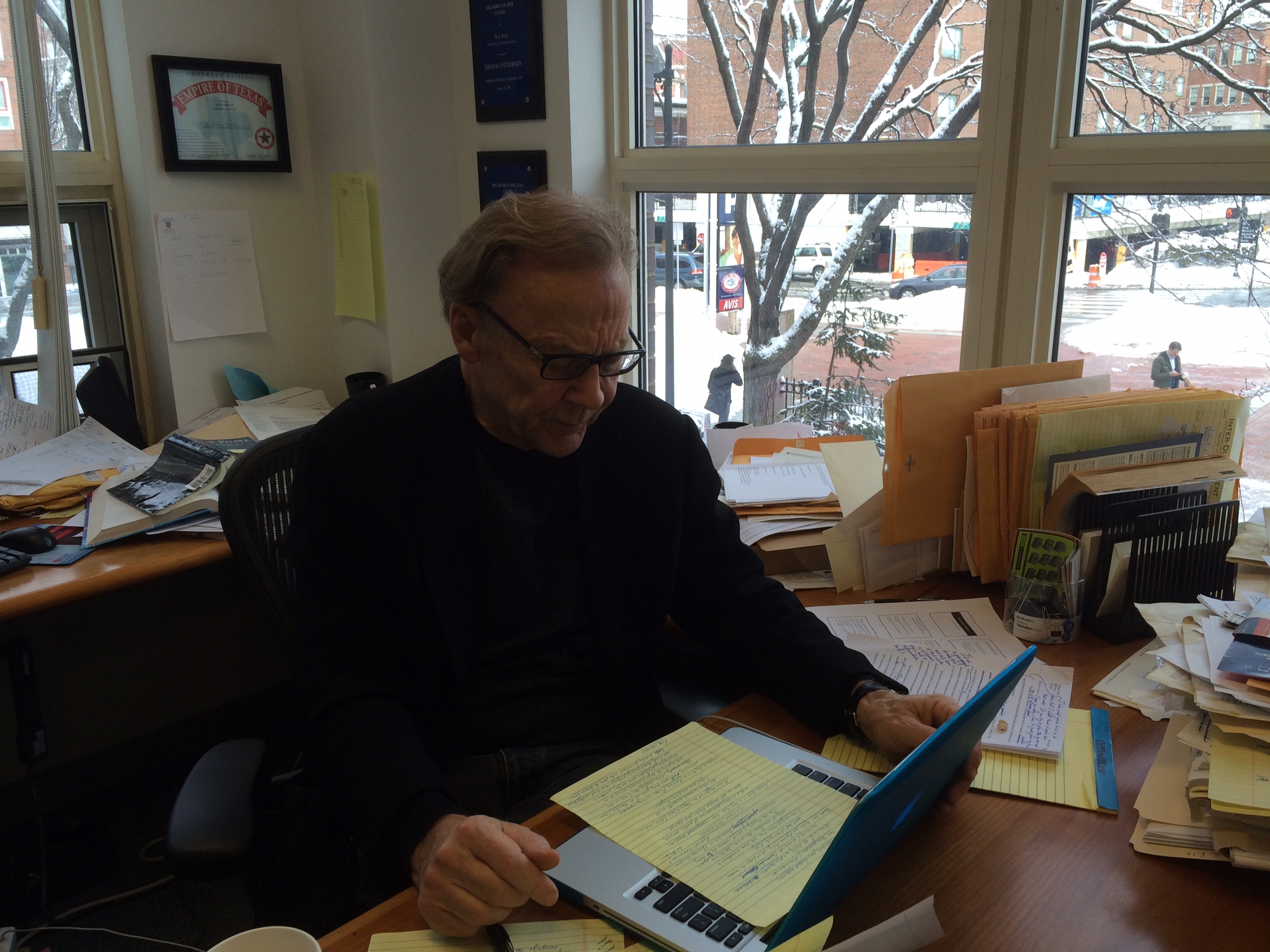
(BGF) – We have had an interesting talk with Nicco Mele in Boston Global Forum Leaders Series. We would like to introduce here some images and videos of the talk. The transcript is also can be found below.
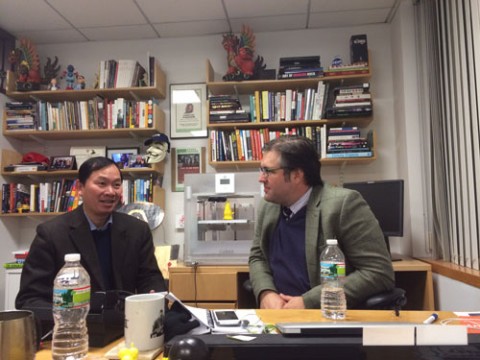
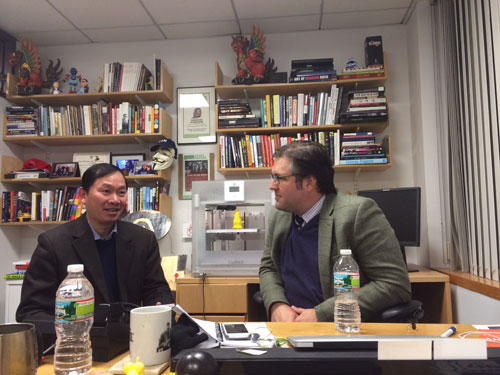
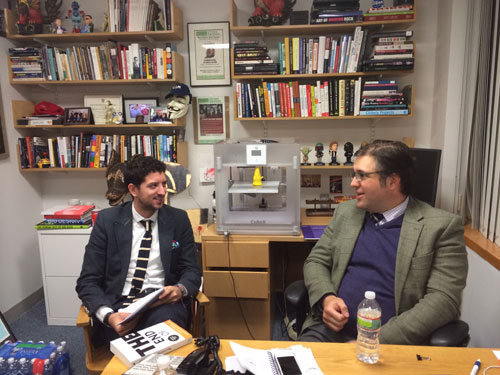
BGF’s Editor-in-Chief Nguyen Anh Tuan and Nicco Mele in the talk.
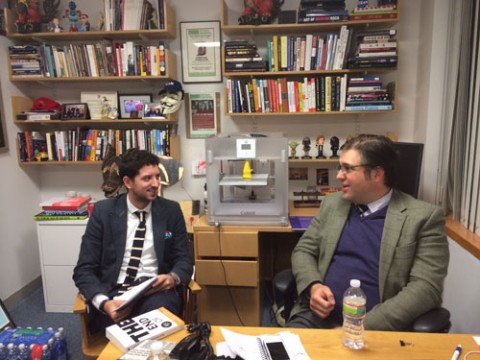
From left to righ: Jonas Brunschwig and Nicco Mele
Part 1 video:
http://www.youtube.com/watch?v=oYeJJDiJwIo
Part 2 video:
http://www.youtube.com/watch?v=f8_VqDpsie0
Transcript
Tuan Nguyen: Welcome. Today we are honored to introduce Nicco Mele, as you watch on the website of Boston Global Forum. He’s a strategist, but a visionary, forecaster in internet technology. But it’s also exciting that he is a poet. I’m honored to introduce Nicco Mele with you.
Nicco Mele: Thank you very much. It’s a pleasure to be here on the Boston Global Forum. Hello to all those viewers out there.
Jonas Brunschwig: You’re free to give us an overview of your book.
Mele: So I’m the recent author of a book called The End of Big. Surely I have a copy of right here, The End of Big. Since St. Press was out this past spring. My thesis is that technology radically pushes power to individuals out of institutions. That our technology has a really powerful effect on—our technology really is empowering individuals at an unprecedented rate in an unprecedented way. And that has a dramatic impact on institutions. All of the institutions in the modern era were designed in a time in many cases before electricity existed. And certainly well before the advent of the smart phone. And so all of our big things—everything from big news to big political parties, big government, big militaries, big universities, big manufacturing, big movie companies—all of them really aren’t prepared for the modern era. [They] can’t figure out how to navigate it. That’s my summary.
Brunschwig: So I figured since we have a pretty global audience, we might want to start with a little bit about your background and what your story is. Where are you from? Where did you grow up? And sort of what shaped who are today.
Mele: Sure. I was born in West Africa, in Kumasi, Ghana. And my father was in the U.S. states department; and I grew up in U.S. embassies—mostly in Indonesia, South Korea and Malaysia. And I graduated when I was eighteen from high school in Malaysia en route to the United States for university. [I] went to the College of William & Mary in Williamsburg, Virginia.
Brunschwig: So what were your interests growing up? How did you get involved in the technology side and the politics side?
Mele: I was always interested in technology. I’m just a tinkerer by nature, you might say. I liked building things and taking things apart. But the kicker for me was here I am, I’m a U.S. embassy kid. I’m supposed to be an American. But I haven’t really lived in the United States. I don’t really know very much about it in some ways. And so I thought, well my father loved baseball; Americans love baseball. I really got into baseball. But you know in the pre-internet days, to get baseball scores when you’re living in Malaysia can be really, pretty challenging. It’s not like you can go online and check out what the score of last night’s game was. You literally had to wait for a boat to come across the Pacific with news of the latest baseball scores. And I heard there was thing called the Internet where you could get baseball scores right away. It was actually prior really–before the invention of the World Wide Web, before modem, very early days. And that got me involved–and I talk about this in the book–that got me involved in the old school, like the BBS’s bulletin board systems, which in the early days of connectivity were kind of like a localized internet, you might say.
Brunschwig: And how about the interest in politics? How did that come about?
Mele: Well politics is power. You want to change things, you have to speak the language of politics.
Brunschwig: So your first real quick involvement was the Howard Dean Campaign in 2004.
Mele: Well, it goes back a little further than that. When the college I went to was a couple hours from Washington D.C. And in the summers I worked in Washington D.C. I worked fixing computers. Washington D.C., because my parents moved back there and also it was the nearest city to my college. And Washington D.C. is a political place. You can’t live there. Even though I was fixing computers and setting up printers and fixing paper jams, and all the I.T. things. Making sure phones worked. That was still in D.C.—the heart of politics. And I got very interested in politics. And I worked at a bunch of places, but most especially a place called The Common Cause. Common Cause is a campaign financial form group, a watchdog group. And that was at the time, it was right around the time John McCain was running for president the first time. And he made campaign finance reform his issue. And when he lost in the primary to George W. Bush. He got really serious about running a legislative campaign that passed significant campaign finance reforms called the McCain-Feingold Bill. And so that was intoxicating being that close to politics at Common Cause. It was shortly thereafter we had Bush v. Gore in the Supreme Court and that was disenchanting—demoralizing—in some ways. I ended up leaving politics, moved to New York City. I was working in New York and heard a guy give a speech in a bar, and moved to Vermont to work for Howard Dean.
Brunschwig: That’s a really, really cool story. That doesn’t happen that often where you have that combination of being in the right place at the right time—with a background of not having grown up in the United States.
Mele: Everything just fell in place just right. But I didn’t know it at the time. Only in retrospect is that clear.
Brunschwig: It’s interesting, reading your book, to acknowledge for the first eighteen years of your life you didn’t live in the United States. And like you said you didn’t know much about it other than—
Mele: Well as a U.S. citizen, I spent some summers visiting family here. I mean I wasn’t like I was totally without it. And I grew up in a—to be part of the U.S. embassy is to be in politics. Diplomacy is politics. It was. I was very conscious of being an American, a U.S. citizen. I was always very conscious of U.S. politics because they affect our diplomacy. I was very much a Cold War kid. I mostly grew up in U.S. embassies when Reagan was president.
Brunschwig: And so you go up to Vermont. You join Howard Dean’s campaign on the fundraising side.
Mele: Well I join the campaign to do all things Internet related—help with the website, help with e-mails. We really didn’t have social media in those days, but to the extent there was something like social media—anything digital. The website became the major vehicle for the campaign. So that was definitely the challenging thing.
Brunschwig: So for our global audience, we’re live streaming this in Vietnam. Can you talk a little about the Howard Dean campaign? What was different about that campaign?
Mele: So that’s a good question. In the United States, ever four years we have a presidential election. And there are two parties and each party has its own primary election where the members of the party duke it out one nominee—one presidential candidate—emerges. In 2003—the presidential election was in 2004—and the Republicans had their candidate, the president George W. Bush. But the democrats had not had their candidate. And there was what they call an open primary—a primary election that had a whole bunch of democrats running for the president in the primaries. And the way the primary system works, in the presidential everyone votes on one day, first Tuesday of November. In the primaries, every state votes and it’s like a slow march—a slow accumulation of state after state after state after state. And the first two states were Iowa and New Hampshire. And in 2003, there were, I think, 9 total presidential candidates. Let’s see if I can name them after 10 years. John Kerry, who ended up the eventual nominee. John Kerry was a U.S. senator who had a long history in American politics. Dick Gephardt, Dick Gephardt had been Speaker of the House Minority Leader in the Congress. He’s a very long-time Democrat. Joe Lieberman, a U.S. Senator who famously had been Al Gore’s vice presidential candidate. General Wesley Clark, who’s a very high-ranking U.S. general, who left the army to run for president. Carol Mosely Braun, who had been a senator from Illinois–African American woman. Reverend Al Sharpton, a perennial favorite. Dennis Kucinich, a U.S. Congressman who is very far to the left. It’s only seven. There’s Howard Dean, who’s governor of Vermont. That’s 8. I think I’m missing one. Any way it’ll come back to me.
Brunschwig: I can’t help with that unfortunately.
Mele: So it’s a very crowded field. Everybody’s trying to run for president. And the election was—I don’t remember the exact date—but the Iowa caucus was the first or second week of January. It’s very early January 20, 2004. And so this was in early 2003. There are that many declared presidents. And so it’s six months, 9 months before the election. People can’t tell who’s wining because there have been no votes. And so there’s something called the money primary. And the way that works is the person who is raising the most money is generally considered the front-runner. And the fundraising is disclosed quarterly. So April 1st, July 1st, October 1st, January 1st. The end of each quarter, the next day you disclose who much money you raised.
And it was well-established John Kerry who was the front-runner. He was raising the most money. He was raising 5 or 6 million bucks in the quarter. Everyone would keep their number secret until the last day to surprise everybody. And Howard Dean—I don’t remember what his first quarter numbers were but the ratio was something like Kerry is in 5 million, Howard raising seventy grand, and everyone else in between. It was actually like a linear slope of sorts and at the very end is Howard Dean. But something incredible happened, which is in Q2—April, May and June—Dean built a giant online movement and raised not 5, not 6, not 7 million, but almost 15 million dollars. He set a record for primary fundraising. And it was a shock. No one saw it coming. The reason it was a shock is that in American politics—Republican or Democrat, it doesn’t matter—money has really traditionally been raised two ways. One way is that you get a list of rich people and you call them up and you ask them for money. And in U.S. law the maximum a single person can give to a candidate in an election was—what was twenty-one hundred, twenty-two hundred bucks? A little over two thousand dollars. So how many rich people do you know who can write a two thousand dollar check. That’s pretty much the game. The other way you raise money is you build a big list of people who can give twenty five dollars each and you send them letters in the mail asking them to give to your campaign. It’s called direct mail. But direct mail is expensive because you have to buy postage. Average gift is twenty-five or thirty dollars, and to raise a million bucks in twenty-five or fifty dollar chunks, you have to send a lot of mail. And each piece of mail you have to buy the postage on. You have to buy a stamp, right? So it’s kind of a lunatic situation all around. Either you have to know a lot of rich people and call them to raise money or you have to spend a lot of money to build a direct mail operation. And people do that but it takes time. It’s takes years—decades even.
And so the Internet opened up a third new way of raising money where you didn’t have to know a lot of rich people. And you didn’t have to spend a lot of time building a direct mail list and spend a lot of money sending people mail. I had a clear, compelling, coherent message. Send an e-mail, which costs almost nothing. And people would donate online using their credit cards. And it was at the time a real thunderclap in American politics. It was a real change because you didn’t have to be a part of the establishment to raise money. If you look at American politics in the election I just said, almost all of those people were from Washington, D.C. They lived and worked in Washington D.C. The Howard Dean campaign was the only campaign that did not have a headquarter in Washington D.C. And so it was the first time someone from outside the establishment won the money primary—had the money to be financially competitive. And that was a big deal.
And of course, Dean lost in the end, but four years later another guy from seriously outside the establishment used the Internet to raise money to break all of the barriers the establishment had put up, and defeated Hillary Clinton. Barak Obama. And at the time it was unthinkable. In 2007, the Democratic Party was the party Bill and Hillary Clinton built. It was their party. They even built the building in Washington, D.C. It’s like the Bill and Hillary Clinton party. So to lose to a man who’s been in public life for less than a decade was a shock—just a tremendous shock. And that was possible because the Internet made Obama financially competitive. And that’s actually the thesis of my book. Part of my book started with, “Well if I was Hillary, what would I have done?” How would an establishment person, an establishment product, an establishment—if you hold all of the keys to power, then how would you use the Internet? It is very clear how outsiders and insurgents can use the Internet to challenge the establishment to disrupt. Everyone talks about the Internet being a disruptive force—very clear how you can use it to be disruptive. What’s not clear is how you might use it if you’re in charge. And that’s the hard work we have to do. That’s the work of the future. That’s the work I started to chip away at with my book.
Brunschwig: So with that revolution or disruption that the Internet fundraising brought by the ’04 campaign, how has that evolved in the last couple of presidential elections. Would you say that it sort of reached a maturity level or is it something still in its infancy that in upcoming elections might surprise us again?
Mele: Well what I would say is that it’s a hard one. I think there are plenty of surprises ahead. But ultimately Obama raised five hundred million on the Internet. And spent almost every dime buying television ads. And so the Internet has significantly changed the fundraising in politics. Asterisk—mostly at the federal level, presidential level. I should say, mostly at the national level, not in the mayoral or the member of congress. But at the national level, the Internet has really changed the fundraising game. And then outside of fundraising, it’s hard to really qualify the impact of the Internet. Definitely changed the nature of managing the press and dealing with the press. There’s a bus that follows the presidential candidates around that’s full of journalists. The Internet, especially Twitter, has really changed that equation significantly. David Axelrod said Twitter was more important to the twenty twelve presidential campaign than the New York Times. And so there is a way you use the technology to manage social media. I mean there is a way you use social media to manage the press, to change narrative of stories. But one of the core parts of running for office is persuading people to vote for you or persuading people to not vote for your opponent. And a lot of that is still done through very traditional advertising channels. And it’s not clear when or if that will change.
Brunschwig: How do you think with the revolution, again, brought about by the Internet and by social media especially, how do you think that might affect future elections in terms of feeding the establishment, which is that big institution that you predict is declining?
Mele: I think it’s very hard—I think it’s too early to say how history will judge Barak Obama’s presidency. Right now it’s not being judged very well. And I think part of that is because—part of that speaks to the challenges of running as an insurgent and governing as the establishment. I remember when Obama was first elected there was this story in the New York Times. He wasn’t president yet; he was president-elect. There was a story in the New York Times about how they didn’t want him to have his own e-mail address or his own BlackBerry. And he had to fight to get his own phone. And that’s because the pace and direction of the institution is out of pace with the technology—sometimes quite purposefully, sometimes for good reason. I think if you look outside the U.S., I think sometimes technology is used by activists to challenge the establishment of power is different, but you see a similar challenge. Look at what’s happened with the Arab Spring. You use the technology to challenge the establishment but governing turns out as hard. The nature of institutions can be a real challenge. It’s easy to disrupt. It’s harder to build and manage and grow.
Brunschwig: You mentioned a few examples in your book about how the end of big with the example of the playground where your children play, where the government wasn’t going to replace the slide. And neighbors that use the slide regularly did a fundraising campaign to replace it. Another example that you mentioned was the road in Hawaii that was too expensive for the government to fix and citizens took initiative upon themselves to fix it. Now how scalable do you see this?
Mele: I don’t actually think it’s that scalable. That’s part of the challenge. I’m a nerd. I love the Internet. I love technology. But I also think that we don’t really understand how to use these things inside of existing institutions for the best outcomes. The story of the slide and my neighbors: there is a really big playground, slide, in my neighborhood and a hurricane came along and destroyed it. And the town said it will be a few years and a whole bunch of money to have it rebuilt And so some parents started a PayPal page and put up signs around the neighborhood and the park. Printed them out on their printer and said, “Hey come. If everybody who visits the park gives fifty dollars, we’ll have the money to rebuild the slides in no time.” And sure enough, that’s what happened. But that creates all kinds of challenges for setting priorities. What if there was a sewage problem in the neighborhood and the goal of the local government was to figure out if they should fix the sewage problem before they fix the slides? Then you don’t really want the citizens going around raising money for slides. On the other hand, that’s the kind of civil participation I applaud. I want people to be that engaged in their local government. The trick is their local government frequently doesn’t have the vehicles, the ways to participate in that same way.
Brunschwig: Yeah, because if you read what economists are saying to fix America, you often hear that infrastructure is pretty high up on their list of to-do, at least on one side of the spectrum. But then again you run into those hurdles where you can’t really invest those needs. And so you don’t think we are anywhere near a situation where people could take that civic drive to the next level and address some of those—
Mele: I want to challenge people’s civic energy into things—into their government. I want people’s energy to go into their government. That’s important. That’s what de Tocqueville loved about the United States. Is that when you have a meeting, everyone showed up—not just crazy people. And so that’s what I want. I want our best effort; our best energy; our best time; our best intentions to go into our communities, to go into our government. But that’s not happening right now. And part of the reason that’s not happening is that the government doesn’t provide ways for that to happen. And sometimes it can be really hard to figure out when the next city council meeting is going be. Sometimes government is just hard to figure out—other times just completely inaccessible. And in an age when people use their phones to transact all kinds of businesses, there’s this expectation of the ease of use—of directness. And government has to get closer to that. [It] doesn’t have to be that. Because there are reasons why you would not want it to be that. But the gap between our institutions and our government and our technology and our lives is growing. Our technology is headed off in this direction at incredible speed and excitement and all kinds of things happening. But our government, our policies, our institutions, our approaches, our processes are going in a different direction. And that’s a dangerous gap for all of us.
Brunschwig: How do we slow it?
Mele: That’s up to you. That’s the challenge of the next hundred years—The United States—is how do we bridge that gap between the tremendous connective power of our technology and the legalities of governing them and decision making and priority setting in communities.
Brunschwig: I want to bring in some questions from the audience that we received beforehand. The CEO of EverNet who has a technical question for you, which is “What do you think about the Federal Communications net neutrality rules?” if you’re familiar with it.
Mele: It’s a decision yesterday or maybe it was Monday, I can’t remember exactly. It’s all a little muddy. What do I think about that—well, I think it is really essential that our technology infrastructure maintain neutrality. I don’t want Comcast or cable provider say, well, we’ll make the New York Times run a little slower until they pay us a fee. We’ll make it a little harder for news sources that don’t pay us a fee, because that can be a slippery slope to all kinds of gateways. And so on the one hand I think that the infrastructure for delivery of the Internet of our media needs to have neutrality to it. [It] should not carry different kinds of financial or ideological penalties or incentives.
By the same token, I do think there is, at the root of this, is some sense is who is going to pay for a significant upgrade to the telecommunication infrastructure in the United States. Somebody’s got to pay for it. I think part of what’s fueling and motivating this net neutrality fight—I’m sure there’s some there’s some greed involved. But I’m also sure that there is a legitimate question of who is going to pay for telecommunication and the structural upgrades. The consumer. The company. The media. There’s also this kind of a realignment happening where for years many of the providers who we think of as internet service were cable companies who made most of their money basically selling you channels—HBO, ESPN, etc. And now that you can get that content online, then that’s a significant lost revenue stream for them and they’re fighting to figure out how to protect it at the same time. So I’m definitely a very big supporter of net neutrality. I don’t want any kind of bias—financial, ideological or otherwise—in any direction in terms of how our infrastructure is used to deliver media. But by the same token, I also recognize there are some market forces at work. And there’s also a significant question of who is going to pay for our infrastructure upgrade, ‘cause we need it.
Brunschwig: Our next question comes from Elizabeth from London. It’s very similar to one that we got from Takazawa Taeko from Tokyo. And it’s about the future of cyber security and what role do you see cyber wars if any in the coming years?
Mele: Cyber war. Now that’s a challenging term. I have a chapter on this in the book about the role of traditional military thinking—big armies and cyber war in the digital age. But I’m not sure it’s a useful way to understand threat or security. Because if the question is what are threats to our safety, to our way of life. If the concern is how do we make sure that there is some degree of security online and offline. It’s dangerous to figure out the world in terms of cyber war. My thesis is that technology pushes power to individuals. And so in the case of cyber war, cyber security, anyone with a five hundred dollar laptop and some significant technical skills is conceivably a threat to national security to someone’s security. And that’s a very different kind of role or place for the nation-state to be. Even when you look at something as critical as cyber-war actions, like the Stuxnet virus that we think helped disable some nuclear centrifuges in Iran, the resources required to create Stuxnet, while significant, were really paltry compared to the resources required to build a nuclear weapon. And so, the balance of power, the nature of power is really fundamentally different. It used to be that to wage a war you had to be a real nation-state; you had to have a lot of resources at your disposal. In my technological era, I just don’t think that’s true anymore. You can wreak havoc and be a very small group of people, not even that well funded. So, the question is, policy wise, what does that mean for national security, for law enforcement, for the Department of Defense, and diplomacy? And I think we’re a long way from clear answers on that. Curiously, I think where we need to look for some clues is back to 18th Century maritime policy where you were dealing with pirates because I think that is very analogous to what we’re dealing with today online. How’s that for a long and not particularly useful answer?
Brunschwig: It’s going somewhere. Moving on on this topic, so cyber-security sort of leads up to a surveillance state. How do you see the surveillance state and the recent events with the NSA leaks?
Mele: It’s upsetting to live in a surveillance state. Why? Because historically surveillance states come hand-in-hand with different kinds of oppression, injustice, and even fascism. So, surveillance states, I think, are dangerous. But, the reality is that we’ve been living in a corporate surveillance state for somewhere north of fifteen years, at least digitally. Your digital actions have been tracked and recorded in ways to help sell you things and that’s not upsetting to most people, and maybe it shouldn’t be. The real concern is when NSA, when the government starts spying on citizens without any accountability. I want to put aside, for a minute, the question of whether or not it’s okay to spy on citizens. Let’s assume it is because we want to catch terrorists and fight threats. Let’s assume that’s okay. We still want some accountability in the system, we want some way to avoid an abuse of power, we want some way to hold the power of the NSA accountable. It’s abundantly clear in every way, shape, and form that it has been impossible to hold the NSA accountable with the surveillance power they have. And that is the most terrifying thing is that they have no accountability. The purpose of this democracy, the reason we have the system of government we have, is to bring accountability to power and when that is trampled on, when that is given up, when that is thrown to the wind that’s when the founders and framers of the Constitution are…, when we dishonor their memories. It’s a really dangerous place for us to be.
Brunschwig: And do you see traditional politics being able to address this issue substantially and constructively? Or is there a need for some disruption in this field?
Mele: I’m not sure our current political systems are able to address this, or, at least, so far they haven’t. I mean, look, if Julian Assange and Edward Snowden are the two men with the moral high ground here we’re in real trouble.
Brunschwig: You mentioned that we’ve been in a corporate surveillance state for fifteen years, so moving onto Google I guess. We have a comment. I’m just going to read this for the purpose of simplicity: “Google expanded it reach for years with the motto ‘don’t be evil, however, in the last year it seems there has been a more aggressive policy with the acquisition of a number of new products and the result, one might argue, is that Google looks more and more like a government trying to enter into all aspects of ordinary life and become indispensible like a passport. Do you know if there are any historical precedents of large non-tech companies, in this case, that have tried to do this? And what do you think we can expect out of this?
Mele: Very interesting comment. This is an idea I’ve seen a little bit, the notion that Google is increasingly more of a public utility than a for-profit company. Or, I’m trying to remember, there is some business journalist who describes Amazon as a non-profit organization run for the benefit of the consumers backed by major investors. This idea that some of these big Internet companies take on such an out-sized role in the delivery of a range of services that, well, certainly, you can argue that Google every day, and Facebook, they make decisions about free speech, they make decisions about the visibility of things on the Internet that are arguably governmental-type decisions. I mean, I don’t think we actually have very good ways of thinking about or understanding the power of these digital platforms. In my book, I call them the “even bigger”, the seven or eight companies that essentially dominate our online space: Amazon, Ebay, Facebook, Google, Skype, I’m missing one, and Twitter, but there’s one other one. Anyway, these big tech companies have this out-sized role: they’re kind of giant, behemoth platform players, there are millions and millions of people who participate on them and use them, and they tend not to have significant competitors which gives them a… Well, I don’t think anyone would be concerned about Google if there were other significant search engines out there. I guess you could argue that there are, but there’s no doubt Google wields a kind of power that is unusual historically, even monopolistic and that crosses over into the public sphere because of the control that it gives Google over people’s information about public issues.
Brunschwig: I want to go back a little bit to social media. We have a question, or a comment with a question, which goes: “The internet and social media have significant potential to enhance democratic participation and empower and engage voters and activists. However, as you noticed in the wake of the Boston Bombing, there is a significant amount of misinformation. How can we counter the abundance of misinformation on the Internet and social media, if at all? And what implications do you feel misinformation has on the democratic process?
Mele: This gets back to what I was talking about with the gap between institutions and technology. If everybody has a smartphone, of course people are going to want to participate in investigations, of course people are going to go looking for the Boston bombers and we need to channel that energy into our institutions in a way that’s going to produce the best outcomes, not lead to vigilante hunts. I mean, at the heart of it, how do we deal with the digital space is our institutions have to open up, they have to more readily engage with the Internet, with our digital world. That’s ultimately how we do it. We have to bring together these big institutions with the power of individuals and figure out ways of merging them, of having them [inaudible] each other. The values of big institutions are hard won, we don’t want to throw the baby out with the bath water.
Brunschwig: There’s a follow-up question to that which is very interesting, if it is possible to develop norms and values for social media so that there is more credibility in the things that people say on the Internet?
Mele: I mean, I think it is possible. I think that, basically, the Internet is very young. It took newspapers a hundred years to develop norms for sourcing and for combating libel and yellow journalism. It took a long time for the ethics and norms of newspapers to get worked out. We’re at the very beginning of it digitally and it’ll get worked out eventually digitally it just might take a long time, like decades and decades, a hundred years, and it might come at a great collateral cost in the mean time.
Brunschwig: So, you said the Internet is a very young thing, so that makes this next question perfect. It comes from Viet Nam from Nguyen Thi Lan Huong who is a lecturer at the Binh Duong University and he is asking if, in your opinion, Viet Nam has a chance to become a new goliath by developing an Internet-based economy?
Mele: Well, I think that the future of power holds a much stronger digital component, a much larger digital component than ever before. So if Viet Nam wants to develop a powerful economy, if Viet Nam wants to be a player on the global stage then understanding and embracing digital technology is a really essential part of that journey. And just look at, here’s Obama’s signature accomplishment in his two term presidency is the health care law. The health care law that has been almost brought to its knees by a website that didn’t work. And that’s just an example of the way that digital technology has intertwined itself very tightly with the nature of power and being powerful today, in the future, being a compelling leader, being a successful businessman or businesswoman, being a good teacher, across the board, whatever your pursuit is, whatever your purpose is, having a power in that purpose requires a digital literacy, requires a thoughtful component [inaudible].
Brunschwig: We have a question from Ahmed Kilany out of Egypt that sort of goes along this potential of the Internet. He’s wondering what opportunities you see for the Internet to help poor countries, countries where you grew up in, for example, in Africa, in Southeast Asia? In 2014, what opportunities are there in Africa to leverage technology and the Internet to improve people’s lives?
Mele: That’s an interesting question. My specialty, really, is U.S. politics but its clear that in some ways that digital technology allowed different kinds of leap-frogging, different kinds of advances. No doubt mobile phones have transformed the developing world. But, I think it also brings with it new kinds of instability, new risks, new challenges. It’s a mixed bag, good and bad, but one thing is clear is it is inevitable, and so the best thing to do is to get inside of it, to understand the pros and the cons, to try to get a sense of what is happening, trying to understand how it affects development, and economies, and the power of public opinion.
Brunschwig: We have a 3D printer right here in your office. What do you think is the impact of these new technologies on the creation of jobs in the future in the United States? There is a recent book by two MIT researchers, Andrew McAfee and Erik Brynjolfsson, Race Against the Machine and now their new book The Second Machine Age, in which they argue that with technology advances we’re going to lose a lot of jobs because people are going to be replaced by machines and the pace at which people develop new skills is not keeping up.
Mele: I think it’s a great book, I highly recommend it. It’s very provocative and interesting. I definitely think the nature of work has changed. I mean, in the United States now, I don’t the exact numbers, but approximately a third of the workforce is contingent and another third of the workforce is self-employed. So, you’re actually talking about a very small number of people who have 9-5 traditional jobs. There’s lots of work, I’m not sure there are jobs and so talking about a gap between institutions and governmental policymakers and the realities of our technology on economies is that the way we think about work is about jobs. A lot of our policies like health insurance, for example, are built around employment through jobs but I’m not sure jobs look anything like they looked twenty-five or fifty, certainly not fifty years ago and I don’t even think twenty-five years ago. Jobs don’t look like that anymore.
Brunschwig: So, how should we educate the younger generations to prepare them for the economy of the future? And, we’re in an institute of higher education, how do you see higher education evolve?
Mele: Well, part of the thesis of my book is not just about pushing power to individuals it’s also about the way institutions have not done a good job, that when people are dissatisfied with the state of things they have used the technology to disrupt. Insurgents don’t win when people are happy; insurgents win when people feel like they’re not being well served. Higher education in the United States is particularly acute. The cost of a four-year college education has skyrocketed, the economic value has plummeted. It’s more expensive than ever to get a degree and it’s harder for it to ever be worth anything. Something about that equation is dramatically wrong. You asked me how do we build and prepare people for the economies of the future: I’m not entirely sure, but I am pretty sure it doesn’t look like the way we’re doing it right now, which is plunging people into dramatic amounts of debt without any hope of ever digging out.
Brunschwig: I want to go back to the topic of social media and the Arab Spring. A former student of yours that sent in a question and a comment, which ties in with a recent report that comes out of the United States Peace Institute, whose findings and the findings of the report argue that actually Twitter and Bit.ly links didn’t play that big of a role in fostering and spreading the Arab Spring. Rather, they helped people on the outside see it, but people that were in, it didn’t really mobilize them.
Mele: I’m not surprised by that, necessarily. I’ll start by saying, I don’t believe that technology is the be-all end-all. It’s not like just you drop Facebook somewhere and everything changes, it just doesn’t work like that. You have a long tradition of political opposition and labor unions advocating for change for decades. There were a lot of forces at work of which technology was one of them. On the other hand, I don’t think that technology is irrelevant. Wael Ghonim, who was one of the lead organizers of the Arab Spring in Egypt in Tahrir Square, wrote a book about the role Facebook played in their organizing and the way they used it to shape protests and challenge the government. It’s a tricky line to walk. On the one hand there is clear power in it. On the other hand, it’s not enough, it’s not all there is. In fact, sometimes it’s not very much power, but it is some power. Jenny Marzov’s written quite compellingly and elegantly about the way it can empower, like in Syria, they’ve used it to hunt down pro-democracy activists and kill them. Unfriendly regimes are quite fond of the Internet for the opportunities it offers for surveillance and for propaganda. So, it’s not without it’s significant challenges, but it’s also not without it’s significant opportunities. It’s a mixed bag. What I want most is I want us to come at it clear-eyed and thoughtful and with critical thinking and to imagine the world we want to help us figure out how to get there because that’s not what’s happening right now. People are either ignoring it, putting their head in the sand, or they’re being absolutely too utopian about what it means and neither of those things is an appropriate response.
Brunschwig: We’re almost veering towards the end of our hour. We’re in the Harvard Shorenstein Center for the Press, so we’ve got to talk a little bit about the press and you mention it throughout your book, multiple times, the demise of big media and how investigative journalism is suffering. We had a talk, about a month ago, with a colleague of yours, Robert Patterson who was presenting his book Informing the News. Did you discuss the ideas that you present in your book with the ones he presents in his book? What synergies to you see? Or where do you see them differ?
Mele: Well, there’s no doubt that the Internet has changed the nature of news gathering, news production, news distribution. On all three fronts the technology has really had an impact and it’s a mixed record. In some ways its fantastic and in some ways its not. I think one of the things that Professor Patterson really is trying to understand is the impact that it’s had on actual news, on real reporting. It’s not a good one in many ways. It’s a dangerous story. We were talking earlier about the informed citizen and the role of a citizen in a democracy, the responsibilities and the challenges that it presents in an age of a fragmented media where misinformation is common. The very fact that Professor Patterson has to coin a term for knowledge-based journalism. I think there was for a brief interregnum of maybe fifty years that most people assumed that journalism was knowledge-based, but you can’t make that assumption anymore.
Brunschwig: I feel we’ve spent fifty minutes talking and the term “radical connectivity” didn’t really come up.
Mele: That’s a good point. I struggled in my other book to figure out how to talk about or describe our technology. Technology, well, the wheel is technology; cars are technology; smartphone, that seems like a weak word to describe what is going one with phones. The Internet doesn’t quite capture it because really it’s as much about mobile phones as it is about the Internet. You just don’t have good language to talk about what’s going on and I was trying to figure out how to describe because phone is not right, and mobile is not right, and Internet is not right. I kind of came up with “radical connectivity”, which is radically connected all the time, everywhere, with enormous power, and no priority or hierarchy. That’s a deep-seated challenge for authority.
Brunschwig: One of the examples that you bring up about the potential of radical connectivity is that 1,000 true fans that artists could, if they reach a 1,000 true fan-base that supports them with $100 a year, they could make a substantial living. Do you see this as being a possibility for independent media outlets that sort of are building a true fan-base that really goes into the investigative and tackles this corporate dominated media?
Mele: Well, I would say that as our institutions aren’t doing a good job, the incentive to build alternatives using our technology grows. And the question I care about is what are the core values of the institution? Why does the institution exist? Can those values be distributed or replicated abroad to new models that are being created as alternatives? And that’s especially challenging when we look at any kind of creative activity, writers, musicians, artists. Compensating creative people is growing more and more challenging in the digital world. One way of trying to do that is the 1,000 true fans theory by Kevin Keller which is you get 1,000 people to give you $100 and you could build a compelling revenue stream to do you art.
Brunschwig: Do you think that might have a future outside of the arts?
Mele: In journalism? That’s interesting. That’s sort of what Kickstarter is. Kickstarter is essentially the 1,000 true fans model. I think that where that’s a challenge is more in the journalism space, especially investigative journalism.
Brunschwig: How are we going to keep getting, or get more, of the high-quality investigative journalism?
Mele: Funding high-quality investigative journalism is a big question mark for the future, there’s no doubt. It’s one of the challenges that we’re facing.
Brunschwig: We have a couple more questions before we cut you loose. What are you going to work on next? Do you have any other book plans?
Mele: Well, I’m interested in a question of what does a hierarchical institution that carries a lot of power do in a digital age of flat-distributed power? How does Harvard, how does the White House, how do big, traditional institutions engage with the realities of the Internet where anybody can do anything? And to try and understand what might work, what potential models might be. I want to look at totally digital mega-institutions like Wikipedia, like the hacker collective Anonymous, understand how they work and what motivates them, and how are they different from traditional institutions and structures. I’m hoping to unlock some ideas and opportunities there.
Brunschwig: Finally, one last question. I was reading reviews to your book on Amazon reviews. You know, The End of Big, I don’t go on the New York Book Review, I read reviews on Amazon and one of the first reviews supposedly came from your mother. She had a question and I’m going to ask it to you, which is where are we going with this?
Mele: Well, I wrote the book because I’m a little concerned about where we’re going. I think that we’re not approaching our world with enough intentionality and thoughtfulness.
Tuan Nguyen: There are some more questions from Hang Hoang in Paris. Do you think the Internet can help balance the global information flow?
Brunschwig: Do you think the Internet can help balance the global information flow, or just reinforce the one-way flow of information?
Mele: I have no doubt it has already balanced the flow of information. That’s what Wikileaks is about, that’s what Edward Snowden was about, that kind of disruption to the way information is managed and controlled.
Nguyen: Also, a question from [name inaudible] co-found of Skin Net to add to you comment about CEO Cisco John Chambers.
Brunschwig: We have a quote by John Chambers CEO of Cisco who said: “The Internet of everything is a connection of people, data, process, and things that is revolutionizing the way we do business, transforming communication, job creation, education, and health care across the globe. As we are beginning to witness when we connect people, communities, cities, even countries amazing things are possible. Fueling the Internet of everything is growing the number of people and things connecting to the Internet. There will be more mobile phone devices and smartphones connected than the total global population by 2015. By 2020 more than 5 billion people will be connected, not to mention 50 billion things and it’s not just devices you’d expect that will be connected, such as tablets, but other physical objects that can sense and share information. I see 2014 as the inflection point for this major technology transition, which I predict will have a much bigger impact on the world than the first twenty years of the Internet.” What are your comments about this quote?
Mele: Well, there’s no doubt that radical connectivity plays in here. The big tech news this week is the acquisition of Nest by Google. Nest is very successful because it built thermostats and smoke detectors that communicate with each other, and with you, and with your phone. A kind of connectivity, this is kind of ambient device awareness in a sense. I can imagine a day when you leave your house to go to a conference and your phone notices that you’ve left your house and it looks at your calendar, it knows where you’re going, it’s watching your car drive you there, and it sends a message ahead to the conference center with the coordinates for your back, and the conference center prints a chair with a 3D printer molded and designed for your back so you get to your meeting or your conference and you have your chair with your name on it and you sit in it and it’s just for you. That’s a world where things are customized and built to your personal satisfaction. But that is a world that empowers individuals, potentially at the expense of civic lives in the community. So, that is also something we’ve got to bring some real intentionality to, if that’s how we want it to be.
Brunschwig: Thank you so much for doing this with us.
Mele: Thank you.
Mr. Nguyen: Nicco, thank you so much. Thank you for your attention and time for Nicco’s talk on the Meet Boston Global Forum Leaders Series and there are a lot of questions. We thank you for sending your questions. But we are limited to only sixty minutes, so we are able to use a part of that. So we hope we to continue to be involved and to attend the Boston Global Forum events and the Meet Boston Global Forum Leaders Series next time. Thank you so much.
Mele: Thank you very much. It’s a pleasure to be a part of this community.
by Admin | Dec 26, 2013 | Highlights
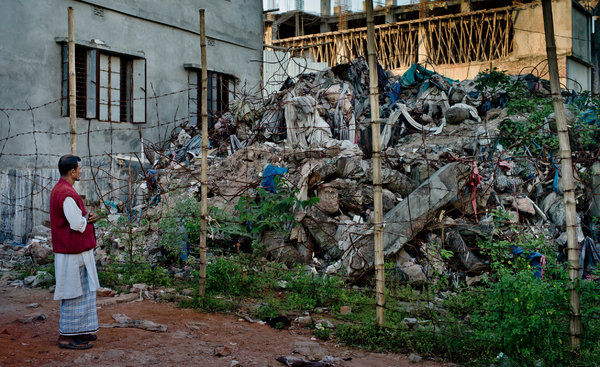
BGF would like to share the article by STEVEN GREENHOUSE about the aid set for Bangladesh Garment Workers since the collapse of the Rana Plaza factory. The original can be found the New York Times website.
$40 Million in Aid Set for Bangladesh Garment Workers
By STEVEN GREENHOUSE
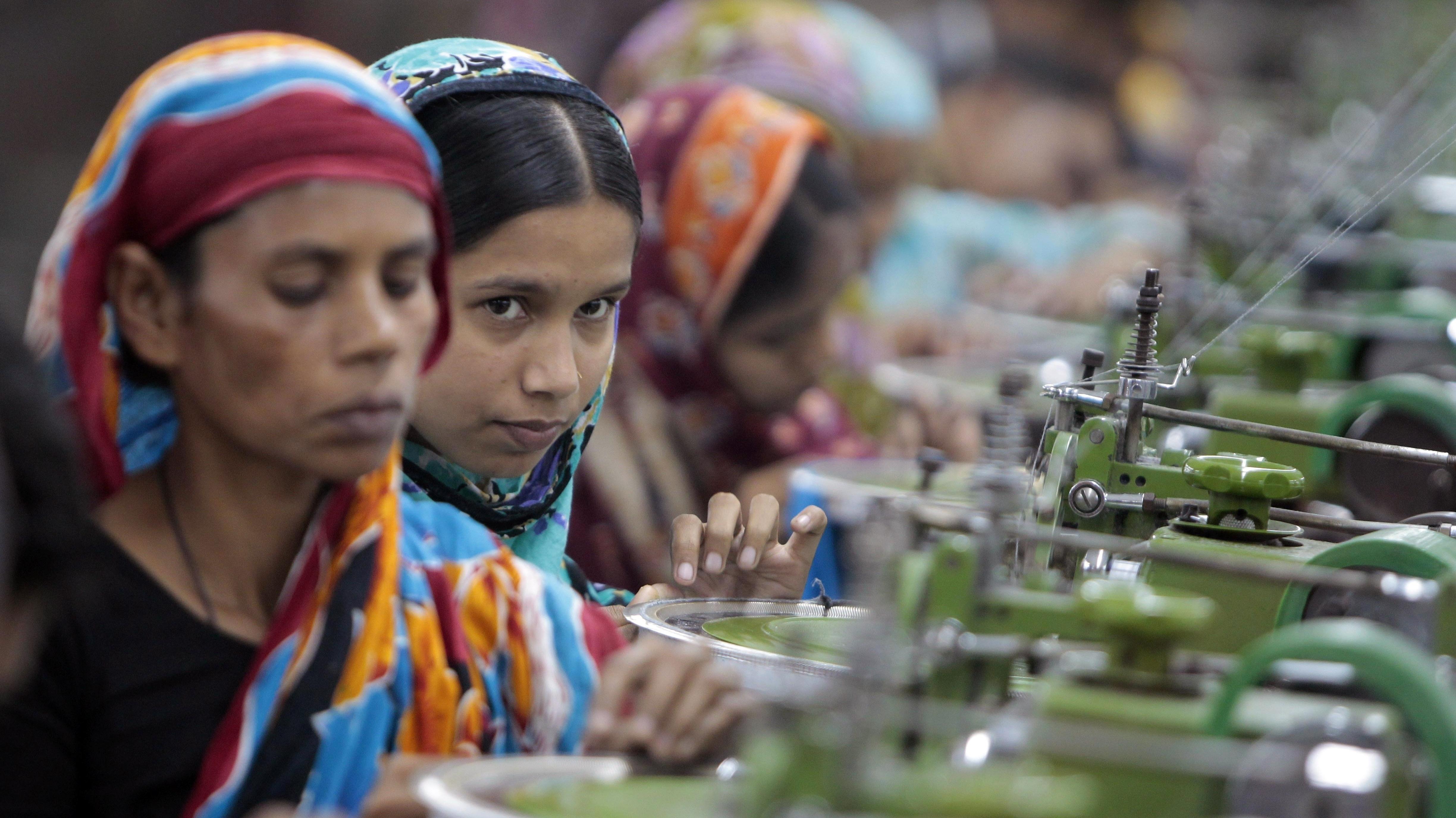
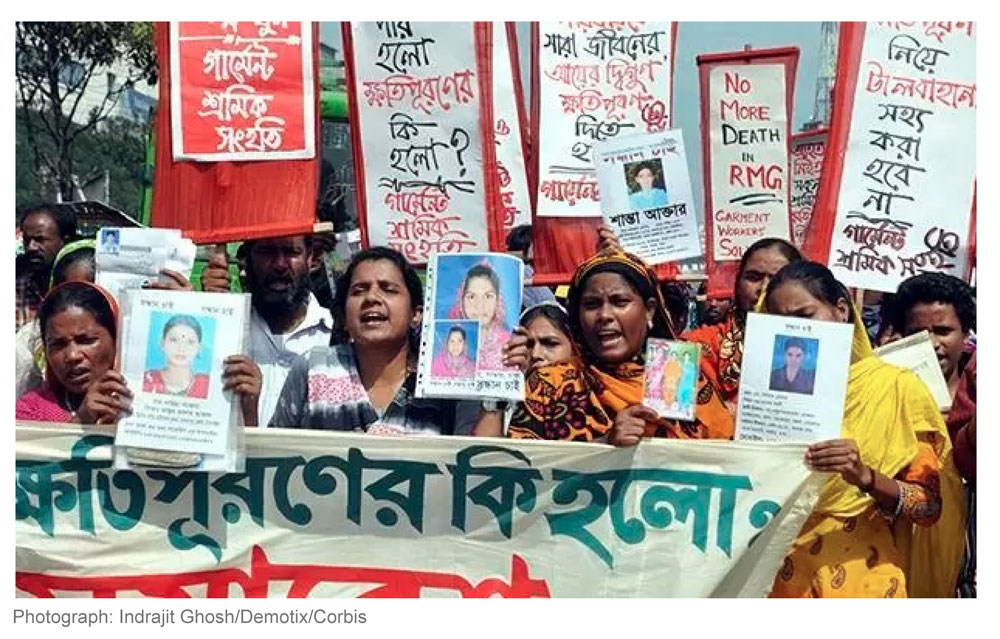
Eight months after the Rana Plaza factory building collapsed in Bangladesh, killing more than 1,100 workers and leaving hundreds of families bereft and financially adrift, several prominent retailers and labor groups have joined with the Bangladesh government to create an estimated $40 million compensation fund to aid the victims’ families.
So far, four retailers — Bonmarché, El Corte Inglés, Loblaw and Primark — have pledged to contribute to the fund, which is intended to compensate the families of those who died last April 24 in what was the deadliest disaster in garment industry history. The new fund is considered a landmark in compensating families of garment industry victims, in terms of both the amount to be paid and the sophistication of the arrangements. No United States-based retailers have signed on.
Several officials involved in negotiations to establish the fund said in interviews that the families of the dead would receive, on average, more than $25,000 each, while hundreds of workers who were injured or maimed would also receive compensation. Per capita income in Bangladesh is about $1,900 a year.
The fund’s members said they hoped to begin making payments in February, although they have yet to decide how much each firm will contribute, which depends in part on whether governments donate. The money is to be paid in installments to ensure that the families have a steady source of income for years to come. “We think the agreement is a really good result,” said Ineke Zeldenrust, international coordinator of the Clean Clothes Campaign, a European antisweatshop group that has pressed retailers to do far more to help the families of the disaster’s victims. “The agreement will deliver to all the victims and the families of the Rana Plaza disaster full and fair compensation in a credible manner. What we need now is for other companies to agree to pay into the fund.”
Families of the victims have already received several months of short-term emergency aid from the Bangladesh government as well as from Primark, an Anglo-Irish retailer. But these families have been pressing for long-term compensation.
In some families, with the mother dead, children have quit school and gone to work. In other cases, workers who were seriously injured and cannot work are desperate for income.
Talks to establish the fund, coordinated by the International Labor Organization, began in September but stalled over such issues as how to collect information on claims, how to determine which claims were legitimate and who should administer the fund. The amount to be paid will be based on the anticipated wage loss of each worker killed, tied to the number of children, or, if the beneficiary is a parent, to the life expectancy of an adult.
With 1,800 workers having died in garment industry disasters in Bangladesh over the last decade, Dan Rees, program director for the Better Work organization, an affiliate of the International Labor Organization, said: “If you look at the history of compensation efforts in the Bangladesh garment industry, it’s not a good one. But this is a potential breakthrough.”
Among the groups that signed the agreement to create the compensation were the Bangladesh Garment Manufacturers and Exporters Association, IndustriAll Global Union, the Bangladesh Employers Federation and the main Bangladesh coalition of labor unions.
Some retailers and labor rights groups have expressed dismay that no United States retailers have agreed to join the compensation effort.
“Following the collapse, we came very quickly to the conclusion that compensation was not only a necessity for the survivors and their families, but a responsibility for the many retailers sourcing from Rana Plaza,” said Robert Chant, senior vice president for corporate affairs at Loblaw, a Canadian company. “We are still hopeful that other retailers will join us in meeting the obligation, but we’ve already made public our disappointment in the failure of others to step forward.”
Loblaw owns the Joe Fresh apparel chain, with apparel from one of Rana Plaza’s factories.
Amid warnings that its columns were crumbling, the poorly constructed building collapsed, crushing hundreds of workers in tons of concrete and steel.
Labor rights groups say they found documents and remnants of apparel tying 25 European and American retailers and brands to the five garment factories spread across Rana Plaza’s eight floors. Several of the firms have since denied their apparel came from any of the factories. Mango, a Spanish apparel brand, said, for instance, that it only had a test order in a factory there.
Walmart has been urged to help the Rana Plaza families because production documents found in the rubble indicated that a Canadian contractor was producing jeans for Walmart in 2012 at the Ether Tex factory inside the building. Walmart said an unauthorized contractor was producing garments there without its knowledge. It says it is focused on assuring that there are no such disasters in the future.
The Children’s Place, which had obtained apparel from one of the factories inside Rana Plaza, said the factory was not supplying it at the time of the collapse.
A Walmart official said the company had no comment about requests for it to contribute to the fund. The Children’s Place did not respond to inquiries.
“These brands produced at Rana Plaza, yet did nothing to protect the workers who made their clothes, despite a history of deadly building collapses in Bangladesh,” said Scott Nova, executive director of the Worker Rights Consortium, a monitoring group based in Washington that is financed by American colleges and universities. “Incredibly, some companies do not seem to feel the slightest responsibility to the families whose lives were destroyed as a result of this negligence.”
Officials involved in the compensation fund say they have not yet worked out how much money each participant should contribute. That will depend, in part, on how many retailers ultimately agree to participate and whether various governments agree to give money.
Some industry experts say the American companies are afraid to participate for fear of being exposed to legal liability or appearing hypocritical after denying that they knowingly did business at Rana Plaza at the time of the collapse.
Mr. Rees, the I.L.O. official, said contributions would not lead to liability. “At the moment, this effort needs support,” he said. “It needs the backing of companies that were in Rana Plaza when it collapsed, that were there in the recent past before it collapsed and that weren’t in there at all and want to show solidarity with the industry.”


 (Photo Credit: Compliance and Safety LLC/Wikimedia Commons)