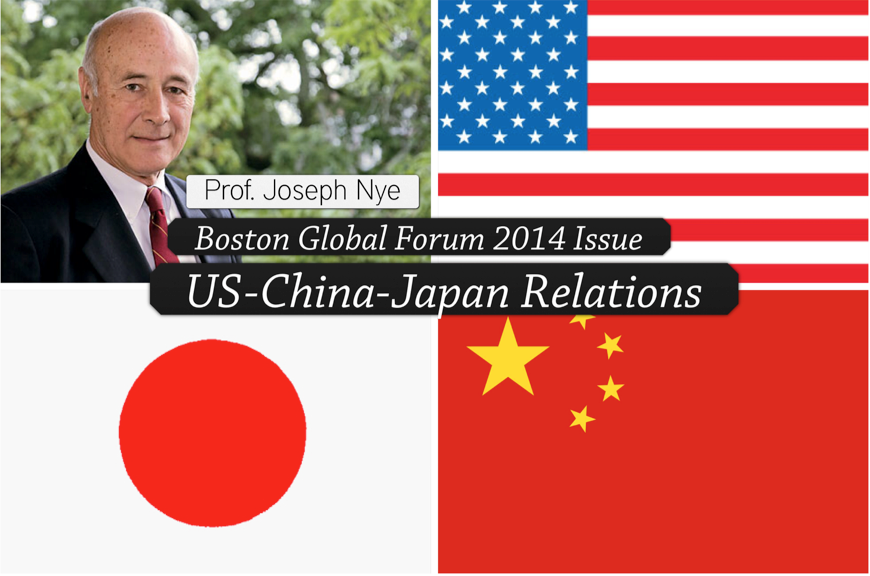
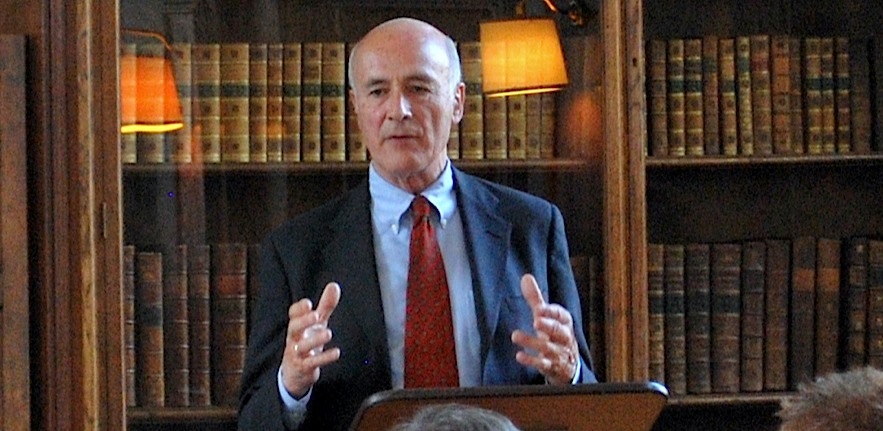
(BGF) – Governor Michael Dukakis, Chairman of the Boston Global Forum, recorded an introduction to this afternoon’s installment of the Distinguished Lecture Series featuring Joseph Nye. Currently, Gov. Dukakis is located in Los Angeles, where he serves as a visiting professor of public policy at UCLA during the winter months. Given that Gov. Dukakis is located in Los Angeles we experienced some technical difficulties while recording his introduction. We apologize for any inconvenience this causes. Below, we have included the video, as well as the transcription, of Gov. Dukakis’ introduction. Additionally, the live stream of Joseph Nye’s Distinguished Lecture can be found here. Thank you very much for your continued support.
Governor Dukakis: Hi everybody and thank you for attending the latest in a series of the Boston Global Forum Distinguished Lectures, which we hope will continue and be very much a part of the Boston Global Forum for a long time to come. Today’s Distinguished Lecture is designed to introduce the Forum’s yearly topic for 2014, and an important topic it is: the relationship between and among the United States, Japan, and China. Throughout the year we will be calling on scholars, leading experts, and practitioners to participate and engage with us on this very important topic. Additionally, in the coming months the Boston Global Forum will host three conferences on U.S., Chinese, and Japanese relations: the first will be on April 24th, the second on September 17th, and the third will be on November 5th, 2014. We are excited about the conferences and hope that they will further the debate on the issues facing, and opportunities present in, the relationship between the United States, China, and Japan. These conferences will also feature a number of extraordinary contributors including today’s guest speaker, Professor Joseph Nye.
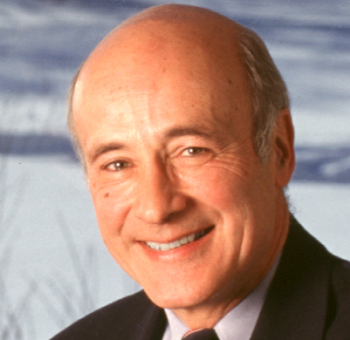
I’ve known Joe Nye ever since we talked together and worked together at the Kennedy School at Harvard. He is a University Distinguished Service Professor at Harvard’s Kennedy School of Government, where he previously served as Dean. He is also a member of our Global Forum’s Board of Thinkers. It’s abundantly clear that there are few scholars with as renown and influential a career as Dr. Nye. In fact, a recent poll on international relations marked him as the most influential scholar on U.S. foreign policy. He has done many, many things, not just in academia but in the real world of policy making. He graduated summa cum laude from Princeton, studied at Oxford as a Rhodes Scholar, and ultimately earned his Ph.d. in Political Science from Harvard. Throughout his distinguished career he has served in many high-level positions including as the Assistant Secretary of Defense for International Security Affairs, Chairman of the National Intelligence Council, and a Deputy Under Secretary of State. So, in Joe we have a very, very special person and somebody for whom I have enormous respect. He is also an author and a researcher and may be the person who coined the phrase “soft power”, The Power Game, and many other publications. He’s really one of the most thoughtful people in international relations today and he, together with me, will be leading discussion throughout the year on this very important topic. It is my great honor to introduce you to, a distinguished scholar, a great thinker, and a friend: Professor Joseph Nye.
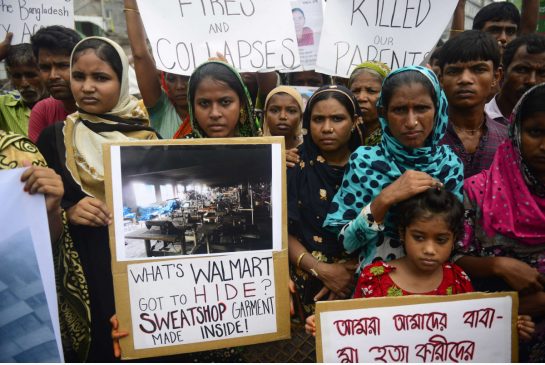
(BGF) – On February 19th, 2014 we launched a program to recognize the companies that promote worker safety and rights through the use of best practices. The program launch was introduced by Governor Michael Dukakis, three-term Governor of Massachusetts, 1988 Democratic Presidential nominee, and Chairman of the Boston Global Forum. In addition, the event featured contributions from Hedrick Smith, who is a Pulitzer Prize-winner and former reporter and editor at the New York Times, Arnold Zack, a world renowned arbitrator and Senior Research Associate at Harvard Law School’s Labor and Worklife Program, and Marcy Goldstein-Gelb, the Executive Director at MassCOSH. The video of their contributions is available here and, for your convenience, the transcript is provided below.
I. Event Introduction: Governor Michael Dukakis
Professor Patterson: Good morning and welcome to the Boston Global Forum on worker rights and safety. It’s part of our yearlong effort to promote discussion and awareness of worker issues in the aftermath of last year’s tragedy at Rana Plaza. I’m Tom Patterson, a co-founder of the Boston Global Forum and I’m on the faculty here at Harvard University’s Kennedy School of Government. I’ll moderate the program this morning and you’ll be able to hear from people who know a lot more about this issues than I do. We’re going to be talking about the issue generally and also to announce an initiative where we’re going to try to recognize companies that have exemplary records in this area. You’ll be hearing first from Governor Michael Dukakis, 1988 Democratic Presidential nominee, two-time Governor of Massachusetts. Mike is on the faculty at Northeastern University where he directs a center on urban and regional policy which bears his name and that of his wife Kitty. Mike, who is the envy of us who’ve been working through these northeastern snowstorms, also has a faculty position at UCLA, where he is today. Governor Dukakis is Boston Global Forum’s Chairman and a co-founder. Governor, good morning.
Gov. Dukakis: Tom, good morning. It’s good to be able to greet you from sunny California where the temperature will be 75 today. We were thinking of all of you in the northeast. Kitty and I will be back in April, about the time the magnolias will be blooming along Commonwealth Avenue in Boston, so we look forward to seeing you. I want to greet all of our participants, viewers, and listeners. Many of you were involved in our first online conference on the 18th of November and you know, as Professor Patterson has pointed out, that the Boston Global Forum is designed to bring people together around major issues affecting our international community. For reasons that I think should be obvious to everybody, especially as a result of the disasters in Bangladesh, we decided to pick international occupational safety and health standards as our first topic. That was the topic of the wonderful discussion we had online with hundreds of you on the 18th of November. For those of you who are interested, the transcript and the audio from the conference can still be found on our website. You will find that the conference features some really terrific people: Congressman Sander Levin; Senator Tom Harkin; Jeff Krilla, who is the President of the Alliance for Bangladesh Worker Safety; Liana Foxvog, who is the Director of Organizing Communications at the International Labor Rights Forum; and many others. Our conference received good coverage from the New York Times as well.
Now, we’re seeking to build on the success of that first conference by launching a new and exciting initiative to recognize companies who are leading the way through the use of best practices for worker safety and rights. A lot of these companies have gotten real criticism and justifiable criticism but there are companies out there who are doing their best to make a real difference and we want to honor them and recognize them. We’ll be nominating companies, brands, and retailers who we feel are leading the way in the use of best practices. Ultimately we hope that this will result in continued discussion about how brands and retailers can promote worker safety and rights, as well as provide guidance for companies who have not yet adopted these best practices. Bearing this in mind, we are very pleased to have contributions today from Arnold Zack, Marcy Goldstein-Gelb, and Hedrick Smith as part of our launch. We hope that you will continue to engage with us as we seek creative solutions for the issue of worker safety and rights. Thank you all so much for your participation and continued support. It’s just a delight to be part of this online forum today and to listen and learn and we hope act to make this world a better place and to make sure workers all over the world have the kind of protections that they need and they deserve. Tom, back to you.
Professor Patterson: Governor, allow me to ask you one quick question. What is the rough timeline on nominations and the opportunity to send us information about companies?
Gov. Dukakis: We’ll be working on this over the next several weeks. We encourage people to nominate companies and individuals who are doing the right thing and we will be brining those nominees to all of you and we hope not only honoring them but holding them up as examples of what we expect from all businesses.
Professor Patterson: Thank you, Governor Dukakis. We’re going to hear next from Arnold Zack, a long-time labor management mediator, a very distinguished career of public service both in the United States and abroad. Arnold teaches at the Harvard Law School where he is Senior Research Associate in the Labor and Worklife Program.
II. Arnold Zack
Zack: Hello. My name is Arnold Zack. I am a mediator and arbitrator of labor management disputes based in Boston. And I have for many years been teaching a course on designing dispute resolution at the Labor and Work Life program at Harvard Law School. I’m very much interested in the area of conflict resolution not merely as a neutral, but primarily because I believe that is a very effective machinery for solving problems of the work place in particular, but problems that through the work place affect the society. The Boston Global Forum is to be commended for looking into this field. And I’m particularly entranced and enthused about the idea of taking leaders of a global issue and testing its applicability for local actions. So think globally and act locally in the Boston, Massachusetts area. And I think we as citizens can have a greater impact than we can by merely giving speeches and writing papers and watching memos about what’s going on in the world.
Let me bring this directly to the issue I want to talk about. And that is what is so relevant for a mediator and arbitrator to talk about what has been going on in, say, Bangladesh and other factories around the world. We all know what has happened to the departure of jobs in the United States, particularly in manufacturing. And we particularly feel sensitive for those here in Massachusetts. I was born in the city of Lynn. And that’s where the shoe industry used to be. And then the shoe industry moved out to St. Louis then it moved overseas. And the current, it’s in a city in Guang Dong, where the fourteen factories produce some 5 billion pairs of shoes a year. That’s the majority of the world’s shoes, are made overseas. So what? We’ve lost jobs. That’s awful. We should bring them back—that’s imperative. But we have to look at what’s going on in the rest of the world and the conditions that are facing these workers who are doing these unskilled jobs. If their conditions can be improved, that is the immediate goal. In the long run, if these countries develop standards that provide workplace safety and provide workplace benefits to the workers, they in turn become almost less competitive. And that is one of the ways that the jobs can be returned to the United States—when the cost of going overseas; the cost of transportation; the tariffs and so on become so heavy that it behooves employers to start thinking about manufacturing in the United States again. So there’s a self-interest for the United States in this, as well as a humanitarian interest in making sure that things go well for workers in developing countries. It’s very hard to police. There are no international laws that deal with these. There is no guarantee that the national laws of these countries where these factories exist are there for the benefit for the workers or are enforced. In too many countries, there’s too much corruption by the [government officials] who are responsible for enforcing the laws. And the brands and the factories that are producing for the brands can turn there heads aside, saying, “It’s not our problem. We have codes of conduct.” And most companies do, saying, “These are the standards by which we expect factories, which produce for us, to treat their employees fairly and to provide decent workplace conditions—and in the case of Bangladesh, a safe environmental conditions and safe factories and building size. But it’s their responsibility—it’s the responsibility of the governments and a lot of these brands. And we will try to monitor these things, but we can’t effectively police the rest of the world. And when you think of companies, brands like Gap and Disney products, produced in more than 10 to 15 factories in over 50 countries around the world. The opportunity for monitoring that becomes very expensive. And the cost of doing so becomes prohibitive. And even if they try their best, they are still unscrupulous, and unfair, and greedy. Factory owners and factory subcontractors who see a fast buck by lowering their costs by taking it out of the hides of the workers by having them work long hours without overtime pay; to having them work in dormitories, or more likely barracks, to cut down their time away for personal needs and to get the most they can out of these workers. Often employing children. And employing people below at legal standards, even in the countries of which they operate.
Now I’ve been involved in this primarily because of my interest in helping to develop dispute settlement machinery, which I’ve done for a number of countries and international organizations. And I have wondered all along as what is the most effective ways of approaching all of this. At the outset, I was entranced by the idea of the brands and their codes of conduct as the way of spreading the good word. And these brands do try. And they are to be commended for that. But it is very difficult for them to police. To the extent that they hire monitors to police their factories or subcontracting factories. There’s never assurance that those monitors are going to give all the bad news to their bosses. There’re certain basic international standards. I started out by saying that there’s no international law, but there are international standards. The International Labor Organization has on its books about 250 what are called conventions that are agreed to by management worker groups and unions and all their member countries. And those are the international norms. They are the standards. They are the conventions. And among those are 8 international codes—conventions—which everyone agrees are the basic standards for fundamental fair play in the workplace. And they include: freedom of association; the right of collective bargaining; gender equity; protection against the employment of child workers; and the protection of slavery—uncompensated workers. Most countries have been signatories to those conventions. Or most countries at least give lip service to complying with them. But the factory owners are not always cooperative. And so they do what they can to enhance their profits—frequently violating these codes. And the monitors surveying what’s happening, they are confronted with double sets of books. And as we can well imagine, they may have some difficulty reporting back to brands, “You’re not doing a good job because Convention 87 and 98 say that you have to give your employees the right to freedom of association and the right to unionize.” And a lot of countries don’t want to do that in their overseas factories. Certainly the factory managers don’t want to do that. Certainly the governments, many of which are corrupt in these host countries don’t want to do that or seek to repress the unions because the unions have the basic building block of democracy as we can look back to Gdańsk and solidarity in Warsaw, which brought the fall of the Soviet Union. Trade unions are the building blocks of democracy. So a lot of companies, a lot of countries don’t want to see trade unions or worker organizations develop. And of course, the workers therefore lose a voice and lose any opportunity for representation to combat violations by their employers or violations by their countries, governments.
So what I think what’s happened in Bangladesh is an awful situation. What happened in terms of the factory destruction and in terms of the impact it’s had on the workers. I have been working in neighboring country Cambodia, where there has been for many years—the ILO has been doing the monitoring and ensuring fair workplace conditions. There is, after the Bangladesh disaster, an ILO effort to begin monitoring what is going on in Cambodia where the ILO does the monitoring and makes sure employees are treated fairly; where there is an arbitration counsel that deals with questions whether or not the employers are acting honestly. And whether or not there are violations of government statutes, and of international norms and collective bargaining agreements. Cambodia has been successful in that despite occasional strikes, which are indeed the mark of a democracy, and there is hope that it will spread to Bangladesh. But at present, it’s difficult to identify who are the good guys in management side in Bangladesh.
When the issue arose and the companies began to try to demonstrate some support of what was going on, the European countries largely created the Accord, in which they committed themselves to be bound by external determinants of what is fair treatment and compensation for the people and families who were lost because of those fires, and the deaths that ensued. Some companies followed the Alliance, which was less responsive in my estimation by saying, “We will set the cap. And we will determine—not any independent government agency—how much liability are members are willing to pay up. So that is the first step. At least the Accord has done well. I applaud the Boston Global Forum in trying to identify the local brands, the local employers, the local factories, the local stores that are selling or making the products of these brands of the companies that are doing well—that are doing good. And I think that the idea of taking an international issue and recognizing those locally, who are living up to standards of fair play and workplace fairness and not destroying the prospects of a fair society deserve some accommodation. And I think the Boston Global Forum is on the right track. Thank you very much.
III. Hedrick Smith
Smith: I didn’t know if you had a specific question, Tom, but the issue you and the Governor had raised and others about worker safety is critical, not just overseas, but in this country as well. It goes into the changing attitudes of, particularly American businesses. To me, one of the most striking things is you’re thinking about nominating companies for good behavior is that it is the European retailers, French, Bonmarché; Spanish company, El Corte Inglés, a couple of British retailers, Primark and Loblaw, that have stepped up and offered funds to help compensate the victims of some of these terrible industrial tragedies in Bangladesh. The American companies have been willing to put up some money to lend to Bangladesh companies if they’ll do something but they haven’t committed themselves in the same way. I don’t think there’s the same sense of responsibility. American companies, American CEOs, retailers don’t seem to want to accept the same kind of accountability and responsibility as some of the Europeans have. It seems to me that it may be critical to see why that’s the case, what’s happened, and if you’re thinking about generating the kinds of incentives and the kind of political, economic, and social context for dealing with this issues more constructively. Back to the long-term trend that we’ve had in this country for off-shoring production; it certainly began in a lot of the retail trade kind of products whether you’re talking about software, socks, or t-shirts or sweaters, or that kind of stuff, or electronic goods. At the same time that we had we had many American companies moving production overseas and buying more products overseas we had this strong trend in America towards deregulation. We did have OSHA set up under Nixon, the Office of Safety and Health Administration, to protect worker safety in this country, but there has been a lot of chaffing, a lot of resentment against that kind of regulation from American companies and when they get overseas they’re freer from that. So, there’s a sense that they don’t have to be as engaged in these issues as they are in America or as they used to be when we used to have what people called stakeholder capitalism operating in America. That is, business leaders who said that the success of the corporations depends on all the groups that have a stake in the success of the corporation and that includes not just owners, and shareholders, and managers but it includes the workers, it includes the suppliers, it includes the creditors, the customers. There was a sense that there was a network around the company and the CEO of the company had an obligation to balance the interests of all these different stakeholders in the company. We’ve moved since then, particularly in America, much less so in Europe and in Asia, toward this concept of shareholder capitalism where the CEO is responsible primarily to maximize return to shareholders and to avoid legal responsibility. I think that’s part of what we confront here when we’re dealing with issues like worker safety in Bangladesh and Vietnam and other countries in Asia, as well as in this country. A focus on the bottom-line rather than a focus on delivering good returns to shareholders while at the same time taking care of the other constituents that constitute the corporation. Finally, there is an attitude it seems to me that is very important and that is that American multinationals now think of themselves as global companies. They don’t think of themselves as national companies rooted here. We have all kinds of statements whether they come from the head of Intel, Craig Barrett at one point said that we could be successful at Intel without hiring another American; and John Chambers said that his company was trying to become a Chinese company; Alex Trotman at Ford says Ford is no longer an American company, it’s a global company. Well, of course, all of these big companies operate in a global environment but the sense that a corporation is a national citizen and operates from a national base tends to give the leadership that they have an obligation to behave well as a corporate citizen in that country. So, it seems to me where you see these European retailers, French, German, Spanish, English, whatever, behaving differently from the American retailers in terms of issues of worker safety abroad, they’re affected by this notion that they’re seen in their home countries as a corporate citizen and that they’re valued by their customers and they’re seen in the marketplace, not just as a company that makes money and delivers goods and services but as a corporate citizen. When that concept of citizenship is vibrant then the impact of consumers who say “wait a second, we don’t want to be buying retail goods made in Bangladesh by producers who essential have blood on their hands for 1,100 hundred workers who died in the collapse of a factory in Bangladesh”, it has an impact on the behavior of those corporate leaders. In America, that connection has gotten weaker over the last 20 or 30 years as we have moved from stakeholder to shareholder capitalism. I think those are all factors and if you’re starting to identify companies that have good records maybe we also need to look at the political, social, and economic market climate in which they’re operating and what the prevailing philosophy is in the various different parts of the capitalist world. Let me just toss those ideas into the hopper.
Professor Patterson: I think those are important ideas. As you were talking I was thinking about the European, American comparison. Of course, Europe has a very different tradition of the relationship between management and labor than is true in the United States, and a much deeper sense also of social democracy where there is a collective responsibility and a collective accountability and looking out for each other. That is a deeper tendency, I think, in the European democracies than here. Do you think the corporate responsibility movement, which is now more than a decade old, do you think that holds any promise as a means of bringing about social change in American corporations?
Smith: Well, it certainly is the one major ray of hope in that regard. The fact that corporations adopt the phrase “corporate responsibility” and the notion of social responsibility. I think the question is, when it rubs up against the bottom-line, exactly what are American corporate leaders prepared to do? It does at least, the notion of corporate social responsibility, provide some leverage for both worker groups and consumer groups to at least enter a dialogue and begin to put some pressure on American corporate leaders to exercise more responsibility, particularly in areas like we’re talking about today such as worker safety and particularly worker safety abroad. The danger for Americans is that we buy from the world we live a long ways away, even though we regard it as one global marketplace and we have a horrified reaction when we see a factory collapse and 1,100 people die in Bangladesh as a result. But that’s news for a day, 2 days, 3 weeks, 4 weeks, 6 weeks and then it tends to get forgotten and unless something like a concept of corporate responsibility becomes part of the ethic, and I think the ethic can start in the business schools. One of the places we need to go, it seems to me, is right where you all are sitting, the business schools up in the Boston area and the business schools certainly in southern California where Governor Dukakis is, are terribly important in terms of what they’re teaching people and whether or not there is some sense of ethical engagement or even some sense of stakeholder engagement. I don’t think that’s being taught very much. Almost every business school can now point to an ethics course but its usually an elective course and maybe you take a look at the enrollments there, they’re nowhere near as much as they are in finance or marketing or other aspects of corporate leadership. So, yes, that’s an opening. There’s got to be a lot more push, a lot more oomph behind it, and a lot more recognition on the part of the public as a whole that the movement to shareholder capitalism and the notion that the shareholder is the only party to which the CEO has any ultimate responsibility, yes they voluntarily do a few other things that make them better citizens, but they only have a responsibility to the shareholder, that’s a highly questionable proposition. It didn’t used to be the case in America, it’s not the case in Europe, and it’s not the case in Asia. We need to be having a debate about that if we’re going to have a discussion about worker safety around the world.
Professor Patterson: I think your point about the public is also an important one, the public both as citizens and consumers and where they fit into this equation. This business culture that we have in the United States goes deeper than the corporations. We saw it playing out last week in Tennessee in a labor vote on the Volkswagen plant when the UAW was trying to unionize that plant. Just the degree to which the different ways labor management is not strictly a labor and management issue, but it’s a larger issue for the society and all the other players that came into it. When you look at it that way, it’s hard to think about how you bring about change in the short-term, or even the medium-term, it looks much more like a long-term proposition.
Smith: Well, you’re talking about social attitudes, which is critical. When you have the leading politicians in Tennessee, the Governor, the Senator, and a number of other politicians actively campaigning against a union vote, which interestingly enough European management, Volkswagen being a German company, was not only accepting of a union vote, but in fact encouraging it. Even after the vote was taken, and there was this narrow defeat of unionization the manager at Volkswagen in Chattanooga said we still want to push ahead and have a German-style work concept. Here you have a concept of management on the part of the German managers that they want to have labor representation in order to deal with issues such as pay, hours, safety, hiring, firing, and that kind of stuff. Whereas, the political attitude is unions are in the way, worker representation is in the way, let management deal directly with the workers. Well, when the management dealt directly with the workers in Bangladesh it didn’t pay any attention to their safety whatsoever. What’s disturbing is that the American companies which were buying products from those Bangladesh factories, which technically had programs that were supposed to monitor the safety of the working conditions in the plants in Bangladesh, or China, or elsewhere in Asia, it turned out that when people looked at them very carefully they weren’t being very aggressively pursued, the oversight wasn’t being aggressively pursued, it got into the area of costs. So if you’ve got a management that is focused exclusively on the bottom-line, you’ve got a problem when safety is going to cost you something and nip into that bottom-line. And then when you get into the problem that you’ve just raised, if domestically the attitude is in many states, so called “right to work states” and Tennessee is one of them, that labor unions are bad and forcing workers into unions and holding union votes are a deterrent, as the Governor suggested, to further expansion of industry in the state, I don’t know how you get the public then concerned about worker safety in a place as distant as Bangladesh. If you’re not going to let the workers in your own state, encourage them to organize and represent themselves, I don’t know how you’re going to have worker interest in a distant country be in the forefront in the mind of consumers. We’ve gotten to the point here where there are only two yardsticks by which we measuring things. Consumers measure them by price: is the price the lowest possible price I can get? Executives and CEOs manage things by what’s the maximum profit I can get. Money is the yardstick. And we don’t just have the problem with Bangladesh. We’re coming up now to this whole issue of the Trans-Pacific Trade Partnership that the Obama Administration is negotiating. There are trade unions and others that are very concerned that issues of worker safety are not going to be built into those trade agreements. They look back at what happened with NAFTA, the North American Free Trade Agreement with Canada and Mexico, or the trade agreement with South Korea, or some of the Central American trade agreements and they say “look, government policy, not just public attitudes, but government policy is not pushing issues of worker safety and not forcing the same kind of safety conditions in those other countries as a part of our agreement as we insist at home. This is an imbalance, this is not a level playing field, this is going to work to the advantage of low-cost foreign suppliers, it’s going to cause American distributers, retailers, marketing-distribution companies to go overseas for production because their labor costs are lower and part because their worker safety protections are much more lax than ours are. And this is now written into policy. When we’re talking about this issue of worker safety, we’re talking about a whole shift in public attitudes and corporate and even political attitudes that has taken place over the last three decades and you’re talking about reversing that. That’s a big struggle. This is a major problem that the Boston Global Forum has taken on and I applaud the Forum for doing it. These are really important issues but they’re going to be tough and they’re going to take a long time to confront.
Professor Patterson: Well, there’s been very little transparency, as you know, around the Trans-Pacific Partnership negotiations, a very large possible trade agreement between the United States and other countries that share the pacific. At the same time, the Obama Administration has said they’re looking for a “21st Century trade agreement”, meaning one that’s really forward-looking, one that’s very progressive, one that might include much more substantial protections of workers than have some of the past trade agreements, and also environmental protections. I don’t think that we know exactly what that’s going to look like. [Inaudible] that it’s probably going to come out closer to the bottom than the more optimistic projections on the TPP would suggest.
Smith: Well, the risk here is that as long as the negotiations are handled in private and as long as the administration is pushing for fast-track approval in Congress, which essentially an up or down vote, it means that there is very little chance for outside parties, whether they are environmental groups, labor groups, consumer groups, or just plain other legislators who are concerned about various issues that affect industries in their particular area, there’s very little opportunity to both question it and challenge it when the substance of the trade agreement can be affected. It seems to me, once again, there’s sort of a lockout against these other concerns, against these other issues. If you were thinking about just today worker safety, then why not have the portions that deal with worker safety in the Trans-Pacific Trade Partnership negotiation made public so that people can say “is that a reasonable position? Is that a standard we want to live by?” This is a huge trade agreement. Most of the others have been bilateral, so they’ve affected trade with one other country and a couple have affected two or three countries. But this is a huge trade agreement between the United States and an entire region in the pacific, multiple countries. That’s got to be negotiated right. It’s going to become a precedent for lots of other agreements, perhaps the agreement we’re negotiating with the Europeans. Although, in the case of the Europeans, their worker protections are better than ours and more vigorously enforced. We’re not a country that has vigorously enforced labor working conditions. They’re written already into our laws. I mean, OSHA has been pretty effective, but when you look at the H1B visa problem, that is foreigners who are hired by companies to work in America, people from India, people from the Philippines, Russia, Ukraine, elsewhere there is supposed to be a standard that they can’t be hired unless it’s clear that there’s no American available with equivalent skills. Well, the enforcement of that law has been lax ever since it was passed in 1990. There have been multiple reports to Congress about that. Here, we’re not even talking about worker safety abroad, we’re talking about the protection of college-educated, knowledge economy, professional jobs in this economy and the worker protections. The protections there for the American employees have been lax, weak, weakly written into law, and weakly enforced. Again, I’m trying to get at this notion that, in my book I call it Who Stole the American Dream?, it’s not just economics, it’s the conditions under which people are working. It’s been deteriorating in this country over three decades. Jacking it up overseas is going to be tough if we can’t take care of the home front very well.
Professor Patterson: Thank you very much. Governor, do you have any comment or question for Rick?
Gov. Dukakis: Well, I wonder Rick, whether in view of what you said, and it’s really quite accurate, it is time at least to think seriously about some kind of international agreement which sets minimum standards and enforces them. As you point out, at this point it’s a mixed bag, our friends in Europe seem to be taking this more seriously in some ways, although some of the American companies are involved and I think want to do the right thing. As long as there is a place where you can do this on the cheap without these kinds of standards people are going to gravitate there and as in the case of environmental standards we need some kind of international framework within which all companies are expected to meet decent minimal standards when it comes to what’s going on in the workplace.
Smith: I couldn’t agree more, Governor. I think you’re absolutely right. There is a framework, the World Trade Organization, the WTO, is set up for trade agreements but worker safety standards are rarely brought up. There is a lot of concern for protection of copyright and patent, and protection of financial services, and the flow of capital. This is where the big political influence is, certainly in this country but also in other countries as well. Yeah, we do need some international standards or exactly what you said is going to happen. The same thing happens in the tax arena. It’s interesting, we finally have the G20 starting to talk about an international tax regime. It’ll probably take a decade to generate it, maybe more, so that you can’t have companies running around finding tax havens. Well, if they can address that kind of an issue on taxes then why not address a similar issue on either worker safety conditions or environmental concerns. If the G20 starts moving in that direction, it seems to me that it makes a lot of sense. As long as we’re split up nationally people are going to divide and conquer and beggar-thy-neighbor and find the cheapest, least demanding environment for producing their goods or at least getting the goods they want to sell.
Gov. Dukakis: In fairness to the Administration, apparently there are some provisions in this trans-Asia agreement that the president wants fast-tracked, which focus on both environmental and occupational safety and health standards. I don’t know the details but one of the arguments that the administration is making on this is that for the first time, really, these provisions are included in the agreement. It does seem to me that unless there is some kind of international framework, with enforcement, in which all companies and all countries, frankly, are expected to [inaudible] you’re going to have this continuing problem.
Smith: Well, I’d like to be optimistic about what the Administration has said about the labor and environmental portions of the negotiations, but this is not the first time that we’ve been told that by a sitting administration about a trade agreement that was being negotiated. Back at the time of NAFTA, there were concerns raised about some of these same issues and the Clinton Administration assured us that in fact labor standards and environmental standards were being considered. In the ultimate result, the standards were pretty weak, and it’s happened subsequent to that too. I hope you’re right. But the test, really, Governor, it seems to me, would be for them to come out and be public about it. Of course it’s difficult when you’re having multinational negotiations to reveal things at every stage of the game. That’s a formula for getting nowhere, and I can understand that. But, maybe there ought to be preliminary benchmarks where you have a preliminary draft. This happens with federal agencies all the time. We have a big dispute going on now in this country about the IRS issuing regulations on how to determine whether tax-exempt organizations are actually engaged in politics or not. They’ve drafted a bunch of rules, they put them out for public comment, and there are all kinds of comments from both the left and right, people are unhappy. But before they issue the rules, they go through that. Well, why can’t that be done in a trade negotiation? Once the rules are drafted you bring them out and you go back and you redraft them. It can’t go on forever, but at least it gives people a chance to measure just how serious the effort that’s being made and it gives people like the Boston Global Forum and the people who support these objectives to weigh-in and say “Yeah, that’s really good what you’re doing there. We like that” or “That’s not adequate and we need to let people know, and organize, and put some pressure on various governments to tighten up the standards and do better by the workforce.”
Professor Patterson: Rick, thank you very much. This has been very helpful and we can’t thank you enough for participating this morning in the Boston Global Forum. Next we’re going to hear from Marcy Goldstein-Gelb, the Executive Director of MassCOSH, which strives to promote worker safety, security, and health largely in this area of Massachusetts. MassCOSH works very closely with professionals, with unions, and with community groups in trying to seek these goals for workers. Marcy.
IV. Marcy Goldstein-Gelb
Goldstein-Gelb: Thank you, Tom, very much. Two weeks ago, Michael McDaniel went to work at the Natick Department of Public Works as he had for the past 26 years. He never returned home. He was struck by a vehicle and killed while making repairs to a water line. That same week, Brian Smith was cutting a tree down for a tree company when it fell on him, killing him. The week before, Victor Horano was crushed to death in a shucking machine while working at a fish processing plant in New Bedford. Nearly every single week in Massachusetts, a worker goes to work and doesn’t return home. 10 more die from occupational disease. And a thousand suffer serious injuries from their work. Behind those numbers are wives and husbands, children and parents who have lost a loved one and a breadwinner.
Each year family members come together from all around the world to commemorate Workers Memorial Day. In Massachusetts, we hold it on April 28th in Boston at the State House. And family members come to us and say, “Why did this happen? What can we do to make sure that no other family has to suffer as we have?” Well the first thing we need to do is stop calling these deaths freak accidents. A freak accident means that it has never happened before and it will never happen again. And we don’t need to look at what happened and why. It means we don’t have to figure out what can be done to prevent it in the future. And we know that when federal OSHA investigates, or the state investigates, there’re always safety measures that could be incorporated that would save lives.
The second thing we can do is to make sure that employers are doing everything possible to promote safe, healthy work places. The Boston Global Forum has initiated this effort to look at these best practices so that we can prevent injuries and deaths. So the question is, what are we looking for? Well I’ll begin by sharing a story of something that we see often at MassCOSH. We have what we call a Worker Center and are apart of an immigrant worker collaborative where very low-wage workers come to us because they’ve either suffered an injury or because of very dangerous conditions. And this gentleman Patrick has a story that’s so common that unfortunately we see all the time. He was working on roofs across Greater Boston repairing homes. And working at great heights although the employer failed to provide him with a harness or other safety measures that would protect him and his coworkers. A day laborer, desperate to ensure that he kept his job, he didn’t feel he was in a position to speak up and question whether or not the employer was complying with OSHA or other measures. And one day he fell from the second story and he severely injured his back and legs. Instead of the employer immediately taking him to the hospital. He brought him to his home and changed his clothes to make sure he wasn’t wearing his work clothes. He had his wife bring him to the hospital and claim he was in fact up in a tree, trying to save a cat.
This is a story of the opposite of what we need from employers. It should be no surprise to any of us that when workers work in tenuous employment such as day laborer or temporary work—when there are fewer job alternatives and they can’t simply leave or speak up easily about unsafe conditions. And those who are employed by companies who penalize workers for speaking up about safety, these are at greater risk of injury and death. As the Boston Global Forum scans the landscape of Massachusetts, recognizing employers who observe best practices for health and safety, at the heart must be a work environment that allows for maximum voice and job security. So workers can be a partner in promoting safety and health without fear of retribution. A union collective bargaining agreement ensures that security. Labor management, health and safety committees help ensure that that voice is at the table a culture that encourages the reporting of hazards and injuries. And management and workers that are knowledgeable and well trained about hazards and safety measures trained in the language that they speak. These are some of the components of a safe, healthy workplace. Many of these components are in OSHA’s proposed I2P2, or Injury Illness Prevention Program.
And one other peace of ensuring a safe, healthy workplace is having employers who are willing to speak up and support federal and state measures that promote health and safety. An employer that is truly supportive of health and safety knows that if you have strong standards and good enforcement, that that is going to deter other employers from violating laws. It’s going to actually in fact keep all employers on a level playing field. We’ve seen the case in Massachusetts.
Last year we worked together with employers, with temporary agencies to pass a Temporary Workers Right to Know law that strengthen protection for temporary workers. Prior to that we worked together with employers to pass protections because it was a floor-finishing product that was highly flammable and killing workers. And employers stepped up and said if all of us got rid of this chemical, all workers will be safe. And so we know that strong deterrence is a critical component of a health and safety workplace. We are also very pleased that Boston Global Forum has recognized that workers really play a critical role as well in ensuring a safe healthy workplace. And by speaking up, many of them put themselves at great risk of losing their jobs. And so we need to recognize that bravery by honoring them as well. And so we are very grateful for the efforts of the Boston Global Forum and look forward to working together to ensure that here in Massachusetts across the country and around the globe, workers can go to work and return home safe and healthy. Thank you very much.
On February 10, 2014 Project Syndicate published an article by Joseph Nye, University Distinguished Service Professor at Harvard’s Kennedy School of Government and a member of the Boston Global Forum’s Board of Thinkers, titled “The Myth of Isolationist America”. In the article Nye tackles the common misperceptions that the U.S. is shifting towards an isolationist stance and that we are living in a post-American world. As Nye argues, even as China is poised to surpass the U.S. as the largest global economy, the U.S. will continue to have the largest per capita income for decades. Additionally, Nye asserts the U.S. is not experiencing a decline. Rather, we are experiencing the “rise of the rest”. The focus, then, should be on collaboration because the U.S. will continue to be the most powerful country in the world, but it will no longer be the sole global power. In a world in which networks and collaboration are vital, the U.S. is well-positioned given that the two entities with economies comparable to the U.S., Japan and Europe, are allies of the U.S. Consequently, Nye advises that the U.S. utilize its networks and alliances in order promote its soft power. Yet, he recognizes that the U.S. must use both it’s soft and hard power effectively. To read the full article visit: http://www.project-syndicate.org/commentary/joseph-s–nye-refutes-the-increasingly-widespread-view-that-the-us-is-turning-inward
The Myth of Isolationist America
By Joseph S. Nye
CAMBRIDGE – Is the United States turning inward and becoming isolationist? That question was posed to me by a number of financial and political leaders at the recent World Economic Forum at Davos, and was heard again a few days later at the annual Munich Security Conference. In a strong speech at Davos, Secretary of State John Kerry gave an unambiguous answer: “Far from disengaging, America is proud to be more engaged than ever.” Yet the question lingered.
Unlike the mood at Davos a few years ago, when many participants mistook an economic recession for long-term American decline, the prevailing view this year was that the US economy has regained much of its underlying strength. Economic doomsayers focused instead on previously fashionable emerging markets like Brazil, Russia, India, and Turkey.
The anxiety about US isolationism is driven by recent events. For starters, there is America’s refusal (thus far) to intervene militarily in Syria. Then there is the coming withdrawal of US troops from Afghanistan. And President Barack Obama’s cancellation of his trip to Asia last autumn, owing to domestic political gridlock in the US Congress and the resulting government shutdown, made a poor impression on the region’s leaders.
Indeed, with Kerry’s time and travel focused on the Middle East, many Asian leaders believe that Obama’s signature foreign policy – strategic “rebalancing” toward Asia – has run out of steam, even as tension between China and Japan, evident in their leaders’ statements at Davos, continues to mount.
Particularly egregious from the point of view of “Davos” was the recent refusal by Congress to approve the reform and refunding of the International Monetary Fund, even though a plan that added no significant burden to the American taxpayer had been agreed years earlier by the G-20 under Obama’s leadership.
When I asked a prominent Republican senator why Congress had balked at keeping an American commitment, he attributed it to “sheer orneriness,” reflecting the mood of right-wing Tea Party Republicans and some left-wing Democrats. Further evidence of American isolationism can be found in a recent opinion poll taken by the Pew Research Center and the Council on Foreign Relations. According to the survey, fifty-two percent of Americans believe that the US “should mind its own business internationally and let other countries get along the best they can on their own.” About the same number said that the US is “less important and powerful” than it was a decade ago.
The problem with these perceptions – both at home and abroad – is that the US remains the world’s most powerful country, and is likely to remain so for decades. China’s size and rapid economic growth will almost certainly increase its relative strength vis-à-vis the US. But even when China becomes the world’s largest economy in the coming years, it will still be decades behind the US in terms of per capita income.
Moreover, even if China suffers no major domestic political setback, projections based on GDP growth alone are one-dimensional and ignore US military and soft-power advantages. They also ignore China’s geopolitical disadvantages within Asia.
America’s culture of openness and innovation will ensure its role as a global hub in an age when networks supplement, if not fully replace, hierarchical power. The US is well positioned to benefit from such networks and alliances, if American leaders follow smart strategies. In structural terms, it matters greatly that the two entities in the world with economies and per capita income similar to the US – Europe and Japan – are both American allies. In terms of balance-of-power resources, that boosts America’s net position, but only if US leaders maintain these alliances and ensure international cooperation.
Decline is a misleading metaphor for today’s America, and Obama fortunately has rejected the suggestion that he should pursue a strategy aimed at managing it. As a leader in research and development, higher education, and entrepreneurial activity, the US, unlike ancient Rome, is not in absolute decline. We do not live in a “post-American world,” but we also no longer live in the “American era” of the late twentieth century. In the decades ahead, the US will be “first” but not “sole.”
That is because the power resources of many others – both states and non-state actors – are growing, and because, on an increasing number of issues, obtaining America’s preferred outcomes will require exercising power with others as much as over others. The capacity of US leaders to maintain alliances and create networks will be an important dimension of America’s hard and soft power. The problem for US power in the twenty-first century is not just China, but the “rise of the rest.”
The Boston Global Forum (BGF) is pleased to announce that it’s issue of focus for 2014 is the relationship between the United States, China, and Japan. BGF will launch its focus on the U.S., Chinese, and Japanese relations on February 26th, 2014 at 4:30 PM with the latest installment of the Distinguished Lecture Series featuring Joseph Nye, who is University Distinguished Service Professor at Harvard’s Kennedy School of Government, the former Dean of Harvard’s Kennedy School of Government, and a member of the Boston Global Forum Board of Thinkers. In his Distinguished Lecture, Professor Nye will focus on numerous topics related to U.S., Chinese, and Japanese relations including the role of the United States in the 21st Century, the potential of a third world war and how to prevent it, how to apply soft power theory in the relationship between US-Japan-China in order to make the world peaceful and prosperous, international justice, China’s role and responsibility in ensuring international peace, and the role and responsibility of Japan in Asia, the Pacific and the world.
Our work on the relationship between the United States, China, and Japan will culminate in a conferences on April 24, September 17, and November 5th, 2014 that will feature contributions from Governor Michael Dukakis, Chairman of Boston Global Forum, Professor Joseph Nye, Professor John Quelch, Professor Thomas Patterson, Nguyen Anh Tuan, Editor-in-Chief of BGF, policy makers, media leaders, and many more.
As always, BGF will work to lead the discussion on this key issue through frequent news updates and interviews with leading experts, scholars, and practitioners. We hope you will join us from February 26th to November 5th. Check bostonglobalforum.org regularly in order to stay up to date on our work and to find out about our upcoming lectures and events! As always, thank you for your continued support.
(BGF) – On February 21, 2014 Project Syndicate published an article by Christopher R. Hill titled “China’s Fear Strategy”. In the article Hill seeks to explain the shift in China’s behavior and international perception. As Hill noted, China was once noted for it’s humble, respectful leaders who were willing to listen and to allow China’s success to speak for itself. This made China a “soft power juggernaut”, according to Hill. Now, however, China is viewed as a bully by its Southeast Asian neighbors and is mired in a renewed territorial dispute in the South China Sea. What could have caused this transition? Hill argues that China’s domestic political tensions are to blame. Click here read the full article: http://www.project-syndicate.org/commentary/christopher-r–hill-explains-why-china-has-gone-from-soft-power-juggernaut-to-neighborhood-bully
China’s Fear Strategy
By Christopher R. Hill
DENVER – Not long ago, China was a soft-power juggernaut. Media accounts highlighted Chinese leaders’ thoughtful forays abroad, depicting policymakers that were respectful of others’ opinions, willing to listen, humble to a fault, and reluctant to dispense unsolicited advice. Here was a country that was content to allow its own example of success to speak for itself.
Those days are over. Today, China, like many large countries, is allowing its internal political battles to shape how it interacts with the world, especially with neighbors whose sensitivities it seems entirely willing to ignore. (Indeed, with alarm bells sounding throughout the region, the United States’ “pivot to Asia,” widely derided for its clumsy rollout and unintended consequences, now seems wise and prudent.)
A country’s historical experience exerts a powerful force on its contemporary behavior, and China is no exception. Since the 1648 Peace of Westphalia, European states, with some notable exceptions, have understood the basic rules of the diplomatic game; moreover, they have had considerable success exporting Westphalian concepts – particularly that of sovereign equality under international law – to many other parts of the globe.
China’s legacy is different. Neighbors have not been equals so much as tributary states. Alliances have often been conceived as representing little more than a calculation that “the enemy of my enemy is my friend.”
Today, China is widely described in Southeast Asia as a bully, disrespectful of others’ opinions, let alone their interests. Nowhere is this more evident than with the countries surrounding the South China Sea, the lifeblood of maritime Southeast Asia and of China’s northeastern neighbors, Korea and Japan. China seeks to turn the South China Sea into a southern Chinese lake, and has included sovereignty over a disputed group of rocks in the East China Sea among its so-called core interests.
Scores of countries around the world have conflicting territorial claims, especially in maritime matters. But most observe a rule that is deeply embedded in international law and custom: claims should be pursued peacefully and by mutual consent. Unilateral assertion of such claims creates tension and increases the threat of violent conflict – often the result of miscalculation or accident.
In November, China unilaterally established an Air Defense Identification Zone in the East China Sea. In the South China Sea, it has recently introduced a notification system for fishing. Given China’s assertions of territorial claims, no one is buying its portrayal of these moves as safety procedures; rather, they are seen as part of a cynical exercise in “salami tactics” – gaining de facto sovereignty over disputed territory one slice at a time.
It is highly unlikely that China’s leaders are concerned that longstanding claims by Southeast Asian countries like Brunei could soon be realized, or that Chinese claims could be lost to history. Given the extent to which China’s foreign policy is shaped by the pursuit of long-term raw-material supplies – including the South China Sea’s hydrocarbon reserves – could the claims be economic in nature?
Perhaps. But another explanation seems at least equally compelling: China’s domestic political tensions.
Chinese leaders and strategic thinkers (groups that do not always overlap) often talk of China’s aversion to the disorderliness of democracy. China’s political system, they assure us, is more disciplined and decisive.
But all political systems must address conflicting interests, and when the process is carried out in informal channels, infighting can soon devolve into a brawl. And China’s institutions are pitted against one another as never before. The internal security services compete against the military for resources and influence, and both compete against civilian institutions.
Moreover, one government agency often has no idea what another is doing. Adjudication of institutional competition sometimes must go all the way to the top, where Chinese leaders struggle to maintain control and balance.
Indeed, despite appearances, President Xi Jinping’s reform agenda involves not so much a grand vision of the future – what Xi calls the “Chinese Dream” – as a capacity to navigate the complex political calculations that need to be made to ensure that everyone will be satisfied enough not to rebel. One can only imagine the inbox of problems that he confronts every morning.
Above all, Xi must maintain a strong relationship with the security and military bureaucracy. Without their support, he will not succeed in implementing the reforms that China needs in order to avoid the so-called middle-income trap. So he could be doing what leaders everywhere must do: picking his battles and setting his priorities. Moreover, given that nationalism in China often serves as a proxy for popular frustration with the authorities, one can see why the government, not wishing to be outflanked, has not placed Japanese, Filipino, South Korean, or Vietnamese sensitivities among its top priorities.
And yet, unless China improves its relations with its neighbors, its international image will continue to take a beating.
(BGF) – In an Op-Ed published in the Moscow Times on December 3, 2013 Joseph Nye, University Distinguished Service Professor at Harvard’s Kennedy School of Government and a member of the Boston Global Forum’s Board of Thinkers, discussed Japan’s recent economic recovery in the wake of the earthquake, tsunami, and nuclear catastrophe in 2011. As Nye notes in the article, Japan’s recent economic growth is subject to several long-term challenges. Among those challenges, Nye lists Japan’s aging and shrinking population, its historically tense relationship with its neighbors which has lingered since World War II, and the recent territorial dispute with China in the East China Sea. Ultimately, Nye makes several recommendations that will allow Japan to look to the future and reinforce its soft power. The full article can be found on the Belfer Center for Science and International Affairs’ website: http://belfercenter.ksg.harvard.edu/publication/23707/return_of_japan_after_20_years_of_stagnation.html?breadcrumb=/experts/3/joseph_s_nye
The Return of Japan After 20 Years of Stagnation
By Joseph S. Nye
“Japan is back!” Prime Minister Shinzo Abe declared during a visit to Washington earlier this year. But while Japan may be on the right track after two decades of economic stagnation, there is still much to be done to secure the country’s long-term future.
In July, Abe’s Liberal Democratic Party won control of both houses of parliament, a resounding electoral victory that amounts to the strongest political mandate any Japanese leader has received in many years. As a result, Abe seems likely to remain in power longer than his ineffectual predecessors, most of whom did not last more than a year.
Meanwhile, Japan’s economy seems to be recovering from a generation of malaise, with this year’s annualized growth rate exceeding 3 percent. Moreover, following the triple shock of the earthquake, tsunami and nuclear catastrophe in 2011, Japan has managed, at considerable cost, to replace the 25 percent of its energy supply that the disabled reactors at the Fukushima Daiichi plant provided. The announcement that Tokyo will host the 2020 Olympic Games has also boosted public confidence.
Skeptics worry that the economic progress may not last, arguing that the high growth rate is simply a reflection of loose monetary policy and fiscal stimulus, a strategy that inflation will render unsustainable. Abe’s supporters reply that the third “arrow” of “Abenomics” — productivity-enhancing structural reforms — has only now been removed from its quiver. They point to Abe’s ability to overcome resistance from small rice farmers, part of the Liberal Democratic Party’s electoral base, to Japan’s participation in negotiations on the Trans-Pacific Partnership, which would open Japan’s economy to increased global competition.
Nevertheless, Japan faces serious long-term challenges. First, with its birth rate well below replacement level, Japan’s population is aging and shrinking. Offsetting this trend will require increased immigration and greater female labor-force participation, neither of which will be easy to bring about. Japan has not traditionally been a country of immigration, and the World Economic Forum’s Global Gender Gap Report, which ranks 136 countries, has Japan in 105th place. But of course, this can change, and Japan does have a history of successfully reinventing itself.
Perhaps the most critical question about Japan’s future concerns its relationship with its neighbors: North Korea, South Korea and China. While recent polls suggest that Japan retains substantial soft power globally, this is not the case in its immediate neighborhood.
Unlike Europe, where Germany overcame World War II’s legacy through its integration into the European Union, Northeast Asia remains burdened by history. According to its neighbors, Japan’s apologies for is past aggression are inadequate. It does not help that some South Korean and Chinese leaders have used anti-Japanese rhetoric to win domestic support.
In Japan, the relentless criticism has triggered a nationalist backlash, spurring politicians to respond in kind during last year’s election campaign. For example, Abe threatened to rescind the official apologies issued by former leaders or officials for abuses and atrocities committed by Japan’s army during World War II and stated his intention to visit the controversial Yasukuni Shrine, which honors not only Japan’s war dead but also many of its war criminals. While Abe has not acted on these campaign statements, some observers remain convinced that he will visit Yasukuni at some point, further straining Japan’s relations with South Korea and China.
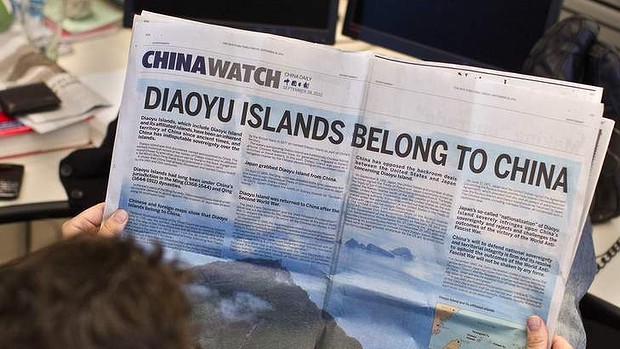
Territorial disputes have exacerbated these tensions significantly. China challenges Japanese control [of] more than seven square kilometers of islets — called the Senkaku Islands in Japan and the Diaoyu Islands in China — in the East China Sea. While the rival claims date back to the late 19th century, the latest flare-up, which has included widespread anti-Japanese demonstrations in China, was triggered in September 2012, when Japan’s government purchased three of the tiny islets from their private Japanese owner.
Then-Prime Minister Yoshihiko Noda said he decided to purchase the islands for the Japanese central government to prevent Tokyo Governor Shintaro Ishihara from purchasing them with municipal funds. Noda feared that Ishihara, who was well known for nationalist grandstanding, would try to occupy the islands or find other ways to use them to provoke China.
But Chinese officials viewed the move as proof that Japan was trying to disrupt the status quo. Some even claimed that Japan was trying to reverse the territorial outcome of World War II.
The full article can be found at: http://belfercenter.ksg.harvard.edu/publication/23707/return_of_japan_after_20_years_of_stagnation.html?breadcrumb=/experts/3/joseph_s_nye
(Photo Credit: Joe Klamar/Agence France-Presse — Getty Images)
(BGF) – BGF would like to introduce you to an article recently written by Helene Cooper which appeared in the New York Times on Saturday, February 22, 2014. The article discusses a recent, month-long U.S.-Japanese joint military exercise which focused on a set of islands in the East China Sea (called the Senkaku Islands in Japan and the Diaoyu Islands in China) that have been at the center of a territorial dispute between China and Japan. Click on this link (http://www.nytimes.com/2014/02/23/world/asia/in-japans-drill-with-the-us-a-message-for-beijing.html?hp&_r=1) to read the full article.
In Japan’s Drill With the U.S., a Message for Beijing
By Helene Cooper
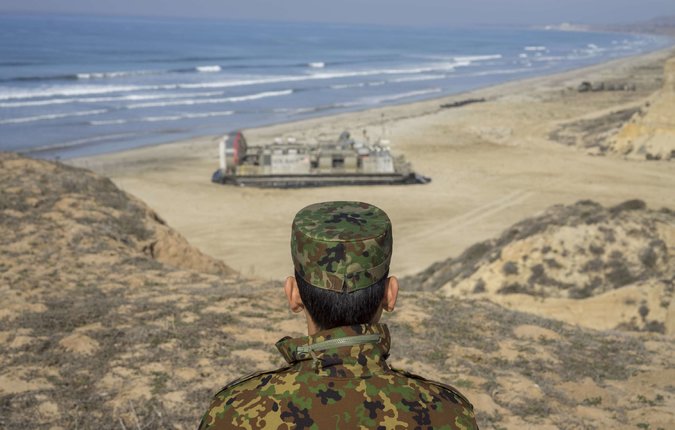
CAMP PENDLETON, Calif. — In the early morning along a barren stretch of beach here last week, Japanese soldiers and American Marines practiced how to invade and retake an island captured by hostile forces.
Memo to Beijing: Be forewarned.
One Marine sergeant yelled for his men, guns drawn, to push into the right building as they climbed through the window of an empty house meant to simulate a seaside dwelling. The Marines had poured out of four amphibious assault vehicles as another group of smaller inflatable boats carrying soldiers of Japan’s Western Army Infantry Regiment landed in an accompanying beachhead assault.
There were shouts in Japanese. There were shouts in Marine English. There was air support, from Huey and Cobra helicopters hovering above. Then larger Navy hovercrafts roared in, spitting up a spray of seawater before burping out Humvees and more Japanese troops, their faces blackened with camouflage paint.
American military officials, viewing the cooperative action of the former World War II enemies from a nearby hillside, insisted that the annual exercise, called Iron Fist, had nothing, nothing to do with last fall’s game of chicken between Tokyo and Beijing over islands that are largely piles of rocks in the East China Sea. But Lt. Col. John O’Neal, commander of the 15th Marine Expeditionary Unit, said that this year, the Japanese team came with “a new sense of purpose.”
“There are certainly current events that have added emphasis to this exercise,” he said, as Japanese soldiers made their way up into the rocks before disappearing into the hills above the beach. “Is there a heightened awareness? Yes.”
In the United States military, commanders are increasingly allied in alarm with Japan over China’s flexing of military muscle. Capt. James Fanell, director of intelligence and information operations with the United States Pacific Fleet, recently said in San Diego that China was training its forces to be capable of carrying out a “short, sharp” war with Japan in the East China Sea.
In a sign of continuing concern, Gen. Ray Odierno, the Army chief of staff, was in China over the weekend seeking to improve the limited relationship between the American and Chinese militaries, perhaps through exchanges of top officers. In recent years, the Pentagon has worried about the buildup of China’s military and a lack of transparency among its leaders.
The islands at the center of the dispute, known as the Senkaku in Japanese and the Diaoyu in Chinese, are a seven-hour boat ride from Japan, even farther from China, and thought to be surrounded by man-eating sharks. Japan has long administered the islands, but they are claimed by China and Taiwan.
Last year, China set off a trans-Pacific uproar when it declared that an “air defense identification zone” gave it the right to identify and possibly take military action against aircraft near the islands. Japan refused to recognize China’s claim, and the United States defied China by sending military planes into the zone unannounced — even as the Obama administration advised American commercial airlines to comply with China’s demand and notify Beijing in advance of flights through the area.
To continue reading: http://www.nytimes.com/2014/02/23/world/asia/in-japans-drill-with-the-us-a-message-for-beijing.html?hp&_r=1
(BGF) On February 19, 2014 the Boston Global Forum (BGF) hosted an event in which it announced a new and exciting initiative to recognize companies, brands, and retailers who are leading the way in worker safety and rights through the use of best practices. The event featured notable contributions from Governor Michael Dukakis, Chairman and co-founder of BGF, Arnold Zack, a renowned mediator, arbitrator and lecturer at Harvard Law School’s Labor and Worklife Program, Hedrick Smith, a Pulitzer Prize-winning journalist and former reporter and editor of the New York Times, and Marcy Goldstein-Gelb, the Executive Director of the Massachusetts Coalition for Occupational Safety and Health (MassCOSH).
Gov. Dukakis kicked-off the event with an announcement about BGF’s new initiative. As he noted, BGF is seeking to build off of the success of the November 18, 2013 online conference on worker safety and rights. It is BGF’s hope that the new initiative will result in continued discussion on ways in which companies, brands, and retailers can promote worker safety and rights. Additionally, Gov. Dukakis noted the potential that the initiative to recognize companies, brands, and retailers who are leading the way in worker safety and rights through the use of best practices could provide guidance or the necessary pressure for other brands and retailers, who are not currently utilizing best practices, to follow suit.
One of the key topics discussed throughout the event were the social and political causes for worker safety and rights issues. As Smith noted, the United States has undergone a transition from stakeholder capitalism, where CEOs answer to various stakeholders including their suppliers and customers, to shareholder capitalism, in which CEOs primarily answer to their shareholders. This focuses much more attention profits and reinforces a perspective that money and profits are the ultimate measuring stick against which everything else is measured. According to Smith, even when companies have corporate social responsibility (CSR) programs it will be interesting to see what companies are willing to do when worker safety issues impact their bottom-line.
Relatedly, political factors contribute greatly to worker safety issues. Zack pointed out that there are 250 different international conventions on worker safety and rights promulgated by the International Labor Organization. Despite the apparent abundance of international conventions, there are no international laws addressing the issue. Making matters worse, international organizations, such as the World Trade Organization and G20 focus primarily on issues such as protecting intellectual property and cracking-down on tax havens, rather than worker safety and rights. Finally, the U.S. labor laws are weakly written and enforced, which prompted Smith to raise the question of how the U.S. can compel other countries to put in place and enforce worker safety and rights legislation when it cannot manage to do that at home?
Even when social and political factors do not hinder efforts to promote worker safety and rights, issues of complexity and lack of transparency enter the picture. Goldstein-Gelb illustrated this point through a story about a man named Patrick who came to MassCOSH’s Worker Center. Patrick, Goldstein-Gelb said, worked on roofs in the Greater Boston area for an employer who refused to provide harnesses and other safety equipment. One day while working on a roof, Patrick fell and severely injured his back and legs. Yet, instead of taking Patrick directly to the hospital, Patrick’s employer took Patrick home, made Patrick change his clothes so it didn’t look like he was hurt on the job, and then made Patrick say he was hurt falling out of a tree while he was trying to save a cat. According to Goldstein-Gelb, these stories are not uncommon.
Goldstein-Gelb’s story about Patrick reflects similar conditions experienced in workplaces around the world. For example, double-bookkeeping is a major issue that disguises true occupational safety and health conditions, according to Zack. Even without outright deceit by employers who operate in unsafe conditions, the sheer complexity of global supply-chains and production makes tracking worker safety and rights nearly impossible. As Zack elaborated, Gap and Disney produced their products in more than 10-15,000 factories which are located in more than 50 different countries. Given this complexity it is extremely difficult to effectively monitor working conditions in each and every one of those factories. What is more, the cost of monitoring safety conditions on such a large-scale is prohibitive for many companies and governments, which brings us back to codes of conduct and CSR policies. Thus, not only will codes of conduct and CSR policies be costly for companies, which could impact their commitment to enforcing those codes and policies, they may simply just be too difficult to implement. Even if a handful of factories are promoting worker safety and rights, it is likely that another set of factories producing for the same country may very well be operating in unsafe conditions.
So, what can we do about all of this? One of the first things we need to accomplish, according to Goldstein-Gelb, is establish a workplace culture in which workers can speak up and raise concerns without having to fear that they will be penalized by their employers. The creation of unions and collective bargaining agreements can help in this respect by giving workers an outlet through which they can express their concerns. Ideally, this will create a scenario in which employers are willing speak up on behalf of state and federal workplace safety and health initiatives. These initiatives, according to Goldstein-Gelb, will benefit workers and employers as the workers will benefit from improvements in worker safety and rights, while employers will benefit from a level playing field in which all employers abide by the same standards.
Secondly, according to Smith, we can attempt to engrain CSR policies and the idea of corporate citizenship into the overall business culture through business schools and their programs. By exposing business students to the importance of CSR and corporate citizenship while they are still students, we can help create a wave of future business leaders who are committed to improving worker safety and rights.
nature of negotiations during the creation of Thirdly, we can push for greater transparency through supply-chain and factory audits, as well as the opening up of trade agreement negotiations. As Smith noted, the closed-door the Trans-Pacific Strategic Economic Partnership Agreement resulted in a lack of transparency and ultimately locked worker organizations out of the negotiations. Any efforts to create a great sense of transparency around worker safety and rights can help leverage improvements in factories or supply-chains where worker safety and rights are not being promoted.
Finally, the Boston Global Forum attempts to recognize those companies, brands, and retailers who are leading the way on worker safety and rights issues. As Goldstein-Gelb noted, deterrence is a critical component to the improvement of worker safety and rights. Through the recognition of the companies, brands, and retailers who are leading the way on worker safety and rights issues through the use and promotion of best practices, BGF hopes to provide guidance and an incentive for companies to adopt best practices. Additionally, this initiative has the potential to enhance information-sharing and transparency around the issues of worker safety and rights. With your continued support, we can continue to push worker safety and rights to the forefront of international discussion and continue to pressure for change.
Joseph S. Nye, Jr. is University Distinguished Service Professor and former Dean of Harvard’s Kennedy School of Government. He received his bachelor’s degree summa cum laude from Princeton University, did postgraduate work at Oxford University on a Rhodes Scholarship, and earned a Ph.D. in political science from Harvard. He has served as Assistant Secretary of Defense for International Security Affairs, Chair of the National Intelligence Council, and a Deputy Under Secretary of State. His most recent books include Soft Power, The Power Game: A Washington Novel, The Powers to Lead and Presidential Leadership and the Creation of the American Era. He is a fellow of the American Academy of Arts and Sciences, the British Academy, and the American Academy of Diplomacy. In a recent survey of international relations scholars, he was ranked as the most influential scholar on American foreign policy.
The Boston Global Forum is pleased to invite you to attend the next installment of the Boston Global Forum Distinguished Lecture Series featuring Professor Joseph Nye. The lecture will kick-off the Boston Global Forum’s topic of focus for 2014, which is the relationship between the United States, China, and Japan.
Professor Nye, who is University Distinguished Service Professor at Harvard, the former Dean of Harvard’s Kennedy School of Government, and a member of the Boston Global Forum Board of Thinkers, will discuss U.S., Chinese, and Japanese relations. In particular, Professor Nye will address topics such as the role of the United States in the 21st Century, the potential of a third world war and how to prevent it, China and Japan’s role and responsibility in ensuring international peace, and how soft power can apply to the world in the 21st century. Please attend at BostonGlobalForum.org and send your questions to [email protected].