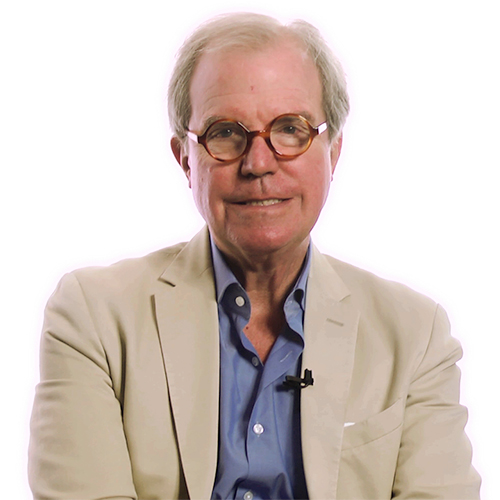
by Admin | Apr 13, 2013 | Board of Thinkers
Nicholas is founder and chairman of the One Laptop per Child non-profit association. He is currently on leave from MIT, where he was co-founder and director of the MIT Media Laboratory, and the Jerome B. Wiesner Professor of Media Technology.
A graduate of MIT, Nicholas was a pioneer in the field of computer-aided design, and has been a member of the MIT faculty since 1966. Conceived in 1980, the Media Laboratory opened its doors in 1985. He is also author of the 1995 best seller, Being Digital, which has been translated into more than 40 languages.
In the private sector, Nicholas serves on the board of directors for Motorola, Inc. and as general partner in a venture capital firm specializing in digital technologies for information and entertainment. He has provided start-up funds for more than 40 companies, including Wired magazine.
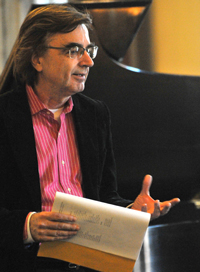
by Admin | Apr 13, 2013 | Members
Recognized by The Chicago Tribune as “a major talent,” composer Larry Bell has been awarded the Rome Prize, fellowships from the Guggenheim and Rockefeller Foundations, and the Charles Ives Award from the American Academy of Arts and Letters and grants from the American Music Center, the American Symphony Orchestra League, and Meet the Composer. He has been a resident composer at Bennington College, the Woodstock/Fringe Festival, the American Academy in Rome, the Virginia Center for the Creative Arts, the Bellagio Study and Conference Center, and the MacDowell Colony.
Bell’s music has been widely performed in the United States and abroad by such orchestras and ensembles as the Seattle Symphony, RAI Orchestra of Rome, Juilliard Philharmonia, Boston Modern Orchestra Project, Ruse Philharmonia (Bulgaria), Hopkins Symphony Orchestra, University of Miami Symphony, ÖENM (Salzburg Mozarteum), Boston Chamber Music Society, Speculum Musicae, St. Luke’s Chamber Ensemble, New York New Music Ensemble, North/South Consonance, and Music Today (NYC), as well as at festivals in Ravinia, Aspen, Valencia (Spain), Pontino (Italy), San Salvador, Russia (Moscow Autumn), and New Zealand. The Juilliard String Quartet premiered Bell’s first String Quartet, written when the composer was only twenty-one. Bell’s music has been commissioned and performed by a distinguished array of performers including Eric Bartlett, Joel Krosnick, Andres Diaz, Ayano Ninomiya, Sara Davis Buechner, D’Anna Fortunato, and conductors Jorge Mester, Gerard Schwarz, Gil Rose, and Benjamin Zander. He and his music have also been the subject of documentaries on National Public Radio’s “New Directions in Europe,” and Concertzender, Radio Amsterdam. Recordings of Bell’s works appear on North/South Recordings, Barking Dog Records, Vienna Modern Masters, New England Conservatory Recordings, and Albany Records.
As a pianist Bell performs his music regularly and has championed works by American composers. He has given recitals throughout the United States, as well as in Italy, Austria, and Japan. Bell is frequently heard on Boston’s WGBH-FM radio, has given their first live broadcast on the World Wide Web of his trio Mahler in Blue Light, and performed as soloist on CDs of his Piano Concerto and Piano Sonata and as an assisting artist on the recordings River of Ponds (the complete cello music), The Book of Moonlight (the complete violin music) and Larry Bell Vocal Music. Bell’s music is published by Casa Rustica Publication and Ione Press, a division of ECS Publishing. His work is licensed for performance through Broadcast Music, Inc (BMI) and he is represented by Rosalie Calabrese Management.
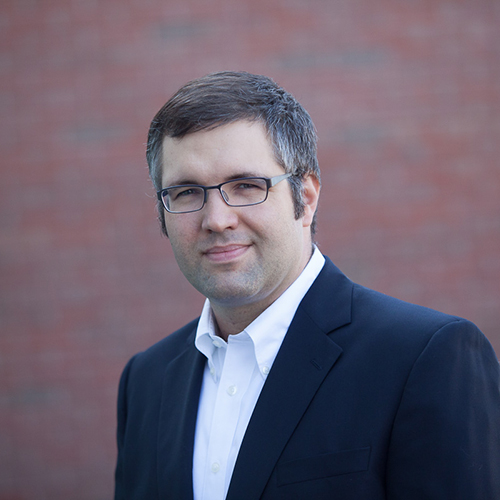
by Admin | Apr 13, 2013 | Board of Thinkers
Nicco Mele – entrepreneur, angel investor and consultant to Fortune 1000 companies – is one of America’s leading forecasters of business, politics, and culture in our fast-moving digital age. He is currently a Senior Fellow at USC Annenberg Center on Communication Leadership & Policy (CCLP) and the Director of Shorenstein Center at Harvard Kennedy School.
Nicco is an active angel investor in technology startups, including Plympton (a publishing startup), UMS (mobile), Cignify (data analytics), and iDiet (health care). He advises several startups, including Blueprint Robotics and Good Labs.
Most recently, Nicco Mele has served as Senior Vice President and Deputy Publisher of the Los Angeles Times. He focused on product, content, revenue, and audience development for all of the California News Group’s brands, including growing existing digital products and services, identifying possible acquisitions, developing new business opportunities and launching new products.
Nicco’s first book, The End of Big: How The Internet Makes David The New Goliath, was published by St. Martin’s Press on April 23, 2013. In it, he explores the consequences of living in a socially-connected society, drawing upon his years of experience as an innovator in politics and technology. The book was named by Amazon as one of the “Best Books of the Year So Far 2013” and has been translated into Japanese andKorean.
From 2009-2014, Mele served on the faculty of the Harvard Kennedy School teaching graduate-level classes on the Internet and politics. In the spring of 2009, Mele was the Visiting Edward R. Murrow Lecturer at the Shorenstein Center on Media, Politics and Public Policy, and in the fall of 2008 he was a Fellow at the Institute of Politics at Harvard University. Prior to joining the Harvard Kennedy School, Mele taught at theJohns Hopkins Graduate School of Communications.
Nicco co-founded Echo & Co., a digital consulting firm with offices in Boston and Washington, DC. Echo & Co. aids clients who are facing, and being overtaken by, overwhelming technological and social change. In addition to Echo’s strategic consulting practice, our design and technical teams have ten years of experience designing digital experiences and executing technical projects. We are recognized experts in Drupal development.
Born to Foreign Service parents, Nicco spent his early years in Asia and Africa before graduating from the College of William and Mary in Virginia with a bachelor’s degree in government. He then worked for several high-profile advocacy organizations where he pioneered the use of social media as a galvanizing force for fundraising. As webmaster for Governor Howard Dean’s 2004 presidential bid, Nicco and the campaign team popularized the use of technology and social media that revolutionized political fundraising and reshaped American politics. Subsequently, he co-founded Echo & Co.
Since his early days as one of Esquire Magazine’s “Best and Brightest” in America, Nicco has been a sought-after innovator, media commentator, and speaker. He serves on a number of private and non-profit boards, including the Nieman Foundation for Journalism at Harvard and the Shorenstein Center on Media, Politics and Public Policy. Nicco co-founded theMassachusetts Poetry Festival, and in 2014 he co-produced a documentary about the poet W.S. Merwin, “Even Though The Whole World Is Burning”.
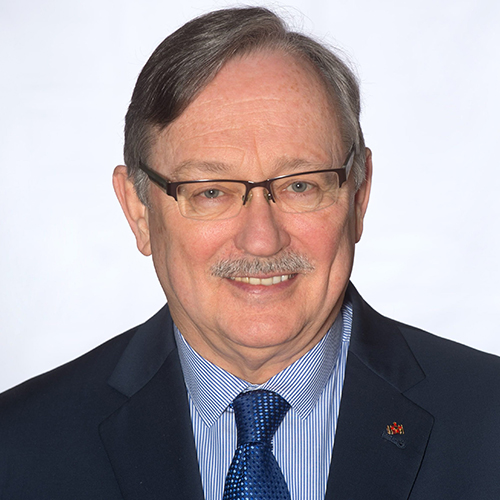
by Admin | Apr 13, 2013 | Board of Thinkers
J.D. Bindenagel, Vice President for Community, Government, and International Affairs, is responsible for deepening connections between DePaul’s Chicago and overseas campuses and communities. These local, global and government relationships support DePaul’s mission to prepare students, not only to better understand, but also to influence and shape the world in which they live. A former ambassador and 28-year veteran of the U.S. diplomatic corps, Bindenagel brings extensive experience in governmental and international affairs to his new post. Prior to joining DePaul, he was vice president for program at the Chicago Council on Foreign Relations. President Bill Clinton appointed him in 1999 as U.S. ambassador and special envoy for Holocaust issues. As ambassador, he provided policy, diplomatic and negotiating advice to the Secretary of State on World War II-era forced labor, insurance, art, property restitution, and Holocaust education and remembrance. He played an instrumental role in the negotiations that led to agreements in 2001 securing $6 billion in payments from Germany, Austria and France for Holocaust and other Nazi victims. A U.S. Army veteran, he served the State Department in Washington, D.C., and Germany in various capacities from 1975 to 2003. He was director for Central European Affairs in the Bureau of European and Canadian Affairs at the State Department from 1992 to 1994 and U.S. charge d’affaires and deputy chief of mission in Bonn, Germany, from 1994 to 1997. He was U.S. deputy chief of mission at the American Embassy in Berlin, East Germany, at the time of the fall of the Berlin Wall in 1989 and helped negotiate the reunification of Germany. Other Foreign Service assignments included head of the embassy political affairs unit in Bonn in the mid-1980s, when he helped pave the way for the deployment of U.S. Pershing missiles on German soil. Bindenagel was special U.S. negotiator for “Conflict Diamonds,” leading a U.S. government interagency group to create a certification process to prevent proceeds from sales of illicit rough “conflict” diamonds from financing insurrections against legitimate governments in Africa. He also was an American Political Science Association fellow with Congressman Lee H. Hamilton (1987-1988) and was director, Business-Government Programs for Rockwell International (1991-1992). Bindenagel received the State Department’s Distinguished Service Award in 2001, the Commander’s Cross of the Federal Order of Merit from the President of Germany in 2001, and the Presidential Meritorious Service Award from President George W. Bush in 2002. He holds a bachelor’s degree in political science and a master’s degree in public administration from the University of Illinois at Urbana-Champaign.
by Admin | Apr 13, 2013 | Members
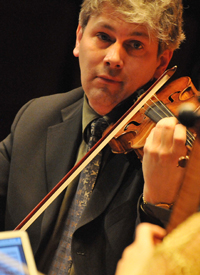
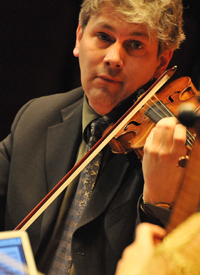
Violinist Nicholas Kitchen, a native of Durham, N.C., has been active as a soloist and chamber musician since making his first professional appearances at age 12. Since then, his performances have taken him to more than 20 countries, where he has been presented in such halls as the Concertgebouw in Amsterdam, the Opera Bastille in Paris, Suntory Hall in Tokyo, Wigmore Hall in London, and Carnegie Hall and Jordan Hall in the U.S.
His solo appearances have included collaborations with such conductors as Michael Tilson-Thomas, Otto-Werner Mueller, and Enrique Batiz.
Since 1989, Kitchen has performed extensively as first violinist of the Borromeo String Quartet. He has participated in the Caramoor, Spoleto, Vancouver, and Orlando festivals, among others.
Among Kitchen’s many awards, he has received the Albert Schweitzer Medallion for Artistry and was named a Presidential Scholar in the Arts.
His interest in contemporary music has resulted in his premiering Stephen Jaffe’s Violin Concerto with the Greensboro Symphony, and working as an artist member of “Music from the Copland House.” Kitchen is Artistic Director of the Cape & Islands Chamber Music Festival, and has the honor of playing on the A.J. Fletcher Stradivarius, a violin purchased for long-term loan to him by the A.J. Fletcher Foundation of Raleigh, NC.
by Admin | Apr 13, 2013 | Members
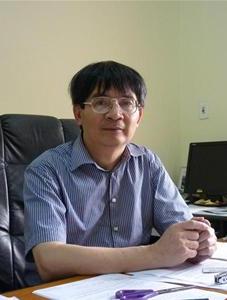
Ngo Viet Trung is the Vietnamese mathematician. He currently is the Head of Institute of Mathematics at Viet Nam Academy of Science and Technology (VAST); and is member of the Third World Academy of Sciences (TWAS).
He came to Germany to study the maths at 16, and holds Master of Science at Martin-Luther University, Halle, Germany in 1974; Ph. D. in 1978, and Dr. Sc. in 1983.
His book “Commutative Algebra” was published in 1994 (with A. Simis and G. Valla) and he has published many articles on international specialist journals.
by Admin | Apr 13, 2013 | Members
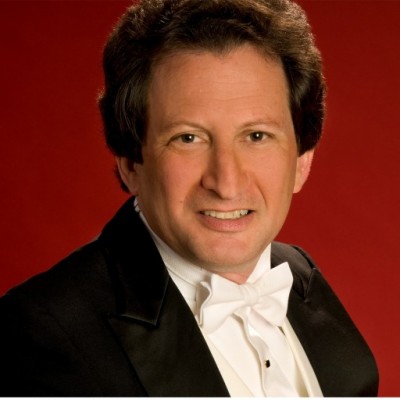
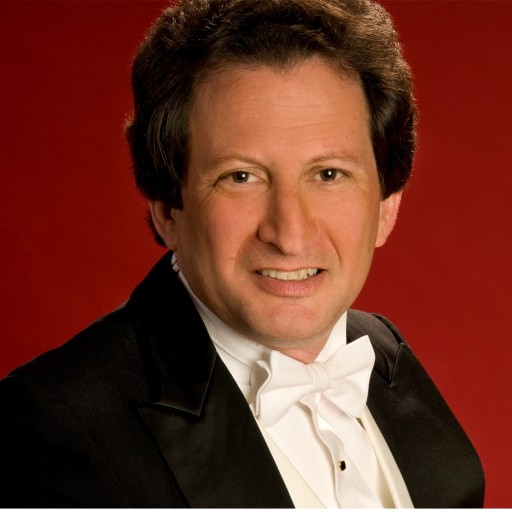
Steven Lipsitt is in his twelfth season as Music Director of the Boston Classical Orchestra. The Boston Globe has observed: “The concerts have a distinct profile, Lipsitt’s and no one else’s. He has a knack.”
First Prize Laureate of the inaugural Dimitris Mitropoulos International Conducting Competition in November 1996, Steven Lipsitt made his Russian debut with the St. Petersburg Philharmonic in 1997, and is a frequent guest conductor of orchestras in the United States and abroad, including the Athens Camerata, the West Czech Symphonic Orchestra, the State Symphony Orchestra of São Paulo (Brasil), the Thunder Bay Symphony Orchestra (Canada), the St. Petersburg Camerata of the Hermitage Museum, the Chinese National Opera Orchestra, the Colorado Symphony, the North Carolina Symphony, the San Diego Chamber Orchestra, the Spokane Symphony Orchestra, and the Hudson Valley Philharmonic. He has served as cover conductor for the symphony orchestras of St. Louis, Toronto, and Boston. Foreign critics have hailed his “exalted and well-structured performances” (Le Monde de la Musique, Paris) and praised his “technically and expressively balanced interpretations” (Adesmeftos Typos, Athens).
As a conductor of opera, ballet, and music theater, Steven Lipsitt has collaborated with Scottish Opera, Boston Lyric Opera, English National Opera, Boston Ballet, Saint Louis Ballet, the Boston Music Theater Project, the Boston Conservatory Opera Theatre, and Opera at Longy. He has worked with directors Robert Carsen, James Hammerstein, and Gerald Gutierrez, and choreographers Peter Martins and Daniel Pelzig. He conducted twenty performances of Carousel at the Kennedy Center Opera House with Broadway stars Faith Prince and Tom Wopat. His concert performance of scenes from Boris Godunov was called “an astonishingly vivid account” by The Globe’s Richard Buell, who wrote: “Steven Lipsitt’s conducting showed real mastery.” In 1994 his production of Viktor Ullmann’s Der Kaiser von Atlantis was called “compelling” by The New York Times, while The Globe’s Richard Dyer observed: “a razor-sharp intelligence was balanced by a generosity of spirit…Steven Lipsitt conducted with an unusual degree of skill and caring.” Dyer named this production Boston’s “Best Opera of 1994″ (tied with Robert Spano’s Rigoletto at Boston Lyric Opera).
Also dedicated to the training of young musicians, Steven Lipsitt has served on the conducting faculties of the Tanglewood Institute, New England Conservatory, the Hartt School of Music, Boston Conservatory, and Boston University, and has prepared student orchestras for Kurt Masur, Christoph von Dohnányi, Leon Kirchner, Luciano Berio, Stanislaw Skrowaczewski, Sergiu Comissiona, and Gunther Schuller. He holds bachelor’s and master’s degrees from Yale University, where he was the recipient of awards for exceptional promise and excellence in conducting. His principal conducting studies were with Otto-Werner Mueller at Yale, and in master classes with Herbert Blomstedt, Helmuth Rilling, Charles Bruck at the Pierre Monteux School, and Gustav Meier at Tanglewood. His earlier training included clarinet studies with Boston Symphony Orchestra member Pasquale Cardillo and Yale’s Keith Wilson, vocal studies with Joan Heller and Phyllis Curtin, and composition studies with Martin Bresnick and Jacob Druckman.
by Admin | Apr 13, 2013 | Editorial Board
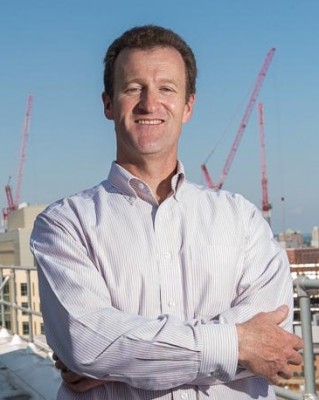
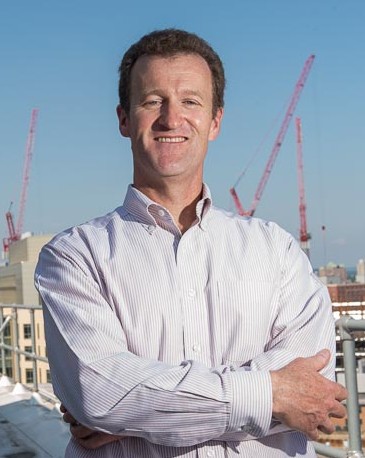
Charles Jennings joined the McGovern Institute of MIT in 2006, as director of the newly established McGovern Institute Neurotechnology (MINT) program. The goal of this program is to support collaborations between neuroscientists and researchers from other disciplines within and beyond MIT, with a view to developing new platform technologies for brain research. In addition to the MINT Program, he oversees communications for the McGovern Institute.
Jennings has a research background in developmental neuroscience. He obtained a PhD from University College London and was a postdoctoral researcher at Harvard and MIT. From 1993 to 2004 he was an editor with the Nature journals, where he founded Nature Neuroscience, one of the leading journals in its field. From 2004-2005 he was the first executive director of Harvard Stem Cell Institute, and he has also worked as a private consultant to academia and industry. From 2006-2008, he served as a member of the advisory committee for the State of Connecticut’s Stem Cell Research Program.
by Admin | Apr 13, 2013 | Members
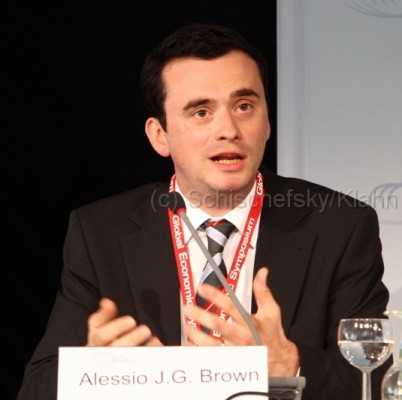
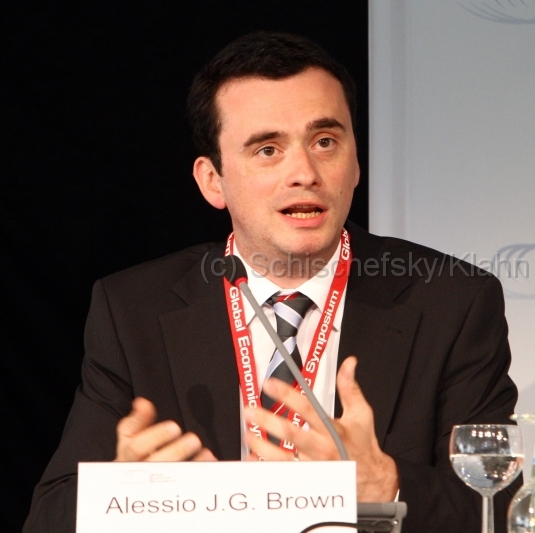
Dr. Alessio J. G. Brown is currently executive director of c(GES) since September 2007, and is visiting researcher at Kiel Institute for the World Economy since January 2011. Dr. Brown’s research focuses on employment incentives and employment policies.
Between 2004 and 2010, he was economist at the Kiel Institute for the World Economy. He was Head of the Research Area Reforming the Welfare Society from 2008 to 2010. Between 2007 to 2010, he was the senior advisor to the President and Kiel Institute for the World Economy.
Dr. Brown is known for his expertise in reforming the welfare society and labour economics. He has published many articles on employment policies, most recently “Comparing the effectiveness of employement subsidies” (2011), and many more in leading journals such as IZA Discussion Paper, Kiel Working Paper, European Journal of Political Economy.
Dr. Brown was born in Rome, Italy, hold Ph.D in Quantitative Economics at the Christian-Albrechts-University Kiel in 2009; Diploma in Business Administration at University of Passau (2003); Bachelor of Commerce at University College Dublin (1999).