by Editor | Feb 25, 2022 | AIWS City and Rebuilding Ukraine, News
24 February 2022
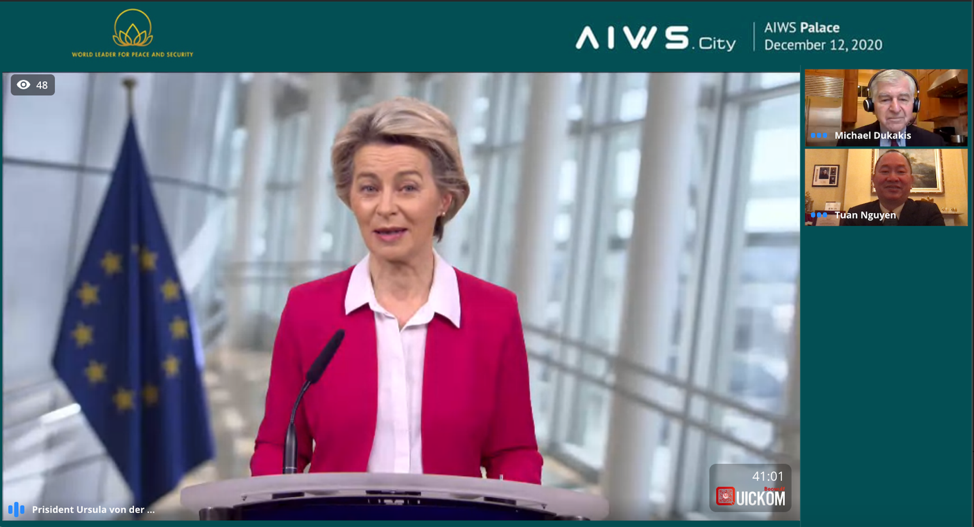
Early this morning, Russian troops invaded Ukraine, a free and sovereign country. Once again, in the centre of Europe, innocent women, men and children are dying or fear for their lives. We condemn this barbaric attack, and the cynical arguments to justify it.
It is President Putin, who is bringing war back to Europe. In these dark hours, the European Union and its people stand by Ukraine and its people. We are facing an unprecedented act of aggression by the Russian leadership against a sovereign, independent country. Russia’s target is not only Donbas, the target is not only Ukraine, the target is the stability in Europe and the whole of the international peace order. And we will hold President Putin accountable for that.
Later today, we will present a package of massive and targeted sanctions, to European Leaders for approval. With this package, we will target strategic sectors of the Russian economy by blocking their access to technologies and markets that are key for Russia. We will weaken Russia’s economic base and its capacity to modernise. And in addition, we will freeze Russian assets in the European Union and stop the access of Russian banks to European financial markets. Like with the first package of sanctions, we are closely aligned with our partners and allies – the United States, the United Kingdom, Canada, but also, for example, Japan and Australia. These sanctions are designed to take a heavy toll on the Kremlin’s interests and their ability to finance war.
And we know that millions of Russians do not want war. President Putin is trying to turn back the clock to the times of the Russian empire. But in doing so, he is putting at risk the future of the Russian people. I call on Russia to immediately stop the violence and to withdraw its troops from Ukraine’s territory. We will not let President Putin tear down the security architecture that has given Europe peace and stability over many decades. We will not allow President Putin to replace the rule of law by the rule of force and ruthlessness. He should not underestimate the resolve and strength of our democracies.
History has proven that societies and alliances built on trust and freedom are resilient and successful. And that is exactly what the autocrats fear. The European Union stands with Ukraine and its people. We will continue to support them. Ukraine will prevail.
https://ec.europa.eu/commission/presscorner/detail/en/STATEMENT_22_1322

by Editor | Feb 21, 2022 | Global Alliance for Digital Governance, Global Law and Accord on AI and Digital, News
At the Policy Dialog 2019 “Digital Transformation and the Future of Democracy organized by World Leadership Alliance-Club de Madrid”, Boston Global Forum organized a ceremony to present the World Leader for Peace and Security Award 2019 to President of Club de Madrid, Vaira Vike-Freiberga, President of Latvia 1999-2007.
AI World Society was introduced at this significant Policy Dialog.
The backdrop of the ceremony to honor World Leader for Peace and Security Award 2019 was designed by Club de Madrid. It is displayed at the ceremony in the evening Oct 21, 2019.
This backdrop is a historical object of AIWS. It is introduced at the History of AI House at AIWS City as its digital treasure.
As President of the Republic of Latvia from 1999 to 2007, Dr. Vike-Freiberga played a key role in Latvia’s NATO membership and its ascension to the European Union, which the country joined in 2004. She is a Board Member of the History of AI at AIWS.net, Co-founder of AIWS City, Distinguished Contributor to the Book “Remaking the World – Toward an Age of Global Enlightenment”.
During her presidency, Dr. Vaira Vike-Freiberga was a Member of the Council of Women World Leaders and, in April 2005, was appointed by Secretary-General Kofi Annan to his team of global political leaders helping to promote a comprehensive UN reform agenda.
She was the only female candidate for the first President of the European Council and between 2008 and 2010 she was Vice Chair of the European Council’s Reflection Group on the Future of Europe 2020-2030. In 2009 Dr. Vike-Freiberga chaired the European Commission’s European Research Council Review Panel, and is a member of the Commission’s European Research Council Taskforce on the ERC’s Future.
A Founding Member of the Club de Madrid, Dr. Vike-Freiberga was Mission Leader of the Club’s 2008 high-level mission to Uganda and its 2009 high-level mission to Colombia. She joined the Club de Madrid’s Assessment mission to Kyrgyzstan in 2010 and was a Member of the Club’s Taskforce on Political Leadership for Democratic Transition in Kyrgyzstan. Dr Vike-Freiberga served as the President of the Club de Madrid from 2014 – 2019.

by Editor | Feb 21, 2022 | News, World Leaders in AIWS Award Updates
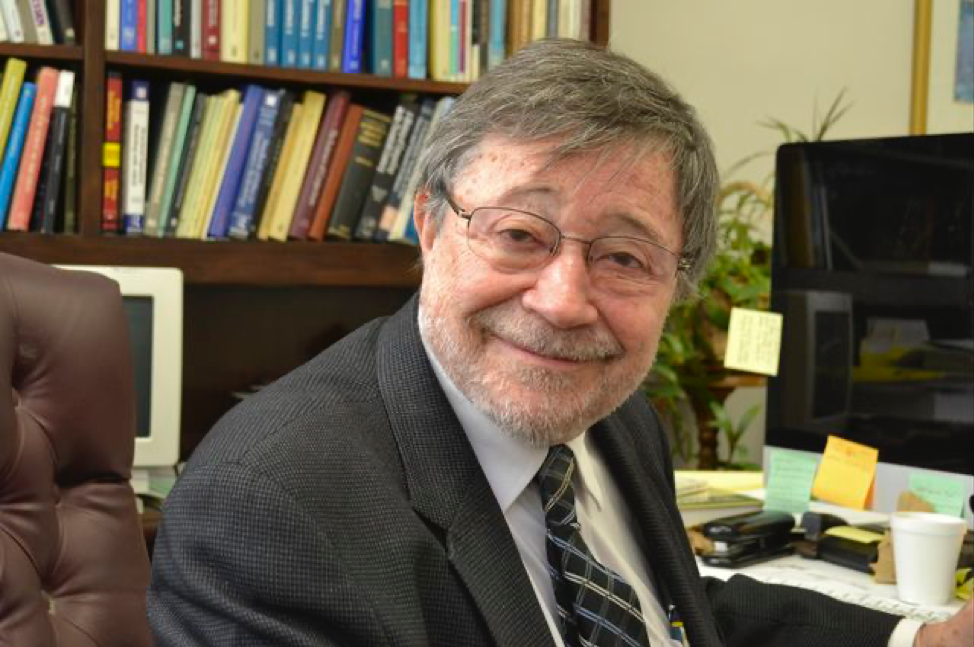
Judea Pearl is the recipient of the fourteenth edition of the ICT Frontiers of Knowledge Award from the Spanish bank group BBVA for “providing a modern foundation to Artificial Intelligence”. The award includes a prize of €400,000 (about $457,000).
Artificial Intelligence is again the focus for the latest award. According to the selection committee, Judea Pearl, who is a Professor of Computer Science and Director of the Cognitive Systems Laboratory at the University of California, Los Angeles (UCLA):
“made conceptual mathematical and formal contributions that enable AI programs to effectively interiorize two of the key resources we humans use to interpret the world and arrive at decisions: probability and causality. With the formal language he developed, these vital decision-making processes can be encoded into computer programs.”
Professor Judea Pearl was honored as the World Leader in AIWS 2020. He is a mentor of AIWS.net and member on the Board of the History of AI at AIWS.net
AIWS warmly congratulates Professor Judea Pearl and grateful for his significant contributions to AIWS and Artificial Intelligence.

by Editor | Feb 21, 2022 | Event Updates
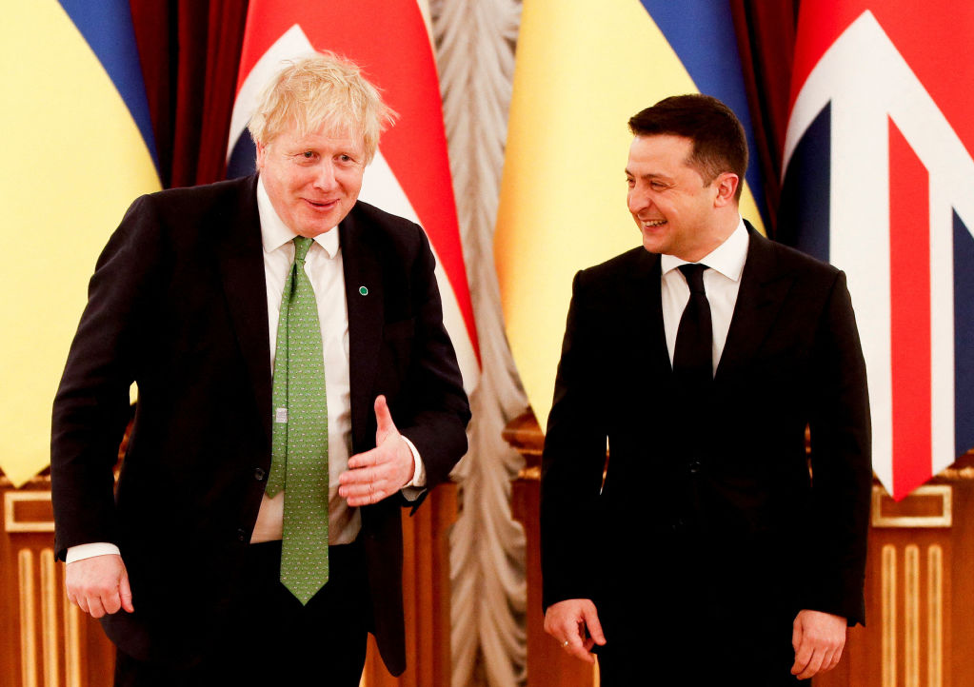
Leaders of Boston Global Forum (BGF) and the Nizami Ganjavi International Center (NGIC) are deeply concerned about the Russia – Ukraine Crisis. They discussed to find out solutions to avoid war.
Leaders of BGF and NGIC will discuss at events organized by NGIC:
“STRATEGIC MEETING ON UKRAINE-RUSSIA CRISIS”
WEDNESDAY, 23 February 2022
9 AM – Eastern Standard Time (EST) / 6 PM – Azerbaijan Standard Time (AZT)
Participants:
Rovshan Muradov, Secretary-General, NGIC
Susan Elliott, Amb. President and CEO, National Committee on American Foreign Policy
Tuan Nguyen, CEO, Boston Global Forum
Symeon Tsomokos, President, Delphi Economic Forum
Dawn Nakagawa, Executive Vice-President, Berggruen Institute
Garry Jacobs, President & CEO, World Academy of Art & Science
Francis O’Donnell, Amb. (ret.), Institute of International & European Affairs (Ireland)
Amitav Banerji, Project Director, Global Leadership Forum
Tanya Guy, InterAction Council
Selim Yenel, Amb. President of the Global Relations Forum
Eka Tkeshelashvili, Deputy Prime Minister of Georgia 2010-2012, Minister of Foreign Affairs of Georgia 2008
Zlatko Lagumdzija, Prime Minister of Bosnia and Herzegovina 2001-2002, deputy Prime Minister 2012-2015
Thomas Axworthy, Secretary-General InterAction Council
Kateryna Yushchenko, First Lady of Ukraine 2005-2010
Robert Cekuta, former US Ambassador to Azerbaijan
“BUILDING BACK THE BROKEN EUROPEAN SECURITY”
FRIDAY, 25 February 2022
9 AM – Eastern Standard Time (EST) / 6 PM – Azerbaijan Standard Time (AZT)
Moderators:
Eka Tkeshelashvili, deputy Prime Minister of Georgia 2010-2012
Zlatko Lagumdzija, Prime Minister of Bosnia and Herzegovina 2001-2002, deputy Prime Minister 2012-2015
Speakers:
Iryna Vereshchuk, deputy Prime Minister of Ukraine and Minister for Reintegration of Temporary Occupied Territories
Volodymyr Havrylov, deputy Minister of Defense of Ukraine
Emine Dzhaparova, First Deputy Foreign Minister of Ukraine (TBC)
Vaira Vike-Freiberga, President of Latvia 1999-2007, Co-Chair NGIC
Rosen Plevneliev, President of Bulgaria 2012-2017
Volkan Bozkir, 75th President of the United Nations General Assembly, Minister for European
Union Affairs of Turkey 2015-2016
Viktor Yushchenko, President of Ukraine 2005-2010
Tzipi Livni, Minister of Foreign Affairs of Israel 2006-2009
Valdis Zatlers, President of Latvia 2007-2011
Susan Elliott, President National Committee on American Foreign Policy
Aleksandr Kwasniewski, President of Poland (TBC)
Kateryna Yushchenko, First Lady of Ukraine 2005-2010, President Ukraine 3000 Foundation
Andris Piebalgs, European Commissioner for Development 2010-2014, European
Commissioner for Energy 2004-2010 (TBC)
Ana Palacio, Minister of Foreign Affairs of Spain 2002-2004
Participants:
Farida Allaghi, former Libyan Ambassador to EU
Mats Karlsson, Vice-President of the World Bank 1999-2002
Francis O’Donnel, Amb. (ret., SMOM) and UN Resident Coordinator in Ukraine 2004-2009
Brian Mefford, Non-Resident Fellow Atlantic Council
Amitav Banerji, Project Director, Global Leadership Foundation
Nguyen Anh Tuan, CEO of the Boston Global Forum


by Editor | Feb 21, 2022 | News, Publications
 02/22/2022
We, the undersigned Former Leaders and civil society representatives of countries of the European Union, the Balkans, Eastern Europe and Middle East wish to express our grave concern about the rapidly growing threat of large-scale armed conflict that is threatening Ukraine’s sovereignty, political independence, unity, and territorial integrity.
The ongoing, almost eight-year-long interstate conflict — which has resulted in the illegal occupation and attempted annexation of vast parts of Ukraine’s territory — poses a serious challenge to the international security order.
The conflict’s humanitarian cost has also been distressing. The military hostilities alone took the lives of 14 000, injured over 25 thousand, and displaced more than 1.4 million persons from their homes. Massive and systemic human rights violations hurt the lives of Ukrainians remaining in the occupied territories.
Regretfully, until now, the international community has not been able to resolve this conflict through the available mechanisms of international law. It is especially worrying that the international organizations entrusted with maintaining world peace have not been able to enforce the rules-based international order essential to peace, security, and prosperity.
As a result, we observe further destabilization in the region, growing security risks for the entire European continent, and new threats to world peace.
We are sounding the alarm to prevent an irreversible destructive scenario from unfolding. We must take lessons from the bitter experiences of the twentieth century and dedicate all our efforts to reversing a march towards conflict, and support a rules-based international multilateralism that reinforces human rights and national sovereignty and territorial integrity as stated in the UN charter.
Today, the world is not blind. We can discern the truth from lies. We have the wisdom to see the catastrophic consequences of the path of destruction for our future. And we must be determined to remove modern-day threats to world peace.
Ukraine, a founding member of the United Nations, and one of the greatest contributors to world peace as a country that voluntarily gave up the world’s third-biggest nuclear arsenal, must receive full support from the international community.
To demonstrate their commitment to peace, security, and justice, our governments must take determined and timely action to restore peace and security in Ukraine and defend a rules based international order based on the principle of equality of sovereign nations, denouncing spheres of influence, and upholding human rights as a foundation of peace and stability.
Our governments must promote conditions under which the fundamental principles of the international order are maintained. We have the tools, and we must use them. Assertive enforcement of international law can be a formidable deterrent to any aggressive actors pursuing malicious agendas in an effort to reshape our world.
We encourage the leaders of the United States, the European Union, G20 countries to form a united front at a time of an unprecedented challenge to global peace and security.
We also call on the international community to provide material, financial, and military assistance to the government of Ukraine to help it to adequately defend itself.
All our nation’s stand to lose from any dismantling or weakening of the international order. If we want the world to prosper, and to enjoy global security, we must reject any policies undermining the very foundation of modern rules based international order. We must find the will and courage to stand up against any violations of international law. By ensuring Ukraine’s peace and stability and defending its territorial integrity our governments would also be protecting the peace security of the entire European continent and beyond. It would help to make the world safer for everyone.
Signed:
Bertie Ahern, Prime Minister of Ireland 1997-2008
Abdulaziz Altwaijri, former Director General of ISESCO
Michael Dukakis, Governor of Massachusetts (1975-1979, 1983-1991)
Jan Fisher, Prime Minister of the Czech Republic 2009-2010
Chiril Gaburici, Prime Minister of Moldova 2015
Toomas Hendrik Ilves, President of Estonia 2006-2016
Kerry Kennedy, President Robert F. Kennedy Human Rights
Mats Karlsson, Vice-President of the World Bank 1999-2002
Aleksandr Kwasniewski, President of Poland 1995-2005
Leonid Kuchma, President of Ukraine 1994-2005
Andrius Kubilius, Prime Minister of Lithuania 2008-2012
Zlatko Lagumdzija, Prime Minister of Bosnia and Herzegovina 2001-2002, deputy Prime Minister 2012-2015
Igor Luksic, Prime Minister of Montenegro 2010-2012
Rexhep Meidani, President of Albania 1997-2002
Rovshan Muradov, Secretary General NGIC
Shuvaloy Mujumdar, Foreign Policy Program Director & Munk Senior Fellow, Macdonald Laurier Institute, Canada
Francis O’Donnell, Amb. (ret.,SMOM) & UN Resident Coordinator in Ukraine 2004-2009
Rosen Plevneliev, President of Bulgaria 2012-2017
Petre Roman, Prime Minister of Romania 1989-1991, Speaker of the Parliament 1996- 1999, Minister of Foreign Affairs 1999-2000
Paul Revay, former Director Trilateral Europe, Trustee Friends of Europe, Paris
Petar Stoyanov, President of Bulgaria 1997-2002
Rosalia Arteago Serrano, President of Ecuador 1997
Laimdota Straujuma, Prime Minister of Latvia 2014-2016
Ismail Serageldin, Vice-President of the World Bank 1992-2000
Eka Tkeshelashvili, deputy Prime Minister of Georgia
Nguyen Anh Tuan, CEO of Boston Global Forum
Vaira Vike-Freiberga, President of Latvia 1999-2007
Kateryna Yushchenko, First Lady of Ukraine 2005-2010
Viktor Yushchenko, President of Ukraine 2005-2010
Valdis Zatlers, President of Latvia 2007-2011
The Will and Courage to Stand Up to a Modern-Day Threat to World Peace
by Editor | Feb 13, 2022 | AIWS City, Event Updates, News
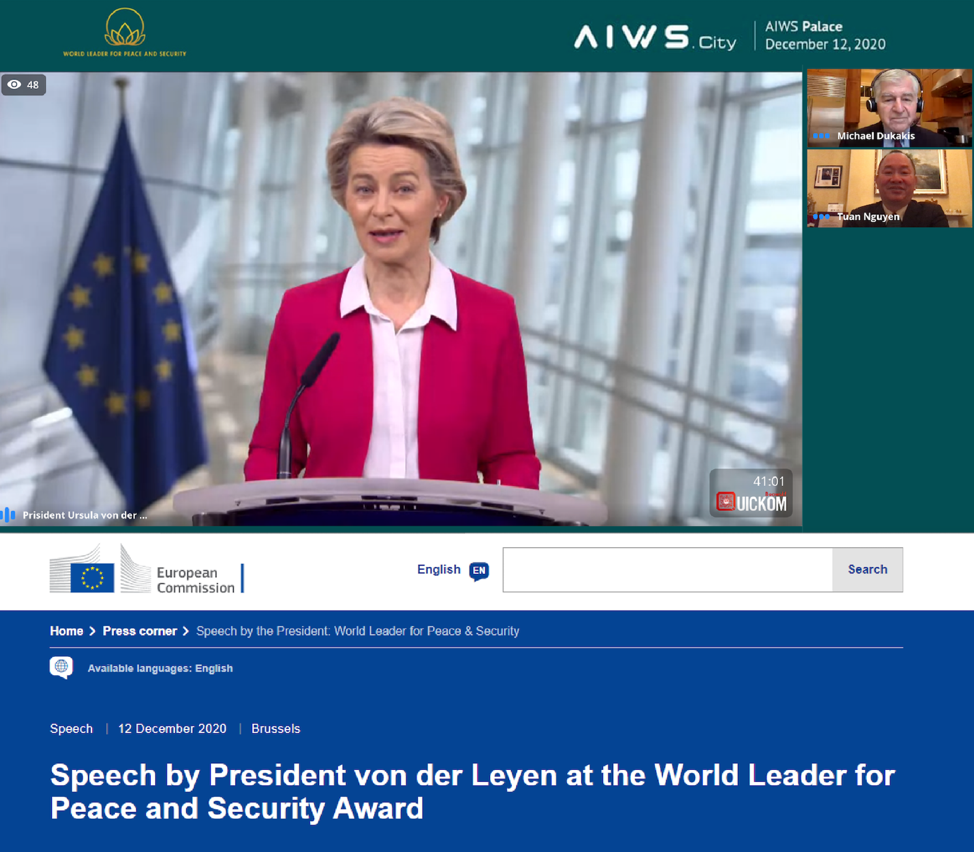
The President of European Commission, Ursula von der Leyen, presented a special speech to receive World Leader for Peace and Security Award 2020. In this speech, she highlighted:
“It is such an honour to be here with you today. At the Michael Dukakis Institute for Leadership and Innovation, you are at the forefront of research and debate. And you definitely work on some of the world’s most pressing issues. You drive the discussion on digital policy and how a human-centric approach on AI could look like. This is an issue whose importance simply cannot be overestimated. Today I would like to speak about our European perspective.”
“I am so honoured to receive this award today. For me this is also a very personal starting point for a great new beginning between the U.S. and Europe. A partnership that has been tested time and again. A partnership that today is needed more than ever, not at least in the digital world. The way we approach algorithms and AI will define the world we live in.
This is why the EU proposes to start work on a Transatlantic AI Agreement. We want to set a blueprint for regional and global standards aligned with our values: Human rights, and pluralism, inclusion and the protection of privacy. A transatlantic dialogue on the responsibility of online platforms!”
AIWS City considers “Speech by President von der Leyen at the World Leader for Peace and Security Award” as its very valuable digital asset and treasure.

by Editor | Feb 13, 2022 | AIWS City and Rebuilding Ukraine, News
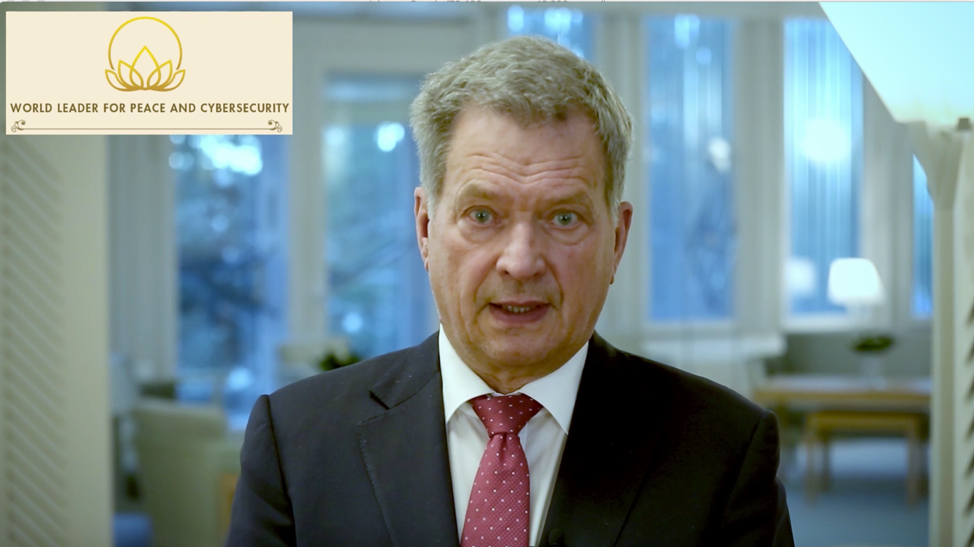
On Boston,12/02/2022, Governor Michael Dukakis Co-founder and Chairman of the Boston Global Forum (BGF), Chairman of the Michael Dukakis Institute (MDI) and Nguyen Anh Tuan, Co-founder and CEO of BGF, Director of MDI send the letter to leaders who honored World Leader for Peace and Security Award:
Prime Minister Shinzo Abe, Chancellor Angela Merkel, UN Secretary General Ban Ki-moon, President Toomas Hendrik Ilves, President Sauli Niinisto, President Vaira Vike-Freiberga, President Ursula von de Leyen, Speaker Andreas Norlen to dícuss solutions for peace and security between Russia and Ukraine.
Welcoming the efforts of the leaders honored by the BGF World Leader for Peace and Security Award over the years, who have continued to make great efforts to contribute to Peace and Security in the world, especially the efforts of President Ursula von der Leyen and President Sauli Niinisto to find a peaceful and secure solution and reduce tensions between Russia and Ukraine.
Tensions between Russia and Ukraine continue to increase, the risk of war.
The BGF and MDI leaders call and would like to get responses of recipients of World Leaders for Peace and Security Award call to avoid war between Russia and Ukraine and discuss how tensions between the two countries can be resolved.

by Editor | Feb 13, 2022 | Global Alliance for Digital Governance, News, World Leaders in AIWS Award Updates
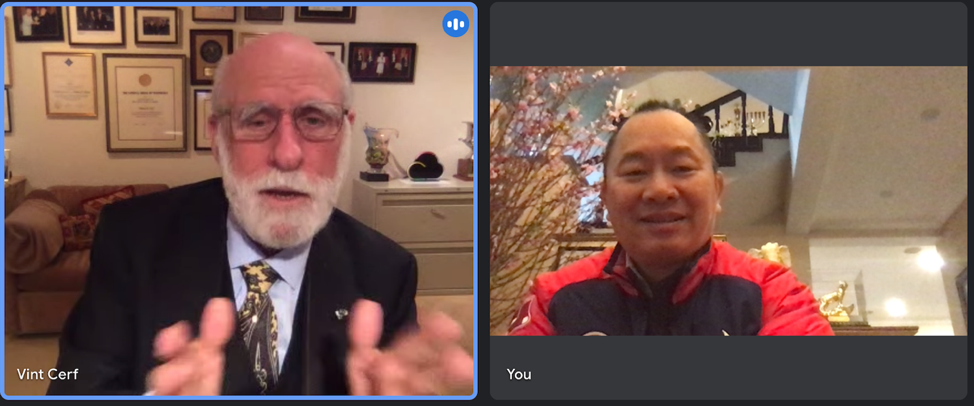
In his trip to Vietnam to speak at the Policy Dialog “Building the Age of Global Enlightenment”, Vint Cerf, the Father of Internet, Vice President and Chief Internet Evangelist of Google will attend the ceremony to launching the Vint Cerf House at NovaWorld Phan Thiet in early September, 2022.
He will present a distinguished speech and lecture at this event.
The Vint Cerf House will include:
- Welcoming Video of Vint Cerf
- Vint Cerf Library
- The Age of Global Enlightenment Room for High Level Meetings
- AIWS City and Google Room
Michael Dukakis Institute will directly manage the Vint Cerf House. There is also a Virtual Honored Vint Cerf House at AIWS City as digital treasure of the AIWS City.
Vint Cerf was honored with the World Leader in AIWS Award 2019; he is a co-founder and Member of Board of Leaders of AIWS City and a distinguished contributor to Remaking the World – Toward an Age of Global Enlightenment.

by Editor | Feb 13, 2022 | Global Alliance for Digital Governance, News
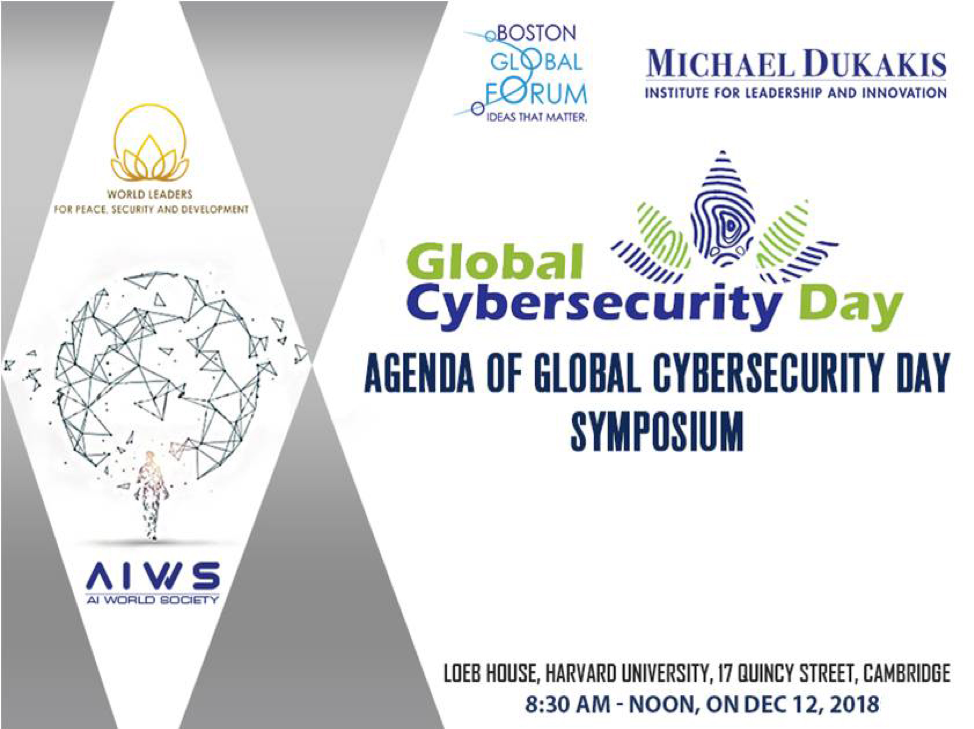
In the last week, CEO of the Boston Global Forum, Nguyen Anh Tuan, had productive meetings with leaders of cybersecurity and information safety in Vietnam.
Vietnam Spark Initiative at Boston Global Forum will support Vietnam to join the Global Alliance for Digital Governance.
Vietnam will actively to contribute to high level discussion of Global Alliance for Digital Governance in 2022 and next years, especially in the Policy Dialog 2022, co-organized by Club de Madrid and Boston Global Forum in Nha Trang, Vietnam.

