by Editor | Jan 29, 2024 | Global Alliance for Digital Governance
After deepfake images of Taylor Swift and fake robocalls of Joe Biden’s voice were spread on social media platforms this week, lawmakers are pushing for stronger guardrails on the usage of Artificial Intelligence.
Clyde Vanel, a Democrat who is the Chair of the New York State Subcommittee on Internet and New Technology, said that process began in September, when Gov. Kathy Hochul signed legislation regarding deepfakes.
What happened to Taylor Swift is illegal in New York,” Vanel said “It’s a class A misdemeanor for someone to knowingly or recklessly publish a generated photo or visual depiction of someone with sexual explicit content. We have to let the public know what we have in place. We have to let them know this is wrong, and we will prosecute these kinds of actions.
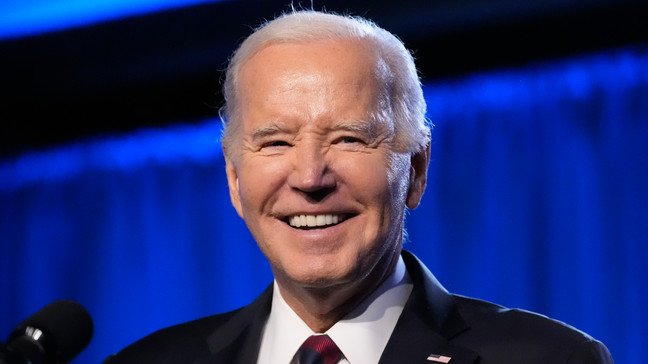
President Joe Biden speaks during a United Auto Workers’ political convention, Wednesday, Jan. 24, 2024, in Washington. (AP Photo/Alex Brandon)
https://abc3340.com/news/nation-world/taylor-swift-deepfakes-fake-biden-robocalls-have-lawmakers-pushing-for-stronger-ai-laws-artificial-intelligence-internet-technology-nude-explicit-images-pop-star-president-2024-election-politics

by Editor | Jan 29, 2024 | Publications
BGF introduces the special e-paper “Honoring the Chair of the Boston Global Forum and AI World Society.” This discusses and recaps the event of the celebration of Governor Dukakis’ 90th birthday at Loeb House, Harvard University on November 2, 2023. It features remarks from Governor Dukakis, Amma, Senators Elizabeth Warren and Ed Markey, and many, many distinguished guests of the event.
Honoring the Chair of the Boston Global Forum and AI World Society


by Editor | Jan 29, 2024 | News
José Parra-Moyano, Karl Schmedders, Alex “Sandy” Pentland
MIT Professor Alex Pentland, a BGF Board Member, wrote “How Data Collaboration Platforms Can Help Companies Build Better AI” on Harvard Business Review:
There are three immediate challenges for companies that want to train fine-tuned AI models: 1) they require extensive, high-quality data — a scarce resource for many enterprises, 2) third-party AI models can include problematic biases, and 3) training fine-tuned models with users’ personal data may result in privacy violations. However, data collaboration platforms can help address these challenges. They can provide a privacy-preserving training space on high-quality, abundant data, ensuring compliance with privacy laws and unleashing the full potential of fine-tuned models.
Read the full article here:
https://hbr.org/2024/01/how-data-collaboration-platforms-can-help-companies-build-better-ai?ab=HP-hero-latest-text-2

D3Damon/Getty Images
by Editor | Jan 22, 2024 | News
Minh Nguyen is the Editor of the Boston Global Forum and a Shinzo Abe Initiative Fellow. She writes the Four Pillars column in the BGF Weekly newsletter.
Airstrikes and attacks continue on in the Red Sea region, between the Pillars of the US and UK and the Houthis. In fact, the US is preparing to hunker down in their campaign against the Houthis and protect shipping lanes. However, it does not seem likely that a ground campaign will be conducted – and for the better. The Pillars should continue to secure shipping lanes in the region, as states that are concerned with upholding the global trade regime and international system. Furthermore, global food supplies rely on these protections now too.
On the Israeli front, PM Netanyahu has confirmed that he would not stand for a Palestinian state. This narrows the opportunities for peace greatly, and the Pillars would do well to find a way for a peace deal that would allow for a two-state solution, even if it may appear unattractive to both parties in the war.
In the EU, a Pillar, the European Commission prepares to develop a program for enlarging the EU, to over 30 members. EU Commissioner Ursula von der Leyen, a recipient of the AIWS World Peace and Security Award, announced the plan in the last week. This is important, as the integration of more countries into the EU and its system stands to unify the continent and bolster its status in the world. While the EU has issues within itself, enlargement would help uplift those who are not in too.
In the Asia-Pacific region, the US and the Philippines continue and enhance their cooperation against Chinese aggression in the South China Sea. It is important that the Pillars continue to maintain allies and gather new ones in the face of rising Chinese aggression and bullying in the region and in the world.
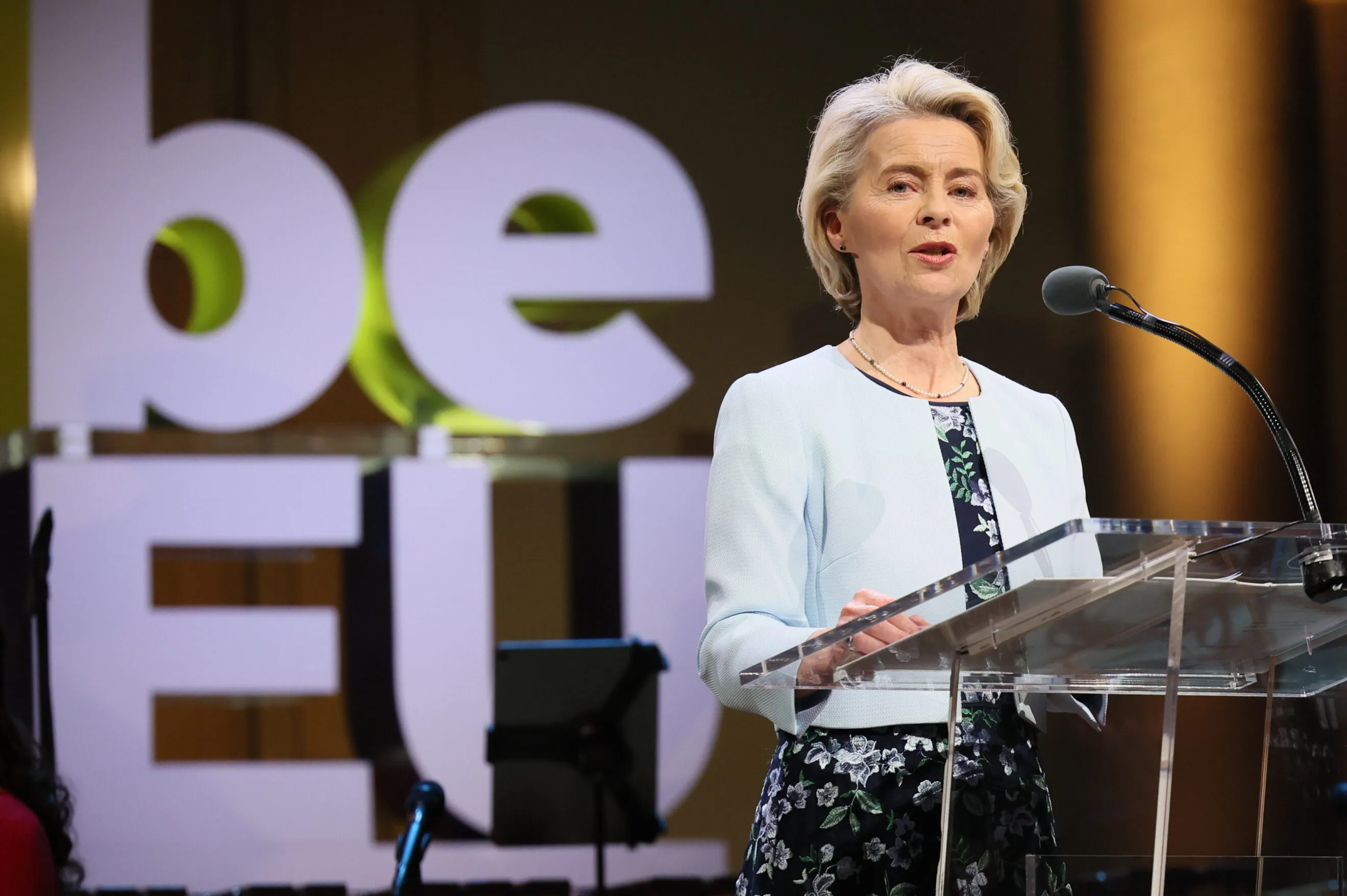
European Commission President Ursula von der Leyen | Pool photo by Benoit Doppagne via Getty Images
by Editor | Jan 22, 2024 | Event Updates, News
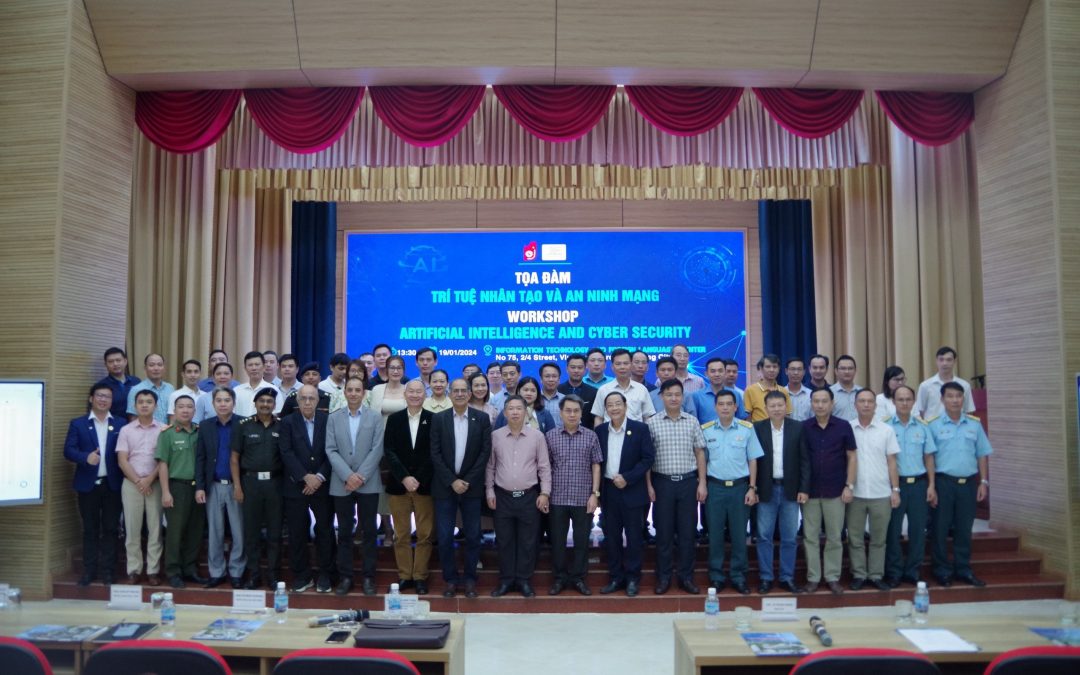
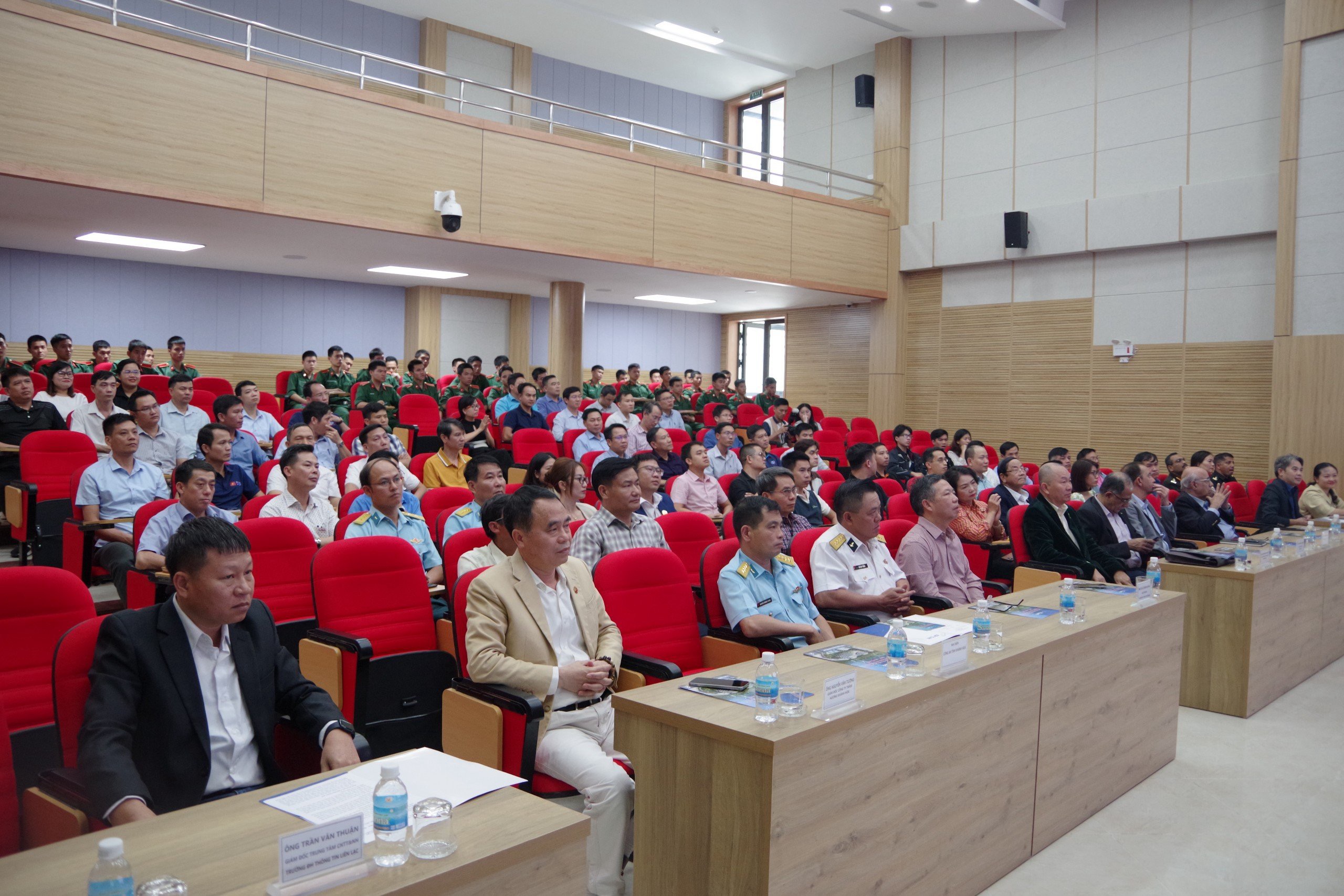
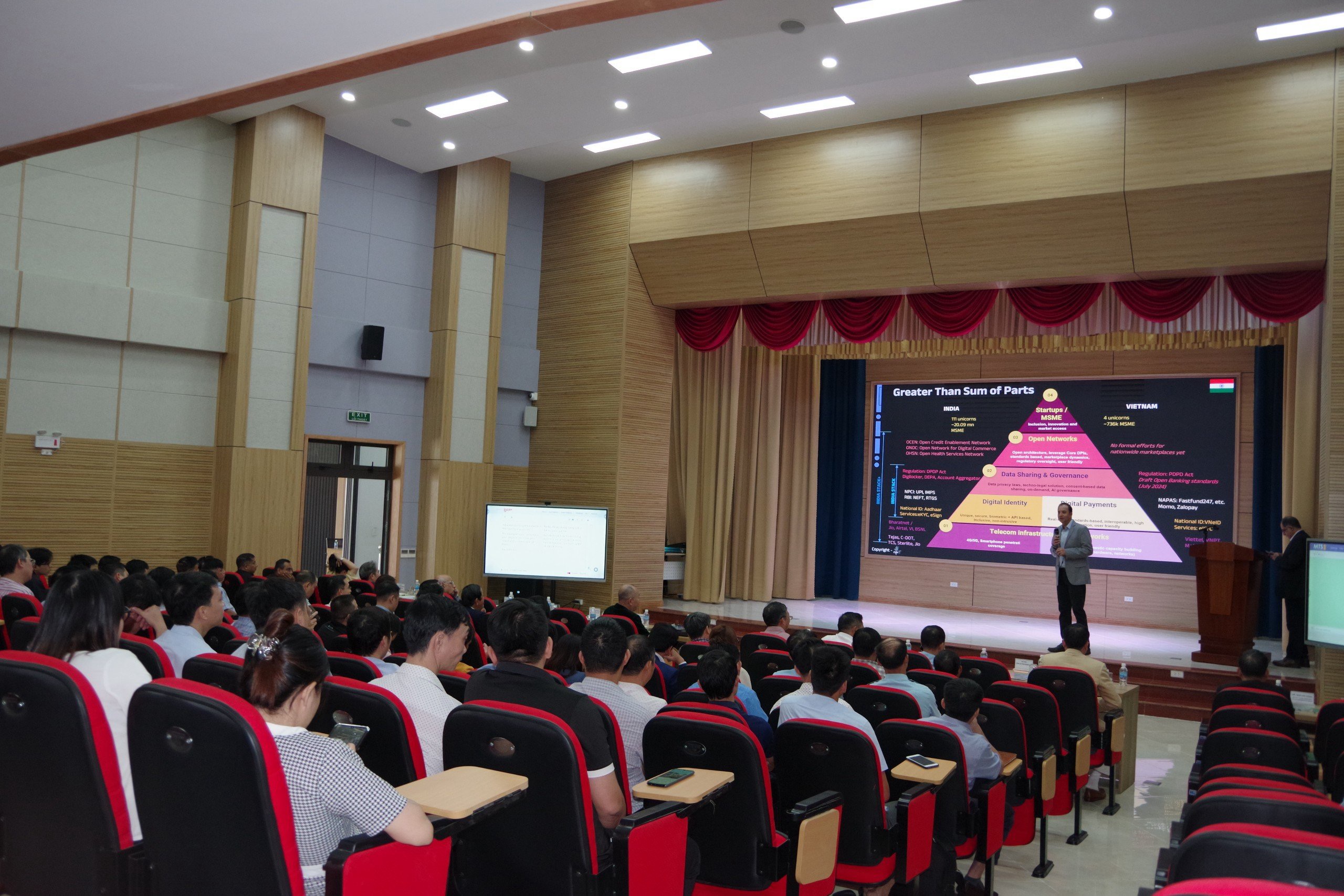
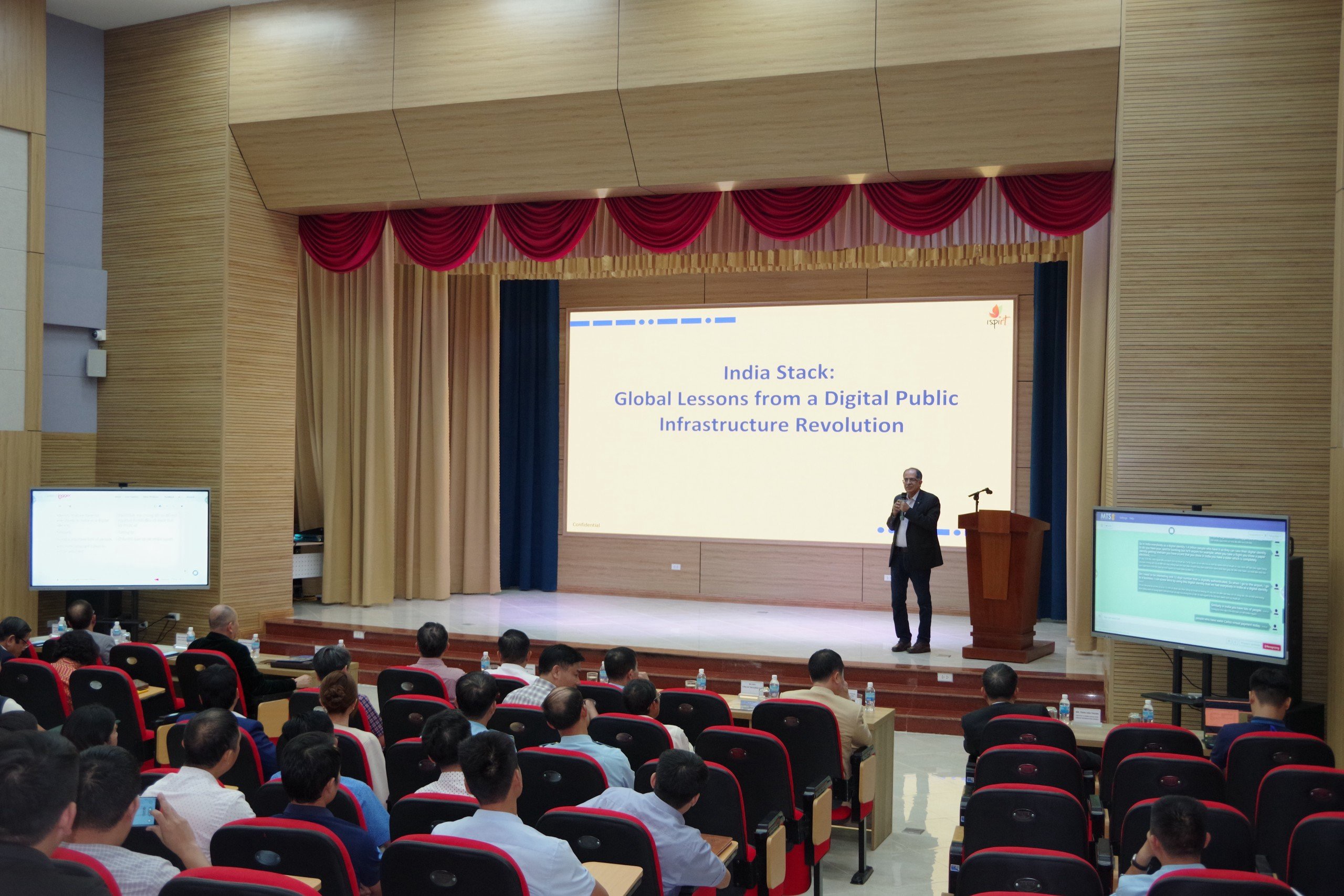
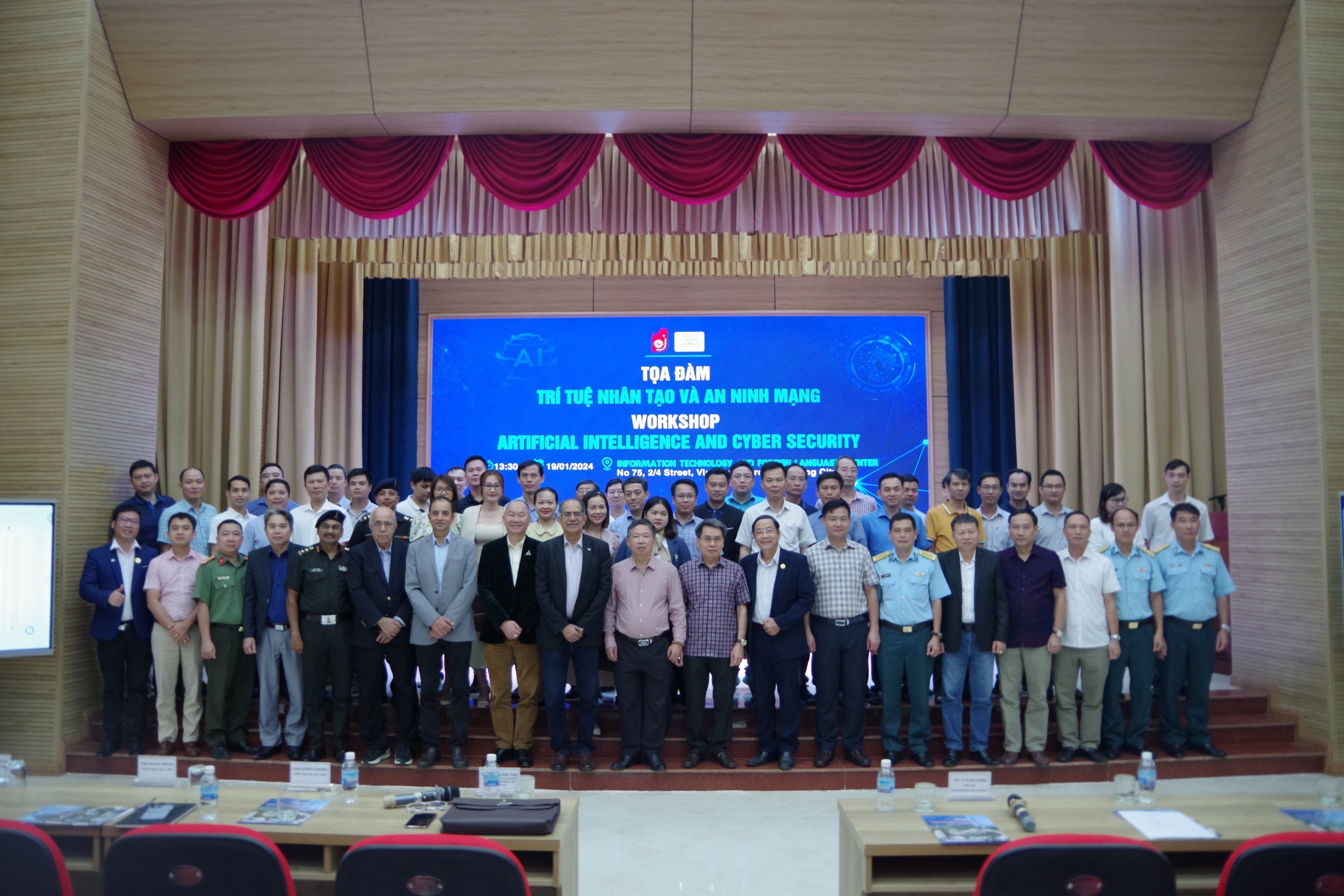
In a momentous event held on January 18, 2024, the Telecommunication University (TCU) in Nha Trang played host to a seminal seminar on AI and Cybersecurity. The keynote speaker, Sharad Sharma, Co-founder, and Chair of ISpirt (Indian Software Product Industry Round Table), shared profound insights into the future of technology, emphasizing concepts like Open Networks and the I-stack of India.
A pivotal juncture in the seminar was the collaboration discussion featuring Mr. Nguyen Anh Tuan, CEO of Boston Global Forum (BGF), and Sharad Sharma. Engaging with Professor Le Xuan Hung, President of TCU, and its leadership team, they explored strategies to advance innovation within the university, focusing notably on the development of the Army Innovation Park at TCU.
Drawing on their collective expertise, Mr. Tuan and Mr. Sharma provided strategic advice to harness the full potential of this innovation hub. Their collaboration aims to create a roadmap aligning with global standards, ensuring TCU’s position as a leading institution fostering technological advancements and enhancing cybersecurity measures.
The seminar not only served as a platform for knowledge exchange but also marked a significant step towards cultivating a secure and innovative future for TCU and its stakeholders. The convergence of industry leaders, academic experts, and visionaries underscored the commitment to leveraging AI and cybersecurity for societal progress and technological excellence. This event solidified TCU’s role in the forefront of technological innovation, setting the stage for a future shaped by cutting-edge advancements in AI and cybersecurity.

by Editor | Jan 22, 2024 | Global Alliance for Digital Governance
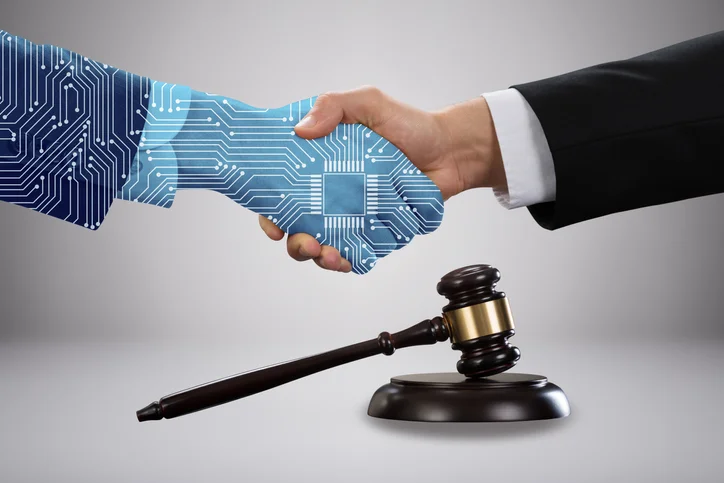
As global leaders and industry power players gather in Davos to address the world’s most pressing problems, the World Economic Forum’s (WEF) AI Governance Alliance (AIGA) has called for stronger collaboration to create a framework for advanced AI.
In a series of three new reports, AIGA has focused on unlocking the value and creating a framework for generative AI (GenAI) usage. AIGA said a global effort is needed to create equitable access to AI.
According to Cathy Li, head of AI, data and metaverse at the WEF: “The AI Governance Alliance is uniquely positioned to play a crucial role in furthering greater access to AI-related resources, thereby contributing to a more equitable and responsible AI ecosystem globally.”
“We must collaborate among governments, the private sector and local communities to ensure the future of AI benefits all,” she added.
AIGA has called for experts in various sectors to address key areas such as improving data quality across nations, boosting computational resources and adapting foundation models to suit local challenges.
A strong emphasis has also been placed on education to navigate local AI ecosystems effectively.
The original article was published on Verdict.
AI needs stronger collaboration, says AIGA Credit: Getty Images / AndreyPopov
by Editor | Jan 22, 2024 | News
Focus: HealthTech, PrivacyTech and Generative AI
Davos, 2024
https://leadingbeyondboundaries.github.io/davos24.html
MIT Professor Alex Pentland, a BGF Board Member, played a significant role at WEF Davos 2024.
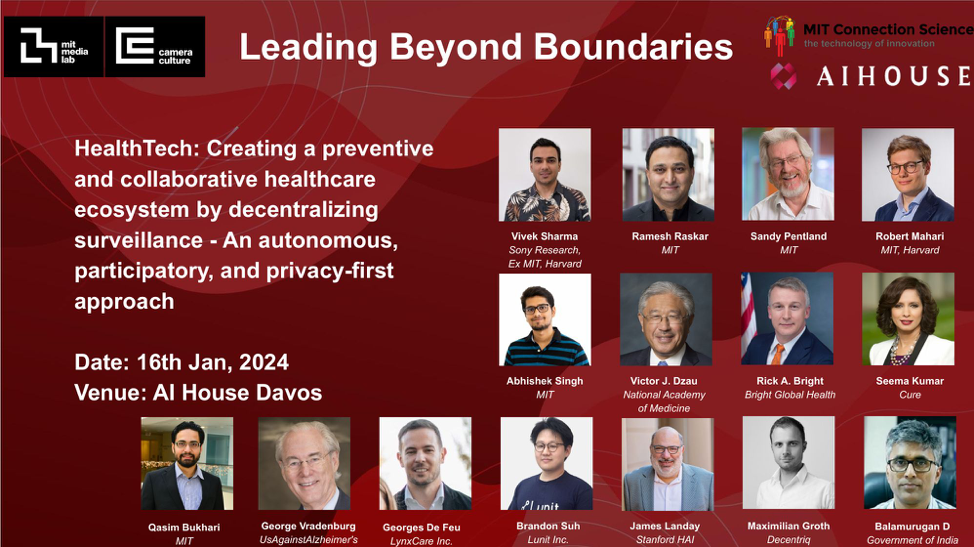
HealthTech Roundtable: Creating a preventive and collaborative healthcare ecosystem by decentralizing surveillance – An autonomous, participatory, and privacy-first approach.
During the World Economic Forum Annual Meeting 2024, the MIT Media Lab, Camera Culture Group, and MIT Connection Science, kicked off “Leading Beyond Boundaries” in Davos.
Recognizing that disciplinary disconnects can hinder effective technology policy, research, and innovation, Leading Beyond Boundaries seeks to bridge these gaps. Leading Beyond Boundaries aims to bring together a diverse group of leaders across disciplines to foster in-depth discussions around the key ideas, challenges, and open questions. Their focus is on addressing pressing societal issues in areas such as healthcare, privacy, and generative AI.
Esteemed panelists include thought leaders such as notable speakers from academia, industry, and government who will contribute to the roundtable discussions.
Organizers: Vivek Sharma, Robert Mahari, Abhishek Singh, Alex ‘Sandy’ Pentland, Ramesh Raskar
Following WEF, plan to compile a high-impact report encompassing recommendations on AI in Healthcare, responsible AI practices, policy considerations, privacy measures, and collaborative strategies based on our roundtable discussion.
This year, their objective was to spark a dialogue around HealthTech, PrivacyTech, and Generative AI. This event fostered an organic conversation that not only addresses critical issues but also unveils innovative solutions, propelling us toward a standardized global AI landscape. The event is positioned to revolutionize the field by tackling pressing societal issues and steering the conversation towards impactful change.
In partnership with Invest India, Ministry of Commerce and Industry, Government of India, we are also organizing a social event to complement our HealthTech, PrivacyTech and Generative AI roundtables.

by Editor | Jan 16, 2024 | News
Minh Nguyen is the Editor of the Boston Global Forum and a Shinzo Abe Initiative Fellow. She writes the Four Pillars column in the BGF Weekly newsletter.
Over the past week, the US and UK, two Pillars, escalated their actions in the Red Sea against the Houthis. This comes after a red line against their continued attacks on shipping lanes. The Anglo countries conducted airstrikes on Houthi targets in Yemen itself. While this may risk escalation from Iran, protecting international shipping lanes and naval conventions should be key, especially to preserve the international order. While this lane does not have major implications for the US itself, it does for Europe-Asia trade, where the other Pillars are as well.
India, another Pillar also got involved, sending their own warships to the region to deter against piracy. It is good that other Pillars are getting involved outside of the US and UK-EU, because securing international norms is collectively something in everyone’s interests.
In Europe, the UK has pledged to support Ukraine with up to 2.6 billion GBP in military aid, during a visit by PM Sunak to Kyiv. This is continued necessary aid for Ukraine to continue its fight against the Russian invasion. This is after last week, in which Japan, a Pillar, committed aid to Ukraine in a surprise visit too.
Taiwan elected the DPP candidate Lai Ching-te to the presidency, to a third term for the party. While the US, Canada, and others congratulated Taiwan on its election, China of course disapproved.

Sgt Lee Goddard/UK Ministry of Defence/Reuters
by Editor | Jan 16, 2024 | News
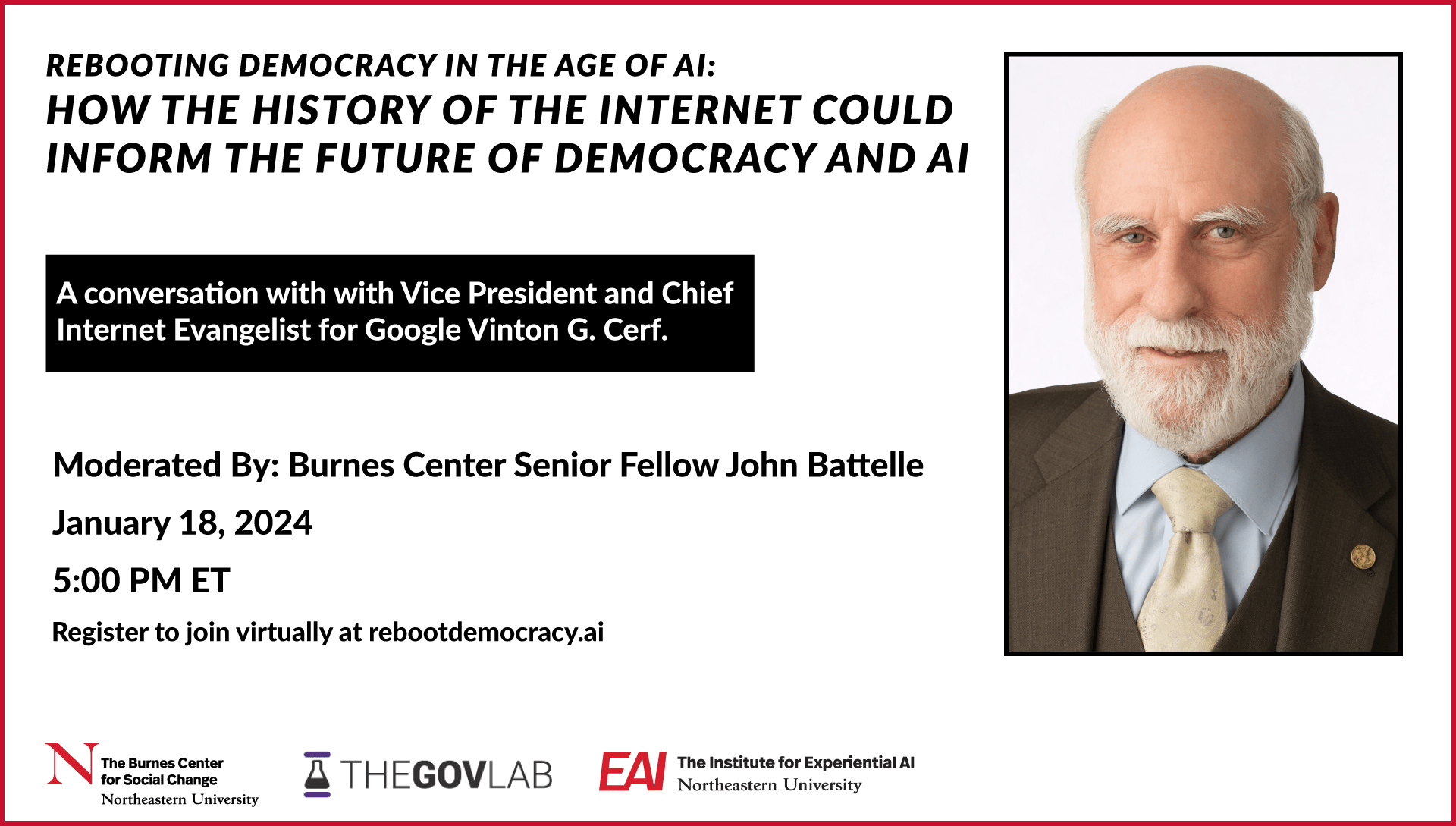
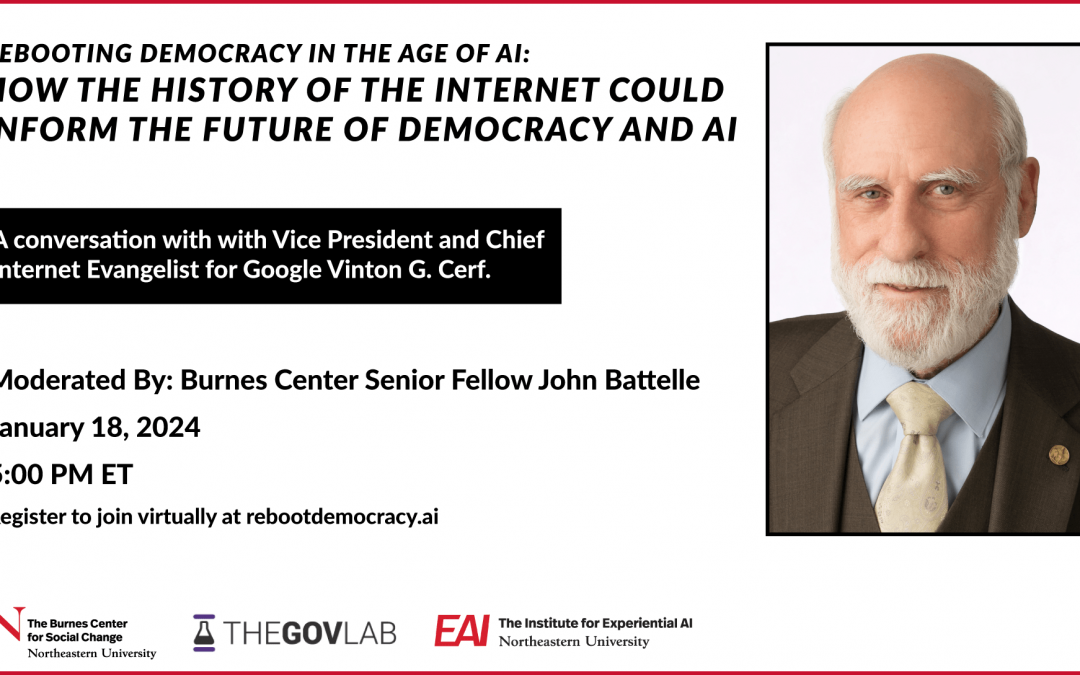
The discussion continues the Burnes Center’s Rebooting Democracy in the Age of AI Lecture Series, hosted by Beth Simone Noveck, and kicks off The Internet We Deserve, a new lecture series moderated by John Battelle that features notable business, policy, technology and academic leaders exploring the evolution of the Internet.
Vinton G. Cerf is widely known as one of the “Fathers of the Internet.” Cerf is the co-designer of the TCP/IP protocols and the architecture of the Internet. Today he is Vice President and Chief Internet Evangelist for Google.
John Battelle is a Senior Fellow at the Burnes Center for Social Change and a Professor of Practice of Northeastern’s College of Arts, Media and Design. He is an entrepreneur, journalist, professor and author who has founded or co-founded seven media and technology businesses.
Rebooting Democracy in the Age of AI Lecture Series talks with innovative designers, thinkers, and those changemakers working to “do democracy” differently in the age of artificial intelligence. Conversations explore how machine learning, natural language processing and generative AI can enable more participatory and inclusive ways of solving problems. Through online and in-person conversations with pioneers working to democratize power in governments, schools and workplaces, these conversations aim to address how to use new technologies to strengthen democracy.
To learn more about the series and read our blog on AI, democracy and governance, visit: https://rebootdemocracy.ai/.
BGF honored Vint Cerf as the 2019 World Leader in AIWS. He is a BGF Global Enlightenment Leader.