by Editor | Jun 20, 2021 | News
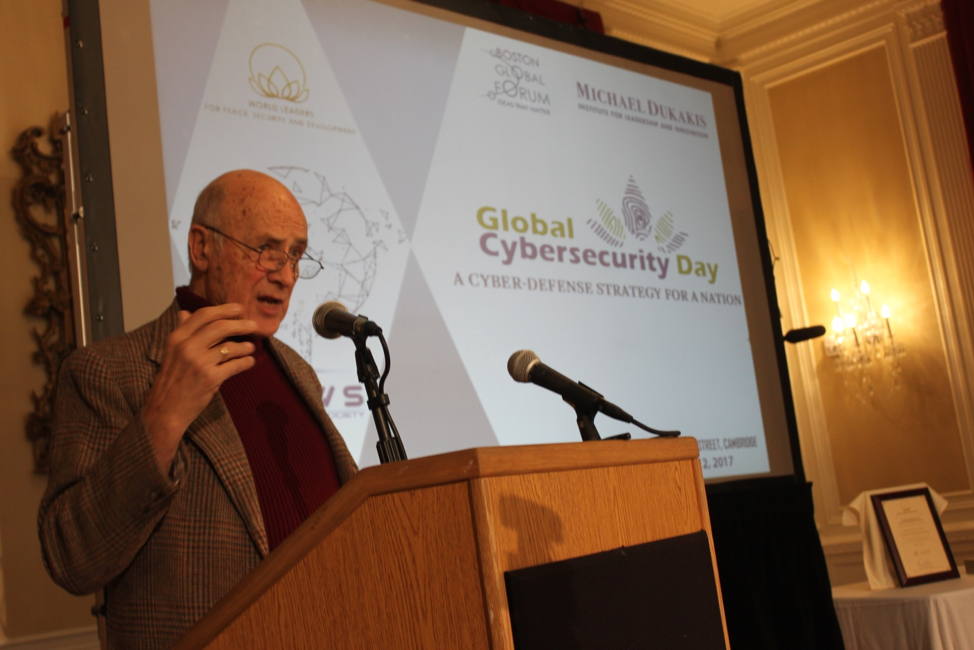
Professor Joseph Nye, Member of BGF Board of Thinkers, contributed his ideas toward the book, below are some of his writings for the book:
“The moral issue is not whether you protect the national interest. It’s whether you define the national interest broadly enough so that what’s good for you is good for others as well. And that’s where I think we have failed in this current crisis.”
“We’re seeing a slight decline in economic globalization. That was already underway, but I think it will be increased by the effects of the pandemic. But the one thing we’re not seeing that many people predicted is the authoritarian model proving to be more powerful than the democratic model.”

by Editor | Jun 20, 2021 | News
Yasuhide Nakayama, a mentor of AIWS Innovation Network (AIWS.net), contributed toward the book:
“AI has become indispensable technology in various fields including in the manufacturing industry, and the medical, agriculture and the financial sectors, with the development of civilian technology. However, scientific developments can also present new challenges to national security. In many countries, the use of AI has led to the development of new military technologies, such as drone swarms and also renewed information warfare threats such as dissemination of fake news”
“As for AI ethics, the social principle of human-centric AI was developed as a guidance. It stipulates principles-related issues. A social principle of human-centric AI consists of seven principles, including human-centric principles that respect basic human rights guaranteed by domestic laws and international norms, and the principles of ensuring security which addresses security risks associated with elements of AI policy observatory of results obtained from AI operations”
“We believe that evaluations and the judgements on the use of AI will follow Japan’s social principle of human-centric AI and international norms as I mentioned. At that time, we are based on the social principles of human-centric AI. It is also necessary to consider that the systems need functions to detect and avoid unintended consequences and to shut down or suspend systems that have unintended behaviors.
“It’s necessary to have closed communications such as the exchange of information and shared awareness of issues related to the responsible use of AI among like-minded nations and international partners which share these values”
by Editor | Jun 20, 2021 | Event Updates
World leaders contributed content toward the book “Remaking the World – The Age of Global Enlightenment,” below are some of them in the backcover of the book:
“At the Michael Dukakis Institute for Leadership and Innovation, you are at the forefront of research and debate. And you definitely work on some of the world’s most pressing issues. You drive the discussion on digital policy and how a human-centric approach on AI could look like. This is an issue whose importance simply cannot be overestimated.”
“This is why the EU proposes to start work on a Transatlantic AI Agreement. We want to set a blueprint for regional and global standards aligned with our values: Human rights, and pluralism, inclusion and the protection of privacy. A transatlantic dialogue on the responsibility of online platforms!”
President of European Commission Ursula von der Leyen, December 12, 2020
“It is greatly reassuring to me that the members of the Boston Global Forum are promoting cybersecurity-related awareness raising activities and fostering discussions in various countries around the world.”
Japanese Prime Minister Shinzo Abe, December 12, 2015
“Cybersecurity will also be crucial as we implement the recently adopted 2030 Agenda for Sustainable Development, which will require us to tap into the potential of the data revolution and close today’s still-large digital divides.
On 15-16 December, the United Nations General Assembly will convene a High-level Meeting to review progress in the implementation of the outcomes of the World Summit on the Information Society. Your discussion at this year’s Boston Global Forum can provide a timely contribution as we strive together to meet these challenges.”
Ban Ki-moon, Secretary General of the United Nations, December 12, 2015
“Exploring a Social Contract for the AI Age – a framework to ensure an AI “Bill of Rights” in the digital age – is fundamental in international relations today.”
The Ambassador of the European Union to the United States, April 28, 2021
“Calling for members of World Leadership Alliance-Club de Madrid and world leaders to support, endorse and work for the implantation of the Social Contract for the AI Age. Among the central features of the Social Contract for the AI Age are the following:
First, it defines an international TCP/IP (the platform for communication among internet users), that is, a set of norms, values and standards specifically designed as connections among governments for enabling and supporting international relations – including between governments, between companies, between companies and governments.
Second, it is anchored principles of justice and equity, recognizing that communities must have control over their data, given that data literacy at all levels of society is the basis for an intelligent, thoughtful society.”
Club de Madrid, December 2020
by Editor | Jun 20, 2021 | News
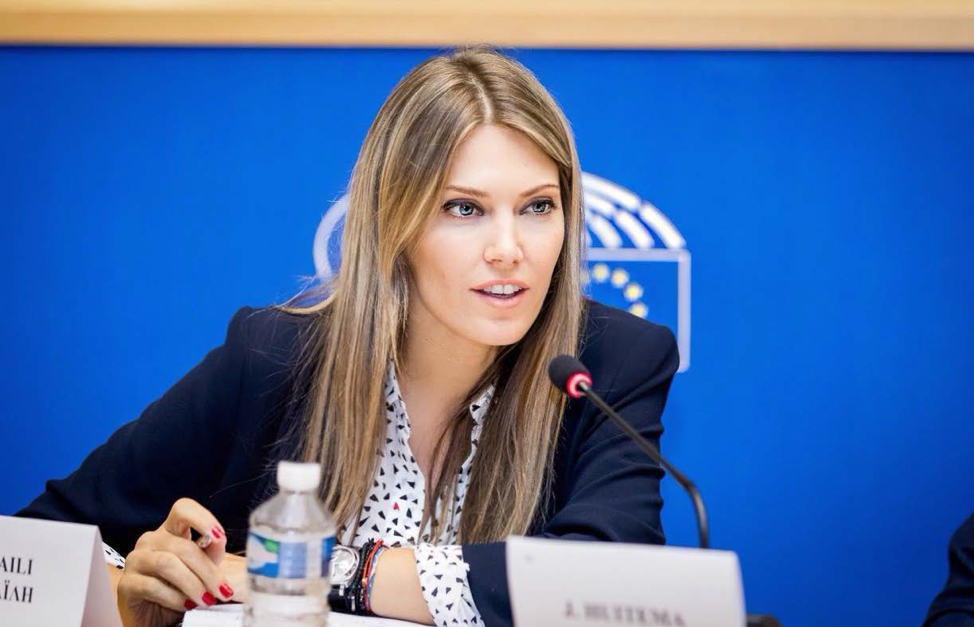
Eva Kaili, MEP and Chair of European Parliament’s Science and Technology Options Assessment body (STOA) and Center for Artificial Intelligence, contributed toward the discussion at the AI International Accord Committee:
The datafication of our societies, via the deployment of AI technologies, is transforming the world as we know it and has the power to challenge and dismantle the fundamentals of our democracy. The ongoing technological change far from being deterministic in its nature and effects, needs to be managed in a proactive and people-centric manner. A new social contract is needed to ensure that any multilateral attempt to shape an AI governance framework is inclusive, trustworthy and will enable the net benefits of digital automation and autonomy to be realized and more widely shared. The European Union as an example of a supranational social contract, can serve as a source of policy inspiration for framing a sustainable, democratic and fair AI. With its new AI Act, just like it did with the ambitious GDPR, Europe is setting high standards to protect digital human rights by default, citizens privacy and consumers safety, prohibiting mass surveillance, intrusive monitoring and social scoring practices that could increase inequalities, in aspiration that our democratic ethical principles could be the basis of an international accord on AI.
by Editor | Jun 13, 2021 | News
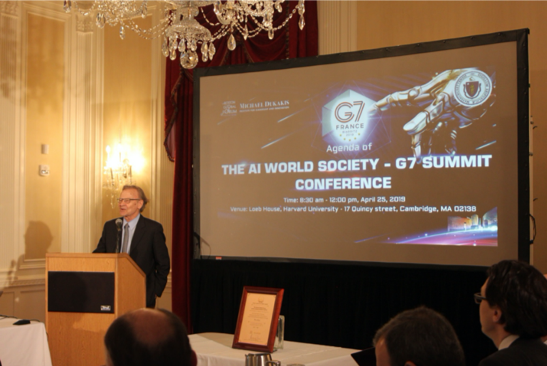
To help citizens have equality of opportunity in education, as well as bringing basic knowledge, encouraging and inspiring foundations for innovations, and supporting in creating values for others and societies, AIWS City created the AIWS Global Enlightenment Program.
The AIWS Global Enlightenment is based on the global citizenship education concepts of UNESCO, with additions from new ideas and concepts in the AI Age. Professor Thomas Patterson, Harvard University, is the director of this special program.
This program is a part of the AIWS Economic-Political Ecosystem.
The AIWS Global Enlightenment Program invite thinkers and leaders to contribute for this program.