by Admin | Mar 6, 2015 | Highlights
Trans-Pacific Partnership (TPP) and Association of East Asian Nations (ASEAN) are keys to multinational dialogue to avert war BGF report says.
Download the report
(Boston, March 10, 2015) In its just-released report titled, “A Framework for Peace and Security in the Pacific,” Boston Global Forum called for strengthening international ties among nations through the new Trans-Pacific Partnership (TPP), and the Association of South East Asian Nations (ASEAN). The report termed TPP, “an important free trade initiative that includes the United States, Canada, Mexico, Australia, New Zealand, Japan, Singapore, Brunei, Chile, Malaysia, Peru, and Vietnam.”
Each year the Boston Global Forum adopts a single issue for detailed discussion, debate, analysis and recommendations. The 2014, “Framework for Peace and Security in the Pacific,” strives to reduce mounting tensions among Asian nations over disputed South and East China Sea territories, such as Spratly, Paracel and Senkaku Islands; shipping lanes, fishing rights, and mineral resources by providing clear mechanisms to avoid armed conflict.
As part of the yearlong effort, Boston Global Forum (BGF) held online international conferences and symposia at Harvard University focusing on the tensions between China, the Philippines, Vietnam and Japan over claims in the South and East China seas. Massachusetts Governor Michael S. Dukakis, BGF chairman and co-founder, and Joseph S. Nye, Jr., a member of the BGF Board of Thinkers and Harvard University Distinguished Service Professor moderated the discussions among over two dozen leading elected officials, scholars and policy analysts from around the world.
The “Framework,” including a complete least of speakers, is available at (http://www.bostonglobalforum.org/wp-content/uploads/BGF-Report-on-Framework-for-Peace-and-Security.pdf ). and cites flash points over the recent past that have involved sparring between China’s military air and sea defenses and other nations over fishing rights, economic zones, oil resources and other matters. One such incident resulted in a near collision between Chinese and American military aircraft.

Photo: Governor Michael Dukakis led a conference about building a Framework for Peace and Security in the Pacific in 2014.
According to the report, “For their part, some of China’s neighbors, including Japan, Indonesia, and Vietnam, have bolstered their defense capacity. Vietnam, for example, has acquired two Russian submarines capable of launching torpedoes and anti-ship missiles that could destroy a Chinese oil rig were it to deploy in Vietnamese waters.” .
The “Framework for Peace and Security” urges reliance on international law to resolve conflict, regional interdependence with strong economic and trade relations among the nations of the Pacific, and multilateralism, in which all nations participate in negotiations over critical issues. In the near term, the BGF report also urged a strong US presence in the region as a means of promoting peace, security and prosperity.
Throughout 2015 the Boston Global Forum will focus on the mounting threats of cyber-warfare and cyber-terrorism.
The Boston Global Forum actively seeks participation by leaders in business, government and the professions who are interested in promoting human rights, global peace and economic security. For information, email Boston Global Forum at: [email protected]
About Boston Global Forum
Established in 2012, Boston Global Forum brings together, in an open and accessible public forum, an eclectic and engaging spectrum of highly regarded academic leaders, real-world experts, influential thoughts leaders, and promising young leaders.
BGF’s immediate goal is to identify emerging threats to peace and stability around the globe, suggest realistic solutions, and identify possible actions that can be taken to avert armed conflict. The Forum’s ultimate goal is to lessen tensions, promote peace and security, and foster conditions that lead to greater social justice and broader economic prosperity wherever they are most needed.
For expert news sources and details contact: Dick Pirozzolo, [email protected] or 617-959-4613.
by Admin | Mar 4, 2015 | Event Updates, Michael Dukakis Institute
Michael Dukakis Leadership Fellow Program is now officially calling for candidates who are leaders or specialists from around the world and at or younger than 40 years old. We are specially interested in those who have shown aptitude, interest, and pursuit of promoting global peace and security. Applications are accepted until May 30, 2015 and only 4 successful candidates will be announced.
The Fellowship program is established as an effort of the Boston Global Forum to engage the youth leaders to further the Framework for Peace and Security in the Pacific, which has recently been released in February 2015 after a series of international online conferences.
The Program provides ten months and related professional experiences in the areas of international relations and cyber security. For the 2015-2016 Program, Fellows will implement their proposed action-oriented plan, work with leaders of Boston Global Forum and high-profile figures of Harvard and MIT, as well as leaders in media, politics, and international relations. Fellows will participate in various events and activities associated with the Young Leader Network to monitor peace and generate solutions to conflicts in the Pacific. They will also work with Boston Global Forum to anticipate cyber terrorism issues, which is the focus issue of the Forum in 2015-2016.
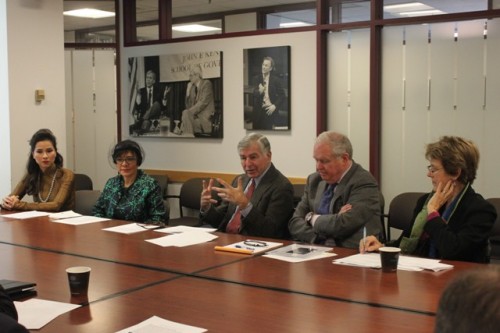
Photo: Governor Michael Dukakis (in the middle) in a conference discussing about solutions to conflicts in the Pacific
The Program aims to enrich the fellows’ leadership competency and integrity in initiating solutions to global problems; engage youth in promotion of peace and security of the world; provide opportunities for self development; and facilitate a dialogue among youth leaders with high-profile figures and policymakers from many nations.
To be eligible, applicants must be 40 or younger, have extraordinary leadership achievement, be currently active in their professional field and produce a one year action plan to contribute to a peaceful and secure world.
Applications are encouraged to send a CV detailing their achievements and an action plan promoting peace and security, and should be submitted to [email protected]
About the Michael Dukakis Leadership Fellow Program
The Michael Dukakis Leadership Fellow Program is initiated and fully funded by the Boston Global Forum, and is named after its Chairman and Co-Founder, the former Massachusetts Governor, Professor Michael Dukakis. Governor Dukakis has devoted his life to the promotion of peace and democracy around the world. Governor Dukakis and his fellows Professor Thomas Patterson, Professor John Quelch, and Nguyen Anh Tuan founded Boston Global Forum in 2012 with the aim of identifying the most impactful issues facing the world and providing practical and meaningful solutions to these problems. Governor Dukakis and Harvard Professor Joseph Nye, a member of the Boston Global Forum Board of Thinkers, led several international conferences to build a Framework for Peace and Security in the Pacific in 2014. The Fellowship program is established as an effort to engage youth leaders to further the Framework and to enrich their leadership capability and integrity in order to improve global peace and security.
by Admin | Mar 4, 2015 | Event Updates
Phillips Exeter Academy (PEA) Concert Choir and Chamber Orchestra will travel the length of Vietnam, from Hanoi to Hue, Hoi An, Da Nang, to Ho Chi Minh City, performing concerts of classical Western music and Vietnamese folk songs and doing cultural exchanges as to celebrate the 20th anniversary of normalization of diplomatic relations between Vietnam and the United States from March 8 to 20, 2015.
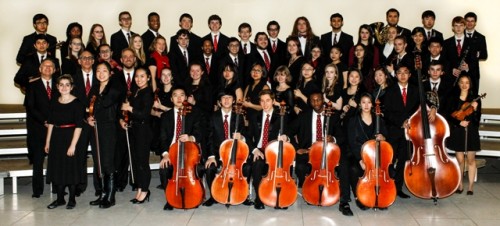
The 28-voice Concert Choir, under the direction of Kristofer Johnson, and the Chamber Orchestra, with conductors Peter Schultz and Rohan Smith, will perform American and European selections by: Leonard Bernstein, John Philip Sousa, Scott Joplin, Dolly Parton, Mozart, Joseph Haydn, Francis Poulenc, Gabriel Fauré, Jaakko Mäntyjärvi, Arcangelo Corelli, William Billings and more. They have also prepared two Vietnamese folk songs, Trống Cơm and Lý Kéo Chài, arranged especially for the tour by Vietnamese musician and composer Vân-Ánh Võ.
During the 14-day “Peace and Innovation” tour, the ensembles will partner with musicians and vocalists from the Vietnam National Academy of Music and from the Ho Chi Minh City Conservatory of Music. PEA ensembles will perform one concert in Hanoi on March 11 and one concert in Ho Chi Minh City on March 19. These concerts are free and open to the public.
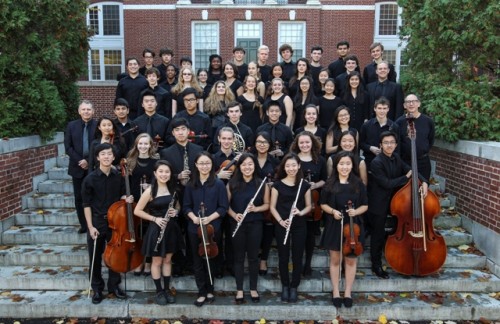
The ensembles also have another performance on March 10 with actors and musicians of the esteemed Vietnam Cheo Theatre, under the direction of Director and Favored Artist Thanh Ngoan; and several cultural exchanges with students from Gifted Schools in Vietnam such as Hanoi Amsterdam, Quoc Hoc Hue, and Mekong University.
Boston Global Forum Editor-in-Chief Nguyen Anh Tuan has sent the congratulation on the tour and emphasized: “…Consider these students as special envoys sending powerful messages through great works of music. Their performance will inspire dreams of a world where only peace, innovation, benevolence and tolerance matter.”
About Phillips Exeter Academy
Phillips Exeter Academy (www.exeter.edu) is a coeducational, independent school, located in Exeter, New Hampshire, USA. Founded in 1781 by John Phillips, Exeter has a tradition of academic excellence, a distinguished faculty, and a long history of educating young people to find their place in the world. It originated the system of instruction known as Harkness teaching in 1931. In the spirit of the school’s charter to foster goodness and knowledge, a Phillips Exeter Academy education is free to any admitted student whose family income is $75,000 or less and the diverse student body comes from a variety of geographic, economic, racial and religious backgrounds.
by Admin | Mar 4, 2015 | Event Updates
Boston Global Forum is proudly to be involved and greatly supports Phillips Exeter Academy’s “Peace and Innovation” Concert tour in Vietnam in March 2015 to celebrate the 20–years of normalization of relations between Vietnam and the United States.
The Phillips Exeter Academy Concert Choir and Chamber Orchestra will be presenting the Academy and the State of New Hampshire to come to and explore Viet Nam through music and cultural exchange.
Mr. Anh Tuan Nguyen, BGF Editor-in-Chief has sent the congratulation letter to the Phillips Exeter Aacademy on the tour:
“This is a special year for Vietnam and the United States as we celebrate the 20th anniversary of normalization between the two countries. How meaningful to open this remarkable year with the Phillips Exeter Academy performance tour that praises peace and innovation.
At the Boston Global Forum, we recently established the Young Leaders Network for Peace and Security to engage young people in international peace initiatives. Consider these students as special envoys sending powerful messages through great works of music. Their performance will inspire dreams of a world where only peace, innovation, benevolence and tolerance matter.
I wish great success for this tour and a bright future for true friendship between Vietnam and the United States.”
The School will travel the length of Vietnam, from Hanoi to Ho Chi Minh City, performing concerts of classical Western music and Vietnamese folk songs in Hanoi, Hue, Hoi An, and Ho Chi Minh City.
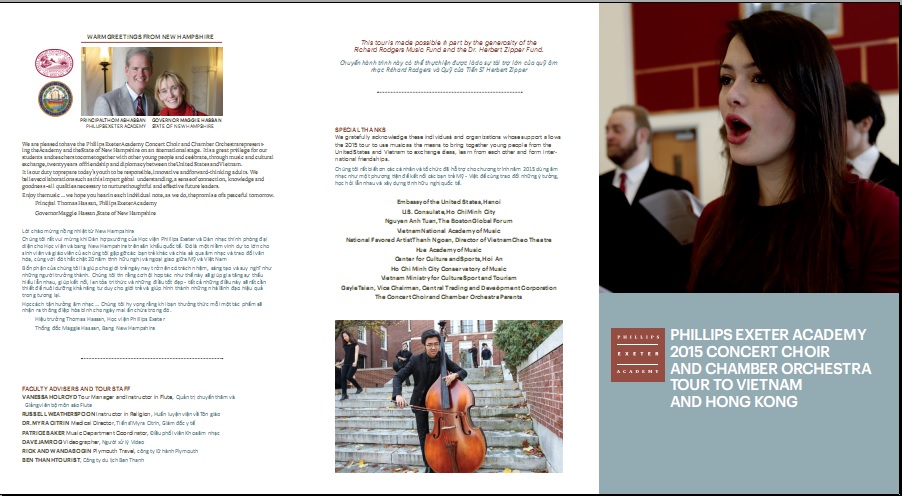
Download the Brochure
by Admin | Feb 26, 2015 | News
Assistants for Young Leader Network for Peace and Security (YLNP), Boston Global Forum
Profile
- Education: Tufts University Class of 2018
- Major: International Relations
- Co-founder of Viet Toastmasters in Boston
by Admin | Feb 26, 2015 | Boston Global Forum Awards
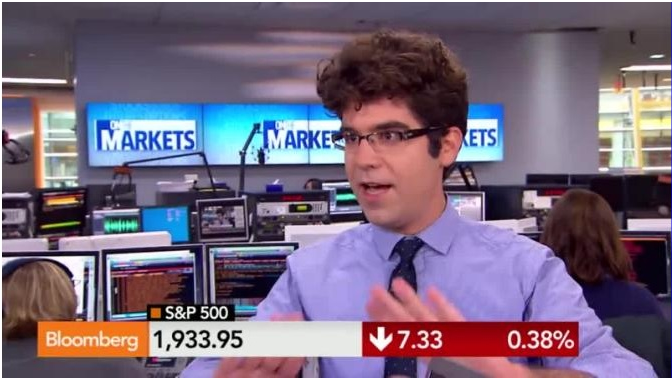
Boston Global Forum is proudly to host a live webcast with Douglas Lavanture, Bloomberg Data Analyst, focusing on Ukraine, Trade, and Global Democracy, at 7:30 PM (Eastern Standard Time), Thursday, February 26, 2015.
Mr. Douglas Lavanture is the Bloomberg data journalist. He has extensive expertise in quantitative analysis and global macro-economics. The Talk is anchored by Dr. Anders Corr, member of Boston Global Forum’s Editorial Board, principal of the Corr Analytics Inc., and publisher of the Journal of Political Risk.
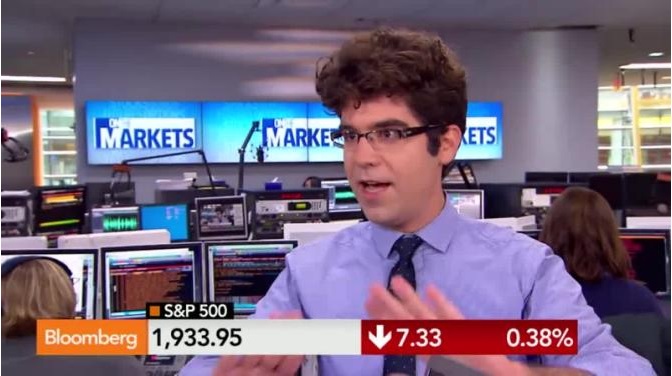 Photo credit: Bloomberg Rankings analyst Douglas Lavanture (Bloomberg)
The talk will be live-streamed at www.bostonglobalforum
Please send your questions on twitter to @jpolrisk, or [email protected].
TIME & VENUE
- Time: 7:30 PM – 8:30 PM (Eastern Standard Time), Thursday, February 26, 2015
- Connecting through Web Video Conference
ANCHOR
- Dr. Anders Corr, Member of Boston Global Forum’s Editorial Board,Principal of the Corr Analytics IncPrincipal of Corr Analytics, Inc.
GUESTS:
- Douglas Lavanture, Bloomberg Data Analyst
- Andrij Dobriansky, Ukrainian Congress Committee of America
- Ivan Rodichenko, 25th Volunteer Battalion, Ukraine Army
- Robert Whitcomb, New England Diary
by Admin | Feb 24, 2015 | News

Assistants for Young Leader Network for Peace and Security (YLNP), Boston Global Forum
Profile:
- Tufts University, Class of 2018
- Major: International Relations and Economics
- Co-founder of Viet Toastmasters in Boston
by Admin | Feb 23, 2015 | Highlights
(February 2015) – During the past year, the Boston Global Forum (BGF) held a series of online international conferences led by Governor Michael Dukakis and Professor Joseph Nye to address the problem of peace and security in the Pacific. The conferences focused on the tensions between China, the Philippines, Vietnam and Japan over claims to the South and East China seas. Conference participants included leading officials, scholars and policy analysts such as former Australia Prime Minister Kevin Rudd, Professor Ezra Vogel, President of Club de Madrid Vaira Vike-Freiberga, Robert Kaplan, David Sangers, Deputy Assistant Secretary of U.S. Department of State Bureau of East Asian and Pacific Affairs Michael Fuchs, and many others who have studied, written, lectured and published on the issue.
The report on the issue is officially released in February 2015, which identifies three major aspects: (1) Threats to Peace and Security in the Pacific; (2) Principles for creating Peace and Security in the Pacific; and (3) Policies to promote Peace and Security in the Pacific.
Below is the full report.
———————
This report is derived from Boston Global Forum (BGF) conferences. A range of views, some conflicting, were expressed by conference participants. Accordingly, the viewpoints expressed in this report are those of BGF and should not be attributed to individual participants.
Introduction
During the past year, the Boston Global Forum (BGF) held a series of online international conferences to address the problem of peace and security in the Pacific. The conferences focused on the tensions between China, the Philippines, Vietnam and Japan over claims to the South and East China seas. Conference participants included leading officials, scholars and policy analysts who have studied, written, lectured and published on the issue. A list of conference participants is appended to this report.
Threats to Peace and Security in the Pacific
Since the 1980s, the Pacific area has been peaceful compared to the previous decades, which were marked by the Vietnam wars (1946-1975) and the Korean War (1950-1953).
Nevertheless, the Pacific region has not been free of conflict and the past few years have witnessed provocations in the South and East China Seas. These areas have strategic importance in terms of oil, gas, fish, and shipping. According to the Energy Information Administration (EIA), the seas under dispute are laden with vast quantities of natural gas and oil resources—some 11 billion barrels of oil and 190 trillion cubic feet of natural gas.[1] These waters also carry half of all global oil shipments and are vitally important to regional economies and the global economy. [2]
In the past few years, these waters have been a flashpoint. China’s economy is heavily dependent on exports, and Beijing sees control of sea lanes as a key to continuing growth. China’s aggressive claims to territory in the East and South China Seas also have a larger geopolitical goal—reducing U.S. influence in the region. The United States has largely used its influence to promote democracy, human rights, open seas, and market economies in Asia—objectives that are at odds with China’s strategic regional objectives. China has largely used its influence to secure control of natural resources and assert influence over the internal politics of its weaker neighbors.
Despite President Obama’s “pivot to Asia,” China appears to see the United States in a retreat from Asia, illustrated by it loss of military basing rights in the Philippines, resulting in the closing of Clark Air Force Base in 1991 and Subic Bay Naval Base in 1992. Although the Seventh Fleet subsequently moved to Singapore, its base there is less close to China.
China has used its air and naval forces and even large militarized fishing boats to encroach upon and threaten its neighbors over shoals, islands, undersea oil fields, and fishing grounds. China claims these possessions as within its historical “nine-dash line,”which traverses the maritime territory of Japan, Vietnam, the Philippines, Brunei and Malaysia.
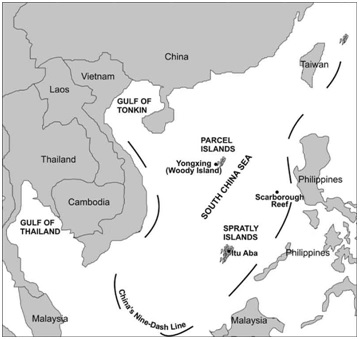
In 2012, China sent marine surveillance ships to surround Scarborough Shoal, 123 miles from the strategic port of Subic Bay and within Philippines’s 200-mile exclusive economic zone (EEZ). The Philippines sent naval boats to oppose the capture of Scarborough, but backed off to pursue a legal strategy instead.[3] Three years later, China still controls Scarborough Shoal.
In 2013, China used its air force to claim an Air Defense Zone (ADZ) over the seas recognized in international law as belonging to Japan. China announced that any aircraft in the zone would have to comply with ADZ composed of its regulations and restrictions, including a requirement that all flights through the region notify Chinese aeronautical authorities. Japan protested China’s actions, and the United States soon thereafter flew nuclear-capable bombers through the ADZ without notifying Beijing. The ADZ includes the Senkaku Islands, which Japan has controlled since 1895. China has contested Japan’s ownership of the island,[4] a dispute that escalated when Tokyo’s governor announced he would use public money to purchase the uninhabited islands from their private Japanese owner.[5] Although the islands are too small to support human life, Japan has argued that under the UN Convention on the Law of the Sea (UNCLOS), it should have an EEZ in the surrounding waters, which contain oil and gas reserves.
Please click Here to read or download the whole report.
by Admin | Oct 10, 2014 | Editorial Board

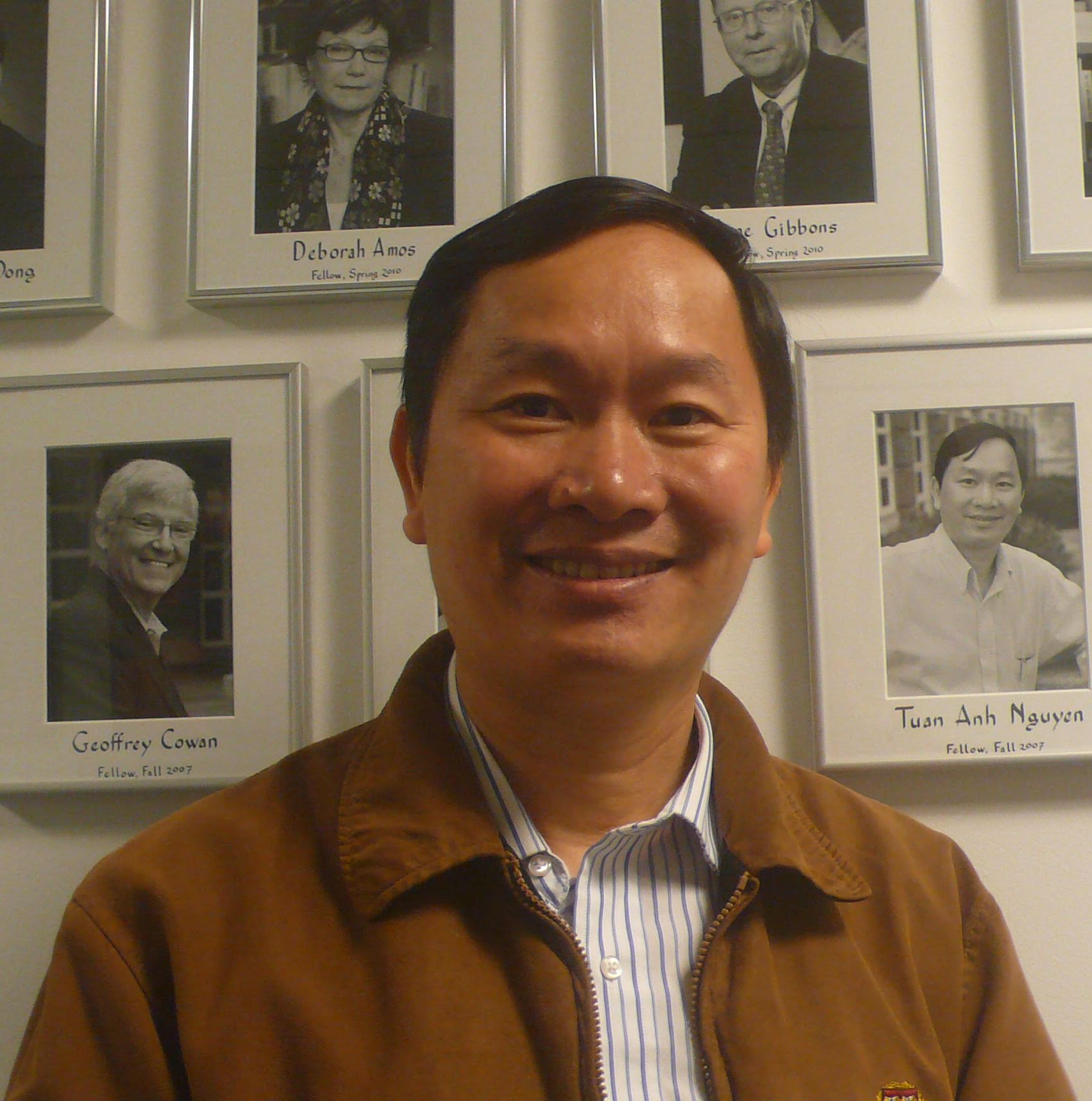
Co-Founder, and Chief Executive Officer of The Boston Global Forum
Mr. Nguyen Anh Tuan is co-founder and Director of The Michael Dukakis Institute for Leadership and Innovation (MDI), and co-founder and CEO of The Boston Global Forum (BGF).
Tuan is recognized globally for his pivotal role as a Vietnam Government reformist, who has successfully fostered freedom-of-expression, vigorous open debate and private enterprise in a nation that has become a leader in commerce, culture, and the innovation as well as a close ally of the West.
For his AI World Society Initiative and the concepts of AI-Government he developed, Vietnam National Television (VTV) named him Person of The Year 2018.
He is the Founder and Chairman of the VietNamNet Media Group and the Founder and Editor-in-Chief of VietNamNet, Vietnam’s preeminent online newspaper. Additionally, Tuan was the Founder and CEO of VASC Software and Media Company and VietNet, the first Internet service provider in Vietnam.
In recognition of his contributions to his native country, the Government of Vietnam named Tuan one of the nation’s 10 most outstanding young talents in 1996.
Under Tuan’s leadership, VietNamNet has raised significant political issues resulting in greater Vietnamese Government transparency and freedoms. He pioneered an interactive live format called the VietNamNet Online Roundtable that allowed online Vietnamese citizens to participate in interviews with leading political, social and cultural figures as well as foreign dignitaries. In 2009, Tuan conceived of an annual global initiative making September 9th World Compassion and Reconciliation Day. Additionally, he founded and organized the Vietnam National Concert to be held annually on September 2nd, Vietnam’s National Day holiday.
In 2011, he became a Pacific Leadership Fellow at the School of International Relations and Pacific Studies at the University of California San Diego. That year he addressed the prestigious Club de Madrid Conference, a gathering of former prime ministers and presidents, in a speech titled Democracy and Digital Technology.
From February 2011 to July 2014 Tuan was an Associate of the Shorenstein Center on Media, Politics and Public Policy, John F. Kennedy School of Government, Harvard University.
He later became a Visiting Scholar at the College of Communication, Boston University for the academic years 2014-2015, and 2015-2016.
As a Shorenstein Fellow at Harvard Kennedy School in 2007, Tuan researched major trends in the development of electronic media in Vietnam.
Tuan served on the Harvard Business School Global Advisory Board from 2008 to 2016. He also serves on the Board of Trustees of the Free-for-All Concert Fund in Boston. Since July of 2015 to November of 2017 he served as Chair of the International Advisory Committee of UCLA – UNESCO Chair on Global Learning and Global Citizenship Education at the University of California Los Angeles.
Tuan is a co-founder, and Chief Executive Officer of the Global Citizenship Education Network (GCEN), a collaboration between the Boston Global Forum and the UNESCO-UCLA Chair on Global Learning and Global Citizenship Education as well as being co-founder and Former Associate Editor of UCLA’s Global Commons Review.
In an effort to enhance cybersecurity worldwide, Tuan created Global Cybersecurity Day, produced the recent BGF-G7 Summit Initiative, and coauthored the Ethics Code of Conduct for Cyber Peace and Security (ECCC).
In November of 2017, Tuan and Governor Michael Dukakis founded AI World Society Initiative, and on June 25, 2018, Tuan and Governor Dukakis, Professor Thomas Patterson, Professor Nazli Choucri announced the Concepts of AI-Government. In 2018, Tuan created the World Leader in AI World Society Award, and the AI World Society Distinguished Lecture, and became the co-author of AI World Society Ethics and Practices Index.