By performing deep learning at the speed of light, this chip could give edge devices new capabilities for real-time data analysis.
As more connected devices demand an increasing amount of bandwidth for tasks like teleworking and cloud computing, it will become extremely challenging to manage the finite amount of wireless spectrum available for all users to share.
Engineers are employing artificial intelligence to dynamically manage the available wireless spectrum, with an eye toward reducing latency and boosting performance. But most AI methods for classifying and processing wireless signals are power-hungry and can’t operate in real-time.
Now, MIT researchers have developed a novel AI hardware accelerator that is specifically designed for wireless signal processing. Their optical processor performs machine-learning computations at the speed of light, classifying wireless signals in a matter of nanoseconds.
The photonic chip is about 100 times faster than the best digital alternative, while converging to about 95 percent accuracy in signal classification. The new hardware accelerator is also scalable and flexible, so it could be used for a variety of high-performance computing applications. At the same time, it is smaller, lighter, cheaper, and more energy-efficient than digital AI hardware accelerators.
The device could be especially useful in future 6G wireless applications, such as cognitive radios that optimize data rates by adapting wireless modulation formats to the changing wireless environment.
Credit: Sampson Wilcox, Research Laboratory of Electronics, Courtesy of MIT
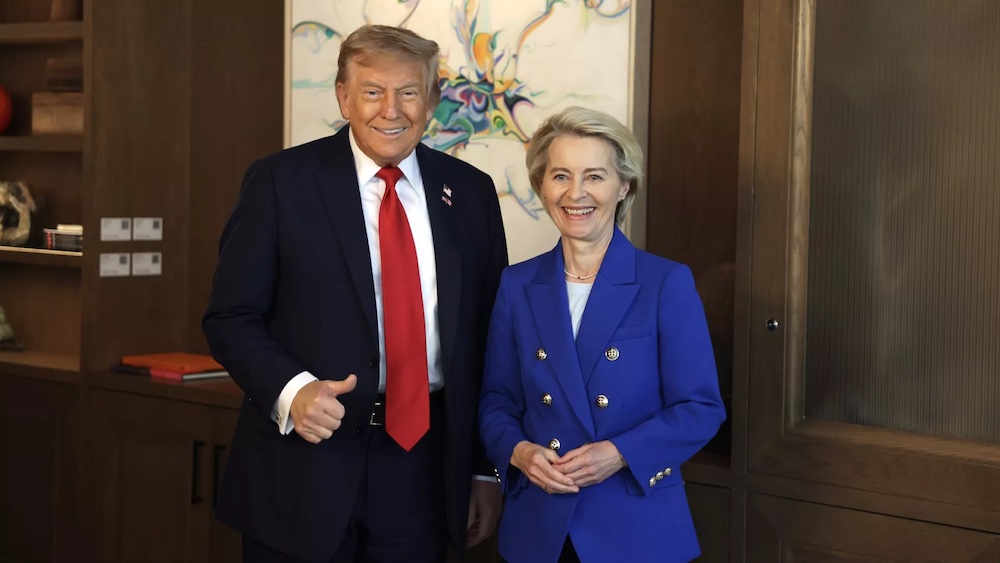
KANANASKIS, Alberta — European Commission President Ursula von der Leyen, 2020 World Leader for Peace and Security Award recipient, on Monday June 16, 2025 tried to find common ground with Donald Trump by criticizing China’s export restrictions on raw materials used for cars, batteries and wind turbines.
During a session on the global economy at the G7 summit in Kananaskis, Canada, von der Leyen slammed Beijing for disrupting global trade by deploying subsidies to boost its own companies, according to an EU readout of the event. The chief of the EU executive accused China of “weaponizing” its leading position in producing and refining critical raw materials, and of ignoring global trade rules to undercut competitors.
“When we focus our attention on tariffs between partners, it diverts our energy from the real challenge — one that threatens us all,” von der Leyen said in a pointed comment aimed squarely at Trump, who sat near her at the G7 roundtable.
“On this point, Donald is right — there is a serious problem,” von der Leyen added, encouraging the U.S. president to join forces with his allies to address China’s trade imbalances, rather than impose tariffs on his allies.
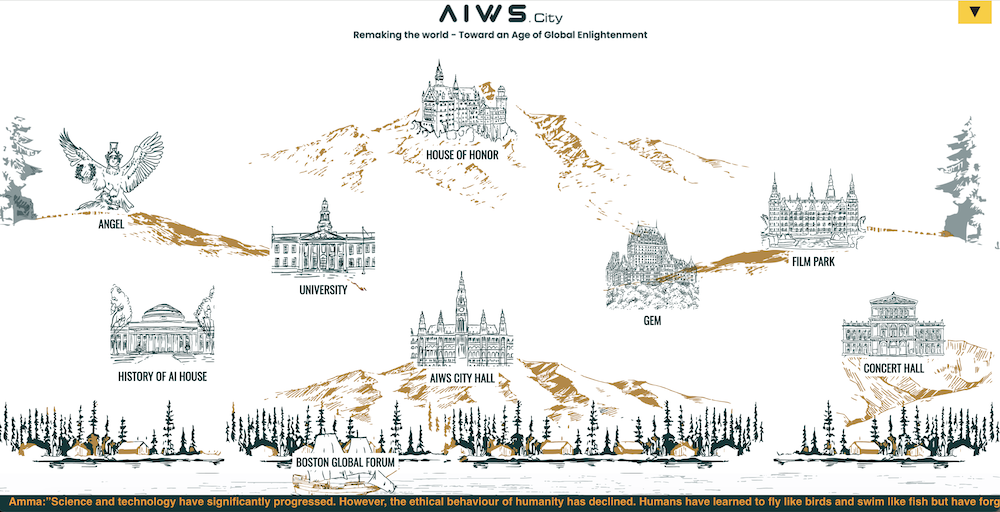
AIWS.city is the official platform for preserving, curating, and showcasing the AI World Society (AIWS) Digital Assets and esteemed digital assets of the world—a living archive of humanity’s most significant contributions to peace, security, innovation, and ethical advancement in the age of Artificial Intelligence.
At the heart of AIWS.city is the distinguished collection of AIWS World Leader Tokens—authentic, verified digital representations of the legacies of world leaders who have been honored with the World Leader for Peace and Security Award and the World Leader in AIWS Award by the Boston Global Forum (BGF).
These tokens are hosted in the House of Honor, a central district within AIWS.city dedicated to preserving the digital legacies of global visionaries, including award recipients, AIWS founders, and outstanding contributors to the Boston Global Forum and the Michael Dukakis Institute.
The first AIWS World Leader Tokens will officially launch in the House of Honor at AIWS.city on November 4, 2025, during the BGF Conference at Harvard University’s Loeb House. At this special conference, the Boston Global Forum will also honor the recipient of the 2025 World Leader for Peace and Security Award—marking a historic convergence of recognition, reflection, and digital innovation.
AIWS.city is governed by the AIWS Asset Board, chaired by Governor Michael Dukakis, Chairman and Co-founder of BGF, and composed of members of the BGF Board and esteemed global thinkers and innovators. The platform upholds the highest standards of integrity, transparency, and ethical stewardship in the curation of digital assets.
Through AIWS.city, scholars, leaders, educators, and citizens around the world can access, engage with, and exchange values through digital assets that embody the principles of enlightenment, democracy, and responsible AI.
Visit AIWS.city — where the legacies of world leaders and visionaries are preserved to guide the future of our digital civilization.
The first official Boston Plurality Summit, held online on June 9, 2025, marked a historic milestone in global finance, unveiling the “AIWS Bank and Digital Assets Model” under the Boston Finance Accord’s 24/7 AI Governance Vision. Hosted by the Boston Global Forum (BGF), the summit brought together a distinguished panel to redefine banking with ethical AI and blockchain.
Speakers included former Japanese State Minister Yasuhide Nakayama, former French Minister Elisabeth Moreno, former Taiwanese Digital Minister Audrey Tang, Glen Weyl—one of the 10 most influential figures in blockchain—Nguyen Anh Tuan, Co-Chair and CEO of BGF, and Jeffrey Saviano, EY Global Emerging Technology Strategy & Governance Leader and AI Ethics Director at Harvard University. They explored the AIWS Bank model, featuring quantum AI for predictive analytics, a global blockchain network for zero-latency transactions, and a digital asset hub for tokenized cultural assets like AIWS Top 100 films, World Leader for Peace and Security Award, World Leader in AIWS, and AIWS Music for Humanity.
The summit concluded with the formation of a team of architects to design the AIWS Bank, the establishment of the AIWS Digital Asset Board to oversee asset creation, and a decision to designate AIWS City as the global hub for AIWS digital assets and the world’s most esteemed digital assets.
“This summit launches a new era in finance,” said Nguyen Anh Tuan. “AIWS Bank will unite humanity through technology, guided by the Accord’s vision.”
The event aligns with Boston’s leadership in AI and finance, setting the stage for further developments at the AIWS Cinema Summit on January 9, 2026.
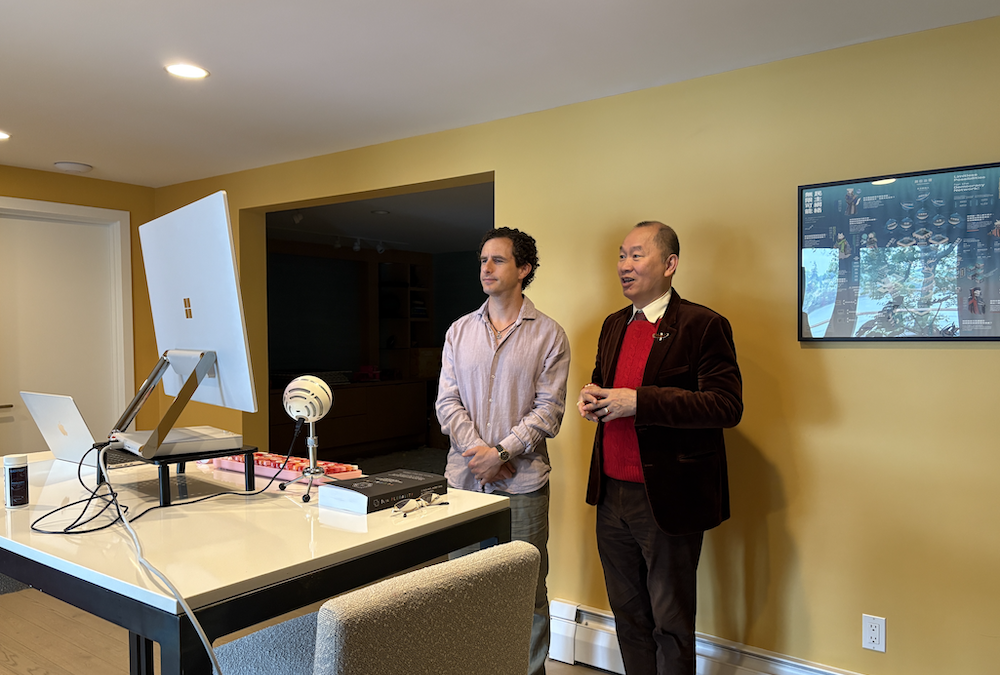
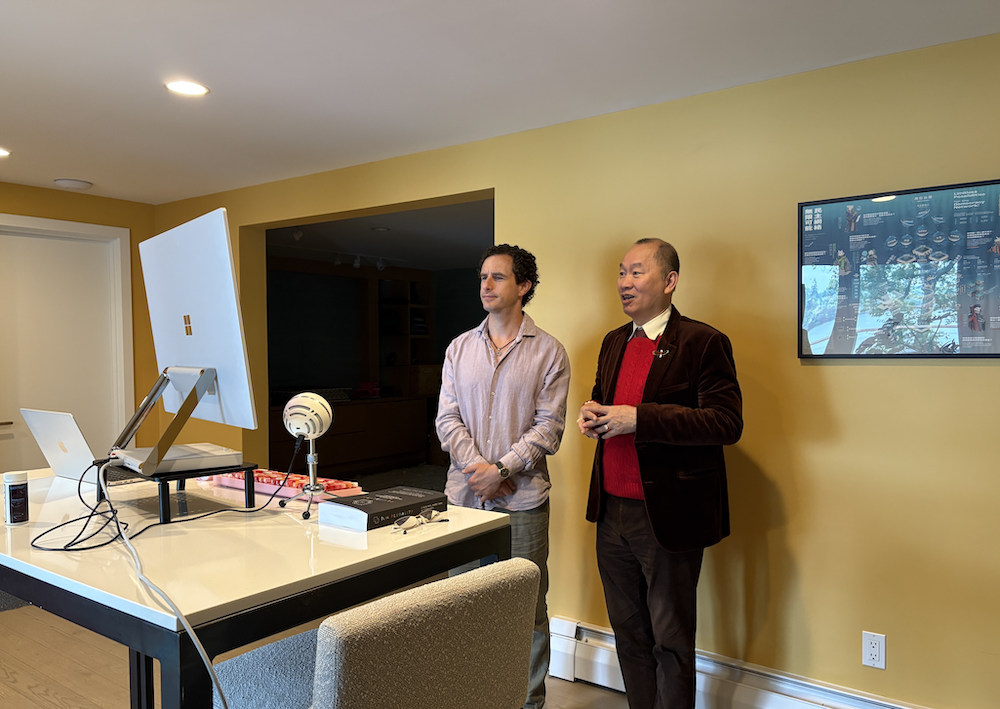
Nguyen Anh Tuan and Glen Weyl at the Online Boston Plurality Summit June 9, 2025
The Boston Global Forum expresses deep concern over the escalating military conflict between Israel and Iran, which poses a serious threat to regional and global peace, security, and stability.
We urge the Islamic Republic of Iran to fully respect the requirements of the United Nations, including halting its nuclear weapons development program and ensuring complete transparency and accountability in its nuclear activities. International trust must be rebuilt through cooperation with the International Atomic Energy Agency (IAEA) and compliance with international norms.
At the same time, we call on Israel to refrain from further military strikes against Iran if Iran fulfills these UN obligations and demonstrates verifiable commitment to peaceful nuclear development. Preventive aggression, without diplomatic engagement and clear evidence of violations, risks destabilizing the region and undermining pathways to peace.
The Boston Global Forum stands for a rules-based international order where disputes are resolved through dialogue, diplomacy, and respect for international law. We encourage all parties to engage in meaningful negotiations and to work with global institutions toward a peaceful, secure, and cooperative future for the Middle East.
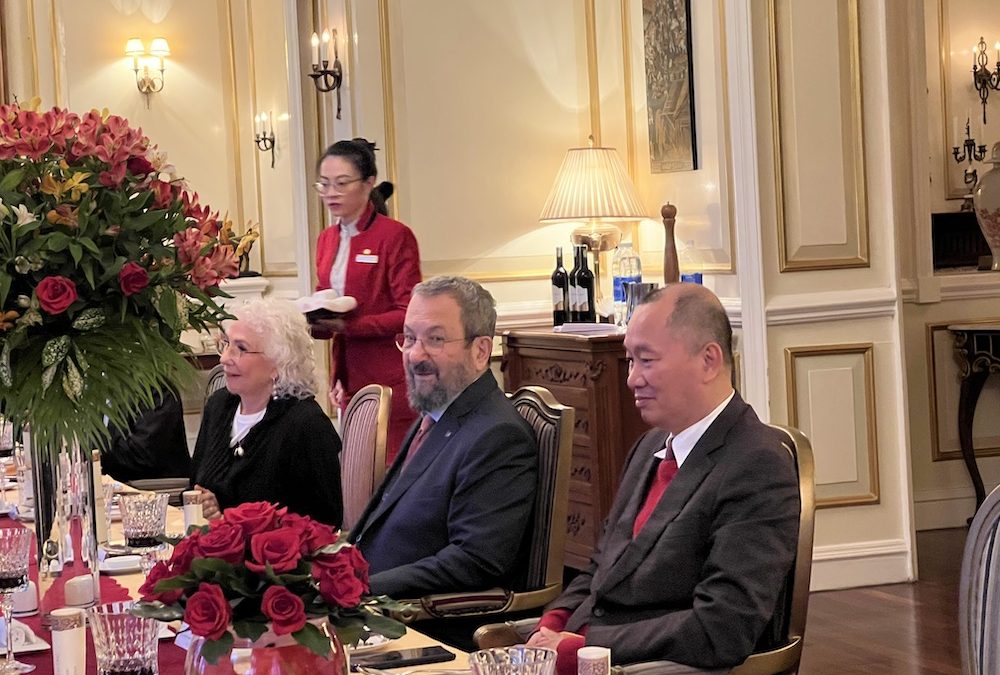
Nguyen Anh Tuan, Co-Chair and CEO of BGF and Former Israeli Prime Minister Ehud Barak
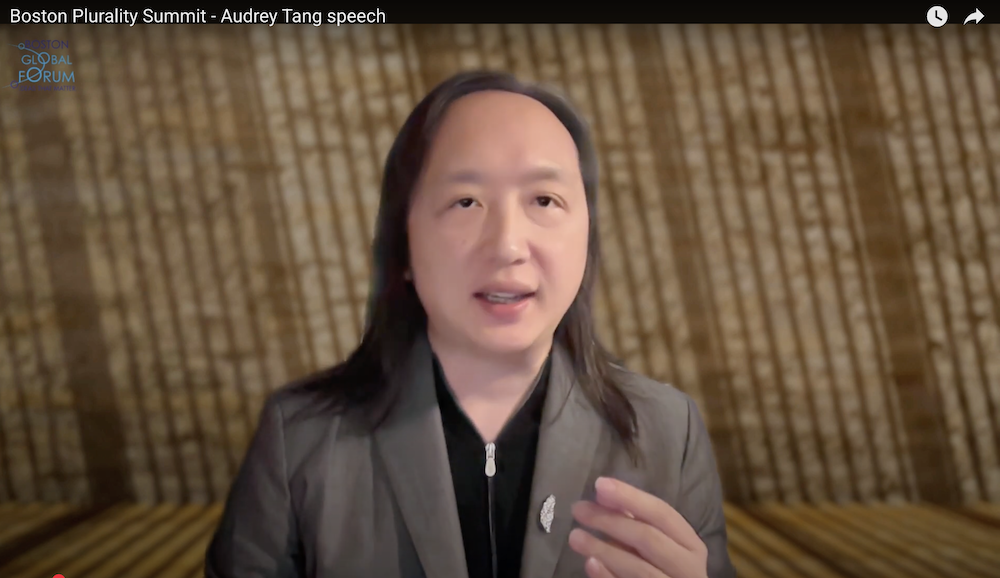
On June 9, 2025, former Taiwan Digital Minister Audrey Tang, recipient of the 2025 World Leader in AIWS Award, delivered a powerful keynote address at the inaugural Boston Plurality Summit.
Below are the full text and video of her inspiring speech:
“Good local time everyone and welcome to the Boston Plurality Summit. Today we stand at an inflection point. The code we write will decide whether intelligence is monopolized or democratized. Right now, the dominant narrative for AI is one of centralization, of raising to a super intelligence, a technological singularity. But there is another path, one grounded not in theory, but in proven democratic practice. For a decade, Taiwan built digital tools used not to broadcast messages from the top down, but to create a space for broad listening at scale. A place where complex national policies were co-written by thousands of citizens, bringing everyone from taxi drivers to tech pioneers into the same conversation network. The crucial lesson from the Taiwan model was about the power of trust. It proved that a system designed to listen to a plurality of voices, turning uncommon ground into common knowledge, doesn’t just produce better outcomes, it produces more legitimate outcomes. It builds epistemic security not through authority but through relationship. So now let us apply that lesson to this moment. What if we took the citizen centered model as the foundation for an AI ecosystem? This is the visionary leap that we must take. Imagine AI not as an oracle that dictates answers but as a facilitator that deepens our understanding. Imagine locally aligned models that don’t replace human judgment, but strengthen it by clarifying points of consensus and contention. Picture AI systems organically aligned with communities to represent an entire bio region like a river, not to speak for it, but to bring its data, its health, its renewal into our human economy with clarity. This isn’t artificial general intelligence. This is augmented group intelligence. The choice before us is clear. We can use AI to concentrate power to create brittle epistemic monoculture that sparrows out of control. Or we can use AI to distribute wisdom, fostering the resilient, positive mess of a truly pluralistic society. The future of intelligence is not singular. It is plural. And our task is not to build a machine that can outsink us, but to build the tools that help us think together. Thank you for listening. Live long and prosper.”
Good morning, everyone.
First of all, I would like to express my sincere gratitude to Governor Michael Dukakis, Mr. Nguyen Anh Tuan, and the Boston Global Forum for giving me the opportunity to speak at this meaningful discussion.
As someone who served as Japan’s State Minister of Defense and State Minister for Foreign Affairs, I see the development of AI in finance not only as a matter of innovation, but as a matter of trust, national security, and democratic integrity.
Let me begin with the Abe Financial AI Protocol. This protocol is deeply rooted in the legacy of the late Prime Minister Shinzo Abe, who championed the vision of a Free and Open Indo-Pacific and a rules-based international order.
Today, we are called upon to build a pioneering model of a Bank and Finance Ecosystem in the Age of AI. The Abe Financial AI Protocol provides the foundation for such a model grounded in transparency, accountability, and democratic values.
This means building AI-powered financial systems that are:
* Explainable
* Human centered
* Resilient against abuse or manipulation
Japan is ready to lead and participate in pilot projects alongside partners in the U.S., EU, and democratic Asia to ensure that our financial AI systems are not tools of exploitation, but pillars of trust and opportunity.
Now, with regard to the cybersecurity of this new kind of AI-driven financial system I would like to propose a three-layered approach:
1. Real-time threat detection using AI x AI AI-powered systems that detect anomalies and prevent intrusions by interacting with other AI in real-time.
2. Zero-trust architecture at every layer From authentication to transaction logging, nothing should be assumed as “safe by default.”
3. International Cyber-Command Cooperation Framework Just as central banks cooperate through BIS, we must form a coalition of cyber units across democratic nations, ensuring cross-border incident response and shared threat intelligence in real-time.
Japan, with its expertise in both cyber-defense and digital governance, can serve as a regional coordinator for this effort especially in Asia-Pacific.
Now, regarding the Boston Finance Accord for AI Governance 24/7 Finance never sleeps. And neither can our governance.
This Accord aims to create a real-time, always on ethical framework to govern AI in finance across borders, across time zones, across crises.
We must build a trust network among democratic nations with shared values, shared standards, and shared responsibility.
In building this new AI-powered financial ecosystem, one of my deepest concerns is this: How can we shield it from the destructive forces of terrorism, war, and authoritarian manipulation?
In today’s world, the line between physical conflict and digital conflict is disappearing. We need systems that are resilient, decentralized, and ethically grounded, so that even in times of geopolitical crisis, our financial systems continue to serve people — not power.
Ultimately, our goal should be to create an ecosystem that remains neutral, fair, and immune to coercion, no matter which side of the global struggle between democracy and authoritarianism one stands.
In closing, as we mark 80 years since the end of World War II, we are called to build new rules of peace and stability. Not through force, but through foresight. Not through fear, but through trust.
Let us work together to realize this vision, and to honor the legacy of leaders like Shinzo Abe. Thank you very much.
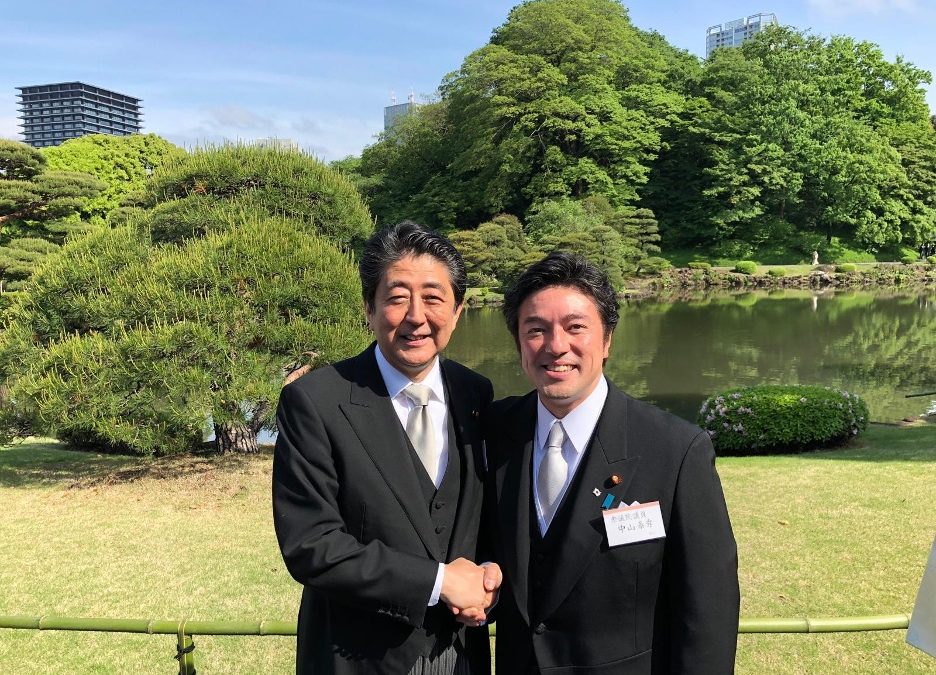
Yasuhide NAKAYAMA, Former Japanese State Minister of Foreign Affairs
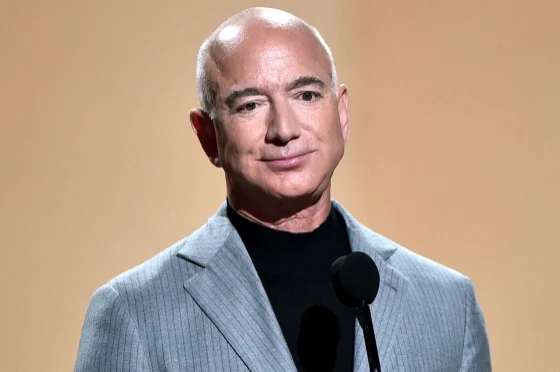
Sam Altman, Jeff Bezos, Elon Musk, and others may have slightly different goals, but their grand visions for the next decade and beyond are remarkably similar.
They include aligning AI with the interests of humanity; creating an artificial superintelligence that will solve all the world’s most pressing problems; merging with that superintelligence to achieve immortality (or something close to it); establishing a permanent, self-sustaining colony on Mars; and, ultimately, spreading out across the cosmos.
Three features play a central role with powering these visions, says Adam Becker, a science writer and astrophysicist: an unshakable certainty that technology can solve any problem, a belief in the necessity of perpetual growth, and a quasi-religious obsession with transcending our physical and biological limits.
In his timely new book, More Everything Forever: AI Overlords, Space Empires, and Silicon Valley’s Crusade to Control the Fate of Humanity, Becker reveals how these fantastical visions conceal a darker agenda.
Date: June 2021
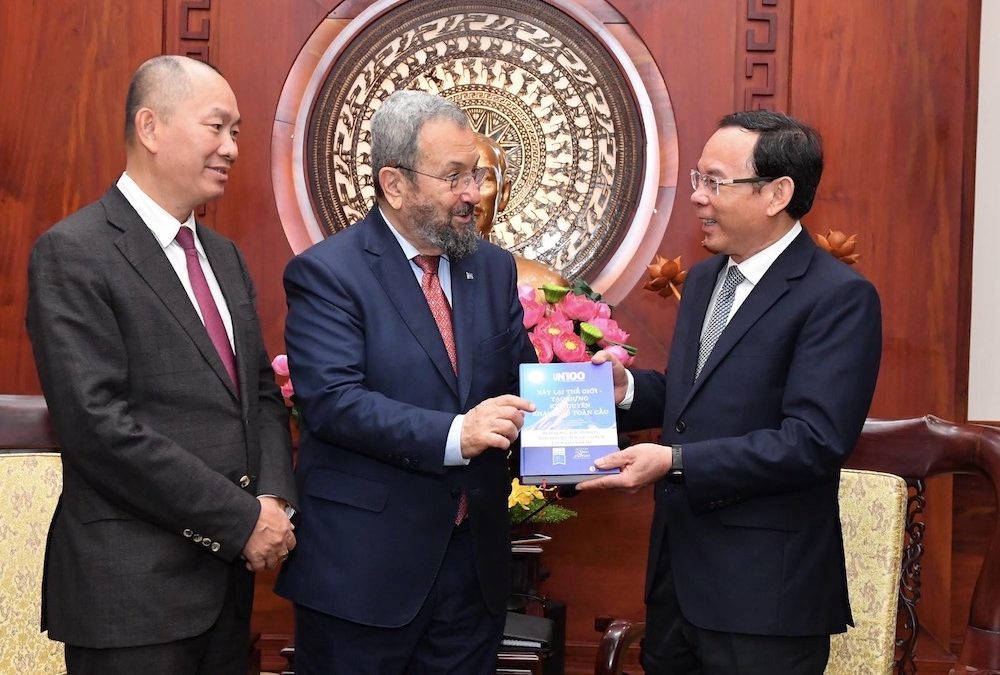
In June 2021, the Boston Global Forum (BGF) and the United Nations Academic Impact (UNAI) co-published the book “Remaking the World – Toward an Age of Global Enlightenment”, marking a pivotal moment in the history of artificial intelligence. Edited by Nguyen Anh Tuan, this work introduced the AI World Society (AIWS) model, a pioneering initiative launched by BGF in 2017. The book presents a visionary framework for integrating AI into politics, economics, governance, education, healthcare, innovation, technology, and culture, featuring contributions, include Japanese Prime Minister Shinzo Abe, European Commission President Ursula von der Leyen, Massachusetts Governor Michael Dukakis, UNAI’s Founding and First Chief Ramu Damodaran, Harvard’s Professor Joseph Nye, MIT’s Professor Alex Pentland, Internet pioneer Vint Cerf, and UCLA’s Professor Judea Pearl.
This collaborative effort outlined bold concepts and solutions—such as ethical AI governance, global digital inclusion, and cultural innovation—that have begun to materialize.
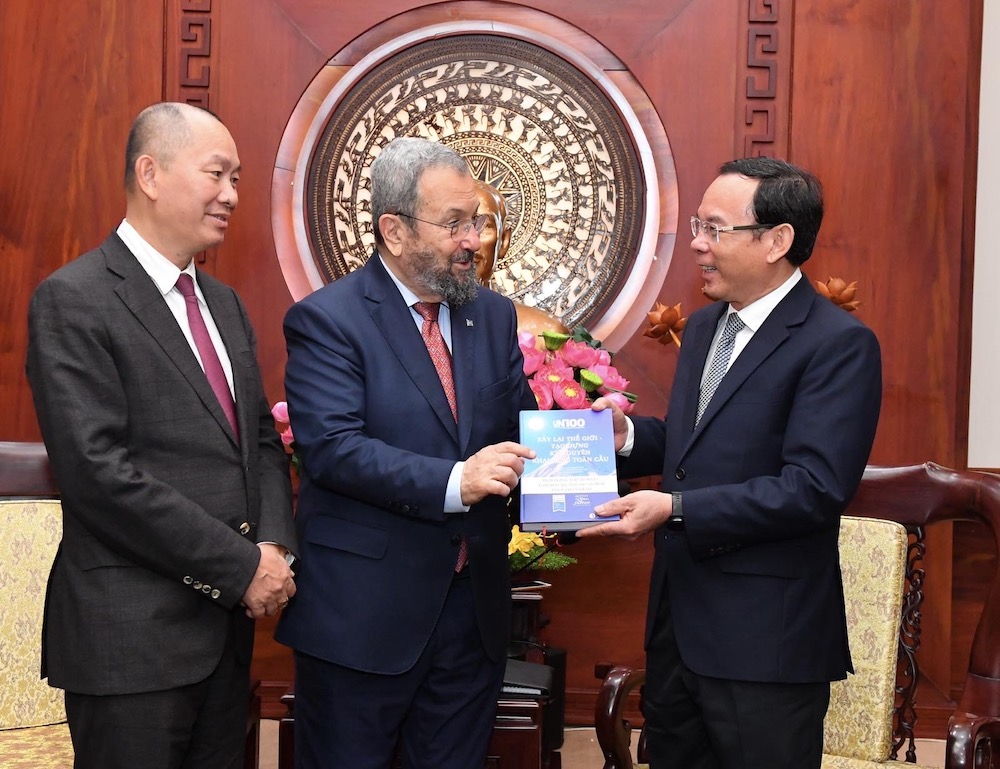
Former Israeli Prime Minister Ehud Barak presents the book Remaking the World – Toward an Age of Global Enlightenment to Mr. Nguyen Van Nen, a high-ranking Vietnamese leader, in August 2022