
by Editor BGF | Sep 1, 2025 | News, Shaping Futures
The U.S. General Services Administration (GSA) has launched USAi, a secure generative AI evaluation suite described as the “infrastructure for America’s AI future.” This platform allows federal agencies to test and evaluate emerging AI technologies collectively, reducing duplication and ensuring efficiency.
Key features of USAi include:
- Adoption of moderate FISMA security standards to balance trust and protection.
- Empowering agencies to select and experiment with the tools best suited to their missions.
- Establishing regulatory guardrails to guide responsible AI adoption.
USAi reflects the White House’s AI Action Plan and signals a commitment to winning the AI race by embedding responsibility, security, and innovation into government infrastructure.
AIWS Government 24/7 Perspective: USAi embodies elements of the AIWS Government 24/7 model, where technology is designed to continuously serve citizens with transparency, security, and inclusivity. By providing a shared, trusted platform for federal experimentation, USAi points toward the kind of always-on, ethical governance infrastructure that AIWS envisions—one that can respond in real-time to challenges, protect public trust, and make government smarter, more efficient, and more humane in the Age of AI.
📖 Full article here:

by Editor BGF | Sep 1, 2025 | World Leader for Peace and Security, News, World Leaders in AIWS Award Updates
European Commission President Ursula von der Leyen, recipient of the 2020 World Leader for Peace and Security Award, emphasized that the security risks Estonia long warned about have now materialized. Speaking at Ämari Air Base, she underlined the EU’s determination to strengthen collective defense, drawing on Estonia’s example.
A key step is the Security Action for Europe (SAFE) loan instrument, through which Estonia plans to borrow up to €3.6 billion to raise its defense spending above 5% of GDP. Estonian Prime Minister Michal stressed that while progress has been made, “the security situation is not getting better” and called for more innovative solutions and increased support for nations heavily investing in collective defense.
📖 Full article here: ERR News – Von der Leyen: Russia risks Estonia long warned us about have materialized
BGF–AIWS Perspective: As Europe adapts to new security realities, the vision of AIWS Government 24/7 offers a model for harnessing technology, ethics, and collective intelligence to strengthen resilience. Building defense in the AI Age requires not only funding and alliances, but also innovative governance that ensures democracy and human dignity remain at the core of collective security.
https://news.err.ee/1609784115/von-der-leyen-russia-risks-estonia-long-warned-us-about-have-materialized
by Editor BGF | Sep 1, 2025 | Global Alliance for Digital Governance
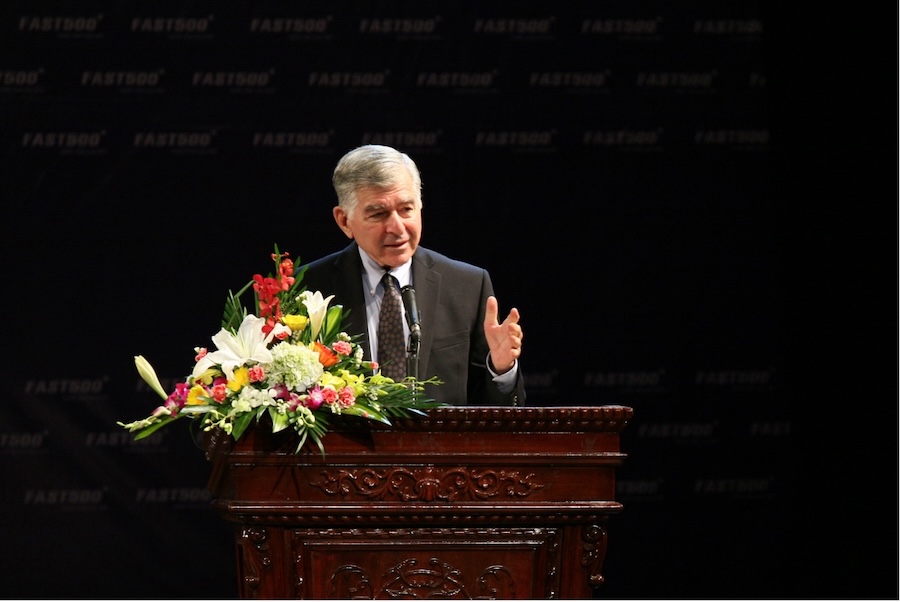
The Global Association of Risk Professionals (GARP) recently featured the Boston Global Forum (BGF) and AI World Society (AIWS) for pioneering ethical AI frameworks across governance, finance, and digital assets. The article underscores how BGF’s initiatives—like the Social Contract for the AI Age, the Boston Finance Accord for AI Governance 24/7, and AIWS Digital Assets—are models of practical, human-centered technological governance.
GARP Board of Trustees (2025)
The GARP Board of Trustees brings together senior leaders from banking, finance, and academia, guiding the global risk profession:
- Bradford Hu – Chair of the Board; EVP & Chief Risk Officer, State Street Corporation
- Victor Ng, Ph.D. – Chair, Audit & Risk Committee; former Head of Risk Architecture, Goldman Sachs
- Jacques Longerstaey – Chair, Compensation Committee; EVP & Chief Risk Officer, Voya Financial
- Geoffrey Greener – Chair, Governance Committee; Chief Risk Officer, Bank of America
- Richard Apostolik – Trustee; President & CEO of GARP
- Bennett W. Golub, Ph.D. – Trustee; Senior Managing Director & Chief Risk Officer, BlackRock
- René M. Stulz, Ph.D. – Trustee; Everett D. Reese Chair of Banking & Monetary Economics, The Ohio State University
- William Martin – Trustee; Chief Risk Officer, Abu Dhabi Investment Authority
- Lewis O’Donald – Trustee; Former Group Chief Risk Officer, Nomura Holdings
- Kerry A. Moynihan – Trustee; Senior Client Partner, Korn Ferry
- Ben Golub – Trustee; Senior Policy Advisor, BlackRock
- Paul Sharma – Trustee; Managing Director, Alvarez & Marsal; former UK Prudential Regulation Authority Deputy Head
Together, this board represents the highest standards in global financial governance, reinforcing the credibility of GARP’s recognition of BGF–AIWS as a pioneer in ethical AI and digital governance.
📖 Full article here: GARP – Boston Think Tank Brings Ethical AI Principles into Governance, Finance, Banking and Blockchain
📑 Full list of Trustees: GARP – Board of Trustees
https://www.garp.org/risk-intelligence/culture-governance/boston-think-tank-brings-250815?hs_preview=wpIBIORd-194312898661

by Editor BGF | Aug 24, 2025 | World Leader for Peace and Security, News, World Leaders in AIWS Award Updates
The recipients of the World Leader for Peace and Security Award and the World Leader in AIWS Award represent some of the most distinguished leaders of our time. Through their vision, courage, and dedication, they embody the principles of responsibility, compassion, and innovation that the world urgently needs.
Together, these leaders contribute to shaping a new culture of leadership for humanity, guided by the spirit of the BGF–AIWS Family Culture. This culture is built on ethics, wisdom, love, and respect — principles that transcend borders, ideologies, and rivalries. It is a culture that embraces dialogue over conflict, innovation over stagnation, and compassion over division.
Within the framework of the Boston Global Forum (BGF) and the AI World Society (AIWS), these leaders are not only honored for their achievements but are also called to inspire future generations. Their collective example strengthens a global movement for enlightened leadership, one that seeks to build an AI World Society where technology is aligned with democracy, human dignity, and peace.
In this way, the laureates of BGF–AIWS Awards stand as pillars of a better future: a world where leadership is not about power, but about service; not about dominance, but about compassion; not about self-interest, but about humanity.
Please see full here: https://bostonglobalforum.org/news/the-culture-of-the-bgf-aiws-family/
Nguyen Anh Tuan presented 2023 World Leader for Peace and Security Award to Amma
by Editor BGF | Aug 24, 2025 | News
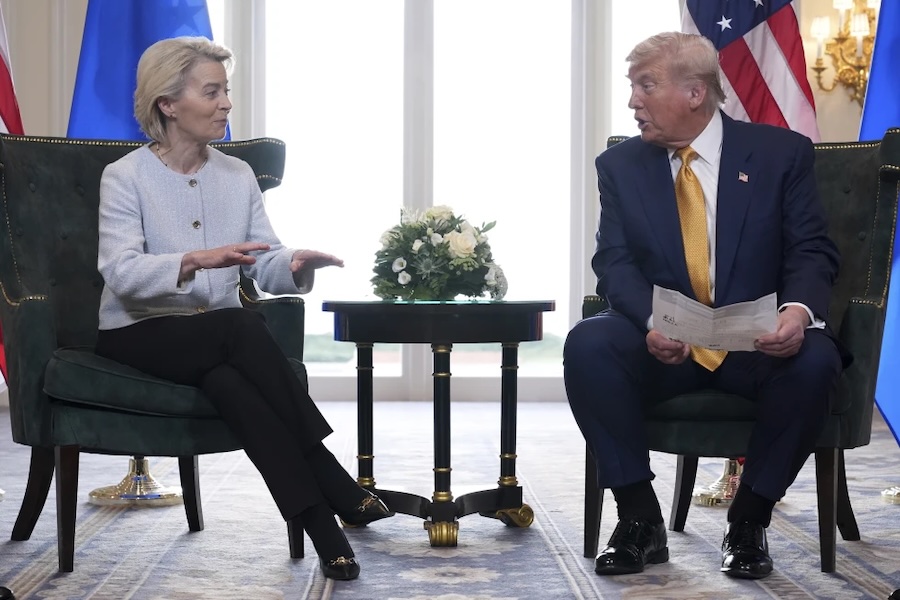
The EU and U.S. have issued a Joint Statement creating a framework for fair, balanced, and mutually beneficial trade and investment, building on the July 27 political agreement between President Ursula von der Leyen and President Donald Trump. The deal restores stability and predictability in transatlantic trade, benefiting businesses and citizens on both sides.
Key elements include:
- A 15% maximum tariff ceiling on most EU exports to the U.S., including cars, pharmaceuticals, semiconductors, and lumber.
- Special tariff treatment (MFN rates only) for certain sectors such as cork, aircraft, and generic pharmaceuticals, effective September 1.
- Joint work on addressing steel and aluminium overcapacity and securing supply chains.
While the EU maintains that high tariffs hurt the global economy, the agreement prevents escalation, safeguards a €1.6 trillion annual economic relationship, and protects millions of EU jobs. President von der Leyen hailed the deal as a step forward for citizens, industry, and transatlantic cooperation, with further tariff reductions and areas of collaboration to come.
Please see full here: https://ec.europa.eu/commission/presscorner/detail/en/ip_25_1973
and: https://apnews.com/article/us-eu-trade-trump-von-der-leyen-f49188375527cac6a4d458b49f641bab

by Editor BGF | Aug 20, 2025 | Statements, News, Publications
By Governor Michael Dukakis and Nguyen Anh Tuan
Boston, August 18, 2025
Dear BGF–AIWS Family Members,
We live in a time of profound change. Technology—especially artificial intelligence—is reshaping our world, creating both extraordinary opportunities and urgent challenges. Together, we are called to build a new model of democracy, guided by advanced technologies, ethics, and human-centered values.
The BGF–AIWS Family is composed of distinguished leaders, policymakers, thinkers, innovators, and creators who hold influence and impact across the globe. As a family, we are united by our commitment to contribute ideas, innovations, and solutions that advance humanity and shape a true AI World Society (AIWS).
Our culture is founded on these principles:
· Global Friendship and Service
We see the people of all nations as our friends. Our mission is to serve them, to help them live better lives with knowledge, ethics, and innovation in the Age of AI.
· Respect for Laws and Values, Led by Compassion
We live and work by rules and laws, but above all we lead with love, compassion, understanding, and sharing. We respect the diverse cultures of all peoples.
· Family of Respect and Support
Within the BGF–AIWS Family, we see each member as true family—bound by mutual respect, love, compassion, and the readiness to support one another.
· Shared Success
The achievements and successes of each member are the success of us all. Every step forward by one strengthens our collective journey toward realizing AIWS.
· Commitment to Ethical AI and Good Governance
We commit ourselves to building a world free from hate, rivalry, cruelty, and feuds— where AI is developed and applied responsibly, ethically, and under good governance.
· Joy, Innovation, and Optimism
We live as a warm-hearted family of joy and innovation, always looking forward with optimism to a better future. Together, we work to solve the world’s problems with creativity, wisdom, and compassion.
The BGF–AIWS Family is not only an idea—it is a living community of bright innovation and human warmth. In unity, we carry forward the spirit of AIWS to build a just, compassionate, and enlightened future for all.
Governor Michael Dukakis
Co-founder and Chair, Boston Global Forum
Nguyen Anh Tuan
Co-founder and Co-Chair, Boston Global Forum
by Editor BGF | Aug 24, 2025 | Shinzo Abe Initiative for Peace and Security, News
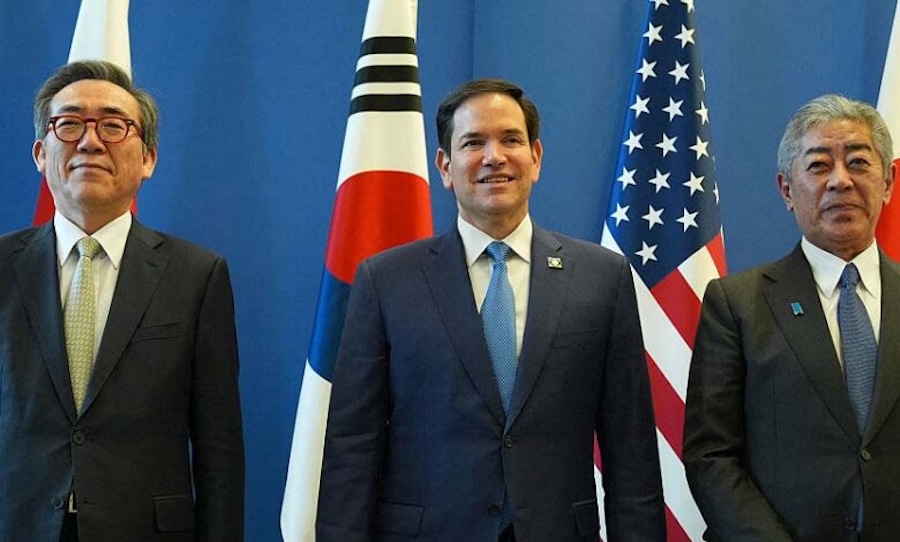
The Trilateral Security Cooperation (TSC) between the United States, South Korea, and Japan has become a critical framework for peace and stability in Northeast Asia, addressing threats from North Korea while countering China’s growing military and technological influence. Rooted in decades of collaboration, the TSC was strengthened under Obama, expanded under Biden, and institutionalised through formal agreements and trilateral exercises. Yet its future is clouded by political change: President Trump’s renewed leadership, South Korea’s internal turmoil, and lingering Japan–Korea historical disputes all raise questions about the alliance’s durability. As regional threats intensify and U.S. policy shifts toward “America First” priorities, sustaining the trilateral will require bipartisan support, pragmatic diplomacy, and a shared vision of security. For the Shinzo Abe Initiative at BGF, the endurance of this trilateral partnership is central to realizing Abe’s vision of a Free and Open Indo-Pacific built on trust, rules, and democratic cooperation.
Please see full here: ttps://www.orfonline.org/research/us-south-korea-japan-trilateral-challenges-to-an-enduring-security-cooperation

by Editor BGF | Aug 24, 2025 | News, Shaping Futures
The newly launched Report on Emerging Computing Pathways in Quantum, Neuromorphic, and Photonic Computing by the Data Security Council of India (DSCI) highlights how photonic computing could revolutionize the future of information processing. By using light instead of electricity, photonic systems promise unprecedented speed, energy efficiency, and scalability — breakthroughs essential for advancing AI, secure communications, and global digital infrastructure. For the Boston Global Forum and AIWS, photonic computing represents not only a technological leap but also a pathway to shaping a future where innovation is aligned with ethics, resilience, and the values of an AI World Society.
Please see full here: https://www.apnnews.com/report-on-emerging-computing-pathways-in-quantum-neuromorphic-and-photonic-computing-launched-by-dsci/

by Editor BGF | Aug 24, 2025 | News
(AIWS Peace Symphony)
The Symphony of Peace and Humanity is a landmark work created under the vision of the Boston Global Forum (BGF) and the AI World Society (AIWS). Composed by human musicians with the assistance of AI, it draws upon Vietnamese folk traditions and the universal language of symphonic music to tell a timeless story: humanity’s struggle, compassion, and triumph.
Inspired by the life and philosophy of King–Buddha Trần Nhân Tông—a leader who defended his nation against invasion and later renounced power to dedicate his life to reconciliation—the symphony journeys through four movements: the determination of resistance, the thunder of battle, the sorrow and compassion of reconciliation, and the radiant joy of peace.
Alongside the full orchestra, Vietnamese traditional instruments such as the đàn bầu and sáo trúc sing with a uniquely human voice, while a choir proclaims a message for our age: “No hatred – Only love.”
This symphony is more than music. It is a cultural and moral statement for the Age of AI, affirming that technology must be guided by ethics, compassion, and human dignity.
“Symphony of Peace and Humanity — AIWS Peace Symphony”
Official Press Conference: December 12, 2025, Boston Symphony Hall
Official Performance: January 9, 2026, Nha Trang, Vietnam, as part of the AIWS Music for Humanity Forum and AIWS Film Park Gala