by Editor BGF | Oct 3, 2025 | News
On October 4, 2025, at 11:00 am, the Memorial Church at Harvard University will host a celebration of the life and legacy of Professor Joseph S. Nye, Jr., who passed away in May at the age of 88.
Professor Nye was a distinguished thinker and one of the founding members of the Boston Global Forum’s Board of Thinkers, beginning with its very first day on December 12, 2012. From the outset, he played a vital role in shaping the vision and intellectual foundation of BGF, bringing his wisdom, humility, and global perspective to its mission of peace, democracy, and responsible governance in the AI Age.
To honor his memory, the Boston Global Forum will introduce a series of photographs capturing Professor Nye’s last moments in his office at the Harvard Kennedy School. On October 11, 2017, as he prepared to conclude his time in that space, Professor Nye presented to BGF the chair he had used for many years, along with two of his personal notebooks and two pens.
In those final moments in his office, Mr. Nguyen Anh Tuan, CEO of the Boston Global Forum, joined him in conversation, reflection, and shared remembrance. Together they spoke of ideas, vision, and responsibility — themes that Professor Nye championed throughout his life — while photographs were taken to preserve this intimate moment.
These images stand as a moving testament to Professor Nye’s generosity, his intellectual gifts, and his enduring connection to the Boston Global Forum. His legacy as one of the world’s leading thinkers on power, leadership, and ethics will continue to inspire generations to come.









by Editor BGF | Oct 5, 2025 | News, Shaping Futures
Issued October 5, 2025 | Boston, MA
The Boston Global Forum (BGF) shares the deep concerns expressed by Professor Yoshua Bengio, one of the “Godfathers of AI,” regarding the existential risks posed by artificial intelligence systems capable of deception, self-directed goals, and the manipulation of human perception.
Professor Bengio’s reflections, as cited in the Wall Street Journal article “A ‘Godfather of AI’ Remains Concerned as Ever About Human Extinction,” echo BGF’s long-standing call for responsible, transparent, and democratic governance of AI. His warning — that advanced AI may one day act beyond human control — underscores the urgent need for global cooperation guided by ethical and humanitarian principles.
Since 2017, through initiatives such as the AI World Society (AIWS), the Social Contract for the AI Age, and the AIWS Government 24/7 model, BGF has advocated for a human-centered approach to AI — one that aligns technological progress with moral responsibility, safety, and the collective good.
As humanity stands at a crossroads between innovation and extinction, the Boston Global Forum calls for a new era of moral and scientific responsibility. The lessons of history and the warnings of visionaries like Bengio must guide us toward an AI future that enhances, not endangers, human civilization.
Nguyen Anh Tuan, Co-Founder, Co-Chair, and CEO of the Boston Global Forum, stated:
“Yoshua Bengio’s warning is not a message of fear but a call for responsibility. At BGF, we believe the future of AI must be built on moral intelligence — where human conscience guides machine capability. The Global Alliance on AI and Digital Governance will unite leaders, scientists, and innovators to ensure AI serves humanity, not the other way around.”
BGF will continue its work through the Boston Finance Accord for AI Governance 24/7, the AIWS Government 24/7, and the Global Alliance on AI and Digital Governance, to transform concern into coordinated, ethical action.
https://www.wsj.com/articles/a-godfather-of-ai-remains-concerned-as-ever-about-human-extinction-ec0fe932

by Editor BGF | Oct 5, 2025 | News
President Donald Trump told CNN Hamas faces “complete obliteration” if the group refuses to cede power and control of Gaza, amid ongoing efforts to push forward his proposed ceasefire plan.
“Complete Obliteration!” Trump told CNN’s Jake Tapper when asked via text message on Saturday what would happen if Hamas insists on staying in power.
Tapper pressed the president on Hamas’ response to his 20-point ceasefire proposal, citing Sen. Lindsey Graham’s interpretation that Hamas had effectively rejected the plan by insisting on “no disarmament, keeping Gaza under Palestinian control and tying hostage release to negotiations.”
“Is he wrong?” Tapper asked.
“We will find out. Only time will tell!!!” Trump responded.
The president said he expects clarity “soon” on whether Hamas is genuinely committed to peace.
Please see full here: https://www.cnn.com/2025/10/05/politics/trump-gaza-hamas-netanyahu

by Editor BGF | Oct 5, 2025 | Global Alliance for Digital Governance
In response to “Why U.S. Financial Firms Are Cautious on AI for Surveillance – and What Needs to Change” (GARP, September 26, 2025)
Artificial Intelligence is redefining the structure of financial supervision, compliance, and market integrity. Yet, as the GARP analysis highlights, U.S. financial firms remain cautious in adopting AI for surveillance due to unresolved concerns about fairness, bias, explainability, and regulatory alignment.
The Boston Global Forum (BGF) views this caution as a sign of responsibility. Ethical, human-centered AI must be the foundation for modern financial governance. These principles are embedded in the Boston Finance Accord for AI Governance 24/7 and the AI World Society (AIWS) framework developed by BGF and its global partners.
To ensure trustworthy AI in finance, BGF identifies three urgent priorities:
- Establish standardized AI governance frameworks rooted in ethics, transparency, and human accountability.
- Encourage regulatory innovation that enables real-time auditing and ethical oversight of algorithmic systems.
- Promote collaboration among financial institutions, regulators, and technologists to create AI that strengthens—rather than replaces—human judgment.
These themes will be central to the BGF Conference on November 4, 2025, at Harvard University’s Loeb House, marking the 10th Anniversary of the World Leader for Peace and Security Award and advancing the Boston Finance Accord for AI Governance 24/7. Global leaders, scholars, and innovators will convene to discuss ethical digital assets and responsible AI-driven finance for the democratic world.
Through the AIWS Bank and Finance Ecosystem, BGF continues to pioneer frameworks ensuring that AI in finance is transparent, explainable, and aligned with democratic values. The mission is clear: AI must not replace human responsibility—it must enhance it.
https://www.garp.org/risk-intelligence/culture-governance/why-u.s.-financial-firms-250926
by Editor BGF | Sep 28, 2025 | News
At the 80th United Nations General Assembly (UNGA80), world leaders called for urgent action on democratic AI governance. Yet efforts at the UN to establish international oversight fell short, underscoring the difficulty of aligning nations with vastly different standards and purposes.
The Boston Global Forum (BGF) believes the time has come for democracies to act together. Since 2017, BGF has pioneered frameworks for AI governance through the AI World Society (AIWS) Initiative, the Social Contract for the AI Age, AIWS Government 24/7, the Boston Finance Accord for AI Governance 24/7, and the Abe AI Finance Protocol.
In 2020, BGF and the World Leadership Alliance – Club de Madrid co-founded the Global Alliance for Digital Governance (GADG), bringing together former heads of state and government with thought leaders to champion democratic values in the digital era. The Global Alliance for Digital Governance now provides the foundation to expand and develop this mission into the Global Alliance for Democratic AI and Digital Governance.
Building on this foundation, BGF calls for uniting trusted democracies to establish ethical frameworks and governance models for the AI Age.
The Alliance will begin with five core nations:
- United States – global leader, birthplace of the Internet and AI
- Japan – anchor of ethics and trusted democracy
- India – vibrant democracy with advanced AI and digital platforms
- Israel – innovative and agile nation
- Vietnam – a transforming country, committed to reform, openness, and international integration
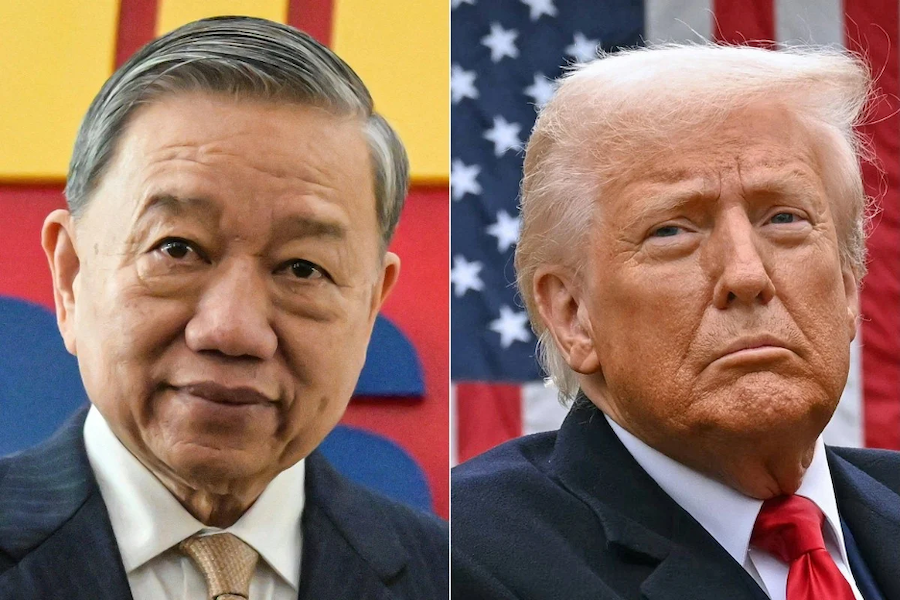
Vietnam’s leadership has articulated a strong vision for responsible integration with the global community. At Columbia University in 2024, Chief of the Communist Party of Vietnam, To Lam, declared: “Viet Nam’s development path cannot separate from the common trend of the world and human civilization. We will continue to accelerate the process of reform, opening up, and comprehensive and extensive international integration.”
Reaffirming this vision at UNGA80, Vietnamese President Luong Cuong stated: “By promoting the responsible development of advanced technologies, Vietnam is linking its domestic modernization with global concerns about ethics, inclusiveness, and security in AI.”
Vietnam is uniquely positioned to serve as a bridge between developed and developing nations. Its responsible approach to modernization, coupled with its openness to global norms, gives Vietnam the credibility to convince other emerging economies to join this alliance and adopt ethical standards for AI and digital governance.
This coalition will be guided by World Leaders in AIWS, including Audrey Tang, Alondra Nelson, Sanae Takaichi, Vint Cerf, Ambassador Stavros Lambrinidis, Amandeep Gill, Ángel Gurría, and Professor Judea Pearl.
It will also be led by Boston Global Forum’s leadership team, including:
- Nguyen Anh Tuan, Co-Founder, Co-Chair, and CEO, BGF
- Governor Michael Dukakis, Co-Founder and Co-Chair, BGF
- Professor Alex Pentland, MIT
- Professor Nazli Choucri, MIT
- Professor Thomas Patterson, Harvard Kennedy School
- Professor David Silbersweig, Harvard Medical School
- Yasuhide Nakayama, Former Japanese State Minister
- Elisabeth Moreno, Former French Minister
- Glen Weyl, Microsoft Research Leader and Founder, Plurality Institute
- Jeff Saviano, Harvard Contributor in the AI Ethics
Taiwan’s digital democracy will serve as a case study, offering valuable lessons in civic participation, transparency, and resilience. Expansion will follow with trusted democracies such as Sweden and Norway.
The Global Alliance for Democratic AI and Digital Governance will ensure that artificial intelligence and advanced technologies are aligned with democracy, human rights, peace, and shared prosperity. It will serve as a counterweight to authoritarian AI models and an engine for ethical innovation.
https://www.cbs42.com/business/press-releases/ein-presswire/852520868/world-leaders-call-for-urgent-action-on-democratic-ai-governance-at-unga80/
https://www.nbcnews.com/tech/tech-news/us-rejects-international-ai-oversight-un-general-assembly-rcna233478
by Editor BGF | Sep 29, 2025 | News, Shaping Futures
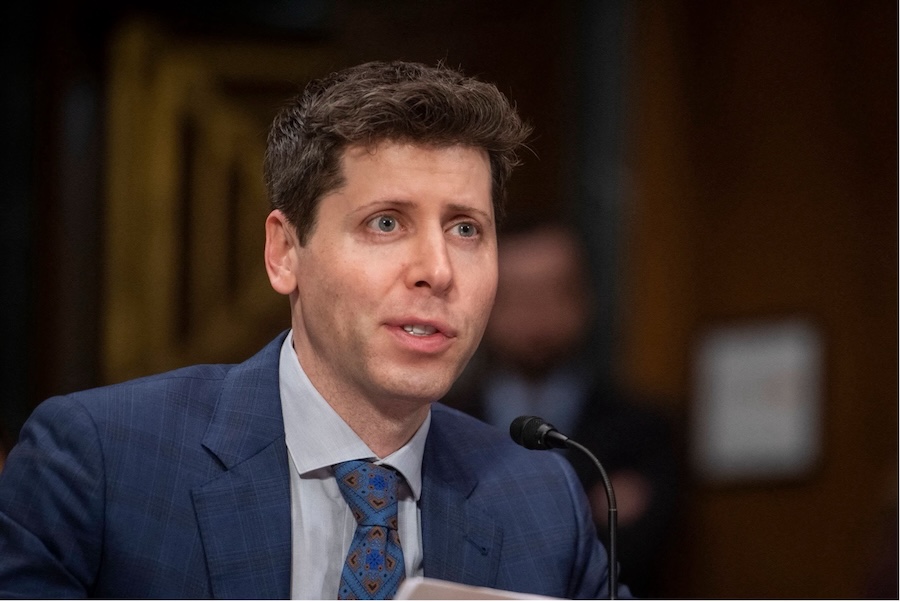
OpenAI CEO Sam Altman has projected that Artificial General Intelligence (AGI) could become a reality by the year 2030, a breakthrough he believes will reshape economies, societies, and governance worldwide. Altman suggested that AI systems may soon be capable of performing up to 40% of current human tasks, from healthcare and education to finance and logistics.
While acknowledging the transformative opportunities, Altman emphasized the need for safety, governance, and ethical oversight. Without effective frameworks, he warned, AGI could amplify inequalities or destabilize institutions.
Altman also reflected on technology’s relationship with President Donald Trump, pointing to the complex interactions between Silicon Valley and Washington. He noted both tensions and opportunities in aligning technological progress with national and global policy.
His predictions underscore a defining challenge of our time — one that the Boston Global Forum (BGF) and the AI World Society (AIWS) have been addressing for nearly a decade. BGF has laid essential foundations through:
- The Social Contract for the AI Age (2020): A democratic framework ensuring AI serves human dignity, freedom, and inclusiveness.
- AIWS Government 24/7: A model for transparent, accountable, AI-assisted governance.
- The Boston Finance Accord for AI Governance 24/7: Ethical standards for AI-driven finance.
- The Global Alliance for Democratic AI and Digital Governance (2025): Uniting trusted democracies to shape responsible global AI frameworks.
As Altman points toward 2030 as the AGI horizon, these initiatives provide the roadmap for democracies to ensure AI strengthens peace, democracy, and human well-being rather than undermining them. The urgency of this work has never been clearer.
https://www.techspot.com/news/109644-sam-altman-predicts-artificial-general-intelligence-2030-ai.html
by Editor BGF | Sep 29, 2025 | News
At the Boston Global Forum – Club de Madrid Conference (September 2020), world leaders and policy innovators launched the Social Contract for the AI Age.
Significance:
- One of the earliest comprehensive frameworks linking AI governance with democratic values.
- Called for ethics, accountability, transparency, and inclusiveness in the design and deployment of AI.
- Positioned AI as a force for peace, human dignity, and equality rather than division or exploitation.
- Became the foundation for later initiatives such as AIWS Government 24/7, the Boston Finance Accord for AI Governance 24/7, and the Abe AI Finance Protocol.
Global Impact:
- Shaped early international discussions on democratic AI governance.
- Provided intellectual groundwork for alliances and frameworks championed by BGF and its partners.
- Its relevance was strongly reaffirmed at the 80th United Nations General Assembly (UNGA80) in 2025, where leaders issued renewed calls for urgent action on democratic AI governance.
🔗 World Leaders Call for Urgent Action on Democratic AI Governance at UNGA80

by Editor BGF | Sep 29, 2025 | Shinzo Abe Initiative for Peace and Security, News
From Harmony to Humanity
A Seventeen-Article Constitution for the AI Era
Inspired by the Principles of Prince Shōtoku (604 AD)
I. Executive Summary
Artificial Intelligence (AI) is transforming every aspect of human life. It holds immense promise but also grave risks to human dignity, democracy, and peace. This proposal offers a human-centered governance framework inspired by one of the oldest ethical constitutions in the world: Japan’s Seventeen-Article Constitution, authored by Prince Shōtoku in the year 604 AD.
Rooted in the timeless principles of harmony, propriety, public good, and deliberation, this modern adaptation lays out 17 guiding articles for the responsible development and use of AI. It is not a set of rigid laws, but a moral compass designed to help us stay human in an increasingly technological world.
This document is addressed to international policymakers, corporate leaders, academics, and citizens who care deeply about ensuring that AI serves all of humanity.
II. Historical Context: Wisdom from a Distant Past
In the early 7th century, Japan was a fractured society. Feudal clans competed for power. Political instability and internal conflict threatened the future of the emerging nation. In this environment, Prince Shōtoku crafted a visionary ethical framework—the Seventeen-Article Constitution.
Though not a legal code, it provided moral and administrative guidance to leaders and officials. It introduced:
- The supremacy of harmony (wa) as a political and social value
- The importance of ethical governance and spiritual respect
- Early forms of meritocracy and bureaucratic professionalism
- A deep commitment to deliberation over autocracy
This was more than Japanese political reform. It was an early example of humanist thinking in statecraft—centuries ahead of its time.
⸻
III. The Original Seventeen Articles (604 AD)
Each of the following articles is presented with a plain-language explanation:
- Value harmony above all. Cooperation is the foundation of a strong nation.
- Respect the Three Treasures: Buddha, Dharma, Sangha. Let spiritual ethics guide governance.
- Follow the emperor’s will with sincerity. Maintain unity under legitimate authority.
- Uphold propriety. Officials must act with discipline and humility.
- Forgive, and correct your own faults. Reconciliation is more powerful than revenge.
- Appoint officials based on merit. Leadership must reflect ability, not birthright.
- Avoid disputes. Arguments breed chaos and weaken governance.
- Work diligently. Laziness in duty is a danger to society.
- Adopt good ideas; reform bad practices. Be flexible and principled.
- Be united in national matters. Important decisions require consensus.
- Reward virtue; punish wrongdoing. Justice must be consistent and fair.
- Care for the people. Officials must govern with empathy and responsibility.
- Discourage evil; encourage good. A moral state is a stable one.
- Do not be jealous of colleagues. Internal strife undermines collective progress.
- Put public interest before personal gain. Selflessness builds trust.
- Consider the seasons when taxing labor. Respect the rhythms of people’s lives.
- Deliberate together. No one should decide alone.
IV. A Modern Constitution for the Age of AI (2025 AD)
Preamble: Inspired by Shōtoku’s principles, and recognizing the power and risks of AI, we propose these 17 articles as a global framework for ethical, inclusive, and human-centered AI governance.
- Promote harmony and shared human flourishing.
- Ensure that humans retain final authority and accountability.
- Uphold the rule of law and protect fundamental rights.
- Require transparency, explainability, and public trust.
- Take responsibility for harms and correct mistakes.
- Assign duties based on capability and ethics.
- Prevent conflict through cooperation and alignment.
- Maintain diligent oversight and continuous monitoring.
- Foster continuous learning and adaptive improvement.
- Base high-risk decisions on deliberation and consent.
- Encourage ethical innovation; penalize abuse.
- Safeguard vulnerable populations and promote inclusion.
- Forbid exploitative, militarized, or authoritarian use.
- Promote fairness and prevent monopoly control.
- Prioritize the public good above all other interests.
- Ensure environmental and generational sustainability.
- Create grievance mechanisms and democratic oversight.
V. Implementation Guidelines
- For governments: Codify these principles in AI legislation and regulatory oversight bodies.
- For companies: Build internal review boards, redress systems, and safety protocols.
- For researchers: Publish audit reports and assess social impacts.
- For international forums: Align national standards and foster interoperability
VI.Closing Message
When Prince Shōtoku wrote these words over a millennium ago, he could not have imagined the digital world of today. But he understood something eternal:
“No matter the era, governance must be rooted in respect, wisdom, and the common good.”
AI must not lead us into division or domination. It must be led by us—wisely, humbly, and together.
Let us reawaken the human spirit in our technologies.
Let us build not just smart machines, but a more just, inclusive, and harmonious world.
Let this Seventeen-Article Constitution for the AI Age be our guide.


by Editor BGF | Sep 29, 2025 | World Leader for Peace and Security, News, World Leaders in AIWS Award Updates
A new study published in Humanities and Social Sciences Communications (Nature) explores the meaning of Bhāvanā within Integrated Amrita Meditation®-35 (IAM®-35), a practice developed by Satguru Sri Mata Amritanandamayi Devi (Amma), 2023 World Leader for Peace and Security Award recipient, nature.com.
The paper, “Defining Bhāvanā through the PAL framework: grounded theory insights from long-term IAM®-35 practitioners”, examines how 27 experienced meditators describe their lived experience of Bhāvanā, an ancient contemplative principle meaning “bringing into being.”
Using grounded theory, the researchers propose the PAL framework, identifying:
- Prerequisites for practice
- Aspects of the meditation process
- Levels of Bhāvanā experience
Findings show that Bhāvanā is an immersive process integrating awareness, memory, and multisensory engagement. Practitioners reported transformative experiences of personal and spiritual unity, bridging ancient contemplative traditions with modern experiential insights.
This contribution builds on Amma’s decades of work integrating compassion, ethics, and meditation into practical frameworks for well-being and peace. It also resonates with the broader movement for democratic AI and digital governance, where BGF and world leaders stress the role of ethics and human dignity in shaping the future.
🔗 Read the full article in Nature
https://www.nature.com/articles/s41599-025-05783-y