by Editor BGF | Oct 19, 2025 | News
October 17, 2025 — The Boston Global Forum (BGF) proudly announces that Gurudev Sri Sri Ravi Shankar, Founder of The Art of Living Foundation, has been selected as the recipient of the 2025 World Leader for Peace and Security Award.
This prestigious recognition honors Gurudev’s extraordinary lifelong contributions to fostering global peace, interfaith harmony, and human development through compassion, nonviolence, and spiritual wisdom. His leadership has touched millions of lives worldwide, inspiring people to cultivate inner peace as the foundation for collective harmony and sustainable development.
Since its establishment in 2015, the World Leader for Peace and Security Award has been presented to distinguished global leaders whose vision and actions have advanced international peace, democracy, and ethical governance. Past honorees include Prime Minister Shinzo Abe (Japan), Chancellor Angela Merkel (Germany), UN Secretary-General Ban Ki-moon, President Sauli Niinistö (Finland), President Ursula von der Leyen (European Commission), President Emmanuel Macron (France), and Amma (Mata Amritanandamayi).
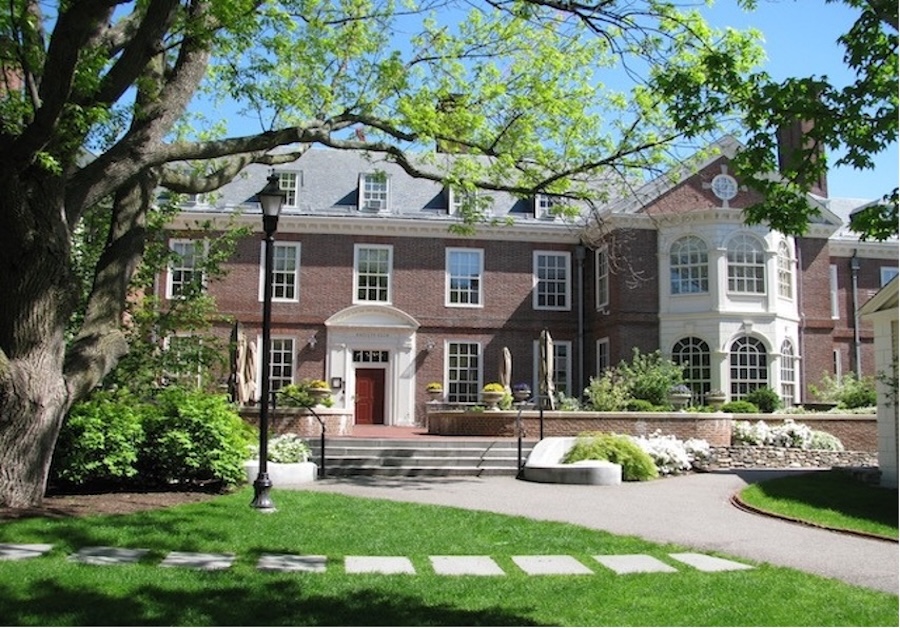
The 2025 Award Ceremony will take place at Harvard University’s Faculty Club on November 3, 2025, marking 10 years of the World Leader for Peace and Security Award (2015–2025). Distinguished leaders, policymakers, and thinkers will gather to honor Gurudev Sri Sri Ravi Shankar and reflect on a decade of leadership advancing peace and human dignity.
In his message of acceptance, Gurudev Sri Sri Ravi Shankar said:
“In global discussions, peace and security are always mentioned in the same breath. Yet, very little attention is given to peace education. If we devote even a fraction of our focus to nurturing peace, it can pave the way for a violence-free and prosperous world.
We welcome this honor and commend the work of the Boston Global Forum in promoting peace and harmony.”
Governor Michael Dukakis, Co-Founder and Chair of the Boston Global Forum, said:
“Gurudev Sri Sri Ravi Shankar embodies the very essence of this award — a spiritual and moral leader who transforms compassion into tangible action. His work has built bridges of understanding across nations and cultures.”
Nguyen Anh Tuan, Co-Founder, Co-Chair, and CEO of BGF, added:
“In the AI Age, when technology increasingly shapes human destiny, Gurudev’s message of mindfulness, compassion, and responsibility provides the ethical foundation for peace in a digital world.”
The ceremony will also feature the launch of AIWS Esteemed Digital Assets, celebrating the 10-year legacy of World Leader for Peace and Security Award recipients and connecting their leadership principles to the emerging ethics of the AI Age.
Additionally, the event will include a special discussion on the newly published book,
“The AI World Society: A 30-Year U.S.–Vietnam Partnership from Nha Trang to Boston (1995–2025)”,
co-authored by Nguyen Anh Tuan and Harvard Professor Thomas Patterson, with a foreword by Governor Michael Dukakis, and published by Tri Thuc Publishing House (Vietnam).
This book marks the 30th anniversary of the normalization of U.S.–Vietnam relations, reflecting how two former adversaries have become strategic partners for peace, innovation, and shared progress in the AI era.
The November 3 event will be followed by the AIWS Digital Asset Standards Initiative (AIWS-DASI) conference at Harvard University’s Loeb House on November 4, 2025, focusing on defining ethical, high-quality, and human-centered standards for digital assets — advancing the Boston Global Forum’s mission to build a just, inclusive, and enlightened AI world.
Together, these gatherings highlight the enduring mission of the Boston Global Forum:
to unite moral leadership, technological innovation, and human values — building the AI World Society (AIWS) for peace, security, and shared prosperity.
Media Contact:
[email protected]
www.BostonGlobalForum.org

by Editor BGF | Oct 19, 2025 | World Leader for Peace and Security, News, World Leaders in AIWS Award Updates
A Boston Global Forum Initiative: Inspiring Wisdom, Culture, and Innovation for Humanity – Where Leadership Meets the Soul of Humanity.
World Leader Spirit is a signature global brand of the Boston Global Forum (BGF) and the AI World Society (AIWS), created to honor, connect, and amplify the enduring values embodied by recipients of the World Leader for Peace and Security Award and the World Leader in AIWS Award.
It serves as a living continuum of these honors — a gathering place where visionary leaders, innovators, scholars, and artists exchange ideas, share music and art, and collaborate to advance peace, democracy, ethics, and human dignity in the Age of Artificial Intelligence.
Through symposia, concerts, exhibitions, and dialogues, World Leader Spirit integrates culture, intellect, and innovation — expressing the soul of enlightened leadership. It transforms recognition into ongoing collaboration, where laureates and new generations together shape a more peaceful, ethical, and human-centered world.
World Leader Spirit events are held at the world’s most prestigious and noble venues — including top universities, historic libraries, sacred cathedrals, concert halls, and royal palaces — places that symbolize human wisdom, beauty, and the shared aspiration for enlightenment.
As both a movement and a series of distinguished gatherings, World Leader Spirit continues the legacy of great moral and intellectual leaders — from statespersons and thinkers to cultural icons — who embody compassion, courage, and creativity as guiding forces for the AI World Society.

by Editor BGF | Oct 19, 2025 | News
The situation in the Gaza Strip remains a profound test of global leadership, humanitarian values and the potential for ethical governance in the AI Age. As hostilities ease and diplomatic initiatives advance, the Boston Global Forum (BGF) offers this reflection: how can we transform cease-fire moments into durable peace built on human dignity, cooperation and innovation?
1. From Cease-fire to Peacebuilding
A brokered pause between Hamas and Israel has opened the door to reconciliation efforts. The Guardian+1 Yet serious obstacles remain: violations of the truce, stalled humanitarian flows, and deeper questions about governance, disarmament and reconstruction. Reuters+1
BGF emphasizes that true stability depends not just on stopping bombs — but on building institutions and systems that serve people, ensure trust and foster a resilient civil society.
2. Humanitarian Urgency and Ethical Responsibility
The humanitarian crisis in Gaza is acute. Delays in aid, damaged infrastructure and mass displacement present a moral imperative. The Washington Post+1 BGF asserts that the AI Age introduces new dimensions: the reconstruction must factor in digital inclusion, transparent technology use, and human-centred rebuilding. These are not add-ons—they are essential to sustainable peace.
3. Digital Tools & Peace Innovation
Emerging research shows that AI-supported dialogues can help bridge divides between Israeli and Palestinian peace-builders. arXiv BGF strongly supports the idea that peace architecture in Gaza could benefit from these tools: platforms for civic engagement, predictive modelling for conflict resolution and open governance frameworks. When anchored by ethical standards, digital innovation can transform from risk to resource.
4. Governance Architecture & Long-Term Vision
The proposed Gaza International Transitional Authority and the supporting International Stabilization Force highlight the readiness of the global community to consider new governance models. Wikipedia+1 For BGF, this is a moment to iterate new norms: transparent institutions, data-driven oversight, inclusive civic participation—all infused with the ethos of the AI World Society (AIWS): technology aligned with human dignity, not undermining it.
5. The Way Forward: Ethics, Innovation, Peace
Drawing on our core mission, BGF offers three guiding principles for Gaza’s journey ahead:
- Ethical Innovation: Technology deployment must be accountable, inclusive and focused on human well-being.
- Shared Value Creation: Reconstruction must serve people (not just assets), fostering education, community and long-term resilience.
- Global Cooperation, Local Ownership: International frameworks matter—but peace succeeds when local voices lead, tech tools support and ethical standards guide.
by Editor BGF | Oct 20, 2025 | News, Shaping Futures
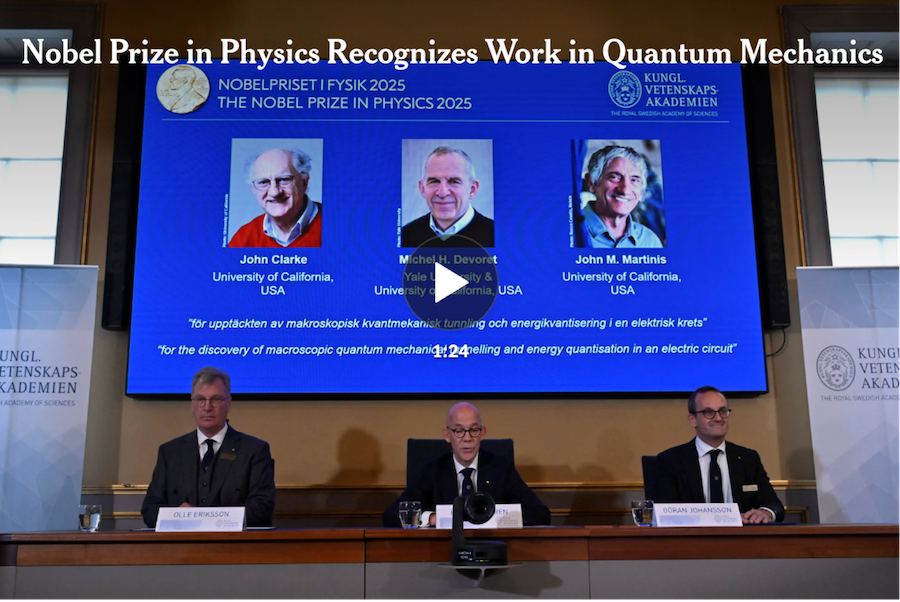
In a breakthrough moment for science and society, the 2025 Nobel Prize in Physics honors researchers who have brought quantum properties to a human scale — transforming what was once invisible and abstract into tangible technologies that can be held, manipulated, and applied in everyday life.
(Source: NobelPrize.org)
Their pioneering work — in making quantum phenomena directly observable and usable — marks a turning point in how humanity engages with the deepest layers of nature. It opens doors to quantum computing, ultra-secure communications, and next-generation materials, reshaping economies and ethical responsibilities alike.
Markets responded instantly: quantum technology stocks soared, signaling investor confidence in a new frontier of computation and intelligence.
(Source: The Chosun Ilbo)
At the Boston Global Forum (BGF) and within the AI World Society (AIWS) framework, this scientific milestone is more than a technological leap — it is a moral and civilizational challenge. As quantum technologies begin to merge with artificial intelligence, the world faces a new question: How can humanity ensure that quantum power amplifies ethics, not inequality?
AIWS calls for a Quantum Enlightenment — where knowledge and governance keep pace with discovery. Quantum advances, if guided by the values of transparency, empathy, and responsibility, can redefine trust, data security, and collaboration in the AI Age.
In this moment, we are reminded that the future is not only about what technology can do, but what humanity chooses to do with it.
by Editor BGF | Oct 20, 2025 | News
BGF and Tri Thuc Publishing House Celebrate 30 Years of U.S.–Vietnam Partnership and the Vision of AIWS
Boston, USA / Hanoi, Vietnam – October 18, 2025
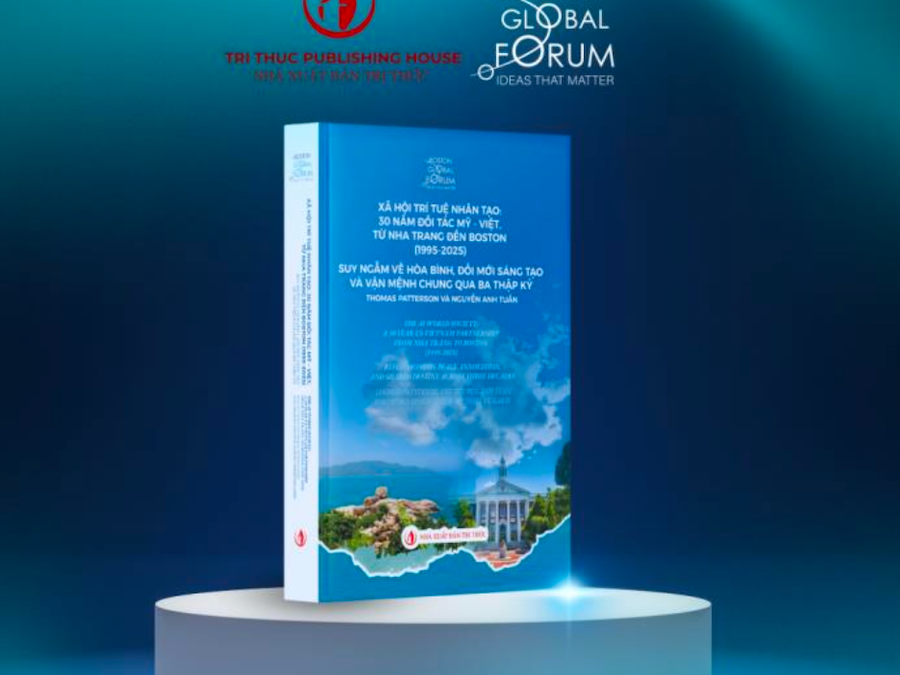
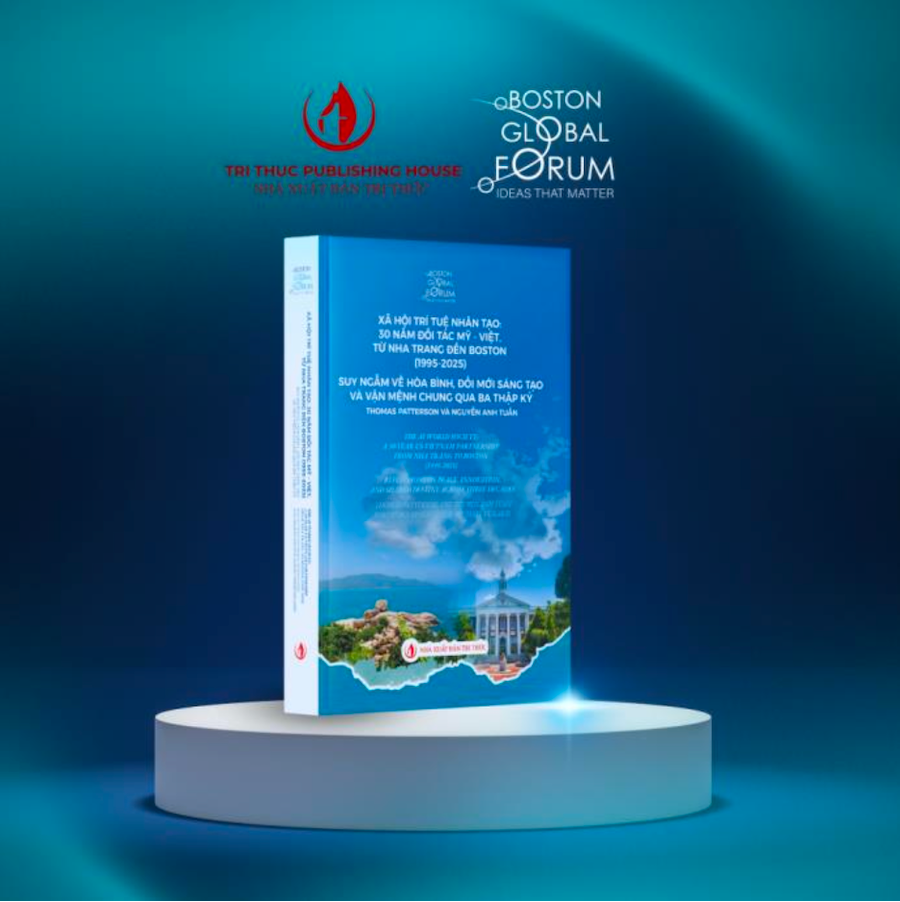
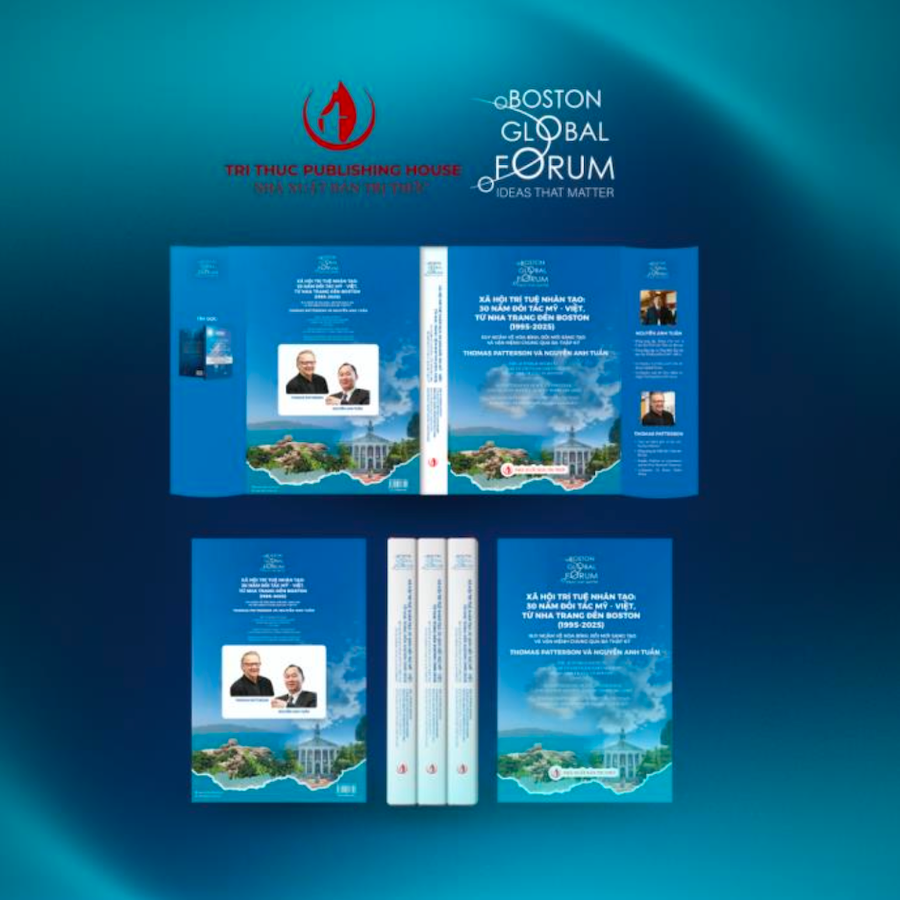
The Boston Global Forum (BGF) and Tri Thuc Publishing House (Vietnam) proudly announce the official publication of “The AI World Society: A 30-Year U.S.–Vietnam Partnership from Nha Trang to Boston (1995–2025)”, authored by Nguyen Anh Tuan, Co-Founder and CEO of BGF, and Professor Thomas Patterson of Harvard University, with a foreword by Governor Michael Dukakis, Co-Founder and Chair of BGF.
The book is published in both English and Vietnamese, marking a milestone in the cultural and intellectual journey celebrating 30 years of normalized relations between the United States and Vietnam (1995–2025).
This landmark work reflects on how the U.S.–Vietnam partnership has evolved from reconciliation to innovation — symbolized through the birth of the AI World Society (AIWS), a vision for a peaceful, ethical, and human-centered world in the Age of Artificial Intelligence.
At a special session of the Boston Global Forum Conference honoring the 10 Years of the World Leader for Peace and Security Award at Harvard University Faculty Club on November 3, 2025, Ms. Bui Thi Thu Hang, Editor-in-Chief of Tri Thuc Publishing House, will deliver a keynote introducing Tri Thuc’s World Knowledge Elite Collection (Tủ sách Tinh hoa Tri thức Thế giới) and the new publication.
Ms. Bui Thi Thu Hang shared:
“Vietnam is proud to have a pioneer like Nguyen Anh Tuan — Co-Founder of the AI World Society — who, together with leaders of advanced nations and distinguished thinkers from Harvard and MIT, has built a transformative political, social, and economic model of AI for humanity.”
Governor Michael Dukakis remarked:
“The Boston Global Forum will support Tri Thuc Publishing House, one of Vietnam’s leading publishers, in bringing the knowledge and intellectual contributions of distinguished U.S. thinkers and innovators to Vietnam through its World Knowledge Elite Collection. Together, we will also issue AIWS Esteemed Digital Assets to realize the AI World Society.”
This publication stands as both a cultural and intellectual milestone, celebrating the spirit of peace, partnership, and shared enlightenment between Vietnam and the United States — a relationship that has evolved from former adversaries to comprehensive strategic partners, serving as a model of reconciliation in global history.
Contact:
📧 [email protected]
📧 [email protected]

by Editor BGF | Oct 19, 2025 | Papers & Reports, Publications
As the world enters a new era shaped by artificial intelligence, digital currencies, and blockchain economies, the need for ethical governance and trusted value systems has never been more urgent. To meet this challenge, the Boston Global Forum (BGF) — through its pioneering initiative, the AI World Society (AIWS) — has launched the AIWS Digital Asset Standards Initiative (AIWS-DASI).
Purpose and Vision
AIWS-DASI redefines the meaning of digital assets in the AI Age. Beyond speculation or currency, digital assets are understood as new embodiments of human achievement — representing knowledge, creativity, trust, and the collective progress of civilization.
The initiative envisions a future where every digital asset is ethically designed, transparently managed, and socially valuable, serving as a tool for peace, sustainability, and global cooperation rather than exploitation or manipulation.
Framework and Methodology
AIWS-DASI establishes a three-dimensional framework for evaluating and certifying digital assets:
- Standards (Ethical and Technical):
Ensuring transparency in creation, ownership, and transaction mechanisms, while aligning with AIWS principles of accountability, fairness, and benefit to humanity.
- Quality (Intrinsic and Societal Value):
Assessing each asset’s contribution to social good — peace, sustainability, education, or innovation — and its authenticity and provenance.
- Values (Human-Centered and Cultural):
Measuring how assets reflect cultural heritage, moral integrity, and respect for human dignity.
Through these criteria, AIWS-DASI will identify and certify AIWS Esteemed Digital Assets, setting a gold standard for ethical digital creation and exchange.
Implementation and Global Collaboration
To realize its vision, BGF will establish the AIWS Digital Asset Standards Board (ADASB) — an interdisciplinary council of ethicists, economists, technologists, and cultural leaders — to oversee the development and application of these standards.
BGF and AIWS will also publish the “BGF–AIWS Charter on Digital Asset Ethics and Value”, serving as a foundational guide for governments, enterprises, and innovators seeking to ensure integrity and trust in the digital economy.
Toward a Human-Centered Digital Future
The AIWS Digital Asset Standards Initiative connects financial innovation with the moral and intellectual foundations of civilization. It links technology to human dignity, creativity, and compassion, offering a path where digital transformation serves not only economic growth but also enlightenment and peace.
By introducing AIWS Esteemed Digital Assets and establishing global standards for their recognition, BGF and AIWS reaffirm their mission: to ensure that technology in the AI Age elevates humanity to a higher level of wisdom, justice, and shared prosperity.
by Editor BGF | Oct 19, 2025 | Shinzo Abe Initiative for Peace and Security, News
The Boston Global Forum is honored to welcome distinguished leaders and thinkers from Japan and Taiwan as featured speakers at its special gatherings on November 3–4, 2025, at Harvard University.
From Japan, the Forum proudly hosts:
- Yasuhide Nakayama, Former State Minister of Japan and Representative of BGF in Japan, who will deliver the keynote “A Decade of the World Leader for Peace and Security Award” and share insights on the Shinzo Abe Initiative and Japan’s leadership in advancing peace and ethical technology governance.
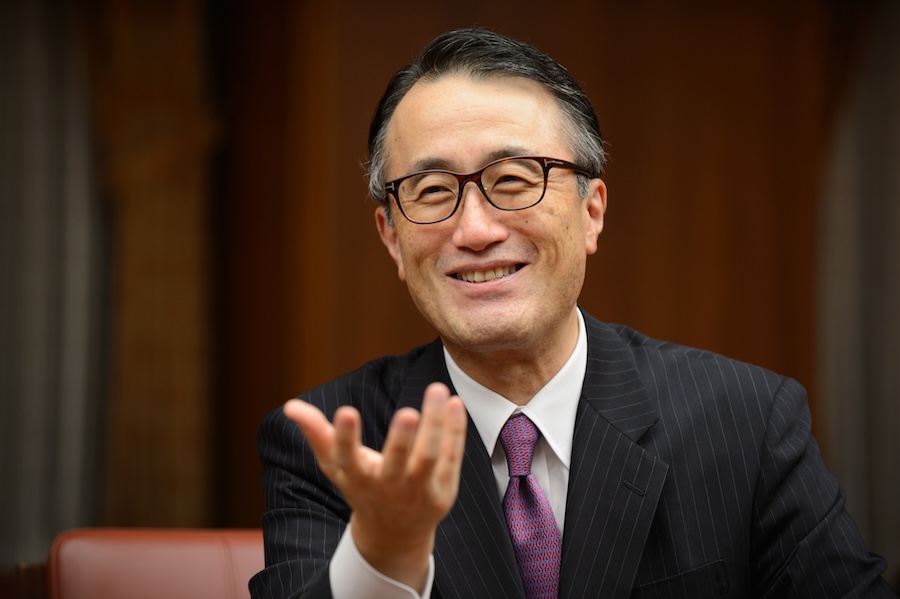
- Kanetsugu Mike, President of Mitsubishi UFJ Financial Group (MUFG Bank), who will deliver the keynote address at the session “Building Trust in AI-Driven Finance,” exploring how ethical and transparent financial innovation can reinforce confidence and collaboration in the global AI economy.
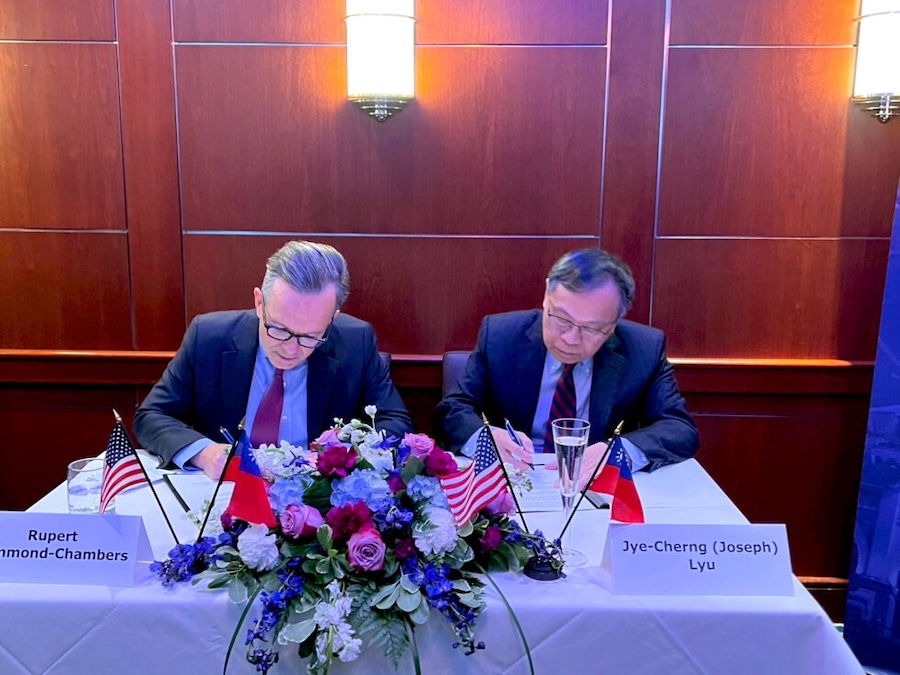
From Taiwan, Mr. Joseph Jye-Cherng Lyu, Chairman of the International Economic Cooperation Association and Former Finance Minister of Taiwan, will deliver a keynote at the session “AIWS Digital Asset Standards Initiative (AIWS-DASI) and Issuing AIWS Esteemed Digital Assets,” focusing on the integration of ethical principles, digital transparency, and responsible governance in the age of AI and blockchain.
Together, these distinguished speakers exemplify the shared commitment of Japan and Taiwan to peace, innovation, and human-centered progress — ideals that define the AI World Society (AIWS) vision.
Kanetsugu Mike, president and chief executive officer of Bank of Tokyo-Mitsubishi UFJ Ltd., speaks during a media roundtable in Tokyo, Japan, on Tuesday, Oct. 3, 2017. Mitsubishi UFJ Financial Group Inc.’s lending arm is seeking acquisitions of about 100 billion yen ($890 million) in Asia and the U.S. to bolster its global operations, Mike said. Photographer: Akio Kon/Bloomberg
by Editor BGF | Oct 19, 2025 | Global Alliance for Digital Governance
In an era where digital assets are redefining value, ownership, and trust, the AIWS Digital Asset Standards Initiative (AIWS-DASI) seeks to establish a global ethical and quality framework for the digital economy.
Launched by the Boston Global Forum (BGF) — through its pioneering initiative, the AI World Society (AIWS) — this program positions digital assets not merely as financial instruments, but as reflections of knowledge, creativity, human dignity, and social progress.
AIWS-DASI aims to define and certify the ethical, technical, and societal dimensions of digital assets, ensuring they contribute to transparency, sustainability, and the common good. It introduces the concept of AIWS Esteemed Digital Assets, recognizing innovations, works, and achievements that embody the highest standards of integrity and human-centered value.
Through this initiative, BGF and AIWS call on world leaders, scholars, and innovators to collaborate in building a trusted, human-centric digital ecosystem — one that transforms technology into a force for peace, inclusion, and enlightenment in the AI Age.
Please see full here: https://bostonglobalforum.org/publication/the-aiws-digital-asset-standards-initiative-aiws-dasi-2/
by Editor BGF | Oct 12, 2025 | News
Honoring the 2025 Laureate and Advancing a Decade of Global Leadership for Peace and Humanity
Date: November 3, 2025 (Afternoon)
Venue: Harvard University Faculty Club, Cambridge, Massachusetts
The Boston Global Forum (BGF) will host a distinguished ceremony on the afternoon of November 3, 2025, at the Harvard University Faculty Club, to honor the 2025 World Leader for Peace and Security Award recipient.
This year’s celebration marks a major milestone — the 10th Anniversary of the World Leader for Peace and Security Award (2015–2025) — a decade of recognizing exceptional world leaders who have advanced peace, stability, and human dignity through vision, courage, and ethical leadership.
The event will include a special session, “New Ideas for the Award at 10 Years,” gathering members of the BGF–AIWS Family — global leaders, scholars, innovators, and previous award recipients — to discuss the future of the Award and its evolving mission in the Age of Artificial Intelligence.
As the world faces profound technological and geopolitical transformation, BGF aims to enhance and advance the World Leader for Peace and Security Award as a living initiative — one that unites its laureates to collaborate on building a more peaceful, just, and human-centered world.
Through this special occasion, the Boston Global Forum calls upon global resources and collective wisdom to build and realize the AI World Society model, where technology and innovation are guided by ethics, compassion, and the enduring values of humanity — elevating the human being to a higher level of consciousness and development.