by Editor BGF | Sep 1, 2025 | News
Chapter 16: The BGF-AIWS Family and Vietnam’s Special Year 2025
The year 2025 is a special milestone for Vietnam, with significant events such as the 50th anniversary of national reunification and the 80th anniversary of the National Day. This year also marks a crucial development in the history of the Boston Global Forum and the AI World Society (BGF-AIWS) with the establishment of the BGF-AIWS Family and its Culture.
The creation of the “BGF-AIWS Family” Charter and Culture is a philosophy of life, a shared commitment to the noble values that BGF-AIWS members strive to build, serving as a benchmark for leaders in the AI era to create a better world, in line with the goals and values of the AIWS. This is a solid foundation where leaders, thinkers, innovators, creators, and like-minded individuals can journey together on a noble path, based on sincerity and love for humanity. This family is a collection of people who share a common ideal, a “culture” built on trust, respect, rich creativity, and compassion. It is this culture that will be the intrinsic strength for us to work together to solve global challenges and build a better world. An organization, a network, a company, or an association may transform, dissolve, or merge… but a family with noble values, beautiful goals, and a warm, loving family culture… will live on in each person, inspiring the best in each of us, especially those who are leaders, elites, and people of influence. It is in this spirit that the BGF-AIWS Family was born.
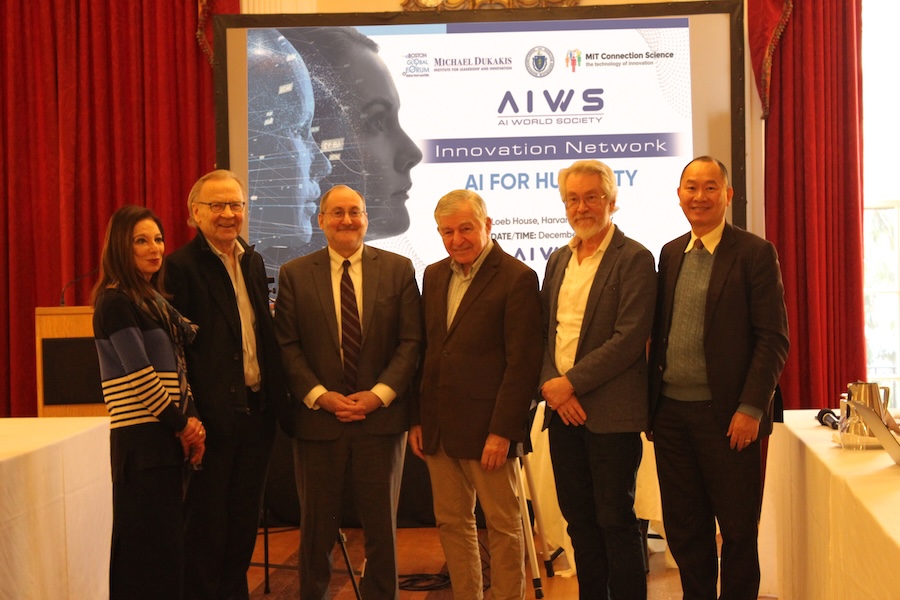
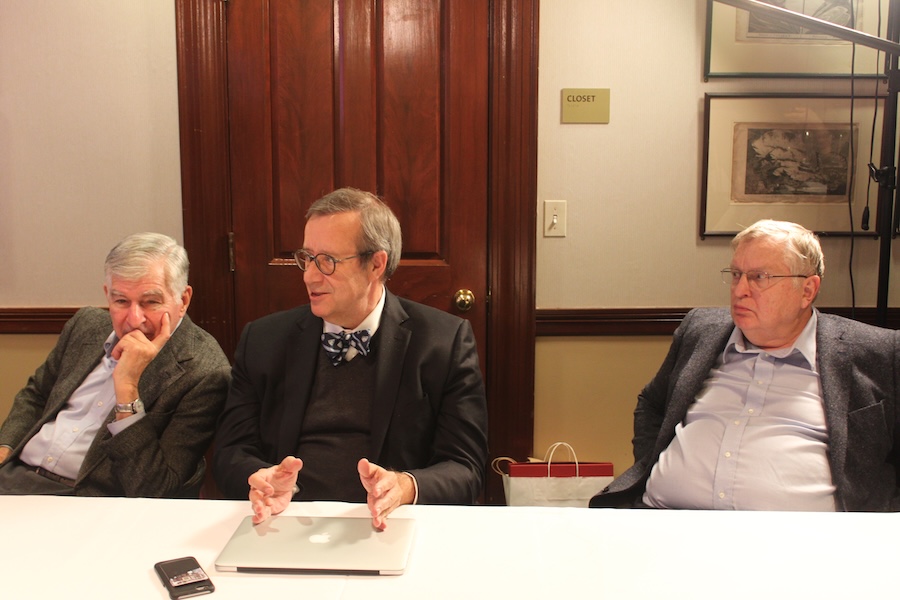
On August 14, 2025, Governor Michael Dukakis and I signed the BGF–AIWS Family Charter, formalizing a special community that is not a legal entity, but a family bound by love, respect, and noble values.
The Charter specifies the composition of the BGF–AIWS Family, which includes:
- The Founders of BGF and AIWS.
- Members of the BGF–AIWS Board of Directors.
- Distinguished individuals honored with the World Leader for Peace and Security Award and the World Leader in the AI World Society Award.
- Members of the Executive Board, the Board of Thinkers, and the Global Enlightened Leaders Board.
- Members of specialized boards such as the AIWS Digital Assets Board and the AIWS Brands and Values Board.
- Members of the Enlightenment in Action Alliance (EAA), the Michael Dukakis Institute, the Shinzo Abe Initiative, and the AIWS Music – Culture Ambassadors for Humanity.
The Charter also opens the door to other members not included in the above categories, provided they have contributed continuously for at least two years, do not exploit the reputation of BGF-AIWS for personal financial gain, and, most importantly, they must respect and practice ethical standards, love, and be willing to help other family members.
More than a charter, the Culture of the BGF–AIWS Family is built on six core principles that embody the humanistic vision we pursue:
- Global Friendship and Service: We see people of all nations as friends, and our mission is to serve them, helping them live better lives with knowledge, ethics, and innovation in the AI era.
- Respect for Laws and Values, Led by Compassion: We live and work by rules and laws, but above all, we lead with love, compassion, understanding, and sharing.
- Family of Respect and Support: Within the Family, we see each member as true family—bound by mutual respect, love, and a readiness to support one another.
- Shared Success: The achievements and successes of each member are the success of us all. Every step forward by one strengthens our collective journey.
- Commitment to Ethical AI and Good Governance: We are committed to building a world free from hatred and cruelty, where AI is developed responsibly and ethically under good governance.
- Joy, Innovation, and Optimism: We live as a warm-hearted family of joy and innovation, always looking forward with optimism. Together, we solve global problems with creativity, wisdom, and compassion.
A significant milestone in 2025 is the article on the website of the Global Association of Risk Professionals (GARP), a prestigious organization governed by leaders from top global financial corporations such as BlackRock, State Street Corporation, Goldman Sachs, Bank of America, Nomura Holdings, BNP Paribas, and Deutsche Bank. On August 15, 2025, GARP published an article honoring the contributions of the Boston Global Forum (BGF) and the AI World Society (AIWS) to global Finance and Digital Assets. This recognition opens up a new direction where business results are measured not only by profit but also by positive social impact and contributions to a better humanity. This new direction is an opportunity for Vietnam to participate in pioneering initiatives, affirm its position on the international stage, and create new values and business opportunities.
From this special year 2025, we look at Vietnam’s future with a new mindset. For Vietnam to soar high and far, and achieve greater success, we must make breakthroughs in technological innovation and build economic strength. At the same time, we must return to the depth of our beautiful traditional philosophies and the core values of the Vietnamese people. These are the spirits of creativity, solidarity, compassion, and the effort to overcome hardship. This is the solid foundation for the Vietnamese people to have a firm position and mindset as we integrate with the world.
BGF and AIWS can make meaningful contributions to this journey. We not only provide creative and breakthrough technological strategies and initiatives but also create a space for Vietnam to connect with world-leading leaders, thinkers, innovators, and creators. Some specific examples: Vietnam can participate in the production and promotion of the Shinzo Abe Film and the development of the AIWS Film Park, thereby demonstrating its commitment to peace and international cooperation and creating a position and message for Vietnamese leaders, respected figures, and elites to share with the world. The Shinzo Abe Film will feature the AIWS Peace Symphony and allude to the AI for Humanity Concert on New Year’s Eve. Vietnam can participate in building and performing the AIWS Peace Symphony and the AI for Humanity Concert in Saigon on New Year’s Eve, connected directly with Boston. This will be a living testament to the convergence of culture, technology, and art in the new AI era. The symphony is not just a musical work, but a symbol of harmony, a bridge connecting cultures, erasing geographical and cultural boundaries, and embodying the humanistic vision of the AIWS.
To become a pioneering country in the AIWS, Vietnam must make a breakthrough in its perception and actions. We must see the AIWS as a great opportunity to leap forward and lead. This is not only demonstrated through technological innovations but also through a civilized, courteous, kind, and creative society that promotes the tradition of compassion and the will to overcome hardship.
One of the most important things to build such a society is to create a civilized environment online and in daily life. The position and reputation of each person and each nation are built on authentic values, on a way of life that loves humanity and nature, not on empty words or an arrogant, superior attitude. The law of cause and effect and the good energy from the mind, from the heart, from sincerity will be the lasting values. The Vietnamese people can fully practice this way of life on their journey of self-development and nation-building.
Debate is necessary to find the truth, but it must be based on reason and sincerity, with civilized, polite language, not with insults or defamation.
A practical solution to promote this change is to strengthen cooperation and exchange with the Japanese people, a nation that is a symbol of kindness and honesty. Vietnam can vigorously develop the Shinzo Abe Initiative between the two countries, turning the Shinzo Abe Initiative into a bridge for bilateral relations and for building social character and ethics.
The significant anniversaries of the 50th anniversary of national reunification and the 80th anniversary of National Day have created an atmosphere of excitement and highly aroused the patriotic spirit of the Vietnamese people. This is a golden time to launch a widespread movement: every Vietnamese person should become an ambassador of civilization, courtesy, and love, a pioneer in building the cultural standards of the AI era through specific actions: no matter who you meet, look at them as a friend; in work and debate, always choose a kind way of speaking and acting, and know how to listen, respect, and support; if you have a choice, let compassion lead the way instead of profit; when others succeed, see it as a shared joy, turning competition into inspiration; every day, create something beautiful: an action, an idea, a word, a melody…; see challenges as opportunities for development; practice a civilized lifestyle; keep public places clean, don’t push or shove, respect others, speak gently and politely, and show love to family and friends… This is how we demonstrate patriotism in the most practical way. These things will be the foundation for creating a high-flying, far-reaching Vietnam in the AI era.


by Editor BGF | Sep 1, 2025 | News
Indian Prime Minister Narendra Modi’s visit to Tokyo has produced a landmark agreement: the next-generation E10 Shinkansen — capable of speeds up to 400 km/h — will be manufactured in India. The project represents a strategic convergence of Japan’s technological excellence with India’s scale and cost advantages, creating what Modi called “a perfect partnership.”
The timing of Modi’s trip, just ahead of his planned visit to China, underscores New Delhi’s effort to balance closer ties with Beijing through stronger cooperation with Tokyo. Beyond the high-speed rail initiative, the visit also highlights the significance of the Quad alliance — Japan, India, the U.S., and Australia — first envisioned by Shinzo Abe to ensure a free and open Indo-Pacific.
Manufacturing the E10 in India is expected to transform transportation infrastructure, boost exports, and build on the long-delayed Ahmedabad–Mumbai rail corridor. It is also a symbol of how India–Japan collaboration in advanced technologies can contribute to economic growth while reinforcing shared strategic interests in the Indo-Pacific.
BGF–AIWS Perspective: This partnership reflects the enduring vision of Shinzo Abe, a World Leader for Peace and Security Award recipient, who championed Indo-Pacific cooperation. For BGF and AIWS, the India–Japan alliance demonstrates how technology, ethics, and strategic collaboration can shape a more interconnected and resilient region — aligning with the AIWS mission of building a New Democracy with AI and advanced technologies.
📖 Full article here: AsiaNews – Modi in Tokyo to bring the new Shinkansen production to India
by Editor BGF | Sep 1, 2025 | Shinzo Abe Initiative for Peace and Security, News
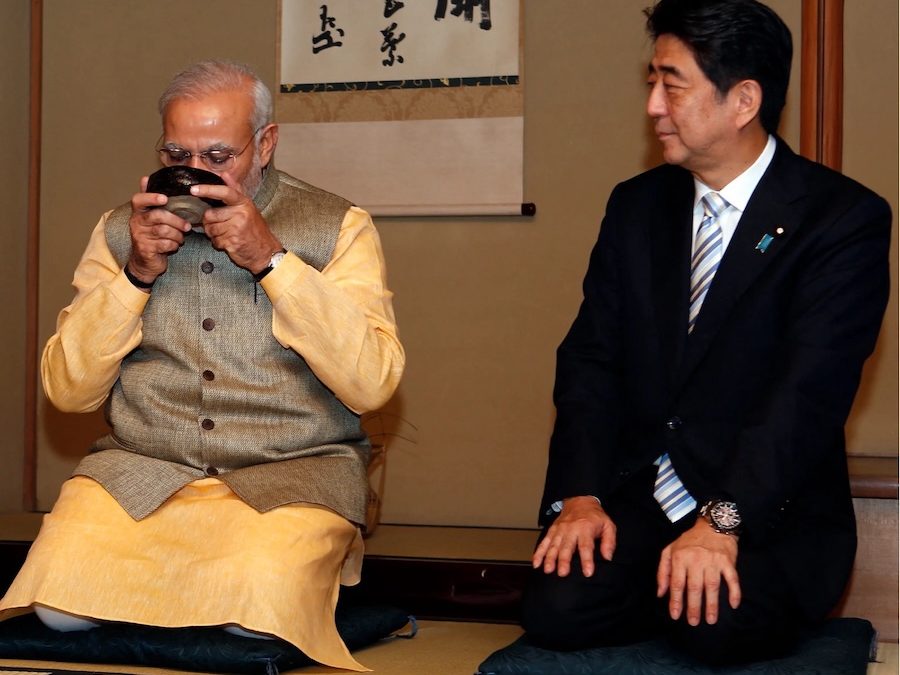
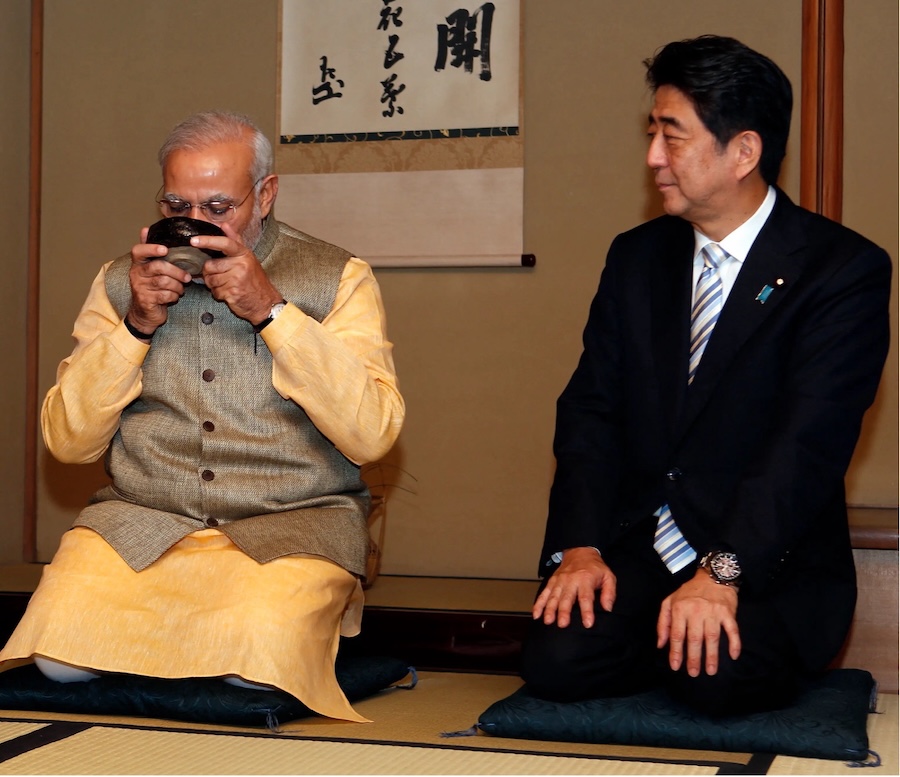
As Prime Minister Narendra Modi makes his current visit to Japan, it recalls the deep India–Japan relationship he nurtured through seven trips since 2014, many of them shaped by his close personal bond with former Japanese Prime Minister Shinzo Abe, recipient of the World Leader for Peace and Security Award.
Modi’s first visit in September 2014 elevated bilateral ties to a “Special Strategic and Global Partnership,” marked by agreements on civil nuclear cooperation, Japan’s $35 billion commitment to Indian infrastructure, collaboration on high-speed rail and smart cities, and strengthened defense and maritime cooperation in the Indo-Pacific.
Viewed through the Shinzo Abe Initiative, these visits underscore Abe’s vision of India and Japan as pillars of a Free and Open Indo-Pacific, working together on security, innovation, and democracy in the Age of AI. The enduring partnership reflects not only economic synergy but also the shared strategic leadership Abe championed for peace and resilience in Asia.
📖 Full article here: WION – PM Narendra Modi’s Japan visit marks eighth trip since 2014
https://www.wionews.com/photos/pm-narendra-modi-s-japan-visit-marks-eighth-trip-since-2014-here-s-a-look-at-past-visits-1756441181375/1756441181376
by Editor BGF | Sep 1, 2025 | News, Shaping Futures
The U.S. General Services Administration (GSA) has launched USAi, a secure generative AI evaluation suite described as the “infrastructure for America’s AI future.” This platform allows federal agencies to test and evaluate emerging AI technologies collectively, reducing duplication and ensuring efficiency.
Key features of USAi include:
- Adoption of moderate FISMA security standards to balance trust and protection.
- Empowering agencies to select and experiment with the tools best suited to their missions.
- Establishing regulatory guardrails to guide responsible AI adoption.
USAi reflects the White House’s AI Action Plan and signals a commitment to winning the AI race by embedding responsibility, security, and innovation into government infrastructure.
AIWS Government 24/7 Perspective: USAi embodies elements of the AIWS Government 24/7 model, where technology is designed to continuously serve citizens with transparency, security, and inclusivity. By providing a shared, trusted platform for federal experimentation, USAi points toward the kind of always-on, ethical governance infrastructure that AIWS envisions—one that can respond in real-time to challenges, protect public trust, and make government smarter, more efficient, and more humane in the Age of AI.
📖 Full article here:
by Editor BGF | Sep 1, 2025 | World Leader for Peace and Security, News, World Leaders in AIWS Award Updates
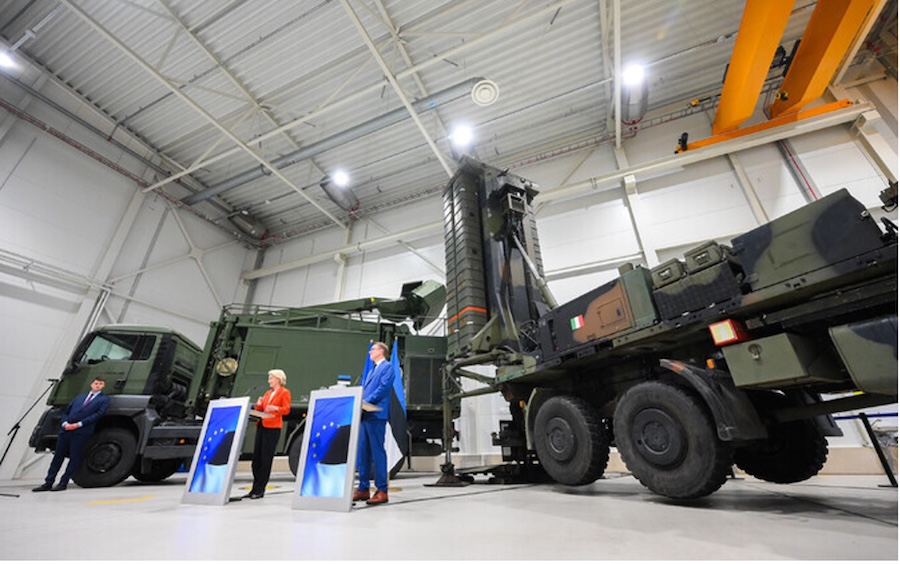
European Commission President Ursula von der Leyen, recipient of the 2020 World Leader for Peace and Security Award, emphasized that the security risks Estonia long warned about have now materialized. Speaking at Ämari Air Base, she underlined the EU’s determination to strengthen collective defense, drawing on Estonia’s example.
A key step is the Security Action for Europe (SAFE) loan instrument, through which Estonia plans to borrow up to €3.6 billion to raise its defense spending above 5% of GDP. Estonian Prime Minister Michal stressed that while progress has been made, “the security situation is not getting better” and called for more innovative solutions and increased support for nations heavily investing in collective defense.
📖 Full article here: ERR News – Von der Leyen: Russia risks Estonia long warned us about have materialized
BGF–AIWS Perspective: As Europe adapts to new security realities, the vision of AIWS Government 24/7 offers a model for harnessing technology, ethics, and collective intelligence to strengthen resilience. Building defense in the AI Age requires not only funding and alliances, but also innovative governance that ensures democracy and human dignity remain at the core of collective security.
https://news.err.ee/1609784115/von-der-leyen-russia-risks-estonia-long-warned-us-about-have-materialized
by Editor BGF | Sep 1, 2025 | Global Alliance for Digital Governance
The Global Association of Risk Professionals (GARP) recently featured the Boston Global Forum (BGF) and AI World Society (AIWS) for pioneering ethical AI frameworks across governance, finance, and digital assets. The article underscores how BGF’s initiatives—like the Social Contract for the AI Age, the Boston Finance Accord for AI Governance 24/7, and AIWS Digital Assets—are models of practical, human-centered technological governance.
GARP Board of Trustees (2025)
The GARP Board of Trustees brings together senior leaders from banking, finance, and academia, guiding the global risk profession:
- Bradford Hu – Chair of the Board; EVP & Chief Risk Officer, State Street Corporation
- Victor Ng, Ph.D. – Chair, Audit & Risk Committee; former Head of Risk Architecture, Goldman Sachs
- Jacques Longerstaey – Chair, Compensation Committee; EVP & Chief Risk Officer, Voya Financial
- Geoffrey Greener – Chair, Governance Committee; Chief Risk Officer, Bank of America
- Richard Apostolik – Trustee; President & CEO of GARP
- Bennett W. Golub, Ph.D. – Trustee; Senior Managing Director & Chief Risk Officer, BlackRock
- René M. Stulz, Ph.D. – Trustee; Everett D. Reese Chair of Banking & Monetary Economics, The Ohio State University
- William Martin – Trustee; Chief Risk Officer, Abu Dhabi Investment Authority
- Lewis O’Donald – Trustee; Former Group Chief Risk Officer, Nomura Holdings
- Kerry A. Moynihan – Trustee; Senior Client Partner, Korn Ferry
- Ben Golub – Trustee; Senior Policy Advisor, BlackRock
- Paul Sharma – Trustee; Managing Director, Alvarez & Marsal; former UK Prudential Regulation Authority Deputy Head
Together, this board represents the highest standards in global financial governance, reinforcing the credibility of GARP’s recognition of BGF–AIWS as a pioneer in ethical AI and digital governance.
📖 Full article here: GARP – Boston Think Tank Brings Ethical AI Principles into Governance, Finance, Banking and Blockchain
📑 Full list of Trustees: GARP – Board of Trustees
https://www.garp.org/risk-intelligence/culture-governance/boston-think-tank-brings-250815?hs_preview=wpIBIORd-194312898661

by Editor BGF | Aug 24, 2025 | World Leader for Peace and Security, News, World Leaders in AIWS Award Updates
The recipients of the World Leader for Peace and Security Award and the World Leader in AIWS Award represent some of the most distinguished leaders of our time. Through their vision, courage, and dedication, they embody the principles of responsibility, compassion, and innovation that the world urgently needs.
Together, these leaders contribute to shaping a new culture of leadership for humanity, guided by the spirit of the BGF–AIWS Family Culture. This culture is built on ethics, wisdom, love, and respect — principles that transcend borders, ideologies, and rivalries. It is a culture that embraces dialogue over conflict, innovation over stagnation, and compassion over division.
Within the framework of the Boston Global Forum (BGF) and the AI World Society (AIWS), these leaders are not only honored for their achievements but are also called to inspire future generations. Their collective example strengthens a global movement for enlightened leadership, one that seeks to build an AI World Society where technology is aligned with democracy, human dignity, and peace.
In this way, the laureates of BGF–AIWS Awards stand as pillars of a better future: a world where leadership is not about power, but about service; not about dominance, but about compassion; not about self-interest, but about humanity.
Please see full here: https://bostonglobalforum.org/news/the-culture-of-the-bgf-aiws-family/
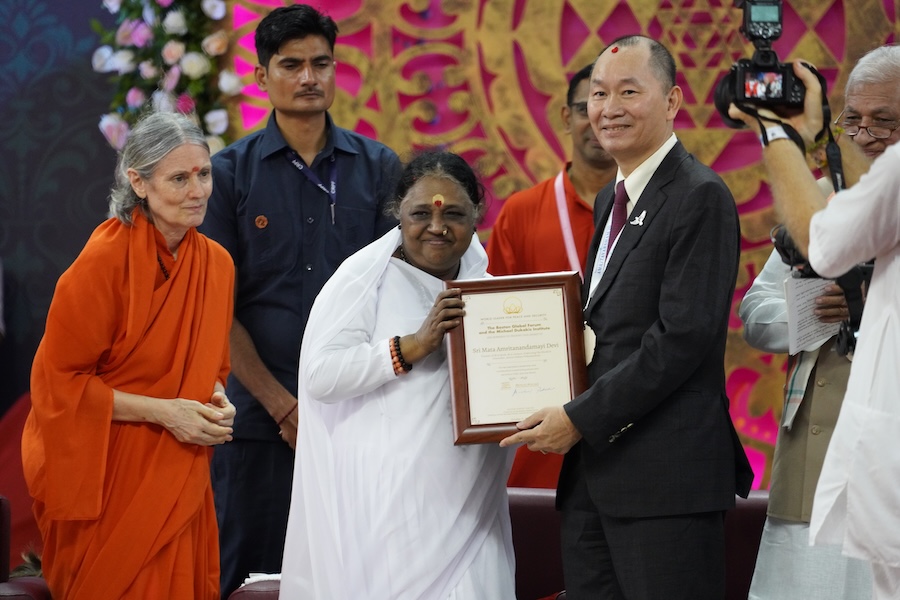
Nguyen Anh Tuan presented 2023 World Leader for Peace and Security Award to Amma
by Editor BGF | Aug 24, 2025 | News
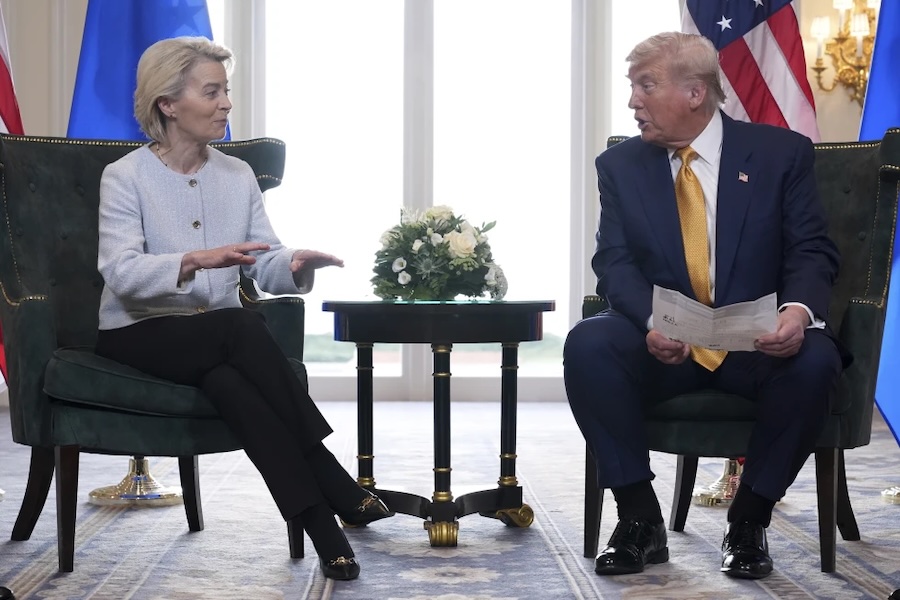
The EU and U.S. have issued a Joint Statement creating a framework for fair, balanced, and mutually beneficial trade and investment, building on the July 27 political agreement between President Ursula von der Leyen and President Donald Trump. The deal restores stability and predictability in transatlantic trade, benefiting businesses and citizens on both sides.
Key elements include:
- A 15% maximum tariff ceiling on most EU exports to the U.S., including cars, pharmaceuticals, semiconductors, and lumber.
- Special tariff treatment (MFN rates only) for certain sectors such as cork, aircraft, and generic pharmaceuticals, effective September 1.
- Joint work on addressing steel and aluminium overcapacity and securing supply chains.
While the EU maintains that high tariffs hurt the global economy, the agreement prevents escalation, safeguards a €1.6 trillion annual economic relationship, and protects millions of EU jobs. President von der Leyen hailed the deal as a step forward for citizens, industry, and transatlantic cooperation, with further tariff reductions and areas of collaboration to come.
Please see full here: https://ec.europa.eu/commission/presscorner/detail/en/ip_25_1973
and: https://apnews.com/article/us-eu-trade-trump-von-der-leyen-f49188375527cac6a4d458b49f641bab
by Editor BGF | Aug 20, 2025 | Statements, News, Publications
By Governor Michael Dukakis and Nguyen Anh Tuan
Boston, August 18, 2025
Dear BGF–AIWS Family Members,
We live in a time of profound change. Technology—especially artificial intelligence—is reshaping our world, creating both extraordinary opportunities and urgent challenges. Together, we are called to build a new model of democracy, guided by advanced technologies, ethics, and human-centered values.
The BGF–AIWS Family is composed of distinguished leaders, policymakers, thinkers, innovators, and creators who hold influence and impact across the globe. As a family, we are united by our commitment to contribute ideas, innovations, and solutions that advance humanity and shape a true AI World Society (AIWS).
Our culture is founded on these principles:
· Global Friendship and Service
We see the people of all nations as our friends. Our mission is to serve them, to help them live better lives with knowledge, ethics, and innovation in the Age of AI.
· Respect for Laws and Values, Led by Compassion
We live and work by rules and laws, but above all we lead with love, compassion, understanding, and sharing. We respect the diverse cultures of all peoples.
· Family of Respect and Support
Within the BGF–AIWS Family, we see each member as true family—bound by mutual respect, love, compassion, and the readiness to support one another.
· Shared Success
The achievements and successes of each member are the success of us all. Every step forward by one strengthens our collective journey toward realizing AIWS.
· Commitment to Ethical AI and Good Governance
We commit ourselves to building a world free from hate, rivalry, cruelty, and feuds— where AI is developed and applied responsibly, ethically, and under good governance.
· Joy, Innovation, and Optimism
We live as a warm-hearted family of joy and innovation, always looking forward with optimism to a better future. Together, we work to solve the world’s problems with creativity, wisdom, and compassion.
The BGF–AIWS Family is not only an idea—it is a living community of bright innovation and human warmth. In unity, we carry forward the spirit of AIWS to build a just, compassionate, and enlightened future for all.
Governor Michael Dukakis
Co-founder and Chair, Boston Global Forum
Nguyen Anh Tuan
Co-founder and Co-Chair, Boston Global Forum