by Admin | Jul 23, 2013 | Highlights
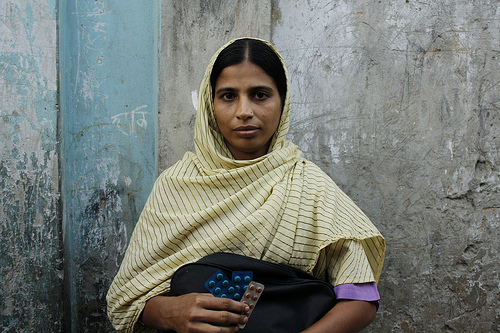
Time Magazine’s online news portal reports on a significant reduction in the number of people living in poverty in Bangladesh. According to the article, The World Bank announced that number of people living in poverty dropped from 63 million in 2000 to 47 million in 2010. The proportion of the population living below the poverty threshold — also known as ‘poverty rate’- was reduced to 26 percent from 29.5 percent.
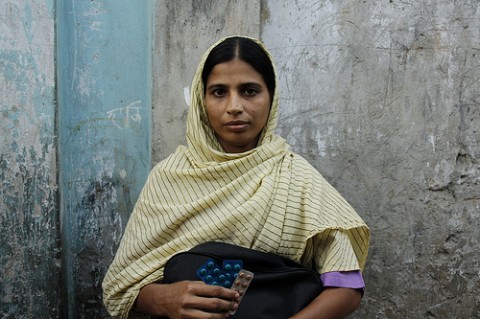
Source- Flickr Creative Commons/ DFID UK
These under-reported figures deserve a noteworthy mention for a country that is plagued by poverty, natural calamities and infrastructural breakdown.
Click here to read the complete article.
by Admin | Jul 24, 2013 | Highlights
The following article has been written by Leonie Barrie, managing editor of just-style.com. To read the article on its source website, please click here.
Source-www.bangladeshnewsnow.com
US: Action Plan Sets Out Bangladesh GSP Safety Steps
The US government has set out a series of steps that Bangladesh needs to implement – including improved worker rights and worker safety in the country’s garment industry – if it wants trade preferences to be restored.
The “action plan” released on Friday (19 July) comes three weeks after the Obama administration decided to suspend Bangladesh’s tariff benefits under the Generalized System of Preferences (GSP) programme over concerns about safety issues.
Among its recommendations are hiring more government labour, fire and building inspectors, and improve their training. It also wants to see increased fines and other sanctions, including loss of import and export licenses, applied to ready-made garment and knitwear factories that fail to comply.
The administration is also calling for a publicly accessible database of all RMG/knitwear factories as a platform for reporting labour, fire, and building inspections, including information on the factories and locations, violations identified, fines and sanctions administered, factories closed or relocated, violations remediated, and the names of the lead inspectors.
And it wants to see an effective complaint mechanism, including a hotline, set up for workers to confidentially and anonymously report their concerns.
Bangladesh is also being urged to enact and implement labour law reforms to address key concerns related to freedom of association and collective bargaining. And it must protect unions and their members from discrimination and reprisal.
The decision to suspend US trade preferences was taken after a fire at the Tazreen Fashion factory killed 114 people in November last year, and the Rana Plaza building collapsed in April killing more than 1,100 garment workers.
The tariff preferences being cut largely cover imports of tobacco, sports equipment, porcelain and plastic products. They do not cover the country’s garment industry, which represents the lion’s share of trade with the US and are subject to import duties ranging between 15% and 32%.
According to Otexa figures, the US imported some US$4.63bn worth of apparel from Bangladesh in the year to May 2013, a rise of 3.1% on the year before and giving it a 5.9% share of the total apparel imported by the US over the period.
The US government has also emphasised the important role played by retailers and brands to ensure that the factories from which they source are compliant with all fire and safety standards in Bangladesh.
“We urge the retailers and brands to take steps needed to help advance changes in the Bangladeshi garment sector and to work together and with other stakeholders to ensure that their efforts are coordinated and sustained,” said a joint statement from the Department of State, the Department of Labor, and the Office of the United States Trade Representative.
North American brands and retailers earlier this month unveiled a new five-year plan to improve worker safetyat the factories in Bangladesh that produce their clothes.
The Bangladeshi government is also making changes to its labour laws in response to domestic and international pressure, although activists say the amendments still don’t do enough to protect worker’s rights or meet international standards
The US added that its action plan is “broadly consistent” with a new “global compact” – the Sustainability Compact for Continuous Improvements in Labour Rights and Factory Safety in the Ready-made Garment and Knitwear Industry in Bangladesh – set out on 8 July.
The US is also joining this group as a partner with the European Union (EU), Bangladesh, and the International Labor Organization (ILO).
Bangladesh Action Plan 2013
- Develop, in consultation with the International Labor Organization (ILO), and implement in line with already agreed targets, a plan to increase the number of government labor, fire and building inspectors, improve their training, establish clear procedures for independent and credible inspections, and expand the resources at their disposal to conduct effective inspections in the readymade garment (RMG), knitwear, and shrimp sectors, including within Export Processing Zones (EPZs).
- Increase fines and other sanctions, including loss of import and export licenses, applied for failure to comply with labour, fire, or building standards to levels sufficient to deter future violations.
- Develop, in consultation with the ILO, and implement in line with already agreed targets, a plan to assess the structural building and fire safety of all active RMG/knitwear factories and initiate remedial actions, close or relocate inadequate factories, where appropriate.
- Create a publicly accessible database/matrix of all RMG/knitwear factories as a platform for reporting labour, fire, and building inspections, including information on the factories and locations, violations identified, fines and sanctions administered, factories closed or relocated, violations remediated, and the names of the lead inspectors.
- Establish directly or in consultation with civil society an effective complaint mechanism, including a hotline, for workers to confidentially and anonymously report fire, building safety, and worker rights violations.
- Enact and implement, in consultation with the ILO, labour law reforms to address key concerns related to freedom of association and collective bargaining.
- Continue to expeditiously register unions that present applications that meet administrative requirements, and ensure protection of unions and their members from anti-union discrimination and reprisal.
- Publicly report information on the status and final outcomes of individual union registration applications, including the time taken to process the applications and the basis for denial if relevant, and information on collective bargaining agreements concluded.
- Register non-governmental labour organisations that meet administrative requirements, including the Bangladesh Center for Worker Solidarity (BCWS) and Social Activities for the Environment (SAFE). Drop or expeditiously resolve pending criminal charges against labour activists to ensure workers and their supporters do not face harassment or intimidation. Advance a transparent investigation into the murder of Aminul Islam and report on the findings of this investigation.
- Publicly report on the database/matrix identified above on anti-union discrimination or other unfair labour practice complaints received and labour inspections completed, including information on factories and locations, status of investigations, violations identified, fines and sanctions levied, remediation of violations, and the names of the lead inspectors.
- Develop and implement mechanisms, including a training programme for industrial police officers who oversee the RMG sector on workers’ freedom of association and assembly, in coordination with the ILO, to prevent harassment, intimidation and violence against labor activists and unions.
- Repeal or commit to a timeline for expeditiously bringing the EPZ law into conformity with international standards so that workers within EPZ factories enjoy the same freedom of association and collective bargaining rights as other workers in the country. Create a government-working group and begin the repeal or overhaul of the EPZ law, in coordination with the ILO.
- Issue regulations that, until the EPZ law has been repealed or overhauled, will ensure the protection of EPZ workers’ freedom of association, including by prohibiting “blacklisting” and other forms of exclusion from the zones for labour activities.
- Issue regulations that, until the EPZ law is repealed or overhauled, will ensure transparency in the enforcement of the existing EPZ law and that require the same inspection standards and procedures as in the rest of the RMG sector.
The following article is reported from Bangladesh News Now. Click here to read the full article.
Bangladesh Hopes US to Revive GSP
Dhaka: Bangladesh hopes that the US administration will soon revive its GSP status and the buyers will continue their business with their long-trusted partners.
Affirming that it will remain engaged with all its trading partners to share ideas and collectively address factory safety issues, Bangladesh also hoped that the US-Bangladesh trade to grow further despite the suspension of GSP, a benefit a least developed country is supposed to receive in the developed countries as per the provisions of the World Trade Organization.
“The government of Bangladesh has come to know about the unfortunate development of GSP suspension in the USA. Indeed a section of people, inside both Bangladesh and the USA, had long been campaigning to this effect,” said a Foreign Ministry release on Friday.
It cannot be more shocking for the factory workers of Bangladesh that the decision to suspend GSP comes at a time when the government of Bangladesh has taken concrete and visible measures to improve factory safety and protect workers’ rights, the Foreign Ministry note said.
Amendments to the 2006 labour act, ILO-led government-employer-worker tripartite agreement to implement time-bound decisions, and formation of a ministerial committee to ensure compliance in garments factories should speak for the Bangladesh government’s seriousness in the matter.
It said Bangladesh is absolutely respectful of a trading partner’s choice of decisions, it expresses its deep concern that this harsh measure may bring in fresh obstacles to an otherwise flourishing bilateral trade.
“Bangladesh believes that its partnership with the USA is founded on certain core values such as democracy, human rights, the rule of law, women empowerment, freedom of expression and social justice.”
It said the resilient nature of the Bangladeshi people – as manifested in 1971 when they earned freedom in the face of ordeals at home and abroad – must help them improve the quality of life and earn respect as an enterprising nation.
Bangladesh enjoys an extensive partnership with the USA in multiple areas such as democratic institutions building, empowering grassroots people, protecting economically and socially vulnerable groups, countering terrorism, contribution to global peace, and most importantly, a lasting business-to-business connectivity, the release added.
by Admin | Jul 22, 2013 | Highlights
The Accord on Fire and Bulding Safety in Bangladesh, backed by the International trade union IndustriALL and the Bangladeshi government, was released on 8 July. It has gathered 75 signatories which are major European retailers. Under the Accord, International teams of fire and building safety inspectors, working with inspectors in Bangladesh will inspect garment supply factories in Bangladesh within nine months to identify “grave hazards” and the need for “urgent repairs”. A central aspect to the Accord, is that it involved workers and their representatives. It also commits signatories to staying in Bangladesh for at least two years of the accord.The Plan also ensures that there is sufficient funds available to fix serious fire and building safety problems in any of the factories that retailers use in Bangladesh
Detail of the Accord on Fire and Building Safety in Bangladesh is presented below:
The undersigned parties are committed to the goal of a safe and sustainable Bangladeshi Ready-Made Garment (“RMG”) industry in which no worker needs to fear fires, building collapses, or other accidents that could be prevented with reasonable health and safety measures.
The signatories to this Agreement agree to establish a fire and building safety program in Bangladesh for a period of five years.
The programme will build on the National Action Plan on Fire Safety (NAP), which expressly welcomes the development and implementation by any stakeholder of any other activities that would constitute a meaningful contribution to improving fire safety in Bangladesh. The signatories commit to align this programme and its activities with the NAP and to ensure a close collaboration, including for example by establishing common programme, liaison and advisory structures.
The signatories also welcome a strong role for the International Labour Organization (ILO), through the Bangladesh office as well as through international programmes, to ensure that both the National Action Plan, and the programme foreseen by the signatories of this Agreement, get implemented
The signatories shall develop and agree an Implementation Plan within 45 days of signing this Agreement. The nongovernmental organizations which are signatories to the Joint Memorandum of Understanding on Fire and Building Safety (dated March 15, 2012), having stated their intention to support the implementation of this programme, shall, at their own election, be signed witnesses to this Agreement.
This Agreement commits the signatories to finance and implement a programme that will take cognizance of the Practical Activities described in the NAPinvolving, at minimum, the following elements:
SCOPE:
The agreement covers all suppliers producing products for the signatory companies. The signatories shall designate these suppliers as falling into the following categories, according to which they shall require these supplier to accept inspections and implement remediation measures in their factories according to the following breakdown:
- Safety inspections, remediation and fire safety training at facilities representing, in the aggregate, not less than 30%, approximately, of each signatory company’s annual production in Bangladesh by volume (“Tier 1 factories”).
- Inspection and remediation at any remaining major or long-term suppliers to each company (“Tier 2 factories”). Together, Tier 1 and Tier 2 factories shall represent not less than 65%, approximately, of each signatory company’s production in Bangladesh by volume.
- Limited initial inspections to identify high risks at facilities with occasional orders, one-time orders or those for which a company’s orders represent less than 10% of the factory’s production in Bangladesh by volume (“Tier 3 factories”). Nothing in this paragraph shall be deemed to alleviate the obligation of each signatory company to ensure that those factories it designates as Tier 3 represent, in the aggregate, no more than 35%, approximately, of its production in Bangladesh by volume. Facilities determined, as a result of initial inspection, to be high risk shall be subject to the same treatment as if they were Tier 2 factories.
GOVERNANCE
- The signatories shall appoint a Steering Committee (SC) with equal representation chosen by the trade union signatories and company signatories (maximum 3 seats each) and a representative from and chosen by the International Labour Organization (ILO) as a neutral chair. The SC shall have responsibility for the selection, contracting, compensation and review of the performance of a Safety Inspector and a Training Coordinator; oversight and approval of the programme budget; oversight of financial reporting and hiring of auditors; and such other management duties as may be required. The SC will strive to reach decision by consensus, but, in the absence of consensus, decisions will be made by majority vote. In order to develop the activity of the SC, a Governance regulation will be developed.
- Dispute resolution. Any dispute between the parties to, and arising under, the terms of this Agreement shall first be presented to and decided by the SC, which shall decide the dispute by majority vote of the SC within a maximum of 21 days of a petition being filed by one of the parties. Upon request of either party, the decision of the SC may be appealed to a final and binding arbitration process. Any arbitration award shall be enforceable in a court of law of the domicile of the signatory against whom enforcement is sought and shall be subject to The Convention on the Recognition and Enforcement of Foreign Arbitral Awards (The New York Convention), where applicable. The process for binding arbitration, including, but not limited to, the allocation of costs relating to any arbitration and the process for selection of the Arbitrator, shall be governed by the UNCITRAL Model Law on International Commercial Arbitration 1985 (with amendments as adopted in 2006).
- The signatories shall appoint an Advisory Board involving brands and retailers, suppliers, government institutions, trade unions, and NGOs. . The advisory board will ensure all stakeholders, local and international, can engage in constructive dialogue with each other and provide feedback and input to the SC, thereby enhancing quality, efficiency, credibility and synergy. The SC will consult the parties to the NAP to determine the feasibility of a shared advisory structure.
- Administration and management of the programme will be developed by the SC in consultation with the ‘High-Level Tripartite Committee’ established to implement and oversee the National Action Plan on Fire Safety, as well as with the Ministry of Labour and Employment of Bangladesh (MoLE), the ILO and the Deutsche Gesellschaft für Internationale Zusammenarbeit GmbH (GIZ), to maximize synergy at operational level; and the SC may make use of the offices of GIZ for administrative coordination and support.
CREDIBLE INSPECTIONS:
- A qualified Safety Inspector, with fire and building safety expertise and impeccable credentials, and who is independent of and not concurrently employed by companies, trade unions or factories, shall be appointed by the SC. Providing the Chief Inspector acts in a manner consistent with his or her mandate under the provisions of this Agreement, and unless there is clear evidence of malfeasance or incompetence on his or her part, the SC shall not restrict or otherwise interfere with the Chief Inspector’s performance of the duties set forth in the Agreement as he or she sees fit, including the scheduling of inspections and the publishing of reports.
- Thorough and credible safety inspections of Tier 1, 2 and 3 factories shall be carried out by skilled personnel selected by and acting under the direction of the Safety Inspector, based on internationally recognized workplace safety standards and/or national standards (once the review foreseen under the NAP is completed in June 2013). The Safety Inspector shall make all reasonable efforts toensure that an initial inspection of each factory covered by this Agreement shall be carried out within the first two years of the term of this Agreement. The Safety Inspector will be available to provide input into the NAP legislative review and to support capacity building work regarding inspections by the MoLE foreseen under the NAP.
- Where a signatory company’s inspection programme, in the opinion of the Safety Inspector, meets or exceeds the standards of thorough and credible inspections, as defined by the Safety Inspector, it will be considered an integral part of the programme activities set forth in this Agreement. Signatory companies wishing to have their inspection programme so considered shall provide the Safety Inspector full access to the findings of their inspections and he or she will integrate these into reporting and remediation activities. Notwithstanding this provision, all factories within the scope of this Agreement shall still be subject to all the provisions of this Agreement, including but not limited to a least one safety inspection carried out by personnel acting under the direction of the Safety Inspector.
- Written Inspection Reports of all factories inspected under the programme shall be prepared by the Safety Inspector within two (2) weeks of the date of inspection and shared upon completion with factory management, the factory’s health and safety committee, worker representatives (where one or more unions are present), signatory companies and the SC. Where, in the opinion of the Safety Inspector, there is not a functioning health and safety committee at the factory, the report will be shared with the unions which are the signatories to this Agreement. Within a timeline agreed by the SC, but no greater than six weeks, the Safety Inspector shall disclose the Inspection Report to the public, accompanied by the factory’s remediation plan, if any. In the event that, in the opinion of the Safety Inspector, the inspection identifies a severe and imminent danger to worker safety, he or she shall immediately inform factory management, the factory’s health and safety committee, worker representatives (where one or more unions are present), the Steering Committee and unions which are signatories to this Agreement, and direct a remediation plan.
REMEDIATION:
- Where corrective actions are identified by the Safety Inspector as necessary to bring a factory into compliance with building, fire and electrical safety standards, the signatory company or companies that have designated that factory as a Tier 1, 2, or 3 supplier, shall require that factory to implement these corrective actions, according to a schedule that is mandatory and time-bound, with sufficient time allotted for all major renovations.
- Signatory companies shall require their supplier factories that are inspected under the Program to maintain workers’ employment relationship and regular income during any period that a factory (or portion of a factory) is closed for renovations necessary to complete such Corrective Actions for a period of no longer than six months. Failure to do so may trigger a notice, warning and ultimately termination of the business relationship as described in paragraph 21.
- Signatory companies shall make reasonable efforts to ensure that any workers whose employment is terminated as a result of any loss of orders at a factory are offered employment with safe suppliers, if necessary by actively working with other suppliers to provide hiring preferences to these workers.
- Signatory companies shall require their supplier factories to respect the right of a worker to refuse work that he or she has reasonable justification to believe is unsafe, without suffering discrimination or loss of pay, including the right to refuse to enter or to remain inside a building that he or she has reasonable justification to believe is unsafe for occupation.
TRAINING:
- The Training Coordinator appointed by the SC shall establish an extensive fire and building safety training program. The training program shall be delivered by a selected skilled personnel by the Training Coordinator at Tier 1 facilities for workers, managers and security staff to be delivered with involvement of trade unions and specialized local experts. These training programmes shall cover basic safety procedures and precautions, as well as enable workers to voice concerns and actively participate in activities to ensure their own safety. Signatory companies shall require their suppliers to provide access to their factories to training teams designated by the Training Coordinator that include safety training experts as well as qualified union representatives to provide safety training to workers and management on a regular basis.
- Health and Safety Committees shall be required by the signatory companies in all Bangladesh factories that supply them, which shall function in accordance with Bangladeshi law, and be comprised of workers and managers from the applicable factory. Worker members shall comprise no less than 50% of the committee and shall be chosen by the factory’s trade union, if rresent, and by democratic election among the workers where there is no trade union present.
COMPLAINTS PROCESS:
- The Safety Inspector shall establish a worker complaint process and mechanism that ensures that workers from factories supplying signatory companies can raise in a timely fashion concerns about health and safety risks, safely and confidentially, with the Safety Inspector. This should be aligned with the Hotline to be established under the NAP.
TRANSPARENCY AND REPORTING:
- The SC shall make publicly available and regularly update information on key aspects of the programme, including:
- a single aggregated list of all suppliers in Bangladesh (including sub-contractors) used by the signatory companies, based on data which shall be provided to the SC and regularly updated by each of the signatory companies, and which shall indicate which factories on this list have been designated by that company as Tier 1 factories and which have been designated by that company as Tier 2 factories, however volume data and information linking specific companies to specific factories will be kept confidential,
- Written Inspection Reports, which shall be developed by the Safety Inspector for all factories inspected under this programme, shall be disclosed to interested parties and the public as set forth in paragraph 11 of this Agreement.
Public statements by the Safety Inspector identifying any factory that is not acting expeditiously to implement remedial recommendations.
- Quarterly Aggregate Reports that summarize both aggregated industry compliance data as well as a detailed review of findings, remedial recommendations, and progress on remediation to date for all factories at which inspections have been completed.
- The signatories to this Agreement shall work together with other organizations such as ILO and the High-Level Tripartite Committee andthe Bangladeshi Government to encourage the establishment of a protocol seeking to ensure that suppliers which participate fully in the inspection and remediation activities of this Agreement shall not be penalised as a result of the transparency provisions of this Agreement. The objectives of the protocol are to (i) support and motivate the employer to take remediation efforts in the interest of the workforce and the sector and (ii) expedite prompt legal action where the supplier refuses to undertake the remedial action required to become compliant with national law.
SUPPLIER INCENTIVES:
- Each signatory company shall require that its suppliers in Bangladesh participate fully in the inspection, remediation, health and safety and, where applicable, training activities, as described in the Agreement. If a supplier fails to do so, the signatory will promptly implement a notice and warning process leading to termination of the business relationship if these efforts do not succeed.
- In order to induce Tier 1 and Tier 2 factories to comply with upgrade and remediation requirements of the program, participating brands and retailers will negotiate commercial terms with their suppliers which ensure that it is financially feasible for the factories to maintain safe workplaces and comply with upgrade and remediation requirements instituted by the Safety Inspector. Each signatory company may, at its option, use alternative means to ensure factories have the financial capacity to comply with remediation requirements, including but not limited to joint investments, providing loans, accessing donor or government support, through offering business incentives or through paying for renovations directly.
- Signatory companies to this agreement are committed to maintaining long-term sourcing relationships with Bangladesh, as is demonstrated by their commitment to this five-year programme. Signatory companies shall continue business at order volumes comparable to or greater than those that existed in the year preceding the inception of this Agreement with Tier 1 and Tier 2 factories at least through the first two years of the term of this Agreement, provided that (a) such business is commercially viable for each company and (b) the factory continues to substantially meet the company’s terms and comply with the company’s requirements of its supplier factories under this agreement.
FINANCIAL SUPPORT:
- In addition to their obligations pursuant to this Agreement, signatory companies shall also assume responsibility for funding the activities of the SC, Safety Inspector and Training Coordinator as set forth in this Agreement, with each company contributing its equitable share of the funding in accordance with a formula to be established in the Implementation Plan. The SC shall be empowered to seek contributions from governmental and other donors to contribute to costs. Each signatory company shall contribute funding for these activities in proportion to the annual volume of each company’s garment production in Bangladesh relative to the respective annual volumes of garment production of the other signatory companies, subject to a maximum contribution of $500,000 per year for each year of the term of this Agreement. A sliding scale of minimum contributions based on factors such as revenues and annual volume in Bangladesh will be defined in the Implementation Plan with annual revisions, while ensuring sufficient funding for the adequate implementation of the Accord and the Plan.
- The SC shall ensure that there are credible, robust, and transparent procedure for the accounting and oversight of all contributed funds.
Share your thought about the Accord on fire and Building Safety in Bangladesh and the issue “Worker Safety Standard” with Boston Global Forum.
by Admin | Jul 22, 2013 | Highlights
The Obama administration released an “action plan” on Friday (July 19) pressing Bangladesh to significantly increase the number of labor, fire and building inspectors and to improve their training.
Three weeks after announcing that U.S would suspend Bangladesh’s trade preferences, the Obama administration publicly recommended a series of steps that the Bangladesh government should take to regain its trade privileges with the United States, such as:
- significantly increase the number of labor, fire and building inspectors and to improve their training;
- impose stiffer penalties, including taking away export licenses, on garment factories that violate labor, fire or building safety standards;
- create a public database of all garment factories for reporting labor, fire and building inspections, including information on violations found, penalties assessed and violations corrected, with the names of the lead inspectors;
- establish “an effective complaint mechanism, including a hot line” for workers to anonymously report fire, building and workers’ rights violations
Besides, the Obama administration also urged Bangladesh to carry out measures to ensure the unionization progress and to publicly report information on the status and outcomes of individual unionization efforts.
Whether this series of steps that the Obama administration has released are enough to boost Bangladesh’s trade? Join our discussion and share your view with us.
by Admin | Jul 21, 2013 | Highlights
Corporate Social Responsibility (CSR) has become a popular concept among corporations in the past few decades, as firms wish to convey to the public their commitment to various environmental and social causes, as well as the ethical treatment of workers. Still, high-profile controversies such as the working conditions at Foxconn, Apple’s manufacturing supplier in China, or the 2013 collapse of a garment factory in Bangladesh, continue to raise questions about integrity and corporate values embedded within global supply chains.
The narrow definition of CSR originally given by Milton Friedman is that of exclusively unprofitable actions intended to create positive societal benefits. However, when such acts are profitable Friedman argues that they cease to constitute CSR and become “hypocritical window dressing.” Conversely, corporations such as Nestle have expanded CSR to the concept of Creating Shared Value (CSV), wherein companies engage in activities which are both socially beneficial and profitable.
Much research has been done on the effect of CSR on the profitability of firms, with one 2003 meta-study finding a positive relationship between CSR and financial performance of firms across 52 studies from various industries. This could likely be the result of consumers placing a premium on goods produced by socially responsible companies. Furthermore, the motivations of corporate leadership to engage in socially responsible production or activities can vary, with some doing so as a result of an internal sense of obligation and others from external pressure. However, limited research has been done on how individuals evaluate potential employers with respect to CSR, and what value, with respect to wages, they put on working for a socially responsible employer.
A 2013 study by researchers at the University of Oslo published in Environmental and Resource Economics, “Is Corporate Social Responsibility Associated with Lower Wages?” examines the relationship between a firm’s reputation for corporate social responsibility and its employees’ wages. The researchers utilize 2006-2007 survey data from Universum, a global branding firm for companies, on firms’ reputations for CSR among graduate students and young professionals. They analyze the relationships among CSR reputation data, employee wages and demographic characteristics.
Key findings include:
- Without accounting for industry or demographic information, the relationship between a firm’s CSR reputation and employee wages was very negative. A firm with a strong reputation of CSR, a score of 1, on average paid 38% lower wages than a firm with a poor reputation of CSR, a score of 0.
- When gender is accounted for, firms with a relative CSR score of 1 would be expected to pay 42% lower wages than firms with a relative CSR score of 0. Furthermore, the wage differential between men and women is 19%.
- When differences in wages due to industry are accounted for, firms with a CSR score of 1 are expected to pay 24% less on average than those with a CSR score of 0. The authors suggest that this is because “some industries (e.g. health and care giving) presumably have a better reputation in terms of social responsibility than others (e.g. petroleum and mining).”
- Firms that have higher degrees of gender equality frequently offer lower wages than firms with lower gender equality levels, but the comparative difference is “considerably smaller for females.” The expected wage loss for men working at a firm with a reputation for “gender equality” and high CSR (1), as opposed to low CSR (0), was 18%, while women could only expect a 6% loss.
Overall, the study finds that there is a significant negative relationship between employee wages and the reputation of an employer for being socially responsible. Furthermore, there was a strong relationship found between gender equality and CSR in firms, with the authors suggesting that women may be more inclined to join more socially responsible firms. The authors conclude that “firms associated with CSR do indeed have a cost advantage in terms of lower wage payments as compared to other firms. One implication is that even if social responsibility is associated with higher costs… responsible firms may survive market competition — even in the absence of ethical consumers or investors.”
– See more at: http://journalistsresource.org/studies/economics/jobs/is-corporate-social-responsibility-associated-with-lower-wages#sthash.92GRcvWs.dpuf
_____________________________________
Professor Thomas E. Patterson, member of Board of Directors, Board of Thinkers, Boston Global Forum.