by Admin | Jul 21, 2013 | Highlights
As supply chains stretch around the globe, scrutiny of working conditions in distant factories has increased. But international labor standards often depend on corporations engaging in “private voluntary regulation,” and even when such standards are adhered to, factory floor dynamics may determine their actual effectiveness.
A 2012 study by researchers at the MIT Sloan School of Management and the Inter-American Development Bank (IADB), “The Promise and Perils of Private Voluntary Regulation: Labor Standards and Work Organization in Two Mexican Garment Factories,” evaluates conditions at two Nike facilities in Mexico (referred to as Plant A and Plant B). Published in the Review of International Political Economy, the study involved field research and more than 90 interviews with factory owners, managers, workers and NGO representatives.
The findings include:
- Both facilities respected minimum wage laws, but workers in Plant A were paid more than those in Plant B; in addition, they received productivity bonuses based on team work, while Plant B based bonuses on individual work.
- Both plants adhered to Nike’s policy on working hours and overtime pay, but workers in Plant A were more likely to receive overtime than those in Plant B because they were made more aware of the policy.
- Workers at Plant A enjoyed more job satisfaction, had a higher degree of input in decision-making and had a greater degree of flexibility between team and individual work than those at Plant B.
- Plant A demonstrated better labor standards and was more productive than Plant B, despite its smaller size and less complex product mix. This contradicts earlier studies that suggested that larger, more bureaucratic factories and a more complex product mix would lead to better respect for labor standards.
- Plant A was closer to Nike’s regional office in Mexico City than Plant B, and this had a positive impact on labor standards. Plant A was also in an industrialized area near other factories, creating more competition for labor than Plant B.
- “More frequent visits and more open communication between Nike’s regional staff and management at Plant A led to the development of greater trust and a better working relationship between these two actors. This, in turn, contributed to the upgrading of Plant A’s production system and its consequent positive impact on working conditions at the plant.”
- Plant A was owned and operated by local firm in Mexico, whereas Plant B was operated by a Taiwanese company, significantly changing management-labor dynamics. Workers in Plant A tended to be treated better and viewed as valuable assets; those at Plant B were viewed as expendable by the management, which often favored hiring Asians workers because they were considered more productive.
- International ownership could negatively impact work standards because workers have greater difficulty voicing their concerns. In addition, there can be more willingness by management to move to another country or hire other nonresidents if labor issues arise.
Overall, the study demonstrates that two very similar factories – each evaluated by corporate management as being roughly equal in terms of labor standards compliance — can have different ground-level outcomes. The researchers suggest that “a more systemic approach, one that combines external (countervailing) pressure, comprehensive and transparent monitoring systems, and a variety of ‘management systems’ interventions aimed at eliminating the root causes of poor working conditions, is required to promote improved labor standards for the millions of workers employed in global supply chain factories.”
See more at: http://journalistsresource.org/studies/economics/business/labor-standards-international-factories#sthash.Sq1k692t.dpuf
_____________________________________
Professor Thomas E. Patterson, member of Board of Directors, Board of Thinkers, Boston Global Forum.
by Admin | Jul 16, 2013 | Highlights
The Bangladesh factory collapse has extorted suggestions and analysis from experts in various fields. But few examine the issue through an empirical lens. Brown University Professor (currently at MIT’s Political Science Department) Richard M Locke’s latest book The Promise & Limits of Private Power, published in April 2013, aims to do just that.
The review below, taken from an online MIT portal , outlines the structure of the book and defines its basic contributions.
The Promise & Limits of Private Power examines and evaluates various private initiatives to enforce fair labor standards within global supply chains Using unique data (internal audit reports, access to over 120 supply chain factories and 700 interviews in 14 countries) from several major global brands (NlKE, Hewlett Packard, Philips van Heusen) and the ILO’s Factory Improvement program in Vietnam, this book examines both the promise and the limitations of these approaches to actually improve working conditions, wages, working hours for the millions of workers employed in today’s global supply chains. Through a careful, empirically-grounded analysis of these programs, this book manuscript illustrates what mix of private and public regulation is needed to address these complex issues in a global economy.
The book makes three basic contributions:
1) First, it makes an empirical contribution in that this is the first study (in fact, the only study) that has been able to gain access to the internal factory audits of major corporations and analyze them to show how things are really working in the thousands of factories scattered throughout the developing world that produce the goods we consume every day. These audit reports (data) coupled with unprecedented access to over 100 factories supply several major brands creates a unique opportunity to shed light on and analyze current labor conditions and labor rights within today’s global supply chains.
2) Second, the book manuscript makes a theoretical contribution by exploring how regulation (both private voluntary regulation and state regulation) need to combine to tackle these labor problems, and how this unfolds in a world of shifting firm boundaries, dynamic supply chains, and growing efforts to complement traditional forms of regulation with emerging private forms of regulation.
3) Finally, the book makes a practical contribution by showing what works and what does not and suggesting pragmatic strategies for key actors (multinational corporations, transnational NGOs, governments, etc.)
An adaptation of his book can be read at Boston Review’s online forum dedicated to the subject- ‘Can Global Brands Create Just Supply Chains?’
by Admin | Jul 16, 2013 | Highlights
(In)Famous for the Rana Plaza Factory collapse, its struggling economy and poverty, Bangladesh’s worthwhile successes have escaped most of public knowledge until recently. PBS reports on BRAC, formerly, Bangladesh Rural Advancement Committee , the world’s largest non-governmental organization serving 160 million people in the country. Started by Fazle Abed, BRAC caters to the this South Asian country’s problems through microfinance schemes ($9 billion), lending money to small and medium businesses (earning itself the title of the fifth largest commercial bank in the country), runs over 38,000 schools and has trained over 100,000 village health workers in public health, as reported by PBS in this article.
In addition to its existing projects, BRAC has devoted itself to monitoring improvements that have been promised since the Rana factory disaster. In this PBS story, BRAC founder Fazle Hasan Abed, describes his organizations efforts to provide rehabilitation, artificial limbs and assistance in collecting compensation for scores of survivors. The story further explores the role of labor unions, and conveys messages from women workers who struggle to earn a living in a traditional society
by Admin | Jul 16, 2013 | News
In a story ‘Wal-Mart, Gap, Others Agree to Boost Worker Safety in Bangladesh’ published on July 10, 2013, by William Mauldin from Dow Jones, reflects the efforts by Wal-Mart and other leading American retailers to bolster worker safety efforts in Bangladesh, although some people still think that these efforts are “woefully inadequate”
Managers from Wal-Mart Stores Inc., Gap Inc. and other large U.S. retailers on Wednesday announced a deal to boost worker safety in Bangladesh following a deadly factory collapse in April.
The retailers group, known as the Alliance for Bangladesh Worker Safety, said it has raised a $42 million safety fund so far, with some retailers also offering a total of $100 million in loans and “access to capital to assist factory owners they work with in Bangladesh,” according to a statement from the group.
The Wall Street Journal reported last month that the U.S. retailers were close to a deal to establish a $50 million, five-year fund.
Some U.S. retailers had come under fire for not joining a group of Western retailers that adopted a legally binding pact to improve worker safety soon after the collapse, which killed more than 1,100 garment workers.
As the deal was announced in Washington, a small group of protesters gathered on the street and handed out leaflets saying the retailers’ pact is “woefully inadequate” and won’t do enough to help workers.
According to this New York Times article, the alliance, formed by 17 major US retailers including Wal-Mart, Gap, Target and Macy’s, came under severe attack from labor rights groups who stated that the plan was ‘less stringent that an accord reached by European companies.’ They described the plan as being “company-developed and company-controlled”.
Click here to access the details of this alliance, and the five-year commitment set in place to improve factory conditions for workers in Bangladesh
by Admin | Jul 16, 2013 | Highlights
The Rana Plaza collapse in Bangladesh in April 2013 that killed over 1,000 people is a clarion call about the urgent need to improve safety standards for garment workers in developing countries. Government interventions, coupled with urgent recommendations, are underway to address the needs of survivors, to prevent future instances of the abuse of workers, to insure higher safety standards and to improve social compliance in Bangladesh’s ready-made garment industry.
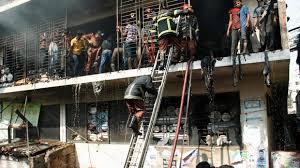
UK government sought steps to avoid another factory disaster
The UK government has helped ratchet up standards in factories supplying UK retailers after the disaster in Bangladesh’s building complex. About 20 retailers, including Primark, were summoned to a UK government summit at the Department for International Development (DFID) as ministers sought steps to prevent another such incident. The meeting encouraged retailers to use their influence to help bring about change. The DFID also offered to provide social, political and economic insight to retailers to help them invest responsibly in developing countries. The UK has donated £18m (about $ 27.5 m) towards safety and skills training for Bangladeshi factory workers and is also offering technical support and advice on factory standards.
See more at: http://www.guardian.co.uk/business/2013/jul/03/government-retailers-factory-disaster-bangladesh?INTCMP=ILCNETTXT3487
Australian retailer promises building safety checks in Bangladesh
Despite not receiving any clothing from Rana Plaza, but relenting to pressure from human rights groups, Australian retail giant Kmart, is presently reviewing its commercial ties with Bangladesh. Kmart’s managing director has stated that the retail company will not tolerate underage employees or unsafe buildings.
See more at: http://www.voanews.com/content/austalia-retail-giant-promises-building-safety-checks-in-bangladesh/1694132.html
Bangladesh tells EU it will boost worker rights, inspections
In response to a “sustainability compact” launched by the EU, Bangladesh officials have pledged to enact a new labor law by the end of 2013, to boost worker rights and to increase the factory inspectorate by 200 staff to 800. This commitment is an effort to preserve European Union trade benefits. Bangladesh has been warned not to take these benefits for granted. A group of mainly European retailers announced they had finalized a plan to promote worker safety through coordinated inspections.
See more at: http://www.reuters.com/article/2013/07/08/us-bangladesh-eu-idUSBRE9670P120130708
Major U.S. names missing as retailers sign deal to improve Bangladesh safety
75 mainly European retailers signed the Accord on Fire and Building Safety in Bangladesh, backed by the international trade union IndustriALL and the Bangladeshi government. The accord is a legally binding plan to inspect garment supply factories in Bangladesh within nine months. In contrast, only three U.S. retailers have signed up to the plan. American firms are reportedly reluctant to join any industry accord that creates legally binding objectives.
See more at: http://www.guardian.co.uk/business/2013/jul/08/retail-bangladesh-factories-improve-safety-deal
According to Jyrki Raina, the general secretary of the IndustriALL Global Union, a “profound change” was only possible with a strong coalition between trade unions, international brands and retailers and Bangladeshi authorities with worker involvement.
What else should foreign governments, multinational brands, trade unions, human right groups, and workers do? Read our 2013 ISSUE OF THE YEAR: Minimal standards for worker safety and Share your view.
.