by Admin | Nov 18, 2013 | Highlights
Prior to the Conference, BGF is receiving comments and questions from participants. Here are some of them:
1. Lan Phuong Bui (Deputy Director, Vietnam Institute of America Studies): How could multi-lateral treaties such as the TPP help improve workers’ safety especially in developing countries?
2. Salil Tripathi (Director, Worker Safety IHRB): There has been considerable focus on western brands and companies. Who is exerting pressure on Bangladeshi companies?
3. Khurrum Siddique (Director, SIMCO): How do we make buyers accept responsibility for outsourcing?
4. Eileen McNeely (Director, Center for Health and Global Environment): What is the role for collective bargaining to oversee health and safety conditions?
5. Professor Kent Jones (Economics Department, Babson College): Instead of “naming and shaming” only corporations that sell sweatshop products, how about doing the same for countries, like the US and members of the EU, that reserve their highest tariff rates for clothing made in the poorest countries? According to www.progressive-economy.org, the average US tariff collected on imports from Bangladesh in 2013 was 15%, second only to Cambodia in its severity. Based on some $4billion annually in clothing imports from Bangladesh, the US collected more than $600 million in tariff revenue on those items in 2012; the EU, with similar tariffs, collects a comparable amount. Why not persuade the importing countries to contribute these tariff revenues to a fund in support of the Bangladesh Fire and Safety Accord? Such a fund, accumulating tariff revenues on Bangladeshi trade alone of $2 billion or more annually, could be turned over to a competent international authority, perhaps the ILO, to fund structural improvements and to link compliance with safety standards to a certification process, with independent inspection and monitoring. In fact, this sort of tariff-based funding could be used to support similar programs in other countries as well, and even in other industries. These tariffs, by the way, are the product of domestic protectionist politics, are a drag on development, and should be reduced and eventually eliminated. In the meantime, the tariff revenues could at least be devoted to such a worker safety initiative that actually helps development.
The good thing about the response to the Rana Plaza tragedy is that it has focused on improving worker conditions through voluntary actions, public awareness, and international cooperation. While these measures alone may not solve the problem, they at least provide a cooperative framework to build upon. Financial resources to implement needed infrastructure and building safety measures must also be a part of the solution, and this element can provide incentives for compliance (see my proposal above). What is unlikely to succeed are unilateral trade sanctions to enforce labor standards, which would end up punishing Bangladeshi and other foreign workers.
6. Jyoti Sinha (Sloan School of Management, MIT): I have been researching on the cause of fire at garment factory/workshop/outlet. Fabric dust of course catches fire easily but where does the spark comes from. Is it electrical appliances outburst, machinery default which produces the spark..or something else? Are the garment workers trained or oriented to follow the safety rules at work. Does the safety culture/ climate exists at these garment factory/workshop/outlet.
With reference to Triangle shirtwaist factory fire: A New York Times article suggested that the fire may have been started by the engines running the sewing machines, while The Insurance Monitor, a leading industry journal, suggested that the epidemic of fires among shirtwaist manufacturers was “fairly saturated with moral hazard.
7. Mr. Kirpal Singh (Director of the Wee Kim Wee Centre for Diversity Education at the Singapore Management University):
- The main issue for worker rights seems to me to be the actual implementation….it is one thing to get these rights, etc, and another to actually see them executed…. Who will do the important but risky *policing*?
- How do we ensure that even if minimum working standards/salaries are agreed to these will be implemented without workers being punished/coerced, etc?
by Admin | Nov 18, 2013 | Event Updates
BGF Conference has started with the introduction of Mr. Tuan Nguyen, editor-in-chief of Boston Global Forum:
“Welcome. I’m Tuan Nguyen, editor-in-chief of Boston Global Forum. We’re delighted you have joined us for our on-line conference on improving minimal global standards for worker safety and rights. The leader of the conference will be Governor Michael Dukakis, the chairman of Boston Global Forum. Mike is a three-term governor of Massachusetts, was the Democratic Party’s 1988 presidential nominee, and is currently on the faculties of UCLA and Northeastern University. He also heads the Dukakis Center, located at Northeastern.
I present to you Michael Dukakis”.
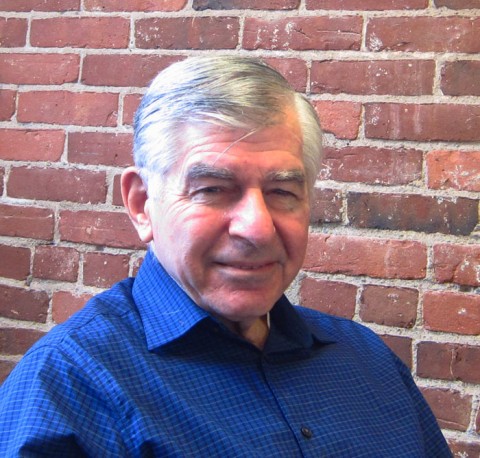
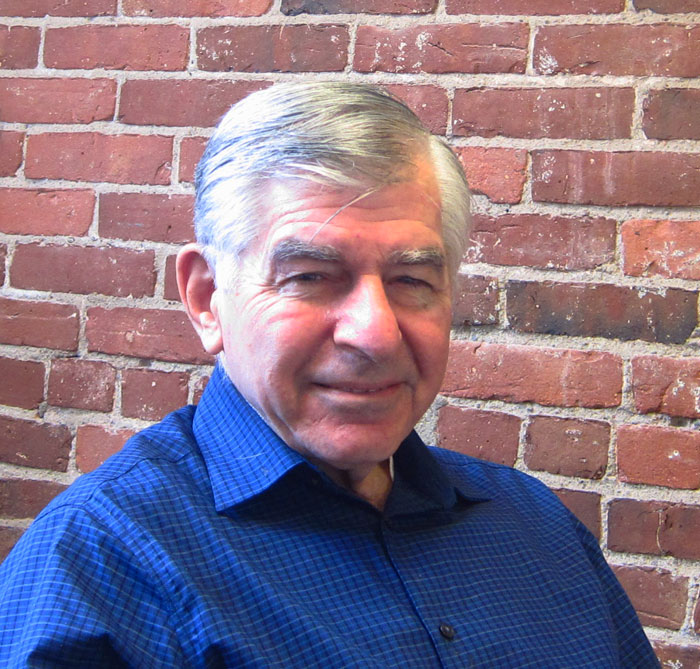
Mr. Michael Dukakis, Chairman of Boston Global Forum.
In his turn, Mr. Michael Dukakis has given out some opening remarks:
“Thanks Tuan and thank you all. Welcome all of you to this unique and very special conference which really launches the work of the Boston Global Forum and I just want to take a couple of minutes to tell you a little bit about the Forum and what we hope to achieve. Obviously, to express our appreciation towards all of you to joining us at this pretty early hour in the morning at least in the East Coast of the United States. The idea behind this was Tuan Nguyen’s, a remarkable person in his own right, who took part in the internet development in Vietnam and has spent a good deal of his time in the Boston area. He started the idea of creating this Forum, which would on the one hand, tap into the intellectual horsepower of the Boston area, and on the other hand reach out to you from many parts of the U.S and all over the world to deal with the specific international issues. It is his idea and we’re very grateful for Tuan and the wonderful collaborative team that you meet in the course of the discussion today to launch this. And thanks Prof. John Quelch who will moderate our discussion, who decided our issue of the year would be this important issue of international worker safety and health. Our hope is that we will have a good and lively discussion, to which many of you know we have well over 100 people who are now part of the conference this morning. A very special thanks, especially to my side and my colleagues from the government, both nationally and in Massachusetts. And we hope that, as a result of our discussion this morning, we can proceed to involve more and more people who are deeply interested in this issue. We hope to have a set of recommendations circulating to you and see if we can have a real impact in this very important public policy area. So thank you again all of you who join us and now I want to turn the discussion over to Prof. John Quelch of the Harvard Business School, who first suggested this topic and our opening issue. And we are very grateful for John to do that. We will run for about 90 minutes, and again, we are grateful to all of you to be part of this. So, John, it’s all yours”.
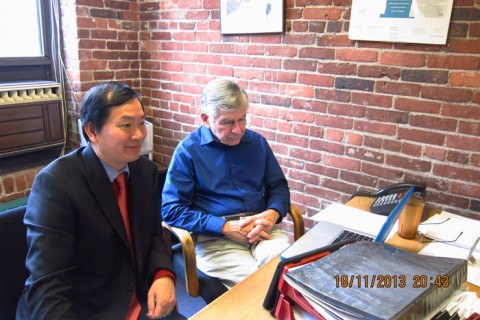
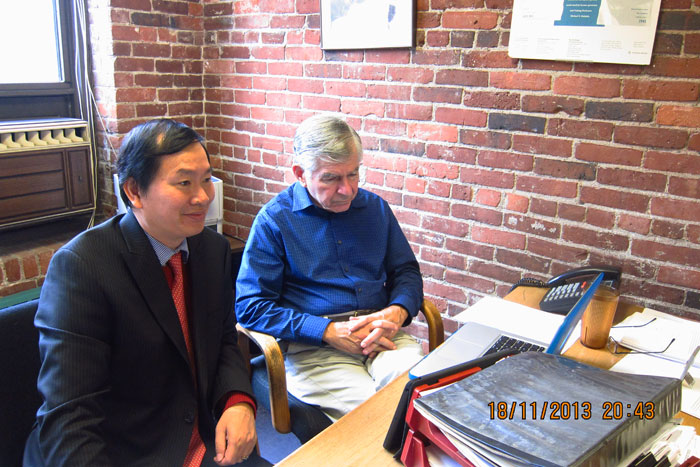
From left to right: BGF’s editor in chief Tuan Nguyen and chairman Michael Dukakis in the Conference room.
by Admin | Nov 18, 2013 | Highlights
Dr. Vu Minh Khuong, Assistant Professor, Lee Kuan Yew School of Public Policy, National University of Singapore has sent BGF his comments and question as following:
Comment: “React” or “reform” is an important indicator when one assesses how far a nation can go in turning a severe disaster such as the Rana Plaza factory collapse into a powerful driver for change and transformation. While the “react” approach may lead to some punishment, review, and revision, its effects are not fundamental and lasting.
In contrast, the “reform” approach foster all the stakeholders, including governments, businesses, workers unions, workers, and MNCs to work together to forge out a strategy that will enable Bangladesh to become a competitive place for garment industry, not only in labor costs but also in working conditions. This strategy should address the fundamentals and particularly emphasize the efforts to benchmark Bangladesh against the comparable countries in Asia (such as Sri Lanka, Vietnam, and China) and to learn from world best practices.
Question: In your observations, the efforts made by the Bangladeshi government, the Bangladeshi garment industry, and MNCs have likely followed which approach, “react” or “reform”?
by Admin | Nov 18, 2013 | Highlights
Here are a couple of questions from Arnold Zack, Mediator/Professor at Harvard Law School:
I realize the focus of the Accord has been on factory safety which obviously impacts employees, but the greater problem is the workplace conditions of factory workers (wages, unpaid overtime, illegally long hours, punishment for unionizing, etc). Given the endemic corruption of the Bangladeshi government what avenues would you recommend for providing better wages and working conditions for its garment factory workers? Do you see the ILO amenable to undertaking the monitoring?
The practice of brands pulling business from a country when they suffer bad publicity from contractors oppressing workers, victimizes the workers once again and not the factory owner or the unscrupulous government officials. Is there a way of protecting the exploited workers in such situations to assure the factories continue with improved working conditions for their employees?
The EU Accord provides a binding robust program of worker protection including the right to unionize. Do you see the weaker voluntary American brand counterpart being strengthened or making our brands more accountable?
by Admin | Nov 18, 2013 | Highlights
BGF is pleased to introduce here some comments from World Bank, sent by Timothy G. Evans, Director of Health, Nutrition and Population in a letter:
“We at the World Bank share your concerns about international occupational safety and health standards. The World Bank is concerned about the many and formidable challenges facing workers. Such challenges can only be addressed through constructive partnerships among various actors, thus, we share your commitment to promoting widespread dialogue. If such are available, we would appreciate receiving the proceedings from the conference. Please accept our best wishes for a successful event.”
_______________________________________
BGF would like to introduce below comments of Mr. Chaovalit Ekabut, President of Siam Cement Group, Thailand:
- Work standard and practice should be audited by a third party (similar to accounting).
- MNCs shall used outsource services only from those audited.
- Recognition for good examples.
_______________________________________
Ms. Deborah Leipziger (Adjunct Faculty member at the Simmons School of Management): What can socially responsible investors do to put pressure on brands to improve working conditions in Bangladesh?
_______________________________________
From Europe, Mr. Roland Schatz, Founder and CEO of Media Tenor International has sent us following questions:
1. Why does Quelch think, that the MNC’s are not responsible? Modern Supply-Chain-Management is no longer accepting the delegation of responsibility?
2. The Reputation damage to European corporates seems to be higher than to US – why?
3. What has to be changed on the level of UN PRI in order to have the concept of Sustainability being understood as material to C-Suites in the West?