
by Admin | Feb 24, 2014 | News
(Photo Credit: Japanese Wikipedia)
(BGF) – In an Op-Ed published in the Moscow Times on December 3, 2013 Joseph Nye, University Distinguished Service Professor at Harvard’s Kennedy School of Government and a member of the Boston Global Forum’s Board of Thinkers, discussed Japan’s recent economic recovery in the wake of the earthquake, tsunami, and nuclear catastrophe in 2011. As Nye notes in the article, Japan’s recent economic growth is subject to several long-term challenges. Among those challenges, Nye lists Japan’s aging and shrinking population, its historically tense relationship with its neighbors which has lingered since World War II, and the recent territorial dispute with China in the East China Sea. Ultimately, Nye makes several recommendations that will allow Japan to look to the future and reinforce its soft power. The full article can be found on the Belfer Center for Science and International Affairs’ website: http://belfercenter.ksg.harvard.edu/publication/23707/return_of_japan_after_20_years_of_stagnation.html?breadcrumb=/experts/3/joseph_s_nye
The Return of Japan After 20 Years of Stagnation
By Joseph S. Nye
“Japan is back!” Prime Minister Shinzo Abe declared during a visit to Washington earlier this year. But while Japan may be on the right track after two decades of economic stagnation, there is still much to be done to secure the country’s long-term future.
In July, Abe’s Liberal Democratic Party won control of both houses of parliament, a resounding electoral victory that amounts to the strongest political mandate any Japanese leader has received in many years. As a result, Abe seems likely to remain in power longer than his ineffectual predecessors, most of whom did not last more than a year.
Meanwhile, Japan’s economy seems to be recovering from a generation of malaise, with this year’s annualized growth rate exceeding 3 percent. Moreover, following the triple shock of the earthquake, tsunami and nuclear catastrophe in 2011, Japan has managed, at considerable cost, to replace the 25 percent of its energy supply that the disabled reactors at the Fukushima Daiichi plant provided. The announcement that Tokyo will host the 2020 Olympic Games has also boosted public confidence.
Skeptics worry that the economic progress may not last, arguing that the high growth rate is simply a reflection of loose monetary policy and fiscal stimulus, a strategy that inflation will render unsustainable. Abe’s supporters reply that the third “arrow” of “Abenomics” — productivity-enhancing structural reforms — has only now been removed from its quiver. They point to Abe’s ability to overcome resistance from small rice farmers, part of the Liberal Democratic Party’s electoral base, to Japan’s participation in negotiations on the Trans-Pacific Partnership, which would open Japan’s economy to increased global competition.
Nevertheless, Japan faces serious long-term challenges. First, with its birth rate well below replacement level, Japan’s population is aging and shrinking. Offsetting this trend will require increased immigration and greater female labor-force participation, neither of which will be easy to bring about. Japan has not traditionally been a country of immigration, and the World Economic Forum’s Global Gender Gap Report, which ranks 136 countries, has Japan in 105th place. But of course, this can change, and Japan does have a history of successfully reinventing itself.
Perhaps the most critical question about Japan’s future concerns its relationship with its neighbors: North Korea, South Korea and China. While recent polls suggest that Japan retains substantial soft power globally, this is not the case in its immediate neighborhood.
Unlike Europe, where Germany overcame World War II’s legacy through its integration into the European Union, Northeast Asia remains burdened by history. According to its neighbors, Japan’s apologies for is past aggression are inadequate. It does not help that some South Korean and Chinese leaders have used anti-Japanese rhetoric to win domestic support.
In Japan, the relentless criticism has triggered a nationalist backlash, spurring politicians to respond in kind during last year’s election campaign. For example, Abe threatened to rescind the official apologies issued by former leaders or officials for abuses and atrocities committed by Japan’s army during World War II and stated his intention to visit the controversial Yasukuni Shrine, which honors not only Japan’s war dead but also many of its war criminals. While Abe has not acted on these campaign statements, some observers remain convinced that he will visit Yasukuni at some point, further straining Japan’s relations with South Korea and China.
Territorial disputes have exacerbated these tensions significantly. China challenges Japanese control [of] more than seven square kilometers of islets — called the Senkaku Islands in Japan and the Diaoyu Islands in China — in the East China Sea. While the rival claims date back to the late 19th century, the latest flare-up, which has included widespread anti-Japanese demonstrations in China, was triggered in September 2012, when Japan’s government purchased three of the tiny islets from their private Japanese owner.
Then-Prime Minister Yoshihiko Noda said he decided to purchase the islands for the Japanese central government to prevent Tokyo Governor Shintaro Ishihara from purchasing them with municipal funds. Noda feared that Ishihara, who was well known for nationalist grandstanding, would try to occupy the islands or find other ways to use them to provoke China.
But Chinese officials viewed the move as proof that Japan was trying to disrupt the status quo. Some even claimed that Japan was trying to reverse the territorial outcome of World War II.
The full article can be found at: http://belfercenter.ksg.harvard.edu/publication/23707/return_of_japan_after_20_years_of_stagnation.html?breadcrumb=/experts/3/joseph_s_nye
by Admin | Feb 24, 2014 | News
(Photo Credit: Joe Klamar/Agence France-Presse — Getty Images)
(BGF) – BGF would like to introduce you to an article recently written by Helene Cooper which appeared in the New York Times on Saturday, February 22, 2014. The article discusses a recent, month-long U.S.-Japanese joint military exercise which focused on a set of islands in the East China Sea (called the Senkaku Islands in Japan and the Diaoyu Islands in China) that have been at the center of a territorial dispute between China and Japan. Click on this link (http://www.nytimes.com/2014/02/23/world/asia/in-japans-drill-with-the-us-a-message-for-beijing.html?hp&_r=1) to read the full article.
In Japan’s Drill With the U.S., a Message for Beijing
By Helene Cooper
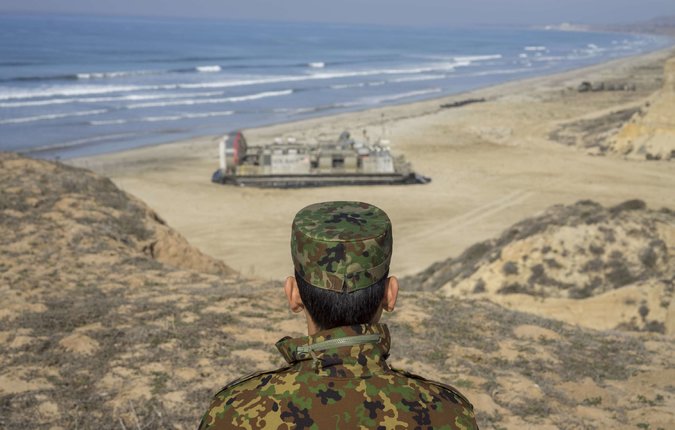
CAMP PENDLETON, Calif. — In the early morning along a barren stretch of beach here last week, Japanese soldiers and American Marines practiced how to invade and retake an island captured by hostile forces.
Memo to Beijing: Be forewarned.
One Marine sergeant yelled for his men, guns drawn, to push into the right building as they climbed through the window of an empty house meant to simulate a seaside dwelling. The Marines had poured out of four amphibious assault vehicles as another group of smaller inflatable boats carrying soldiers of Japan’s Western Army Infantry Regiment landed in an accompanying beachhead assault.
There were shouts in Japanese. There were shouts in Marine English. There was air support, from Huey and Cobra helicopters hovering above. Then larger Navy hovercrafts roared in, spitting up a spray of seawater before burping out Humvees and more Japanese troops, their faces blackened with camouflage paint.
American military officials, viewing the cooperative action of the former World War II enemies from a nearby hillside, insisted that the annual exercise, called Iron Fist, had nothing, nothing to do with last fall’s game of chicken between Tokyo and Beijing over islands that are largely piles of rocks in the East China Sea. But Lt. Col. John O’Neal, commander of the 15th Marine Expeditionary Unit, said that this year, the Japanese team came with “a new sense of purpose.”
“There are certainly current events that have added emphasis to this exercise,” he said, as Japanese soldiers made their way up into the rocks before disappearing into the hills above the beach. “Is there a heightened awareness? Yes.”
In the United States military, commanders are increasingly allied in alarm with Japan over China’s flexing of military muscle. Capt. James Fanell, director of intelligence and information operations with the United States Pacific Fleet, recently said in San Diego that China was training its forces to be capable of carrying out a “short, sharp” war with Japan in the East China Sea.
In a sign of continuing concern, Gen. Ray Odierno, the Army chief of staff, was in China over the weekend seeking to improve the limited relationship between the American and Chinese militaries, perhaps through exchanges of top officers. In recent years, the Pentagon has worried about the buildup of China’s military and a lack of transparency among its leaders.
The islands at the center of the dispute, known as the Senkaku in Japanese and the Diaoyu in Chinese, are a seven-hour boat ride from Japan, even farther from China, and thought to be surrounded by man-eating sharks. Japan has long administered the islands, but they are claimed by China and Taiwan.
Last year, China set off a trans-Pacific uproar when it declared that an “air defense identification zone” gave it the right to identify and possibly take military action against aircraft near the islands. Japan refused to recognize China’s claim, and the United States defied China by sending military planes into the zone unannounced — even as the Obama administration advised American commercial airlines to comply with China’s demand and notify Beijing in advance of flights through the area.
To continue reading: http://www.nytimes.com/2014/02/23/world/asia/in-japans-drill-with-the-us-a-message-for-beijing.html?hp&_r=1
by Admin | Feb 21, 2014 | Highlights
(Photo Credit: MUNIR UZ ZAMAN / AFP/GETTY IMAGES)
By Philip Hamilton
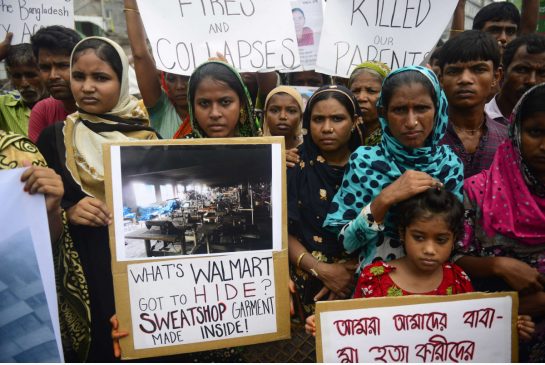
(BGF) On February 19, 2014 the Boston Global Forum (BGF) hosted an event in which it announced a new and exciting initiative to recognize companies, brands, and retailers who are leading the way in worker safety and rights through the use of best practices. The event featured notable contributions from Governor Michael Dukakis, Chairman and co-founder of BGF, Arnold Zack, a renowned mediator, arbitrator and lecturer at Harvard Law School’s Labor and Worklife Program, Hedrick Smith, a Pulitzer Prize-winning journalist and former reporter and editor of the New York Times, and Marcy Goldstein-Gelb, the Executive Director of the Massachusetts Coalition for Occupational Safety and Health (MassCOSH).
Gov. Dukakis kicked-off the event with an announcement about BGF’s new initiative. As he noted, BGF is seeking to build off of the success of the November 18, 2013 online conference on worker safety and rights. It is BGF’s hope that the new initiative will result in continued discussion on ways in which companies, brands, and retailers can promote worker safety and rights. Additionally, Gov. Dukakis noted the potential that the initiative to recognize companies, brands, and retailers who are leading the way in worker safety and rights through the use of best practices could provide guidance or the necessary pressure for other brands and retailers, who are not currently utilizing best practices, to follow suit.
One of the key topics discussed throughout the event were the social and political causes for worker safety and rights issues. As Smith noted, the United States has undergone a transition from stakeholder capitalism, where CEOs answer to various stakeholders including their suppliers and customers, to shareholder capitalism, in which CEOs primarily answer to their shareholders. This focuses much more attention profits and reinforces a perspective that money and profits are the ultimate measuring stick against which everything else is measured. According to Smith, even when companies have corporate social responsibility (CSR) programs it will be interesting to see what companies are willing to do when worker safety issues impact their bottom-line.
Relatedly, political factors contribute greatly to worker safety issues. Zack pointed out that there are 250 different international conventions on worker safety and rights promulgated by the International Labor Organization. Despite the apparent abundance of international conventions, there are no international laws addressing the issue. Making matters worse, international organizations, such as the World Trade Organization and G20 focus primarily on issues such as protecting intellectual property and cracking-down on tax havens, rather than worker safety and rights. Finally, the U.S. labor laws are weakly written and enforced, which prompted Smith to raise the question of how the U.S. can compel other countries to put in place and enforce worker safety and rights legislation when it cannot manage to do that at home?
Even when social and political factors do not hinder efforts to promote worker safety and rights, issues of complexity and lack of transparency enter the picture. Goldstein-Gelb illustrated this point through a story about a man named Patrick who came to MassCOSH’s Worker Center. Patrick, Goldstein-Gelb said, worked on roofs in the Greater Boston area for an employer who refused to provide harnesses and other safety equipment. One day while working on a roof, Patrick fell and severely injured his back and legs. Yet, instead of taking Patrick directly to the hospital, Patrick’s employer took Patrick home, made Patrick change his clothes so it didn’t look like he was hurt on the job, and then made Patrick say he was hurt falling out of a tree while he was trying to save a cat. According to Goldstein-Gelb, these stories are not uncommon.
Goldstein-Gelb’s story about Patrick reflects similar conditions experienced in workplaces around the world. For example, double-bookkeeping is a major issue that disguises true occupational safety and health conditions, according to Zack. Even without outright deceit by employers who operate in unsafe conditions, the sheer complexity of global supply-chains and production makes tracking worker safety and rights nearly impossible. As Zack elaborated, Gap and Disney produced their products in more than 10-15,000 factories which are located in more than 50 different countries. Given this complexity it is extremely difficult to effectively monitor working conditions in each and every one of those factories. What is more, the cost of monitoring safety conditions on such a large-scale is prohibitive for many companies and governments, which brings us back to codes of conduct and CSR policies. Thus, not only will codes of conduct and CSR policies be costly for companies, which could impact their commitment to enforcing those codes and policies, they may simply just be too difficult to implement. Even if a handful of factories are promoting worker safety and rights, it is likely that another set of factories producing for the same country may very well be operating in unsafe conditions.
So, what can we do about all of this? One of the first things we need to accomplish, according to Goldstein-Gelb, is establish a workplace culture in which workers can speak up and raise concerns without having to fear that they will be penalized by their employers. The creation of unions and collective bargaining agreements can help in this respect by giving workers an outlet through which they can express their concerns. Ideally, this will create a scenario in which employers are willing speak up on behalf of state and federal workplace safety and health initiatives. These initiatives, according to Goldstein-Gelb, will benefit workers and employers as the workers will benefit from improvements in worker safety and rights, while employers will benefit from a level playing field in which all employers abide by the same standards.
Secondly, according to Smith, we can attempt to engrain CSR policies and the idea of corporate citizenship into the overall business culture through business schools and their programs. By exposing business students to the importance of CSR and corporate citizenship while they are still students, we can help create a wave of future business leaders who are committed to improving worker safety and rights.
nature of negotiations during the creation of Thirdly, we can push for greater transparency through supply-chain and factory audits, as well as the opening up of trade agreement negotiations. As Smith noted, the closed-door the Trans-Pacific Strategic Economic Partnership Agreement resulted in a lack of transparency and ultimately locked worker organizations out of the negotiations. Any efforts to create a great sense of transparency around worker safety and rights can help leverage improvements in factories or supply-chains where worker safety and rights are not being promoted.
Finally, the Boston Global Forum attempts to recognize those companies, brands, and retailers who are leading the way on worker safety and rights issues. As Goldstein-Gelb noted, deterrence is a critical component to the improvement of worker safety and rights. Through the recognition of the companies, brands, and retailers who are leading the way on worker safety and rights issues through the use and promotion of best practices, BGF hopes to provide guidance and an incentive for companies to adopt best practices. Additionally, this initiative has the potential to enhance information-sharing and transparency around the issues of worker safety and rights. With your continued support, we can continue to push worker safety and rights to the forefront of international discussion and continue to pressure for change.
by Admin | Feb 23, 2014 | Boston Global Forum Awards
Date: Feb. 26, 2014
Time: 4:30 pm, EST.
Where: Live-streaming at bostonglobalforum.org
Send your questions and opinions to [email protected]
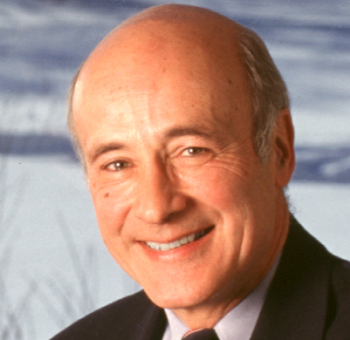
Joseph S. Nye, Jr. is University Distinguished Service Professor and former Dean of Harvard’s Kennedy School of Government. He received his bachelor’s degree summa cum laude from Princeton University, did postgraduate work at Oxford University on a Rhodes Scholarship, and earned a Ph.D. in political science from Harvard. He has served as Assistant Secretary of Defense for International Security Affairs, Chair of the National Intelligence Council, and a Deputy Under Secretary of State. His most recent books include Soft Power, The Power Game: A Washington Novel, The Powers to Lead and Presidential Leadership and the Creation of the American Era. He is a fellow of the American Academy of Arts and Sciences, the British Academy, and the American Academy of Diplomacy. In a recent survey of international relations scholars, he was ranked as the most influential scholar on American foreign policy.
The Boston Global Forum is pleased to invite you to attend the next installment of the Boston Global Forum Distinguished Lecture Series featuring Professor Joseph Nye. The lecture will kick-off the Boston Global Forum’s topic of focus for 2014, which is the relationship between the United States, China, and Japan.
Professor Nye, who is University Distinguished Service Professor at Harvard, the former Dean of Harvard’s Kennedy School of Government, and a member of the Boston Global Forum Board of Thinkers, will discuss U.S., Chinese, and Japanese relations. In particular, Professor Nye will address topics such as the role of the United States in the 21st Century, the potential of a third world war and how to prevent it, China and Japan’s role and responsibility in ensuring international peace, and how soft power can apply to the world in the 21st century. Please attend at BostonGlobalForum.org and send your questions to [email protected].

by Admin | Feb 21, 2014 | Event Updates
 (Photo Credit: Compliance and Safety LLC/Wikimedia Commons)
On February 19, 2014 the Boston Global Forum (BGF) launched an initiative to recognize the companies, brands, and retailers who are leading the way in worker safety and rights through the use of best practices. The event featured notable contributions from Governor Michael Dukakis, Chairman and co-founder of BGF; Arnold Zack, a renowned mediator, arbitrator and lecturer at Harvard Law School’s Labor and Worklife Program; Hedrick Smith, a Pulitzer Prize-winning journalist and former reporter and editor of the New York Times; and Marcy Goldstein-Gelb, the Executive Director of the Massachusetts Coalition for Occupational Safety and Health (MassCOSH). BGF would like to thank the participants for their enlightening comments and guidance. We greatly appreciate their knowledge, ideas, energy, and enthusiasm.
Going forward, BGF will collaborate with MassCOSH in order to develop a list of Best Practice Companies on worker safety and rights. Additionally, BGF welcomes your input and recommendations on the companies, brands, and retailers who are using best practices in worker safety and rights. Ultimately, with your input and continued support, BGF will announce a list of Best Practice Companies on Worker Safety and Rights on April 28, 2014, which is Worker Memorial Day in the Commonwealth of Massachusetts.
As always, thank you for your continued support!