by Robert Whitcomb | May 26, 2016 | Initiative
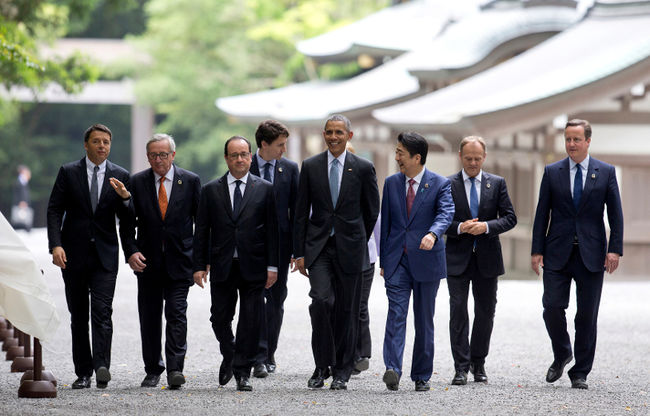
(May 30th, 2016) The Group of Seven (G7) leaders agreed on May 26 at their summit in Japan on the need to send a strong message to China about its maritime claims in the western Pacific, where an increasingly aggressive China has territorial disputes with Japan and several Southeast Asian nations. China has been seizing and militarizing some disputed islands and reefs in the region and threatening nations in the region that have challenged the seizures.
“Prime Minister (Shinzo) Abe led a discussion on the current situation in the South China Sea and East China Sea. Other G7 leaders said it is necessary for G7 to issue a clear signal,” Japan’s Deputy Chief Cabinet Secretary Hiroshige Seko told reporters after a session on foreign policy.
At a news conference late on Wednesday, Mr. Abe said that Japan welcomed China’s peaceful rise. But he repeated Tokyo’s opposition to acts aimed at changing the status quo by force and urging respect of the rule of law.
Chinese Foreign Ministry spokeswoman Hua Chunying retorted in Beijing that the South China Sea issue had “nothing to do” with the G7 or any of its members.
“China is resolutely opposed to individual countries hyping up the South China Sea for personal gain,” she said.
U.S. President Obama called on China to resolve maritime disputes peacefully and he reiterated that the United States was concerned about freedom of navigation and overflights in the region, through which 30 percent of world trade passes.
Read more
by Admin | May 2, 2016 | World Leaders in AIWS Award Updates
( May 2nd, 2016) The decision by the Bank of Japan to put off more economic stimulus for now means that market watchers are turning their attention to Prime Minister Shinzo Abe to see if he will propose a supplementary spending package to accelerate economic growth.
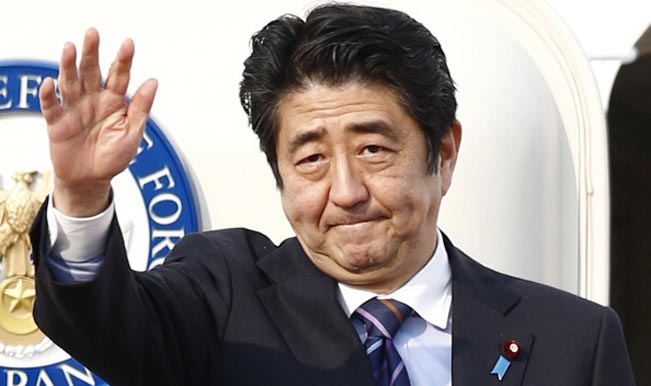
The Boston Global Forum has named Mr. Abe a “World Leader for Peace, Security and Development.’’
Bloomberg News has noted: “Abe has already said he’ll create a supplementary budget to address the economic damage caused by deadly earthquakes in Kumamoto earlier this month. The central bank said on Thursday it would supply 300 billion yen of funds to banks affected by the quakes.’’
by Admin | May 1, 2016 | World Leaders in AIWS Award Updates
(May 2nd, 2016) Japanese Prime Minister Shinzo Abe will visit Italy, France, Belgium, Germany, Britain and Russia this week for talks with their leaders.
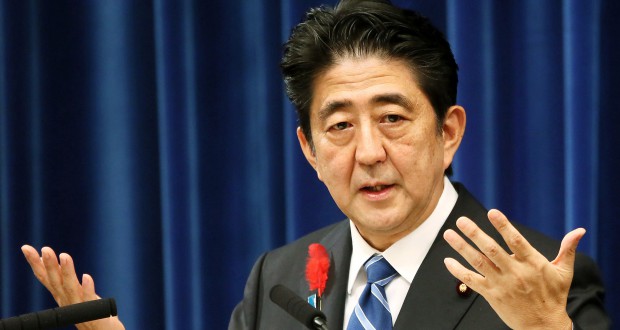
Mr. Abe will exchange views on the world economy and other major issues to be discussed at a G7 Summit that Japan will host on May 26-27. Italy, France, Germany, Canada, the United States, Japan and Britain are the G7 members. For a while there was a G8, which included Russia, but that nation was excluded after its invasion and occupation of Ukraine’s Crimea peninsula.
In Russia, Abe will talk with President Vladimir Putin on bilateral relations, including a territorial dispute over four Russian-held islets off Hokkaido, and other international issues.
The G-7 Ise-Shima Summit will take place May 26 to 27 in Mie Prefecture, central Japan.
by Admin | Feb 29, 2016 | World Leaders in AIWS Award Updates
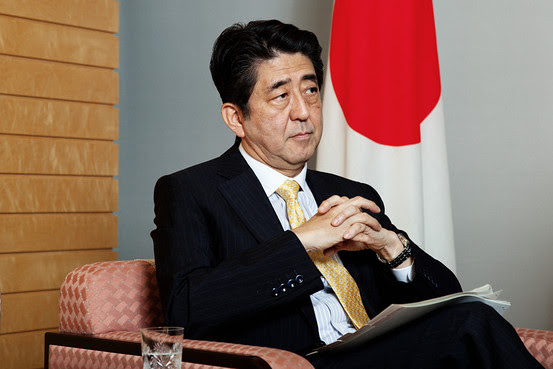
(29th Feb 2016) Mr. Abe said the tax decision must be based on expert analysis to determine “whether the global economy is really contracting.
Japanese Prime Minister Shinzo Abe’s recent warning about the possibility of a severe global economic contraction after theMay 26-27 G7 Summit, in Japan, has spurred speculation about delaying a tax increase and about the timing of the next parliamentary lower-house elections.
Mr. Abe said the tax decision must be based on expert analysis to determine “whether the global economy is really contracting.”
The economic outlook looks increasingly uncertain ahead of the upper-house election this summer.
See more
by Admin | Feb 15, 2016 | World Leaders in AIWS Award Updates
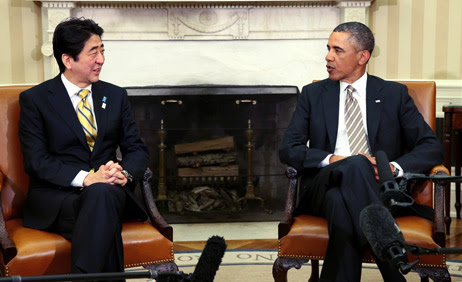
(15th Feb 2016) U.S. President Barack Obama and Japanese Prime Minister Shinzo Abe have discussed by phone North Korea’s menacing. Feb. 6launch of a ballistic missile and called for a strong international response to what the White House called a “destabilizing provocation.’’
U.S. President Barack Obama and Japanese Prime Minister Shinzo Abe
U.S. President Barack Obama and Japanese Prime Minister Shinzo Abe have discussed by phone North Korea’s menacing. Feb. 6launch of a ballistic missile and called for a strong international response to what the White House called a “destabilizing provocation.’’ But perhaps more importantly, Mr. Obama emphasized America’s “ironclad’’ commitment to Japanese security and promised to take all necessary steps to defend Japan and its other allies in the region.
The launch distressed many around the world in part because it showed North Korea’s increasing technological capability, including in cyber-related matters.
The U.S., South Korea and Japan have been urgently discussing tougher sanctions on the North Korean police state – a topic bound to come up at the G7 Summit in May. Japan and the U.S., of course, are both members of the G7.
See more
by Admin | Mar 12, 2016 | World Leaders in AIWS Award Updates
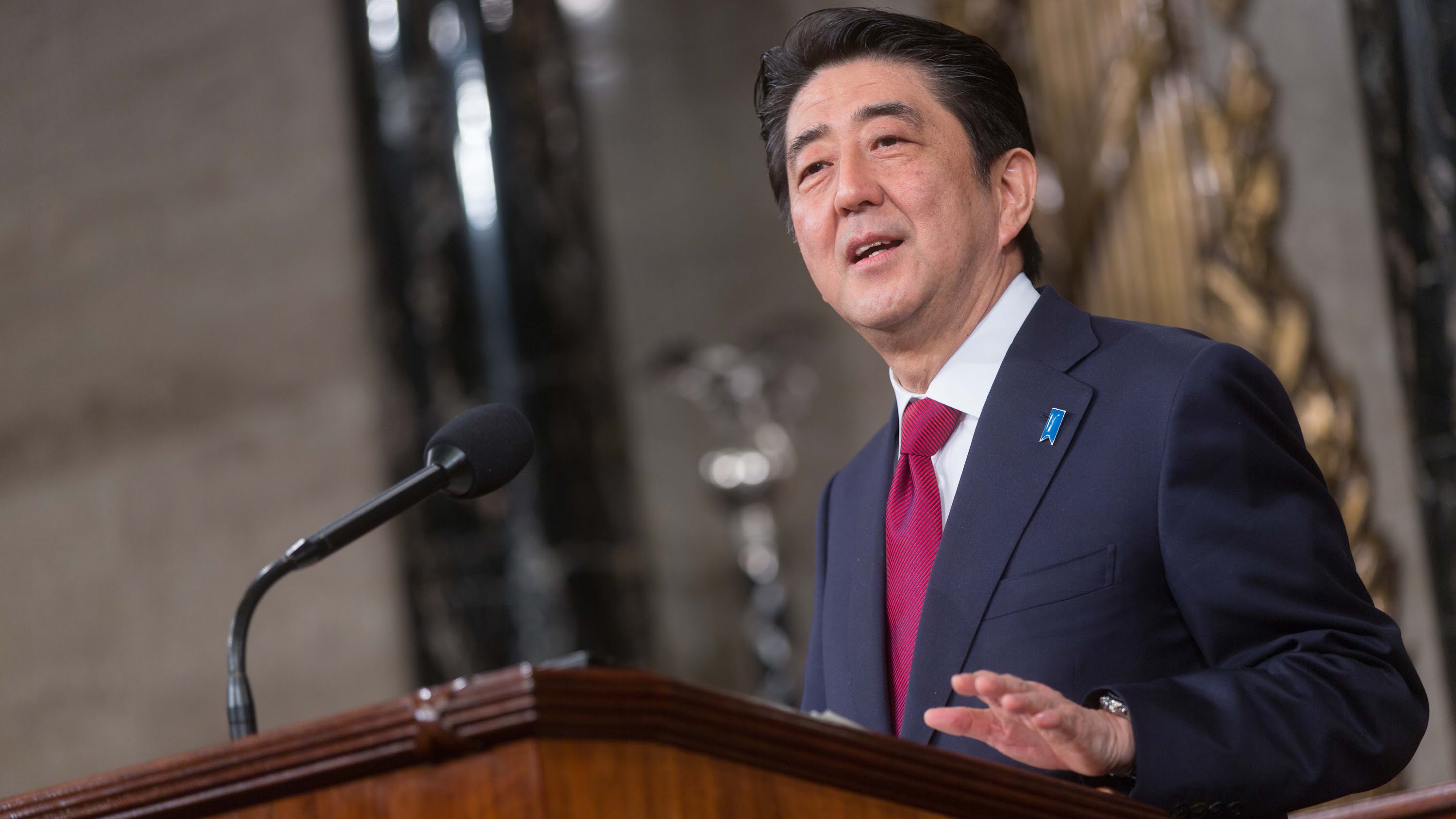
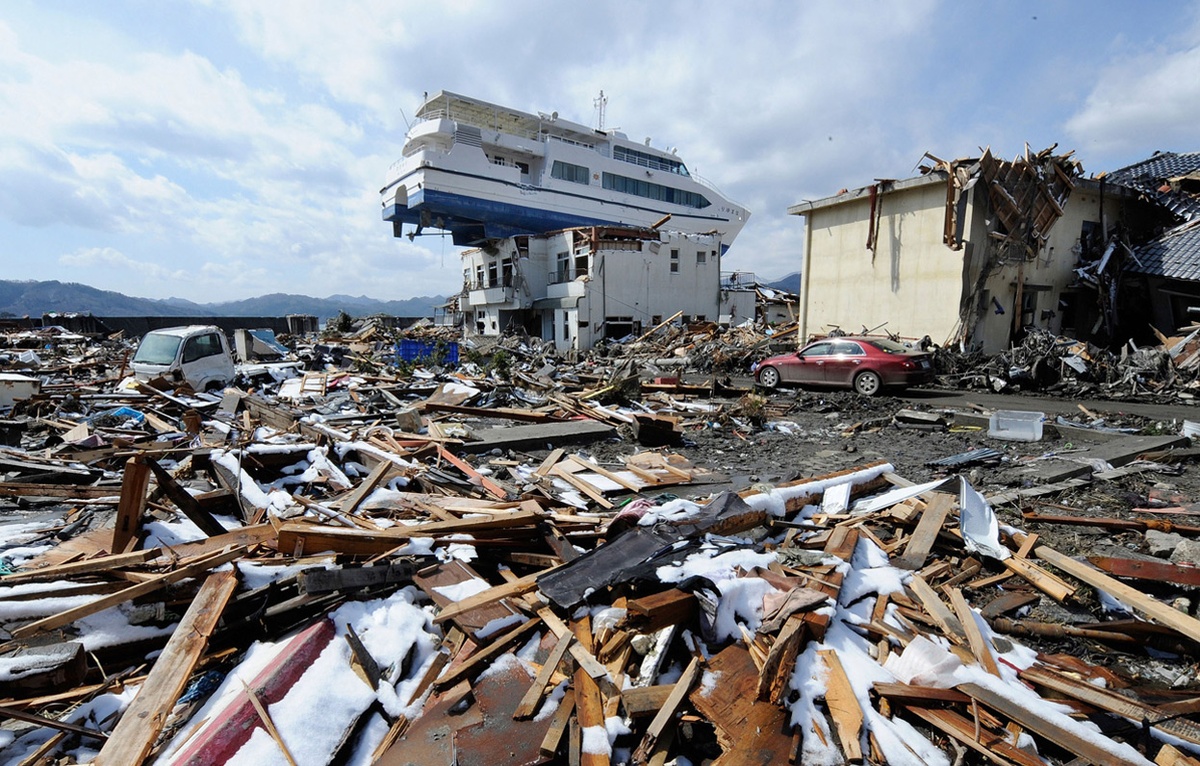
(March 14th, 2016) Japanese Prime Minister Shinzo Abe, who will be the main host of this year’s G7 Summit, on May 26-27, last week marked the fifth anniversary of the huge earthquake and tsunami that struck the north coast of Honshu on March 11, 2011.
He said:
“Already, five years have passed since the Great East Japan Earthquake, which claimed many precious lives and completely changed the lives of so many more people.
“When I think of the despair of those who lost beloved members of their families and friends in the disaster, I am overwhelmed even now with deep sorrow. It is with my deepest sympathy that I reiterate my sincerest condolences. I would also like to extend my heartfelt sympathies to all those who have been affected by the disaster.
“Many people are still leading uncomfortable lives in the affected areas. There are many who cannot return to their beloved homes because of the accident at the nuclear power plant.
“Every time I visit the affected areas, I fully sense that ‘the disaster is continuing.’ And yet, step by step, the reconstruction is making steady progress. Revitalization of the livelihoods of the residents is similarly gathering pace and becoming fully fledged alongside the construction of new housing.
“By being aware of the circumstances of each and every one of the affected individuals, we commit ourselves to such tasks as providing care for their minds and bodies, forming new local communities and supporting industrial development of the affected areas, so that reconstruction leads to the attractive revitalization of the region.
“Consequently, with the determination to never allow the valuable lessons learned from the disaster to erode, we will ceaselessly review disaster-prevention measures by constantly integrating the latest wisdom and knowledge. Once again, I would like to make a firm pledge here that the government will exert its unified efforts to build a strong and resilient nation that is resistant to disasters.’’
by Admin | Mar 6, 2016 | World Leaders in AIWS Award Updates
(7th March 2016) Japanese Prime Minister Shinzo Abe’s nomination of Makoto Sakurai, an obscure 70-year-old economist, to the board of the Bank of Japan signals his determination to ensure that the central bank supports Mr. Abe’s stimulative economic policies. Japan, which has the world’s third-biggest economy, has been in the economic doldrums for 25 years and successive governments have tried to pull the nation out of them.
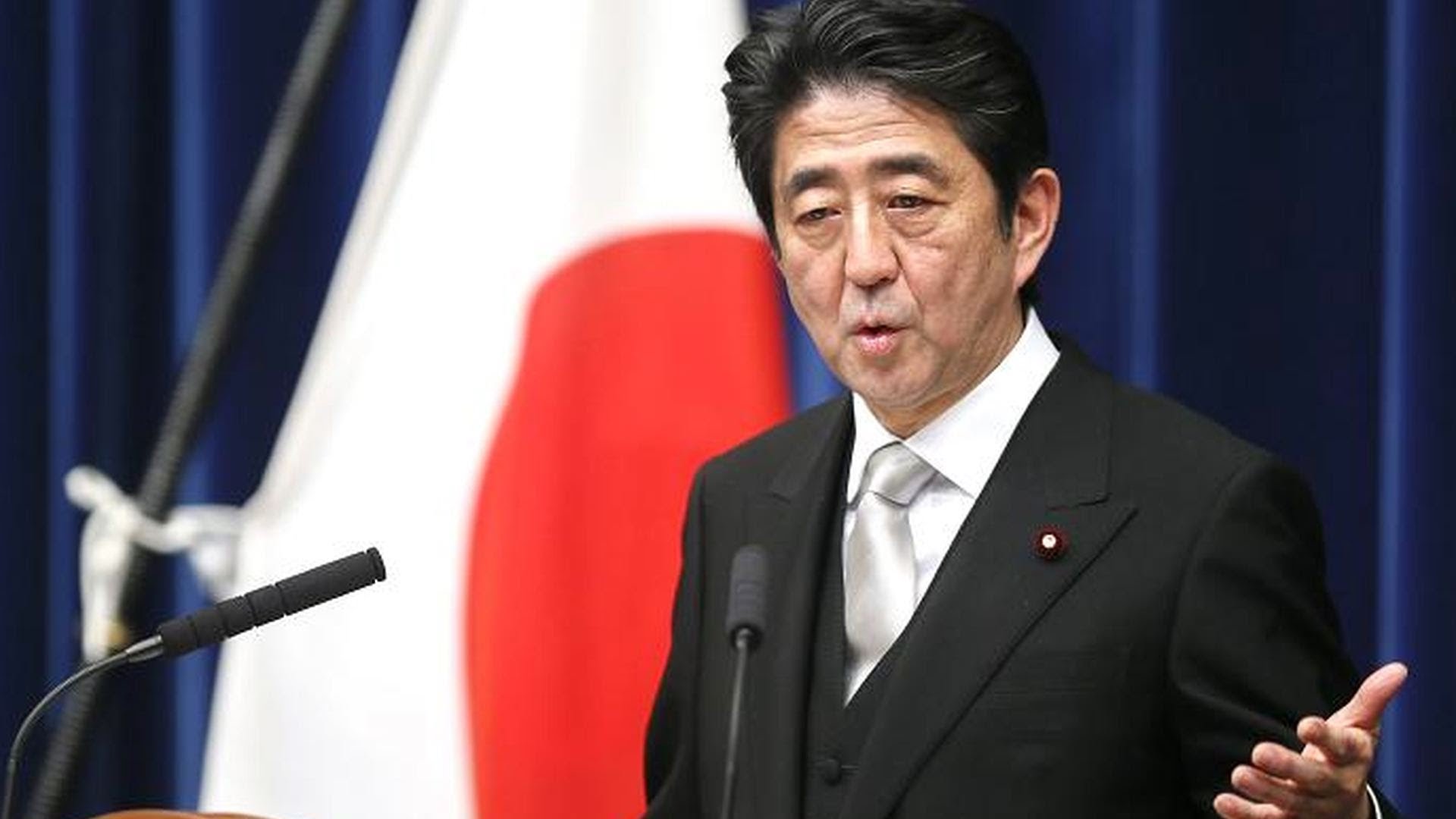
Mr. Abe will host the G7 Summit May 26-27. He is a winner of The Boston Global Forum’s World Leader in Cyber-Security Award.
“Mr. Sakurai has extensive experience as a researcher at government-affiliated think tanks … and he has repeatedly applauded Abenomics (stimulative fiscal and monetary policies) in his economic speeches.” Naoki Iizuka, an economist at Citigroup in Tokyo, told the Financial Times.
“Assuming other conditions remain unchanged, we think the appointment would make it easier for the BoJ to implement additional easing measures,” Mr Iizuka added.
“The BoJ has recently suffered setbacks in its quest to break Japan free from two decades of stagnant prices and drive inflation to 2 per cent. Weakness elsewhere in the world economy has led to a strengthening of the yen, potentially hitting Japan’s exports and appetite for business investment,’’ the newspaper reported.
The leaders at the G7 Summit will discuss weakness in the world economy and efforts to fend off an international recession that Chinese economic weakness and the European refugee crisis, among other problems, may threaten in coming months. The Boston Global Forum has been collaborating with G7 Summit planners as part of its BGF-G7 Summit Initiative.
by Admin | Feb 2, 2016 | World Leaders in AIWS Award Updates
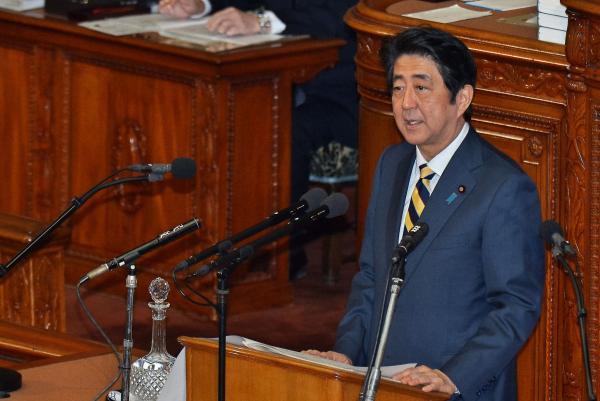
(Jan. 31, 2016) – Japan still sticks with its scheme of providing humanitarian and monetary aids instead of sending its people to directly join the international force in the fight against terrorist or environment crisis.
Japan’s Prime Minister Shinzo Abe stated Tuesday Japan’s Self-Defense Forces would not be joining others in combat in the Middle East. File Photo by Keizo Mori/UPI
Prime Minister Shizo Abe said on Tuesday that Japan would not plan to join the international coalition against the Islamic State, and that “”This decision will remain unchanged for the foreseeable future.” Its assistance would be limited to humanitarian needs instead, according to UPI’s report.
See more at http://www.upi.com/Top_News/World-News/2016/01/27/Shinzo-Abe-Japan-wont-fight-Islamic-State/9761453914657/
by Admin | Jan 26, 2016 | World Leaders in AIWS Award Updates
(BGF) – At a joint interview with Nihon Keizai Shinbun and The Financial Times, Prime Minister Shinzo Abe, underscored his belief that the G7 nations should lead the destabilizing world on a path to peace.
Prime Minister Abe added that cooperation with Russia is indispensable when it comes to combating extremists such as the Islamic State (ISIS) and in dealing with Middle Eastern instability. He has expressed strong interest in visiting Russia before the next G7 convention (Ise Shima Summit) that convenes in May.
He told journalists that the international situation is becoming increasingly unstable due to the rise of ISIS and confusion in Middle East. As the U.S. is becoming more passive in dealing with international affairs, there have been more incidences of international law violations such as Russia’s annexation of Crimea and China’s expansion in the South China Sea.
The Prime Minister suggested that the G7 Isa Shima Summit cover the uncertain world economy, terrorism, North Korea, problems in the Middle East, radicalism, climate change and the world’s poverty stricken population. He urged G7 countries to act in unity to show the world a course of positive action.
He emphasized that the G7 Summit is the place where the champions of freedom, fundamental human rights, and governance by law, and universal rights meet. He acknowledged, however, that it is becoming more difficult for the G7 to solve the problems of terrorism and instability in the Middle East as well as to call for self-restraint by China and Russia. With this in mind, the Prime Minister considers it essential for G7 countries, that share the common values, to unite under the leadership of the United States.
To deal with tensions between Iran and Saudi Arabia, as well as the war between Syria and ISIS, it is important, not only to have G7 involvement, but to have constructive involvement by Russia as well. With this in mind Prime Minister Abe suggested he visits Russia or that Russia’s President Vladimir Putin visits Japan to further this objective.
He also questioned China’s land reclamation in the South China Sea and the one- sided development of natural resources in the East China Sea. The threats China poses to world order are unforgivable, he said adding, that Japan will join in a united front with its allies on this issue.
On the Chinese economy, Prime Minister Abe noted that although fluctuations of RMB and share price in China are wide, the economy is steady and looks forward to steady economic growth.
With regard to North Korea’s nuclear test, he said Japan would deliver a resolution in the U.N. calling for effective measures to dissuade North Korea from such actions. Japan will also establish stricter sanctions of its own in response to the nuclear tests. He also said the stage for a meeting with Kim is not yet set and denied any plans to meet Kim Jung Un.
Reducing deflation, which has been a major goal since the start of Abe’s second term in office, is expected to occur over time, he said.
Regarding the need for further monetary easing by the Bank of Japan (BoJ), he said that the BoJ and the Government will try their best but the bases are still the policies set out in the three “arrows” of Abenomics.
He considers it is important to increase the productivity through reforms to achieve the three major targets, one of which is 600 trillion yen GDP.
_______________________________________
Mr. Katuyoshi Kondoh of Nihon Keizai and Mr. Lionel Barbar of FT conducted the interview, which have since become the same media group.
Translation: S.Takayama