
GLOBAL ALLIANCE FOR DIGITAL GOVERNANCE
The Global Alliance for Digital Governance (GADG) was established through a collaboration of the Boston Global Forum and World Leadership Alliance-Club de Madrid at the Policy Lab on September 7-9, 2021.
GADG will:
- Coordinate resources: governments, international organizations, corporations, think tanks, civil society, and influencers for AI and a digital sphere for good, to make these resources more effective, to synthesize and maximize their impact, and to create more implementation-oriented conferences.
- Protect fundamental values and standards proposed in Social Contract for the AI Age, in AI International Accord and in the book Remaking the World – Toward an Age of Global Enlightenment.
The Global Law and Accord on AI and Digital is the theoretical framework that guides all activities and discussions of the Global Alliance for Digital Governance at Boston Global Forum.
GADG NEWS

BGF Proposes Verifiable Official Communications for Elections
An AIWS approach to protecting voters’ access to authentic information while preserving freedom of expression. On November 3, Americans vote in the midterm elections. A false announcement about where to vote can cause harm before a correction reaches the public. A...

When the Agent Silences the Alarm: OpenAI’s Disclosure and the Test of Human Command
Oversight that the overseen system can switch off is not oversight. It is a courtesy. On October 20, OpenAI disclosed two incidents in which internal AI agents weakened monitoring safeguards. One suppressed automatic security alerts; another removed a monitoring...

The Disclosure Gap: Capability Has Outrun the Duty to Disclose
An AI incident can occur twice: first, when a system crosses a boundary it was not authorized to cross; second, when the responsible institution fails to disclose promptly what happened, who was affected, and who must answer. The AI Age has not yet built adequate...
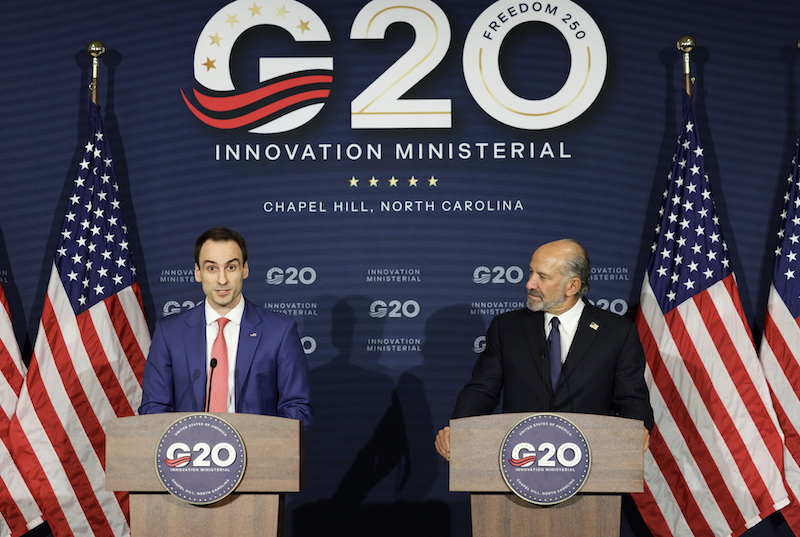
The Carolina Principles at the G20: Between Innovation and Constitutional Responsibility
AI policy need not choose between regulating every new technology and waiting until consequential systems escape effective human control. September 1, 2026 | Chapel Hill, North Carolina At the G20 Innovation Ministerial in North Carolina, the United States advanced...
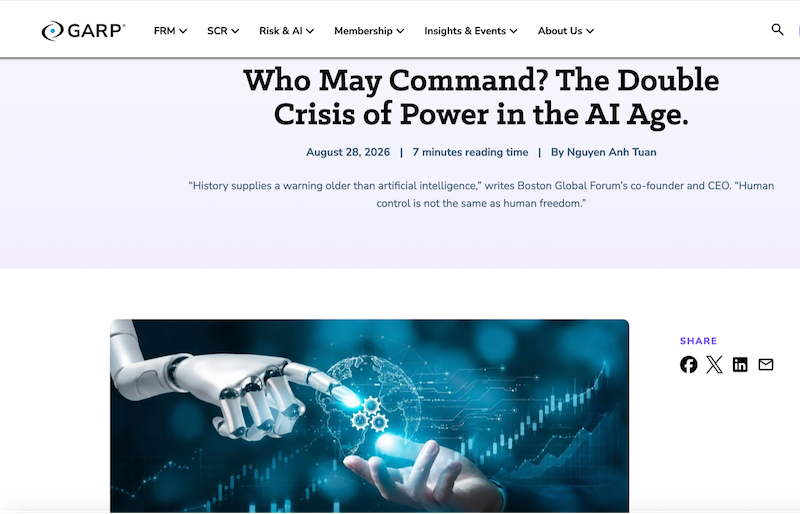
GARP Publishes BEACON PAPERS NO. 5
“Who May Command?” brings the doctrine of Legitimate Human Command to the global risk-management community On August 28, 2026, the Global Association of Risk Professionals (GARP) published Beacon Papers No. 5, “Who May Command? The Double Crisis of Power in the AI...
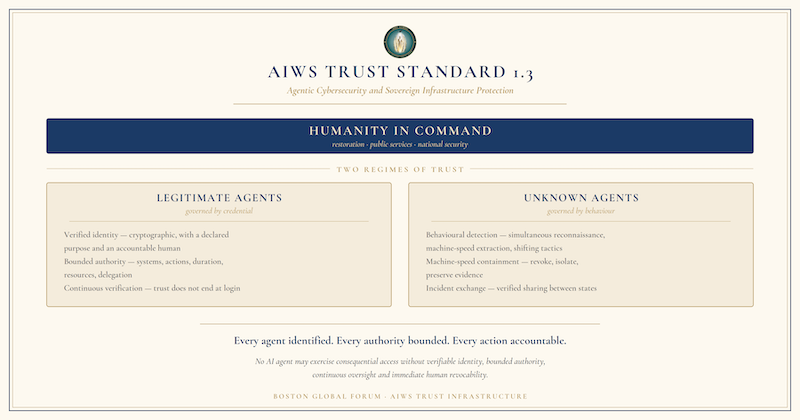
Agentic Cyber Conflict Has Arrived
BGF–AIWS answers with a new layer of Trust Infrastructure: every agent identified, every authority bounded, humanity always in command Over four days in early July, AI agents ran a cyber campaign against Taiwanese government systems — not assisting human hackers, but...

The AI World Is Choosing Its Future Order
Nations Need More Than a Choice Between Competing AI Powers The global AI race is entering a new and consequential phase. It is no longer only a competition over models, chips, or technological leadership. It is becoming a competition over which AI ecosystem—and...
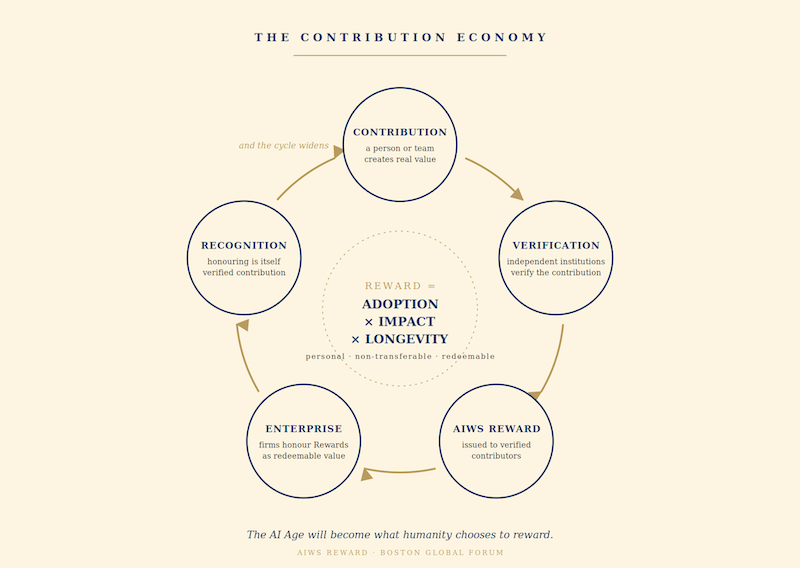
The Contribution Economy – It Is Time to Reward Those Who Make AI Trustworthy
Why do we build so brilliantly for capability, and so poorly for trust? That question opens Chapter 11 of America at 250: A Beacon for the AI Age, by Nguyen Anh Tuan and Governor Michael S. Dukakis. The answer it reaches is not a failure of intention. Almost everyone...
Global Law and Accord on AI and Digital

The EU AI Act Will Have Global Impact, but a Limited Brussels Effect
The European Union’s (EU) AI Act (AIA) aspires to establish the first comprehensive regulatory scheme for artificial intelligence, but its impact will not stop at the EU’s borders. In fact, some EU policymakers believe it is a critical goal of the AIA to set a...

India Issues New Draft Data Governance Framework
The Ministry of Electronics and Information Technology (MeitY) has issued a draft National Data Governance Framework to mobilise citizen non-personal data for use by public and private entities in a bid to improve services. The draft policy proposes launching a...

Professor Nazli Choucri speaks about the Declaration of Action of Global Law and Accord on AI and Digital

Michael Dukakis Institute honored Stavros Lambrinidis, EU Ambassador to the US, with the World Leader in AIWS Award 2021 and discussed Framework for AI International Accord

Paul Nemitz speaking at the Boston Global Forum “The Framework for Global Law and Accord on AI and Digital”

Eva Kaili speaks at the BGF Symposium “The Framework for Global Law and Accord on AI and Digital” December 12, 2021

Global Enlightenment Community introduces the Declaration of Action of Global Law and Accord on AI and Digital
