
by BGF | Jan 27, 2019 | News
Baidu, Alibaba, and Tencent, the three Chinese tech goliaths freely proportionate to Google, Amazon, and Facebook, are not simply creating and sending AI themselves.
A week ago, Chinese news source Huxiu.com distributed a realistic that outlines the full degree of their inclusion over China’s AI industry. It uncovered that BAT puts resources into 53% of the country’s 190 noteworthy AI organizations. This may not shock those of you who intently pursue China’s AI biological system. Be that as it may, it’s a significant distinctive topology for those increasingly comfortable with Silicon Valley’s.
Baidu, Alibaba, and Tencent put resources into more AI organizations than some other AI monster.

Taken a gander at one way, the scene demonstrates how seriously these organizations are endeavoring to excel over each other. While every company a primary specialized topic—Alibaba in the internet business, Tencent in person to person communication, and Baidu in inquiry and data ordering—they are additionally testing each other head-on crosswise over many enterprises.

Taken a gander at another way, the size of BAT’s contribution demonstrates exactly how essential the three organizations are to China’s bid to be a worldwide pioneer in AI by 2030. Their skills and financing set the bearing and pace of the innovation’s improvement, yet their shortcomings additionally help decide how likely China is to reach its goals.

As the realistic features, BAT’s speculations have advanced a best substantial AI industry: loads of organizations devoted to AI applications with far less committed to building up the advances that support it, including the calculations and propelled silicon chips behind the achievements in machine vision, regular dialect handling, and other AI abilities.
Specialists have cautioned about this best greatness previously. China’s galactic ascent in AI authority is at present floated by its bounty of information and careless perspectives on security. Temporarily, both those conditions make it ripe ground for exceptionally gainful machine-learning applications. In any case, the nation still lingers behind the US in its endeavors to extend existing AI capacities through central research. In the long haul, that could put a roof on the amount China will keep on profiting from AI.
Because artificial intelligence is developed for personal and business use, it is important to ensure that artificial intelligence technology does not have the risks of abuse, errors, or loss of control. This is also the content of Layer 7 in the 7-layer AIWS Model, which is being implemented by the Michael Dukakis Institute for Leadership and Innovation (MDI). Through Layer 7 in particular and the whole model in general, AIWS hopes to ensure the inclusion of AI in life and bring positive impacts.
by BGF | Jan 27, 2019 | News
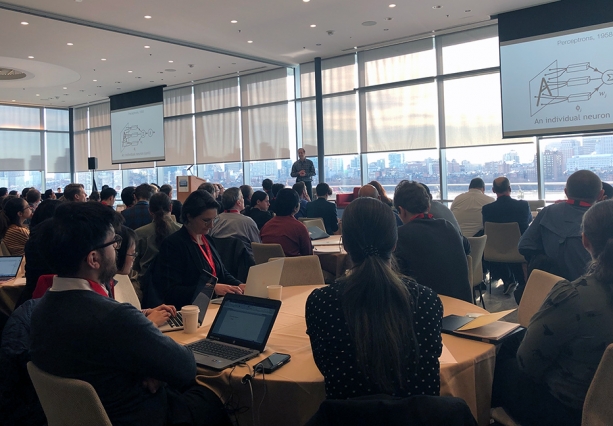
On January 18, scientists and policymakers came together at the first MIT AI Policy Congress. They discussed how to build up the opportunities of AI while grappling with big challenges.

The MIT Internet Policy Research Initiative (IPRI) held the MIT AI Policy Congress, alongside a two-day meeting of the Organization for Economic Cooperation and Development (OECD).
The 3 main issues addressed at the forum are:
- A new “commitment to address ethical issues”
- A varied policy landscape
- Public accountability
One big idea highlighted at this event is that AI policymaking can be quite different between industries. The forum focused on many areas including transportation and safety, medicine, labor, criminal justice, and national security.
“Things are evolving quite quickly,” spoke Andrew Wyckoff (director for science, technology, and innovation at the OECD), “we need to begin to try to get ahead of that.”
Daniel Weitzner, founding director of IPRI and a principal research scientist at the MIT Computer Science and Artificial Intelligence Laboratory (CSAIL) said: “I hope the policymakers come away with a clear sense that AI technology is not some immovable object, but rather that the right interaction between computer science, government, and society at large will help shape the development of new technology to address society’s needs.”
Accroding to Professor Jason Furman (Chairman of the Council of Economic Advisers; President Obama’s chief economist; professor at Harvard University’s Kennedy School of Government; a Senior Fellow at the Peterson Institute for International Economics; member of AIWS Standards and Practice Committee, Michael Dukakis Institute), “The real problem with artificial intelligence is we don’t have enough of it.”
As part of the event, experts of Artificial Intelligence expert group at the OECD (AIGO) were trained about machine learning in a half-day with a “trainer” – Prof. Hal Abelson, the Class of 1922 Professor of Computer Science and Engineering at MIT.
AIGO is made up of experts from OECD member countries and think tanks, business, civil society and labour associations and other international organisations which providing guidance in scoping principles for artificial intelligence in society. The two of active members in AIGO are Mr. Nguyen Anh Tuan – Director of The Michael Dukakis Institute for Leadership and Innovation (MDI), Co-founder and Chief Executive Officer of The Boston Global Forum (BGF) and Marc Rotenberg – President and Executive Director of the Electronic Privacy Information Center (EPIC), Member of AIWS Standards and Practice Committee, Michael Dukakis Institute.
by BGF | Jan 27, 2019 | News
Amid a period of populist enthusiasm, open social requests have continuously gone under strain. Regardless, the danger of atavistic ideological improvements couldn’t like to contrast with that introduced by astounding new headways in the hands of dictators.

“I need to caution the world around an extraordinary risk that is undermining the exact survival of open social orders,” according to George Soros (Hungarian-American investor and philanthropist).
The quickly enhancing instruments of control that machine learning and man-made brainpower can deliver are giving severe routines an intrinsically preferred standpoint.
The social credit framework isn’t yet completely operational, though it is unmistakable where it’s going. Soros locates the social credit framework as alarming and despicable. Sadly, some Chinese discover it rather alluring, on the grounds that it gives data and administrations that are not as of now accessible, and can likewise secure well-behaved nationals against enemies of the state.
He use “open society” as shorthand for a general public in which the standard of law beats rule by a solitary individual, and where the job of the state is to ensure human rights and individual opportunity. In his view, open society should give careful consideration to the individuals who experience the ill effects of separation or social avoidance and the individuals who can’t guard themselves.
In what manner can open social orders be ensured if these new innovations give tyrant routines a worked-in preferable standpoint? It ought to distract each one of the individuals who like to live in an open society.
Autocracy with Chinese characteristics
“My first exertion in China looked rather encouraging,” said Soros.
In the long run, a Chinese give beneficiary visited Soros in New York and let him know – at significant hazard to himself – what had occurred.
By and large, he obviously committed an error in endeavoring to set up an establishment, which worked in manners that were foreign to individuals in China. Around then, giving them that created a feeling of commitment between the contributor and beneficiary and obliged them two to stay faithful to one another eternity.
The betrayal of reform
When he initially began visiting China, he met numerous individuals in places of intensity who were adherents to the standards of open society.
They were anxious to get a notification about Popper’s contemplations on the open society. While they found the idea exceptionally engaging, their translation remained to some degree not quite the same.
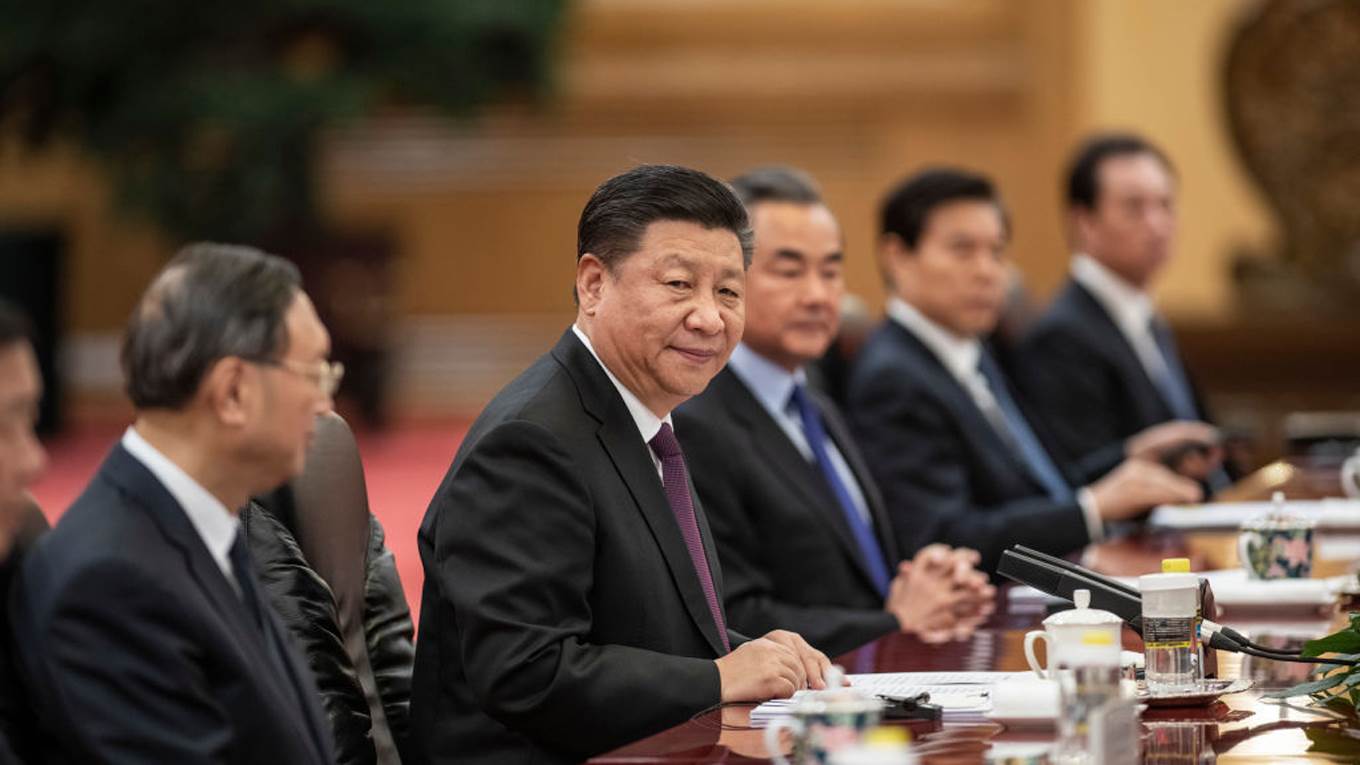
The submitted safeguards of an open society in China, have for the most part resigned, and more youthful individuals, who are subject to Xi for advancement, have had their spot.
It’s imperative to understand that such reactions were just a notice to Xi about his overabundances, yet did not turn around the abrogation of the two-term limit. In addition, “Xi Jinping Thought,” which he advanced as his refining of Communist hypothesis, was raised to indistinguishable dimension from “Mao Zedong Thought.” A definitive result of the current political infighting remains uncertain.
The Open Society and its advocates
“I have been focusing on China, however open social orders have a lot more foes, Putin’s Russia principal among them. Also, the most unsafe situation is one in which these foes plot with, and gain from, each other so as to persecute their kin all the more adequately,” said Soros.
What would we be able to do to stop them? The initial step is to perceive the peril. Along these lines, he needs to concentrate on the most critical inquiry for open social orders: what will occur in China?
Only Chinese individuals can answer the inquiry. As some China experts have disclosed, there’s a Confucian convention as per which the ruler’s guides are relied upon to stand up when they unequivocally can’t help contradicting one of his activities or announcements, knowing very well indeed that it might result in a state of banishment or even execution. It implies that another political world class has developed that is eager to maintain the Confucian custom, and that Xi will keep on having rivals in China.
Conclusion
Since Xi is the most unsafe adversary of open social orders, we should stick our expectations on the Chinese individuals, and particularly on the political tip top, which is motivated by the Confucian convention.
“This does not imply that those of us who put stock in the open society ought to stay detached,” said Soros.
It’s conceivable to dream of something like the United Nations Treaty toward the end of World War II. This would be the fitting consummation of the present cycle of contention between the US and China. It would restore worldwide collaboration and enable open social orders to thrive.
International conventions, norms, and agreements for artificial intelligence development in supporting new generation democracy are extremely necessary. Therefore, every country needs to abide by the moral and legal codes when developing in this area, and the world also requires international policies, conventions and regulations to ensure unity and global consensus in developing AI. Calling leaders of nations to build a treaty on the exploitation and development of AI for peace is what the Michael Dukakis Institute (MDI) is actively implementing through Layer 5 of the 7-layer AIWS Model.

by BGF | Jan 27, 2019 | News
In an interview with Boston Public Radio, Former Massachusetts Governor Michael Dukakis, Chairman and Co-founder of BGF & MDI, called on his Democrats MPs to pay attention to the 2020 election instead of pushing for impeachment.

“I’m not a big impeachment fan — I think we just go out and beat [President Trump’s] brains in, politically, in two years,” told Dukakis.
In April, NPR, PBS Newshour and Marist Poll released a survey found that 70% of Democratic respondents said they would definitely vote for a runner advocating the idea of arraignment.
“I really don’t think that spending a lot of time on impeachment makes sense,” Former Massachusetts Governor said, “I just think we’ve got to get out there and work our tails off in every single one of the states.”
Dukakis added that he considered Trump a challenging politician to report on.
“I think it’s very difficult to cover this president,” noted Dukakis.
“The fact of the matter is, he’s a pathological liar. I mean, that’s clear,” said Dukakis in the interview. He also said, “I’m not being a wiseguy about this, I don’t even know if he knows that he lies, but he lies all the time.”
As Co-Founder and Chairman of The Board of Directors and Board of Thinker of The Boston Global Forum, Michael Stanley Dukakis culminates a half-century career dedicated to public service, political leadership, fostering the careers of young leaders, and scholarly achievement.
Together with Nguyen Anh Tuan, this former Massachusetts governor, has established The Boston Global Forum as a globally recognized think tank noted for developing peaceful solutions to some of the world’s most contentious issues.

by BGF | Jan 27, 2019 | Highlights
Understanding the impact of culture on thinking is imperative for compromise, forecast, and basic leadership. Give us a chance to take a gander at good basic leadership. Despite the fact that this spares more lives, there’s a moral predicament connected to tossing the switch, since this mediation would straightforwardly make somebody bite the dust.

Moral reasoning is important to model accurately as AI systems become ever more integrated into our lives. This paper explores the use of analogical generalizations to improve moral reasoning. In detail, the following research on moral reasoning and decision-making in humans has revealed that certain moral decisions are based on moral rules rather than utilitarian considerations. (Joseph A. Blass and Kenneth D. Forbus, “Moral Decision-Making by Analogy: Generalizations vs. Exemplars,” Proceedings of the Twenty-Ninth AAAI Conference on Artificial Intelligence, Austin, Texas, 2015, available HERE)
Let’s discuss with Shaping Futures about this new methodology and assess how it will impact the future of AI?
There are different precedents that particularly feature how secured qualities can fluctuate crosswise over societies. This understanding recommends that by utilizing similarity in AI frameworks, such frameworks could all the more precisely catch the impact of culture on individuals’ decisions.
Ongoing advancement in computational displaying of similarity in intellectual science has given frameworks that shape the reason for another relationship based innovation for AI frameworks. It utilizes analogies with socially explicit stories and earlier issues to settle on a choice. Its thinking can be investigated, including the qualities distinguished and their source.
Vitally, changing the narratives accessible to MoralDM to mirror those of various societies (e.g., Iranian versus American) makes its choices change as needs be.
As of late Joe Blass and I have stretched out this model to utilize analogical speculation, a learning procedure that helps lift basic examples out of stories.
Our methodology recommends another philosophy for computational sociology. This recommends another method for displaying parts of culture: accumulate its social stories and make them accessible to AI frameworks in structures that they can comprehend and utilize.
Should this be possible? So far there have just been little pilot tests, which demonstrate that the methodology is promising. Including intelligent discourse and test-taking offices would disentangle the way toward checking if the interpretation to formal portrayals was exact (which at present is finished by AI specialists examining them). Here is a delineation of this pipeline in real life, from our tests:
This model has a few points of interest over conventional machine learning or profound learning frameworks. Initially, all the thinking is inspectable. Second, the information effective nature of analogical learning lessens the quantity of social items required to manufacture a model. It likewise streamlines completing examinations to comprehend why the models are working the manner in which they do.
As AI frameworks turn out to be increasingly astute and adaptable, having them turned out to be undeniable accomplices in our way of life appears as though a promising method to guarantee that they are valuable in their effects.
