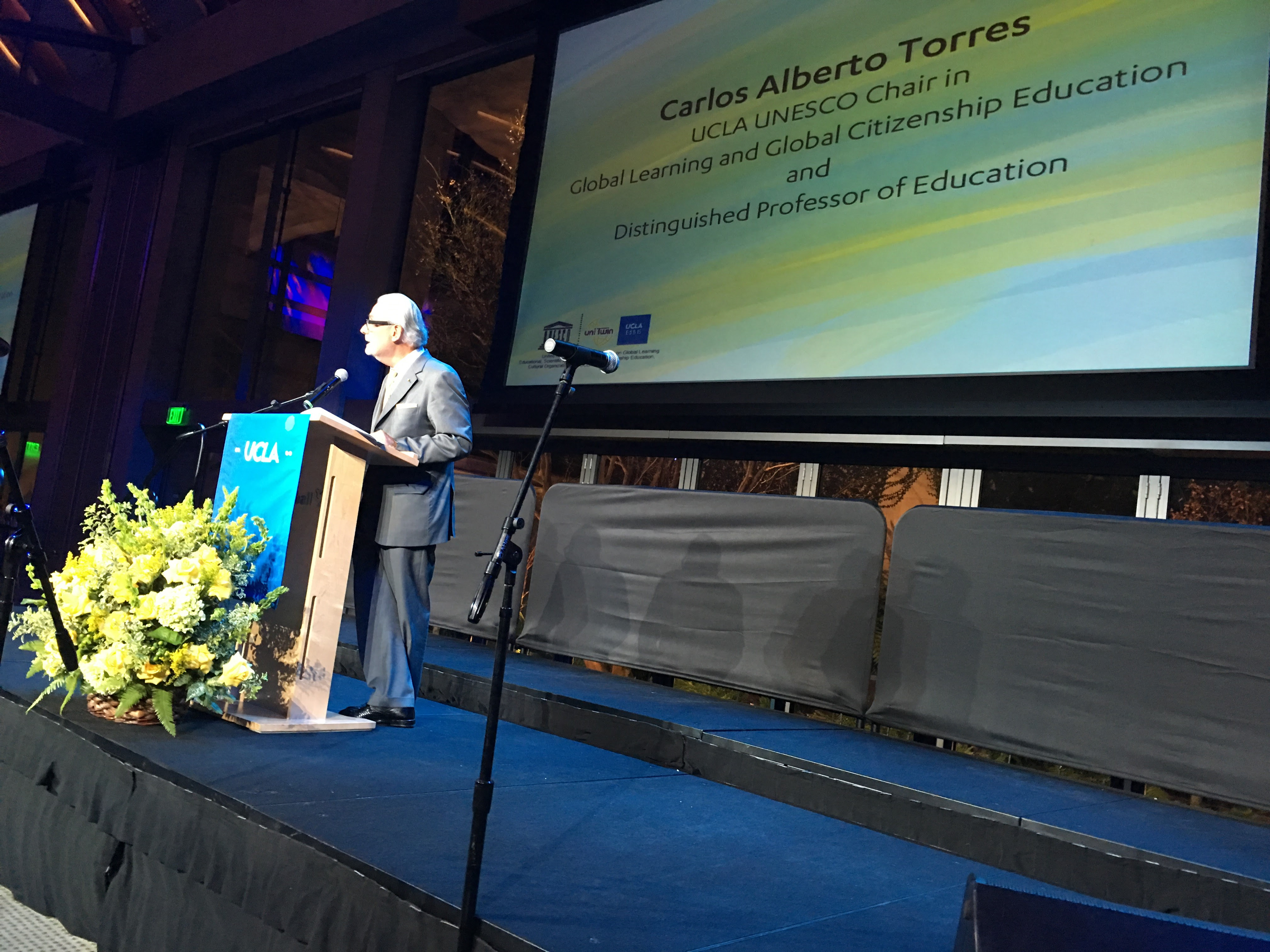
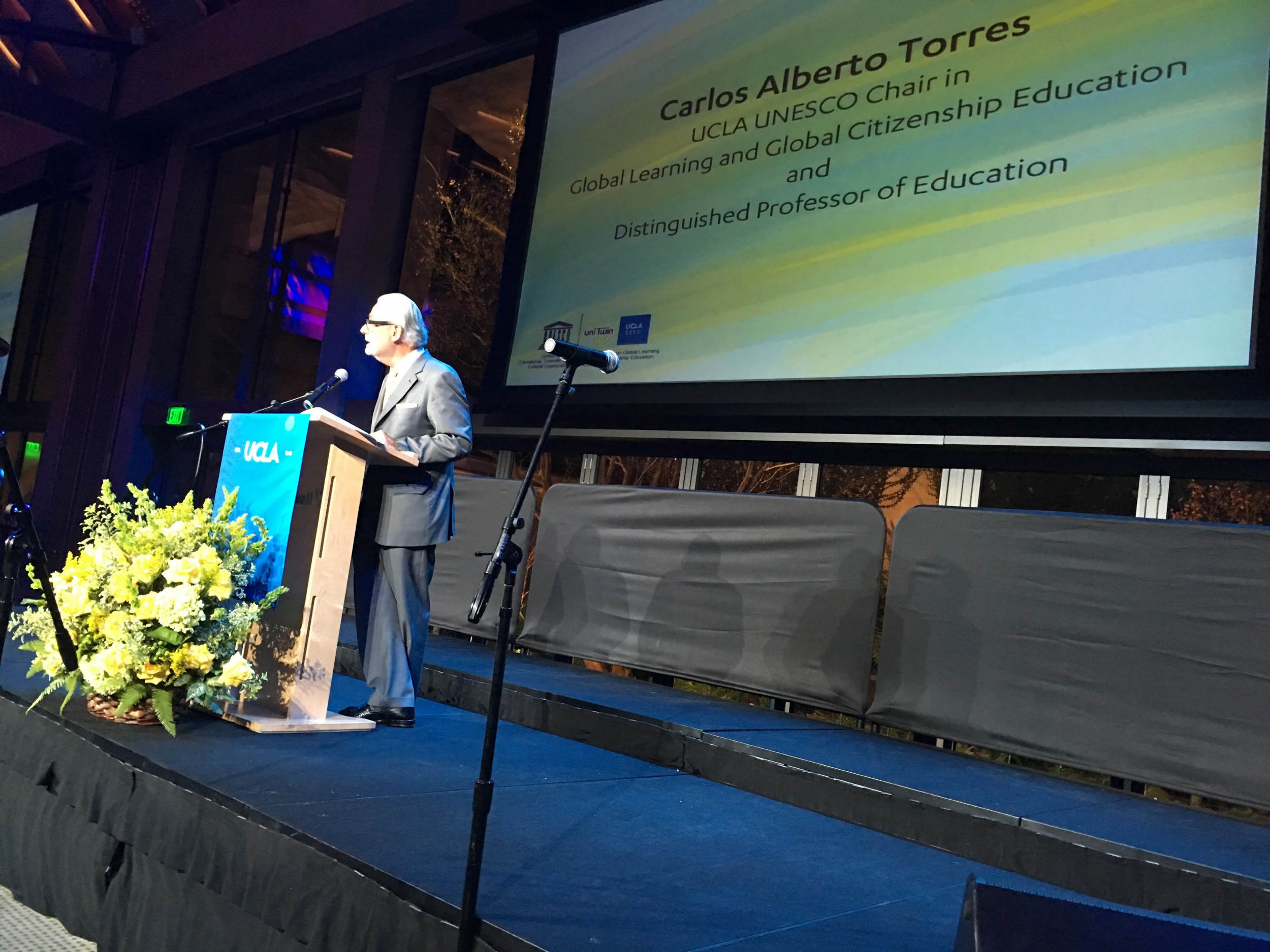
(22th Feb 2016) The UNESCO Chair in Global Learning and Global Citizenship Education at the UCLA Graduate School of Education & Information Studies and the Paulo Freire Institute-UCLA hosted the conference.
The Boston Global Forum was proud to participate in the International Research Conference on Global Citizenship Education held onFeb. 8at the Faculty Center of the University of California at Los Angeles.
The UNESCO Chair in Global Learning and Global Citizenship Education at the UCLA Graduate School of Education & Information Studies and the Paulo Freire Institute-UCLA hosted the conference.
Presiding at the meeting were Marcello Suarez-Orozco, dean of UCLA’s Graduate School of Education and Information Studies; Dr. Carlos Alberto Torres, Distinguished Professor of Education and UNESCO Chair in Global Learning and Global Citizenship Education as well as director of the Paulo Freire Institute and president of the World Council of Comparative Education Societies, and Nguyen Anh Tuan, chairman of the International Advisory Committee of the UNESCO-UCLA Global Citizenship Education (GCE) program and chief executive and editor-in-chief of the Boston Global Forum.
More than 20 distinguished professors from around the world attended the conference.
The conference provided a much-needed space for dialogues and regional perspectives by experts from multiple disciplines who described innovative approaches and best-practices and critiqued the theories, methodologies, policies and pedagogies of GCE.
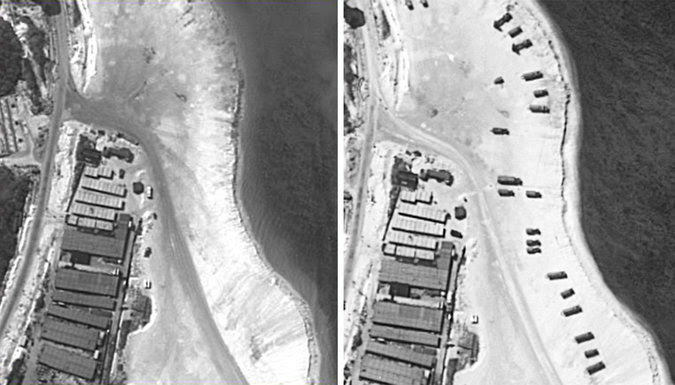
(22th Feb 2016) Expansionist China is militarizing the South China Sea. The latest example: It has deployed surface-to-air missiles on a disputed island in the Paracel chain, close to Vietnam and along some of the world’s most important shipping lanes.
Expansionist China is militarizing the South China Sea. The latest example: It has deployed surface-to-air missiles on a disputed island in the Paracel chain, close to Vietnam and along some of the world’s most important shipping lanes. Indeed, it appears the China wants to flex its muscles even more than it already has in the region, at least in part to try to control those lanes when it wants.
Kenneth Lieberthal, a senior fellow and expert on China at the Brookings Institution, summed up the situation to The New York Times: “What China is doing is worrisome because they’re obviously increasing their capacity for surveillance and for sustaining a presence that is well beyond what they’ve had before.’’ (See more)
Mr. Liberthal asked: “Are we going to see a situation where they {the Chinese} turn targeting radar on a ship conducting a freedom of navigation mission?’’
Admiral Harry B. Harris Jr., the head of the U.S. Pacific Command, said that China’s provocative missile move in the Paracel Islands, as has its construction of bases on “islands’’ it has built on reefs in the South China Sea, would seem to contradict pledges by Chinese President Xi Jinping not to militarize the sea. History has shown that pledges by powerful expansionist dictatorships such as Russia and China must be treated with great skepticism.
The Chinese action has drawn more attention to the idea, increasingly discussed by officials, that China’s neighbors in the western Pacific and Southeast Asia need a military alliance modeled on NATO to protect members from what appears to be relentless Chinese expansionism.
Vietnamese Prime Minister Nguyen Tan Dung seemed to make indirect reference to that when he called on Feb. 15 for the U.S. to use a “stronger’’ voice against Chinese island seizures and military-related actions in the South China Sea. The region’s maritime nations, especially Vietnam, the Philippines, Indonesia and the U.S., are particularly concerned about China’s move because of their dependence on free navigation on international shipping lanes in the region. See more
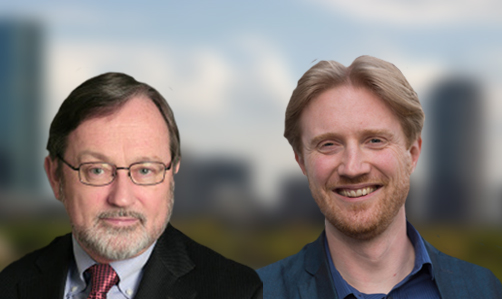
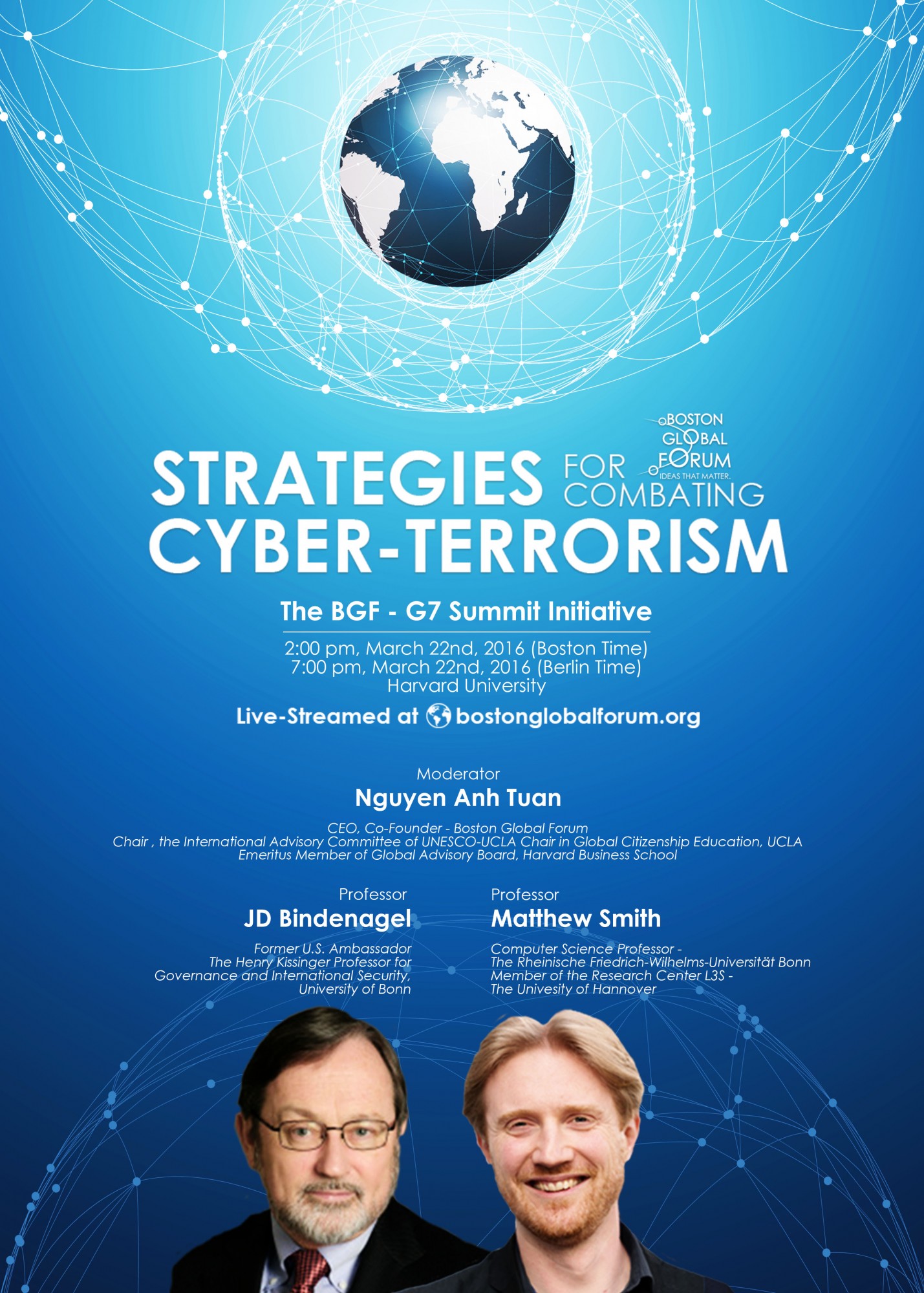
(March 22nd, 2016) – Professor JD Bindenagel , The Henry Kissinger Professor for Governance and International Security, University of Bonn, Professor Matthew Smith, Computer Science Professor – The Rheinische Friedrich-Wilhelms-Universität Bonn and a member of The Boston Global Forum (BGF), will speak on Strategies for Combating Cyber-Terrorism at a talk at 2:00 pm on March, 22nd at Harvard University.
Discussants are encouraged to send questions to [email protected]. Members of the Boston Global Forum’s Special Editorial Board will gather your insights and send them to the speaker.
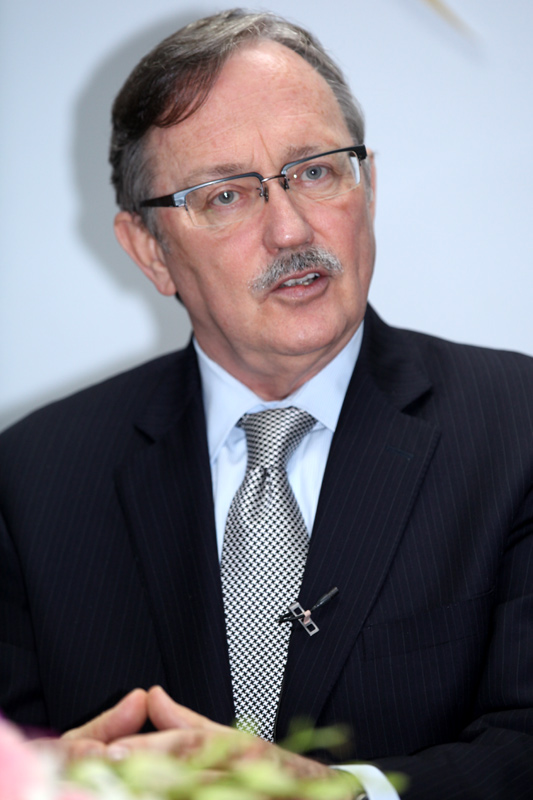
J.D. Bindenagel is a retired U.S. career diplomat and expert on Germany, where he served as deputy chief of mission in the U.S. Embassy, Bonn, Germany, from 1994 to 1997.
In 1999, Mr. Bindenagel was appointed by President Bill Clinton as U.S. Ambassador and Special Envoy for Holocaust Issues. He also served as Special U.S. Negotiator for “conflict diamonds.”
Following his diplomatic career, he was Vice President of the Chicago Council on Global Affairs and subsequently Vice President at DePaul University. Prior to his diplomatic career he was assigned to the U.S. Army’s 3rd Infantry Division in Germany.
Ambassador Bindenagel is now Special Advisor to Strategy XXI Partners, where he advises clients on matters of domestic and international policy and on key multilateral issues that can represent potential risk to clients’ reputations and shareholder value.
Mr.Bindenagel received the State Department’s Distinguished Service Award in 2001, the Commander’s Cross of the Federal Order of Merit from the President of Germany in 2001 and the Presidential Meritorious Service Award from President George W. Bush in 2002.
He is a member of the Council on Foreign Relations, the German Council on Foreign Relations (DGAP), the President’s Circle of the Chicago Council on Global Affairs, the American Council on Germany and the American Institute of Contemporary German Studies. Mr.Bindenagel is also President of the Japan America Society of Chicago.
Mr.Bindenagel received the U.S. Department of State’s Distinguished Service Award, the Commander’s Cross of the Federal Order of Merit from the President of Germany, and the Presidential Meritorious Service Award from President George W. Bush. He was an APSA Congressional Fellow with Congressman Lee H. Hamilton.
He holds an MA in Public Administration and an AB in Political Science from the University of Illinois at Urbana-Champaign.
About Professor Matthew Smith:
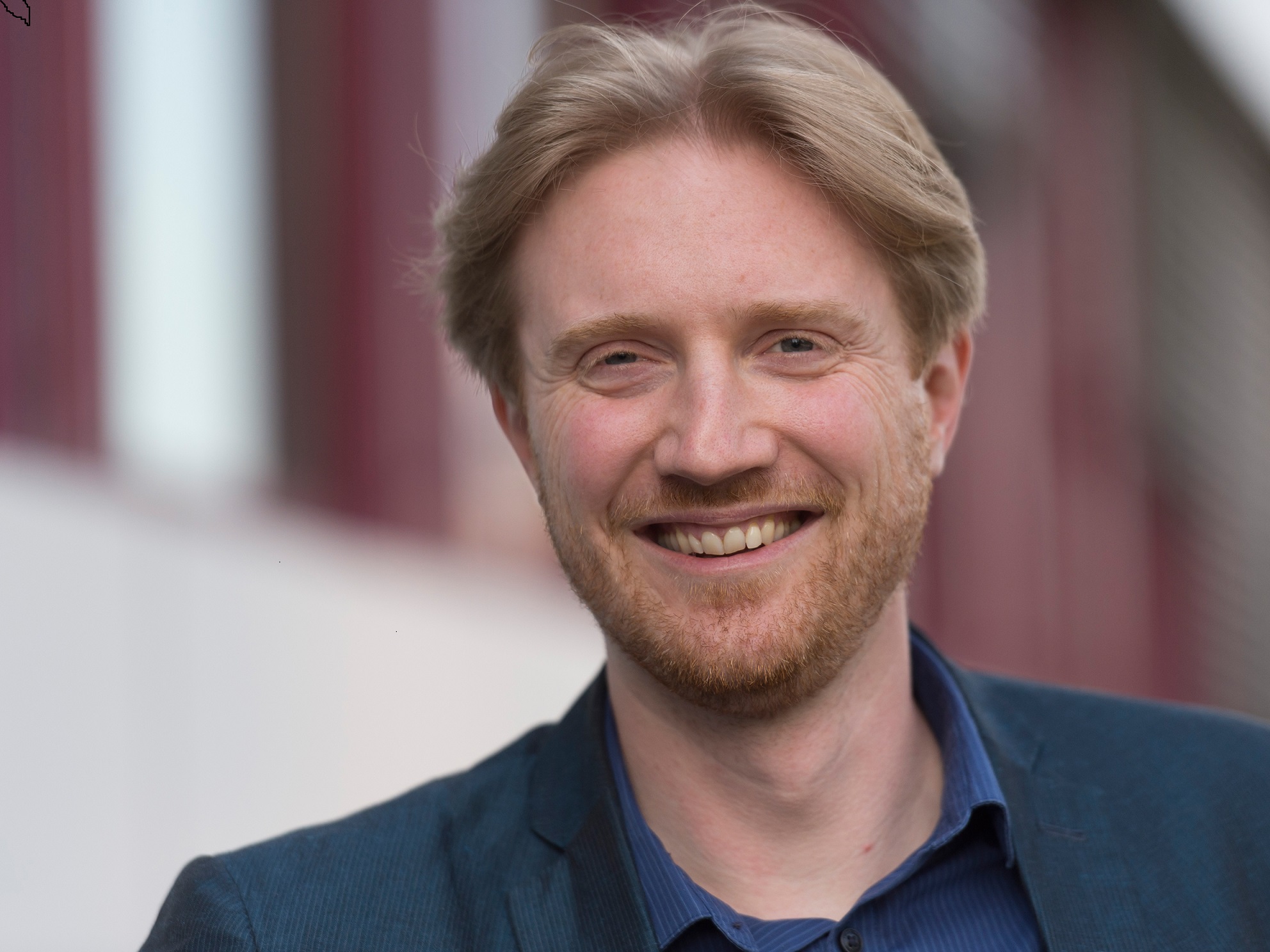
Professor Matthew Smith
He is a Computer Science Professor at the Rheinische Friedrich-Wilhelms-Universität Bonn and the Fraunhofer FKIE and a full member of the Research Center L3S at the Univesity of Hannover.
His research interests lie in the intersection of technical IT security & privacy and behavioural research.
He study the interaction effects between technical and psychological, social, economic, cognitive, and emotional factors related to the security and privacy behaviour of individuals and institutions.
He is currently particularly focusing on the human factors of experts such as IT administrators and developers, since many of the most catastrophic security incidents were not caused by end-users, but by developers or administrators.
He is also a member of the Research Center L3S – The Univesity of Hannover.
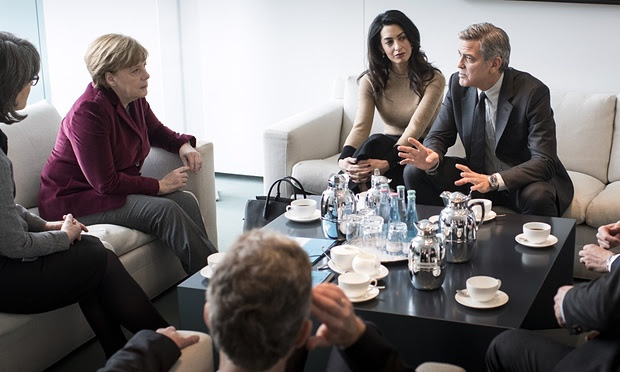
(12th Feb 2016) George Clooney has backed Germany’s open-door policy towards refugees fleeing the Syrian conflict after meeting Chancellor Angela Merkel in Berlin.
George Clooney has backed Germany’s open-door policy towards refugees fleeing the Syrian conflict after meeting Chancellor Angela Merkel in Berlin.
Clooney and his human-rights lawyer wife, Amal, enjoyed a one-hour meeting with Merkelon Fridaymorning to discuss the ongoing crisis in the Middle East and the political reaction to it in Europe and elsewhere. Merkel has led Germany’s approach to the greatest movement of refugees since the second world war, which has resulted in Europe’s most populous nation taking in nearly one in two of all asylum applications made by Syrians in EU member states last year.
The actor, director and humanitarian, who was also due to meet refugees in Berlin, earlier told reporters: “I absolutely agree with her”. See more