by Admin | Mar 19, 2016 | Event Updates
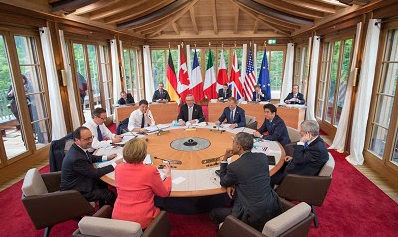
(March, 19th) The Boston Global Forum (BGF) is presenting to participants in the G7 Summit its proposals for improving international cybersecurity.
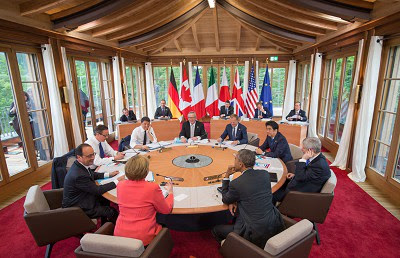
The Boston Global Forum (BGF) is presenting to participants in the G7 Summit its proposals for improving international cybersecurity. The proposals are part of the BGF-G7 Summit Initiative leading up to the May 26-27 conference in Japan.
The recommendations are focused on adopting norms for cyber-responsibility as set forth by the G20, the United Nations’ Group of Government Experts and the BGF’s Ethics Code of Conduct for Cybersecurity.
The BGF encourages not only G7 nations but also vendors to develop and follow cybernorms.
The BGF’s cybersecurity agenda also includes:
- Suggested risk-reduction measures.
- Best practices to strengthen cybersecurity.
- Encouraging G7 nations, which are all advanced industrial democracies, to support cybersecurity capacity-building in developing nations.
The entire agenda may be seen here

by Admin | Mar 19, 2016 | AI World Society Summit
(March 21st) The G7 nations have a big stake in creating a stable and secure cyberspace, in the public and private spheres. Accordingly, The Boston Global Forum, as part of its BGF-G7 Summit Initiative, proposes
I. That the G7 nations encourage adoption of norms set forth by the G20, the United Nations’ Group of Government Experts (GGE) and The Boston Global Forum’s Ethics Code of Conduct for Cybersecurity (ECCC).
- Key G20 norms:
- Nation-state conduct in cyberspace should conform to international law, including the U.N. Charter.
- No country should conduct or support cyber-enabled intellectual-property theft.
2. Key GGE norms:
- No country should intentionally damage the critical infrastructure of another state or otherwise impair infrastructure that serves the public and the damage to which would undermine rights guaranteed by the U.N. Declaration of Human Rights.
- No country should impede the response of Computer Security Incident Response Teams (CSIRTs) to cyberincidents, and nor should CSIRTs be used to create cyberincidents.
- Countries should cooperate with requests from other nations to investigate cybercrimes and mitigate malicious activity coming from their territories.
3 .Key ECCC norms:
- Countries should not establish or support policies or actions harmful to a safe cyberspace.
- Countries should not engage in the unlawful taking of the assets, including confidential information, of private individuals or organizations.
- Nations should not use cyberspace to wrongly damage the reputation of other nations, organizations or individuals.
II. G7 nations should engage hardware and software vendors to develop cybernorms, following the six guidelines in the Microsoft report titled “International Cyber-Security Norms: Reducing Conflict in an Internet-Dependent World.”
- Countries should not target information and communications technology (ICT) companies to insert vulnerabilities (“backdoors’’) or take action that would undermine public trust in products and services.
- Countries should have a clear principle-based policy for reporting product and service vulnerabilities that includes a strong mandate to report them to vendors rather than keeping them secret for possible future aggressive or mercenary purposes.
- Countries should exercise restraint in developing cyberweapons and should ensure that any that are developed are limited, precise and not reusable by a third party.
- Countries should commit to nonproliferation of cyberweapons.
- Countries should limit their engagement in cyberoffensive operations to avoid creating very dangerous mass events.
- Countries should assist private-sector efforts to detect, contain, respond to and recover from events in cyberspace.
III. The G7 nations should develop these cyber risk-reduction measures:
- Create domestic threat-reduction centers equipped with secure communications with other such national centers.
- Assess and improve the cybersecurity of national critical infrastructures.
- Take steps to reduce the number of domestic compromised computers, particularly those that have been marshalled into botnets.
- Improve domestic cybersecurity through advisory and legislative measures.
IV. The G7 nations should identify, publish and promote these “best practices” in cybersecurity:
- Transitioning from username/password for user access to more secure methods, such as biometrics and/or two-factor authentication.
- Establishing structures that are more secure than those of open architecture networks, such as compartmentalized-data networks and “zero-trust” networks.
- Creating regulations that incentivize standard-setting organizations to strengthen cyberdefenses and promote safe practices. The weakest links in the cybernetworks of G7 countries are people operating with inadequate information, understanding and discipline.
- Developing regulations to impose quality standards on the fast-growing cyberinsurance industry. Some firms in this area are marketing products and services that offer far less than the claimed level of protection
V. The G7 nations should support cybersecurity capacity building in developing countries.
Secure networks would let developing countries become economically and socially successful more quickly and efficiently by reducing costs resulting from cybercrime, including cyberespionage.
REFERENCES
- Bloom, Les and John E. Savage. “On Cyber Peace.” The Atlantic Council, August 2011, Accessed 3/4/16. http://www.atlanticcouncil.org/images/files/publication_pdfs/403/080811_ACUS_OnCyberPeace.PDF
- Boston Global Forum. “Ethics Code of Conduct for Cyber Peace and Security,” 12/02/15, accessed 3/14/16. http://bostonglobalforum.org/2015/11/the-ethics-code-of-conduct-for-cyber-peace-and-security-eccc-version-1-0/
- Nicholas, Paul. “Six Proposed Norms to Reduce Conflict in Cyberspace.” 1/20/15, accessed 3/4/16. http://blogs.microsoft.com/cybertrust/2015/01/20/six-proposed-norms/
- Painter, Christopher. “G20: Growing International Consensus on Stability in Cyberspace.” State.gov, 12/3/15, accessed 3/5/16. https://blogs.state.gov/stories/2015/12/03/g20-growing-international-consensus-stability-cyberspace
- Valeriano, Brandon and Ryan C. Maness. “The Coming Cyberpeace: The Normative Argument against Cyberwarfare.” Foreign Affairs. 5/13/15, accessed 3/3/16. https://www.foreignaffairs.com/articles/2015-05-13/coming-cyberpeace
by Admin | Mar 19, 2016 | World Leaders in AIWS Award Updates
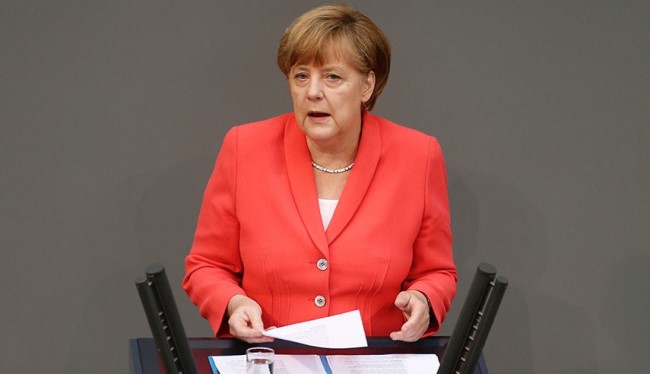
(March, 19th) In a deal in which German Chancellor Angela Merkel played a large role, the European Union and Turkey have agreed that new asylum seekers – many from Syria — who arrive in Greece from Turkey will be returned to Turkey.
EUROZONE-GREECE/GERMANY
In a deal in which German Chancellor Angela Merkel played a large role, the European Union and Turkey have agreed that new asylum seekers – many from Syria — who arrive in Greece from Turkey will be returned to Turkey.
The leaders of the 28 nations in the bloc and Prime Minister Ahmet Davutoglu of Turkey approved the accord “over strenuous objections from humanitarian groups, who said the deal violated international law on the treatment of refugees,’’ The New York Times reported.
“Putting this massive and delicate operation, which does not call for migrants already in Greece to be sent back, into effect over the course of a single weekend would be difficult. European officials wanted to quickly put the measure in place to prevent a rush of migrants seeking to reach Greece before the deal goes into effect, although the exact cutoff date had not been formally established. But Greece currently lacks the infrastructure to ensure that migrants are given a fair hearing before they are sent back to Turkey, according to European officials,’’ The Times reported.
The agreement may be at least temporarily good news for Chancellor Merkel, who helped develop the plan at a time when much of the Continent, including many in her own country, rejected her policy of taking in almost unlimited numbers of migrants.
The European/Mideast refugee crisis is expected to be a major topic for Mrs. Merkel and other leaders at the G7 Summit in Japan on May 26-27. The Boston Global Forum has been working with G7 Summit planners on discussion points for the conference as part of the BGF’s BGF-G7 Summit Initiative.
Meanwhile, The Times reported:
“The bigger headache will be when the smugglers start rerouting migrants to Italy through Libya because you’ve got a failed state there so no real government to make a deal with,” said Guntram Wolff, the director of Bruegel, a research organization in Brussels.

by Admin | Mar 19, 2016 | World Leaders in AIWS Award Updates
(March, 19th) Prof. Carlos Alberto Torres, a member of The Boston Global Forum’s Board of Thinkers, will speak on “Global Citizenship Education and Global Universities
Prof. Carlos Alberto Torres, a member of The Boston Global Forum’s Board of Thinkers, will speak on “Global Citizenship Education and Global Universities: Promise and Conundrums,’’ at the Ben Gurion University of the Negev (Israel) on March 28 at 2:15 local time.
Professor Torres is Distinguished Professor of Education and UNESCO Chair in Global Learning and Global Citizenship Education at the University of California at Los Angeles; director of the Paulo Freire Institute, and president of the World Council of Comparative Education Societies.
Professor Torres’s March 4th BGF broad-ranging online discussion of global citizenship and global education initiatives and challenges .
by Admin | Mar 19, 2016 | Initiative
(March, 21st) The United States is seeing what may be new Chinese surveying at a reef in the South China Sea that China seized from the Philippines nearly four years ago.
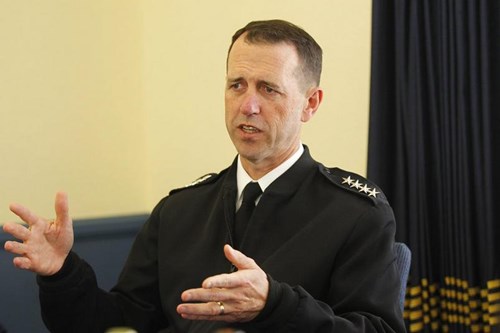
The United States is seeing what may be new Chinese surveying at a reef in the South China Sea that China seized from the Philippines nearly four years ago, Reuters reports.
The activity area is Scarborough Shoal, in the northern Spratly archipelago, about 125 miles (200 km) west of the Philippine base of Subic Bay.
The work might be a precursor to creating an island on which China would put military operations to strengthen its power in the area, through which goes 30 percent of world trade.
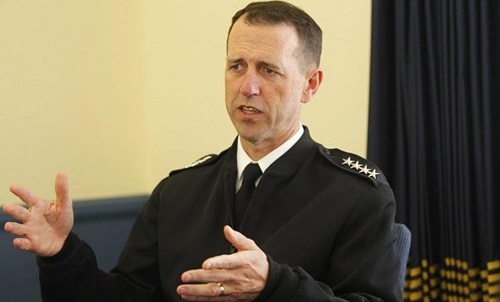
Reuters reported that the head of U.S. naval operations, Admiral John Richardson, “expressed concern that an international court ruling expected in coming weeks on a case brought by the Philippines against China over its disputed South China Sea claims could be a trigger for Beijing to declare an exclusion zone in the busy trade route.’’
China claims most of the South China Sea. Vietnam, Malaysia, Brunei, the Philippines and Taiwan have rival claims.
Richardson said China’s expansionism in the South China Sea, which has included creating artificial islands with military facilities, “threatened to reverse decades of open access and introduce new ‘rules’ that required countries to obtain permission before transiting those waters,’’ Reuters reported.
Still, he noted that China’s increasing militarization of the sea had increased the willingness of other countries in the region to work together against Chinese expansionism. He said, for example, that the U.S. military saw good opportunities to strengthen relationships with Vietnam and the Philippines.