by Admin | Apr 3, 2016 | Initiative
(April 4th, 2016) European Union governments had vowed deeper cross-border cooperation to battle Islamic terrorism after the November attacks in Paris exposed fatal weaknesses in security coordination, the Brussels attacks showed that those efforts remain very incomplete. This week’s deadly strikes in Brussels have underscored that the efforts of European Union governments pledged on counterterrorism still have a long way to go.
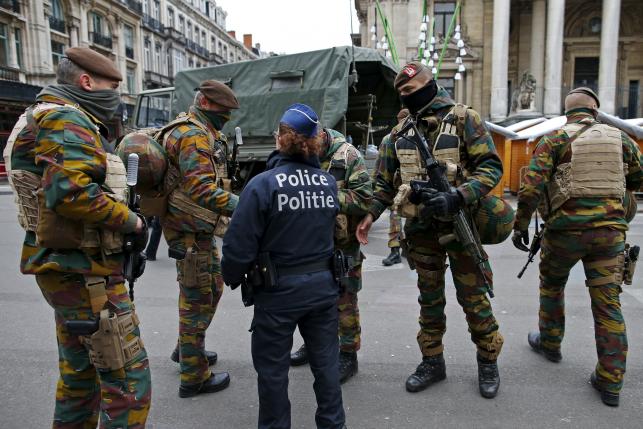
European Union governments had vowed deeper cross-border cooperation to battle Islamic terrorism after the November attacks in Paris exposed fatal weaknesses in security coordination, the Brussels attacks showed that those efforts remain very incomplete.
E.U member officials say that wide gaps persist in coordination among the bloc’s governments. After the Paris attacks, the E.U. promoted a package of measures to boost the bloc’s response to terrorism – included stepping up data-sharing, cracking down on arms trafficking and terrorist financing and strengthening E.U. border controls.
But months later, most key measures remain unimplemented. These include a air-passenger database to help authorities track terror suspects trying to return to Europe. That measure has been held up in the European Parliament because of data-privacy concerns.
But perhaps the Brussels attacks will get things moving.
by Admin | Apr 3, 2016 | AI World Society Summit
(April 4th, 2016) In The Boston Global Forum’s latest online dialogue on cybersecurity, Andrew Douglas, director of Deloitte’s Cyber Risk Services, and Allan M. Cytryn, a BGF adviser and a principal of Risk Matters International, discuss how organizations can use “white hat hackers’’ to help identify weaknesses in their digital systems and defend against malicious intrusions by “black hat hackers’’. This is a very useful session, particularly for businesses.
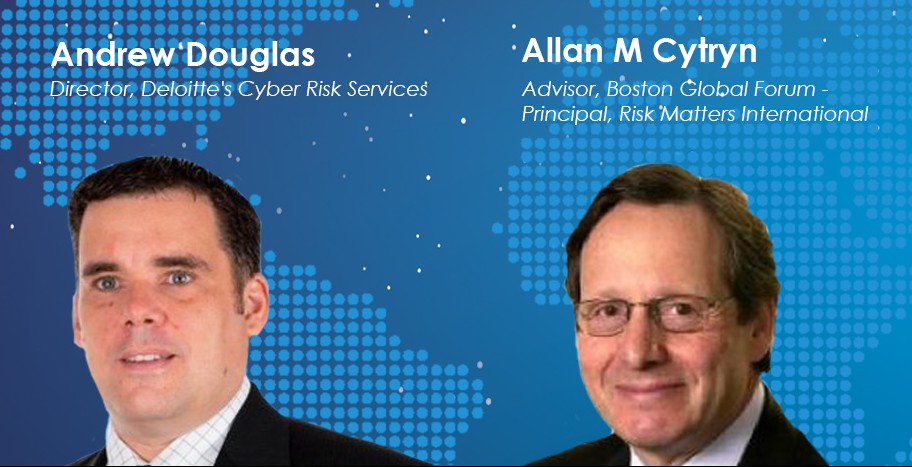
Some of the white hat work, Mr. Douglas noted, recalls the sort of reverse engineering that led to the development of the Enigma machine used to break the German codes in World War II.
Mr. Douglas noted that the digital community is cooperating more than ever to help fight “black hat hackers’’ who may be seeking to damage organizations’ systems and/or to steal information. This involves testing and surveillance, both he and Mr. Cytryn have noted, to look for gaps in hardware, software and the human (especially regarding training and daily behavioral discipline) sides of digital systems.
Mr. Douglas talked about the challenge of deciding how much to disclose about white hat hackers’ tools without giving those weapons to “the bad guys.’’
And he expressed satisfaction that recent big data breaches, such as that against Target, the huge retailer, and other events have led to more investment in digital security and heightened cooperation among private- and public-sector organizations to combat cybercrime. Further, he implied that “bounties’’ for finding security problems could be used to lure gray or black hats to become white hats.
Mr. Douglas praised the BGF for its Ethics Code of Conduct for Cyber Peace and Security and the BGF’s work to prepare proposals on cybersecurity for the G7 Summit in Japan, on May 26-27.
by Admin | Mar 30, 2016 | News
(March 31st ,2016 ) On March 31, Mr. Allan M. Cytryn, a Boston Global Forum adviser, and Mr. Andrew Douglas, Director at Deloitte’s Cyber Risk Services, will speak on “White Hat Hacking”. It’s another online discussion in this year’s BGF cybersecurity series.
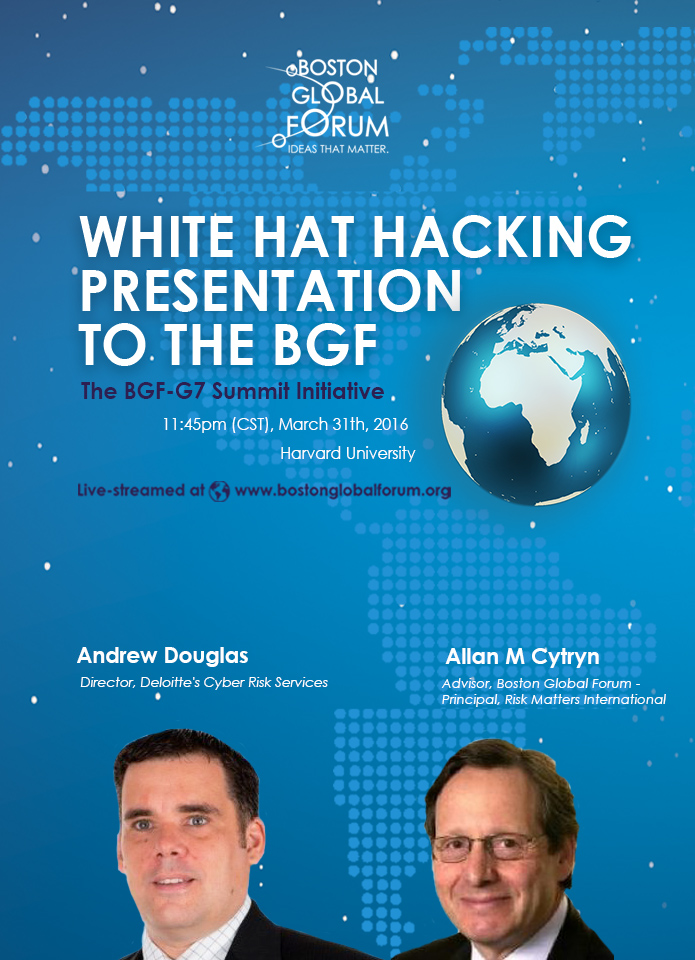
Live-stream of The Presentation to The BGF: White Hat Hacking
https://www.youtube.com/watch?v=iTNAWfreLd8&feature=youtu.be
Discussants are encouraged to send questions to [email protected]. Members of the Boston Global Forum’s Special Editorial Board will gather your insights and send them to the speaker.
About Mr Allan M Cytyn:
Mr Allan M. Cytryn is with Risk Masters Inc, a consulting firm that advises clients on Risk Mitigation and Management, including business continuity planning, disaster recovery, and recovery from cyber attacks. He has been a senior Information Technology executive for more than 30 years. Prior to Risk Masters, Allan spent 15 years at Deloitte where he was a Director. His roles and responsibilities there included Regional CIO, National Director of Applications, and National Director of Technology for Audit and Enterprise Risk Services. Before joining Deloitte, Allan was the CIO of Simpson Thacher & Bartlett, a Vice President of Corporate Finance with Goldman Sachs, and a Vice-President of Information Technology with Bankers Trust. In all of these roles he led organizations through rapid operational and technological transformations and helped them adopt new and innovative technologies to support their core strategic objectives.
Mr Allan additionally played a critical leadership role for Deloitte in managing the IT recovery from the 9/11/2001 attack in New York and for Simpson Thacher and Bartlett leading their recovery from the 1993 NatWest Tower Bombing in London.
Allan earned a BS in Electrical Engineering and Computer Science and an MS in Operations Research & Applied Mathematics from Columbia Engineering, as well as a M.Arch from Columbia’s Graduate School of Architecture, Planning and Preservation.
About Mr Andrew Douglas
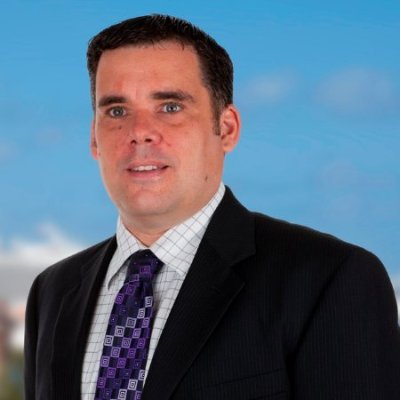
Mr Andrew Douglas is a Director in Deloitte’s Cyber Risk Services practice, which helps clients to be Secure, Vigilant, and Resilient in the face of an ever increasing array of cyber threats and vulnerabilities.
Mr Andrew specializes in technical security assessments, including penetration and vulnerability assessments, as well as cyber program assessments to help organizations identify and address their cyber gaps.
by Admin | Mar 27, 2016 | Initiative
(March 28th, 2016) This week, President Obama is in Havana, he is determined to make his détente with Cuba irreversible. He does after all face quite a few people who oppose his effort to end the half-century of enmity between the two countries.
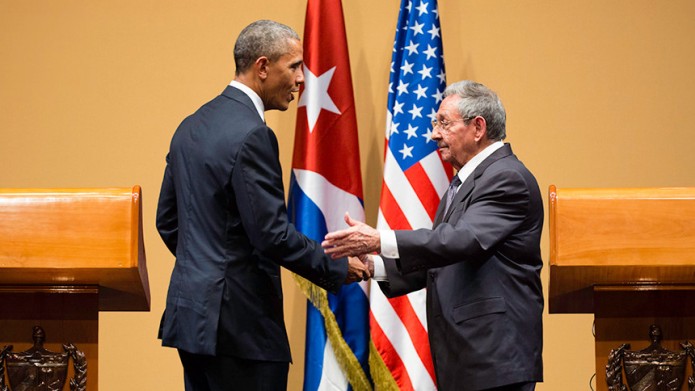
As his trip to Cuba just showed, President Pbama is detarmined to make U.S detente with the island nation irrevasible, despite the continuing opposition of many Republicans. He wil be aided by the many U.S business interest that see the island a potential goldmine. Already, foreign capital, much of it operating through joint foreign-Cuban ventures, is getting a big foothold there.
by Admin | Mar 27, 2016 | World Leaders in AIWS Award Updates
(March 28th, 2016) Taking second place of the list of 50 of the world’s greatest leaders is German chancellor Ms Merkel, who is currently facing an anti-migrant backlash after hoardes of refugees flooded the borders.
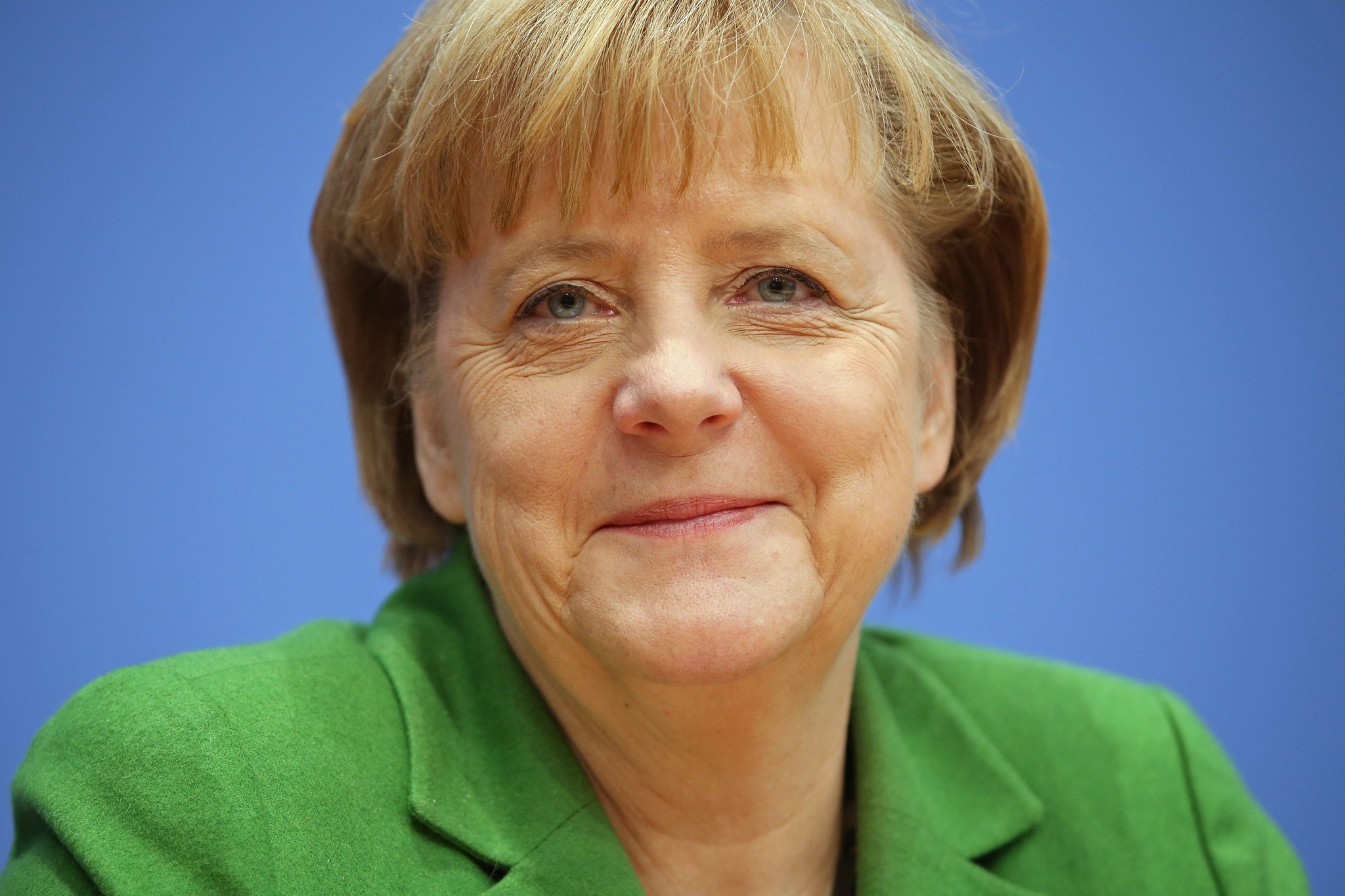
Fortune magazine had named German Chancellor Angela Merkel as number 2 (after Amazon’s Jeff Bezos) on its list of the world’s greatest leaders. The award comes despite the fact that she faces a political backlash because of her government’s acceptance of up to a million migrants over the past year, mostly from the Mideast.
Fortune noted: “She is the only Continental leader whose term in office predates the 2008 financial crisis, a winner of three general elections who has also seen off countless intra-party rivals.”
Aun San Suu Kyi, leader of the National League for Democracy party in Myanmar, was ranked as third while Pope Francis came in fourth in the list.
Last December, The Boston Global Forum named Chancellor Merkel one of its “World Leaders for Peace, Security and Development’’.