by Admin | Mar 27, 2016 | World Leaders in AIWS Award Updates
(March 28th, 2016) The UN Secretary-General’s Global Initiative on Education has developed three core priorities: put every child in school, improve the quality of learning, and foster global citizenship.

An upcoming U.N. Conference on Global Citizenship will host discussions on the meaning and promise of global citizenship, especially through the eyes of youth.
On May 30 to June 1, leaders of nongovernmental organizations, technical experts, U.N. and national government officials will meet in Gyeongju, South Korea, to develop an action agenda focused on the theme: “Education for Global Citizenship: Achieving Sustainable Development Goals’’.
Education for global citizenship is necessary for building a more peaceful world where everyone has a right to clean air and water, food, shelter and other basic human rights. UNESCO Global Citizenship Education “aims to empower learners to assume active roles to face and resolve global challenges and to become proactive contributors to a more peaceful, tolerant, inclusive and secure world.” To this end, U.N. Secretary-General Ban Ki-moon’s Global Initiative on Education has developed three core priorities: put every child in school, improve the quality of learning and foster global citizenship.
The Boston Global Forum has been intensely involved in global-citizenship initiatives, especially through its collaboration with the UNESCO-UCLA program in Global Learning and Global Citizenship Education. The program’s chair is BGF member Prof. Carlos Alberto Torres. And Nguyen Anh Tuan, the BGF’s Chief Executive and Editor-in-Chief, is chairman of the International Advisory Committee of the UNESCO-UCLA Global Citizenship Education program.
by Admin | Mar 27, 2016 | AI World Society Summit
(March 28th, 2016) The FBI found the hackers’ identities by obtaining search warrants for their Google and Facebook accounts. The men often used Gmail accounts to threaten and extort money from their victims.

Ahmad Umar Agha and Firas Dardar
The FBI has put two Syrian computer hackers on its most-wanted list for international cybercrime directed against the U.S. They are connected with an organization called the Syrian Electronic Army, which backs the regime of Syrian President Bashar Assad. The organization has also attacked Web sites of the U.S. Marines, Harvard and Human Rights Watch.
The two hackers were identified as Ahmad Umar Agha and Firas Dardar.
The addition of the two men brought to 19 the number of people put on the most-wanted list. Others include five members of China’s People’s Liberation Army and assorted hackers from Eastern Europe and Russia.
by Admin | Mar 27, 2016 | AI World Society Summit
(March 28th, 2016) The Boston Global Forum host online discussion on cybersecurity, and also try to bring cybersecurity proposals to the 2016 G7 Summit scheduled for May 26-27 in Japan.

J.D. Bindenagel, the Henry Kissinger Professor for Governance and International Security at the University of Bonn, and Prof. Matthew Smith, a computer-science professor there and a member of The Boston Global Forum, discussed the opportunities and challenges involved in establishing norms and rules to promote international cybersecurity and thwart cyberterrorism and other digital crime.
Their conversation is one in a series of online discussions hosted by the BGF this year on cybersecurity.
The two experts discussed the need for the technical community and governments to understand each other. Professor Smith, a “techie,’’ noted the “gulf’’’ between the “surveillance side’’ and the “cybersecurity side’’ in efforts to create a system of ethics and norms in the cyberworld that both protects the privacy of law-abiding individuals and organizations and addresses the need to block and track terrorism and other criminal behavior.
He said that the Edward Snowden revelations produced much worry in the technical community about U.S. government power to intrude into private cyberplaces. “We have a mindset that we’re {the technical community} defenders against the surveillance state,’’ he said.
Professor Smith cautioned that for governments to force tech companies to have “back doors’’ into digital information could do more harm than good. He noted that however rigorously national governments might act to get information from a device, such as in the San Bernardino terrorist/iPhone case, that individuals and organizations can “migrate’’ outside national borders to escape government intrusions.
Mr. Bindenagel, a former U.S. ambassador, strongly supported discussions in such venues as the BGF, G7 and G20 about establishing codes of ethics and acceptable norms for cyberbehavior. Such discussions in search of consensus are needed to create what he called “first principles’’ that can be the foundation for establishing formal international agreements, under the United Nations, to protect cybersecurity. Professor Smith, for his part, called for a broad ‘’forum’’ to take up these issues.
The Boston Global Forum has been working to bring cybersecurity proposals to the 2016 G7 Summit scheduled for May 26-27 in Japan.
Professor Bindenagel said that for each nation to set its own cyber-rules in isolation from the intrinsically international nature of cyberspace can only brew conflict. Both he and Professor Smith see the difficulty of reaching global agreements to stem global warming in the face of national economic interests as an analogy to what will be difficult efforts to achieve international cybersecurity consensus.
by Admin | Mar 27, 2016 | Event Updates
(March, 28th ) Prime minister Shinzo Abe denounces attacks in Belgium, hikes security as ministry warns Japanese travelers.
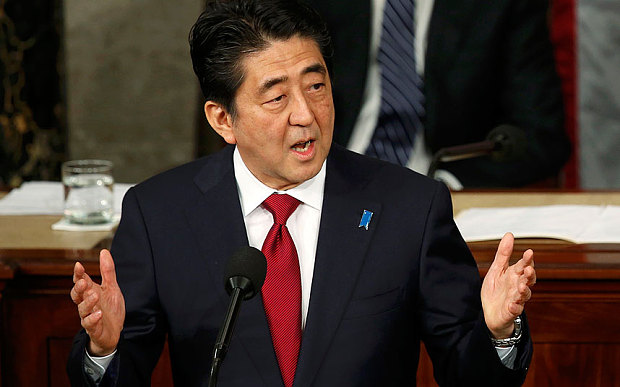
Japan, which will host the G7 Summit on May 26-26, will further tighten security in response to the terrorist attacks on Belgium’s airport and subway system, said Prime Minister Shinzo Abe.
“We will do our utmost to prevent terrorism,” Mr. Abe told reporters after explosions rocked Brussels airport and a subway station, killing dozens of people and injuring hundreds more. He expressed outrage over the attacks, saying “Terrorism can never be tolerated.”
The prime minister voiced Japan’s “strong solidarity with Belgium and the European Union, which face difficulties right now,” and vowed that the government would do its best to protect citizens overseas. Meanwhile, the Japanese Foreign Ministry warned Japanese nationals traveling to or staying in Belgium to refrain from unnecessary outings.
The Boston Global Forum last December presented Mr. Abe with its “World Leader in Cybersecurity’’ award.
by Admin | Mar 26, 2016 | Event Updates
(March 26th 2016) China has pressed Japan not to broach Beijing’s disputes with regional neighbors in the South China Sea at the upcoming Group of Seven summit to be held in Japan in May.
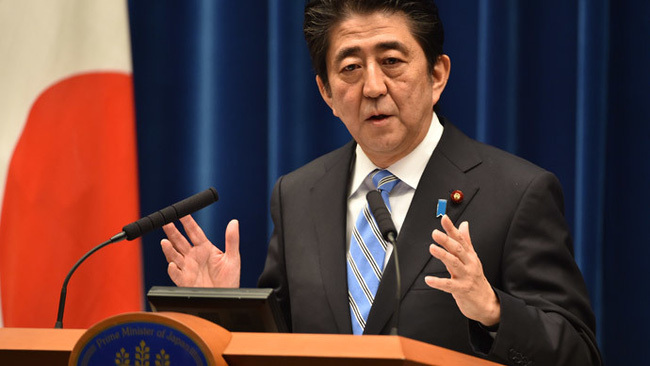
Diplomatic sources say that China is pressuring Japan not to bring up Beijing’s disputes with regional neighbors in the South China Sea — including its seizure and militarization of reefs in those waters — at the G7 Summit in Japan on May 26-27. China warns that addressing the issue at the summit would undermine efforts to improve relations between the two nations.
However, Japan has rejected the Chinese demand, saying that the international community cannot accept China’s building of artificial islands in the sea and their militarization, the sources said. 30 percent of world trade goes through the South China Sea.
China has overlapping territorial and maritime disputes in the South China Sea with Taiwan and four members of the Association of Southeast Asian Nations — Brunei, Malaysia, the Philippines and Vietnam. The U.S. has also expressed alarm about China’s increasingly aggressive expansion in the region.
Japanese Prime Minister Shinzo Abe is expected to emphasize the importance of the rule of international law regarding freedom of navigation in the sea in a G7 leaders’ declaration that’s expected after formal consensus on the issue is achieved at G7 foreign ministers’ meeting in Hiroshima in April.
If Japan does raise the issue at the summit, Beijing may well block improvement in bilateral ties that have already been undermined by a territorial dispute involving islands in the East China Sea.