by BGF | Jun 3, 2018 | News
Beginning on June 4, AIWS Standards and Practice Committee will open a discussion of standards for an AI Citizen.
The Committee includes:
Governor Michael Dukakis, Chairman of Boston Global Forum and Michael Dukakis Institute
Professor Nazli Choucri, MIT
Mr. Allan Cytryn, Representative of Michael Dukakis Institute in New York
Mr. Masahiro Fukuhara, Founder and CEO of IGS and GROW360, Japan
Mr. Ian Goodfellow, Research Scientist at Google
Ms. Beatriz Merino, Former Prime Minister of Peru
Mr. Tuan Anh Nguyen, Co-founder and CEO of Boston Global Forum, and Director of Michael Dukakis Institute
Professor Thomas Patterson, Harvard University
Professor Derek Reveron, U.S Naval War College
Professor John Savage, Brown University
Professor David Silbersweig, Harvard University
Professor Max Tegmark, MIT
Ms. Vaira Vike-Freiberga, President of World Leadership Alliance-Club de Madrid and Former President of Latvia
Professor Patrick Winston, MIT
Mr. Kazuo Yano, Chief Engineering of Hitachi, Japan
Attendees of the AIWS Citizens Standards discussion are world leaders, leading innovators and scholars in AI sector.

by BGF | Jun 3, 2018 | News
With the help of Google, the Pentagon’s Project Maven, a drone imaging program involving using AI to identify ISIS targets, has been progressing considerably well. However, even though the role of Google in this project is still unclear, thousands of Google employees have protested against Project Maven.
At the same time, AIWS is calling for the making of an AI Peace Treaty. With more and more people realizing the ethical implications of projects involving AI, it is crucial that the world address such issues of ethics before jumping into programs that potentially weaponize AI.

by BGF | Jun 3, 2018 | News
AI is making remarkable progress with noticeable achievements: the creation of an AI with the purpose of foreseeing violence by scanning social media content, or combining AI with high-performance computing in the form of a new chip platform in Taiwan.
On November 22, 2017, the AI World Society (AIWS) was conceived by MDI as a way to build a social model that will make AI safe, trustworthy, transparent, and humanistic. AIWS hopes to inform people about all aspects of AI so that it can contribute to the good of society—now and well into the future.
by BGF | Jun 3, 2018 | News
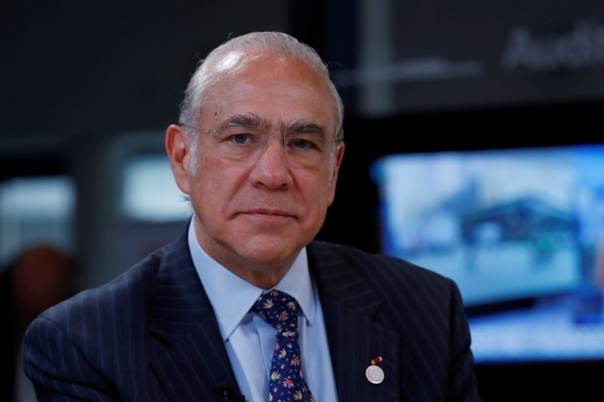
Ángel Gurría, the Secretary-General of Organization for Economic Cooperation and Development (OECD) who has been leading this organization since 2006, plays an important role among the leaders who are brainstorming policies against Trump’s latest declaration to impose a steel tariff on the EU, Canada, and Mexico. On May 30, 2018 in Paris, France, an OECD ministerial council meeting with many world leaders such as French President Emmanuel Macron addressed this issue.
Ángel Gurría is the recipient of many awards and honors, including recognition by the French, Dutch, and Korean governments. Recently, he was honored as the World Leader in AI World Society by BGF and MDI for his leadership on AI.

by BGF | Jun 3, 2018 | News
On 28th and 29th of September, the Riga Conference 2018 will be held in Riga, Latvia by Club de Madrid and the Latvia Government.
This event is a unique venue for constructive dialogue on international security issues between leading global decision makers. At this year’s conference, amongst other things, participants will consider the EU’s role in the rise of geo-economics, security challenges in the information age and hybrid warfare, transatlantic relationship as a critical axis of global stability, relations between Russia and the West as well as prospects of Eastern Partnership countries.
The World Leadership Alliance – Club de Madrid (WLA-CdM) is partnered with BGF and MDI to collaborate and develop the AIWS initiative. The President of WLA-CdM, Vaira Vike-Freiberga, serves as co-chair of AIWS activities and conferences along with Governor Michael Dukakis.
by BGF | May 28, 2018 | News
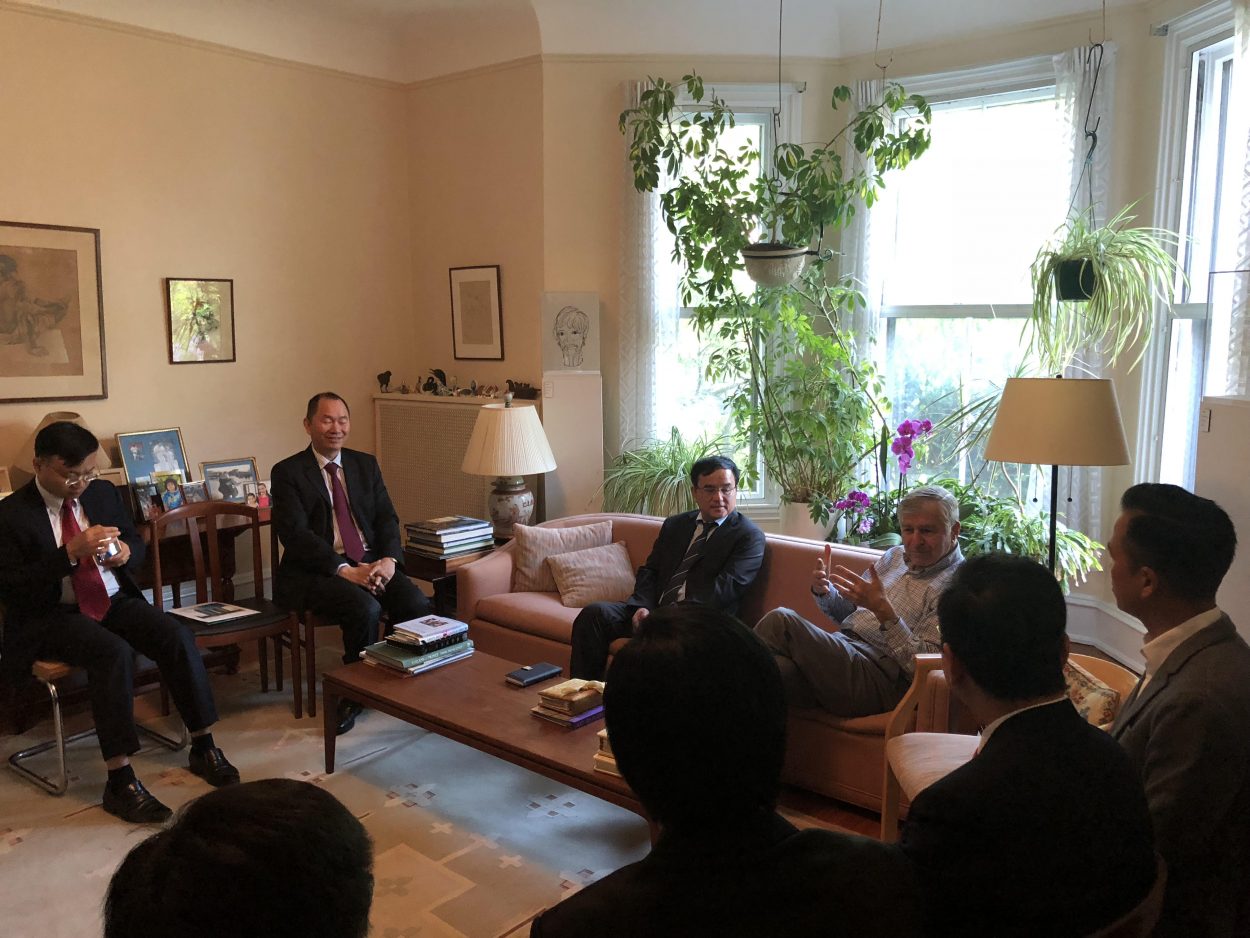
On May 25, Mr. Duong Quang Thanh – Chairman of Electricity of Vietnam Group (EVN), the largest power corporation in Vietnam, had a meeting with Leaders of Michael Dukakis Institute for Leadership and Innovation (MDI) to discuss the implementation of AIWS in EVN.

Governor Michael Dukakis led and moderated this Roundtable, alongside senior leaders from both EVN and MDI. At the present time, EVN is one of the largest enterprises in Vietnam and the leading enterprise in Vietnamese’s energy sector. In the 2016 – 2020 period, EVN is interested in developing and applying science and technology advances to corporate governance, management, the operation of the power system, etc. to achieve the vision of becoming a leading power corporation in the region. Accordingly, Mr. Duong Quang Thanh – Chairman of EVN had a meeting with Governor Michael Dukakis to discuss applying advanced technologies and implementing AIWS in the operation of EVN.
At the roundtable, on behalf of MDI, Prof. David Sibersweig presented the 7-Layer Model of AIWS and the contribution of AIWS to the G7 Summit in 2018. Mr. Nguyen Anh Tuan, CEO of MDI, outlined strategies for employing AIWS in EVN’s system. Some of the key strategies that MDI has suggested to EVN are: Building a Big Data System, which would operate for EVN as a Data and Decision Support Center; Building a Social Network that connects customers who use EVN’s services in Vietnam; Building a network of world-leading experts and innovators in the field of electricity who are associated with EVN and support EVN.
To EVN’s side, Chairman Duong Quang Thanh stated EVN’ objectives in AI application development and looks forward to the deployment of the AIWS Layers as well as specific solutions to help EVN flourish in AI fields. Chairman and senior leaders of EVN highly appreciated the AIWS model and solutions initiated by Mr. Nguyen Anh Tuan for EVN. At the end of the meeting, Governor MD Dukakis affirmed MDI’s willingness to assist Vietnam and EVN in developing AI economies.
by BGF | May 28, 2018 | News
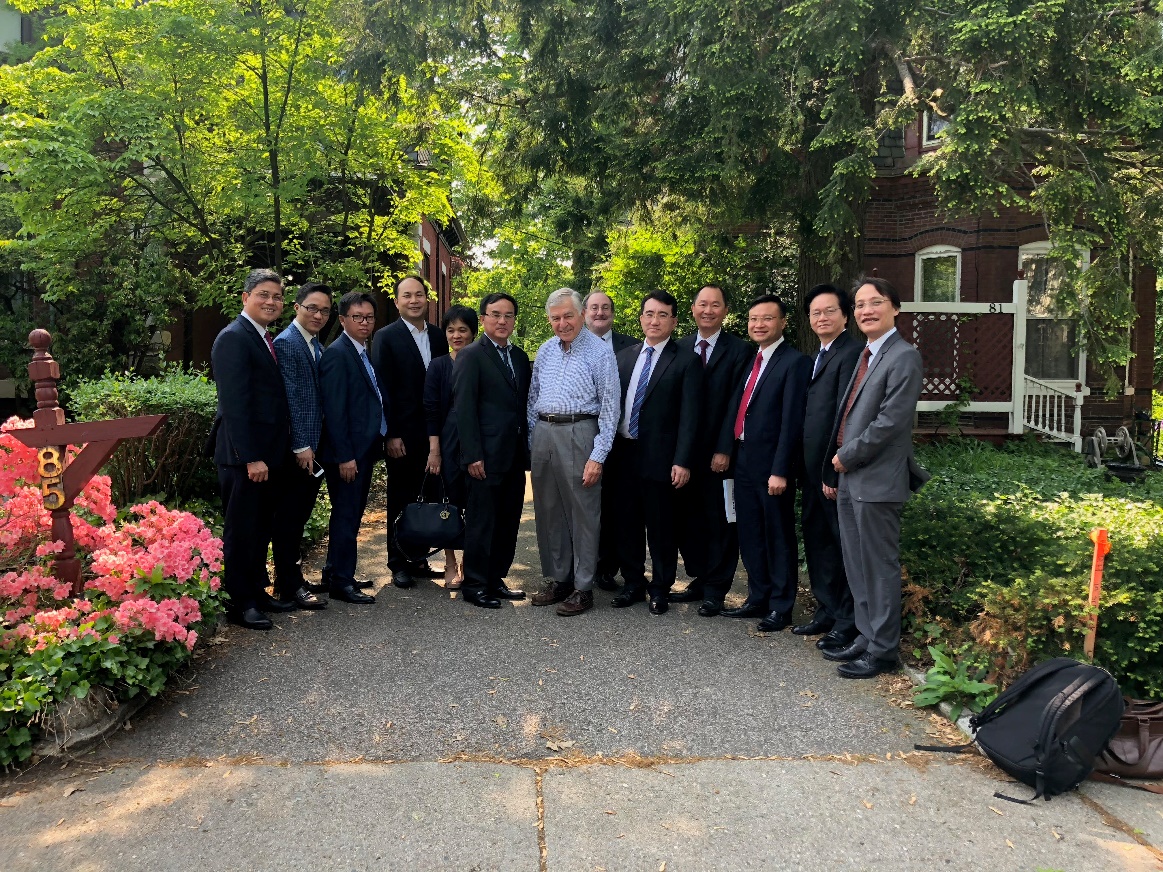
Chairman and senior leaders of EVN visited and had a working meeting with Governor Michael Dukakis and MDI’s leaders.
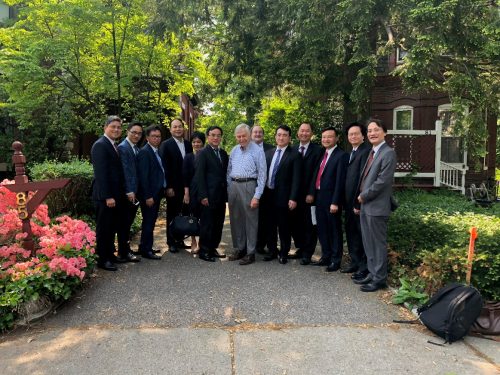
On May 25, senior leaders from MDI and EVN had a chance to meet and discuss the application of AIWS in EVN’s system. At the beginning, representatives of both organizations exchanged gifts and took group pictures. The meeting took place in an open and constructive atmosphere where both sides exchanged ideas for the development of AI, and how the AIWS might be applied in the context of EVN, in particular, and of Vietnam, in general.
AIWS (Artificial Intelligence World Society) is a set of values, ideas, concepts, and protocols for standards and norms whose goal is to advance the peaceful development of AI and technology. AIWS was conceived by the Michael Dukakis Institute for Leadership and Innovation (MDI) with the hope of improving every aspect of AI as it relates to human life, and of supporting individuals, organizations, and businesses working to promote the benefits and mitigate the risks associated with AI applications.

by BGF | May 28, 2018 | News
Professor Jason Furman, professor at Harvard Kennedy School and Chairman of the White House Council of Economic Advisers, will have a visit to Vietnam and share his thoughts on AI economy at Vietnam CEO Summit in July, 2018.

President Obama referred to Prof. Furman as “one of the most brilliant economic minds of his generation”. During his tenure as chairman, Furman played a role in advancing economic debates and public policies around tax reform, competition, investment issues, innovation, and artificial intelligence. On July 25 in Hanoi, Vietnam, as a keynote speaker at Vietnam CEO Summit 2018, Prof. Furman will share his thoughts on the AI economy and his strategic view for how Vietnam can become an AI pioneer in Southeast Asia.
Prof. Furman is also a major partner of BGF and MDI in building initiatives, ideas, and solutions to concerns related to AI and cybersecurity, with the goal of improving quality of life for people around the globe.

by BGF | May 28, 2018 | News
The New York Times reports that the tech giant has partnered with Volkswagen to build an autonomous shuttle for its own employees’ use.
Prior to that, Apple had negotiated with several automakers, including BMW and Mercedes; however, negotiations had failed as these luxury carmakers had refused to hand over to Apple control of relevant data and design of the vehicle. Apple is now partnering with Volkswagen to remake Volkswagen’s T6 vans into driverless cars. The shuttle is expected to be completed by the end of this year.
This is believed a huge progress for Apple and also for the upcoming generation of transportation; nevertheless, the operation of self-driving cars in reality continues to raise many concerns amongst scientists, companies and regulators. Recently, Governor Michael Dukakis had a discussion with Prof. Iyad Rahwan, Associate Professor of Media Arts & Sciences at the MIT Media Lab and a fellow of the Michael Dukakis Leadership Fellow Program, on ethical problems arising from the development of autonomous vehicles.