by BGF | Sep 10, 2018 | News
Blockchain could be a trusted ledger as every action is transparent to everyone. In some creative industries, it can act as a platform for the intellectual property.

Many people have known of blockchain and how it works as a technology developed for the cryptocurrency Bitcoin. In terms of creative industries, it can help define one artist’s work to protect their intellectual property rights.
Recently, organizations and new intermediaries such as Youtube and Spotify have inserted themselves into the value chain between artists and audiences. As a result, artists receive less revenue from their work. In addition, their pieces of art are shared, advertised, priced. This problem can be tackled by blockchain.
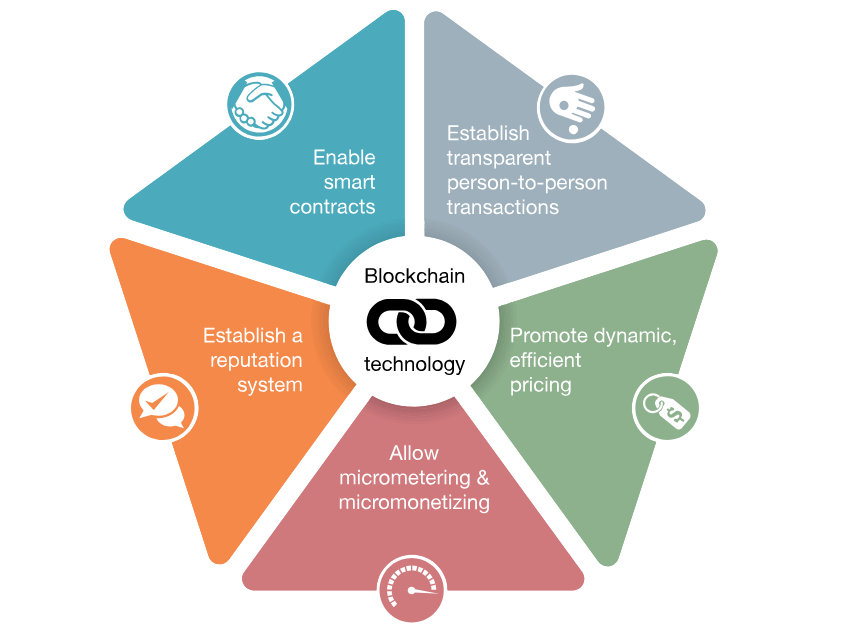
There are five features of blockchain that can address these issues:
Feature 1: Enable smart contracts.
Blockchain can host “smart contracts” to ensure author’s digital rights and allocate revenue share to team that help creating the work.
Feature 2: Establish transparent peer-to-peer transactions.
As all of the transactions for creative work are transparent and accessible by all. This will allow the value of the product to be acknowledged.
Feature 3: Promote efficient and dynamic pricing
If blockchain serves as a platform, the demand for the artist’s work can be tracked, pricing would be more dynamic and controllable to the artist without going through web of intermediaries.
Feature 4: Allow “micrometering” or “micromonetizing”
By using blockchain, snippets – added info in form of code, text… could be made available for a certain cost. “This allow users to support content creator of their choice to reduce unwanted ads” said Mike Belshe- Cofounder of BitGo.
Feature 5: Establish a reputation system
Blockchain enables users and creator of creative content to verify one another, enhance the collaboration and behavior, collaboration not fulfilling the contract will be recorded.
In general, blockchain technology has a great potential to create a reliable accountability and transparency leading to efficiency for both artist and consumers.
by BGF | Sep 10, 2018 | News
In August 2018, Chancellor Angela Merkel’s government announced that Germany will invest €200 million in 5-year time on an agency to develop cyber capabilities.

Chancellor Angela Merkel is Germany’s first female chancellor and one of the leading figures of the European Union, since the 2005 national elections. She was also titled the World Leader for Peace, Security, and Development by MDI. She showed her interests in many fields including cybersecurity.
According to The Politico, her government will establish an agency following the model of U.S. Pentagon Research agency DARPA. The agency will come into operation by the end of 2018. The new Agency for Innovation in Cybersecurity is created to combat cyberthreats as many security agencies have prepared cyber capabilities such as hacking software from enterprises outside of Europe.
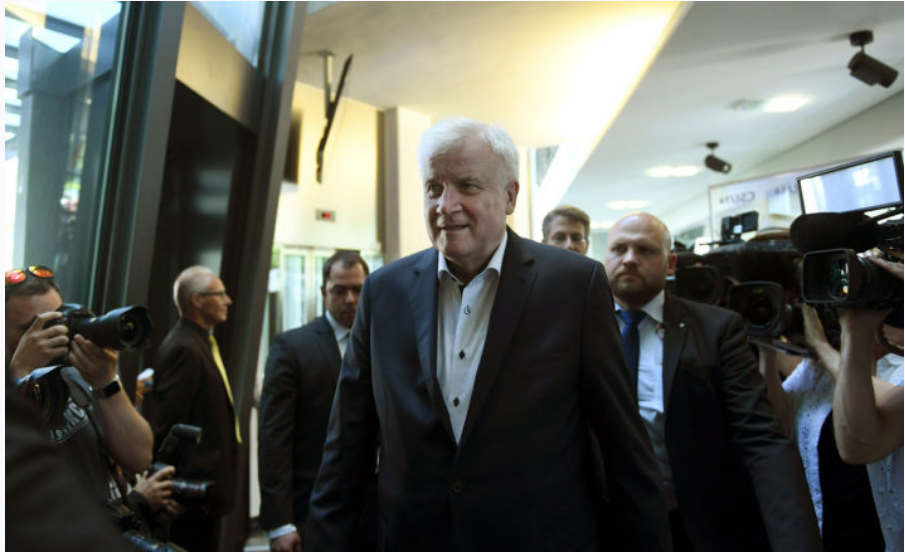
“We cannot just sit around watching sensitive information technology of high security relevance being controlled by third countries,” said Interior Minister Horst Seehofer.
At the same time, Chancellor Angela Merkel’s government is going to launch another agency on disruptive innovation for civil applications stated by Research Minister Anja Karliczek.
by BGF | Sep 10, 2018 | News
The political influences of WLA-CdM’s members can be used to guide future actions in the political field with a new project on Information Integrity and the Future of Democracy.

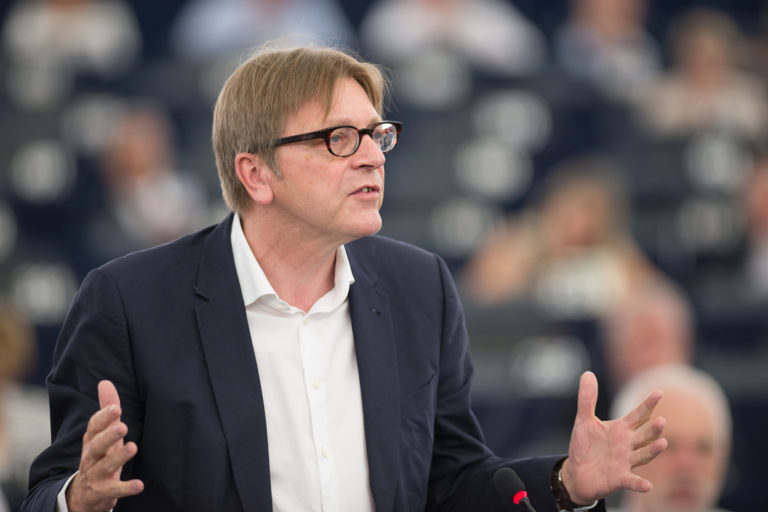
WLA-CdM has been developing the Next Generation Democracy project which addresses the main factors affecting democracy of the world, which were new technology and social media. Guy Verhofstadt, former Belgian Prime Minister and Member of WLA-CdM, wrote an op-ed on Project Syndicate. He put emphasis on the threat of information integrity and social media shaping people’s political view.
To tackle this problematic situation, WLA-CdM launched a new project on Information Integrity and the Future of Democracy, with a purpose to engage in the discussion with stakeholders and WLA-CdM’s members to come up with recommendations to guide people in the area.
“In a world where an algorithm determines all outcomes, politics no longer exists,” said Guy Verhofstadt, “There is no time to lose. The world needs a new Internet, and Europe needs a new digital strategy – one that is not simply copy-pasted from the American model.”
The Roundtable on Global Governance for Information Integrity (take place on September 27, 2018 in Riga, Latvia) is the first activity of this new project. The event is organized under the cooperation of Latvian Ministry of Foreign Affairs and WLA-CdM, in consultation with the Lavitan Association of Political Science and the NATO Strategic Communications Center of Excellence. Mr. Nguyen Anh Tuan, Director of MDI, will attend the panel discussion of this event.

by BGF | Aug 26, 2018 | News
The AIWS Standards and Practice Committee welcomes the two newest members: Professor Jason Furman and President Marc Rotenberg.

The Committee is responsible for:
- Updating and collecting information on threats and potential harm posed by AI.
- Connecting companies, universities, and governments to find ways to prevent threats and potential harm.
- Engaging in the audit of behaviors and decisions in the creation of AI.
- Creating both an Index and Report about AI threats – and identifying the source of threats.
- Creating a Report on respect for, and application of, ethics codes and standards of governments, companies, universities, individuals and all others…
There are 21 members of AIWS Standards and Practice Committee found by Michael Dukakis. Recently, the board has welcomed two innovative leaders to AIWS Standards and Practice Committee.
The first one is the professor of the Practice of Economic Policy at Harvard Kennedy School (HKS) — Prof. Jason Furman. He is also nonresident senior fellow at the Peterson Institute for International Economics. This followed eight years as a top economic adviser to President Obama, including serving as the 28th Chairman of the Council of Economic Advisers from August 2013 to January 2017, acting as both President Obama’s chief economist and a member of the cabinet.
The second is Mr. Marc Rotenberg, President of the Electronic Privacy Information Center (EPIC), an independent public interest research organization in Washington, DC. Professor Rotenberg has served on advisory panels for the American Bar Association Section on Criminal Justice, the American Association for the Advancement of Science (AAAS), the Institute of Medicine (IOM), the International Telecommunications Union (ITU), the Internet Corporation for Assigned Names and Numbers (ICANN), the National Academy of Science (NAS), the Organization of American States (OAS), UNESCO, and the OECD. He is a former chair of the Public Interest Registry, which established and manages the .ORG domain.
by BGF | Aug 26, 2018 | News
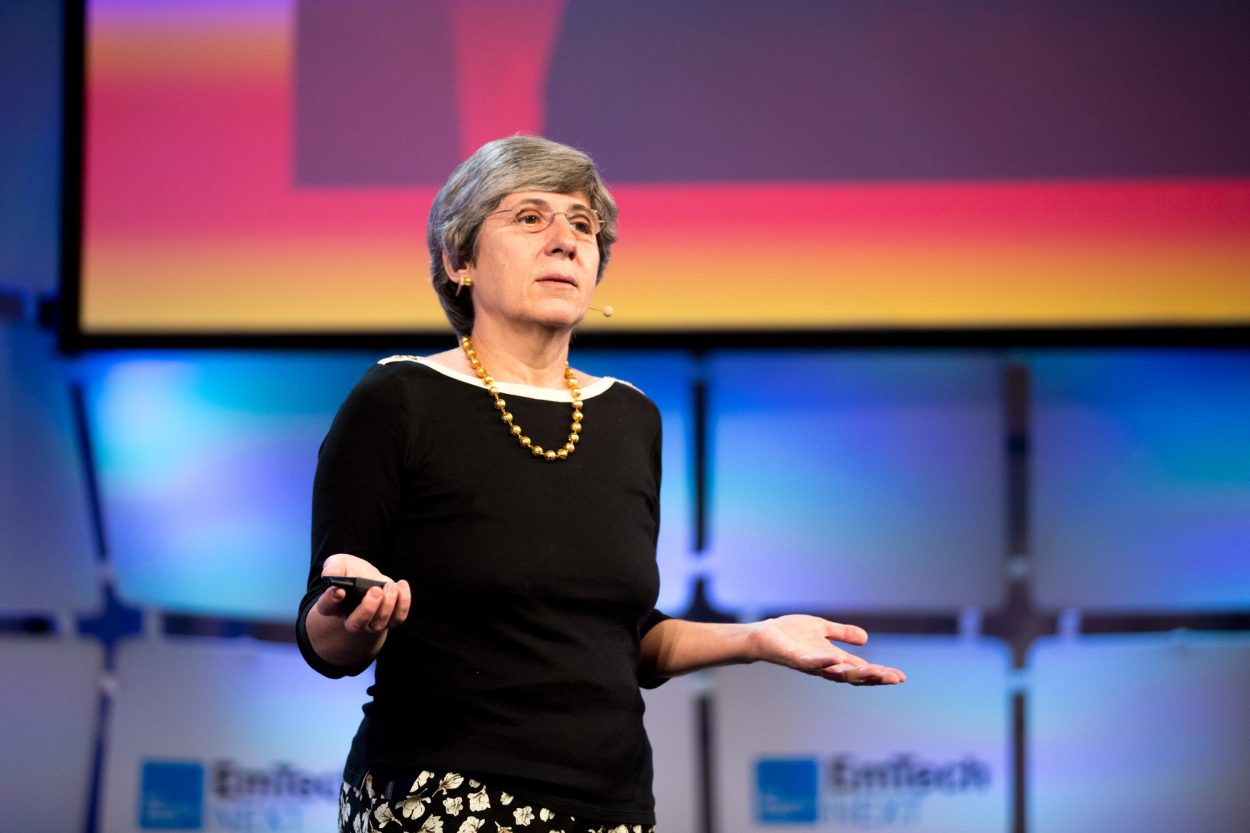
On July 8th, 2018 Em Tech by MIT Technology invited Manuela Maria Veloso to discuss the capabilities of AI systems nowadays and to make predictions regarding the future of AI.

Manuela Maria Veloso is the Head of the Machine Learning Department at Carnegie Mellon University & Herbert A. Simon University Professor in the School of Computer Science at Carnegie Mellon University. She discussed in her speech the current situation of robots—including the fact that there are now examples of AI in most of our devices (e.g., cellphones, computers with censors, cognitive systems).
However, she pointed out, there are also not many actual mobile robots around us. And robots nowadays are typically only equipped with cameras as a visual sensor. A challenge for mobile machines, then, is the fact that they must process the sensory data and use it to make decisions. Furthermore, mobile machines usually encounter uncertainties in making decisions with the actual state regarding stocks, weather, direction… but they will be more certain as they collect more data to make decision faster.
One possible solution is to enable AI to ask humans for help, a practice demonstrated at Carnegie Mellon by a robot tasked with fetching a cup of coffee. While it could not do all physical activities, it ask for human or other machines’ help in executing the task. In the future, to enhance human – AI interaction, Prof. Manuela Maria Veloso emphasized the need to create transparency, as robots are programmed in code, which “is a cryptic to human”. A current obstacle, known as verbalization, is the need to translate this code into natural language. A system enables machine to verbalize its activities and data processing.
If feasible, this would be a major development for robots. According to the first layer in MDI’s 7-layer model—a set of ethical standards for AI—it is vital that automation and intelligence are transparent so that human can understand a robot’s movements and actions.

by BGF | Aug 26, 2018 | News
The U.S. Bureau of Labor Statistics projected that banks will eliminate more than 40,000 jobs in 10 years, through 2026. Yet, banks also raising the minimum wage to $15 an hour.

As the technology develops, bank tellers are increasing expected to lose their jobs to automation. Howoever, their wages have actually risen this year, as customers are increasingly using mobile phones for financial services and tellers are needed to help customers navigate these services. Tellers are taught to pitch loans, guide local entrepreneurs, and offer technical support. “They have to solve problems like my PayPal doesn’t work, or my Venmo doesn’t work, or why doesn’t Uber accept my card?’’ said Christopher Maher, chief executive officer of Ocean First Financial Corp., New Jersey’s fourth-largest lender.
As reported by Bloomberg, Ocean First, for example, created a nine-week course for staff on payment platforms to bring about 500 tellers to assist customers with financial decisions. The way bankers help others has also changed as well. Now users can experience a video teller — a remote teller that can perform services available online. Video teller machines look like ATMs — but with the option of pushing a button and connecting to a human. One teller can support up to 10 machines.
Of course, AI is just a tool, and it is essential for people to learn how to use AI for their benefit. The importance of AI applications in some key sectors such as finance and banking is the focus of Layer 7 of the AIWS 7-Layer Model.

by BGF | Aug 26, 2018 | News
Elon Musk, the chairman and chief executive of the electric-car maker Tesla, tweeted his intention to take his company private at $420 a share. The message has drawn the attention of Tesla’s stakeholders.

His tweet started a chain reaction with the involvement of investors, Tesla board members and the stock market.
The New York Times had an hour-long interview with Mr. Musk, answering questions relevant to his Twitter post. Mr. Musk said that he had been working 120 hours a week lately, and had not taken more than a week of since 2001. “There were times when I didn’t leave the factory for three or four days — days when I didn’t go outside,” he said. “This has really come at the expense of seeing my kids. And seeing friends.” His restless pace of work was taking a toll on his mental as well as physical health. In the interview, he also blamed the short-sellers and analysts who he said put pressure on him, by promoting a narrative about Tesla’s loss after the Model 3 mass-market declaration. He occasionally had to take Ambien, a hypnotic primarily used for the short-term treatment of sleeping problems.
Worried about him, Tesla executives have attempted to find a chief operating officer or other No. 2 executive to share the burden with Mr. Musk. But Mr. Musk stated that there was no active search at the moment, and he had no intention of relinquishing his role as chairman, saying his commitment to his company remains strong.

by BGF | Aug 26, 2018 | News
For years, politicians have had concerns about cyber issues being used for warfare. However, cyber issues has been proved to be more of a confusion-causing tool, which leads to economic disruption.

Joseph S. Nye, Jr, who was the former US assistant secretary of defense and chairman of the US National Intelligence Council, and now a professor at Harvard University, Member of Board of Thinkers of The Boston Global Forum, expressed his consternation of a potential devil-cyber system: “A doctrine for hybrid warfare that blends conventional weapons, economic coercion, information operations, and cyber-attacks” as described by Russian chief of the general staff Valery Gerasimov.
To demonstrate his point of view, Prof. Joseph Nye used many prime examples of the damage caused by cyber.attacks In December 2015, for example, Russian hackers successfully carried out the first cyberattack on the Ukrainian power grid, compromising information systems of three energy distribution companies and disrupting electricity supply to consumers. Social media is thought to be the perfect instrument for sowing confusion, as was seen in the 2016 U.S. presidential election. Several measures are suggested to address the situation, the most important of which is that the US must be aware of the potential for cyber-attacks, particularly those that involve the manipulation of social media.

by BGF | Aug 26, 2018 | News
Antonio Guterres, the ninth Secretary-General of the United Nations has recently established a committee of digital cooperation to address issues of cybersecurity and hate speech and assigned an Indian diplomat, Amandeep Singh Gill to be executive director.

As reported by the Financial Express, UN Secretary-General Guterres said at a press conference on July 12, “Digital technology is changing economies and societies at warp speed. At the same time, the world is only beginning to address the dark side of innovation – such as cybersecurity threats, the risks of cyberwarfare, the magnification of hate speech, and violations of privacy. As a global community, we face questions about security, equity, ethics, and human rights in a digital age.”
Secretary-General Guterres created an association consisting of 20 members, many of whom are leaders in their fields, and chaired by US philanthropist Melinda Gates and China-based Alibaba founder Jack Ma.
The initiative was established to address the dark side of innovation, while at the same time mapping the trends of technology and identifying the risks and opportunities to strengthen society. The panel will focus on cyber-bullying, cybercrime and security.
UN Secretary-General Antonio Guterres is also a member of WLA-CdM — a close partner of MDI in developing The Next Generation Democracy.