
by Editor | Aug 29, 2021 | News
The opportunities and risks of Artificial Intelligence (AI) seem limitless. While some believe that many of the most challenging problems of this world can be solved through or with the help of AI, other, such as Bill Gates, consider this technology also a risk alike to atomic power and atomic weapons.
There are a number of reasons why AI poses a global risk: First, AI is analysing data through Algorithms, which are supposed to learn, and thus improve their performance, beyond capabilities of humans. While today such performance of AI beyond capabilities of humans is normally limited to very specific tasks, there is a trend to the broadening of these tasks. It cannot be excluded anymore that a general AI is being developed, which surpasses all aspects of human intelligence and eventually thus could dominate humankind in all respects. The problem of control of AI in order to ensure that humans do not become objects of machine control and the ability of states to govern is not undermined has already been amply described in science. It is clear that technology alone cannot deliver such control to a sufficient extent.
Second, much of Artificial Intelligence is and will be delivered and deployed via the Internet, across the borders of this world. It is thus a technology crossing borders in the virtual space without effective controls.
Third, AI is a technology, which is being developed by global corporations and states for various purposes and not limited to a sector. It is a multi-purpose technology, which has potential to scale globally in most areas of our lives, ranging from education and health via the production and delivery of media content and opinions, important for democracy, right through to the management of all essential infrastructures and military purposes. It is the sensitivity of the multiple contexts within which AI is deployed which requires to give its good functioning and governance highest attention. It is also clear that those who control the functioning of AI in sensitive sectors will command greatest power in this world.
Fourth, AI can be embedded in autonomous machines, which may cross borders in trade, crime or military operations, thus combining classical physical safety and security risks with the new risks of AI.
It is important to consider this cross border, global and multipurpose nature of AI in any attempt to assess risks and opportunities of AI. The world has become a community of risk, not only relating to COVID, but also relating to AI. And the scarcest resources is not the one next great idea in terms of a technological solution to a major global challenge, but the scarcest resource relating to AI is the ability to agree, both within states and among states, on how to govern this new powerful and globally scaled multipurpose technology to the benefit of states and mankind.
It is before this background that we are discussing how to give an impetus to the international community and the United Nations to start work on a global multilateral agreement on the governance of AI.
Paul Nemitz, Distinguished Contributor to the book Remaking the World – Toward an Age of Global Enlightenment, will be the lead speaker of Plenary I at the Club de Madrid – BGF Policy lab, September 7, 2021.
Please register here: https://aidigitalrights.com/registration/
by Editor | Aug 29, 2021 | Event Updates
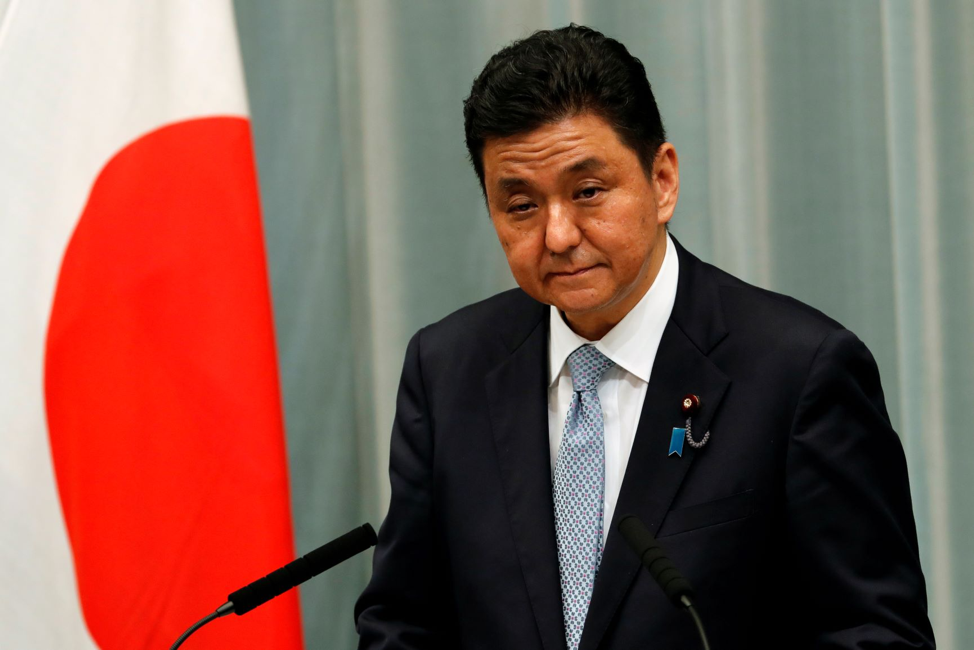
Nobuo Kishi, Japanese Minister of Defense, will be the lead speaker at the Plenary Regional perspectives, models for the governance of AI and digital societies.
Time: 9:00 AM EST; September 7, 2021
Plenary II: Regional perspectives, models for the governance of AI and digital societies
Facilitator: Ramu Damodaran, Co-Chair of the United Nations Centennial Initiative
Lead speaker:
- Nobuo Kishi, Minister of Defense of Japan
Panel discussion
- Kevin Rudd, Member of Club de Madrid, Prime Minister of Australia (2007-2010, 2013),
- Iveta Radičová, Member of Club de Madrid, Prime Minister of Slovakia (2010-2012)
- Irene Braam, Executive Director, Bertelsmann Foundation North America
- Nanjira Sambuli, Fellow in the Technology and International Affairs Program at The Carnegie Endowment for International Peace
- David Bray, Director, GeoTech Center and GeoTech Commission, Atlantic Council
Please register here: https://aidigitalrights.com/registration/
by Editor | Aug 23, 2021 | News
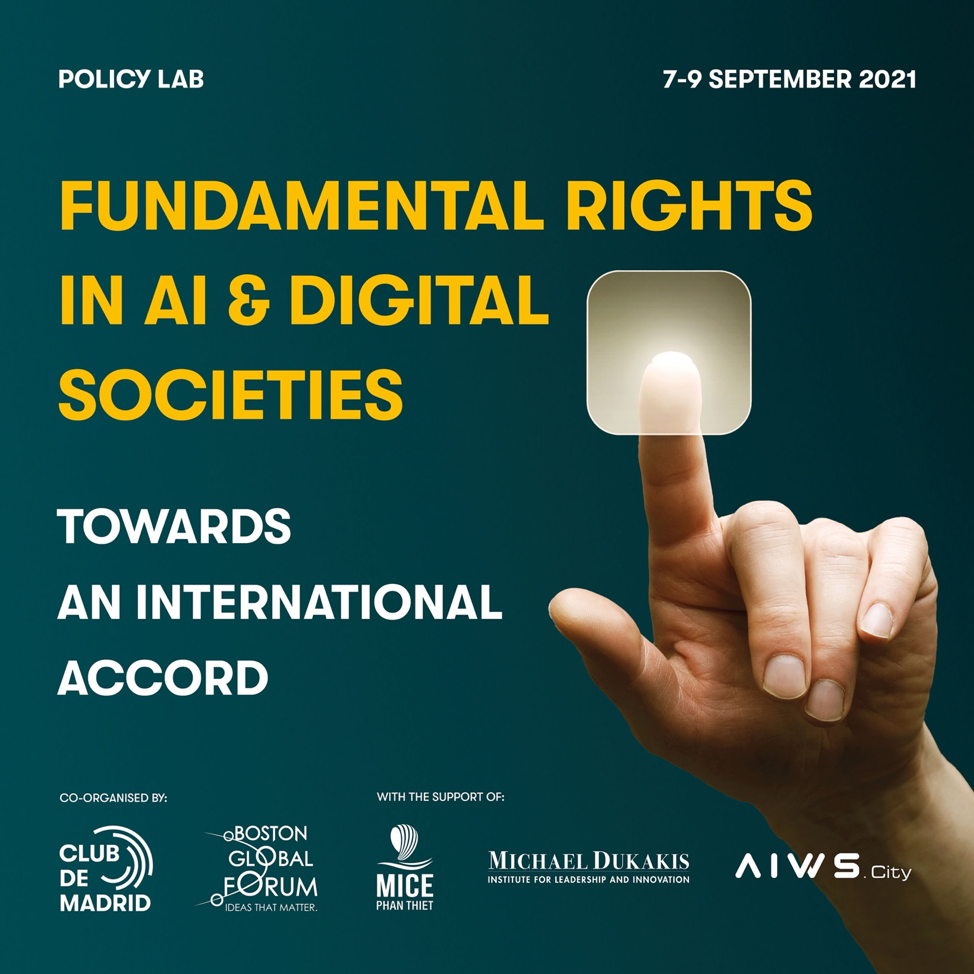
On September 9, 2021, at Club de Madrid – Boston Global Forum Policy Lab, AIWS City (AIWS.city) will officially launch to operate and provide service in its first phase, which includes AIWS University and AIWS Innovations.
AIWS University will bring key programs: AIWS Leadership Master Program, Global Enlightenment Program, and Leaders in the Age of Global Enlightenment. With professors of Harvard, MIT, and other distinguished leaders, AIWS University would to bring flagship ideas, programs with concepts of lifelong learning, learning by practice with smart information, and knowledge base. Students will practice at the United Nations Centennial Initiative and AIWS City.
AIWS Innovations will support and build an ecosystem of AIWS Values, Community Innovation Economy, and People Centered Economy Concepts. AIWS Innovations will apply AIWS Rewards.
Together with the Board of Leaders of AIWS City, which include distinguished leaders, thinkers, innovations, are Global Enlightenment Community. Members of AIWS City will have an ecosystem of learning, working, innovation with Global Enlightenment Community.
Core members of the Global Enlightenment Community are Distinguished Contributors to the book Remaking the World – Toward an Age of Global Enlightenment, and people that contribute towards its concept.
by Editor | Aug 23, 2021 | News
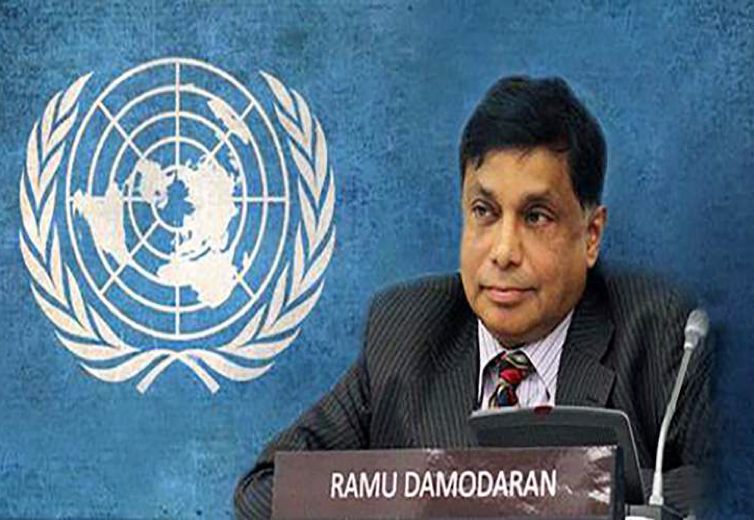
Ramu Damodaran, Chief of United Nations Academic Impact (2010 – 2021), co-chair of the United Nations Centennial Initiative, will talk about the goals of the United Nations Centennial Initiative: Remaking the World – Toward an Age of Global Enlightenment, with Global Enlightenment Education Program, Leaders in the Age of Global Enlightenment.
Practicing and applying concepts of Remaking the World – Towards an Age of Global Enlightenment at AIWS City. AIWS City and NovaWorld Phan Thiet will set up an ecosystem for Community Innovation Economy and a Distinguished City to Honor the United Nations’ first Centennial.

by Editor | Aug 23, 2021 | Event Updates
Kyriakos Pierrakakis is also President of the OECD Global Strategy Group.
The OECD Global Strategy Group, which brings together Undersecretaries, Secretaries-General and other senior officials each year, has the task of facilitating cooperation between Member States. It prepares the work of the OECD Annual Ministerial Meeting, but adopts a more long-term vision.
Topics covered by the Commission include: digital transformation, the future of the labor market and trade in a digitized world, policy planning and international cooperation in a post-pandemic global economic system, and the design and implementation of a sustainable and comprehensive recovery plan. Another goal is to make the Commission more open globally, by expanding the reach of key partners, both from the candidate countries and from G7 and G20 Sherpas representatives.
Plenary V: The United Nations Centennial Initiative: the practice of Fundamental Rights in AI & Digital Societies
- Facilitator
- David Silbersweig, Chairman, Department of Psychiatry and Co-Director for Institute for the Neurosciences, Brigham and Women’s Hospital, Harvard Professor
- Key speakers
- Ramu Damodaran, Co-Chair of the United Nations Centennial
- Kyriakos Pierrakakis, Minister of State and Digital Governance of Greece, Chair of the Global Strategy Group, OECD
- Panel discussion:
-
- Vaira Vike-Freiberga, Member of Club de Madrid, President of Latvia (1999-2007)
- Michelle Bachelet, Member of Club de Madrid, President of Chile (2006-2010; 2014-2018) (video-message)
- Thomas Patterson, Research Director of The Michael Dukakis Institute for Leadership and Innovation, Professor of Government and the Press of Harvard Kennedy School
- Sean Cleary, Advisor of Club de Madrid, Executive vice-chair of the FutureWorld Foundation, Member of the Carnegie Council’s Artificial Intelligence & Equality Initiative’s Board of Advisors
- Tran Dinh Thien, Professor, Senior Advisor to Vietnamese Prime Minister
by Editor | Aug 23, 2021 | News
The world can make an AI international Accord, but how would its implementation look like? Through education – education is fundamental for a transparency, responsibility, accountability, peace, security, and prosperity.
Global Enlightenment Education will attempt to solve and meet requirements of citizens in developing countries, for opportunities to innovative life through AIWS Innovations with concepts of Community Innovation Economy. The world needs to concentrate resources and to fight to bring Global Enlightenment Education to every citizen of developing countries.
One of the goals of the United Nations Centennial Initiative and the Age of Global Enlightenment is that every citizen is educated and practices Global Enlightenment Education.
Governments of G7 countries and OECD countries should to collaborate to support this goal.
by Editor | Aug 16, 2021 | News
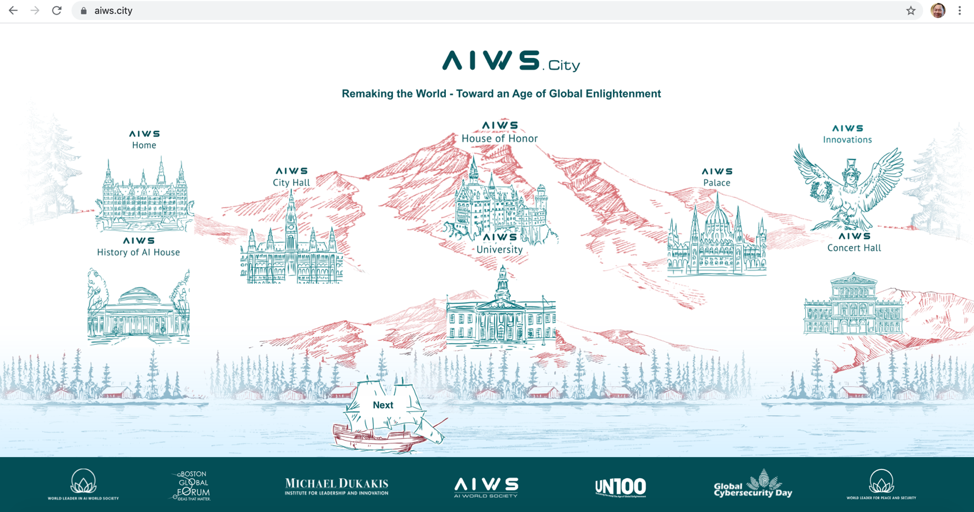
The AIWS Value System is innovative and, as such, untested for its utility. AIWS will test the concept by creating the AIWS City, which will be a virtual digital city dedicated to promoting the values associated AIWS. We envision it as a community of scholars, innovators, leaders, and citizens dedicated to fostering thought, creativity, and ethical behavior.
The digital platform for AIWS City has been created and the first phase of the project will be launched on September 9, 2021. AIWS City has offices in Boston, Massachusetts (USA); Tokyo (Japan), and NovaWorld Phan Thiet, Ha Noi, and Nha Trang (Vietnam), with plans to expand to other locations at a later time.
The heart of AIWS Innovation Ecosystem at AIWS.city to support and apply CIE concepts is the AIWS Innovation Hub.
AIWS Innovation Hub, which will serve as an incubator to help firms, inventors, innovators, and entrepreneurs turn their ideas into reality. They will be able to discuss their ideas and problems and hear from experts and practitioners on how to advance or solve them. The Innovation Hub will promote pioneering models that foster social responsibility and will reward their developers through the AIWS Rewards Program.
by Editor | Aug 16, 2021 | News
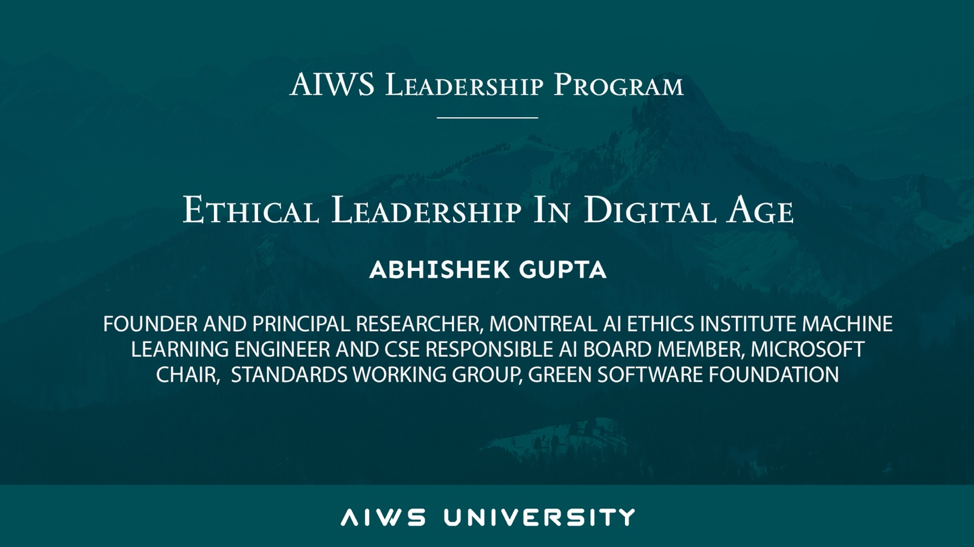
To educate leaders in the AI and Digital Age, for Remaking the World – Toward an Age of Global Enlightenment, Michael Dukakis Institute organized the AIWS Leadership Program.
Abhishek Gupta gave the lecture Ethical Leadership in the Digital Age at AIWS Leadership Program, presenting “Turning the Gears Key Lesions for Organizations in responsible AI.”
Abhishek Gupta is the founder of Montreal AI Ethics Institute and a machine learning engineer at Microsoft where he serves on the CSE AI Ethics Review Board. His research focuses on applied technical and policy methods to address ethical, safety and inclusivity concerns in using AI in different domains. He has built the largest community driven, public consultation group on AI ethics in the world that has made significant contributions to the development of many initiatives in the domain of responsible AI. His work on public competence building in AI ethics has been recognized by governments from North America, Europe, Asia, and Oceania.
The AIWS Leadership program is a special program of the AIWS University.
by Editor | Aug 16, 2021 | News
The Community Innovation Economy is a concept, that innovation and entrepreneurship need to be customized for the circumstances of each community, as well as an ecosystem that supports every citizen so they can innovate.
The Community Innovation Economy (CIE) was conceived by MIT Professor Alex Pentland and Nguyen Anh Tuan, CEO of Boston Global Forum.
AIWS seeks to create an AIWS Ecosystem that empowers citizens to create value for themselves, for others, and for society through the application of artificial intelligence, digital, blockchain, and data science technologies. It is a sharing ecosystem that rewards both the creators and users of these technologies, as well as an ecosystem that encourages everyone to innovate. It breaks down the hierarchies that traditionally have created unequal power relationships, paving the way to a sharing society. It recognizes the value of every citizen, as well as every citizen’s creative potential. It seeks to promote citizens’ economic wellbeing while also promoting ethical and community values. It aims for nothing less than the creation of a more trusting, prosperous, and compassionate world where people can live more fulfilling lives, materially and ethically.
The AIWS Value System
Remaking the world as a more humane, peaceful, and secure place rests on promoting the values that will foster that world. To that end, AIWS has created the AIWS Value System as a means of guiding and encouraging individuals to contribute to a changing world.
The AIWS Value System focuses on creative or innovative acts that foster a sharing society.
The AIWS Ecosystem is a sample of the Community Innovation Economy.