by Editor | Oct 11, 2021 | News
IS DATA THE NEW FRONTIER OF POWER?
Decades have passed since one can consider issues of security at a regional or global level as straight forward melee combat. The number of battle-fronts a country must consider keeps increasing on a regular basis. The most recent tool to be used and targeted is the digital footprint left by any transaction, message or activity in our digital age: data. Unidentifiable resources are invested into gathering as much data as possible to be used for a variety of questionable purposes. How should we reconcile the opportunities and the vulnerabilities that stem with holistic digitalisation? How far should we go to govern the internet, the hardware and the software that enables an unparalleled level of innovation but also the threat of the rise of surveillance capitalism and openings for other national security threats?
Andrejs Vasiljevs, Cofounder and Chairman of the Board of Tilde
Amb Casper Klynge, Vice President of European Government Affairs, Microsoft
Aura Salla, Public Policy Director, Head of EU Affairs at Facebook
Josef Schroefl, Deputy Director of the COI Strategy and Defense, European Centre of Excellence for Countering Hybrid Threats
Moderator: Jānis Sārts, Director, NATO Strategic Communications Centre of Excellence
The Rīga Conference has become a unique venue for constructive dialogue on international security issues between leading global decision makers. The event is organized jointly by the Latvian Transatlantic Organisation (LATO), the Ministry of Defence of the Republic of Latvia, and the Ministry of Foreign Affairs of the Republic of Latvia.
The Riga Conference facilitates debates at various levels, engaging high-level politicians, diplomats, experts, as well as local and international media. There are top leaders of the world such as US President George W. Bush, European Commission President Ursula von der Leyen, and heads of states and governments of Baltic areas were speakers of the Rīga Conferences.
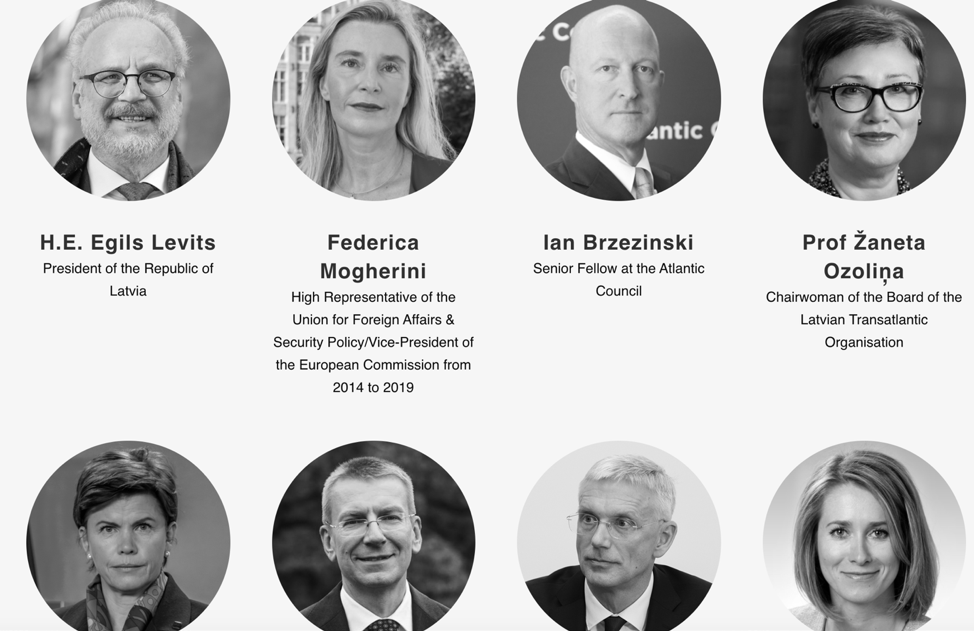
Some leaders that will be speaking at the Rīga Conference 2021 are:
H.E. Egils Levits, President of the Republic of Latvia, H.E. Krišjānis Kariņš, Prime Minister of the Republic of Latvia, Kaja Kallas the first female prime minister of Estonia, H.E. Klaus Iohannis, President of Romania, António Guterres, the Secretary-General of the United Nations, Valdis Dombrovskis, Executive Vice-President of the European Commission for An Economy that Works for People, Hulusi Akar, Minister of National Defence of Turkey, Mr James Heappey, Minister for the Armed Forces, Parliamentary Under Secretary of State, United Kingdom etc.
Link to the conference: https://www.rigaconference.lv/
by Editor | Oct 11, 2021 | News
AIWS.net is network of distinguished leaders, thinkers, innovators, think tanks, and organizations, connecting with governments to support “Remaking the World – Toward an Age of Global Enlightenment” through solutions, initiatives, practices, and implementations of principles and ideas of the book and the United Nations Centennial Initiative.
Sponsors: Boston Global Forum, Massachusetts Government, MIT Connection Science, CyberPolitics@MIT.
Headquarter: Boston
There are representatives of Boston Global Forum and AIWS.net at 45 cities, including New York, Washington DC, San Francisco, Los Angeles, Tokyo, Zurich, Stockholm, Helsinki, Copenhagen, Oslo, Saint Petersburg, Riga, London, Paris, Berlin, Brussels, Athens, Rome, Jerusalem, Vienna, Madrid, Lisbon, Warsaw, Dubrovnik, Toronto, New Delhi, Melbourne, Hanoi, Baku, Cairo, and Lima.
AIWS.net have connected with 54 governments, including of G7 and OECD countries, and international organizations such as the United Nations, UNESCO, World Bank, OECD, Club de Madrid, and Nizami Ganjavi International Center.
Representative of BGF and AIWS.net at cities are Ambassadors of BGF and AIWS.net. They will, on behalf of BGF and AIWS.net, connect and engage people, governments, and organizations at those cities with BGF, AIWS, and bridge Boston and other cities. They are distinguished leaders, strategists, thinkers, and innovators of cities.
Distinguished Thinker Paul Nemitz is the Representative of Boston Global Forum and AIWS.net at Berlin and Brussels. Chairwoman of LATO, Professor Zaneta Ozolina is Representative of BGF and AIWS.net in Riga.
by Editor | Oct 11, 2021 | News
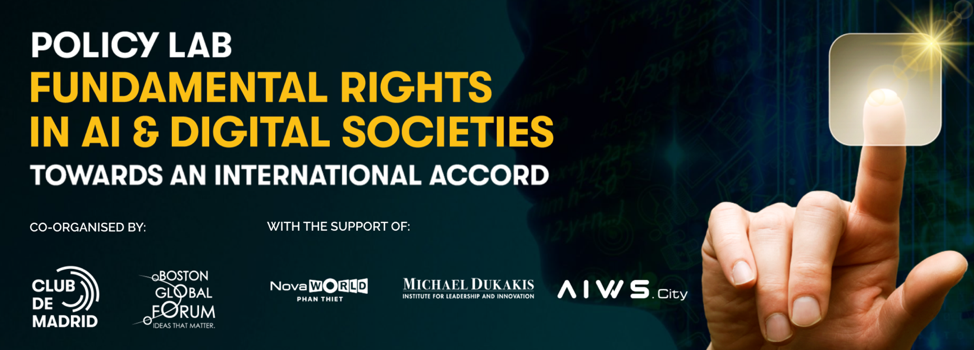
Paul Nemitz, Representative of Boston Global Forum in Brussels and Berlin, one of key persons on Global Law on AI and Digital initiative, presented “the elements & process for an international legal framework to protect fundamental rights in AI & digital spaces” at the Policy Lab, co-organized by Club de Madrid and Boston Global Forum.
The Framework of Global Law on AI and Digital Governance will be presented on Global Cybersecurity Day on December 12, 2021.
Paul Nemitz also is the author of the chapter “Fundamentals of International Law: AI and Digital” of the Book “Remaking the World – Toward an Age of Global Enlightenment”.
Recently he answered interview of Digismak: https://digismak.com/paul-nemitz-the-mantra-that-the-law-kills-innovation-is-false-digital-transformation-technology/
He stressed:
“The mantra that law kills innovation is false. It is the simplest and most misguided myth in any discussion of regulation. History shows that regulation serves innovation. For example, safety regulation ensures that technology is acceptable to society and encourages companies to innovate to increase safety and lower its price. We would not have an environment of progress in technological innovation if we had not had a public policy agenda. The law, unlike markets, creates incentives to innovate in areas that serve the public interest. This also redistributes resources, including those of private companies.
Those who speak of developing AI for the common good cannot at the same time say that they do not want laws. When we speak of regulation as an obstacle to innovation, as something to avoid, we must once again understand that the law is an instrument to express what democracy wants to achieve, to shape society. Therefore, it must prevail over a social modeling directed by business interests and technology.”.
Alondra Nelson, deputy director for science and society at the White House Office of Science and Technology Policy, wrote on Wire Magazine “Americans Need a Bill of Rights for an AI-Powered World
The White House Office of Science and Technology Policy is developing principles to guard against powerful technologies—with input from the public.”
https://www.wired.com/story/opinion-bill-of-rights-artificial-intelligence/
The Global Law on AI and Digital meets and supports this policy of White House and can contribute for White House Office of Science and Technology Policy in its work.
by Editor | Oct 11, 2021 | Event Updates
The United Nations Centennial initiative was launched by the Boston Global Forum (BGF) and the United Nations Academic Impact (UNAI) in 2019 as the United Nations planned to mark the 75th anniversary the following year. It brought into its fold some of the finest minds of our times as they sought to anticipate the world, and the United Nations, in 2045, the year of the world organization’s centennial. The core concepts of the initiative are reflected in the book “Remaking the World: Toward an Age of Global Enlightenment”; these include the idea of a social contract for the Artificial Intelligence (AI) age, a framework for an AI international accord, an ecosystem for the “AI World Society” (AIWS) and a community innovation economy. Some of these ideas have already begun to be put into practice, including a Global Alliance for Digital Governance and the evolution of AIWS City, a virtual digital city dedicated to promoting the values associated with AIWS.
This session will discuss concepts of the book to build the Age of Global Enlightenment, and the particular role of the Baltic States – who celebrate thirty years of United Nations membership this year-in this regard.
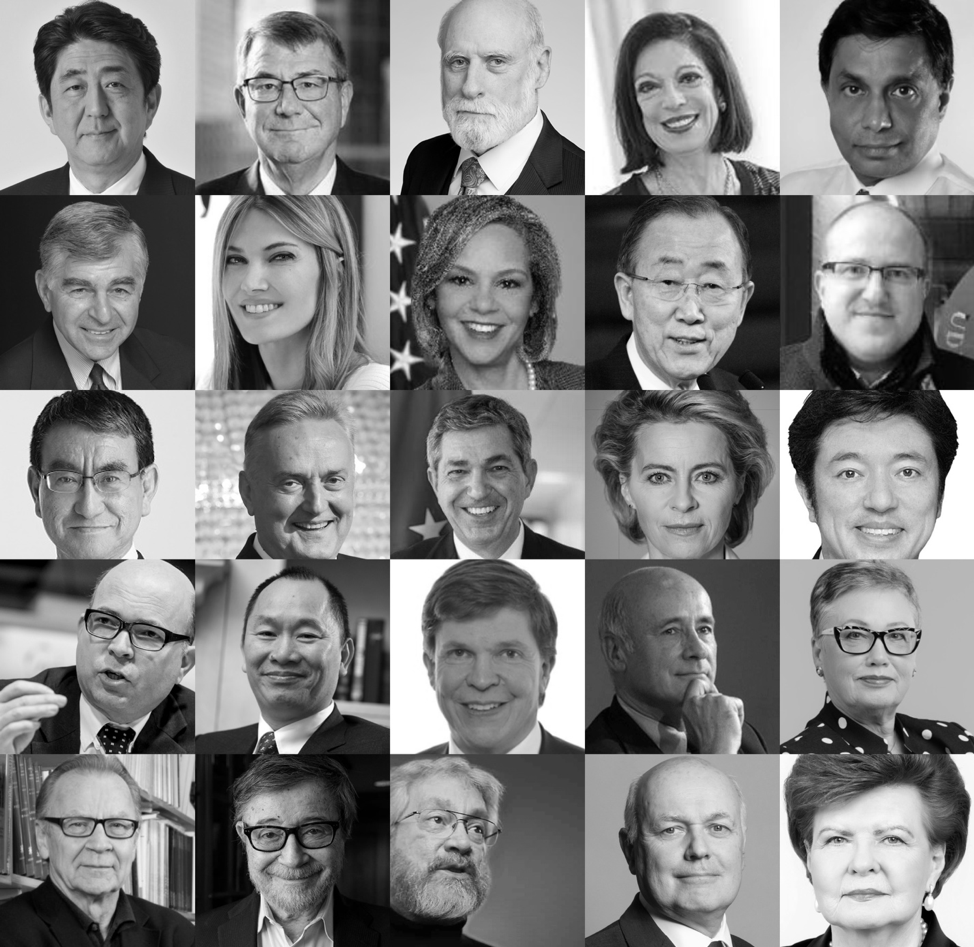
Dr Vaira Vīķe- Freiberga, President of the Republic of Latvia from 1999 to 2007
Nguyen Anh Tuan, CEO of the Boston Global Forum, Director of the Michael Dukakis Institute for Leadership and Innovation, Co-Founder of the AI World Society Innovation Network, Co-Founder of AIWS City
Paul F. Nemitz, Director for Fundamental rights and Union citizenship in the Directorate-General for JUSTICE of the European Commission
Alex ‘Sandy’ Pentland, Director of the Human Dynamics Laboratory, MIT’s, Director of the MIT Media Lab Entrepreneurship Program, Co-Leader of The World Economic Forum Big Data and Personal Data Initiatives, Founding Member of The Advisory Boards for Nissan, Motorola Mobility, Telefonica
Thomas Patterson, Bradlee Professor of Government and the Press, Harvard University, Research Director of The Michael Dukakis Institute for Leadership and Innovation, Co-founder of the Boston Global Forum.
Moderator: Prof Žaneta Ozoliņa, Chairwoman of the Latvian Transatlantic Organisation
16:00-17:30 Riga time (UTC+2)
This discussion is a special side event of the Rīga Conference 2021 which is co-organised by the Latvian Transatlantic Organisation and the Boston Global Forum.
Link to the event: https://www.rigaconference.lv/side-events/
by Editor | Oct 3, 2021 | News
The United Nations Centennial Initiative defines concepts, principles, and standards for a flagship city in the Age of Global Enlightenment:
- Innovations: a place to birth significant and pioneering initiatives to shape the Age of Global Enlightenment.
- Support for Standards of the Social Contract for the AI Age.
- Contribute to build the Age of Global Enlightenment.
- Educations: excellent education system that supports concepts and principles of the Age of Global Enlightenment; more than half of citizens of city have perceptions and live with the Global Enlightenment Education Program.
- The city has mechanism to support for its citizens so they can create and innovate in the Community Innovation Economy platform (AIWS Innovation Ecosystem).
Boston is a flagship city in the Age of Global Enlightenment. It is the birth city of AI World Society, the United Nations Centennial Initiative, pioneering ideas of Remaking the World – Toward an Age of Global Enlightenment, and AIWS City. Boston meets all requirements below, and deserves the title of flagship city of the Age of Global Enlightenment.
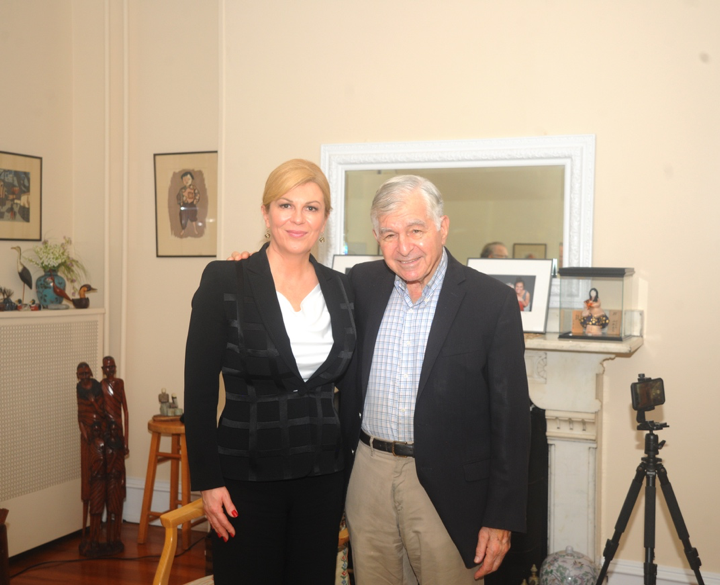
H.E. Kolinda Grabar-Kitarovic, President of Croatia (2015-2020), spoke at the UN Centennial Roundtable on September 24, 2021 with Governor Michael Dukakis and Harvard professors at Boston Global Forum.
by Editor | Oct 3, 2021 | News
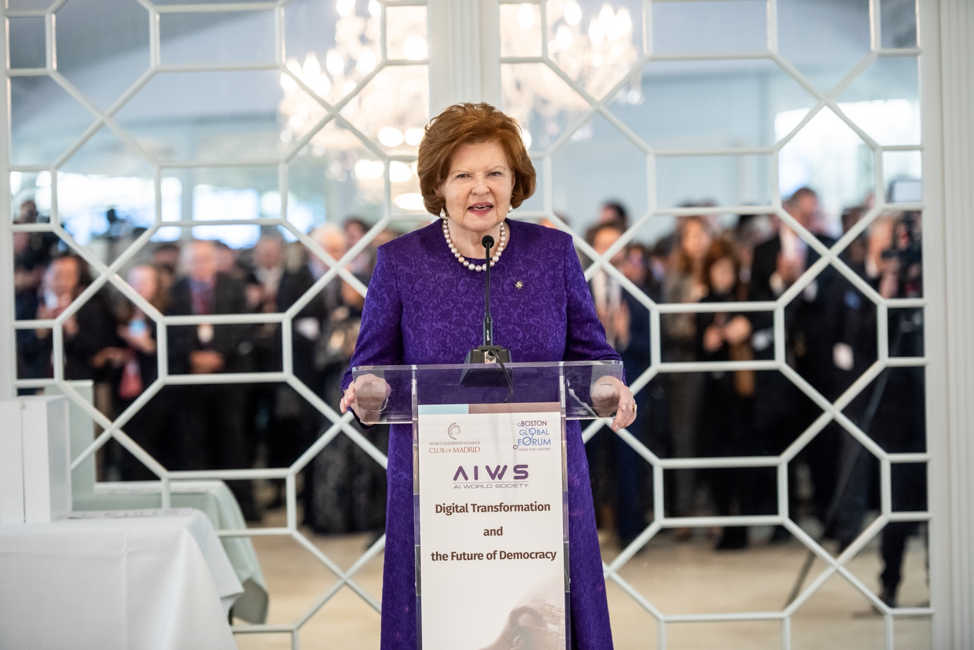
The session to discuss about pioneering ideas and concepts of the book Remaking the World – Toward an Age of Global Enlightenment will be moderated by Prof Žaneta Ozoliņa, Chairwoman of the Latvian Transatlantic Organisation, who also is a distinguished contributor of the book. President of Latvia (1999-2007) Vaira Vike-Freiberga, a distinguished contributor of the book will be a lead and keynote speaker of the panel.
Here is some information on the event:
REMAKING THE WORLD – THE SECOND AGE OF ENLIGHTENMENT. THE UNITED NATIONS 2045
Economy: Community Innovation Economy
Dr Vaira Vīķe- Freiberga, President of the Republic of Latvia from 1999 to 2007
Nguyen Anh Tuan, CEO of the Boston Global Forum, Director of the Michael Dukakis Institute for Leadership and Innovation, Co-Founder of the AI World Society Innovation Network, Co-Founder of AIWS City
Paul F. Nemitz, Director for Fundamental rights and Union citizenship in the Directorate-General for JUSTICE of the European Commission
Alex `Sandy’ Pentland, Director of the Human Dynamics Laboratory, MIT’s, Director of the MIT Media Lab Entrepreneurship Program, Co-Leader of The World Economic Forum Big Data and Personal Data Initiatives, Founding Member of The Advisory Boards for Nissan, Motorola Mobility, Telefonica
Moderator: Prof Žaneta Ozoliņa, Chairwoman of the Latvian Transatlantic Organisation.

by Editor | Oct 3, 2021 | News
Governor Michael Dukakis, Professors Thomas Patterson, David Silbersweig, Nazli Choucri, President Vaira Vike-Freiberga, Prime Minister Zlatko Lagumdzija, Nguyen Anh Tuan, Ramu Damodaran, and other distinguished leaders and educators discussed to create the Framework of Global Enlightenment Education program, and its sub-committees of its. Framework of the program based on its principles and missions:
Educating citizens who will build the Age of Global Enlightenment, that are able to create, innovate, and master their own lives, have the tolerant and kindness mindset and ability to create lives globally, have honest, sincere, tolerant, and noble personalities.
Helping citizens have a right, positive, and beautiful mindset about life, and encourage their passions and interests to create a good life, work, and career for themselves in the Age of Global Enlightenment. Each citizen is guided and helped to be able to live and establish a career in developed countries such as the US, European Union, G7, or OECD countries, or they live in their home countries, can connect with and to have the opportunity to exchange values, work, and do business with developed countries in the Age of Global Enlightenment. It also creates an environment for each citizen to connect with the flagship cities of the Age of Global Enlightenment.
The Global Enlightenment Education Program is an important part of the United Nations Centennial Initiative. It is a fundamental to building the Age of Global Enlightenment.
by Editor | Oct 3, 2021 | News
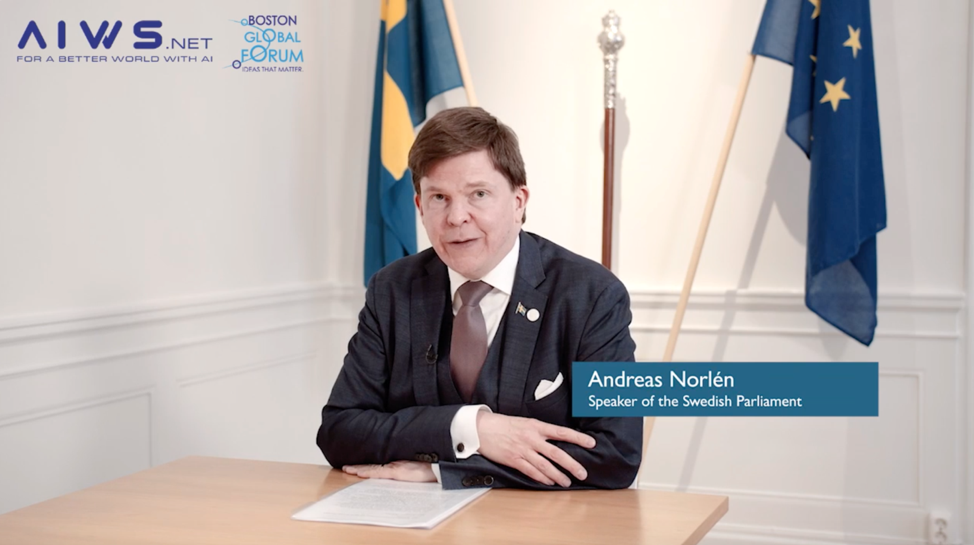
Speaker of Swedish Parliament Andereas Norlen, Governor Michael Dukakis, Former US Acting Secretary of Commerce Cameron Kerry, Australian Senator Kimberley Kitching and other distinguished leaders will talk and discuss at the Symposium about Framework for Global Law on AI and Digital.
December 12, 2021
08:00 EST / 14:00 CET
Venue: Loeb House, Harvard University and online
The symposium will discuss principles of Global Law on AI and Digital, a part of the United Nations Centennial Initiative and Global Alliance for Digital Governance. This is a joint initiative between the Boston Global Forum and World Leadership Alliance-Club de Madrid.
US Senators Martin Heinrich (D-NM) and Rob Portman (R-OH), co-founders of the Senate Artificial Intelligence Caucus, are announcing two bipartisan pieces of legislation to strengthen the U.S. government’s artificial intelligence (AI) readiness and tosupport long-term investments in AI ethics and safety research, as well as increase governmental AI transparency.
US Senator Mark Warner, chairman of the US senate’s intelligence committee, wants Washington to work with allies on setting digital rules.
To prepare for the Symposium, a sub-committee of Boston Global Forum and World Leadership Alliance – Club de Madrid will create a Framework for Global Law on AI and Digital.

by Editor | Sep 26, 2021 | Event Updates
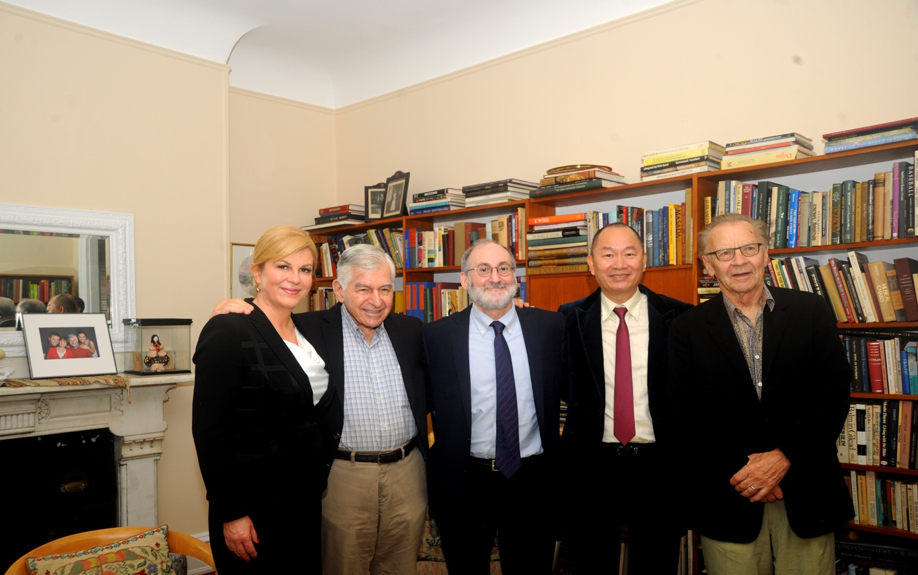
On September 24, President of Croatia (2015-2020) Kolinda Grabar-Kitarovic, member of Nizami Ganjavi International Center, visited and discussed with Governor Michael Dukakis and leaders of the Boston Global Forum.
President Grabar-Kitarović expressed enthusiasm that the city of Dubrovnik, with the young, open-minded mayor Mato Franković, can be a satellite city of AIWS City. BGF can provide advice for Dubrovnik in building AI infrastructure and legislations, while Dubrovnik can be an ally of the AI International Accord and Law and Global Alliance for Digital Alliance. Governor Michael Dukakis invited President Grabar-Kitarovic to join the initiative of BGF in Global Alliance for Digital Governance and Global Law and Accord on AI and Digital.
This visit of President Grabar-Kitarovic opens a new road for opportunities between Croatia and Boston Global Forum, especially in works to apply AIWS Ecosystem and Community Innovation Economy.