by Editor | Oct 16, 2022 | News
“This challenge is the second event under the initiative of OSS4SDGs – Open Source Soſtware for Sustainable Development Goals – a joint collaboration between the European Commission Directorate-General for Informatics and United Nations Office of Information, Communications and Technology. The goal of the event is to tackle SDG 11 “Sustainable Cities & Communities.”
The selected open-source community will be OpenStreetMap (OSM) since the open source platform is broadly used by the United Nations and European Union teams.”
https://ideas.unite.un.org/sdg11/Page/Overview?mc_cid=f7dda37d7c&mc_eid=7eb0d8e81c
AIWS.net includes news reports, analysis and reflections by distinguished thinkers and innovators supporting innovations and solutions for “Remaking the World – Toward an Age of Global Enlightenment” and the United Nations Centennial initiative, looking at how the world might be in 2045 when the global organization completes a hundred years.

by Editor | Oct 16, 2022 | Global Alliance for Digital Governance
By Michael Dukakis, Nguyen Anh Tuan, Alex Pentland
Artificial intelligence (AI) and automated systems are increasingly affecting our daily lives. Banking algorithms decide who is eligible for housing or financial loans, healthcare algorithms are making decisions on coverage and standard of care. Companies are using hiring algorithms to sort resumes for potential employees. While all of these innovations make life more convenient, they pose risks to the public and are often rife with bias and discrimination.
Further, there has been substantial investment in the development and adoption of AI, but nowhere near as much money or energy has been put toward safeguards or protection, regulations or even a standard code of ethics.
Earlier this month, the White House Office of Science and Technology Policy (OSTP) released a “Blueprint for an AI Bill of Rights,” one that aims to ensure the use of AI is fair, equitable and nondiscriminatory. As members of the Boston Global Forum, we applaud President Biden and the OSTP for advancing this important measure which protects people from threats and defines guardrails on technology to reinforce civil rights, civil liberties and privacy, and equal opportunities ensuring access to critical resources and services.
The Blueprint outlines five common-sense protections with respect to AI to which all citizens should be entitled:
- AI should be safe and effective;
- It shouldn’t discriminate;
- It shouldn’t violate data privacy;
- We should know when AI is being used;
- We should be able to opt out and talk to a human when we encounter a problem.
It’s not binding legislation, but rather a set of recommendations for government agencies and technology companies using AI. It’s also a great tool to educate the public as well as organizations responsible for protecting and advancing our civil rights and civil liberties.
This is a necessary first step for our country, but the effort must be a global one.
On the world stage, bad actors in other nations are increasingly using AI to spread disinformation and propaganda through deep fakes and other manipulated media – all of which are in direct conflict to the values of democracy and freedom.
Last year, the Boston Global Forum and World Leadership Alliance – Club de Madrid brought prominent international leaders together to explore ideas and strategies and for a Global Law and Accord on Artificial Intelligence and Digital Rights.
The group established the Global Alliance for Digital Governance (GADG) to coordinate resources among governments, international organizations, corporations, think tanks, civil society and influencers for AI and a digital sphere for good, to make the resources more effective to synthesize and maximize their impact. It is not an organization, but rather, a network for sharing resources and cooperating among governments. At the core of this imperative is to establish a common understanding of policy and practice, anchored in general principles to help maximize the “good” and minimize the “bad” associated with AI:
- Fairness and justice for all: The first principle is already agreed upon in the international community as a powerful aspiration. It is the expectation of all entities – private and public – to treat, and be treated, with fairness and justice.
- Responsibility and accountability for policy and decision making —private and public: The second principle recognizes the power of the new global ecology that will increasingly span all entities worldwide—private and public, developing and developed.
- Precautionary principle for innovations and applications: The third principle is well established internationally. It does not impede innovation but supports it. It does not push for regulation but supports initiatives to explore the unknown with care and caution.
- Ethics-in-AI: Fourth is the principle of ethical integrity—for the present and the future. Different cultures and countries may have different ethical systems, but everyone, everywhere recognizes and adopts some basic ethical precepts. At issue is incorporating the commonalities into a global ethical system for all phases, innovations, and manifestations of artificial intelligence
At home and abroad, we must move toward a framework, an ecosystem, and a social contract for the AI age. Without adequate guidelines and useful directives, the undisciplined use of AI poses risks to the wellbeing of individuals and creates fertile ground for economic, political, social, and criminal exploitation. As we gain consensus on principles and practices among members of the global society, we will generate and enhance social benefits and wellbeing for all, shared by all.

by Editor | Oct 9, 2022 | News
Professor Koichi Hamada is a world-leading expert on international economics and the Japanese economy. He has had a distinguished career as an internationally renowned economics professor, an economic adviser to the Japanese government and as an economic consultant to the IMF and WTO. He is Special Economic Adviser to Japanese Prime Minister Shinzo Abe, Professor Emeritus of Economics at Yale University and Professor Emeritus of Economics at the University of Tokyo.
He is credited as one of the key architects of Abenomics, economic policies based upon “three arrows” of monetary easing, fiscal stimulus and structural reform.
Professor Koichi Hamada was a speaker at BGF conferences and officially joins the Shinzo Abe Initiative for Peace and Security Board.



by Editor | Oct 9, 2022 | News
Following the High Level Discussion “Technology for Peace in the Global Enlightenment Age” with keynote speaker Under-Secretary-General, Tech Envoy of United Nations Amandeep Gill on UN International Day of Peace September 21, Boston Global Forum is creating Manifesto “Tech for Peace in the Global Enlightenment Age.” The Global Enlightenment Leaders that will join in building this special Manifesto are Governor Michael Dukakis, Harvard Professors Thomas Patterson, David Silbersweig, MIT Professor Nazli Choucri, Alex Sandy Pentland, CEO of Boston Global Forum Nguyen Anh Tuan, Co-Chair of the United Nations Centennial Initiative Ramu Damodaran, Former Prime Minister of Bosnia & Herzegovina Zlatko Lagumdzija and Father of Internet Vint Cerf. The Manifesto will contribute concepts and models to “Tech for Peace in the Global Enlightenment Age.” The Manifesto is a part of the United Nations Centennial Initiative.



by Editor | Oct 9, 2022 | News
The Biden administration on Friday Oct 7, announced sweeping new limits on the sale of semiconductor technology to China, a step aimed at crippling Beijing’s access to critical technologies that are needed for everything from supercomputing to guiding weapons.
The package of restrictions, which was released by the Commerce Department, is designed in large part to slow the progress of Chinese military programs, which use supercomputing to model nuclear blasts, guide hypersonic weapons and establish advanced networks for surveilling dissidents and minorities, among other activities.
Alan Estevez, the under secretary of commerce for industry and security, said his bureau was working to prevent China’s military, intelligence and security services from acquiring sensitive technologies with military applications.
Further readings can be found at the New York Times and Protocol.
AIWS.net includes news reports, analysis and reflections by distinguished thinkers and innovators supporting innovations and solutions for “Remaking the World – Toward an Age of Global Enlightenment” and the United Nations Centennial initiative, looking at how the world might be in 2045 when the global organization completes a hundred years.
by Editor | Oct 9, 2022 | Global Alliance for Digital Governance
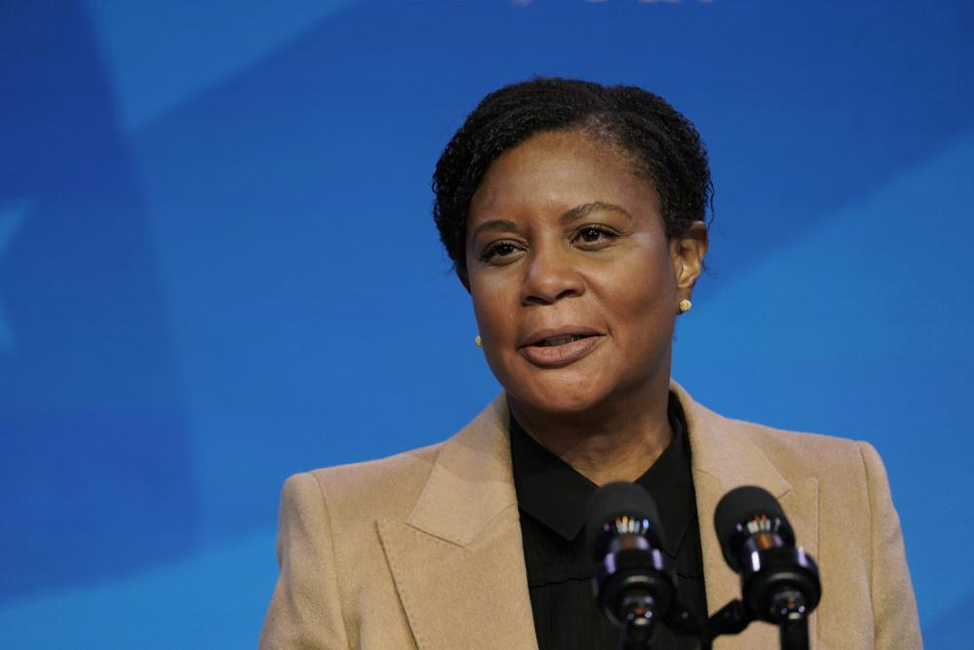
President Joe Biden on October 4 unveiled a new AI Bill of Rights, which outlines five protections Americans should have in the AI age, making automated systems work for the American people.
Boston Global Forum is pioneering by presenting a proposal and call for International Law and Accord in AI and Digital Rights at the Policy Lab: “FUNDAMENTAL RIGHTS IN AI & DIGITAL SOCIETIES – TOWARDS AN INTERNATIONAL ACCORD,” co-organized by BGF and Club de Madrid on September 7-9, 2021. BGF also published “Remaking the World – Toward an Age of Global Enlightenment,” which includes these important chapters: “Framework for an AI International Accord” by MIT Professor Nazli Choucri, “An AI ‘Bill of Rights’ in the Digital Age” by Ambassador Stavros Lambrinidis, and “Fundamentals of International Law: AI and Digital” by Paul Nemitz; and the special report of BGF and Club de Madrid (CdM) in 2021 with highlights below:
CdM in partnership with BGF organized a Policy Lab on Fundamental Rights in AI & Digital Societies: Towards an International Accord in September 2021. Multistakeholder discussions aimed to build consensus around a rights-based agenda for the global governance of AI and digital societies, focusing on the following topics:
- Opportunities and threats for fundamental rights in AI & digital societies.
- Transatlantic approaches to protect fundamental rights in AI & digital spaces.
- The elements & processes for an international legal framework to protect fundamental rights in AI & digital spaces
- The Concept, Principle and Ecosystem for Digital and AI Society – “Remaking the World, Toward an Age of Global Enlightenment”.
- The Global Alliance for Digital Governance
- A framework for a global law and accord on AI and digital tools The Policy Lab followed the work initiated by both organizations on the implications of digital technologies and AI for democracy, global cooperation and multilateralism, with a particular focus on the Transatlantic space, and based on the progress of the AIWS Social Contract 2020 (Social Contract for the age of AI) and AIWS Innovation Network (AIWS.net).
Here is the link of the book “Remaking the World – Toward an Age of Global Enlightenment.”
Here is the link to the report.
Firstly, BGF will connect governments of the EU, US, Japan and India to discuss about International AI Bill of Rights, then expand to the UK, Australia, South Korea and Brazil.

by Editor | Oct 2, 2022 | News
“And a lot of the focus that we have is in taking the two centuries old idea of census data and augmenting it to have richer census data. So, the census data is something that it’s hard to appreciate, but any sort of modern management of society, government services depend on knowing where the people are and something about them and not at the individual level, but at the neighborhood level.”
“So, in the United States most people on the left top graph believe that the people on the right are more extreme, more interested in subverting democracy. They’re really engaged in a culture war.
But the truth is very different. If you actually go and you sample in a scientific way very few people on the right are as radical as they’re painted. In fact, most are quite moderate and willing to support engagement. And the same is true about the right’s belief about the left’s opinion. The right believe that the left is full of crazies. But the truth is if you actually go and you ask people one on one for their actual opinions, they’re very much more moderate. And so, it’s this lack of knowledge of the other side that is driving this notion that the other guys are cheating and we need to take radical action in order to be able to protect ourselves.
And I put peace and war up here in the United States, it’s not that extreme yet but it’s perhaps closer than we would like to believe. But this is a general psychological process. When people don’t interact broadly, they develop suspicions of each other. And what we found is just showing people what we showed you just now.
In other words, this notion of what the real beliefs are of the other people has a dramatic change on people’s beliefs and their willingness to subvert democracy, their willingness to promote radical effects. In fact, it’s something where perhaps extreme beliefs, the warlike attitude of each group can be decreased by something on the order of 50% just by having trusted the third party data.
This is the sort of thing that I think that the UN in particular could be very good at is. What are the actual beliefs of the people in each of these countries? Are they actually trying to subvert the peace or are they not? This may not apply very much to situation like the Ukraine Russian war because that seems to be something that comes generally from a small coterie of people at the top.
But if the Russian people had been much more aware of what was happening or had much more access to the true opinions about Ukrainians, it would have been much more difficult for the people at the top to fan the flames of war.”

by Editor | Oct 2, 2022 | News
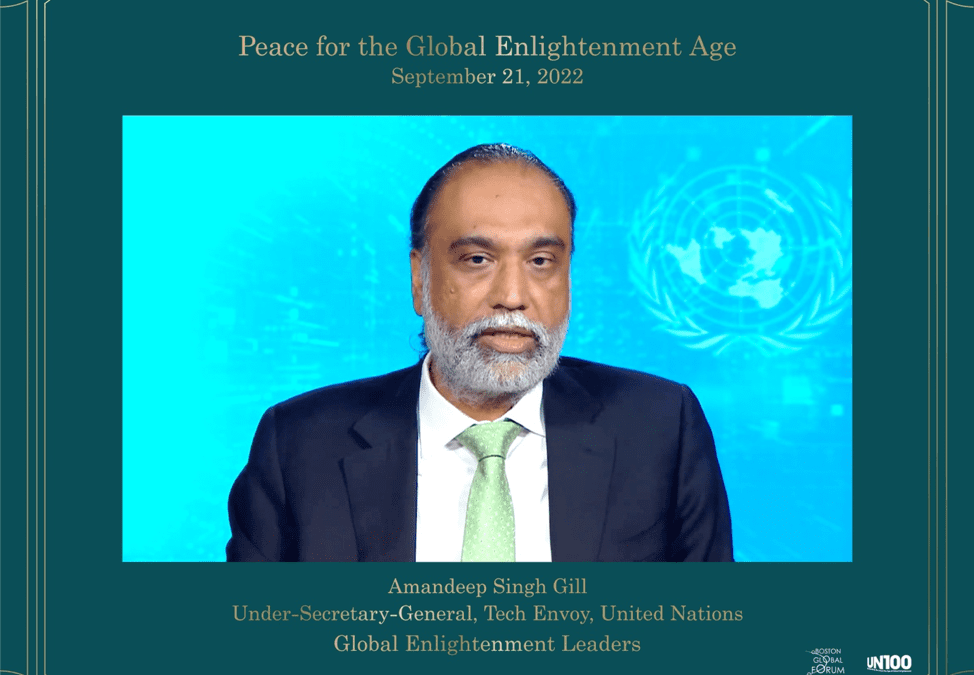
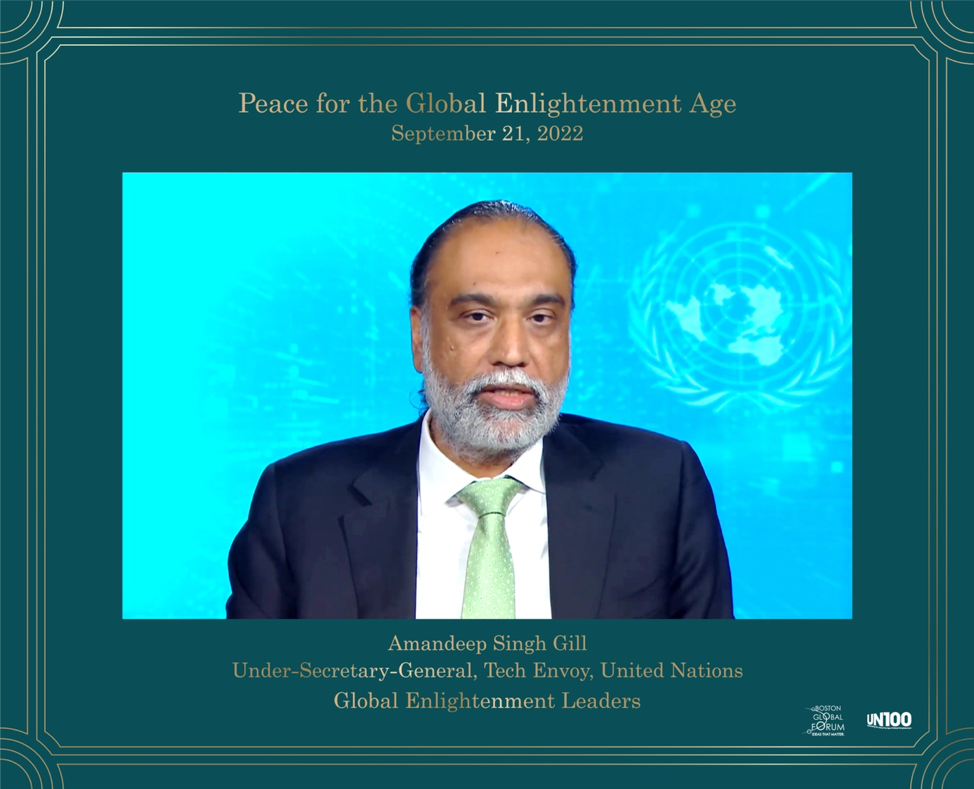
The Boston Global Forum (BGF), MIT Connection Science, and professor Alex Pentland will co-organize the high-level discussion “Teach for Peace,” as a part of the United Nations Centennial Initiative at Stanford University in November 2022.
Professor Alex Sandy Pentland will lead these meetings. Mr. Nguyen Anh Tuan, CEO of the BGF will join the events and meet and discuss with Stanford professors and leaders of companies in Silicon Valley to develop the United Nations Centennial Initiative and AIWS City in San Francisco and Silicon Valley.
by Editor | Oct 2, 2022 | News
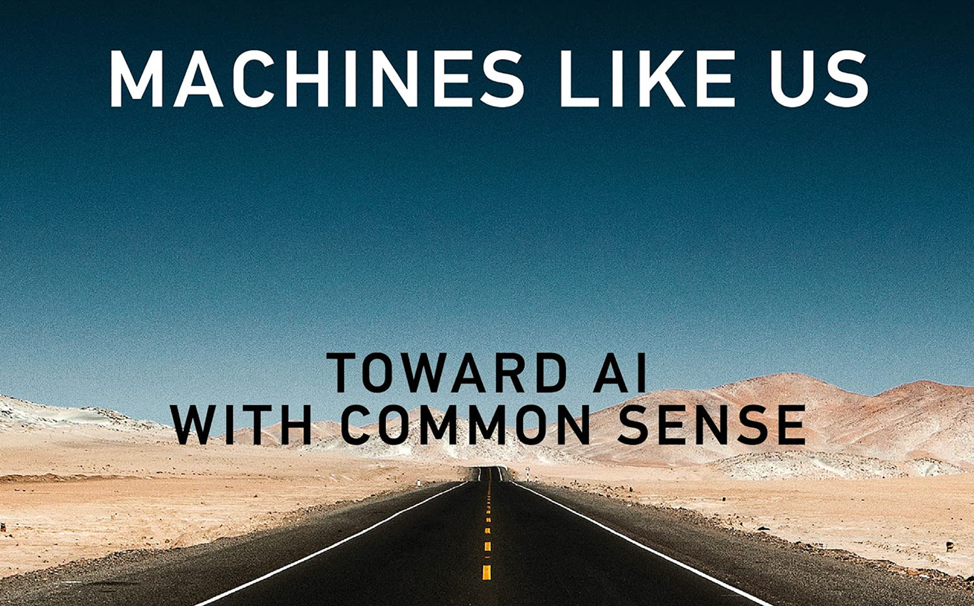
“In their new book Machines Like Us, computer scientists Ronald J. Brachman and Hector J. Levesque discuss their view and potential solution to this missing piece of the AI puzzle, which has eluded researchers for decades. In an interview with TechTalks, Brachman discussed what common sense is and isn’t, why machines don’t have it, and how “knowledge representation,” a concept that has been around for decades but has fallen by the wayside during the deep learning craze, can steer the AI community in the right direction.”
Go deeper at: https://bdtechtalks.com/2022/08/08/machines-like-us-review/
AIWS.net includes news reports, analysis and reflections by distinguished thinkers and innovators supporting innovations and solutions for “Remaking the World – Toward an Age of Global Enlightenment” and the United Nations Centennial initiative, looking at how the world might be in 2045 when the global organization completes a hundred years.