Shinzo Abe

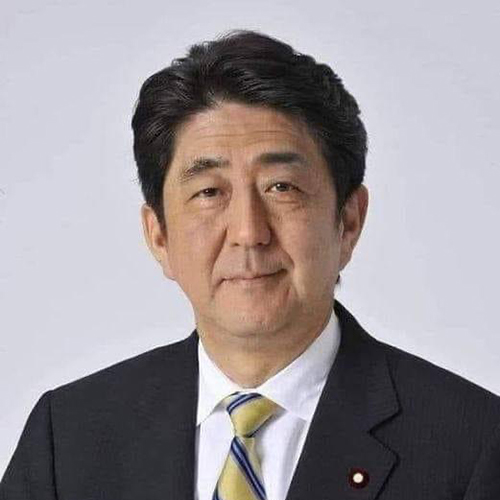
Shinzo Abe

Shinzo Abe was Prime Minister of Japan from 2006-2007 and again from 2012-2020. During his time as Prime Minister, Abe reinforced nation-wide Cybersecurity in Japan and launched the Basic Action Cybersecurity program and Cybersecurity Strategy.

In PM Abe’s view, cybersecurity is a critical issue to the national security and Japan’s crisis management, as well as an important element fostering the Japan’s Growth Strategy. He said his government will “take all possible means to ensure cybersecurity”, given its mission of successfully hosting Ise-Shima Summit in 2016, Tokyo Olympic and Paralympic Games in 2020.

In his speech, PM Abe also stressed that “We are now engaged as a national in all our efforts to reinforce cybersecurity. Theses include the Government’s enactment of the Basic Action Cybersecurity in Nov 2014 and a Cabinet Decision taken in Sep this year on our new Cybersecurity Strategy”, and expressed his commitment to cooperate with international communities in the fight against cyber crime: “Japan will continue to cooperate closely with the US and other partners in the International community, reliably safeguard our nation’s important information and property while playing a leading role in achieving the peace and stability of the international community.”

Watch the full speech of PM Abe
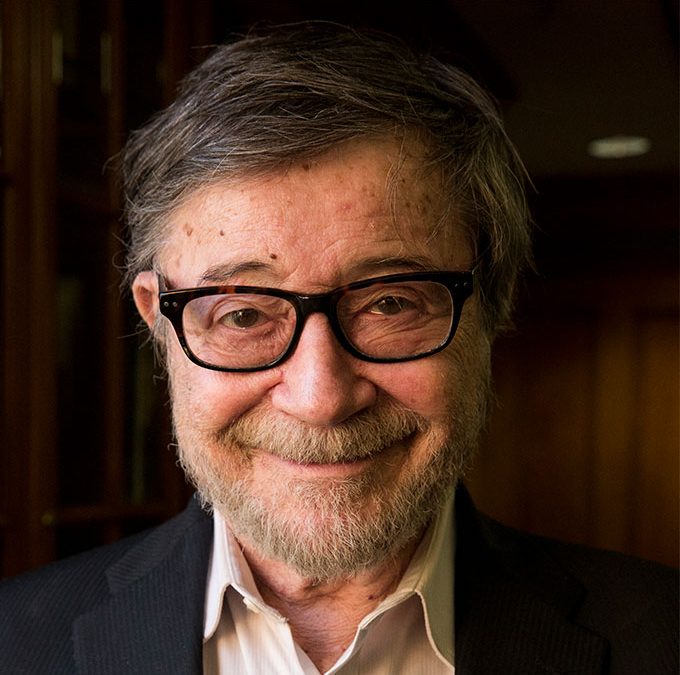
Judea Pearl

Judea Pearl

Judea Pearl, (born 1936, Tel Aviv), is an Israeli-American computer scientist and winner of the 2011 A.M. Turing Award, the highest honour in computer science, for his “fundamental contributions to artificial intelligence.”

Pearl received a bachelor’s degree in electrical engineering from Technion–Israel Institute of Technology in Haifa in 1960 and a master’s degree in electrical engineering from Newark College of Engineering (now part of the New Jersey Institute of Technology) in 1961. He then received a master’s in physics from Rutgers University in New Brunswick, New Jersey, and a doctorate in electrical engineering from the Polytechnic Institute of Brooklyn in New York (now the Polytechnic Institute of New York University) in 1965. He worked at the David Sarnoff Laboratories of the RCA Corporation (now the Sarnoff Corporation) in Princeton, New Jersey, and on computer memory at the manufacturer Electronic Memories, Inc. (later Electronics Memories and Magnetics Corp.), in Hawthorne, California. He became a professor of computer science at the University of California, Los Angeles, in 1970.

Pearl introduced the messiness of real life to artificial intelligence. Previous work in the field had a foundation in Boolean algebra, where statements were either true or false. Pearl created the Bayesian network, which used graph theory (and often, but not always, Bayesian statistics) to allow machines to make plausible hypotheses when given uncertain or fragmentary information. He described this work in his book Probabilistic Reasoning in Intelligent Systems: Networks of Plausible Inference (1988).
Pearl’s work after the 1990s concentrated on the role of morality in artificial intelligence, specifically the role of counterfactual statements—that is, a statement where the premise is not true (e.g., “If the car had worked, I would have driven to the store”). He has posited that counterfactual statements are “the building blocks of scientific and moral behaviour” and thus that machines that could understand such statements would be able to take responsibility for their actions.
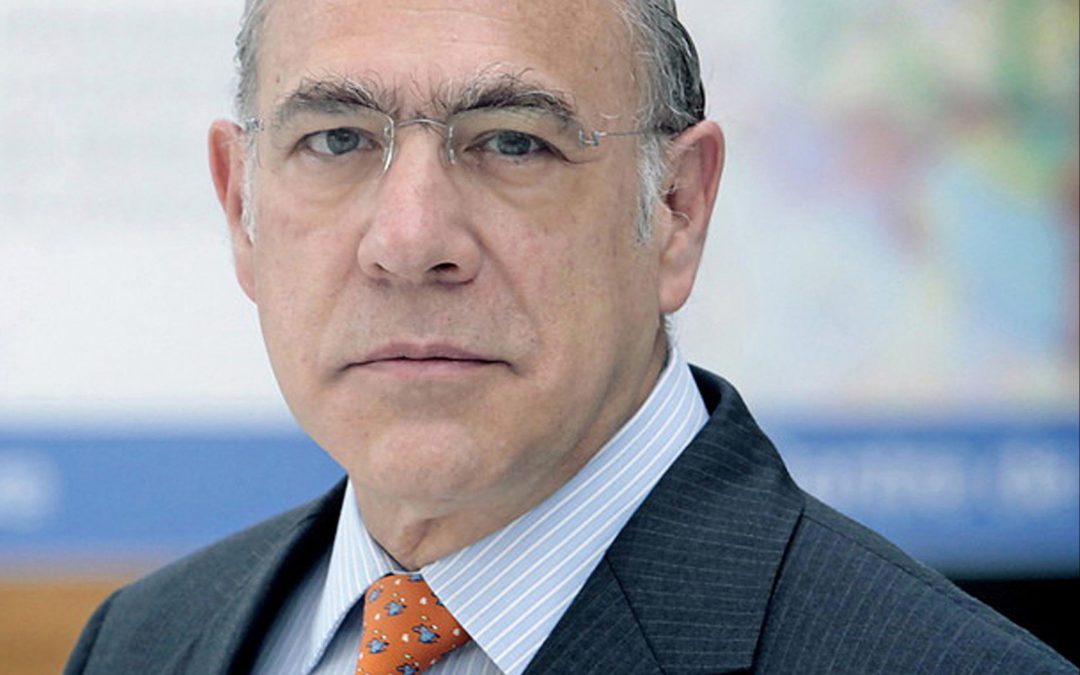
José Ángel Gurría

José Ángel Gurría

Former Secretary-General of the Organisation of Economic Co-operation and Development (OECD) since 2006, Angel Gurría firmly established the Organisation as a pillar of the global economic governance architecture including the G7, G20 and APEC, and as a reference point in the design and implementation of better policies for better lives. He broadened OECD’s membership with the accession of Chile, Colombia, Costa Rica, Estonia, Israel, Latvia and Slovenia, and has made the Organisation more inclusive by strengthening its links with key emerging economies. Under his watch, the OECD led the effort to reform the international tax system, and to improve governance frameworks in anti-corruption and other fields. He also heralded a new growth narrative that promotes the well-being of people, including women, gender and youth, and scaled up the OECD contribution to the global agenda, including the Paris Agreement on Climate Change and the adoption of the Sustainable Development Goals.

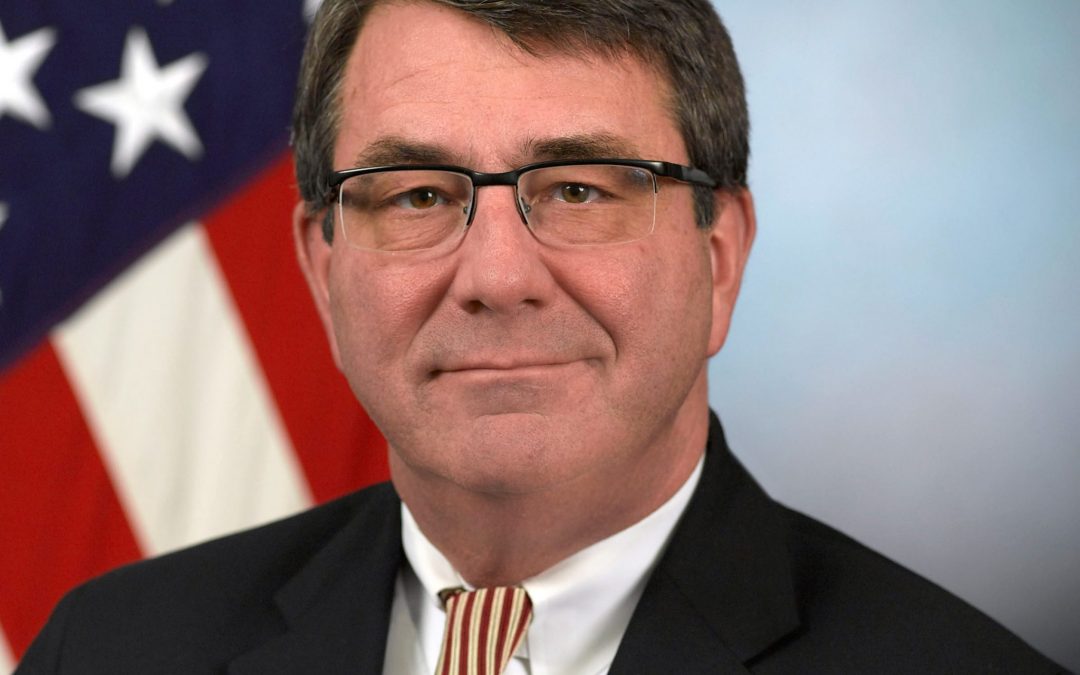
Ashton B. Carter

Ashton B. Carter

Ashton B. Carter served as the 25th Secretary of Defense. Carter transformed the department’s strategic approaches to critical global challenges across the domains of armed conflict, ranging from sea, air, and land to space and cyberspace. He led the military campaign to defeat ISIS, the strategic pivot to the Asia-Pacific, the Defense Department and NATO’s new playbook for confronting Russia’s aggression, and the Department’s latest cyber strategy.

Carter pushed investments to develop new technological and operational capabilities, launched six transformative ‘Force of the Future’ initiatives, opened military recruitments to women without exception, brought tech experts into the Pentagon for a tour of duty through the Defense Digital Service program, opened Pentagon outposts in Silicon Valley, Boston, Austin, and other tech hubs to reconnect the government and military with visionary private sector leaders and companies, and established the Department’s first Defense Innovation Board, which attracted thought leaders such as Google Alphabet’s Eric Schmidt, astrophysicist Neil Degrasse Tyson, LinkedIn’s Reid Hoffman, among others.

Building a bridge of values between us, our community of nations, and values and that value stream while continuing to keep peace and commerce is the challenge of our time.

Machine assisted human intelligence is going to be part of our future, and the question is how do you situate that assistance into value.