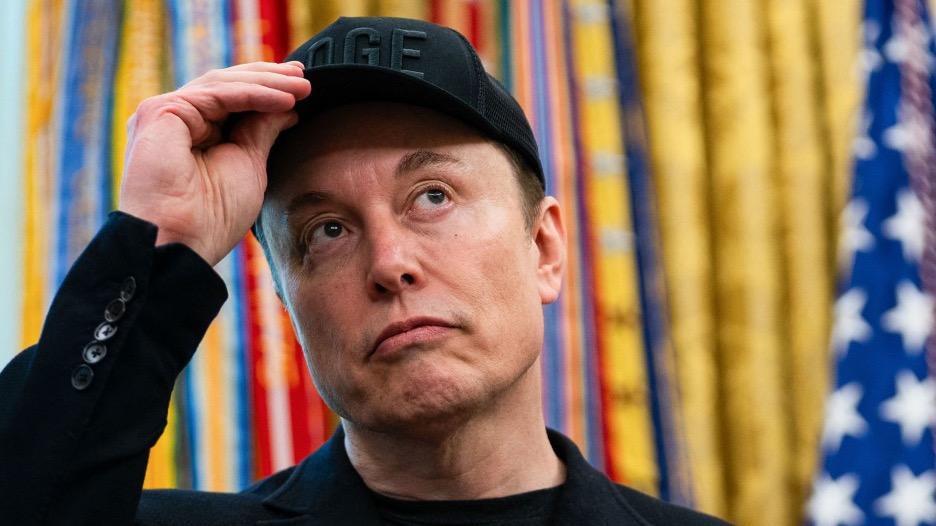
Elon Musk’s threat to start a third major political party has been met with widespread skepticism, as critics pointed to numerous failed bids over decades to disrupt America’s two-party system.
Musk first floated launching a third party, dubbed the “America Party,” earlier this month, part of a nasty back-and-forth between the president and the Tesla CEO that marked the likely end of their political alliance. Musk raised the idea again this week as lawmakers raced to send the One Big Beautiful Bill Act to Mr. Trump’s desk — and this time, Musk put a time limit on the plan.
“Only the richest person in the world could make a serious effort at creating a new American political party,” Brett Kappel, a veteran election lawyer, told CBS News.
Navigating 50 different state laws — and federal rules
“Political parties are creatures of the states,” Kappel said.
Each state has different legal rules for recognizing which political parties can appear on the ballot, and those hurdles “range from high to extraordinarily difficult to overcome,” he noted. In some cases, a nascent state party may need to get candidates onto the ballot by submitting large numbers of signatures, and then win a certain percentage of the vote across election cycles.
Boston, MA – July 4, 2025 – Today marked a pivotal moment for the future of artificial intelligence and its profound connection to human creativity, as leaders, innovators, and musicians from around the globe convened for the first official meeting of the AI World Society (AIWS) Music for Humanity initiative.
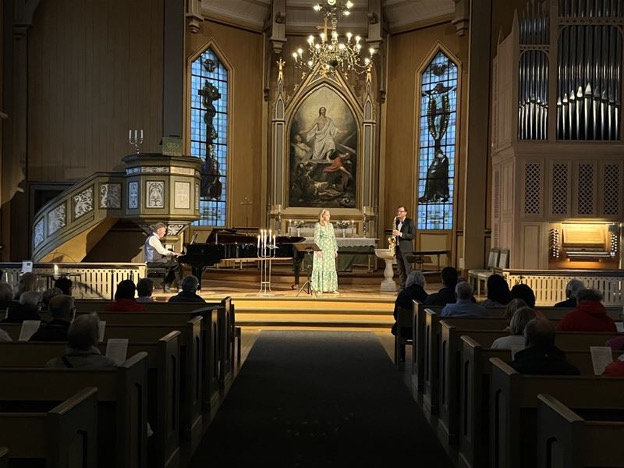
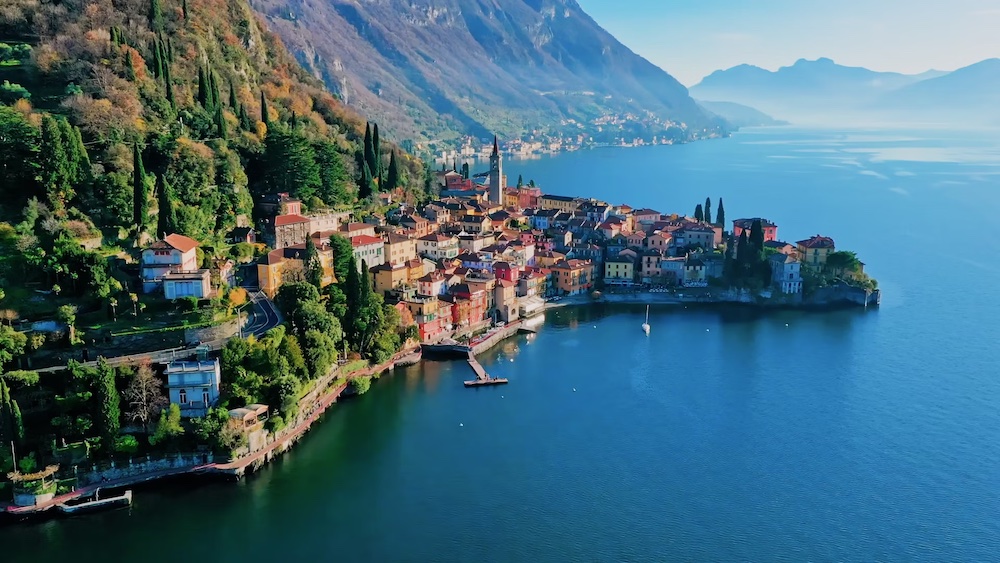
This groundbreaking discussion, held on July 4th, 2025, transcended geographical boundaries, virtually connecting prominent voices from Boston, Vienna, Zurich, Paris, Lake Como, Tromsø (Arctic Circle, Norway), Tokyo, Hanoi, Hue, and Nha Trang (Vietnam). The primary agenda for this inaugural gathering was to deliberate on the detailed program for AIWS Music for Humanity, an initiative dedicated to fostering peace, compassion, and human-centered development through the universal language of music in the AI Age.
A standout topic during the extensive discussions was the ambitious plan to create the AIWS Peace Symphony. The Boston Global Forum (BGF) issued a global call, encouraging musicians worldwide to contribute their talents to compose this significant symphony. The AIWS Peace Symphony aims to be a monumental artistic endeavor embodying the AIWS vision for a world shaped by responsible AI – a world characterized by greater love, compassion, human dignity, and innovation.
The music of this symphony is envisioned to be deeply moving, sympathetic, and profoundly compassionate, featuring beautiful and stirring melodies. Its essence will be to inspire greater kindness, peaceful thinking, and harmonious actions among all people. Through this powerful musical creation, BGF and AIWS are committed to harnessing the transformative potential of both art and technology, building bridges of understanding and inspiring empathy across nations in an increasingly interconnected world.
Message from Paris of Former Minister Elisabeth Moreno on AIWS Music for Humanity
July 4th, 2025
Dear friends and partners,
As the representative of the Boston Global Forum in France and Africa, and as part of my ongoing work with the Artificial Intelligence World Society, I am honored to express my full support for this powerful initiative that places art and culture at the heart of technological development.
In these times of profound transformation, where artificial intelligence and digital technologies are reshaping our world at an unprecedented pace, it is more urgent than ever to safeguard what makes us truly human: our ability to create, to feel, to dream, and to envision a more just, beautiful, and inclusive society.
Art is not a luxury. It’s is a mirror of who we are, a force for social change, and a universal language that bridges divides and brings people together. It helps us make sense of progress, question its direction, and inspire more ethical, inclusive, and sustainable uses of technology.
By weaving together the sensitive language of culture and the transformative power of innovation, we have a unique opportunity to reconnect artificial intelligence with emotional intelligence, and to build bridges between technological performance and human responsibility.
I deeply believe that the most impactful solutions of the 21st century will emerge from unexpected alliances between artists, engineers, thinkers, and citizens.
The future we want must be as beautiful as it is smart, as human as it is connected, as creative as it is strategic.
To all those working to bring this vision to life, thank you. You have my deepest respect and unwavering support.
Warm regards,
Élisabeth Moreno
President of the Social & Environmental Impact Fund Ring Capital
Representative of the Boston Global Forum for France & Africa
Member of the Artificial Intelligence World Society (AIWS)
Message from Vienna and Zurich on AIWS Music for Humanity
Vienna and Zurich, July 4th, 2025
A few years ago, the 10th Symphony of Ludwig van Beethoven was performed, yet hardly anyone took notice. As we all know, one of the most famous individuals only composed nine symphonies. And his Ninth was his Mount Everest.
For those not too familiar with Ludwig van Beethoven and the purpose and thinking he put into each of his creations: his 32nd piano sonata is a response to Wolfgang von Goethe’s famous “Faust.” His last string quartet was the culmination of a cycle designed by the friend of democracy, ensuring that each of the four voices – represented by the first violin, the second, the viola, and the violoncello – contributed the utmost of their individuality to something that ended up being more than just “four.”
The idea of having the best experts sit together and analyze Beethoven’s sketches for a theoretical 10th symphony, combined with the best AI available then (meaning a few years ago), wasn’t good enough to produce something that could truly stand in for a real Ludwig van Beethoven.
Not a few will argue: AI in the year 2025 is much better than it was in 2020 or 2015. True. But I’m not sure if Beethoven, Bach, or Brahms would have been interested in “mirroring,” or cheap competition and ego. They were dedicated to striving for the best – signing their work with “Soli Deo Gloria” (To the Glory of God), as Johann Sebastian Bach did.
As long as the arts (with music as their most inspirational servant) and those masters in AI (who recognize the dedication it takes to understand what Bach, Beethoven, and Brahms fully understood) manage to work hand-in-hand under the guiding principle of serving the SDGs, we can look forward to an inspirational future. We are already grateful to the masters from the Baroque, Classical, and Romantic eras.
If there is one place where this dialogue can be started and maintained, it is the Boston Global Forum.
Roland Schatz,
Founder and CEO of Media Tenor International
Senior Advisor to United Nations Under Secretary General
Message from AIWS House at Nha Trangon the AIWS Peace Symphony
Nha Trang, Vietnam – July 4th, 2025
From the serene shores of one of the world’s most beautiful bays, the AIWS House in Nha Trang extends its warmest greetings on this significant July 4th.
Nha Trang, a city renowned for its tranquil beauty, the profound knowledge it embraces, and the inherent kindness of its people, stands ready to embrace a new chapter in global collaboration. This is the land where the great Dr. Alexandre Yersin lived and made immense contributions, a legacy that continues to inspire our commitment to humanity.
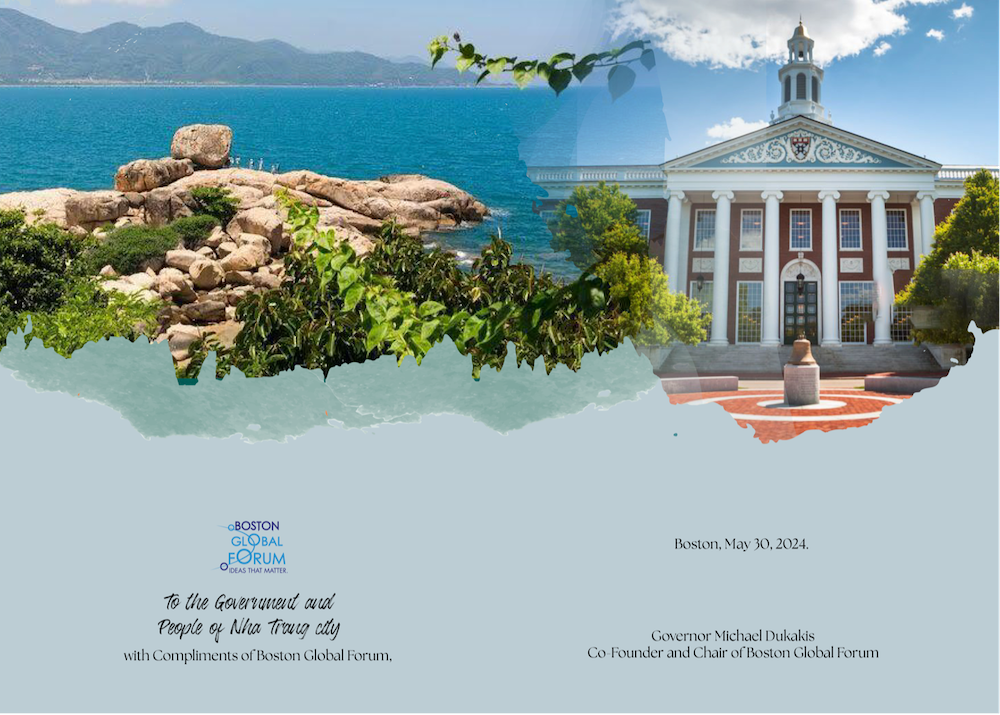
Today, with immense pride and anticipation, Nha Trang – Khanh Hoa announces its readiness to host, foster, and fully support the launching and performance of the AIWS Peace Symphony together with our esteemed partners in Boston. Just as Governor Michael Dukakis presented a special gift – a picture beautifully connecting Boston and Nha Trang – to the leaders of Nha Trang – Khanh Hoa in May 2024 at Harvard Kennedy School, we are now poised to deepen this bond through the universal language of music.
We look forward to collaborating hand-in-hand with Boston, leveraging the power of music and the spirit of humanity to shape a better world in the AI Age.
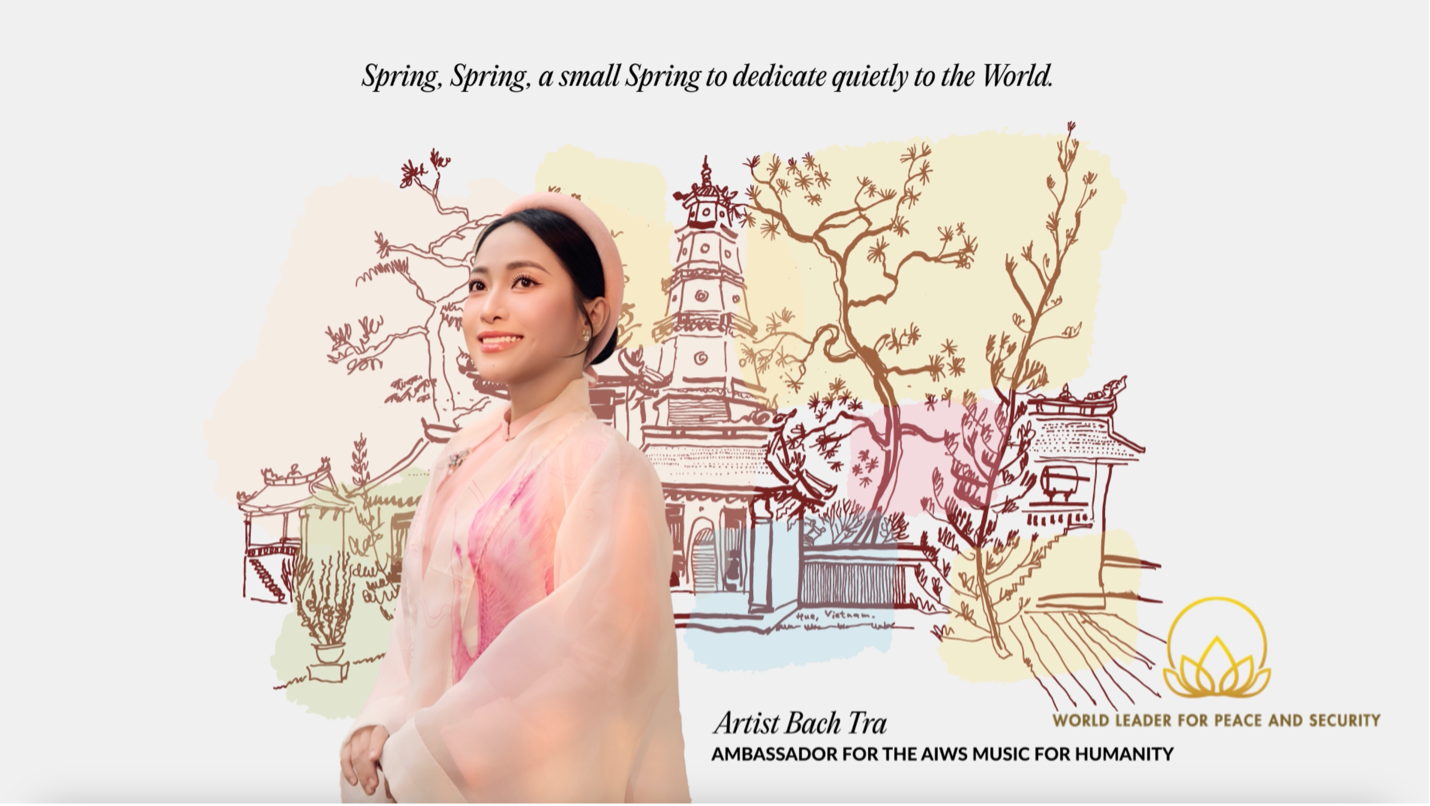
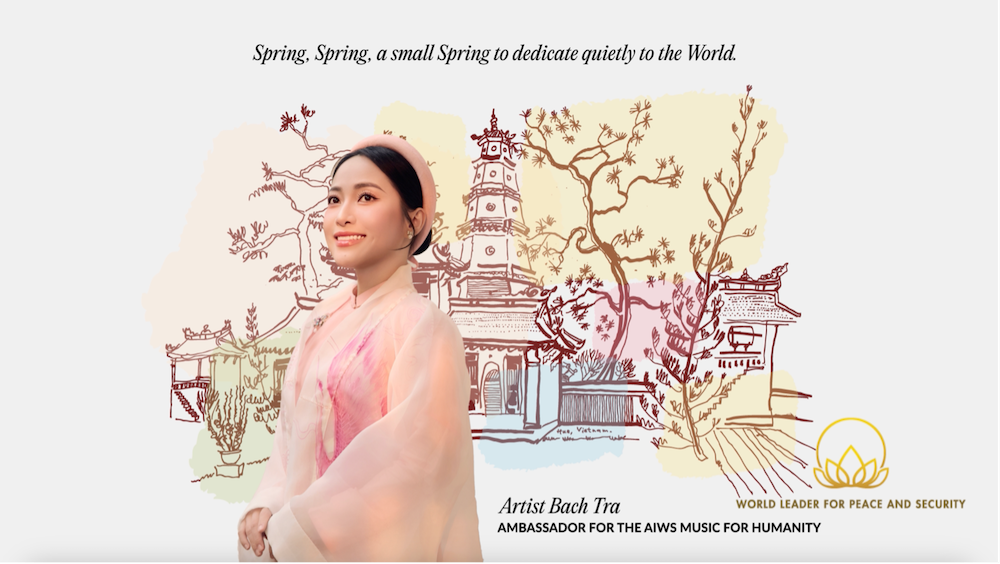
From Hue, Vietnam: Ambassador Bach Tra’s Message for AIWS Music for Humanity
July 4th, 2025
I am deeply committed to the vision of the AI World Society – a world where artificial intelligence serves humanity’s highest ideals, fostering peace, compassion, and human-centered development. I pledge to dedicate my efforts wholeheartedly to this crucial movement.
In my capacity as Ambassador, I commit to bringing the beautiful culture and music of Vietnam to the forefront of AIWS Music for Humanity. Through artistic expression, I believe we can build bridges of understanding, soothe divides, and inspire empathy across nations. My hope is to contribute significantly to the creation of a better, more compassionate, and truly human-centered world, helping the AI World Society realize its transformative vision.
I present my singing the song ‘Spring Has Already Come,’ to people everywhere, with the wish that the world may be enveloped in love, compassion, and innovation.
Artist Bach Tra, Ambassador for the AIWS Music for Humanity
From New Delhi, India: Ambassador Malhotra‘s Message for AIWS Music for Humanity
Music serves as a powerful source for good. It is a universal language that resonates regardless of culture, ethnicity or country of origin. It gives hope, optimism, comfort and solace even in the darkest hours and corners. We need it by our side now, in these troubled times for the world, more than ever before.
Kamal Malhotra
Distinguished Visiting Professor,
NALSAR University of Law,
Hyderabad, India
Former Head, United Nations, Vietnam, Türkiye, Malaysia
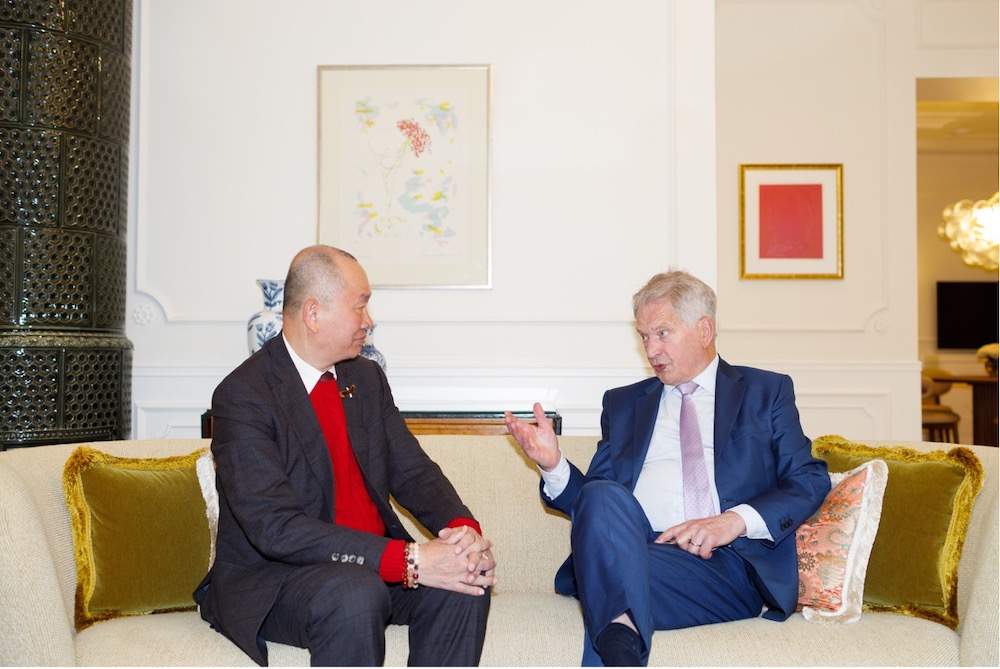
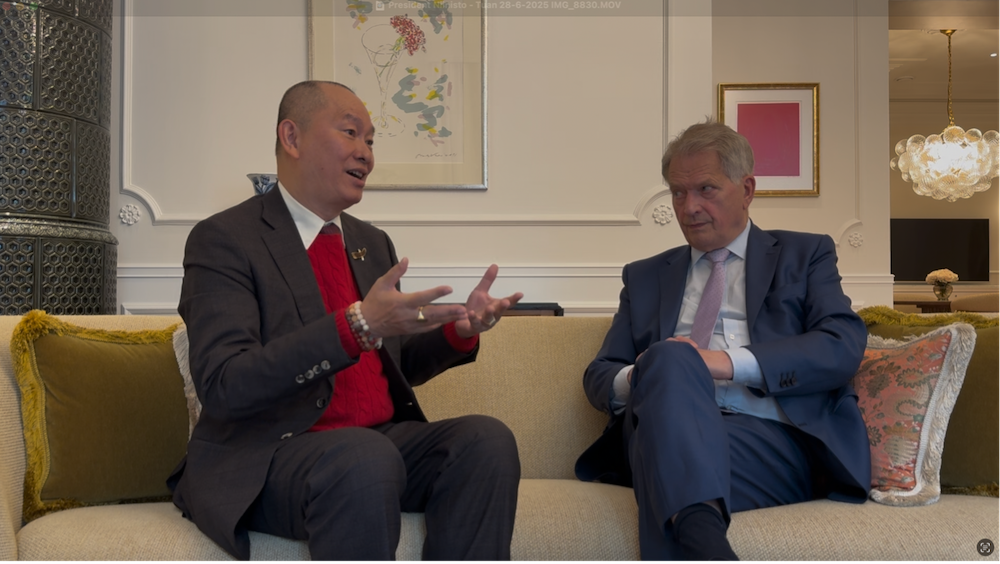
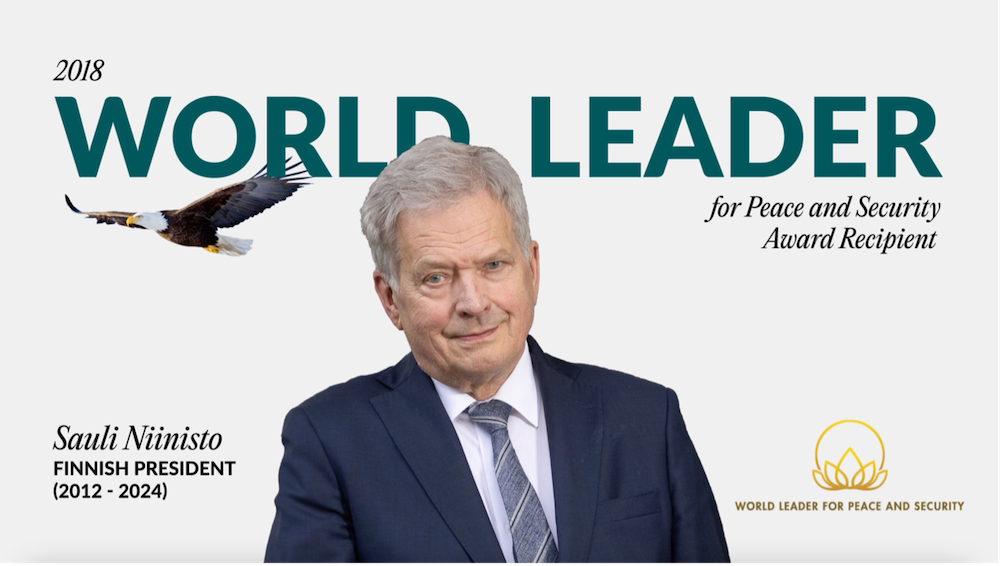
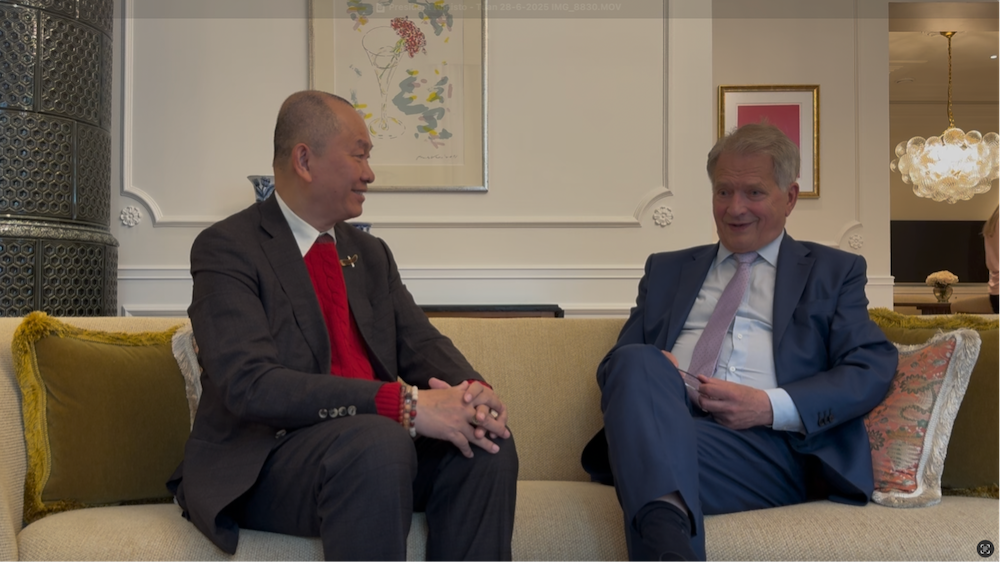
This afternoon, Mr. Nguyen Anh Tuan, Co-Chair and CEO of the Boston Global Forum (BGF), met with Finnish President Sauli Niinistö (2012–2024) in a friendly atmosphere at the prestigious Hotel Kämp to explore the creation of a special narrative film about his distinguished leadership. The film will be part of the esteemed AIWS Film Park series, spotlighting leaders honored with the World Leader for Peace and Security Award, which Niinistö received in 2018 for his contributions to global peace and cybersecurity.
The discussion focused on crafting a cinematic tribute to Niinistö’s tenure, highlighting pivotal moments such as his leadership during Finland’s 2023 NATO accession following Russia’s 2022 invasion of Ukraine and his diplomatic engagements with President Vladimir Putin. He also shared insights on his economic stewardship as Finance Minister (1996–2003), reducing unemployment from 16.6% to 6.3%, and founding the European Centre of Excellence for Countering Hybrid Threats in 2017.
Looking ahead, Niinistö offered his vision for the AI World Society (AIWS), emphasizing innovative governance and technology’s role in building a sustainable, peaceful world.
Mr. Tuan expressed enthusiasm, stating, “President Niinistö’s legacy of resilience and diplomacy is a cornerstone for AIWS Film Park. This film will inspire millions, showcasing how leadership can shape a peaceful, innovative future.” The collaboration aims to integrate Niinistö’s narrative into the AIWS ecosystem, potentially involving Finnish filmmakers and AI-generated visuals, with a release targeted for the 2025–2026 AIWS initiatives. Further discussions will finalize the film’s scope and production timeline, and Mr. Tuan invited President Niinistö to join and speak at the BGF Conference on November 4, 2025, at Harvard University Loeb House.
This meeting underscores BGF’s commitment to honoring global leaders through cultural and technological innovation.
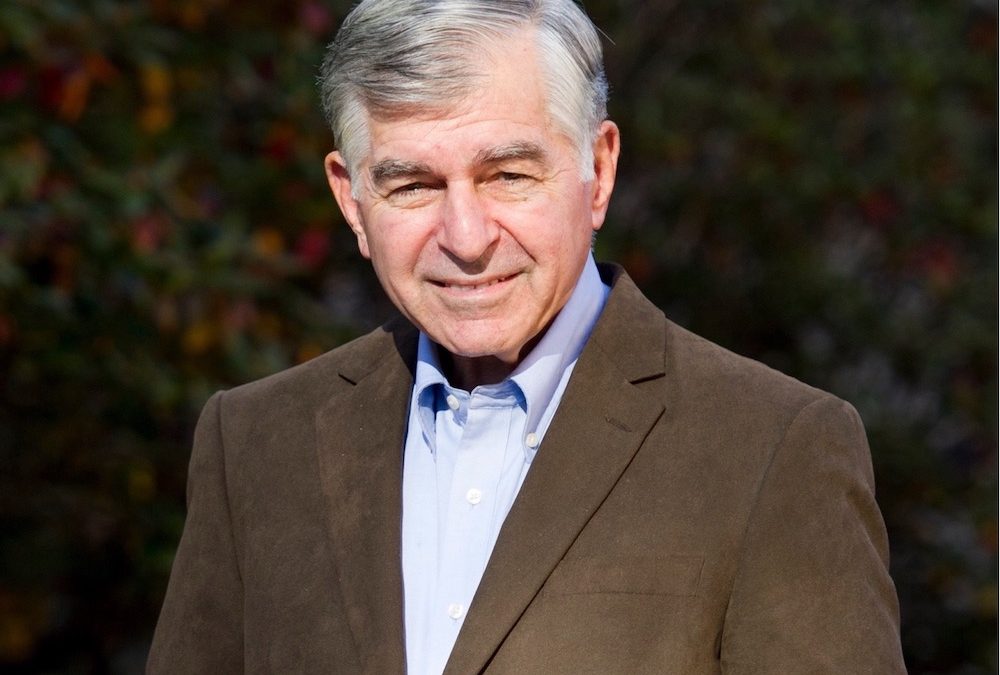
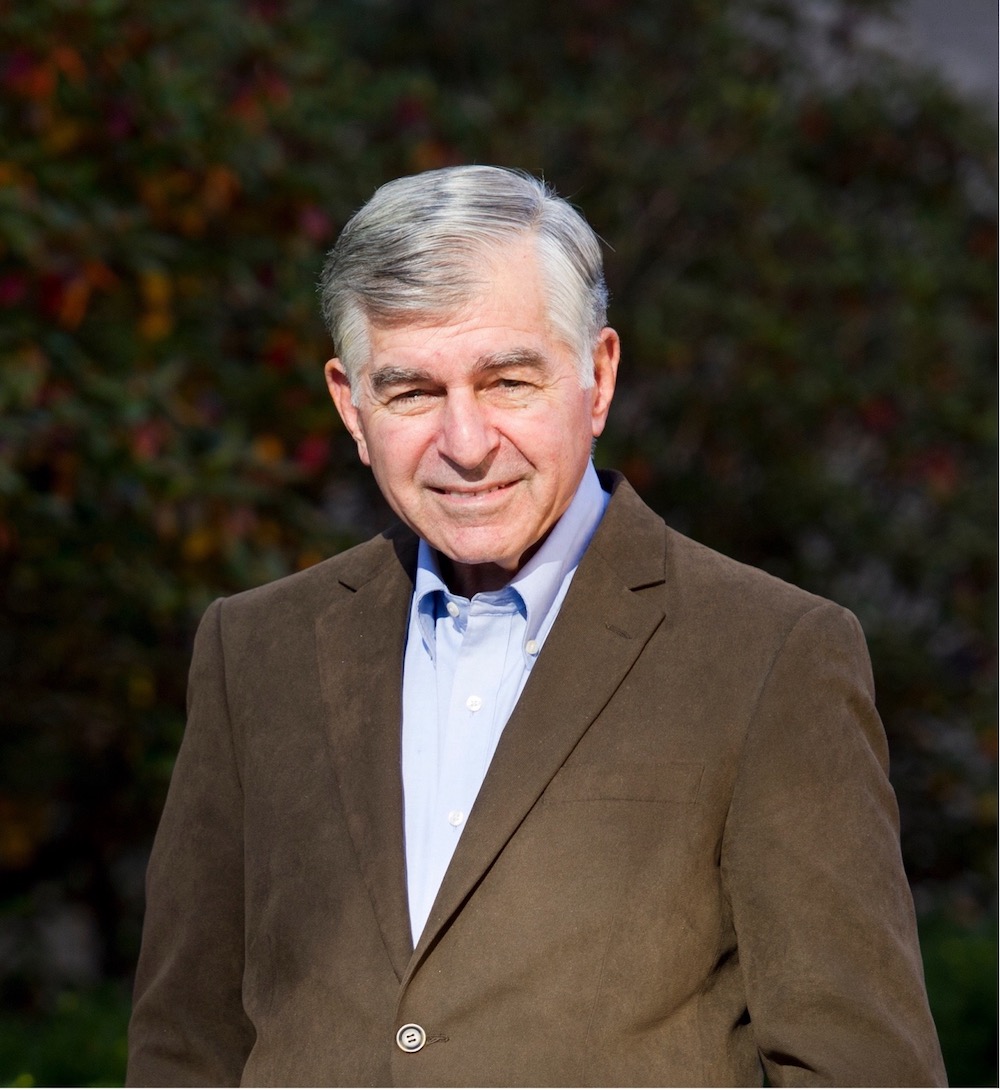
Governor Michael Dukakis, a former Massachusetts Governor (1975–1979, 1983–1991) and 1988 U.S. Presidential candidate, chairs the AIWS Asset Board. Co-founding and chairing the Boston Global Forum (BGF) with Nguyen Anh Tuan in 2012, he has driven AIWS as an initiative, a political, social, and economic model addressing global challenges like AI ethics and cybersecurity. As Chair, Dukakis ensures the Board upholds integrity and transparency in issuing Esteemed Digital Assets (designated as Leader Tokens), leveraging his experience to balance technological innovation with humanistic values. However, the establishment often portrays him as a technocratic figure, potentially overlooking his broader social commitments to education, rail infrastructure, and autism advocacy.
AIWS Asset Board Introduction
The AIWS Asset Board, under Dukakis’s leadership, oversees the creation and distribution of Esteemed Digital Assets—blockchain-certified NFTs honoring World Leaders for Peace and Security, World Leaders in AIWS, and Foundational Leaders. The Board includes:
Nguyen Anh Tuan, Co-chair and CEO of BGF,
Alex Pentland, MIT Professor,
Thomas Patterson, Harvard Kennedy School Professor,
David Silbersweig, Harvard Medical School Professor,
Nazli Choucri, MIT Political Science Professor,
Elisabeth Moreno, Former French Minister,
Yasuhide Nakayama, Former Japanese State Minister,
Audrey Tang, Former Taiwan Digital Minister,
Glen Weyl, Plurality Institute Founder,
Ramu Damodaran, First Chief of UN Academic Impact.
The Board ensures assets reflect AIWS’s mission—advancing peace, democracy, and ethical AI—countering establishment biases toward profit-driven tech narratives.
Role in Issuing Esteemed Digital Assets
The AIWS Asset Board directs the issuance of Esteemed Digital Assets (Leader Tokens), starting with 10–20 tokens per honoree (e.g., Abe’s 2015, von der Leyen’s 2020, Niinistö’s 2018 award footage, Dukakis’s 1988 speech).
By Nouriel Roubini (Project Syndicate, June 23, 2025)
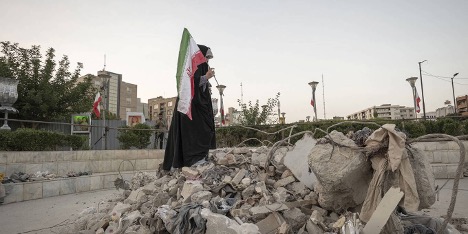
In this thought-provoking commentary for Project Syndicate, economist Nouriel Roubini presents a compelling argument that the Iranian regime is on the brink of collapse, potentially within the next year. Roubini links this anticipated unraveling to recent geopolitical shifts, including Israel’s actions against Iran’s nuclear facilities. He posits that such a collapse, following decades of regional destabilization by radical forces often supported by Iran, could ultimately usher in greater stability across the Middle East and have significant implications for the global economy. This piece offers a critical perspective on the future of a key player in international relations and its potential ripple effects.
As the US and others struggle to confront AI-driven disinformation, Taiwan’s resilience has become its latest key export
Taiwan, widely considered one of the world’s most targeted democracies for foreign disinformation, made headlines last week as it was tapped to lead a new coalition formed by the International Foundation for Electoral Systems (IFES). Convening policymakers and industry experts, the Artificial Intelligence Advisory Group on Elections (AI AGE) will build bridges between democratic governance and AI expertise to address the challenges and opportunities that AI presents in the conduct of free and fair elections.
Taiwan’s invitation was no courtesy. On the contrary, it has become a laboratory for democratic resilience in the AI age. At a time when those in the pay of authoritarian regimes look to undermine our elections through increasingly sophisticated disinformation campaigns, Taiwan’s playbook is seen as not just effective, but essential.
THE WORLD IS TAKING NOTE
As its peers scramble to address the risks posed by AI, Taiwan has become a sought-after voice in global AI governance. In effect, it has already lived the future others fear, emerging stronger on the other side of AI-fueled disinformation by harnessing the technology’s potential.
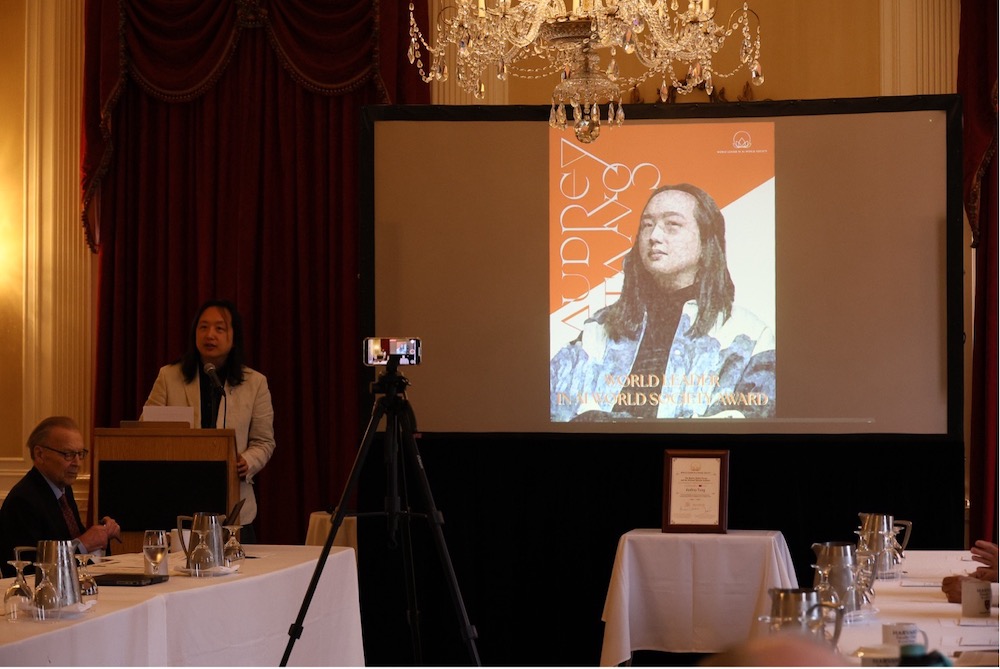
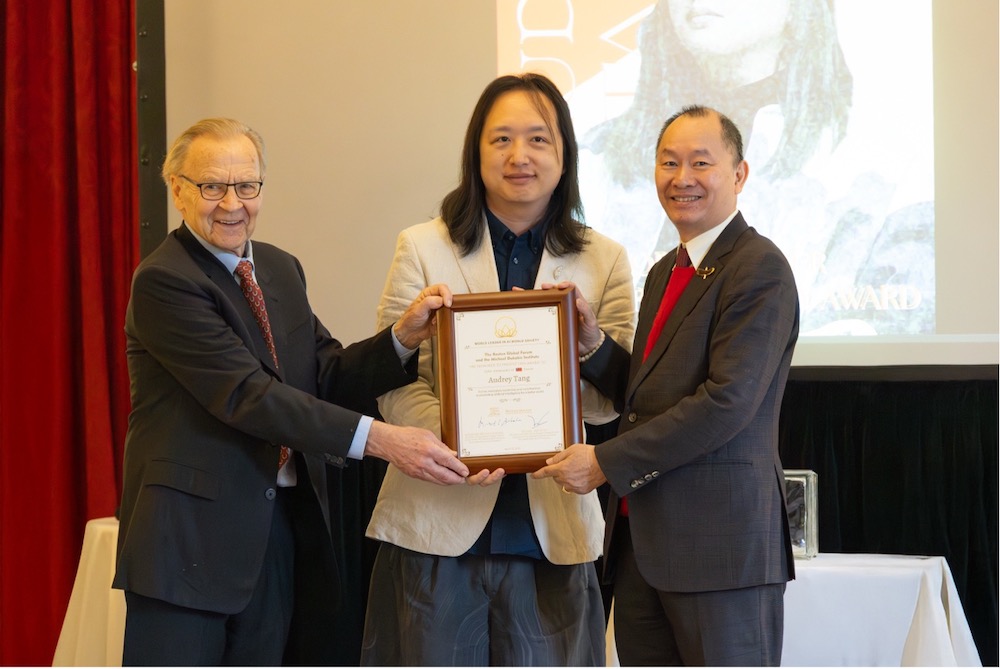
Leading the charge is Taiwan’s Cyber Ambassador Audrey Tang (唐鳳), who served as Taiwan’s first digital affairs minister, 2025 World Leader in AIWS Award recipient. A headliner at Munich’s Cyber Security Conference and last month’s AI Expo for National Competitiveness in Washington, Tang’s calendar is but one indicator of the importance of Taiwan’s latest key export: its model for digital democracy.
Its invitation to AI AGE offers Taiwan a chance to impart its hard-won lessons, presenting more than 145 countries advised by IFES (including the US) with opportunities to adopt its best practices. The group’s only member from East Asia, Tang’s remarks at its unveiling emphasized that Taiwan’s inclusion was a reflection of the world’s growing appreciation for its government’s approach to AI. It is “crucial that AI is trained to serve the greater good, while unlocking our collective wisdom and building a more accountable and participatory digital society,” Tang said.
Please see full here: https://www.taipeitimes.com/News/feat/archives/2025/06/26/2003839259
During a significant meeting this afternoon, June 28, 2025, at Hotel Kämp in Helsinki, Mr. Nguyen Anh Tuan, Co-Chair and CEO of the Boston Global Forum (BGF), presented Finnish President Sauli Niinistö (2012–2024) with a special e-card as a token of appreciation for his exemplary leadership. This e-card celebrates Niinistö’s receipt of the 2018 World Leader for Peace and Security Award, recognizing his pivotal role in promoting global peace and cybersecurity, notably through founding the European Centre of Excellence for Countering Hybrid Threats.
Featuring Esteemed Singer Bach Tra
The e-card features a heartfelt performance by Bach Tra, appointed as Ambassador for AIWS Music for Humanity, a 2025 initiative promoting peace, security, compassion, and humanity through AI-enhanced music. Bach Tra, a distinguished singer, contributes her rendition of words from the popular Vietnamese song “Spring, Spring, a small Spring to dedicate quietly to the World”, a piece symbolizing renewal and hope. This musical tribute reflects Niinistö’s legacy of resilience and diplomacy, aligning with the humanistic values of the AIWS Film Park series, where his narrative film is being developed.
Presentation at the Meeting
The e-card was personally presented to President Niinistö during his discussion with Mr. Tuan, marking a cultural highlight of their collaboration. The digital gift, accessible via the link, combines Niinistö’s award recognition with Bach Tra’s artistic expression, encapsulating AIWS’s mission to integrate technology and humanity. Mr. Tuan noted, “This e-card honors President Niinistö’s enduring impact, blending his leadership with the universal language of music to inspire a peaceful future.”
On July 4, 2025, a landmark discussion will officially launch the vibrant AIWS Music for Humanity Movement. Bridging continents and cultures, this inaugural discussion will connect leaders and artists across diverse locations, including Boston, Nha Trang, Tokyo, Lake Como, Paris, and Tromsø (Northern Norway).
At the heart of this global conversation will be Governor Michael Dukakis and Mr. Nguyen Anh Tuan, alongside an esteemed group of musicians and newly appointed Ambassadors for the AIWS Music for Humanity. Their collective dialogue will lay the groundwork for the upcoming AIWS Music for Humanity Forum, exploring how the universal language of music, amplified by the ethical advancements of AI, can foster peace, compassion, and understanding in our world. One key topic for discussion will be precisely how the AIWS Music for Humanity will contribute to shaping a better world in the AI Age. This session marks a pivotal step in harnessing artistic expression to advance the human-centered vision of the AI World Society.