Boston, December 9, 2024 – The Boston Global Forum (BGF) proudly marks its 12th anniversary, celebrating over a decade of dedicated efforts to promote global peace and security amidst a tumultuous world. Since its founding on December 12, 2012, BGF has been instrumental in advancing significant initiatives that foster innovation, collaboration, and democratic values worldwide.
One of BGF’s flagship programs, the Four Pillars for Peace and Security, brings together key global players including the United States, Japan, the European Union and the United Kingdom, and India. In today’s increasingly unstable world, the Four Pillars initiative serves as a vital framework for cooperation and strategic alignment among these influential nations. Additionally, BGF proudly incorporates the Shinzo Abe Initiative for Peace and Security, honoring the legacy of Japan’s former Prime Minister and his contributions to international stability and diplomatic relations.
Over the past twelve years, BGF has continuously contributed to these pillars by facilitating dialogue, fostering partnerships, and implementing programs that address the complex challenges facing our world. As part of its ongoing mission, BGF now calls upon the leaders of the Four Pillars nations to consolidate their efforts to maintain and enhance global peace and security. By uniting their strengths and resources, these nations can effectively counteract the threats and uncertainties of today’s geopolitical landscape.
In celebration of its anniversary, BGF is also committed to building the AI World Society – New Democracy (AIWS – New Democracy), a solid foundation aimed at reinforcing peace and security through innovative governance and technological advancements. This initiative leverages artificial intelligence to support democratic processes, enhance decision-making, and ensure resilient and adaptive governance structures.
“As we celebrate 12 years of BGF, we reaffirm our commitment to fostering a peaceful, secure, and prosperous world,” said Nguyen Anh Tuan, Co-founder, Co-Chair, and CEO of Boston Global Forum. “Our Four Pillars for Peace and Security initiative, alongside the Shinzo Abe Initiative, exemplifies our dedication to collaborative leadership and strategic partnerships. We invite leaders from the Four Pillars nations to join us in building the AIWS – New Democracy, ensuring a stable and democratic future for generations to come.”
BGF extends heartfelt gratitude to its network of partners, distinguished leaders, thinkers, innovators, and dedicated staff who have been integral to its success over the past twelve years. As BGF looks to the future, it remains steadfast in its mission to drive positive change and build a resilient global society through collaborative initiatives and groundbreaking programs.
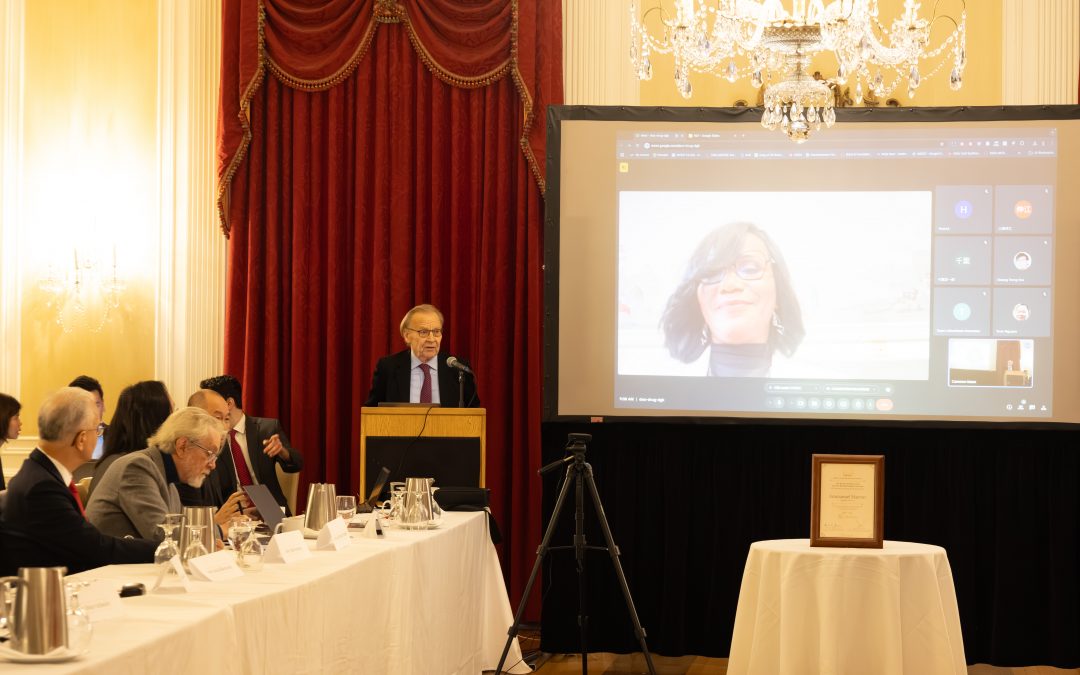
French Former Minister, Representative of Boston Global Forum in France and Africa
Boston Global Forum Conference “AIWS-New Democracy”, November 25, 2024
Harvard University Loeb House
Ladies and gentlemen,
It is an immense honor to address such a distinguished audience today, filled with visionaries, innovators, and experts whose work is shaping the future of our world.
I am particularly moved by the Boston Global Forum’s recognition of President Emmanuel Macron for his resolute commitment to peace, security, and his advocacy for artificial intelligence as a force for the good of humanity.
Having had the privilege of working closely with him during my time as a government minister, I can attest to the sincerity of his vision and the depth of his determination.
Though urgent political and geopolitical demands have kept him from joining us today, he is deeply touched by this recognition and asked me to convey his gratitude to you all.
**************
Now, as we gather here virtually, let me invite you to reflect on a reality that I, as a leader, have lived and grappled with.
We live in a world of unprecedented complexity. Change is constant. Crises overlap. Information flows in faster than we can process it and Decisions that affect millions of lives are often made under crushing pressure, with little time for deep reflection.
A Personal Journey Through Leadership
When I became an entrepreneur at 20, I thought leadership meant having all the answers. When I entered government years later, I realized leadership was not about knowing everything—it was about navigating the unknown, making decisions in uncertainty, and remaining grounded in the realities of the people you serve.
But let me be honest: this is easier said than done. As a young business leader, I often felt trapped in a bubble. I was surrounded by voices that reinforced my own perspectives. Later, in politics, I experienced the same challenge on a larger scale.
The system around leaders often isolates them: you are advised by people who share your background, read the same publications, and inhabit the same intellectual circles. While this can provide comfort, it also creates blind spots—dangerous ones.
I vividly recall moments when, despite my best efforts, I felt disconnected. Whether it was running a company or sitting in a ministerial office, there were times I questioned if I truly understood the realities of the people I was making decisions for.
Those were humbling moments, but they taught me something invaluable: leadership is not about staying in control; it’s about staying connected.
The Challenge and the Opportunity
This disconnection—between leaders and the people they serve—is at the heart of why so many citizens today feel mistrust in both political and business leadership. And yet, this very challenge is where I see the greatest opportunity.
In these moments of complexity and disconnection, artificial intelligence offers us a chance to reimagine leadership—not to replace it, but to enhance it.
AI as a Force for Human-Centered Leadership
Imagine this:
An AI agent that doesn’t just process data but reveals what we are missing—challenging our assumptions like sometimes our teams do not dare doing, uncovering blind spots, and introducing voices from places we’ve never been and people we’ve never met.
An AI system that helps leaders better understand the world’s complexities, not as abstract concepts but as realities shaped by diverse lives, cultures, and experiences.
An AI partner that frees leaders from the grind of routine tasks, giving them time to focus on what truly matters: people, strategy, and vision.
I wish I had had such a tool earlier in my career. The ability to see beyond my immediate environment, to be challenged constructively, and to use my time more effectively would have made me a better leader—more informed, more connected, and more compassionate.
For AI to truly transform leadership, it must embody four critical values: Transparency, Inclusion, accountability and Compassion.
Transparency: because Leaders cannot lead with integrity if they do not understand the systems guiding their decisions. AI must be clear, explainable, and trustworthy.
Inclusion because AI must reflect the diversity of the world we live in. It must integrate perspectives that challenge our paradigms and ensure that no voice is left unheard, particularly those of marginalized communities.
Accountability because Leadership and AI must be held accountable for their decisions and the impact they create.
AI systems must track outcomes, provide clarity on decision-making processes, and ensure that both leaders and technology remain answerable to the people they serve. Accountability ensures that leadership is grounded in trust, fairness, and a commitment to continuous improvement
And Compassion: because above all, AI must remind us of the humanity behind every decision. Data may guide us, but empathy must shape us.
A Call to Action for a New Kind of Leadership
This is not just a technical challenge—it is a moral and philosophical one.
Leadership in the 21st century is not just about making the right decisions. It’s about breaking out of bubbles, rejecting the comfort of sameness, and embracing the full complexity of the human experience. AI can help us do that—but only if we design it with purpose.
As members of this forum, as creators and thinkers, the responsibility lies with us. Let us build tools that open minds, broaden horizons, and reconnect leaders with the realities of those they serve.
Because in the end, leadership is not about power—it’s about connection. It’s about understanding that every decision we make ripples out into the lives of countless others.
And if we can use AI to make those ripples a force for good, then we will have done something truly extraordinary.
Ladies and gentlemen, I am grateful for your time, your vision, and your dedication to shaping a better world.
Together, we can redefine what it means to lead—with intelligence, with compassion, and with courage.
Boston, December 9, 2024 – The Boston Global Forum (BGF) proudly commemorates its 12th anniversary and its dedicated efforts to advance significant global initiatives. Since its inception on December 12, 2012, BGF has been at the forefront of fostering innovation and promoting peace, security, and democratic values worldwide. It has spearheaded groundbreaking programs such as the AI World Society – New Democracy, and the prestigious “World Leader for Peace and Security” and “World Leader in AI World Society” awards. These awards have recognized and empowered leaders who are making exemplary contributions to creating a more peaceful and technologically advanced world.
On this momentous occasion, BGF announces the “AIWS Government 24/7” model. This visionary framework proposes a government that operates continuously—24 hours a day, 7 days a week, without holidays—to provide unwavering support and guidance in transforming governance through artificial intelligence and advanced technologies. The AIWS Government 24/7 model aims to enhance governmental efficiency, responsiveness, and resilience in an ever-evolving global landscape.
BGF extends heartfelt gratitude to the distinguished leaders, thinkers, innovators, and our partners from the United States and around the world who have supported and contributed to our initiatives. We also express our deep appreciation to the dedicated BGF leaders, staff, and contributors who have been instrumental in our 12-year journey.
As we look to the bright future—the Age of Global Enlightenment—BGF calls upon technical communities, business leaders, and governments to join us in realizing the AIWS Government 24/7 vision. Together, we can build a world that is more peaceful, secure, prosperous, and compassionate through the continued efforts of the AI World Society and BGF’s ongoing initiatives and programs.
Boston Global Forum is highly committed to driving positive change and fostering a better global society through the AI World Society, where technology and democracy work hand in hand to achieve sustainable progress for all.
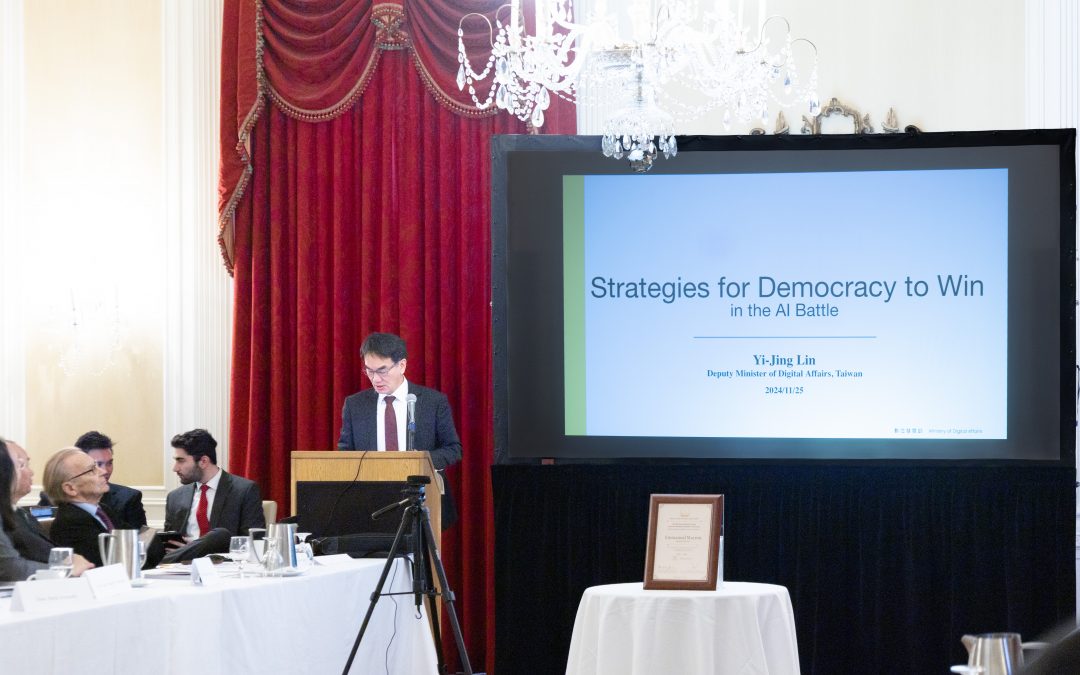
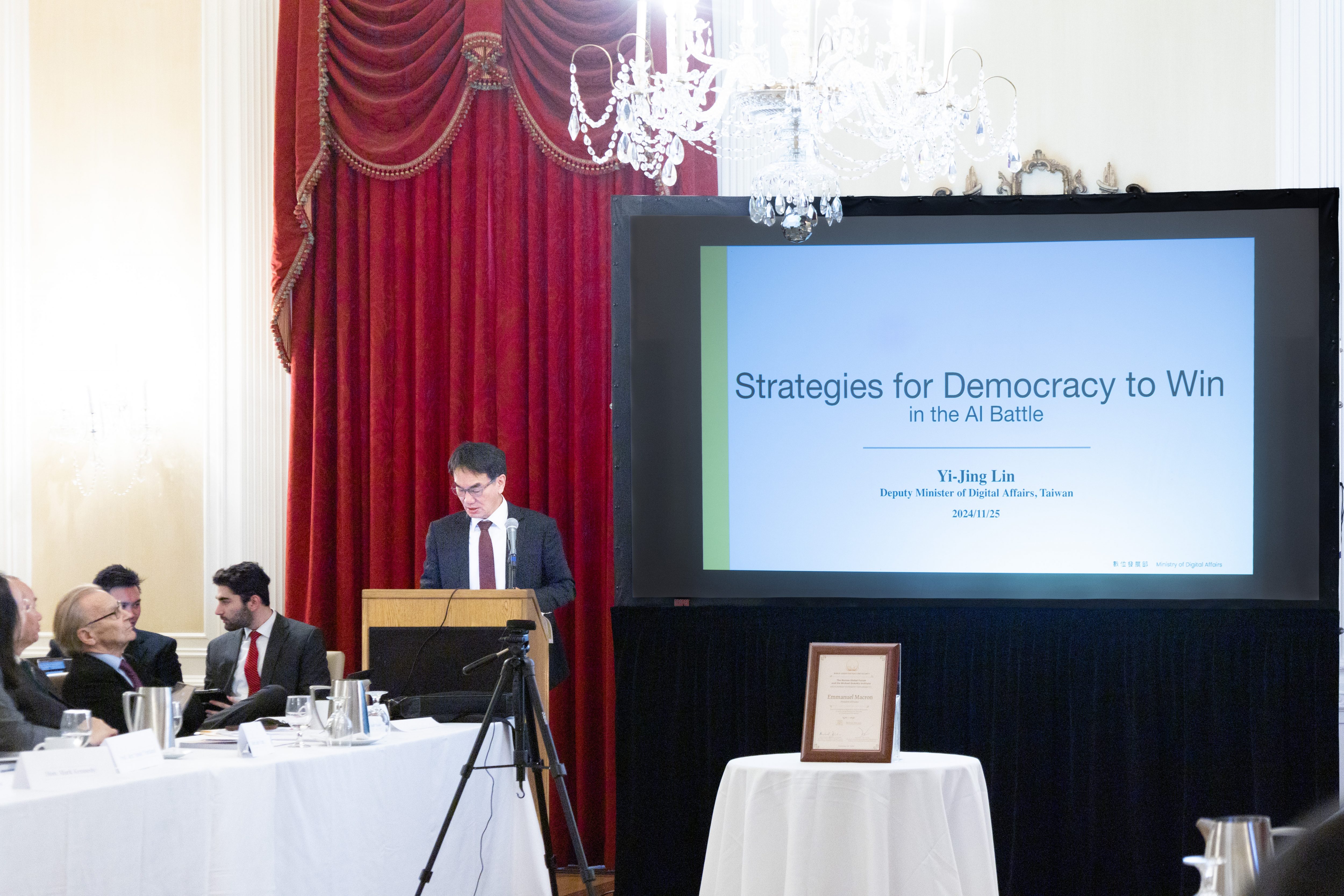
On November 25, 2024, At the Boston Global Forum conference honoring French President Emmanuel Macron with the “2024 World Leader for Peace and Security Award,” Taiwan’s Deputy Minister of Digital Affairs, Yi-Jing Lin, spoke at the “AIWS – New Democracy” panel session on “Strategies for Democracy to Win in the AI Battle.” Below are the slides from Deputy Minister Lin’s presentation.
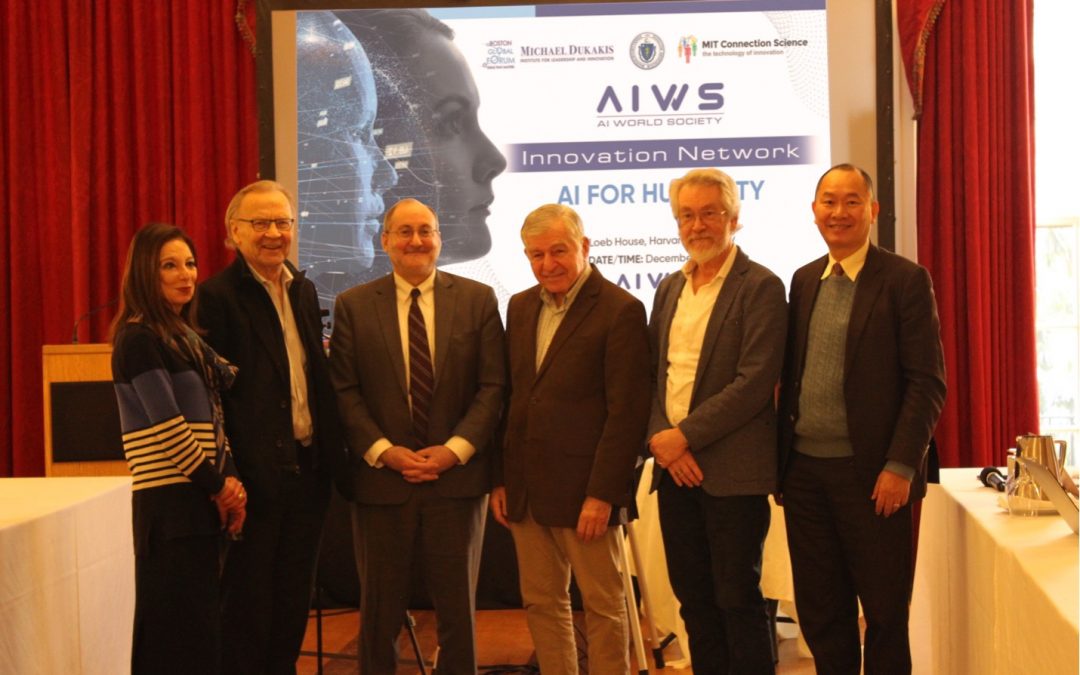
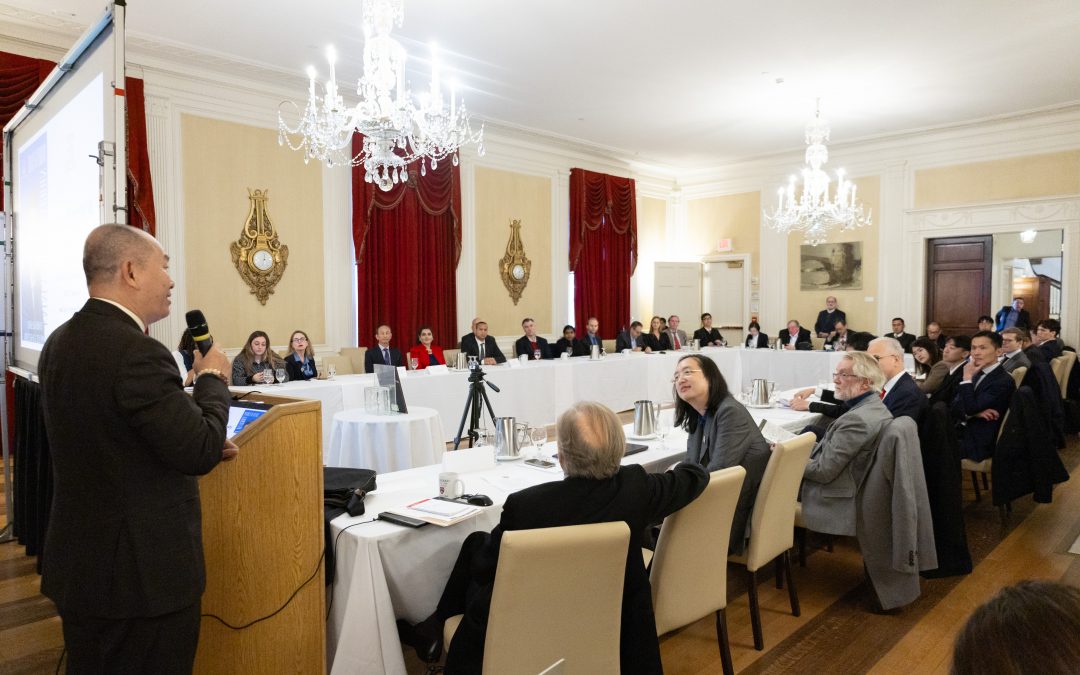
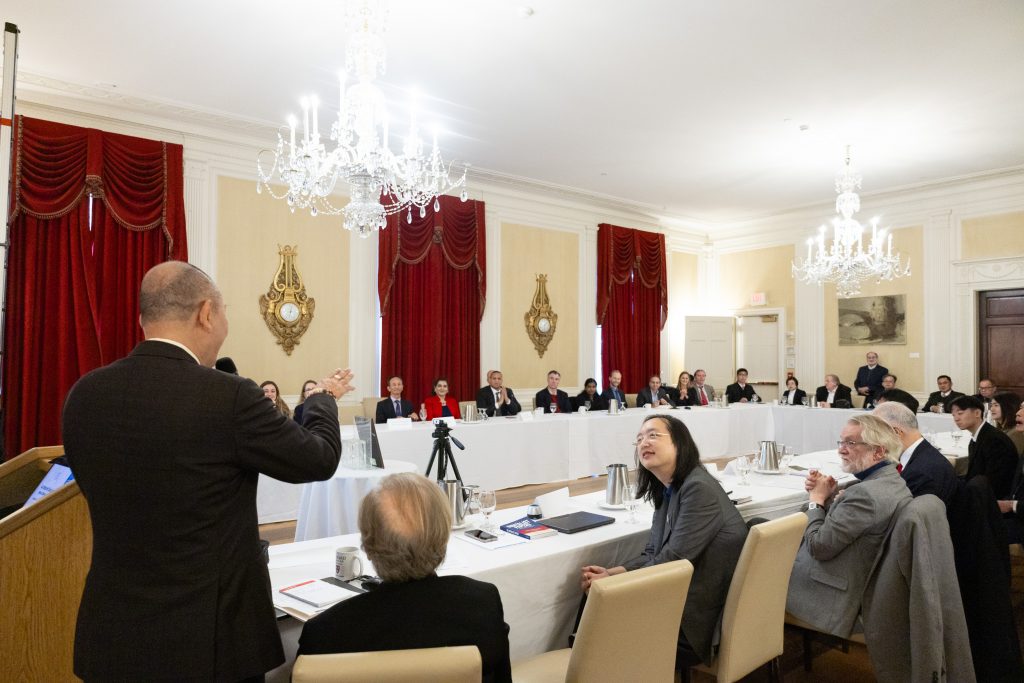
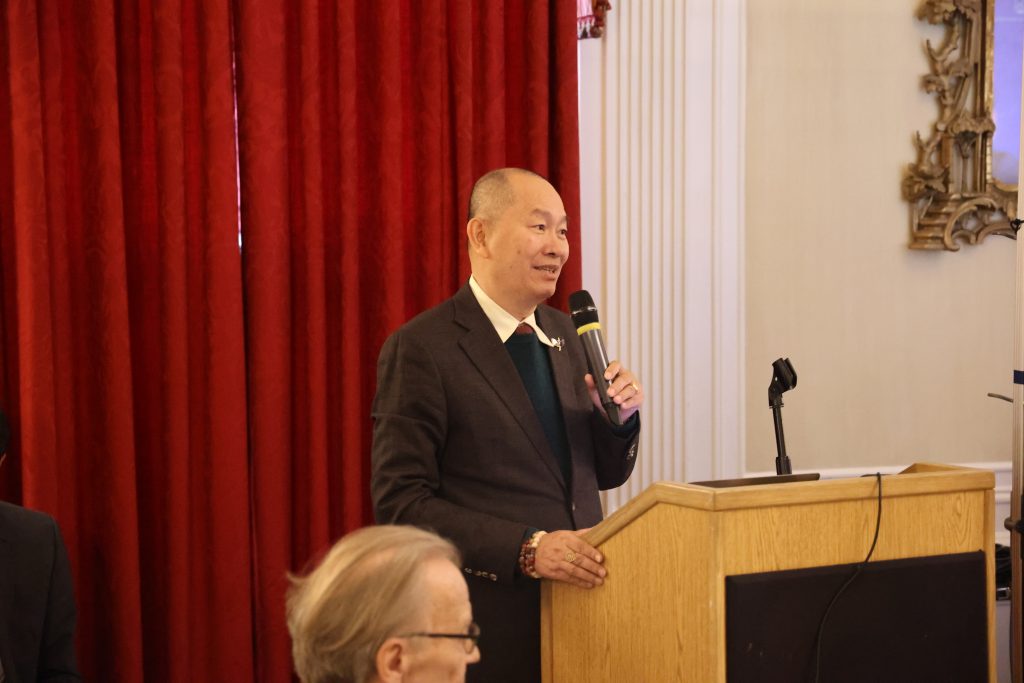
On November 25, 2024, the Boston Global Forum (BGF) hosted a landmark event at the prestigious Loeb House at Harvard University: Ceremony Honoring French President Emmanuel Macron with the 2024 World Leader for Peace and Security Award and the “AIWS-New Democracy” Conference.
During the event, Nguyen Anh Tuan, Co-chair and CEO of BGF, introduced groundbreaking concepts for governance in the Age of AI. Key highlights included the AIWS Government Concepts, featuring the 24/7 Government, which enables continuous and adaptive governance, and the Boston Areti AI (BAI), a cutting-edge AI agent designed to assist leaders with decision-making, administrative tasks, and personal needs.
The 24/7 Government model proposes a shift-based system supported by AI, ensuring government services remain accessible at all times without requiring layoffs or significant staff reductions. This innovation guarantees seamless citizen support around the clock—governments serve citizens continuously, even during holidays.
These pioneering ideas, which integrate AI to empower governance, herald a bold vision for the future of leadership and democracy in an AI-driven world—AI World Society (AIWS). The conference underscored the transformative role of such frameworks in shaping responsive, resilient governments equipped to meet the challenges of the future.