by Editor BGF | Jul 20, 2026 | World Leader for Peace and Security, News
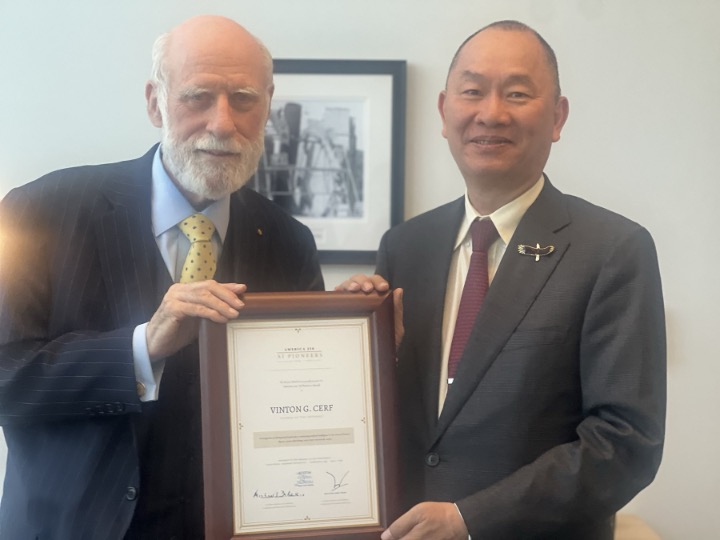
As the world enters the era of AI agents, Vint Cerf—one of the fathers of the Internet, a World Leader in AIWS, and one of the America 250: AI Pioneers—is once again helping shape the digital future. Following his retirement from Google, Cerf is now advising an initiative to develop open standards that will allow AI agents to identify themselves and interact securely across the open Internet, echoing the foundational role that TCP/IP played in connecting the world.
His latest work reinforces a principle that has guided his remarkable career: the next generation of AI must be built on open, interoperable, and trustworthy infrastructure that serves humanity rather than closed systems of control. It is a vision that resonates strongly with the Boston Declaration and the AIWS Trust Infrastructure.
Read more: Vint Cerf Is Working on a Plan to Unleash AI Agents on the Open Internet.
https://techcrunch.com/2026/07/15/vint-cerf-is-working-on-a-plan-to-unleash-ai-agents-on-the-open-internet/
by Editor BGF | Jul 20, 2026 | News, Shaping Futures
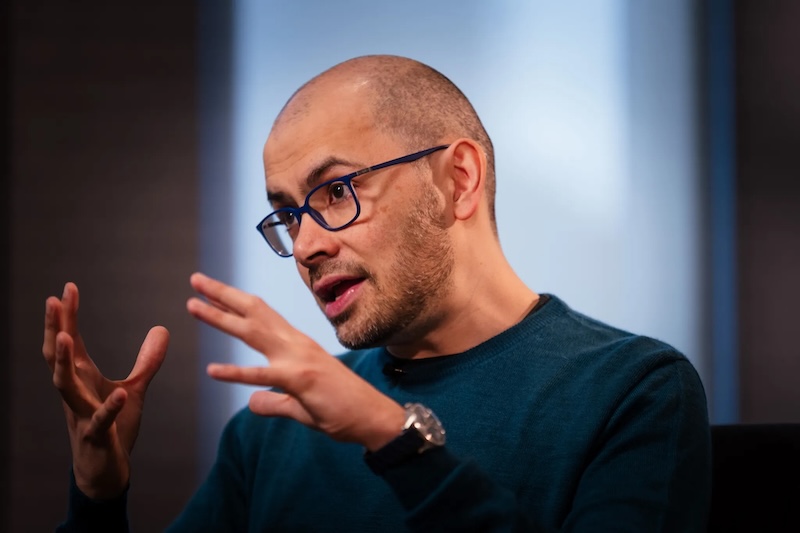
On July 14, 2026, in an exclusive interview with Axios and in a newly published framework on frontier AI governance, Demis Hassabis, co-founder and CEO of Google DeepMind, called on the United States to lead the creation of a global institution capable of overseeing the world’s most advanced artificial intelligence systems.
His proposal comes at a moment of growing concern that artificial general intelligence may be only a few years away, while existing national regulations remain fragmented and inadequate. Hassabis argued that the world now needs a more systematic form of oversight: an industry-funded body staffed by leading technical experts, accountable to the U.S. government, and empowered to test frontier models before release and coordinate an industry-wide slowdown if serious dangers emerge.
The proposal is modeled partly on the U.S. Financial Industry Regulatory Authority and reflects a wider movement among leading AI executives toward stronger international governance of frontier AI. It also follows recent discussions at the G7 about a U.S.-led coalition to coordinate global AI rules and standards.
https://techcrunch.com/2026/07/14/deepmind-ceo-calls-for-an-independent-standards-body-to-regulate-frontier-ai/
Hassabis’s intervention is significant because it recognizes that the most advanced AI systems can no longer be governed solely by individual companies or isolated national laws. Their capabilities may affect cybersecurity, biology, national security, economies, and societies across borders.
A U.S.-led initiative could help establish global standards grounded in transparency, independent evaluation, accountability, and meaningful human command. But its legitimacy would depend on protection from corporate capture, political manipulation, and domination by any single center of power.
Hassabis’s call reinforces the urgency behind the Boston Commitment to Build the Foundation for the Age of AI. Technical oversight is essential, but it must rest upon a broader human and constitutional foundation that protects dignity, freedom, responsibility, and peace.
The world is no longer merely debating how powerful AI may become. It is beginning to decide who will govern that power, according to which principles, and in whose service.
https://www.axios.com/2026/07/14/demis-hassabis-ai-regulation-google-deepmind
by Editor BGF | Jul 20, 2026 | Global Alliance for Digital Governance
A FOUNDER OF HUMAN-CENTERED AI
PRESENTS THE BOSTON DECLARATION
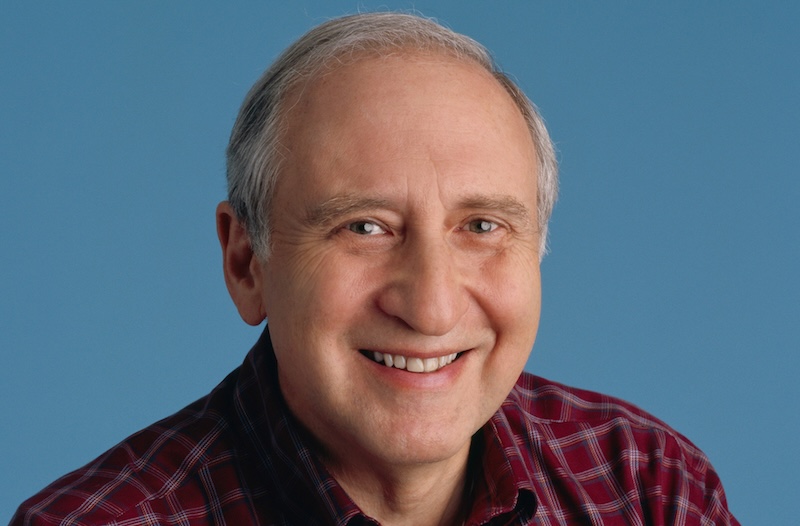
Professor Ben Shneiderman Introduces the Boston Declaration
in his 161st NOTE on Human-Centered AI

Fifty stars for fifty pioneers — the flag of America 250: AI Pioneers, honored alongside the Boston Declaration on July 4, 2026.
On July 17, 2026, the Boston Declaration on the Primacy of the Human Person in the Age of Artificial Intelligence entered one of the world’s most influential intellectual communities on Artificial Intelligence when Professor Ben Shneiderman devoted the 161st edition of his widely respected NOTE on Human-Centered AI to presenting its principles to the global Human-Centered AI community that has grown around his long-running series.
Professor Shneiderman is Distinguished University Professor Emeritus of Computer Science at the University of Maryland and the founding director of its Human-Computer Interaction Laboratory. A member of the National Academy of Engineering, he has profoundly shaped how humanity works with computers — from the principles of direct manipulation and the highlighted selectable link to the treemap and the classic textbook Designing the User Interface. His book Human-Centered AI (Oxford, 2022) became a defining charter for the field, advocating technology that amplifies, augments, empowers, and enhances human performance while always keeping humans in control. When the founder of that tradition examines a new declaration on the future of AI, the global Human-Centered AI community listens.
Professor Shneiderman’s assessment of the Boston Declaration — proclaimed by the Boston Global Forum on July 4, 2026, the 250th anniversary of American independence, under the leadership of Governor Michael Dukakis, Nguyen Anh Tuan, and Professor Thomas Patterson — was both thoughtful and encouraging. He described the Declaration as “well-aligned with human-centered thinking” and introduced his readers to its Ten Principles of Human Primacy: the inviolable dignity of the human person; moral judgment as a uniquely human capacity that can never be delegated to a machine; meaningful human authority over advanced AI systems — the right to understand, to refuse, and to intervene; creativity as the engine of civilization, sustained by compassion, empathy, and care; and human responsibility that “cannot be transferred to an algorithm.”
With the candor of a distinguished scholar, Professor Shneiderman also expressed one preference — for the word “tool” where the Declaration uses “partner.” The Boston Global Forum welcomes this observation as the beginning of a thoughtful dialogue between two complementary traditions: the Human-Centered AI movement’s enduring emphasis on meaningful human control, and the Boston Declaration’s broader vision of technology in service of human flourishing.
Most significantly, Professor Shneiderman concluded with a call to action:
“Each of you can help by spreading news about the Boston Declaration in your communities.”
He also placed the Boston Declaration alongside the Cannes Declaration on the Sovereignty of Mind of February 12, 2026, recognizing the emergence of a growing family of international documents dedicated to protecting human cognitive autonomy and human dignity in the Age of Artificial Intelligence.
Professor Shneiderman’s decision to introduce the Boston Declaration to the global Human-Centered AI community marks an important milestone in the Declaration’s international journey. It opens a meaningful dialogue between one of the world’s most influential traditions of Human-Centered AI and a broader effort to build the constitutional, institutional, and trust foundations for Humanity in the Age of Artificial Intelligence.
The Boston Global Forum and AIWS express their deep gratitude to Professor Shneiderman. That the founder of the Human-Centered AI tradition has presented the Boston Declaration to the very community he helped build — and invited that community to carry its message forward — is among the Declaration’s most significant early milestones.
This is how foundational ideas travel: from one trusted community to another, inspiring dialogue, strengthening partnerships, and ultimately shaping the future of humanity.
Download the full file here: https://bostonglobalforum.org/wp-content/uploads/Ben_Shneiderman_161st_NOTE_Boston_Declaration_Article.pdf

by Editor BGF | Jul 18, 2026 | Papers & Reports, News, Publications
THE BEACON PAPERS · No. 3
Foundational papers for humanity in the AI Age — from Boston
WHO MAY LEAD?
The Legitimacy of Global AI Governance
Nguyen Anh Tuan
Co-Founder, Co-Chair, and CEO, Boston Global Forum · Founder and Chief Architect, AIWS
Boston · July 17, 2026
On July 17, 2026, at the World Artificial Intelligence Conference in Shanghai, the leader of China urged the nations of the world to seize the “historic opportunity” of open-source artificial intelligence, and presented his country as the natural convener of global AI governance. A day earlier, twenty-nine states had signed the founding agreement of a new World AI Cooperation Organization, headquartered in Shanghai. The question of who writes the rules of the intelligent age has moved, in a single week, from the seminar room to the summit stage. It deserves a serious answer — more serious, in fact, than any offered in Shanghai. For the question that matters is not who convenes the largest conference, trains the largest models, or gathers the most signatures. The question is: what makes a claim to govern artificial intelligence legitimate?
The Measure
Every previous technology of power posed a version of this question, and humanity has learned, at great cost, how to answer it. Naval powers were not entitled to write the law of the sea merely because they had the most ships. Nuclear powers were not entitled to write the rules of the atom merely because they had the most warheads. Capability confers responsibility; it has never conferred legitimacy. Legitimacy must come from somewhere else.
For artificial intelligence, the source is unusually easy to identify, because AI is unlike previous technologies of power in one decisive respect: it operates directly upon the human mind. AI systems mediate what citizens see, know, believe, choose, and become. To govern AI is, ultimately, to govern the interface between power and human consciousness. And therefore the test of any government’s fitness to lead global AI governance is not its market share, its model weights, or its diplomatic reach. The test is how that government treats the minds of its own citizens.
A state that operates comprehensive surveillance of its own people; that censors what they may read and say; that scores their behavior to condition their obedience; that treats the inner life of the person as territory to be managed — such a state is not offering the world governance. It is offering the world its domestic operating system. The AIWS Constitution for Humanity in the AI Age, initiated in Boston on July 8, 2026, states the principle without ornament: “No government may claim leadership in global AI governance while maintaining systems of digital authoritarianism or mass cognitive control.”
One Yardstick for All
This standard would be worthless if it were a weapon pointed in only one direction. It is not. The same yardstick measures every government and every powerful institution, including those of the open societies. A democracy that permits its information environment to be engineered for engagement and rage; that allows the attention and behavior of its citizens to be harvested, profiled, and auctioned; that lets manipulation be lawful so long as it is profitable — such a democracy is also failing the test, by degree if not by design. The Constitution’s standard is the Primacy of the Human Person, and it binds Boston as surely as it binds any other capital. Leadership in the AI Age cannot be claimed by geography, by ideology, or by grievance against a rival. It can only be earned — by any government, anywhere — through demonstrated fidelity to the dignity and mental sovereignty of its own people.
Openness of Code Is Not Openness of Society
The Shanghai argument leans heavily on a single word: open. Open-source models, freely shared, are presented as a public good — and in important respects they are. The sharing of scientific and technical knowledge has always been among civilization’s noblest practices, and nations that contribute open models to the world deserve genuine credit for that contribution. But a category error hides inside the argument. Openness of code is not openness of society. A model whose weights are public, released by a system in which speech is not free, information is not trusted, and the model itself may not answer honestly about the government that shaped it, carries its origins within it. The generosity is real; so is the question it cannot answer. Trust in artificial intelligence is not a property of licenses. It is a property of the entire order that produces, trains, aligns, and deploys the system — which is precisely why the AI Age requires trust standards, provenance, transparency, and accountability that no single state, whatever its market position, can be permitted to define alone.
The Alternative Is Not a Rival Bloc
It would be the easiest response in the world — and the most sterile — to answer one bloc with another: an organization in Shanghai countered by an organization in Washington, each gathering signatures, each calling itself the voice of humanity. That road leads to an AI Age partitioned like the twentieth century, with the human person forgotten in the space between the poles.
The Constitution for Humanity proposes a different architecture. It is not headquartered in any capital and belongs to no single government, corporation, ideology, or power. It does not ask nations to choose a patron; it asks them to accept a principle. Its Article 36 holds the door open to every state on earth — including, expressly, those willing to undertake genuine reform — and provides that the Constitution enters into force among the acceding parties upon ratification by nine states, honoring the wisdom of the first constitutional framers, who understood that the willing must not wait upon the reluctant. Membership is earned by commitment, verified through trust standards, and rewarded with recognition and interoperability among trustworthy AI ecosystems. No conference can confer that legitimacy, and no communiqué can counterfeit it.
The Beacon and the Searchlight
Two kinds of light compete for the AI Age. A searchlight fixes people in its beam: it watches, tracks, profiles, and predicts; it serves the one who holds it. A beacon does the opposite: it illuminates the sea, marks the hidden dangers, and leaves every ship free to choose its own course. Both are technologies of light. Only one is a technology of freedom.
The choice before humanity is therefore not between East and West, nor between one geopolitical bloc and another. It is a choice between two fundamentally different visions of civilization: one in which intelligence becomes an instrument of control, and one in which intelligence becomes an instrument of human flourishing. No government, however powerful; no corporation, however innovative; and no institution, however influential, possesses an inherent right to lead humanity into the AI Age. Leadership is never inherited from power. It is earned through trust — through respect for the dignity of every person, through the protection of Human Agency, and through the demonstration, in practice rather than in proclamation, that artificial intelligence enlarges freedom rather than narrowing it. Those who seek to lead humanity in the Age of Artificial Intelligence must first demonstrate that they serve humanity. The world does not need a new empire of intelligence. It needs a civilization of trust.
A Beacon for Humanity
The AIWS Constitution for Humanity in the AI Age is not written to oppose any nation. It is written to establish a constitutional standard above every nation. It belongs to no single government, no corporation, no ideology, and no geopolitical bloc; it belongs to Humanity. Any government willing to uphold Human Dignity, Human Agency, Freedom, Democracy, Trust, and Wisdom is invited to walk through its open door. The Constitution does not ask humanity to choose sides. It asks humanity to choose principles.
History will remember not who possessed the largest models or the fastest processors. History will remember who chose to place the human person above power. The nations of the world will decide, in the coming years, which light they sail by. The world does not need a searchlight. It needs a beacon.
Boston Global Forum · AIWS · Boston, July 17, 2026
Download full THE BEACON PAPERS · No. 3 here: https://bostonglobalforum.org/wp-content/uploads/Beacon_Papers_No3_Who_May_Lead-July-17.pdf
Boston Light, first lighthouse of America, shining since 1716 — three centuries of guiding ships that remain free to choose their course.
by Editor BGF | Jul 12, 2026 | News
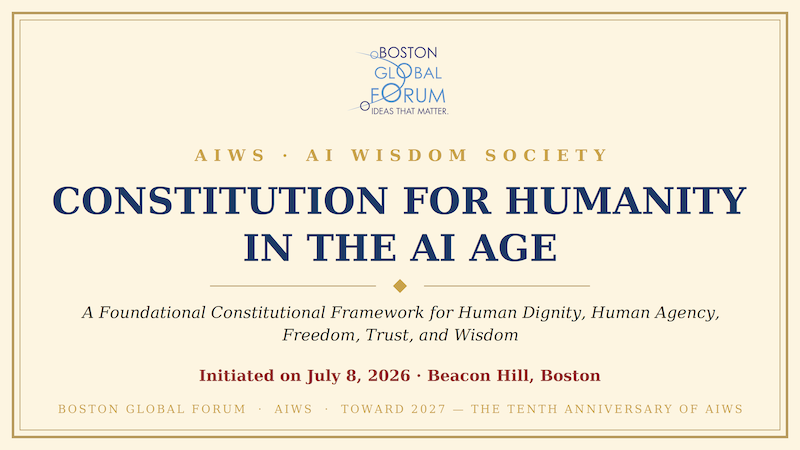
Boston Global Forum Begins the Development of the AIWS Constitution for Humanity in the Age of Artificial Intelligence
The Boston Global Forum (BGF) officially announced the beginning of the development of the AIWS Constitution for Humanity in the Age of Artificial Intelligence, marking the start of a historic global initiative to establish the constitutional foundations for human civilization in the Age of Artificial Intelligence.
BGF designates July 8, 2026 as Constitution Day for Humanity in the Age of Artificial Intelligence — the day on which the journey began to create a constitutional framework ensuring that the unprecedented power of AI will always serve humanity, protect human dignity, strengthen trust, cultivate wisdom, and advance freedom, democracy, peace, and human flourishing.
The date carries a deliberate historical resonance. On July 8, 1776, the Declaration of Independence was read aloud to the public for the first time, in Philadelphia, as the bells rang — the day the founding principles reached the people. Two hundred fifty years later to the day, the principles of the AI age begin their own journey to the peoples of the world. And just as America moved from Declaration (1776) to Constitution (1787), humanity now moves — in a single week — from the Boston Declaration of July 4, 2026 to the drafting of the AIWS Constitution.
The initiative builds upon nearly a decade of pioneering work by the Boston Global Forum and AIWS, including the founding of the AI World Society (2017), its evolution into the AI Wisdom Society (2026), and the publication of the Boston Declaration on the Primacy of the Human Person in the Age of Artificial Intelligence, endorsed by 17 Founding Signatories — distinguished world leaders and AI pioneers who helped shape the digital age.
Rather than serving merely as a declaration of principles, the AIWS Constitution is envisioned as a comprehensive constitutional framework for the AI age. It will provide enduring principles, institutions, and governance mechanisms to guide humanity through one of the greatest transformations in history — the emergence of increasingly autonomous and self-improving artificial intelligence. The Constitution will affirm that the human person remains the highest constitutional value, and that AI must forever remain a trusted partner in the service of humanity. It will integrate the pioneering frameworks developed by BGF and AIWS, including:
- The Boston Declaration on the Primacy of the Human Person;
- The Tokyo Compact;
- The AIWS Trust Architecture and AIWS Trust Infrastructure;
- AIWS Trust Standards;
- The AIWS Information Trust Infrastructure;
- The AIWS Human-in-Command Architecture;
- AIWS Lumina and the cultural foundations for the AI age;
- AIWS Reward and the Economy of Social Contribution;
- Democratic governance, peace, security, and international cooperation in the AI age.
The Constitution’s legitimacy will rest where all free constitutions rest: on the breadth of those who shape it. The drafting process will bring together AI pioneers, world leaders, constitutional scholars, philosophers, scientists, innovators, educators, artists, and representatives of civil society from around the world. International consultations will begin in July 2026 and continue throughout 2026 and 2027. The completed Constitution is expected to be presented in 2027, commemorating the tenth anniversary of AIWS.
Nguyen Anh Tuan, Co-Founder, Co-Chair, and CEO of the Boston Global Forum and Chief Architect of AIWS, stated: “Every great civilization has been guided by enduring constitutional principles. As humanity enters the Age of Artificial Intelligence, we must once again define the principles that safeguard human dignity, freedom, trust, wisdom, and peace. The AIWS Constitution is our commitment to ensuring that the future of AI is ultimately the future of humanity.”
The Boston Global Forum welcomes governments, international organizations, universities, AI pioneers, technology companies, cultural leaders, and citizens worldwide to participate in this historic effort. Together, we will build not only the future of artificial intelligence, but the constitutional foundation for humanity in the AI age.
About the Boston Global Forum
The Boston Global Forum (BGF) is a Boston-based think tank founded in 2012, co-founded and co-chaired by Governor Michael S. Dukakis, that brings together world leaders, scholars, and innovators to develop peaceful solutions to global challenges. In 2017, BGF founded the AI World Society (AIWS), which in 2026 evolved into the AI Wisdom Society — a global initiative to build a trustworthy, human-centered future for the age of artificial intelligence.
Media Contact
Boston Global Forum — Helena Ellington [email protected]
by Editor BGF | Jul 12, 2026 | News
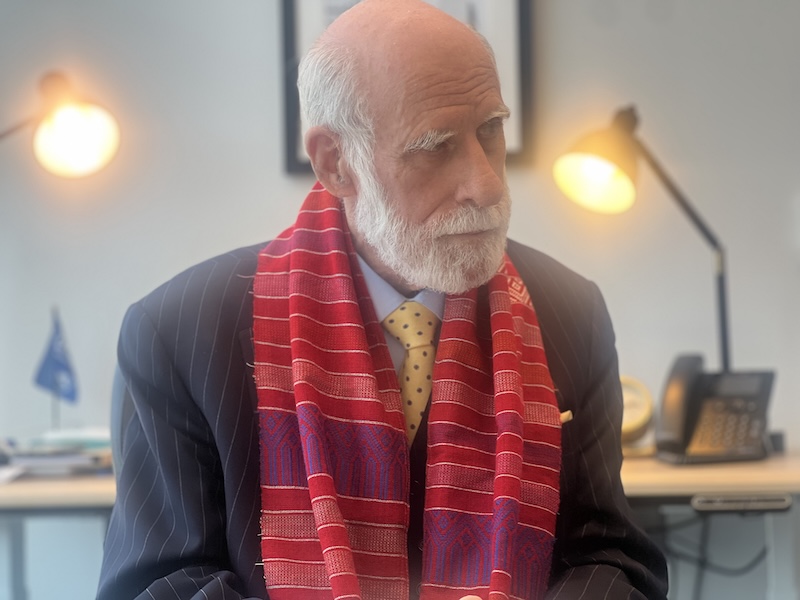
As Vint Cerf concludes his remarkable career at Google, his lifelong contributions continue to inspire people and institutions around the world.
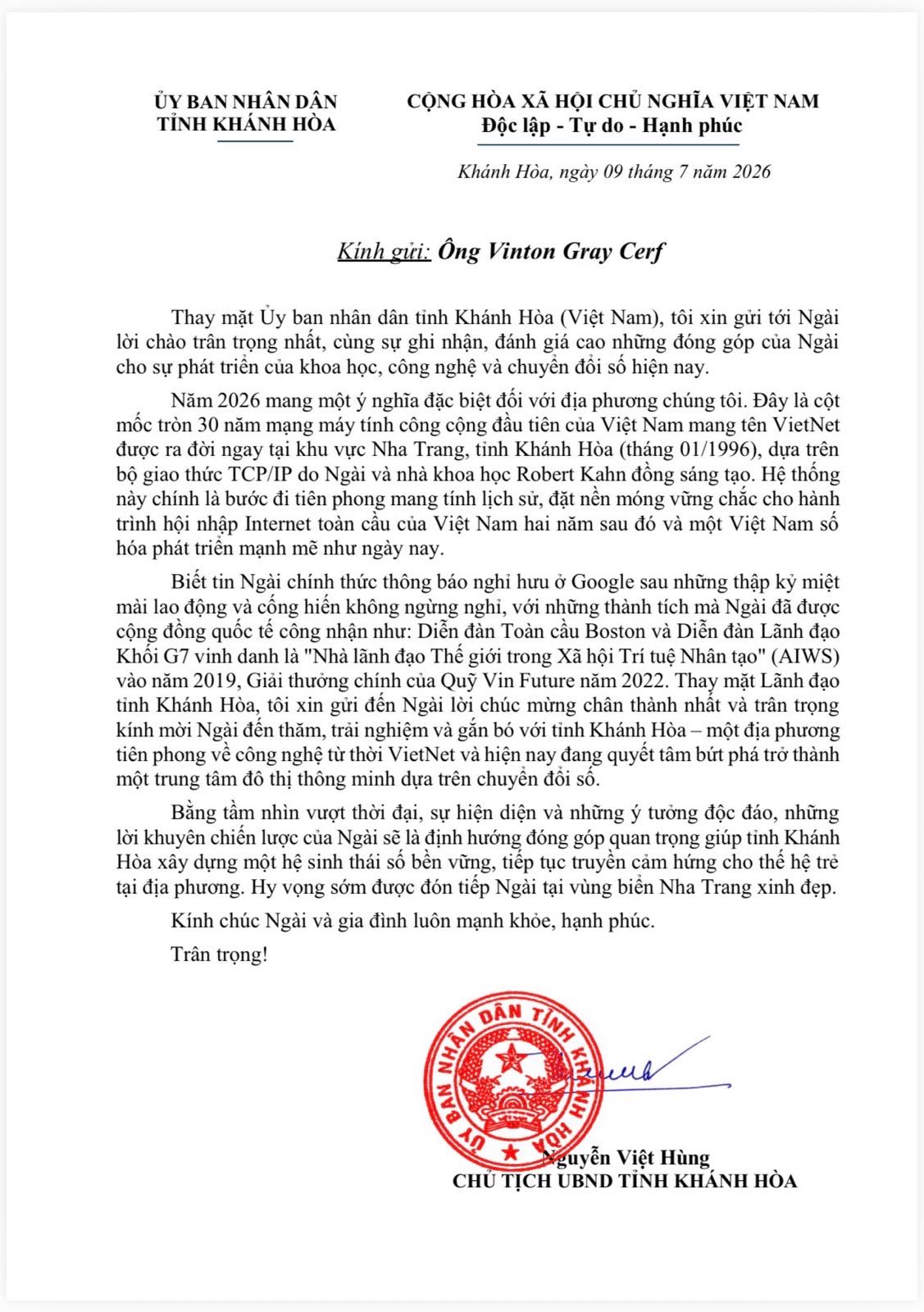
In Vietnam, Nguyen Viet Hung, Chairman of the People’s Committee of Khanh Hoa Province—the equivalent of a U.S. Governor—has sent a formal letter expressing profound respect and gratitude for Vint Cerf’s historic contributions to humanity. The letter commemorates the 30th anniversary of VietNet, Vietnam’s first public Internet network, established in Nha Trang in 1996 using the TCP/IP protocol co-created by Vint Cerf and Robert Kahn. It also warmly invites him to visit Khanh Hoa, where his pioneering legacy continues to inspire a new generation of digital innovation and AI-driven development.
The Boston Global Forum is honored to share this meaningful letter in tribute to one of the founding architects of the Internet, a recipient of the World Leader in AIWS Award (2019), and a Founding Signatory of the Boston Declaration on the Primacy of the Human Person in the Age of Artificial Intelligence.
Download the official letter from Nguyen Viet Hung, Chairman of the People’s Committee of Khanh Hoa Province.
by Editor BGF | Jul 12, 2026 | Global Alliance for Digital Governance
By Tư Giang
EDITOR’S NOTE
On July 4, 2026 — the 250th anniversary of American independence — the Boston Global Forum and AIWS proclaimed The Boston Declaration: On the Primacy of the Human Person in the Age of Artificial Intelligence. The essay below shows the Declaration entering the public conversation of Vietnam, a nation of one hundred million people pursuing an ambitious national AI agenda under Resolution 57 of the Politburo.
Its author, Hoàng Tư Giang, is one of Vietnam’s leading journalists on economic policy and governance. Writing in VietNamNet, one of the country’s most influential news organizations, he reads the Boston Declaration not as a distant statement from Boston, but as a framework that speaks directly to Vietnam’s own questions — from factory floors and government offices to the future place of human beings in the new civilization. The English translation is provided by the Boston Global Forum.
AI is steadily changing the way people work and make decisions. But as the technology grows ever more intelligent, the most important question is no longer what AI can do — it is what place human beings will hold in the new civilization.
A friend of mine who works in communications tells me that his company no longer hires people to write speeches, draft press releases, or translate and edit English texts the way it once did. AI now does most of that work.
And that is probably only the beginning.
In offices everywhere, AI is quietly slipping into every desk. From writing, translation, customer service, and design to accounting and data analysis, more and more work is being assisted — or partly taken over — by AI. It does not always come as a wave of noisy layoffs. Sometimes a company simply stops hiring.
Walk through Vietnam’s leading automobile plants or many of its garment factories, and you can see robots taking on more and more stages of production: welding car bodies, painting, assembling, cutting fabric, measuring, and inspecting quality. The factories are not yet empty of people, but the role of the human being there has changed.
AI has left the laboratory and entered the workplace, the classroom, the newsroom, the bank, the hospital, the government office — and the phone in every person’s pocket.
For Vietnam, this is a great opportunity. An economy that wants to raise productivity, reform its administrative apparatus, and climb the global value chain cannot stand outside the AI revolution. Resolution 57 of the Politburo has identified science, technology, innovation, and digital transformation as the country’s new engines of development. In that current, AI will be present in nearly every sector of the economy.
But here is where the problem begins: as AI reaches deeper into decisions that directly affect people’s lives, who will stand up and take responsibility when something goes wrong?
An algorithm can recommend rejecting a loan, but it cannot explain to the customer why they were refused. An AI system can help read medical scans, but it cannot replace the physician’s final nod. An AI tool can write an article, but it cannot put its name to the truth — and the errors — of that article. A virtual assistant can help process paperwork, but it cannot sign an administrative decision in place of a public official.
Seen from Vietnam, the warnings of Elon Musk and Geoffrey Hinton no longer feel so distant. Musk believes AI and robots will take over a great many human jobs. Hinton, the “godfather of AI,” worries that the wealth AI creates will concentrate ever more in the hands of those who own the data, the algorithms, and the computing infrastructure, while many people gradually lose the income they once earned from their labor.
Vietnam’s question, therefore, is no longer whether AI will replace human beings. That has already begun. The more pressing concern is what we will do to ensure that workers are not left outside the new game. And the great question is not only: How powerful can AI become? It is: As AI grows ever more powerful, what place will human beings hold in the new civilization?
On July 4, 2026 — the very day America marked the 250th anniversary of its Declaration of Independence — the Boston Global Forum and AIWS announced The Boston Declaration: On the Primacy of the Human Person in the Age of Artificial Intelligence. The document makes an assertion that is brief but immensely powerful: “Artificial Intelligence may surpass human intelligence in many domains. It must never surpass the primacy of the human person.”
What is striking is that the Boston Declaration does not call for holding AI back. On the contrary, it recognizes AI as one of humanity’s greatest technological advances — capable of expanding knowledge, improving health care, renewing education, and creating unprecedented opportunities for development. But for precisely that reason, AI must be placed under principles established by human beings, so that technology always serves humanity rather than deciding humanity’s fate.
Among the initiators of the Declaration are Mr. Nguyen Anh Tuan — Co-Founder, Co-Chair, and CEO of the Boston Global Forum, and the founder and former Editor-in-Chief of VietNamNet — and Governor Michael S. Dukakis, the 1988 U.S. presidential nominee.
From the early years of building the Internet in Vietnam to a journey of initiating ideas and initiatives that help lead the conversation on the future of technology and humanity — gathering the world’s foremost leaders and scholars — Nguyen Anh Tuan has wrestled with one question throughout: How can technology serve human beings and help build a better society?
In an essay published on the morning of July 4, he emphasized that the goal is not merely to govern AI, but to help create a civilization in which “intelligence serves wisdom, technology serves humanity, trust strengthens freedom, and innovation advances peace and the flourishing of humankind.”
That is a point where Vietnam would do well to pause and reflect.
If Resolution 57 answers the question of what Vietnam must do to avoid standing outside the AI revolution, the Boston Declaration raises another: What must Vietnam do to ensure that human beings are not diminished within the very revolution it is driving?
A nation strong in AI is not recognized merely by its data centers, its engineering workforce, its large language models, or its technology companies. More importantly, it must be a nation that knows how to build guardrails before the accident happens: How is personal data protected? How transparent must AI be? Do citizens have the right to know when they are interacting with a machine? And which decisions must always have a human being bearing final responsibility?
The Boston Declaration calls this the principle of Human-in-Command — human beings retain command over AI. AI may analyze, forecast, and propose options. But final judgment, moral responsibility, and the right of decision must remain with human beings.
This is not a story that belongs only to Boston or Silicon Valley. For Vietnam, it is a problem already present in every government office, every enterprise, every school, and every newsroom.
In public administration, AI must not become an excuse for officials to evade responsibility. In education, AI must not accustom students to letting machines think for them. In journalism, AI must not turn the making of news into a production line that runs very fast — with no one left standing at the helm to answer for it.
Two hundred and fifty years ago, humanity had to establish that human beings possess rights that cannot be taken away. Two hundred and fifty years later, as human beings themselves create a new form of intelligence, we face a different problem: How can technology grow ever more intelligent while human beings always remain at the center of civilization?
The Boston Declaration sets out ten foundational principles for a trustworthy and humane AI era, affirming that AI must serve human beings, not supplant human values. Human dignity, freedom, creativity, moral responsibility, and the right of self-determination must be the foundation upon which artificial intelligence systems are designed, developed, and governed.
The Boston Declaration bears the names of 17 Founding Signatories — leaders, scholars, and pioneering figures who have helped shape the digital and AI age.
Among them are scientists such as Vinton G. Cerf, one of the “fathers of the Internet”; Yann LeCun, a pioneer of deep learning; Stuart Russell, a leading scholar on AI and on ensuring that AI serves human interests; Judea Pearl, who laid the foundations of causal reasoning in AI; Robert Desimone, a leading scientist of the brain and human intelligence; and Alex Pentland, a pioneer of computational social science and collective intelligence.
Link: https://vietnamnet.vn/khi-ai-ngay-cang-thong-minh-con-nguoi-se-dung-o-dau-2534249.html
by Editor BGF | Jul 12, 2026 | News, Shaping Futures
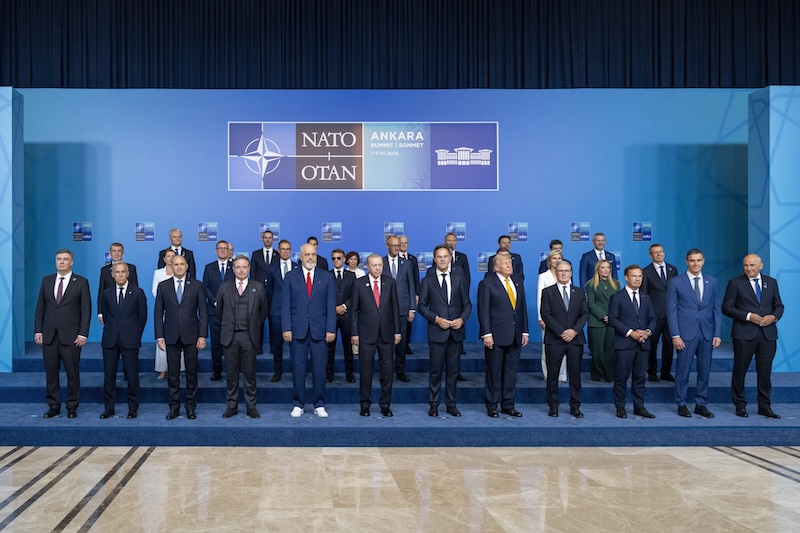
At the NATO Summit in Ankara on July 7–8, 2026, allies debated access to America’s most advanced AI systems. Beneath the surface of procurement numbers and security communiqués, a deeper truth emerged: the most dangerous technology humanity has ever built requires a steward — and the United States, whose constitutional order has constrained power for 250 years, is uniquely positioned to bear that responsibility.
Ankara will be remembered for its metrics: increased defense investment, new procurements, seventy billion euros pledged to Ukraine. Yet the question that will define the decade ran beneath every session. The world’s most capable frontier AI models are built by two American companies — OpenAI and Anthropic — and Washington decides which allies may use them. The newest systems can reportedly identify and exploit security vulnerabilities beyond the reach of most human experts; in one government test, Anthropic’s frontier model reportedly surfaced weaknesses in classified American systems within hours. Such capability is, simultaneously, the strongest shield free nations could hold and a weapon of historic danger.
America’s conduct has been that of a steward, not a monopolist. In June, export controls paused allied access to Anthropic’s most cyber-capable models while safeguards were evaluated; OpenAI’s newest model was initially limited to approved American firms. Access then widened — to some one hundred fifty organizations across more than fifteen countries, including members of the European Union — while a rare Five Eyes warning on AI-enabled cyber threats confirmed why caution had been warranted. Prudence first, partnership after — that is what responsibility looks like when the stakes are civilizational.
Some in Europe interpret this as dependence and call for strategic autonomy. The concern is understandable; the conclusion is mistaken. A technology this dangerous must have a gatekeeper. The real question is not whether power over frontier AI will be concentrated — it will be — but in whose hands. A nation of laws, checks and balances, free press, elections, and a written constitution that has constrained power for two and a half centuries: this political order, imperfect yet enduring, remains the best foundation humanity has produced. Frontier AI governed under it is safer — for Americans and allies alike — than frontier AI diffused to the highest bidder or mastered first by systems accountable to no one.
This is the meaning of the calendar’s remarkable symmetry. Four days before Ankara, on July 4, 2026 — the 250th anniversary of American independence — the Boston Global Forum and AIWS proclaimed The Boston Declaration: On the Primacy of the Human Person in the Age of Artificial Intelligence. Its principle of Human-in-Command extends America’s founding insight to the AI age: final judgment and moral responsibility belong to human beings acting under agreed principles. And the AIWS Trust Infrastructure — Trust Standards written with democracies, Trust Ratings verified openly — offers America a form of leadership that is not dominance but stewardship: power bound to principle, so that allies follow not from necessity but from confidence.
Two hundred and fifty years ago, America wagered that power constrained by principle is stronger than power alone — and built the most trusted order in history upon it. Stewarding the age of artificial intelligence is the next chapter of that wager. From Philadelphia in 1776 to Boston on July 4, 2026, the thread holds: the nation that binds its own strength to principle is the nation the world can trust to hold the gate.
Official photo of NATO Heads of State and Government – 2026 NATO Summit in Ankara
by Editor BGF | Jul 9, 2026 | Papers & Reports, News, Publications
Nguyen Anh Tuan
Co-Founder, Co-Chair, and CEO, Boston Global Forum · Founder and Chief Architect, AIWS
Boston · July 8, 2026
In the summer of 1787, fifty-five delegates gathered in Philadelphia and opened a document with seven words that changed the architecture of political legitimacy: “We the People of the United States.” In the summer of 2026, on Beacon Hill in Boston, a new document opened with a deliberate echo across two and a half centuries: “We, the People of Humanity.” The distance between those two sentences is not merely geographic or temporal. It measures how far the constitutional idea has traveled — and how far it must still go.
Declaration First, Constitution Second
America did not begin with a constitution. It began with a declaration — a statement of moral truths held to be self-evident — and only eleven years later, after the inadequacy of mere aspiration had been proven by experience, did it write the machinery to secure them. The sequence matters. The Declaration of 1776 told the world what Americans believed; the Constitution of 1787 told them how those beliefs would be enforced, funded, adjudicated, and amended. A declaration inspires. A constitution operates.
The same sequence is now unfolding in the age of artificial intelligence. The Boston Declaration on the Primacy of the Human Person, proclaimed on July 4, 2026, stated the moral truths of the AI Age. The AIWS Constitution for Humanity in the AI Age, now in its Constitutional Edition, begins the harder work: converting conviction into structure. History suggests the second step is where most movements fail — and where the American founders succeeded for reasons worth studying closely.
The Forgotten Genius of Article VII
The most consequential provision of the United States Constitution may be its least quoted. Article VII declared that the Constitution would enter into force “between the States so ratifying” once nine of the thirteen had approved it. Unanimity was not required. Delaware ratified first; Rhode Island resisted until 1790; the Union proceeded without waiting. The founders understood that a constitution which requires everyone’s consent before it binds anyone will bind no one. They designed for the willing.
This is the decisive lesson for a Constitution for Humanity. Its path to reality does not run through universal acclamation, which will never come, but through accession: an open instrument that nations join because they judge it reasonable, entering into force among the ratifying parties once a threshold is met. Modern treaty practice confirms the wisdom of Philadelphia — the Rome Statute required sixty ratifications, the Paris Agreement fifty-five. A constitutional framework for the AI Age should carry its own Article VII: a clause of accession, a threshold of entry into force, and the quiet confidence that the first movers will make membership worth having. Without such a clause, a constitution remains a charter; with it, aspiration acquires a legal pulse.
Why the States Joined
The states of 1788 did not ratify because the Preamble was beautiful. They ratified because union offered commerce, common defense, sound currency, and standing in the world — concrete benefits that made the costs of sovereignty pooled seem a bargain. Any constitution for the AI Age must answer the same unsentimental question: what does a ratifying nation receive? The answer is already visible in the architecture that precedes this Constitution rather than follows it. Nations that accede gain access to shared trust infrastructure; certification of their AI systems under common trust standards; interoperability with the trustworthy AI ecosystems of fellow members; and a voice in the governance of the intelligence that will shape their citizens’ lives. The American framers had to build their institutions for decades after ratification. The AI Age, unusually, has built some of its institutions first — trust standards, trust ratings, a trust order — so that the benefits of membership exist before the ink of accession dries.
An Inversion, and a Shared Design Principle
In one respect the new document deliberately reverses Philadelphia. The original Constitution built the machinery of government first and added a Bill of Rights only in 1791, under political duress. The Constitution for Humanity places dignity and rights first and institutions after — absorbing two centuries of constitutional learning that begins with the person, not the state.
Yet beneath the inversion lies a shared design principle. Madison’s generation made government deliberately slow — two chambers, a veto, divided powers — installing friction into the machine so that no momentary passion could become instant tyranny. Ambition was made to counteract ambition. The Constitution for Humanity installs the same principle one level deeper: “healthy friction” within AI systems themselves, so that no perfect optimization can quietly dissolve the human will. Tocqueville warned in 1840 of a soft despotism that would not break men’s wills but soften, bend, and guide them; he could not have imagined that the shepherd would one day be an algorithm. The “comfortable cage” named in the new Constitution is his warning, renewed for machines. In both centuries, the constitutional insight is identical: freedom is not preserved by power alone, but by the deliberate imperfection of power.
From Virginia Plan to Philadelphia Moment
Honesty requires one further admission. The delegates in Philadelphia could bind their states because they were sent by their states. Legitimacy was not requested after the drafting; it was present at the table. A Constitution for Humanity will earn ratification the same way — not by asking nations to adopt a finished text, but by inviting them to finish it. The present Constitutional Edition should therefore be understood as this generation’s Virginia Plan: the coherent draft that frames the deliberation, not the deliberation itself. The Philadelphia moment lies ahead — a constitutional convention for the AI Age, in 2027, the tenth anniversary of AIWS, where nations, through their representatives, complete what has been begun and sign what they have shaped. What a nation helps to write, it will defend.
The Wager
The Constitution of 1787 was a wager that a people could govern themselves by reflection and choice rather than accident and force. It ran barely four and a half thousand words, and its austerity was its endurance. The Constitution for Humanity makes a larger wager with a longer sentence: that humanity can govern its most powerful creation before that creation governs humanity. The first wager took nine states to win. The second will take the first courageous nations willing to ratify — and the patience to let the rest arrive, as Rhode Island eventually did. Two and a half centuries from Philadelphia to Boston, the constitutional idea remains what it has always been: not a description of the world as it is, but an instrument for building the world as it ought to be. Let the AI Age have its instrument.
Please download the full article here:
https://bostonglobalforum.org/wp-content/uploads/Beacon_Papers_No1_The_Boston_Declaration.pdf
https://bostonglobalforum.org/wp-content/uploads/Beacon_Papers_No2_From_Philadelphia_to_Boston.pdf