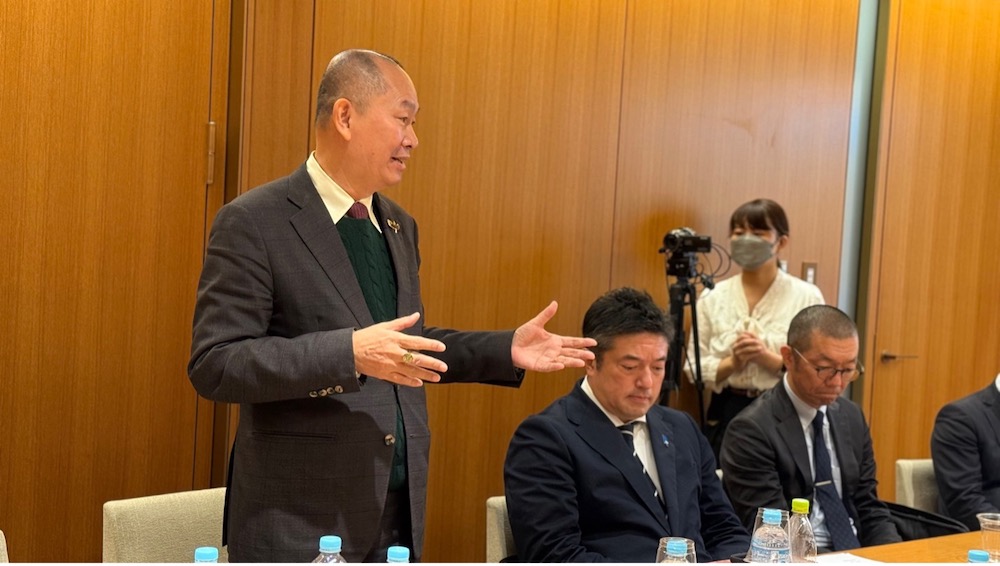
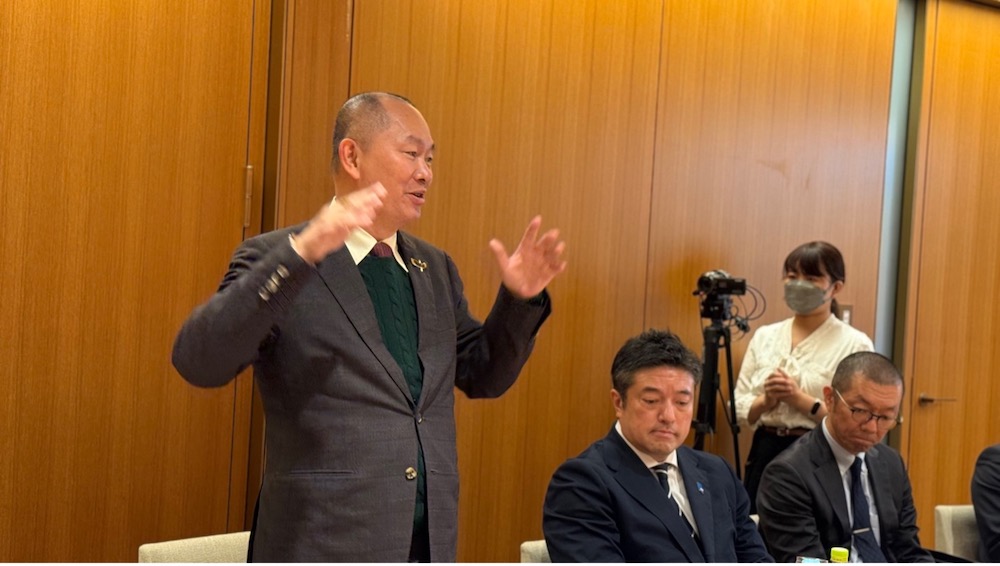
Speech by Minoru Kiuchi, Minister of State for Science and Technology Policy, Japan
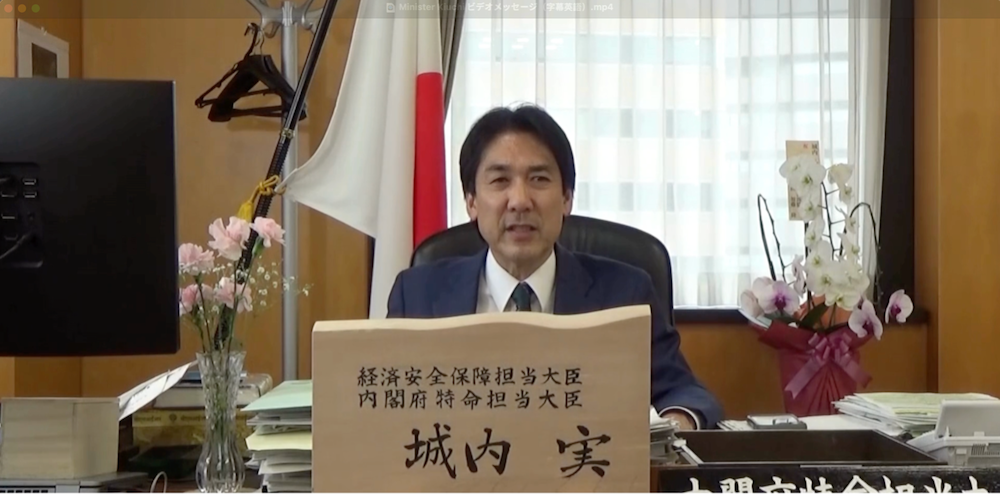
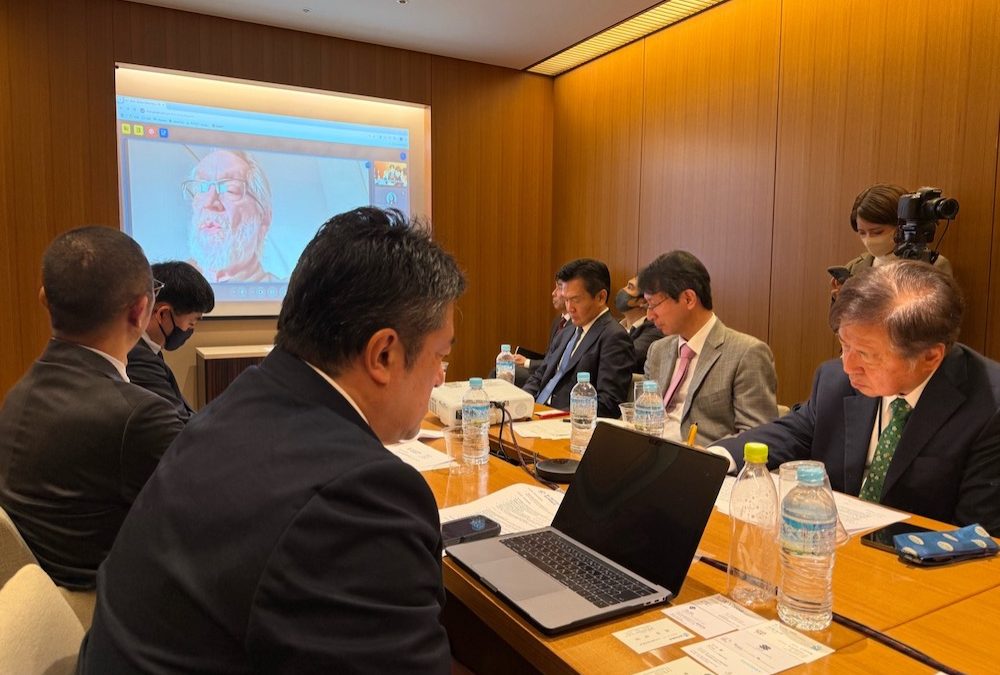
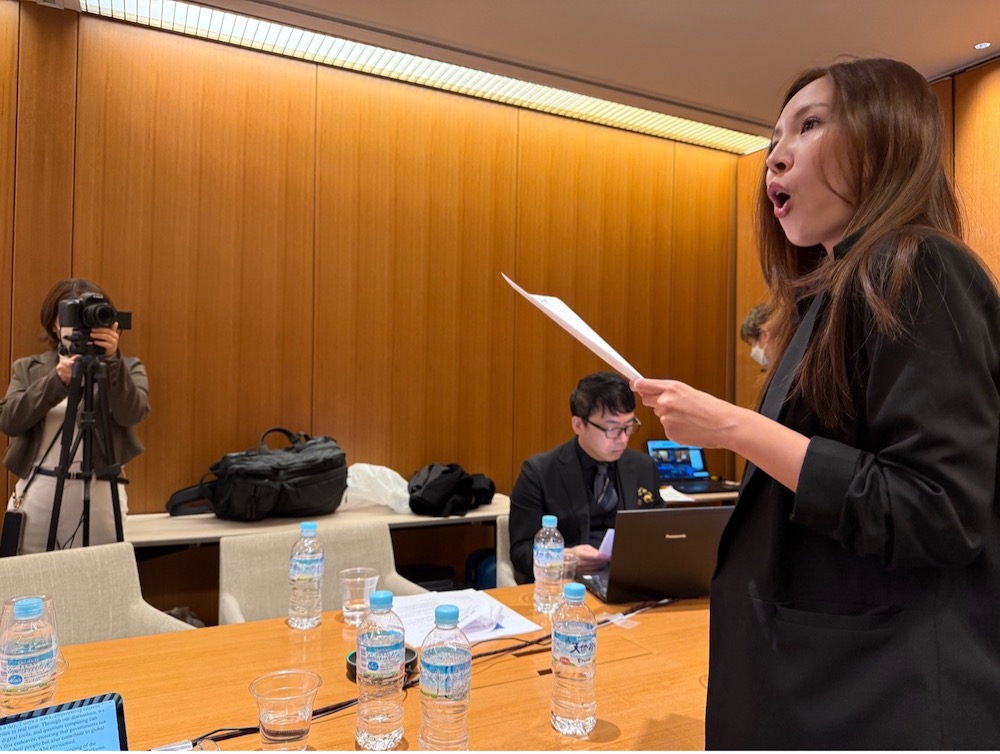
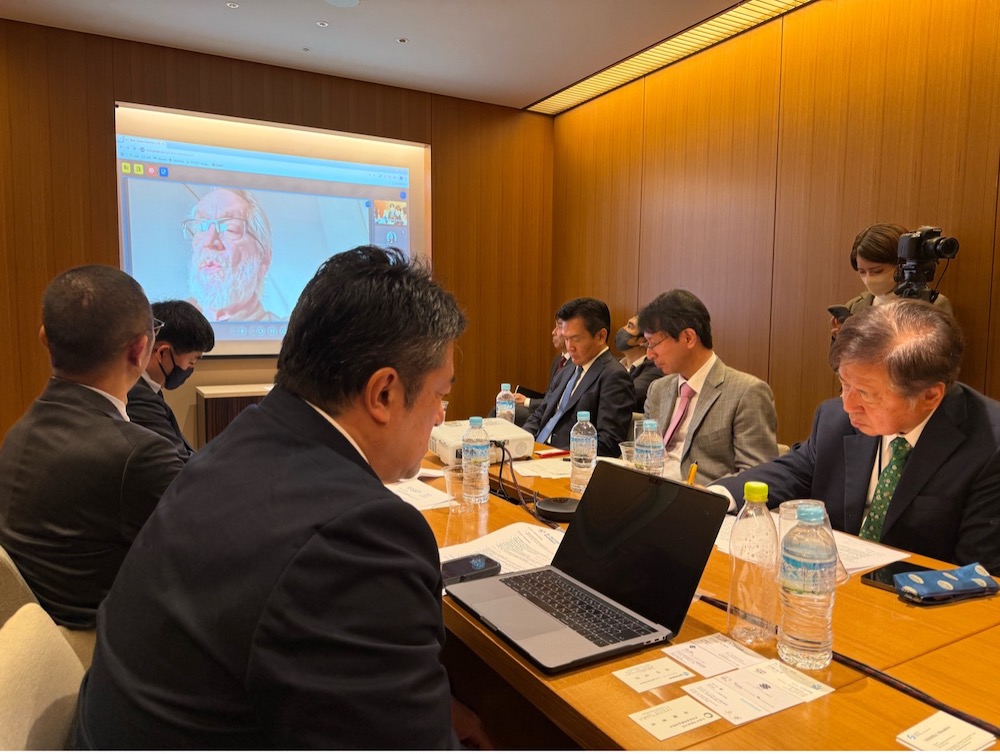
Minoru Kiuchi, Japan’s Minister of State for Science and Technology Policy, delivered a notable speech at the 4th Shinzo Abe Conference on March 28, 2025, in Tokyo. Highlighting Japan’s role in advancing the AIWS Government 24/7 initiative.
As Governor Michael Dukakis wrote in his Opening Remarks at the 4th Shinzo Abe Conference on March 28, 2025, in Tokyo: “I am thrilled that Nguyen Anh Tuan will carry this message forward. His presence at this conference highlights a significant trip to Japan, which began on March 24, 2025, during which he has engaged with government leaders, business visionaries, distinguished scholars, and outstanding students, as well as participated in key political events. The mission of his trip is to advance the AIWS and Shinzo Abe Initiative, fostering deeper connections between Japan and the United States, and amplifying Japan’s vital role on the global stage through the AIWS Government 24/7 initiative.”
As the Representative of the Boston Global Forum (BGF) in Japan and Taiwan, I am deeply honored to have arranged an agenda for Mr. Tuan during his special trip to Japan from March 24 to March 30, 2025.
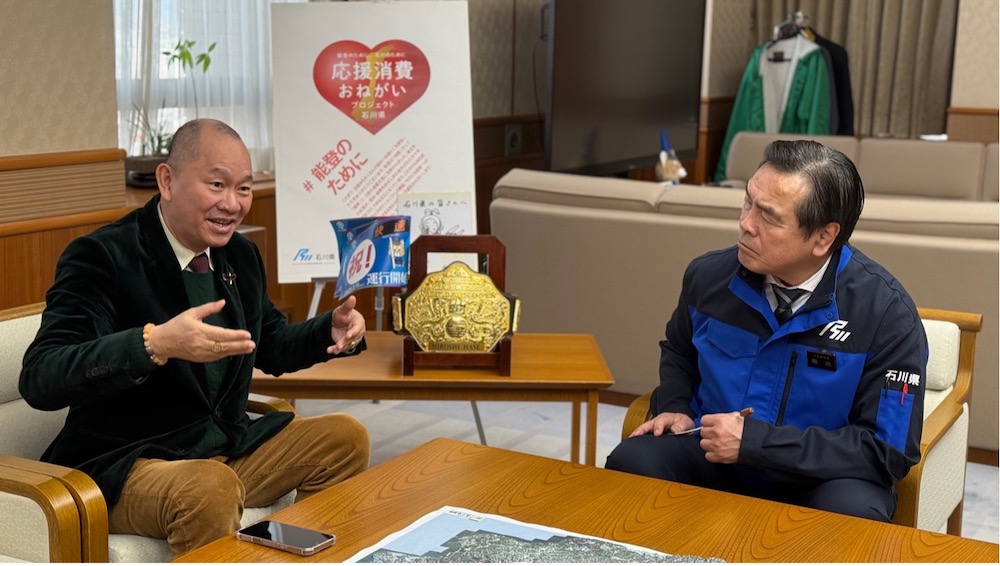
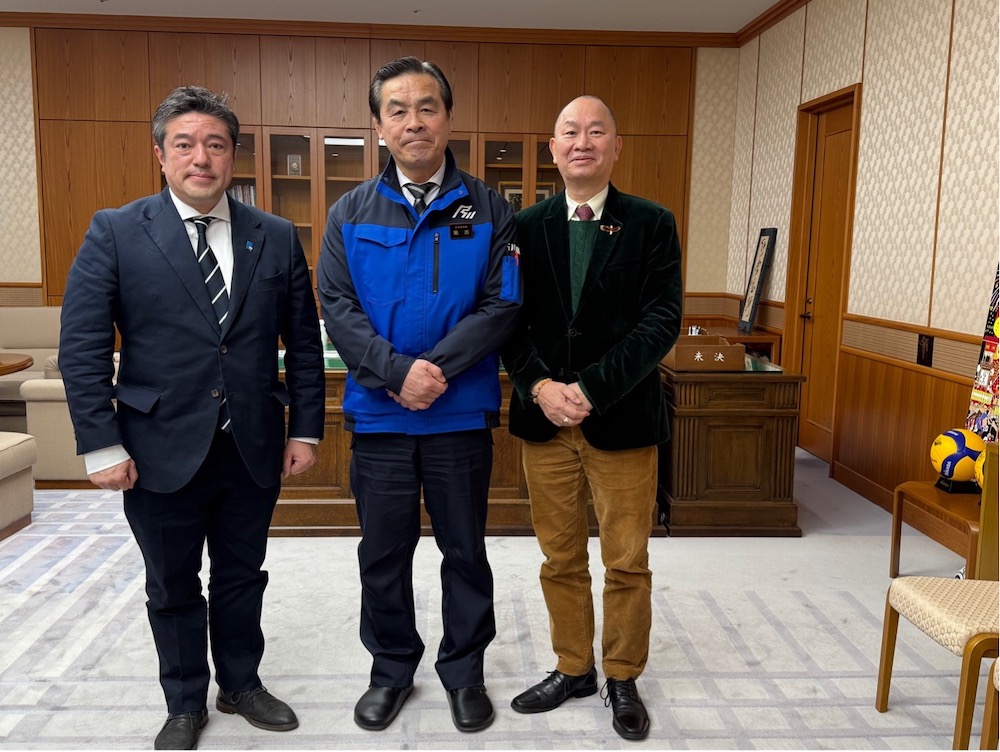
On March 26, I accompanied Mr. Tuan to visit Ishikawa Prefecture and meet with Governor Hiroshi Hase.
During the meeting at the Governor’s office, when Governor Hase asked him what he intended to achieve with his visit today, I proposed the idea of organizing a conference here. Immediately, in a flash of inspiration, Nguyen Anh Tuan spoke: “The earthquake brought immense pain and loss to Ishikawa, but let us transform this suffering and the devastation caused by nature into new miracles. This will serve as a reminder to humanity to cherish nature, to avoid causing disasters and destruction to both people and the environment ourselves. Here, we will give birth to ideas, initiatives, and creative programs to build a better humanity in the era of artificial intelligence, within the AI World Society (AIWS), ensuring that humanity does not bring about disasters for itself through artificial intelligence.” With that spirit, BGF, together with Governor Hiroshi Hase and the Ishikawa government, will organize a conference in September 2025—not a conference to solicit donations to recover from the 2024 Ishikawa earthquake, but one that uses Ishikawa as a foundation to collaboratively develop action programs to prevent human-made disasters in the AI era.
Adopted at the 4th Shinzo Abe Conference, Tokyo, March 28, 2025
Preamble
We, the participants of the 4th Shinzo Abe Conference, gathered in Tokyo on March 28, 2025, to honor the legacy of Prime Minister Shinzo Abe—a visionary leader who strengthened Japan and advanced global peace and security—recognize the urgent need to transform governance and financial systems in an era of rapid technological change. Inspired by his commitment to innovation, stability, and service to humanity, we hereby establish the Tokyo Accord for Government 24/7: AI and Finance Platforms. This accord is a bold step toward realizing the AI World Society (AIWS) vision, with AIWS Government 24/7 as its cornerstone, ensuring that governments and financial systems serve citizens continuously, ethically, and effectively.
Principles
Continuous Governance:
We commit to developing AIWS Government 24/7—a framework that harnesses artificial intelligence, digital tools, and quantum computing to provide governance that is accessible, transparent, and responsive 24 hours a day, 7 days a week. This ensures that governments meet the needs of citizens in real-time, fostering trust and resilience.
Finance as a Force for Good:
We pledge to construct AI-driven finance platforms that innovate and reform financial systems, integrating them with Government 24/7. These platforms will leverage AI, digital technologies, and quantum computing to enhance efficiency, ensure economic resilience, and promote ethical advancement for the benefit of all.
Humanity at the Core:
The deployment of AI and finance platforms must prioritize human well-being, equity, and inclusion, reflecting the humane leadership exemplified by Shinzo Abe. These systems will empower citizens, reduce disparities, and strengthen societal bonds.
Global Leadership through Collaboration:
Building on Japan’s legacy of contributing to world peace and security, we aim to position Japan as a leader in ethical AI and economic progress. This accord fosters collaboration between nations, particularly strengthening ties between Japan and the United States, to share knowledge, resources, and innovations.
Innovation and Stability:
We honor Shinzo Abe’s vision by balancing cutting-edge technology with stability. The integration of AI and finance platforms into governance will drive progress while safeguarding the security and prosperity of our societies.
Commitments
Implementation of AIWS Government 24/7: We will work to adopt and refine AIWS Government 24/7, ensuring that it becomes a model for continuous, citizen-centered governance worldwide. This includes pilot programs, policy frameworks, and technological infrastructure to support its realization.
Development of Finance Platforms: We will establish AI and quantum-powered finance platforms that integrate with Government 24/7, reforming financial systems to be more efficient, resilient, and equitable. These platforms will be designed to support economic growth and ethical investment.
Dialogue and Action: We commit to ongoing discussions, beginning today at the 4th Shinzo Abe Conference under the theme “Government 24/7: AI and Finance Platforms,” to refine and advance this vision. We will engage government leaders, business innovators, scholars, and students to build a global coalition.
Tribute to Shinzo Abe: We dedicate this accord to Prime Minister Shinzo Abe, whose leadership inspires us to create stronger, more effective, and more humane systems. Japan will lead by example, amplifying its role in shaping a peaceful and prosperous world.
Call to Action
We invite all nations, organizations, and individuals to join us in this historic endeavor. The Tokyo Accord for Government 24/7: AI and Finance Platforms is a commitment to harness technology for the greater good, building on Shinzo Abe’s legacy to create a future where governments and financial systems serve humanity with unwavering dedication. Let us act with purpose and unity to make this vision a reality.
Signed in Tokyo, Japan, on this 28th day of March, 2025
Dukakis, Michael, Former Governor of Massachusetts, Co-Founder and Co-Chair of Boston Global Forum Jonen, Tsukasa, Economic Commentator Kanehara, Nobukatsu, Executive Director, The Sasakawa Peace Foundation; Professor, Doshisha University; The Inaugural Deputy Secretary-General of the National Security Secretariat Kano, Takehiro, Ambassador Extraordinary and Plenipotentiary, Permanent Delegate of Japan to UNESCO Kiuchi, Minoru, Minister of State for Science and Technology Policy Matsuo, Yutaka, Professor from Tokyo University (AI), External Board Director, SoftBank Group Corp Moreno, Elisabeth, Former French Minister, Representative of BGF France and Africa Nakayama, Yasuhide, Representative of BGF Japan and Taiwan; Former State Minister of Defense, Former State Minister of Foreign Affairs Nguyen, Tuan, BGF Co-Chair and CEO Nham, Quynh, Senior Assistant to Chairman of BGF Pentland, Alex, MIT and Stanford Professor Poort, Joris, CEO, Rescale Tang, Audrey, The First Minister for Digital Affairs, Republic of China Yano, Kazuo, Fellow of Hitachi, Ltd. (AI)
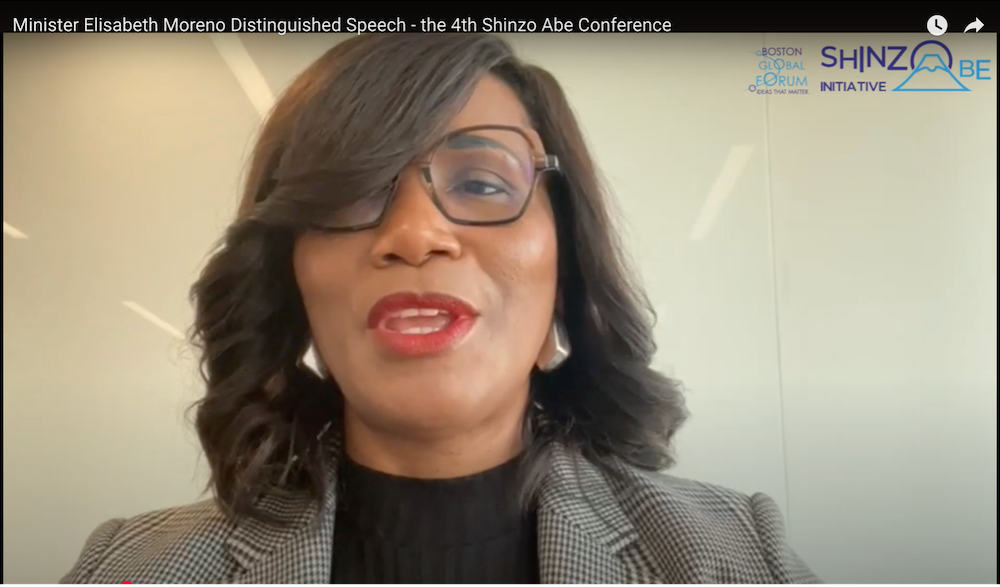
Representative of the Boston Global Forum for France and Africa
The 4th Shinzo Abe Conference
The Okura Tokyo, March 28, 2025
Ladies and gentlemen,
Distinguished guests,
Dear partners and friends from across the globe,
It is both an honor and a responsibility to speak to you today—as the representative of the Boston Global Forum for France and Africa—on this historic occasion, at the heart of Tokyo, at the close of the 4th Shinzo Abe Conference.
Although I join you from a distance, my voice carries with it the aspirations of two continents—Europe and Africa—united by a shared belief: that technology must serve people, not the other way around.
Prime Minister Shinzo Abe understood this better than most.
He envisioned a hope-driven economy, where innovation was not just a tool for growth—but a catalyst for stability, dignity, and democratic resilience.
Today, we gather to build on his legacy through the bold vision of Government 24/7: AI and Finance Platforms.
This is not just about digitizing public services.
It is about reimagining governance.
It is about creating governments that are responsive, resilient, and relentlessly human.
Because no citizen should ever be told:
“Come back tomorrow.”
Not when their rights, their health, or their future is at stake.
And certainly not when technology allows us to respond instantly, equitably, and transparently.
The AIWS Government 24/7 platform embodies this vision:
A public finance system that never sleeps—designed to empower governments and uplift citizens.
A platform where AI supports tax services, benefits distribution, fraud detection, and even personalized financial planning—not just for the privileged few, but for every citizen, including those historically excluded.
As a woman who was born in Africa, raised in Europe, and who has served in the highest levels of government and business, I can tell you this:
Digital transformation without inclusion is just another form of exclusion.
We cannot build Government 24/7 unless we build trust 24/7.
Trust in AI.
Trust in institutions.
Trust in one another.
That is why ethics must be the backbone of this transformation:
Transparency, so that every decision is open and auditable.
Accountability, so that algorithms do not replace judgment, but assist it.
Equity, so that even the most vulnerable—on every continent—are not left behind.
And sustainability, because our financial systems must serve future generations, not just quarterly results.
This is especially urgent for Africa, a continent full of youth, energy, and untapped potential.
AI and finance platforms can unlock unprecedented opportunities—but only if we design them to be inclusive by default.
And as we design the future, let us not forget the lessons of the past.
It was once said—by Nobel laureate Henry Kissinger:
“Who controls the food supply controls the people; who controls the energy can control whole continents; who controls money can control the world.”
But today, we must go beyond control.
In an era of AI and global interdependence, the question is no longer who controls— but rather, who takes responsibility.
Responsibility to empower, not dominate.
To serve, not surveil.
To unite, not divide.
Because the true power of technology lies not in what it can do, but in what we choose to do with it.
As Shinzo Abe once said:
“The future is not something we enter. It is something we create.”
Let us create it—together—with courage, clarity, and care.
Let us build a Government 24/7 that reflects not only the power of AI, but the best of our humanity.
Distinguished guests, honorable leaders, and dear friends,
As we draw this remarkable day to a close, I am filled with gratitude and inspiration. The 4th Shinzo Abe Conference has been a profound gathering—a testament to the enduring legacy of a great leader, Shinzo Abe, and a powerful step forward in our shared journey toward a more peaceful, secure, and prosperous world. I want to thank each of you—government leaders, scholars, innovators, and students—for your thoughtful contributions, your insightful discussions, and your unwavering commitment to the ideals we hold dear.
I also want to express my heartfelt appreciation to Yasuhide Nakayama, Representative of BGF in Japan and Taiwan, who set up a great program for me to visit and discuss with Japanese government leaders, business leaders, distinguished scholars, and outstanding students. It has truly been an amazing Japan trip for me, one that has deepened my understanding of Japan’s vital role in our global mission and strengthened the bonds between our nations.
Today, we have celebrated the realization of the AI World Society—AIWS—and its transformative vision of AIWS Government 24/7. We have explored how this framework can redefine governance, making it responsive, transparent, and accessible 24 hours a day, 7 days a week, empowering citizens to shape their societies in real time. Through our discussions, we have seen how AI, digital tools, and quantum computing can serve as partners in this endeavor, ensuring that governments not only meet the needs of their people but also contribute to global peace and stability, just as Shinzo Abe envisioned.
A highlight of this conference has been the unveiling of the Tokyo Accord for Government 24/7: AI and Finance Platforms, which includes the groundbreaking Abe Financial AI Protocol. This accord is more than a document—it is a commitment to harness AI and finance platforms for the betterment of governance and society, rooted in Abe’s vision of strength, compassion, and foresight. The Abe Financial AI Protocol, with its focus on transparency, fraud detection, and sustainable economic growth, positions Japan as a global leader in ethical AI and financial reform. I am deeply grateful to Minister Minoru Kiuchi, Yasuhide Nakayama, and all our distinguished participants—Kano Takehiro, Matsuo Yutaka, Elisabeth Moreno, Alex Pentland, Audrey Tang, Yano Kazuo, and Governor Michael Dukakis—for your leadership and insights that have shaped this historic moment.
Our discussions today have also laid the foundation for the next steps in our journey. The outcomes of this conference will be brought to the BGF Conference at Harvard University Loeb House on April 22, 2025, where we will build on the Tokyo Accord to develop the Boston Finance Framework for Governance 24/7. This framework will further advance our shared vision for AI-driven governance and global enlightenment, ensuring that the momentum we have created here in Tokyo continues to inspire and shape the future. I look forward to seeing many of you there as we continue this important work together.
As I reflect on today, I am reminded of Shinzo Abe’s words and actions—his dedication to peace, his passion for innovation, and his belief in the power of collaboration. He showed us that true leadership is about building bridges, not walls; about serving humanity with humility and vision. Let us honor his living legacy by carrying forward the spirit of this conference—by working together to make AIWS Government 24/7 a reality, not just in Japan, but across the world. Let us create a future where every citizen’s voice is heard, where technology serves the greater good, and where peace and prosperity are shared by all. We will take action together, and our next conferences will be geared toward actionable outcomes, ensuring that our shared vision translates into tangible impact for societies worldwide.
I leave you with a heartfelt thank you for your partnership and a renewed call to action. Let us continue this journey with the same courage, determination, and hope that Shinzo Abe embodied. Together, we can build a world that reflects his dream—a world where governance is a force for unity, innovation, and peace, every hour of every day.
Thank you, and I look forward to our continued collaboration.