AI researchers are warning of the evil use of AI in the future

The report was written by leading researchers whose specialties varied in many fields such as civil societies and industries including Oxford University’s Future of Humanity Institute; Cambridge University’s Centre for the Study of Existential Risk; OpenAI, a leading non-profit AI research company; the Electronic Frontier Foundation, an international non-profit digital rights group; the Center for a New American Security, a US-based bipartisan national security think-tank; and other organizations. According to the University of Cambridge, their research anticipates rapid development in cyber-crime and malicious use of emerging technologies as a result of unprecedented pace of advancement. The report is considered a clarion call for governments and corporations worldwide to jointly address the present danger inherent in a variety of AI applications.
Measures to intervene the threat of these manipulations recommended in the report are:
- Policy-makers and technical researchers need to work together now to understand and prepare for the malicious use of AI.
- AI has many positive applications but is a dual-use technology and AI researchers and engineers should be mindful of and proactive about the potential for its misuse.
- Best practices can and should be learned from disciplines with a longer history of handling dual use risks, such as computer security.
- The range of stakeholders engaging with preventing and mitigating the risks of malicious use of AI should be actively expanded.
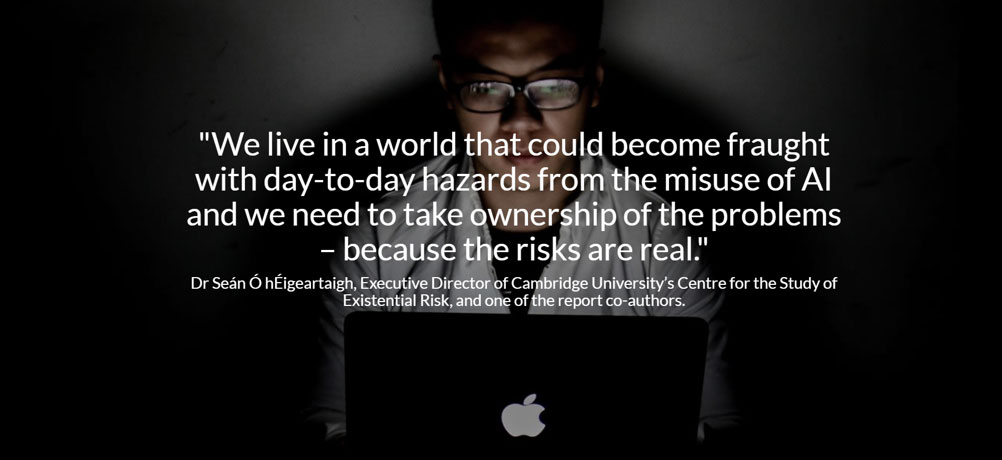
Dr. Seán Ó hÉigeartaigh – Executive Director of Cambridge’s Centre for the Study of Existential Risk (CSER) – commented: “For many decades hype outstripped fact in terms of AI and machine learning. No longer. This report looks at the practices that just don’t work anymore.”
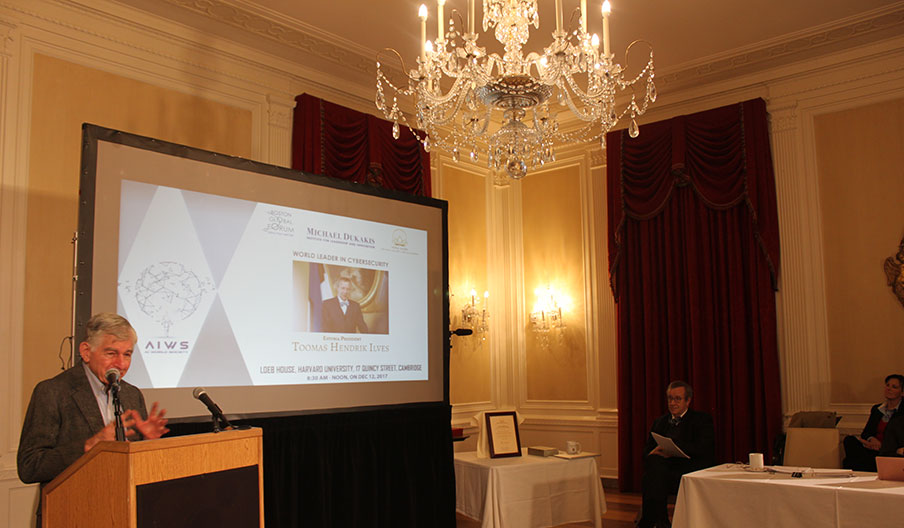
Concerned with the potential risks of AI and Cybersecurity is also the main theme of Global Cybersecurity Day Conference hosted by Boston Global Forum this year. The conference, scheduled on December 12, 2018 is hoped to inspire the shared responsibility of the world’s citizens to protect the safety and transparency in the use of AI and Cybersecurity.