by Robert Whitcomb | Jul 26, 2016 | News
Bloomberg reports that the cybersecurity goals of the Obama administration may live on in a Hillary Clinton administration. The Democratic Party platform echoes the same goals set by President Obama, designed to strengthen U.S. cybersecurity and modernize federal information-technology systems.
To read about the Democrats cybersecurity goals, please hit this link.
by Robert Whitcomb | Jul 26, 2016 | News
U.S. Secretary of State John Kerry said on July 26 that the U.S. hopes to announce in early August details of planned military cooperation and intelligence-sharing with Russia on Syria.
But given Moscow’s actions so far in going all out to support the regime of Syrian dictator Bashar Assad and how the Russians have generally ignored U.S. pleas to stop bombing anti-Assad forces that are not connected with Islamic terror groups such as Isis and al-Qaida, most observers expect little change. The U.S. is increasingly seen as lacking will in the Syrian conflict.
Reuters reported that the latest proposals “would have the two powers share intelligence to coordinate air strikes against the al Qaida-affiliated Nusra Front and prohibit the Syrian air force from attacking rebel groups labeled as moderate.”
To read the Reuters article, please hit this link.
by Robert Whitcomb | Jul 25, 2016 | News
Many experts think that the the regime of Russian President Vladimir Putin is trying to throw the U.S. presidential election to Donald Trump, who has expressed admiration for Mr. Putin and other dictators.
Cybersecurity experts, as well as the Hillary Clinton campaign, are now saying the Russians did last month’s hack of the Democratic National Committee. Mr. Putin, a former KGB agent, and his police state have been hard at work carrying out a cyberwar against parts of the U.S. public and private sectors for several years.
Bob Gourley, a former chief technology officer for the Defense Intelligence Agency and now the co-founder and partner Cognitio, a cybersecurity consultancy, told Bloomberg:
“The software code that I have seen from the hack had all the telltale signs of being Russian, including code re-used from other attacks. This is a really big deal. Some people in the community are saying this is the Russians pretending to be a hacker, then giving that information to Julian Assange is all part of an operation.” (Assange founded WikiLeaks.)
To read the Bloomberg story, please hit this link.
by Robert Whitcomb | Jul 25, 2016 | News
The Russian-backed attack on eastern Ukraine has taken vast numbers of weapons out of the hands of irregular military units and put them into the criminal international arms business, which is selling the weapons far beyond the conflict zone.
“Interviews by Reuters with security officials and rebels, as well as study of law enforcement data and court documents have shown that weapons are being channeled out of the conflict zone in eastern Ukraine in significant numbers, in some cases as part of an organized underground trade,” Reuters reported.
“Of course, they have moved arms across, and they’re moving them across now,” Igor, a fighter with a pro-Russian rebel unit in eastern Ukraine told Reuters. “Mainly they take Kalashnikovs,” he said.
To read the entire Reuters story, please hit this link.
by Robert Whitcomb | Jul 22, 2016 | News

View of the Acropolis, in Athens.
Greek lawmakers voted July 21 to lower the voting age to 17 from 18 and eventually eliminate a 50-seat bonus for the winning party.
The drop in voting age will take effect in the next election, but the seat bonus will end two elections from now.
Lowering the voting age might have two possible effects: mostly increasing the total votes for the left (which now controls the parliament) and/or increasing votes for populist parties of the right and the left. Of course, young people vote at much lower rates than do older people.
To read an Agence France-Presse article on this, please hit this link.
by Robert Whitcomb | Jul 22, 2016 | News
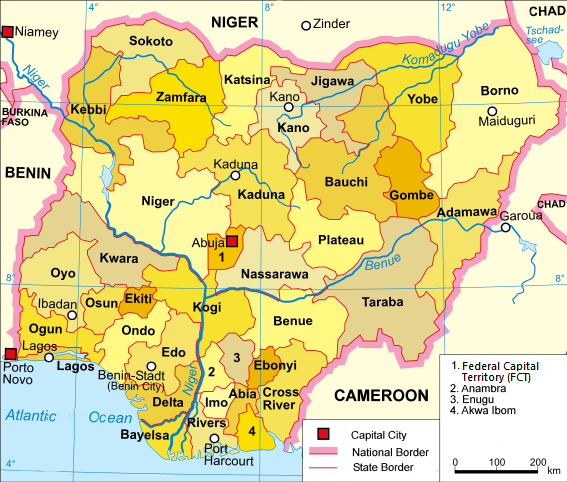
Nigeria’s oil wealth has been more of a curse than a blessing. Meanwhile, “Avengers” who complain that people in the Niger River Delta have not received their fair share of oil revenues in this astonishingly corrupt nation step up their daily damage to oil-industry infrastructure.
To read a BBC story on this, please hit this link.
by Robert Whitcomb | Jul 22, 2016 | News
Thousands of Chinese executives have been moving to the U.S. to work for formerly American companies bought by Chinese firms.
“We’ve seen a huge surge,” Bernard Wolfsdorf, founder and managing partner of a U.S.-based immigration law firm, told CNN. “Chinese companies are investing very heavily in America, and [they are] bringing in key executives and employees.”
CNNMoney analysis found that the U.S. granted 10,258 L-series visas to Chinese workers and their family members in 2015, more than four times the number approved in 2005.
America is generally a more pleasant place to live than China, and so it’s not surprising that s0 many Chinese executives would want to move to the U.S., at least for a while. But the Chinese government may also like the idea because it provides more opportunity for industrial espionage.
To read the CNN story, please hit this link.
by Robert Whitcomb | Jul 22, 2016 | News
America’s NATO allies, already dealing with an aggressive Russia, the rise of nativist populism and the possible effects of Brexit, became even more worried this week when they read Donald J. Trump say that the United States might not come to the defense of NATO allies that do not foot their share of joint-defense bills as mandated by agreements but often ignored by European governments.
American officials have pressed European countries in recent years to increase military spending in line with their commitments to NATO, but Mr. Trump much more explicitly has linked financial considerations to the strategic response he would order as president in the event of an attack by Russia.
To read an article on this, please hit this link.
by Robert Whitcomb | Jul 22, 2016 | News
Libya’s U.N.-backed government has denounced France for sending troops into eastern Libya, declaring it a violation of Libyan sovereignty. The French sent in the troops to fight the Islamic State, whose followers have been murdering French people in large numbers.
To read an article on this, please hit this link.