by Robert Whitcomb | May 28, 2016 | AI World Society Summit
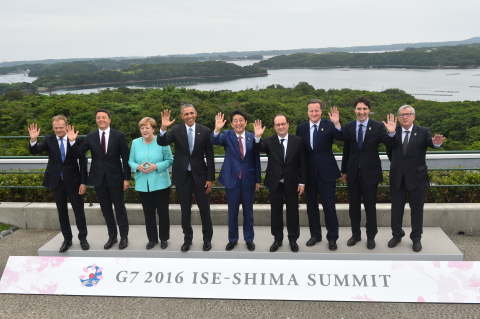
(May 30th, 2016) Marc Chandler argues, in the wake of the G7 Summit, that a major problem facing the world economy lies in problems in the capital markets and the “currency mismatches that stem from dollar borrowings.’’ Read his overview of summit concerns.
by Robert Whitcomb | May 28, 2016 | Initiative
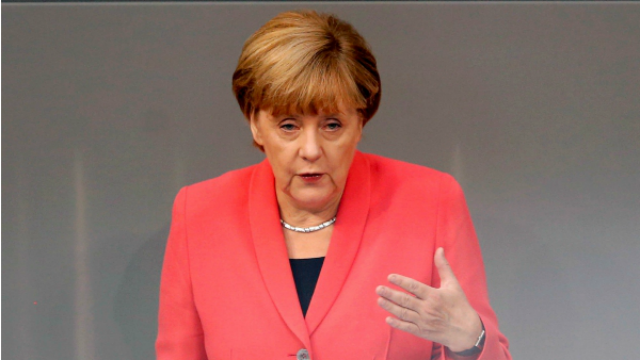
(May 30th, 2016) German Chancellor Angela Merkel said on May 26 that the Group of Seven will not end sanctions on Russia over its involvement in the conflict in eastern Ukraine and its seizure of Crimea.
“For me it’s too early to give the all clear,” Ms. Merkel said in Japan, where she was attending the G7 Summit.
“There is no change of position to be expected” from the G7, she said. Earlier that day European Council President Donald Tusk, also at the summit, said that the G7 needed to take a “clear and tough stance” toward Russia for its moves in Ukraine — as well as toward China for its controversial claims and militarization in the South China Sea.
“The test of our credibility at the G7 is our ability to defend the common values that we share,” he told reporters at the Japan talks. “This test will only pass if we take a clear and tough stance on every topic of our discussions here.”
Ukraine and its Western allies believe that Russia seized and annexed Crimea from Ukraine in March 2014 and fomented an insurgency in the country’s east to keep a grip over the former member of the Soviet Union, and especially to prevent it from seeking membership in the European Union and NATO.
by Robert Whitcomb | May 28, 2016 | World Leaders in AIWS Award Updates
(May 30th, 2016) This link will take you to a description of the program in Vietnam of the UNESCO Chair in Global Learning and Global Citizenship Education, with which The Boston Global Forum has been collaborating closely.
The program has been working in Vietnam since 2015 with a project called “The University in Transition: Policy Research Addressing Major Challenges In The Institutions Of Higher Education In Vietnam.” This project has support from private sources in Vietnam and strong collaboration from government institutions.
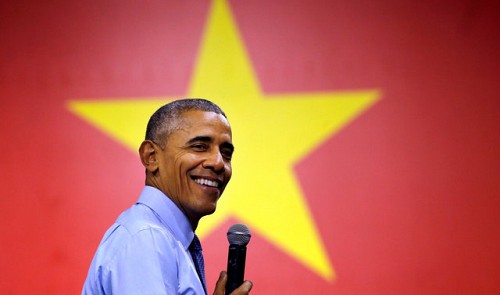
This is part of the ongoing strong reconciliation of Vietnam and the United States, symbolized by President Obama’s trip this past week to Vietnam. He was the third U.S. president, after Bill Clinton and George W. Bush.
This report provides a detailed description of the objectives and rationale of the project in the context of the overall challenges to higher education in Asia. It also looks in general at the challenges for higher education in Vietnam and the United States.
by Robert Whitcomb | May 28, 2016 | Initiative
(May 30th, 2016) Pavan Duggal, an Indian cyberlaw and cybersecurity expert, warned that as governments around the world struggle to stop cyberattacks and data breaches, India needs to come up with a more comprehensive legal approach and framework to address various issues in cyberspace. Read this link to The Times of India story.

“Today, a lot of work in personal, professional, social and governance space is being done on the internet. Therefore, there is a need to look at the issues in cyberspace. It is here that issues like cyberlaw, cybercrime and cybersecurity come in,” Mr. Duggal, president of cyber laws.net and a lawyer who argues before the Indian Supreme Court, said at meeting on cyberlaw, cybercrime and cybersecurity in New Delhi.
He warned that, given recent cyberspace trends in India, cyberterrorism and political radicalization via the Internet are going to hit big time in India.

by Robert Whitcomb | May 28, 2016 | Initiative
(May 30th, 2016) Despite hopes that China’s ever-tougher censoring of the Internet to keep away challenges to the dictatorship of the Communist Party would be cracked, in fact that censorship seems to be increasingly effective.
As this first in a series of articles in The Washington Post about the ‘’Great Firewall of China’’ notes:
“Far from knocking down the world’s largest system of censorship, China in fact is moving ever more confidently in the opposite direction, strengthening the wall’s legal foundations, closing breaches and reinforcing its control of the Web behind the wall.’’