by Robert Whitcomb | Jun 12, 2016 | Event Updates
Alexei Pushkov, the Foreign Affairs Committee chairman of the lower house of the Russian parliament, said that it would be no surprise if the G7 nations extended sanctions against Russia for its occupation of Crimea and its war against the pro-Western government of Ukraine in the eastern part of that country, reports Sputnik News, which acts as a mouthpiece for the Russian government of Vladimir Putin.
But then, the G7 leaders at their May 26-27 summit in Japan had already make it quite clear that the sanctions would be extended.
“The signals from the West on the extension of sanctions are not a surprise. The decision was taken at the G7 [summit]. Since then, other options have been excluded,” Mr. Pushkov wrote on Twitter.
To read the Sputnik News article, hit this link.
by Robert Whitcomb | Jun 12, 2016 | World Leaders in AIWS Award Updates
(June 13th, 2016) The news service V3 reports that international cybersecurity expert Bruce Schneier warned that governments lack the expertise to, as V3 paraphrased him, “define security policy when it comes to the rapidly growing Internet of Things.’’
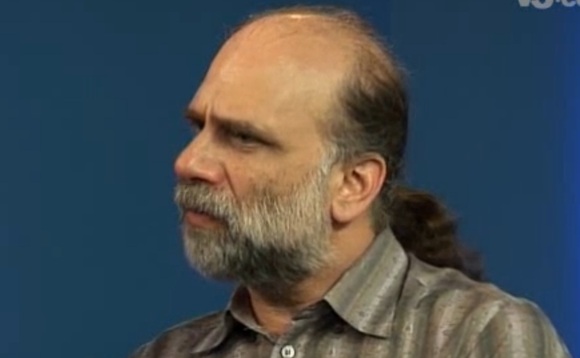
The Boston Global Forum honored Mr. Schneier last Dec. 12 as a “’Business Leader in Cybesecurity for dedicating his career to the betterment of technology, security and privacy’’ in the Internet.’’ The security technologist is also a member of the Infosecurity Europe Hall of Fame.
V3 reported that Mr. Schneier “explained that that governments approach topics such as the Internet of Things and cybersecurity without the technical knowledge to understand the challenges.’’
“A lack of relevant expertise is really going to hurt us. There is a fundamental mismatch between the way government works and the way technology work,” Mr. Schneier said.
In any case, he said: “I think that more government involvement in cybersecurity is inevitable simply because the systems are more real. I think we are going to see more cyberwar rhetoric, more cyberterrorism rhetoric, more calls for surveillance, more calls for use control, more trusting of the government.’’
V3 noted: “Concerns about Internet of Things security are becoming more pertinent because the threats posed to some connected devices have the potential to cause physical harm.’’
For the V3 story, hit this link.
by Robert Whitcomb | Jun 12, 2016 | AI World Society Summit
(June 13th, 2016) The Sunday Standard of New Delhi reports that a Chinese cyberattack on Indian government units and business groups has led to an alert to the Indian military, which appears to be the main target.

The paper reported that a Chinese Advanced Persistent Threat (APT) group called Suckfly, run by the Chinese military and based in the Chengdu region, is doing the targeting via malware called Nidiran.
The Standard reports that Suckfly has stolen certificates from legitimate software- development firms in South Korea and is using them to camouflage its attacks. “Sensitive information from targeting computers and networks is exfiltrated, and this information is being used to undermine the national security and economic capabilities,” the Indian Defense Ministry alert says.
For full story, hit this link.
by Robert Whitcomb | Jun 10, 2016 | AI World Society Summit
Roger Cohen warns in The New York Times of the perils that lie just ahead with what he sees as the terrifying possibility that the European Union could collapse if the United Kingdom decides to leave the E.U.
Mr. Cohen implied that would make Russian President /Dictator Vladimir Putin and would-be tyrants in central Europe very happy.
Mr. Cohen concluded:
….I listened the other evening at the American Academy in Berlin as Henry Kissinger, the personification of realpolitik, insisted that the “necessity of the coherence of the Atlantic world” had become ‘even greater.’ With him was the American ambassador to the United Nations, Samantha Power, the recipient of this year’s Kissinger Prize — and long the personification of liberal interventionist idealism. In many ways they formed a strange duo. But their togetherness was also a statement: That, until now, America’s postwar European and internationalist commitment has held across the foreign policy spectrum.
“Realpolitik and idealism meet in the unity of Europe. The unthinkable, on both sides of the Atlantic, must be resisted before it is too late.’’
For the full column, hit this link.
by Robert Whitcomb | Jun 10, 2016 | Initiative
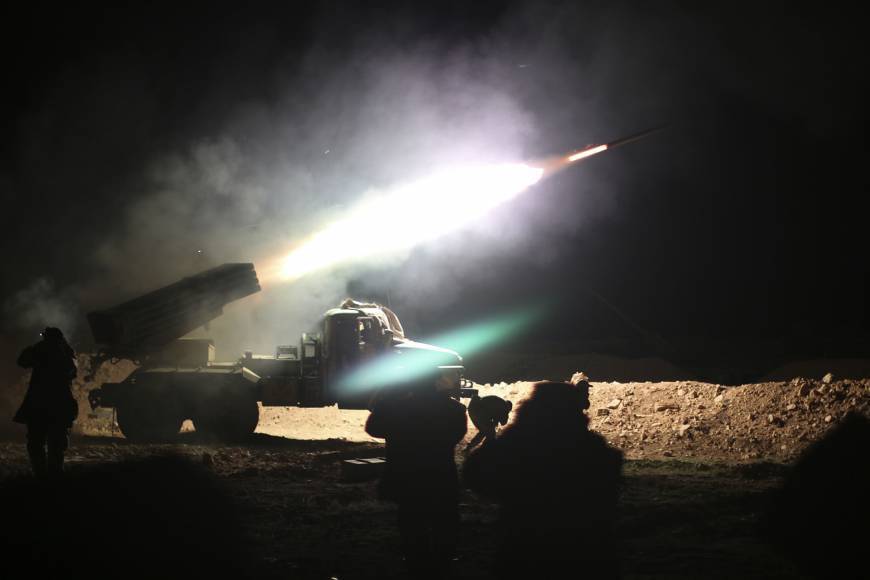
(June 13th, 2016) As the Islamic State continues to suffer more and more losses of territory and fighters, growing numbers of Western jihadis are trying to quit the ISIS and go back home. But Western security officials have a difficult time in ascertaining who might want to return home to engage in Islamic terrorism and not to resume a peaceful and law-abiding life.
For its part, ISIS, which is losing ground in Syria, Iraq and Libya, is trying to stop some of the thousands of foreign volunteers who have joined its ranks from going home.
“They sense that we have entered the final stage. Many are starting to send us messages to know how they can return,” France’s national intelligence coordinator, Didier Le Bret, told Agence France-Presse.
But many of those who want to defect are “prevented by Daesh (ISIS) policy, which considers those who want to leave Syria {and other places where ISIS operates} as traitors to be immediately executed,” he said.
For more details, hit this link.