by Robert Whitcomb | Jun 17, 2016 | World Leaders in AIWS Award Updates
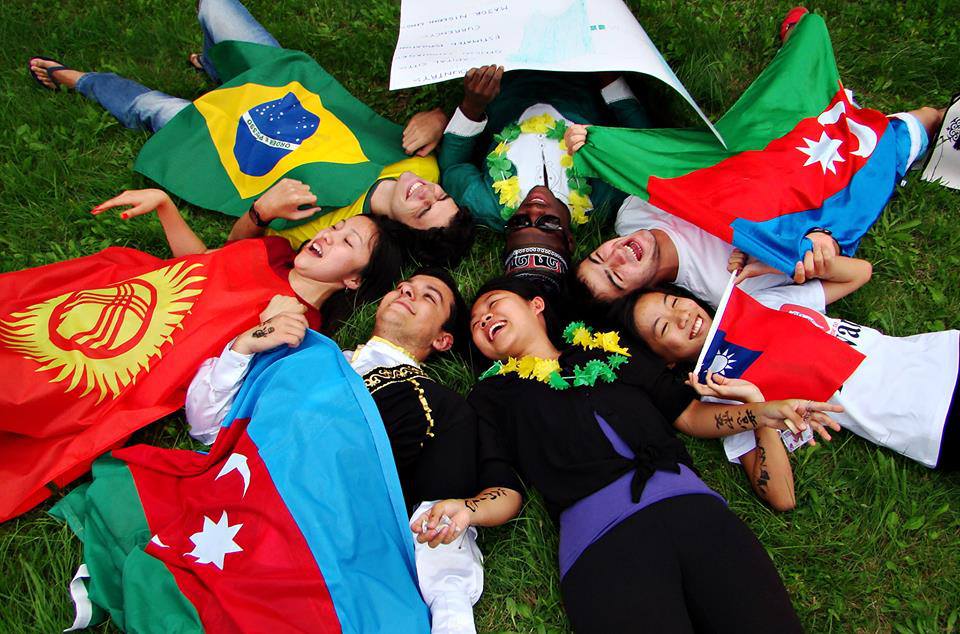
(June 21st, 2016) A BBC World Service poll funds that people in general are increasingly identifying themselves as global rather than just national citizens. (The Boston Global Forum has been heavily involved in global citizenship education programs.)
The news service says that that the trend “is particularly marked in emerging economies, where people see themselves as outward looking and internationally minded.”
However, in some advanced industrialized nations, perhaps most notably Germany, “fewer people say they feel like global citizens now, compared with 2001,” in what points to the effects of Chancellor Angela Merkel’s decision to open borders to a flood of migrants from the Mideast. That decision has spawned much anxiety in Europe.
The poll founds that “more than half of those asked (56 percent) in emerging economies saw themselves first and foremost as global citizens rather than national citizens.
In Nigeria (73 percent), China (71 percent), Peru (70 percent) and India (67 percent) the data were particularly marked.
“By contrast, the trend in the industrialised nations seems to be heading in the opposite direction.
“In these richer nations, the concept of global citizenship appears to have taken a serious hit after the financial crash of 2008 {and with the start of the refugee crisis}. In Germany, for example, only 30 percent of respondents see themselves as global citizens.”
For the entire BBC story, please hit this link.
by Robert Whitcomb | Jun 17, 2016 | AI World Society Summit
The Guardian reports that “‘Anonymous’ has launched another wave of hacking attacks against Islamic State (ISIS), taking over social-media accounts associated with the group and giving them an LGBT-flavored makeover.”
“The loose hacking collective, which grew out of the infamous 4Chan forum in the late 2000s, announced its war on ISIS in 2015, taking control of almost 100 twitter accounts following the Charlie Hebdo attacks in Paris that year.”
“Now, after the murder of 49 people in a gay club in Orlando, Florida, a hacker who goes by the name WauchulaGhost says he has taken control of more than 200 accounts belonging to ISIS supporters. This time, rather than simply lock the users out of the accounts or report them to Twitter, the cybervigilante has given the accounts a gay-friendly makeover.”
ISIS members say they hate gay people, and they treat them with great brutality. But some ISIS people are (self-hating) gays themselves.
To read the full story, please hit this link
by Robert Whitcomb | Jun 17, 2016 | AI World Society Summit
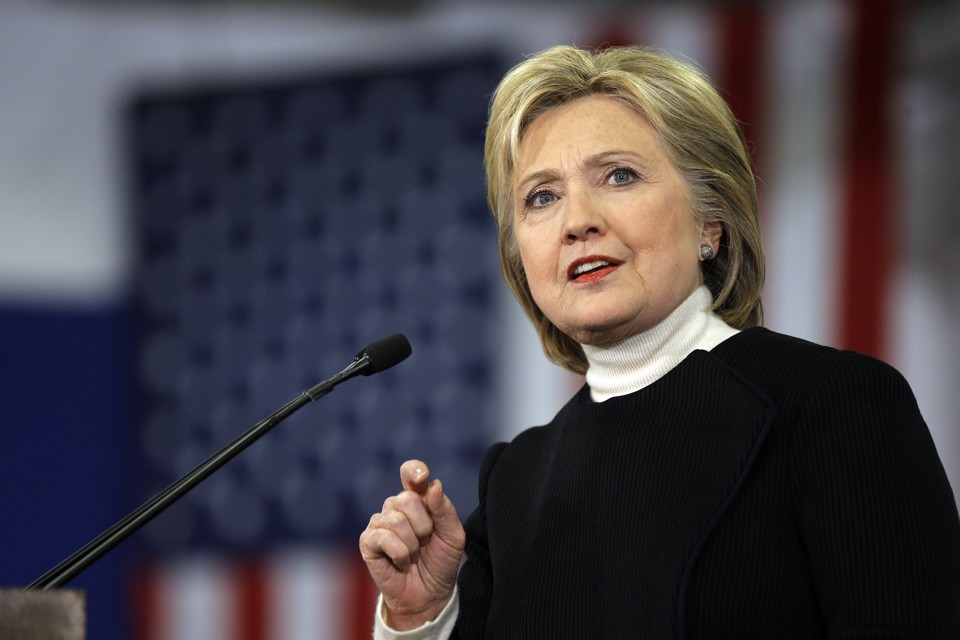
(June 21st, 2016) Bloomberg News reported on June 17 that Hillary Clinton’s presidential campaign said, in Bloomberg’s paraphrase, that “there’s no sign that hackers have broken into its computer systems, but it’s well aware that Russian cyber operatives may be trying.”
Democratic presidential candidate Hillary Clinton speaks at her first-in-the-nation presidential primary campaign rally, Tuesday, Feb. 9, 2016, in Hooksett, N.H. (AP Photo/Matt Rourke)
“We continue to have no evidence that HFA’s information systems have been compromised,” Glen Caplin, a spokesman for Hillary for America, the campaign organization, said.
The news service reported that on on June 26, SecureWorks Corp., an Atlanta-based cybersecurity company, “said its researchers found a group of hackers linked to the Russian government targeted Clinton’s campaign, ‘including individuals managing Clinton’s communications, travel, campaign finances and advising her on policy.”’
Earlier, the Democratic National Committee had disclosed that hackers believed to be working for the Russian government had gotten into its servers.
To read the Bloomberg article, please hit this link.
by Robert Whitcomb | Jun 17, 2016 | AI World Society Summit
U.S. Navy Secretary Ray Mabus said that the United States will maintain its military presence in the Black Sea despite, in Reuters’s words, “a Russian warning that a U.S. destroyer patrolling there undermined regional security.”
The USS Porter entered the Black Sea this month, drawing heavy criticism from Moscow. Turkey and Romania are expected to seek a bigger NATO presence in the sea at the NATO summit in Warsaw next month.
Mr. Mabus told Reuters that it was the U.S. Navy’s job to deter aggression, presumably meaning Russian aggression, and keep international sea lanes open.
Relations between Russia and NATO have been very strained over Moscow’s attack on Ukraine and military support of Syrian dictator Bashar al-Assad.
For more details, hit this link.
by Robert Whitcomb | Jun 17, 2016 | Initiative
The Guardian looks at the “gun-control terror gap” in the United States, which the news organization defines as “the notion of a legislative hole whereby U.S. citizens can purchase deadly firearms even if they are under investigation for suspected terrorist activity. The Government Accountability Office found that between 2004 and 2014, some 91% of suspected terrorists who attempted to buy a gun – 2,043 out of 2,233 – succeeded.”
To read the article, please hit this link.