by Robert Whitcomb | Jul 5, 2016 | News

In Kaliningrad.
Here’s a look at how the geography and tangled history of the Baltic region make everyone nervous as a more aggressive Russia probes NATO defenses in the region.
Kaliningrad, a key Russian naval hub and leftover from World War II, is at the epicenter of tensions.
To read a Washington Post article on this, please hit this link.
by Robert Whitcomb | Jul 5, 2016 | News
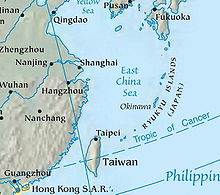
China has strongly criticized Japan over a scramble of military aircraft from the two countries amid a dispute over islands in the East China Sea.
Japan is in an old dispute with China over ownership of a group of islands northeast of Taiwan, known as the Senkakus in Japan and the Diaoyus in China.
The Chinese Defense Ministry said that two Japanese fighter jets took “provocative actions” at a high speed near a pair of Chinese fighter jets patrolling the sea on June 17.
The Japanese planes used radar to “light up” the Chinese aircraft, the Chinese statement added. Japan has acknowledged that there was a scramble but has denied that there was any radar lock.
“The Japanese plane’s provocative actions caused an accident in the air, endangering the safety of personnel on both sides, and destroying the peace and stability in the region,” China’s Defense Ministry said.
Japan has accused China of escalating military activity in the East China Sea, saying that Japanese emergency scrambles to counter Chinese jets have almost doubled over the past three months.
Reuters reports that Japan “is worried that China is escalating its activity in the East China Sea in response to Tokyo’s pledge to support countries in Southeast Asia, including the Philippines and Vietnam, that oppose China’s territorial claims in the South China Sea.”
To read the Reuters article on this, please hit this link
by Robert Whitcomb | Jul 5, 2016 | News

In the wake of the British vote to leave the European Union, Poland, the Czech Republic, Hungary and Slovakia are prepared to push back against the efforts of Germany for more integration of EU. member states.
The push-backers are worried about being marginalized as Germany, no longer having to share space in the E.U. with Britain, a major economic power, might gain even more authority in the multinational organization. Britain has been a strong friend and ally of the four nations as they try to get the best deals for themselves within the E.U. Further, they, like the British, strongly support curbs on immigration into the E.U. in particular and into their nations in particular.
Note, of course, that there’s an outside chance that the U.K. won’t leave the E.U. after all.
“The genuine concerns of our citizens need to be better reflected,” the group’s four prime ministers said in a joint statement last week, in which they called for the E.U.’s executive power to be restrained. “Instead of endless theoretical debates on ‘more Europe’ or ‘less Europe’, we need to focus on ‘better Europe’,” they wrote.
To read The Guardian article on this, please hit this link.
by Robert Whitcomb | Jul 5, 2016 | News
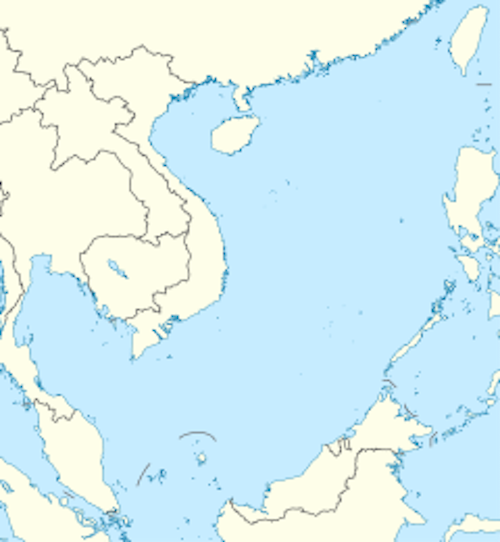
The exercises, inside a 100,000-square-kilometer zone around the disputed Paracel Islands, come ahead of a ruling expected next week by the Permanent Court of Arbitration in the Hague over a long-standing territorial dispute between the Philippines and China.
The court will rule on whether the Philippines has the right to exploit waters also claimed by China.
A ruling could cast into doubt China’s vast claims in the region, through which about 30 percent of world trade goes through. But Beijing has refused to recognize the court’s authority.
To read The Guardian’s story on this, please hit this link.

by Robert Whitcomb | Jul 4, 2016 | AI World Society Summit

Needless to say, the colleagues of Prof. John Savage at the Boston Global Forum (BGF) were very pleased to read the announcement below from Brown University, which we have slightly edited for clarity. John Savage is a BGF member and the An Wang Professor of Computer Science at Brown.
The press release from Brown:
“Congressional Quarterly Roll Call recently interviewed Professor John Savage of Brown University‘s Department of Computer Science (Brown CS) to document a unique moment in history. ‘The May 26-27 meeting of the Group of Seven in Ise-Shima, Japan,’ writes Paul Merrion, ‘produced the G7’s first-ever stand-alone agreement on cybersecurity, data protection and Internet governance.’
“To give a bit of history, the Boston Global Forum (BGF), chaired by former {Massachusetts Gov.} Michael Dukakis, was founded to bring together thought leaders and experts from around the globe to participate in open public forums to discuss and illuminate the most critical issues affecting the world at large. In February, Nguyen Anh Tuan, the BGF’s CEO and a co-founder of the nonprofit think tank, asked John to address the BGF and prepare an agenda for the G7 Summit, working with other individuals affiliated with the BGF to develop his presentation into a formal proposal.
“The G7 agreement (‘The G7 Ise-Shima Leaders’ Declaration’), which draws on the work of Savage and his colleagues, makes the landmark statement that cyberspace is under the rule of national law, and advocates for responsible state behavior during peacetime and the development of confidence-building measures to increase security. ‘It’s very significant,’ John says. ‘It’s progress, it’s recognition that nations need to help one another.”’
For more information, please his this link.