by Robert Whitcomb | Jul 19, 2016 | News

Russian President Vladimir Putin won’t admit to the massive state-sponsored doping of Russia’s would-be Olympic athletes because that might be seen as admitting that Mr. Putin himself
is a criminal.
And so, Bloomberg reports, “Putin appears less and less willing to cooperate with international sports organizations and increasingly inclined to complain about political conspiracies against his country.”
“The issue is no longer just Russian athletes’ participation in the Rio Olympics: It’s about Putin’s state being labeled as criminal. Putin’s reaction under these circumstances — as when a Malaysian airliner was shot down over eastern Ukraine two years ago and Russia and its proxies were strongly implicated — is to deny, deny, deny.”
To read more, please hit this link.
by Robert Whitcomb | Jul 19, 2016 | News
Brazilian Judge Daniela Barbosa Assunção de Souza has imposed an indefinite suspension of Facebook Inc.’s WhatsApp after it failed to cooperate in a criminal investigation. Reuters reports that it’s the third such incident involving the phone-messaging app since December.
The judge said the order, affecting more than 100 million users in Brazil, will be lifted once Facebook surrenders data. But she withheld details of the confidential case.
Reuters reported that WhatsApp stood by its defense that encrypted messages sent over the app are not stored on its servers, “an argument that has won out on appeal, quickly reversing recent blockages that still show the vast discretionary power of Brazil’s lower courts.” Some wonder if it involves political corruption.
“As we’ve said in the past, we cannot share information we don’t have access to. We hope to see this block lifted as soon as possible,” said a WhatsApp spokesperson.
“The office of Brazil’s attorney general reiterated its position that judges who suspend WhatsApp are incorrectly interpreting a 2014 law meant to provide a legal framework for the Internet.”
“Still, that guidance has not stopped judges frustrated with the modern limits of wiretaps in drug-trafficking investigations from going after the service and even briefly jailing a senior Facebook executive in March.”
To read the Reuters story, please hit this link.
by Robert Whitcomb | Jul 19, 2016 | News
New details are emerging that show how close the Turkish coup came to success. Contrary to what has already become the conventional wisdom, the attempt was very well organized. But the plotters had some bad luck.
One observer said that the coup started to fail when the president, the prime minister and high-level army commanders went on the air and declared their support for the democratically elected government and called on citizens to go into the streets to block pro-coup troops.
To read The Guardian story on this, please hit this link.
by Robert Whitcomb | Jul 18, 2016 | News
In a new show of muscle, China is closing part of the South China Sea for military exercises this week. The announcement comes after an international tribunal ruled against Beijing’s claim to own virtually the entire sea.
An area southeast of China Hainan island province will be closed until Thursday local time, but Beijing gave no details about the exercises.
The Japan Times reported: “Six governments claim territory in the South China Sea, although the area where the Chinese naval exercises are being held is not considered a particular hot spot. China’s navy and coast guard operate extensively throughout the South China Sea and regularly stage live firing exercises in the area.”
To read The Japan Times story, please hit this link.
by Robert Whitcomb | Jul 18, 2016 | News
In a plea that’s unlikely to be respected by Turkey’s increasingly dictatorial president, Recep Tayyip Erdoğan, European politicians and U.S. Secretary of State John Kerry have called on Turkey to respect the rule of law amid a purge of state institutions in the aftermath of the botched coup.
Mr. Kerry told a news government: “We …urge the government of Turkey to uphold the highest standards of respect for the nation’s democratic institutions and the rule of law. We will certainly support bringing the perpetrators of the coup to justice but we also caution against a reach that goes well beyond that.”
As Turkish authorities consider restoring the death penalty for those either in the coup or simply those whom Mr. Erdogan deems political enemies, the E.U. has warned that for Turkey to restore the death penalty would doom its {already probably doomed attempts} to join the E.U. Turkey’s increasingly authoritarian government and Islamist tendencies make it an unlikely member of a group of open, secular democracies.
To read a Guardian article on this, please hit this link.
by Robert Whitcomb | Jul 15, 2016 | News
The United Kingdom’s new prime minister, Theresa May, pushed for U.K. unity in Edinburgh on July 15 on her first visit as Britain’s premier. While 51 percent of voters in the U.K. as a whole backed its exit from the European Union, 62 percent of Scots voting favored remaining.
The vote triggered calls among Scottish nationalists for another referendum on whether Scotland should leave the U.K.
“I want to get the best possible deal for the whole of the United Kingdom out of our negotiations for the U.K. leaving the E.U.,” the new premier said.
Questioned about another plebiscite on Scotland leaving the U.K., two years after Scots voted to remain part of the kingdom, the Conservative leader said: “As far as I’m concerned, the Scottish people had their vote.”
But she also signaled some flexibility on Scotland’s demands to be allowed to chart a somewhat different course than the rest of the U.K. in dealing with Europe.”I want the Scottish government to be fully engaged in our discussions and our considerations, and I will listen to any options that they bring forward.”
To read more, please hit this link.
by Robert Whitcomb | Jul 15, 2016 | AI World Society Summit
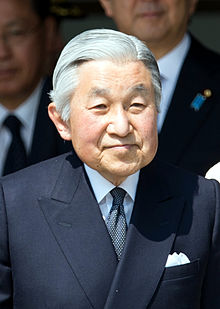
Emperor Akihito.
The Japanese government has begun work to revise the law governing the imperial family system to permit an emperor to abdicate. Emperor Akihito wants to abdicate, government sources have said. He has been treated for prostate cancer and heart problems.
The 82-year-old monarch is expected to soon speak about his desire to hand over the throne to his 56-year-old son, Crown Prince Naruhito.
The Japan Times noted: “Revision to the Imperial House Law is necessary for an emperor to relinquish the throne while still alive, as the law does not provide for abdication. No succession from a living emperor has taken place for about 200 years.”
Read The Japan Time’s article on this by hitting this link.
by Robert Whitcomb | Jul 15, 2016 | News
Jason Burke, writing in The Guardian, discusses why France is such a target for Islamic mass murderers.
He observes, among other things that:
“Undoubtedly, the role France has historically assumed as standard bearer of Western secular liberalism has put the nation in the spotlight. Islamic extremists may see the U.S. as a source of moral decadence and economic exploitation, but France is seen as an atheist power which is both defending Western ideals such as human rights, free speech and democracy and, in the eyes of jihadis, trying to impose them on the Islamic world.”
To read his essay, please hit this link.
by Robert Whitcomb | Jul 15, 2016 | News

Container ships in world trade.
Despite Brexit and rising pressure for protectionism across the West, ”anyone who thinks globalization is dead misreads what’s really happening,” writes Michael Schuman in Bloomberg News.
“While there are pockets of resistance, much of the world is still forging tighter links between countries, companies, and communities. Rather than retrenching, globalization is deepening and expanding—whether angry Trump supporters or British Leave voters like it or not.”
“As working classes {in the West}—suffering from stagnant incomes and joblessness—lash out at the free movement of money, goods, and people, their elected politicians face pressure to detach from an increasingly interconnected world. In doing so, though, they may cede to non-Western competitors the potential benefits these fresh linkages will create. The fate of nations may depend on whether they continue to embrace globalization.”
Read Mr. Schuman’s essay by hitting this link.