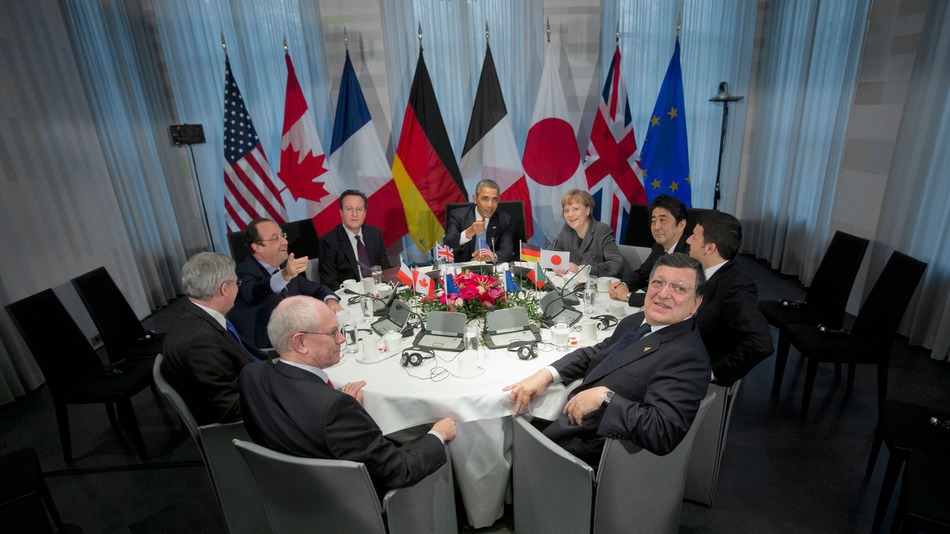
(7th March 2016) The Boston Global Forum, as part of its BGF-G7 Summit Initiative, urges the national leaders at the G7 Summit in Japan May 26-27 to discuss these crucial topics:
The need for stronger action to fight cyber-terrorism and other cyber-pathologies through global cooperation, including through the adoption of such programs as the BGF’s Ethics Code of Conduct for Cyber Peace and Security.
The need to eliminate ISIS and similar terrorist groups, in part through such programs as the Global Learning and Global Citizenship Education program based at the University of California at Los Angeles and of which the BGF is a member.
The urgent need to stop China’s reef and island seizures and militarization in the South China Sea. The BGF has recommended creating a Pacific Security Alliance of the U.S., Japan, Vietnam, South Korea, the Philippines and Australia to thwart Chinese hegemony in that sea. That hegemony could imperil freedom of navigation in a region with very important global trade routes. Of course, Japan and the U.S. are G7 members.
The BGF realizes that there are many other important threats, such as Russia’s aggressive expansionism, global warming, new disease pandemics, the refugee crisis spawned by wars in the Mideast and a potential new global recession. However, the BGF considers that the three issues bulleted above can be successfully and promptly addressed with enough will and ingenuity on the part of G7 member nations.
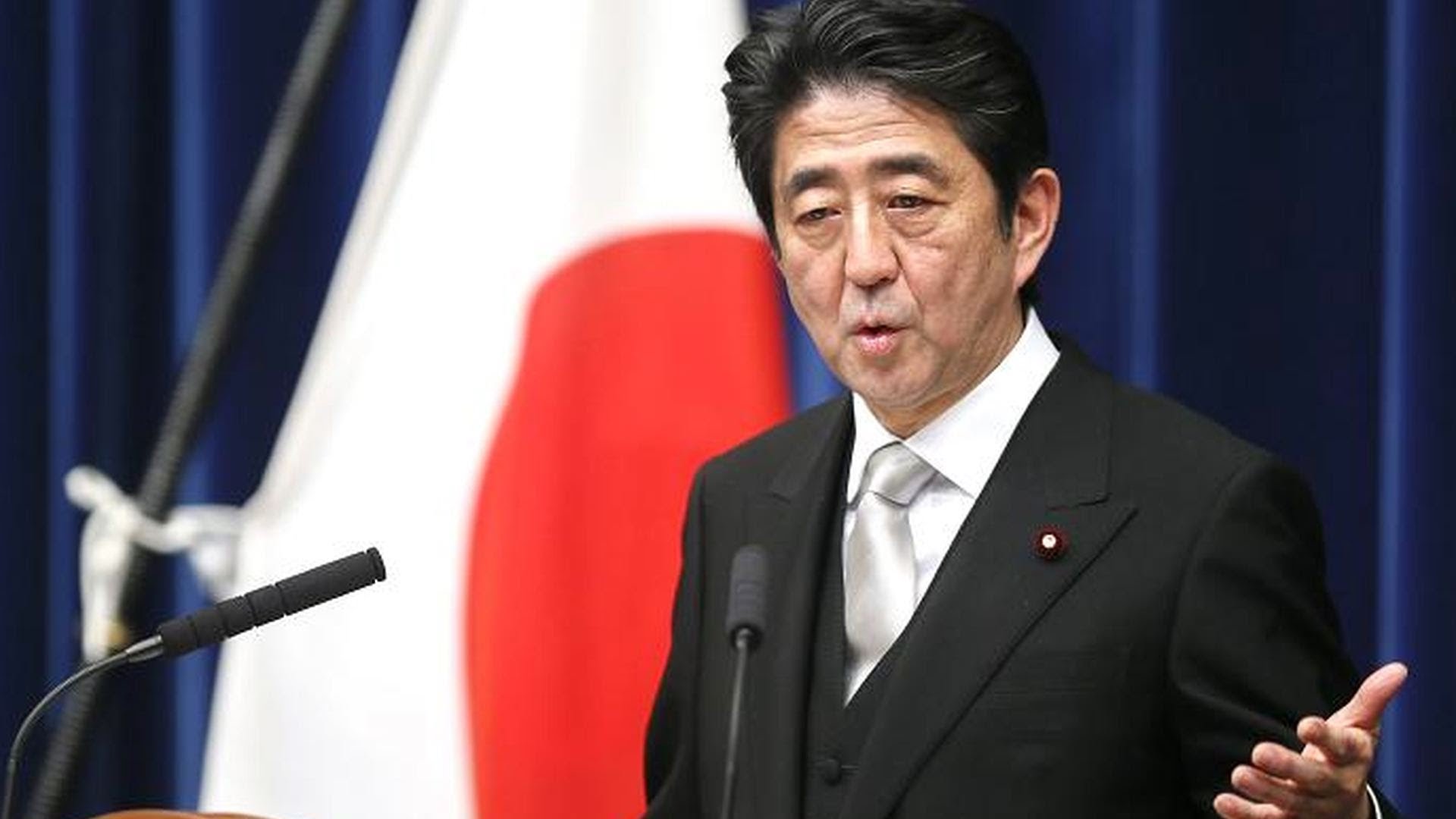
(7th March 2016) Japanese Prime Minister Shinzo Abe’s nomination of Makoto Sakurai, an obscure 70-year-old economist, to the board of the Bank of Japan signals his determination to ensure that the central bank supports Mr. Abe’s stimulative economic policies. Japan, which has the world’s third-biggest economy, has been in the economic doldrums for 25 years and successive governments have tried to pull the nation out of them.
Mr. Abe will host the G7 Summit May 26-27. He is a winner of The Boston Global Forum’s World Leader in Cyber-Security Award.
“Mr. Sakurai has extensive experience as a researcher at government-affiliated think tanks … and he has repeatedly applauded Abenomics (stimulative fiscal and monetary policies) in his economic speeches.” Naoki Iizuka, an economist at Citigroup in Tokyo, told the Financial Times.
“Assuming other conditions remain unchanged, we think the appointment would make it easier for the BoJ to implement additional easing measures,” Mr Iizuka added.
“The BoJ has recently suffered setbacks in its quest to break Japan free from two decades of stagnant prices and drive inflation to 2 per cent. Weakness elsewhere in the world economy has led to a strengthening of the yen, potentially hitting Japan’s exports and appetite for business investment,’’ the newspaper reported.
The leaders at the G7 Summit will discuss weakness in the world economy and efforts to fend off an international recession that Chinese economic weakness and the European refugee crisis, among other problems, may threaten in coming months. The Boston Global Forum has been collaborating with G7 Summit planners as part of its BGF-G7 Summit Initiative.
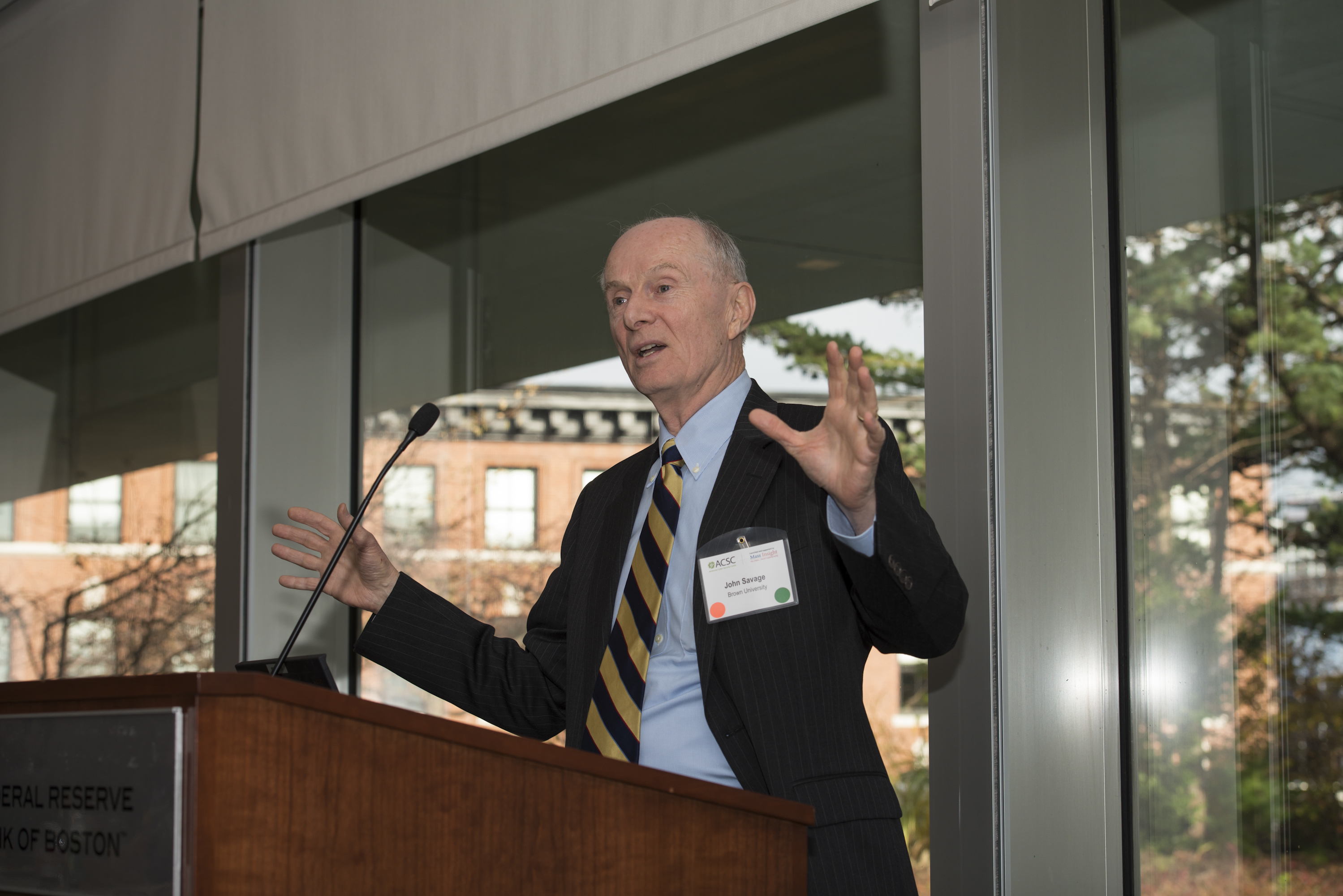
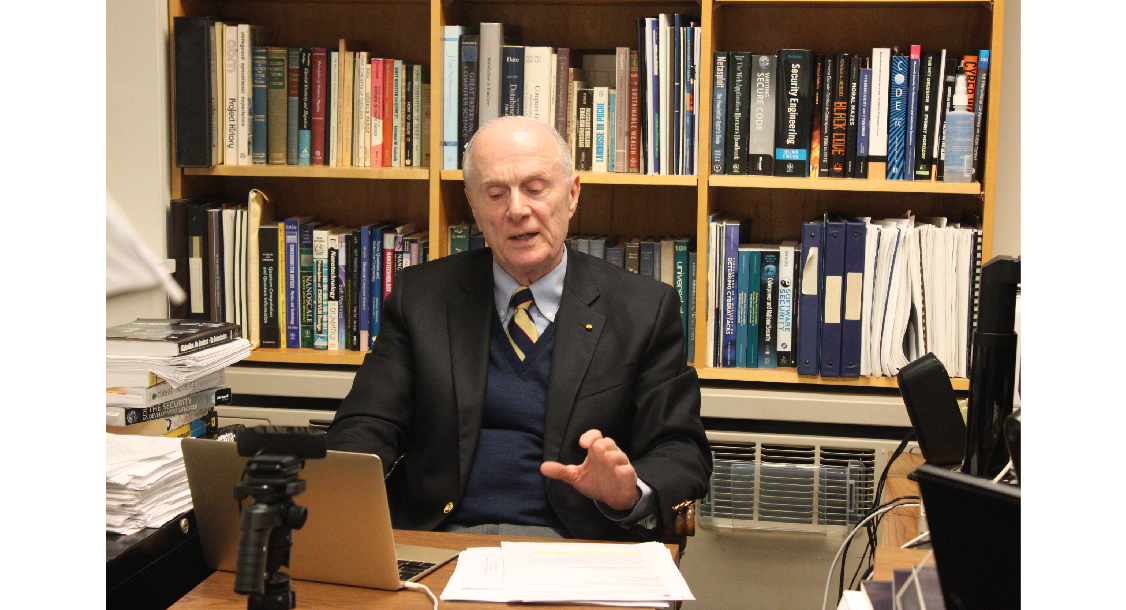
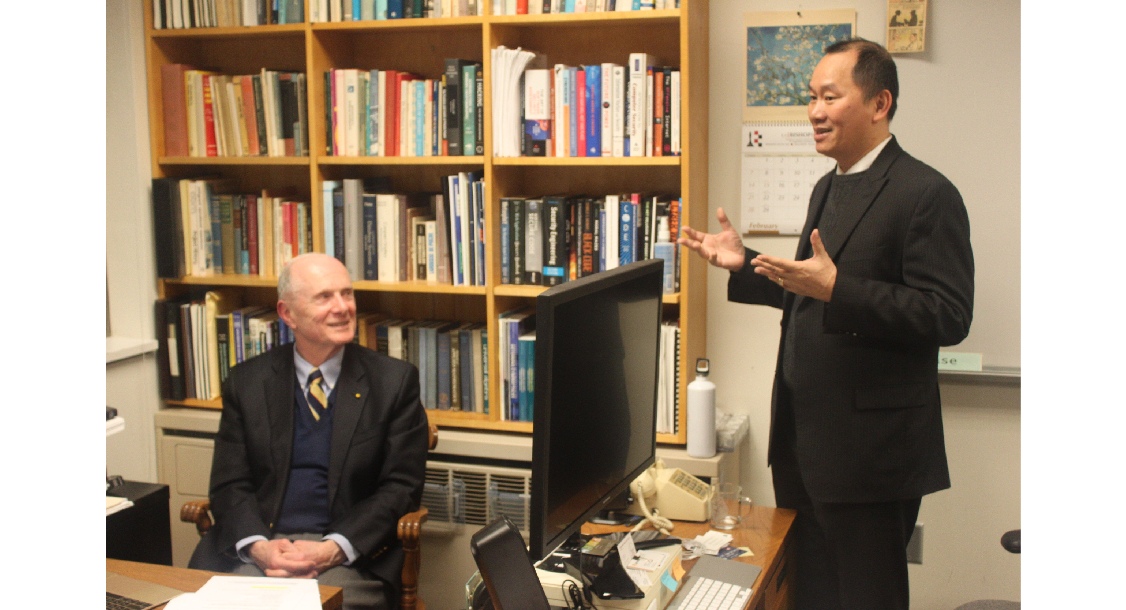
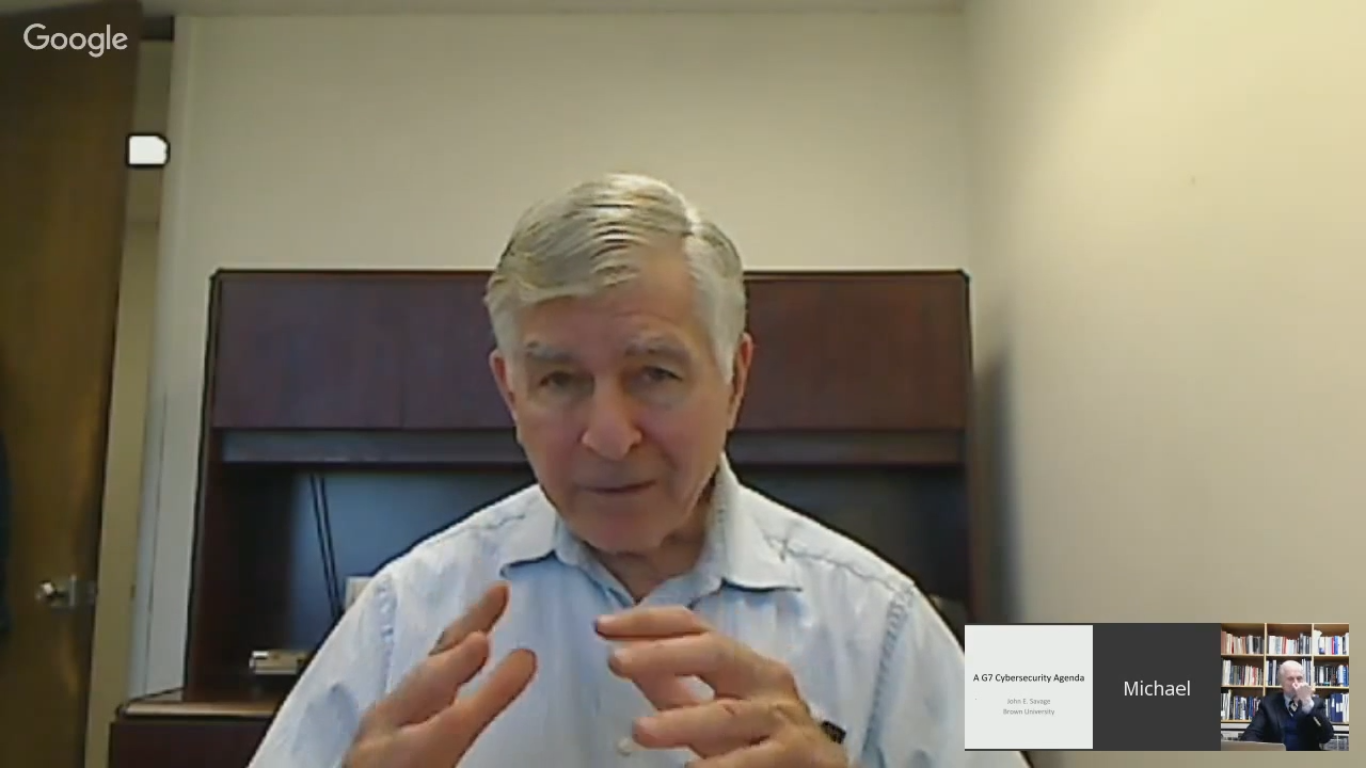
(Feb. 14, 2016) – The Boston Global Forum (BGF) is pleased to introduce the third in series of online dialogues to build the BGF-G7 SummitInitiative. This session will be with Professor John Savage,An Wang Professor of Computer Science at 7:00 PM (Boston time), Feb.22 at Brown University.
Professor Savage is a fellow of AAAS and ACM, a Life Fellow of IEEE, and a Guggenheim Fellow. He is a recipient of a Fulbright-Hays Research Award and Professorial Fellow of the East West Institute. He also served as a Jefferson Science Fellow in the U.S. State Department during the 2009-2010 academic year. His current research interests are cyber-security technology and policy, reliable computation with unreliable components, computational nanotechnology, efficient cache management on multi-core chips, and I/O complexity. Professor John Savage is also a member of The Boston Global Forum – G7 Summit Committee
The 60-minute event will focus on “Strategies for Combating Cyber-Terrorism” and be moderated by former Massachusetts Gov. Michael Dukakis, chairman of the Boston Global Forum.
Discussants are encouraged to send questions to [email protected]. Members of the Boston Global Forum’s Special Editorial Board will gather your insights and send them to the speaker.
Professor Savage earned his PhD in Electrical Engineering at MIT in 1965 specializing in coding and information theory. He joined Bell Laboratories in 1965 and the faculty of the Division of Engineering at Brown in 1967. In 1979 he co-founded the Department of Computer Science and served as its second chair from 1985 to 1991. By the early 1970s his research interests changed to theoretical computer science.
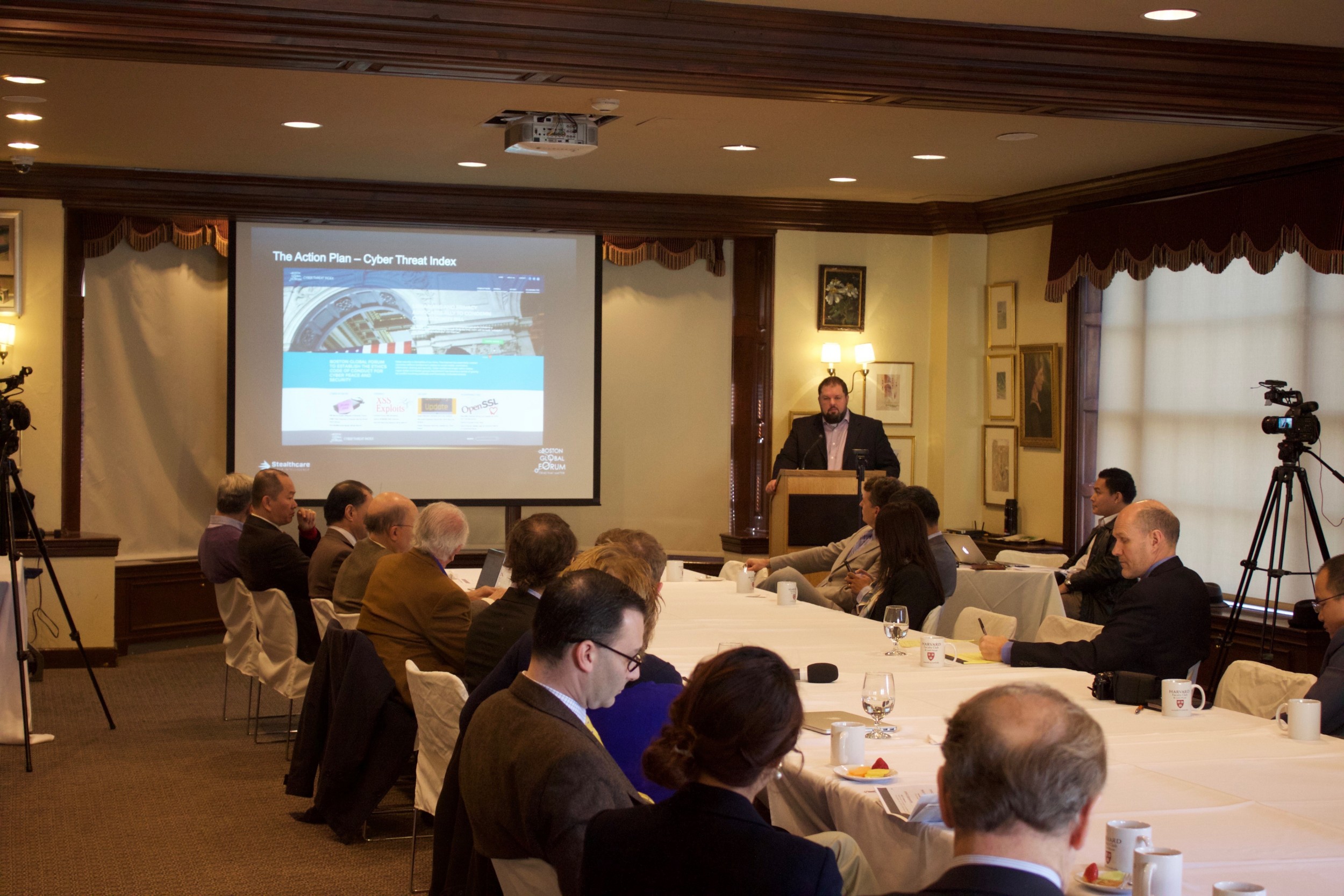
(22nd Feb 2016) The Boston Global Forum (BGF) is continuing to host experts and build up its institutional expertise in its cyber-security project this year, a key part of the BGF-G7 Summit Initiative.
One of the most important goals of the Initiative is to craft norms for national and international laws and policies in order to promote global cyber-security. As part of this mission, the BGF urges that the roles of the G7 nations in setting and maintaining the norms be clearly established and promoted, hopefully at the G7 summit in Japan on May 26-27.
Such world-famed experts on cyber-security as David Sanger and Bruce Schneier have already taken part in BGF sessions. They and other experts have discussed in BGF forums the need to set ethical and legal norms for digital activities to replace the current chaotic and sometimes criminal global digital environment. Cyber-expert Adam Segal also cited the need to build such norms when he spoke at the Christian Science Monitor on Feb 4.
Other cyber-security experts, such as Prof. John Savage, a renown computer scientist, will join us in conversations in coming weeks. And the BGF will continue to discuss cyber-security and other issues of international peace and security with past and present government leaders.
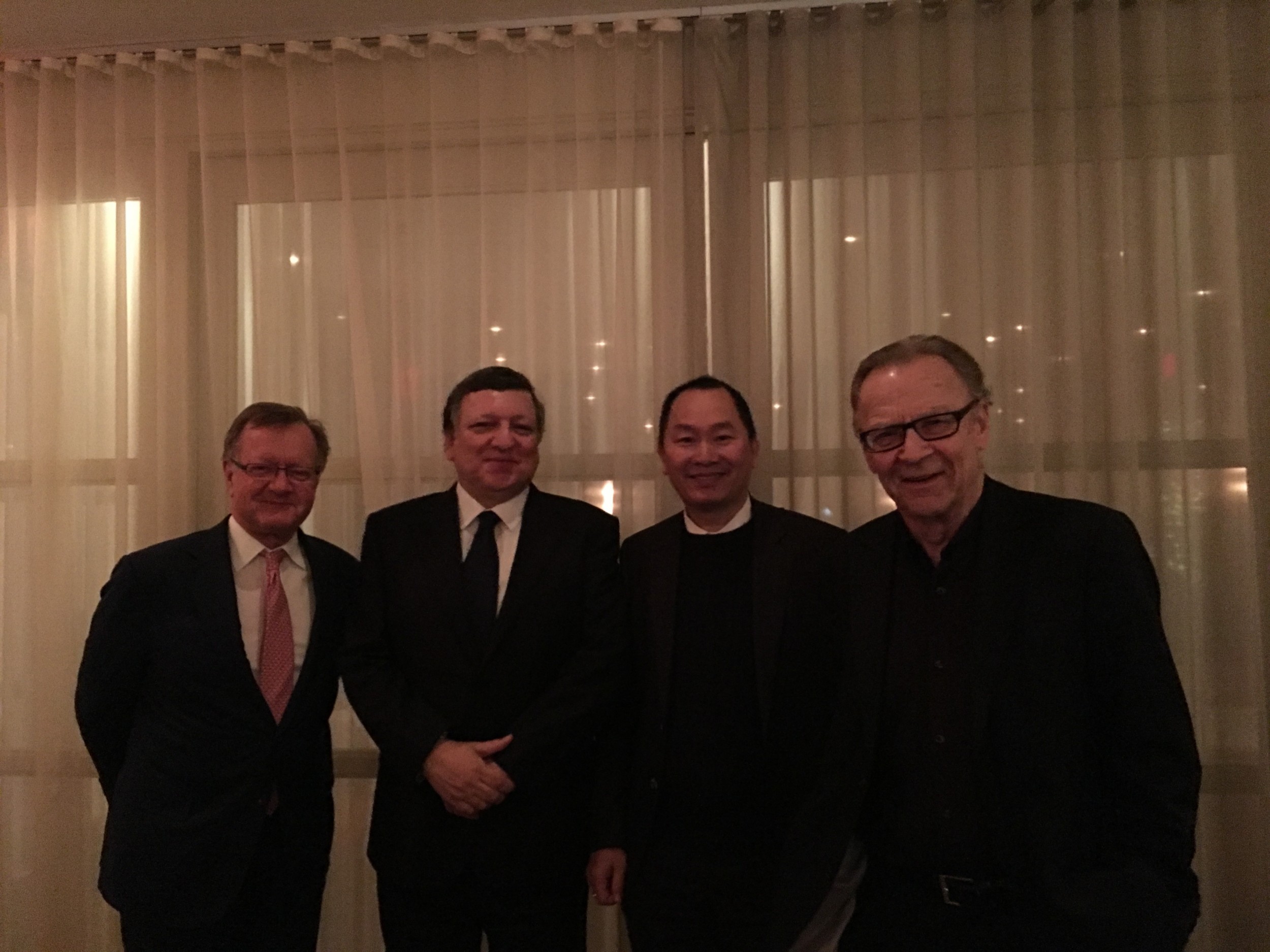
Joining the BGF-G7 Summit Initiative team for a four-hour meeting and a dinner on Feb. 20 in Cambridge, Mass., was Prof. Jose Barroso, former president of the European Commission and former prime minister of Portugal. He contributed strong and useful advice for building the Initiative, based in part on his experience of having attended the G7 Summit (called the G8 Summit before Russia was excluded because of its seizure of Crimea from Ukraine) 10 times in his role as the leader of the European Commission (a role sometimes called “president of Europe’’).
The BGF has been working on its cyber-security project since last year. The BGF’s Global Cyber-Security Day was held last Dec. 12 and featured discussions with people around the world. It followed the BGF’s creation of the Ethics Code of Conduct for Cyber Peace and Security (ECCC) earlier in 2015.
Besides Mr. Barroso, such major leaders as U.N. Secretary General Ban Ki-moon, Japanese Prime Minister Shinzo Abe, and Vietnamese Prime Minister Nguyen Tan Dung have also endorsed the principles of the ECCC and Global Cyber-Security Day (GCD).
ECCC and GCD are both affiliated with the Global Citizenship Education Program of the University of California at Los Angeles, a combination with the United Nations Educational, Scientific and Cultural Organization (UNESCO).
We will continue on this site to bring cyber-security initiative as we approach the G7 Summit in Japan in late May.
(22nd Feb 2016) Governor Michael Dukakis – Founder and Chairman of The Boston Global Forum shared his view about “Avoiding another Cold War”
Recently, we have seen a surge in the number of people who seem to think that Russia threatens American security.
Both the secretary of defense and the chairman of the Joint Chiefs of Staff have called the Russians our number one threat. Many of our European friends are saying the same thing. George Soros, who has had an impressive history of supporting important philanthropic causes, recently authored an article that sounded like a full-fledged cry for a return to the Cold War.
I am puzzled and concerned. George H.W. Bush and Mikhail Gorbachev did a remarkable job of ending the Cold War and saving us from what had been trillions in unnecessary spending on the military. For a while we enjoyed the fruits of that peace dividend until we decided to invade Iraq and plunge ourselves and the world into what seems now to be almost endless suffering and turmoil in the Middle East, which is threatening the security of the European Union. Now Barack Obama, a president whom I admire greatly, has announced that we will put billions we don’t have into military expansion in eastern Europe, presumably to “stop the Russians.”
I am puzzled. Yes, the Russians have been engaging in troubling policies in eastern Ukraine. And, yes, they have been involved for years with the regime of their ally Syrian President Bashar Assad. But they also played, and continue to play, a crucial role in the successful nuclear negotiations with Iran, and they warned us repeatedly that any intervention by us in Syria would backfire. In fact, they were largely responsible for persuading Assad to get rid of his chemical weapons, an initiative in which we participated.
We will disagree from time to time with the governments of various countries. That is a normal part of life. But let’s not start revving up the Cold War guns again. Let’s use the United Nations’ peacemaking capacity to deal with these issues in ways that can resolve them peacefully, just as we have done with the Iranians with the strong support of the five permanent members of the Security Council, including Russia and China.
Those of us who spent much of our adult lives in a world dominated by the Cold War know how costly and debilitating it was. We don’t need to go down that path again.