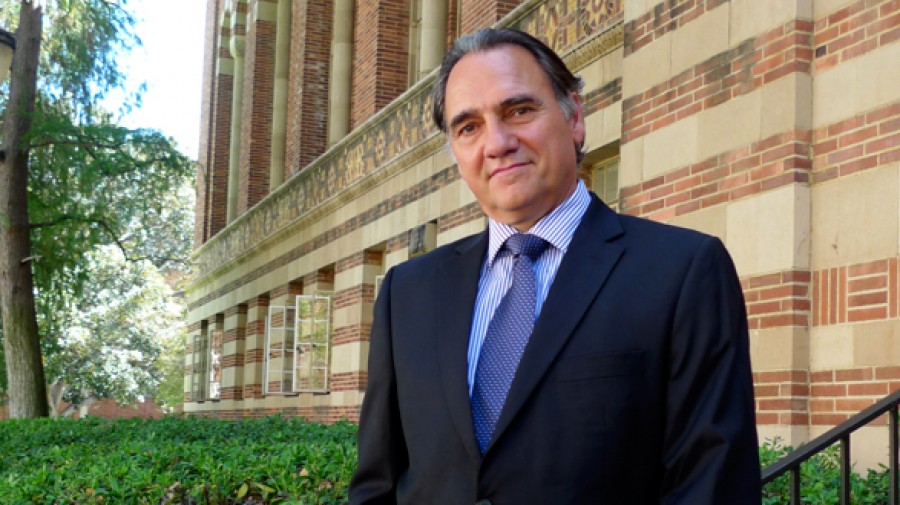
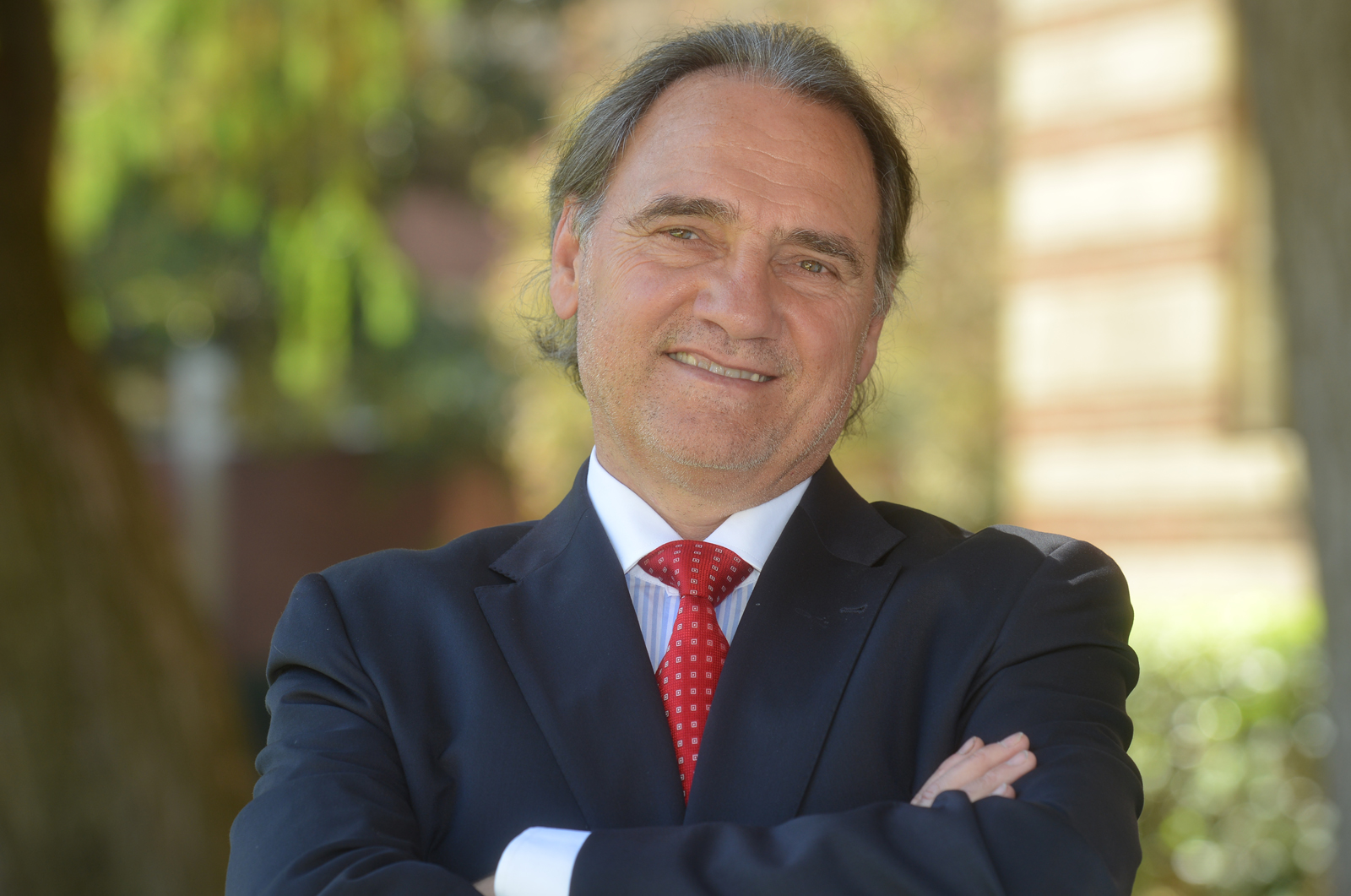
(Feb. 29th, 2016) – Dr. Carlos Alberto Torres, a member of The Boston Global Forum (BGF), will speak on “Global Citizenship Education to Improve Cyber-Security’’ at a talk at 5:30 pm on March 4th at the University of California at Los Angeles.
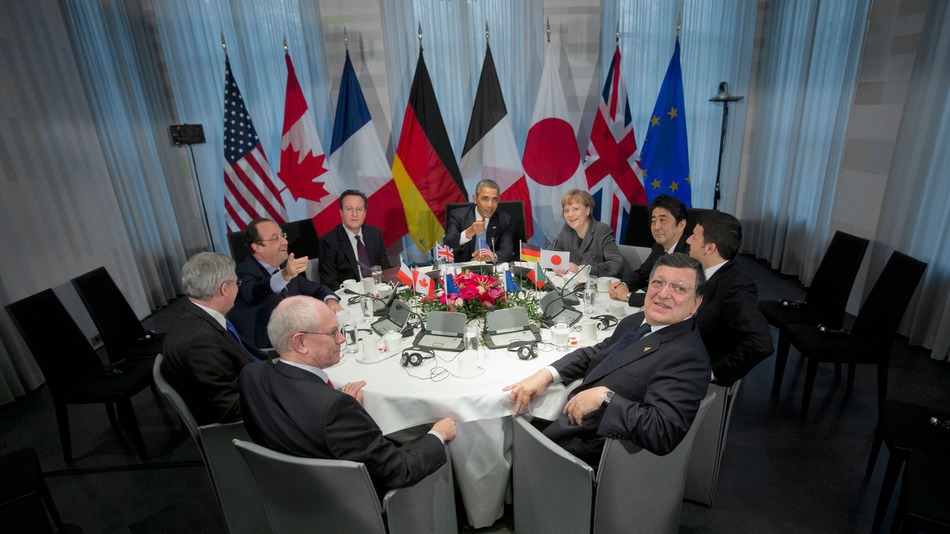
The talk is one in the series of online dialogues leading up to the G7 Summit in Japan on May 26-27 as part of the BGF-G7 Summit Initiative. Professor Torres’s talk is a collaboration of the BGF and the Global Learning and Global Citizenship program at UCLA, which is affiliated with the United Nations Educational, Scientific and Cultural Organization (UNESCO).
Discussants are encouraged to send questions to [email protected]. Members of the Boston Global Forum’s Special Editorial Board will gather your insights and send them to the speaker.
About Dr. Carlos Alberto Torres
Doctor Carlos Alberto Torres, Distinguished Professor of Social Sciences and Comparative Education, UNESCO Chair in Global Learning and Global Citizenship Eduction, and former Director of the UCLA-Latin American Center, he is a political sociologist of education who did his undergraduate work in sociology in Argentina (B.A. honors and teaching credential in Sociology, Universidad del Salvador), his graduate work in Mexico (M.A. in Political Science, Latin American Faculty of Social Sciences, FLACSO) and the United States (M.A. and Ph.D. in International Development Education, Stanford University), and post-doctoral studies in educational foundations in Canada (University of Alberta).
He is also the Founding Director of the Paulo Freire Institute in SaÞo Paulo, Brazil; Buenos Aires, Argentina; and UCLA. Dr. Torres has been a Visiting Professor in universities in North America, Latin America, Europe, Asia and Africa. He has lectured throughout Latin America and the United States, and in universities in England, Japan, Italy, Spain, Tanzania, Finland, Mozambique, Argentina, Brazil, Mexico, Canada, Costa Rica, Portugal, Taiwan, Korea, Sweden and South Africa. He has received two Fulbright fellowships. Elected President, World Council of Comparative Education Societies (WCCES) 2013-2016.
(7th March 2016) Boston Global Forum (BGF) friends will want to hear and see this learned and passionate presentation by Prof. Carlos Alberto Torres on the potential of global education and citizenship programs to promote world peace. At the end of his more formal remarks, he responds to questions about his ideas.
His presentation was another in the series of online dialogues produced by the BGF as part of its BGF-G7 Summit Initiative.
Professor Torres, a BGF member, is Distinguished Professor of Social Sciences and Comparative Education and the UNESCO Chair of Global Learning and Global Citizenship Education at the University of California at Los Angeles.
The BGF has strongly collaborated with the UCLA program because of its potential to help create a global environment that encourages mutual understanding of national and other differences and similarities by people around the world, and thus cooperation and peace.
Dr. Torres discussed how promoting a sense of global citizenship (which he emphasized does not mean abandoning national citizenship) — to be spawned by emphasizing multicultural/multinational education — can help address such problems as:
Growing socio-economic inequality.
Property
Rapacious individualism eroding concern for the public good.
Rigid teacher-based, instead of student-based, education.
A “predatory’’ attitude toward the earth’s resources instead of acceptance of the need for sustainable use of what Professor Torres calls the “global commons.’’
He discussed how engendering a sense of global citizenship (and what he called “hospitality’’ ) through education can fight terrorism by encouraging mutual respect and understanding among different cultures and nations, thus facilitating conflict resolution and reducing “extreme nationalism,’’ and the bigotry and aggression that can accompany it.
He added that cyber-security (a major issue for the BGF-G7 Summit Initiative) can be strengthened by education programs to foster honorable behavior and respect for the truth on the Internet.
At the same time, he observed that there are limits to how much the Internet, which is vulnerable to many bad actions, can be used to develop and maintain healthy relationships. People, including students and their teachers, need to have frequent in-person encounters, too, if they are to better understand, and empathize with, each other.
He advised G7 leaders to promote global citizenship education out of enlightened self-interest. Professor Torres noted that “people (voters) want peace and the protection of the planet’’ and that they will support leaders who encourage these things through such programs such as the Global Learning and Global Citizenship Education Program at UCLA.
He warned at the end of his remarks that the world faces a “race between chaos and education.’’
Medical Doctor holding a world globe in her hands as medical network concept
U.S. healthcare providers lag way behind other industries in protecting their digitized data about patients. Thus the number of cyber-attacks is only expected to accelerate.
See more
The number of healthcare-data attacks over the past five years has increased 125 percent as the industry has become an easy target
Personal health information is 50 times more valuable on the black market than financial information, according to the survey. Foreign powers, especially China, have been hard at work stealing the personal health records of many Americans, most notably of government employees who might be vulnerable to being blackmailed into giving foreign governments U.S. secrets.
U.S. healthcare providers spend on average less than 6 percent of their information- technology budget expenditures on security, according to a survey from HIMSS Analytics, the research arm of the Healthcare Information and Management Systems Society, and security firm Symantec.
The federal government spends 16 percent of its IT budget on security, while financial institutions spend 12-15 percent.
(7th March 2016) Robert Whitcomb, Chairman of the Providence Committee on Foreign Relation, Managing Editor of the Boston Global Forum commented on the join military maneuvers of US, Japan and India
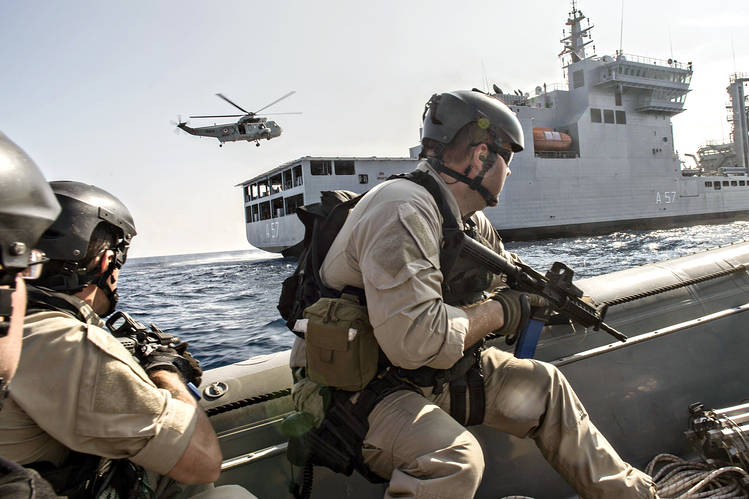
In a sign of slowly growing cooperation to counter aggressive Chinese expansionism in the East and South China seas, the U.S., India and Japan said they will conduct joint naval exercises in the northern Philippine Sea. No time was announced, presumably for security reasons.
The Boston Global Forum has recommended that a Pacific Security Alliance be established to counter Chinese imperialism. The alliance would include the U.S., Japan, Australia, South Korea, the Philippines and Vietnam and perhaps eventually Indonesia. It is a part of the “Framework for Peace and Security in the Pacific’’ that the Boston Global Forum proposed in December 2014 .
The Wall Street Journal noted that the Philippine Sea maneuvers would be part of an annual event between the U.S. and Indian navies that, since 2014, has expanded to include Japan, signaling closer cooperation among the three powers, which share fears about China’s military and territorial ambitions in an area with major international trading routes. See more
“The U.S. has in recent months ratcheted up its warnings over what it calls China’s growing ‘militarization’ of the South China Sea, where Beijing is embroiled in territorial disputes with a number of countries, including Vietnam and the Philippines. U.S. warships and aircraft have undertaken a series of operations in the region to challenge Beijing’s moves and U.S. officials are seeking to stitch Asian military powers into closer collaboration,’’ the newspaper noted.
U.S. officials have been pushing India to more energetically join its security operations in what the Pentagon calls “the Indo-Asia-Pacific’’ region. The Indians have been leery of antagonizing the Chinese, in large part because of fears that China might stage attacks along the long Indian-Chinese border. But increasing concerns that Chinese installation of military bases on islands and reefs in the South China Sea might imperil freedom of trade has gotten New Delhi’s attention.
U.S. military officials are also pressing Australia to take a more muscular role in the region in collaboration with Japan, India and the U.S.
India and the U.S. presented a “joint strategic vision for the Asia-Pacific and Indian Ocean region” in January 2015 to protect “freedom of navigation and over flight throughout the region, especially in the South China Sea”. India launched a trilateral dialogue on the subject with Japan and Australia last year.
(7th March 2016) After a month of discussions, the Boston Global Forum’s cyber-security group has produced these early ideas as a basis for possible future recommendations to G7 Summit leaders.
Encouraging private-sector enterprises to create market-based incentives to share information among themselves on cyber-threats and responses.
Setting up government clearing houses for data on cyber-attacks and best practices to thwart them.
Boosting coordination of Computer Emergency Readiness Teams to facilitate handling cyber-incidents at the international level.
Establishing norms of cyber-behavior at both government and nongovernmental levels.
Improving training and discipline of people working on secured networks. This is called “cyber-hygiene.’’ The weakest link in almost all computer networks is not technology but
Modernizing regulations domestically and internationally to strengthen cyber-security and remove barriers to cooperation. This would include more global sharing of information among regulators and streamlining prosecution of cyber-crimes.
Clarifying the pros and cons of encryption.
As part of its cyber-security initiative, the Boston Global Forum is forming a group that it calls “Hackers for Peace and Security,’’ to work with “white hat hackers’’ (honest and civic-minded software experts) to thwart “black hat hackers’’ and turn the latter into white hats.