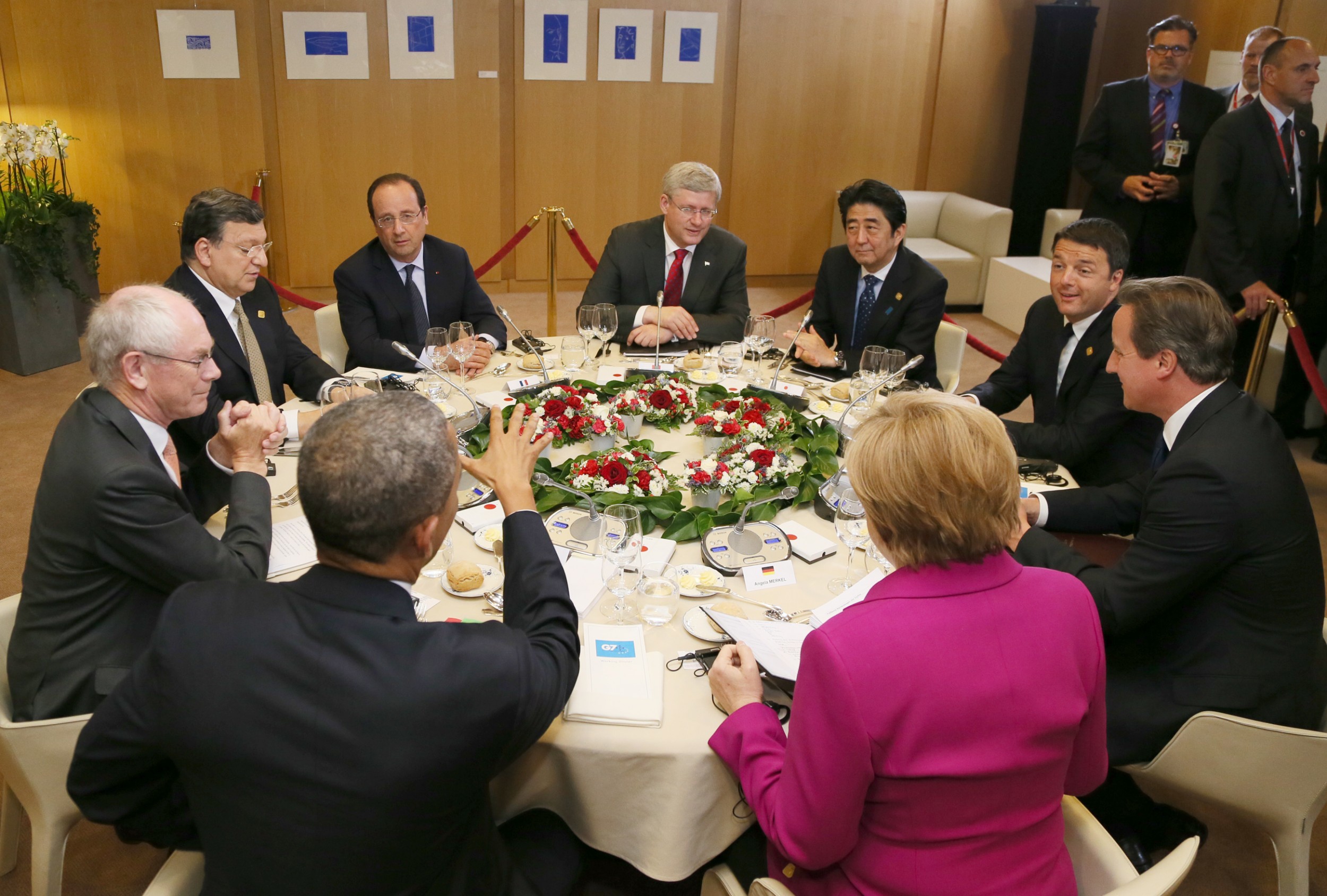
(April 11st, 2016) The G7 Summit will take up far more than such dark topics as terrorism, cybercrime, desperate refugees and Russian and Chinese expansionism.
More happily, its agenda is also aimed at boosting such crucial projects for the improvement of living standards as expanding global infrastructure initiatives (e.g., in transportation, energy, public-health, etc.), establishing stronger incentives for sustainable development, improving energy security and reinforcing efforts to counter-act climate change.
The leaders, with their economic/financial advisers, will address these things while discussing what they can do collectively to prevent the world economic slowdown from becoming a serious recession.
Japan, the summit host, has led by example: It has long been at the forefront globally in (quietly) helping to finance a wide range of infrastructure investments, in both the developed and developing worlds.
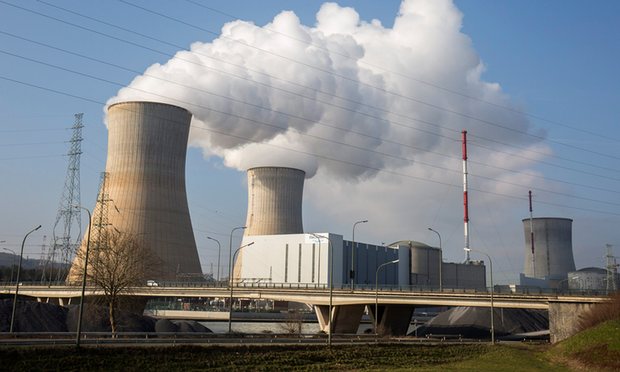
(April 11st, 2016 ) The terrorists in Brussels had been trailing a senior Belgian nuclear official. The strong implication is that ISIS would be pleased to stage an attack with nuclear material – perhaps not a nuclear explosion itself, but rather they would use radioactive material with conventional explosives to spread terror and chaos via a “dirty bomb.’’.
Nuclear power plant in Tihange, Belgium.
Far too little is being done at many facilities around the world to secure nuclear material.
As this New York Times piece notes, a key nuclear-security treaty fails even to order the arming of guards who monitor bomb-grade nuclear material!
G7 Summit leaders presumably will discuss this potentially catastrophic terrorism when they meet in Japan on May 26-27. The Boston Global Forum hopes that the Global Initiative to Combat Nuclear Terrorism, a network of 86 states and five international organizations, encourages its members to share intelligence and best security practices regarding the storage of nuclear material.
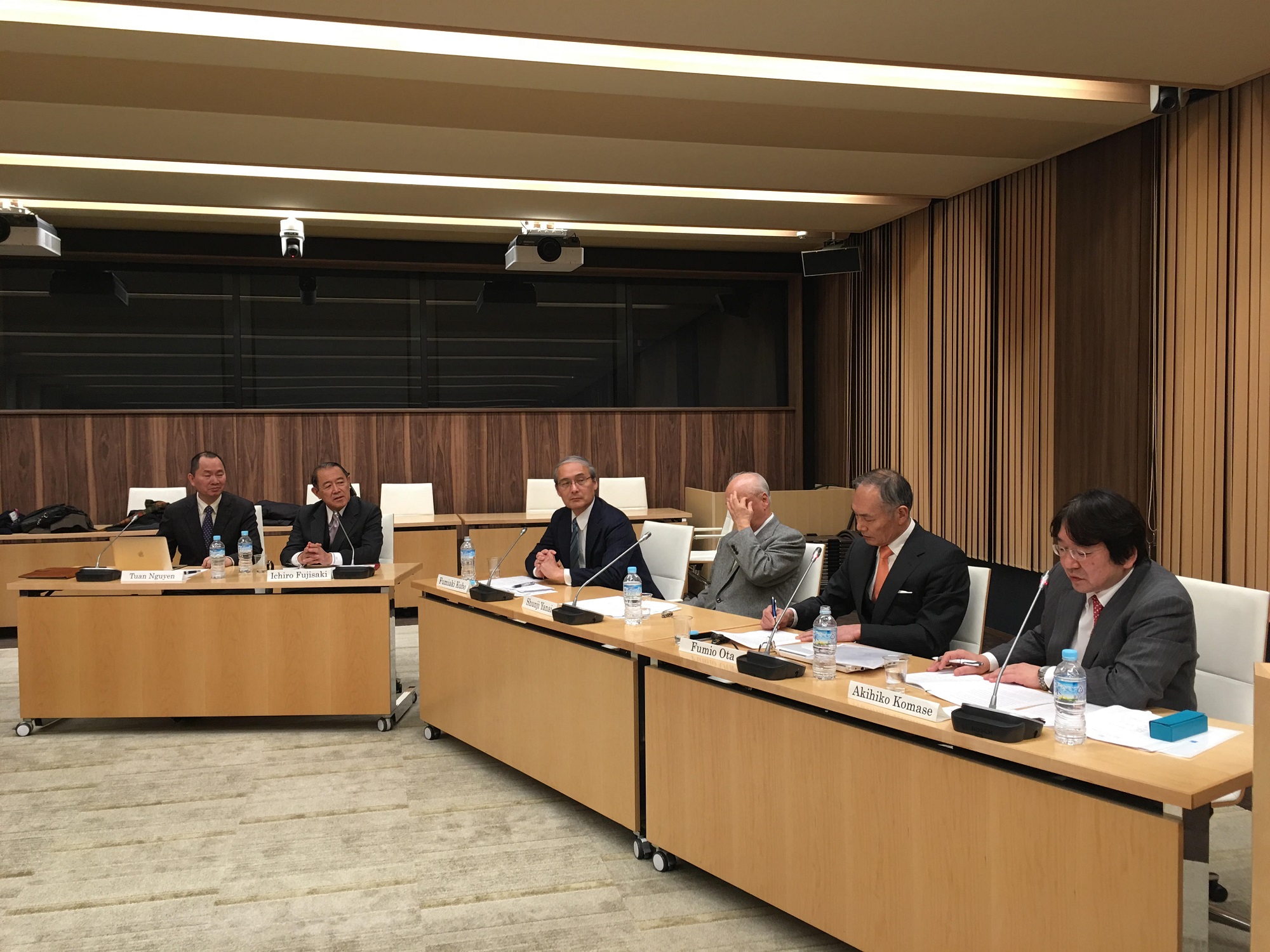
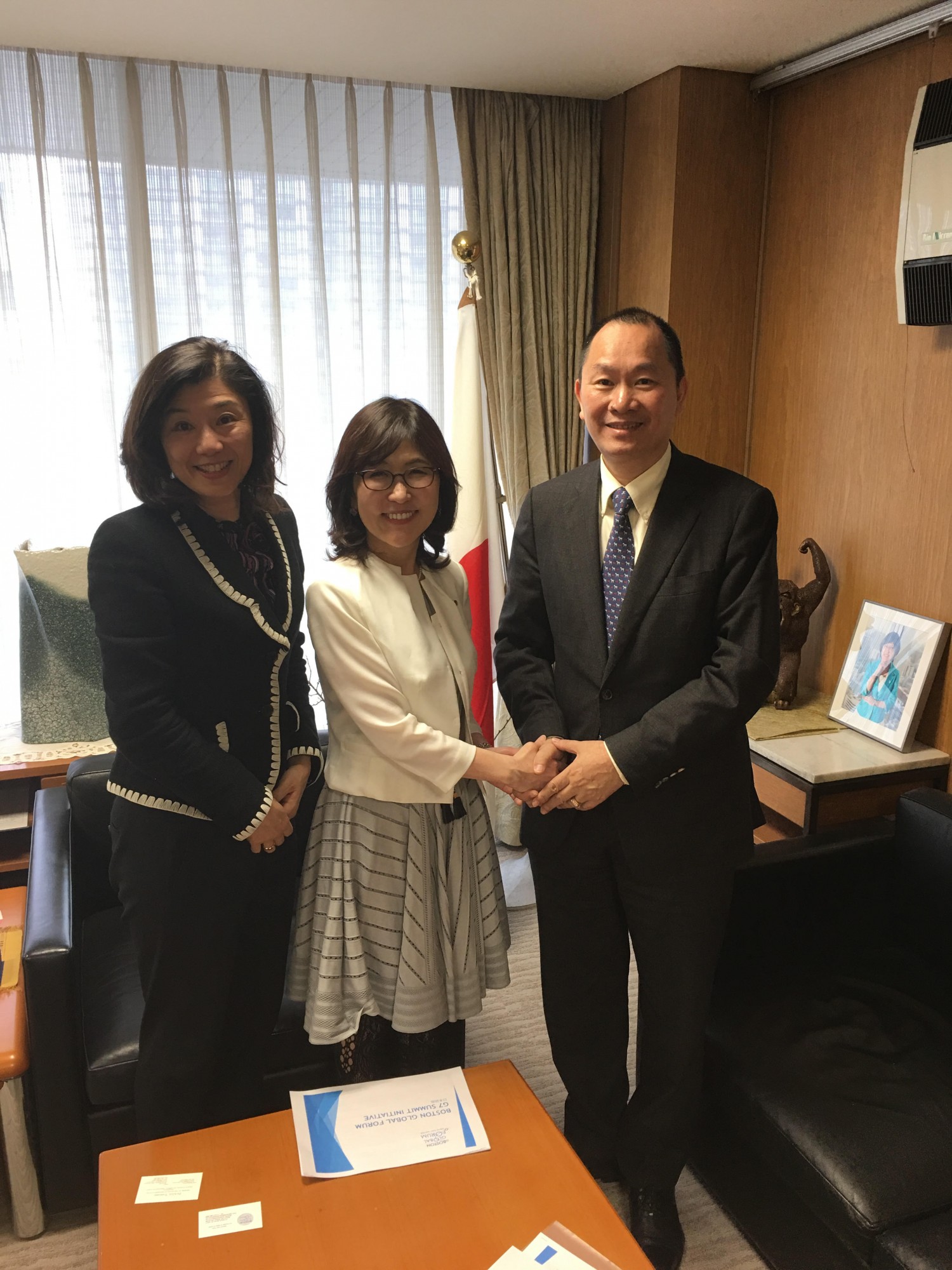
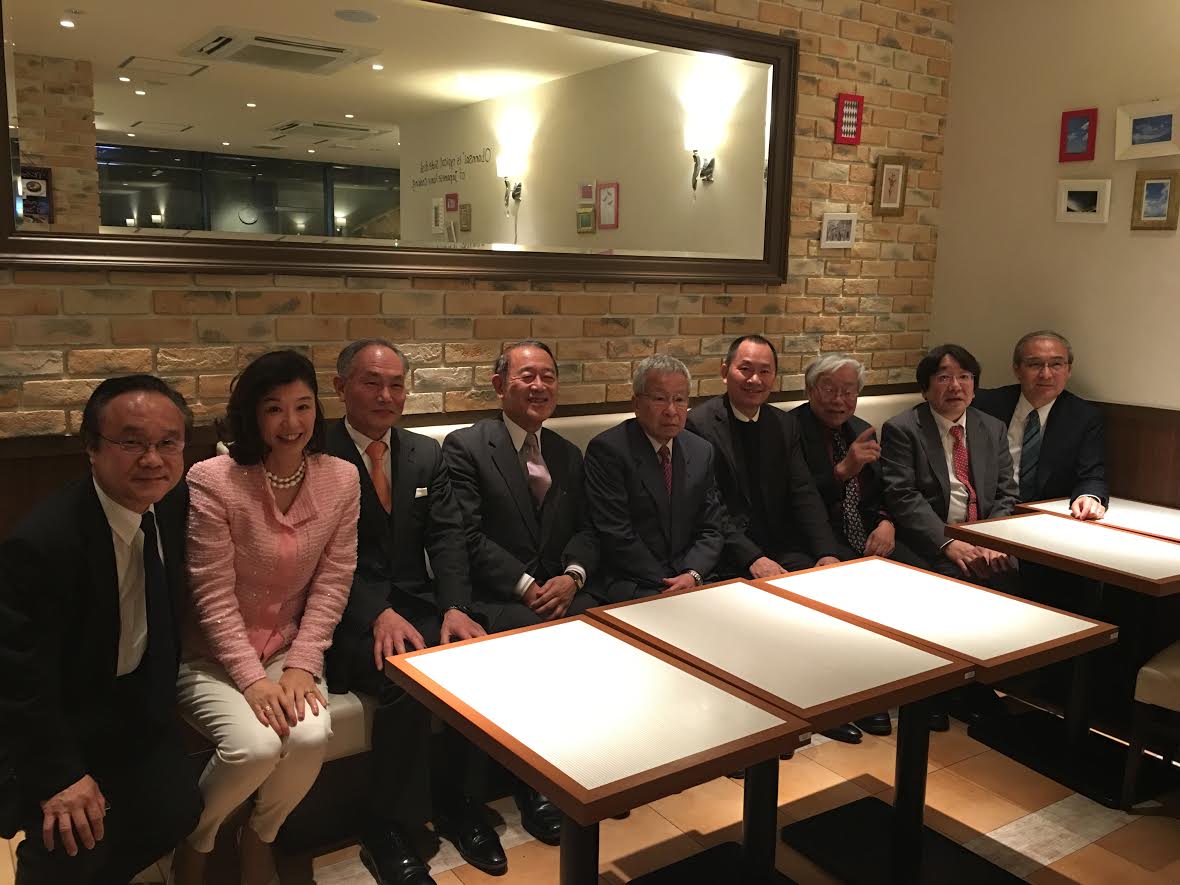
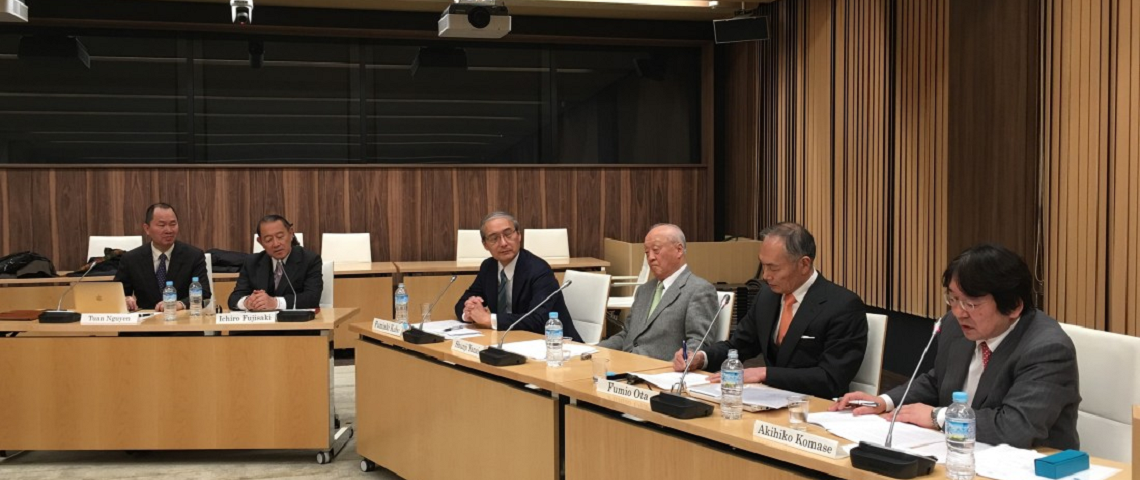
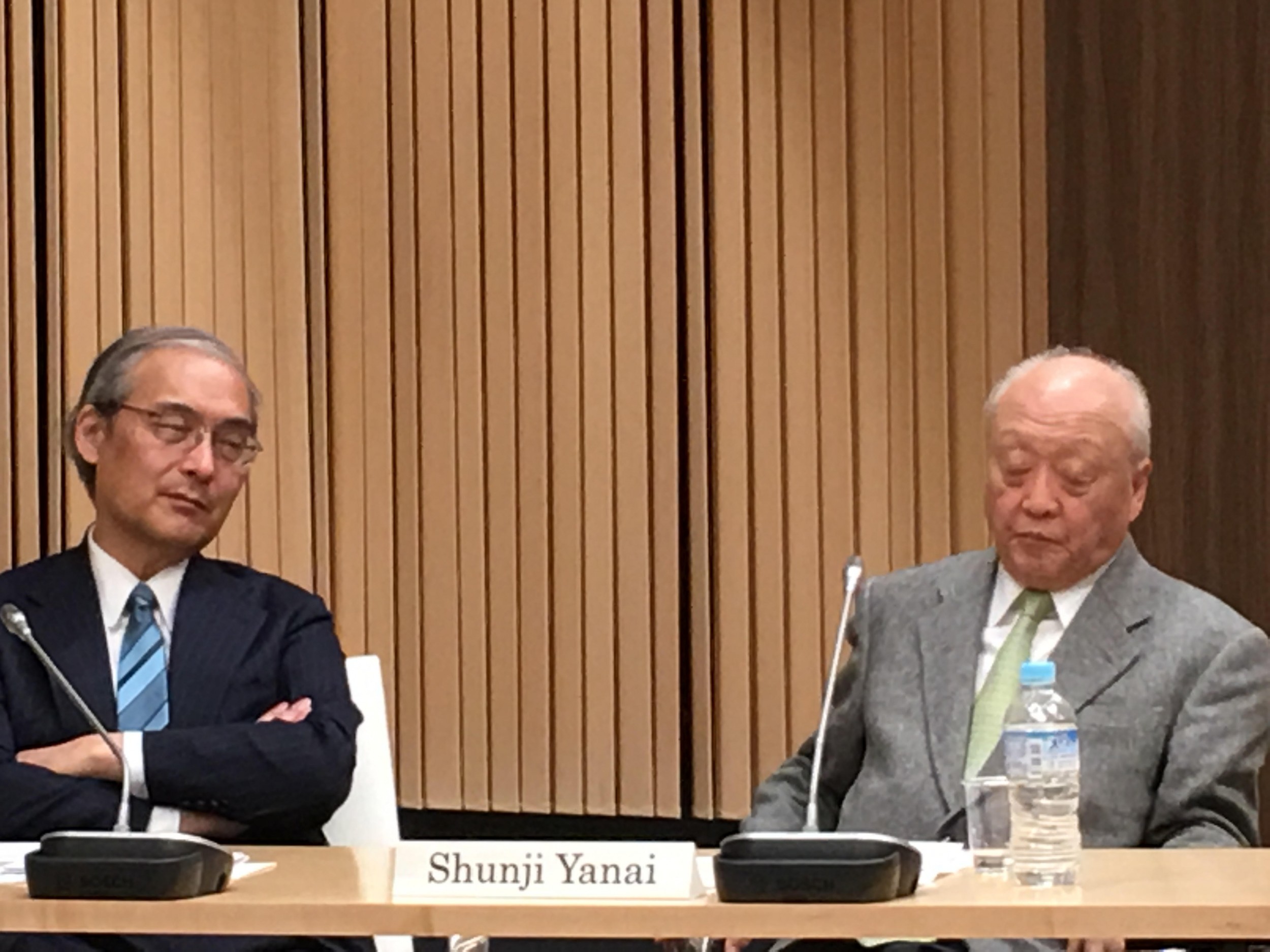
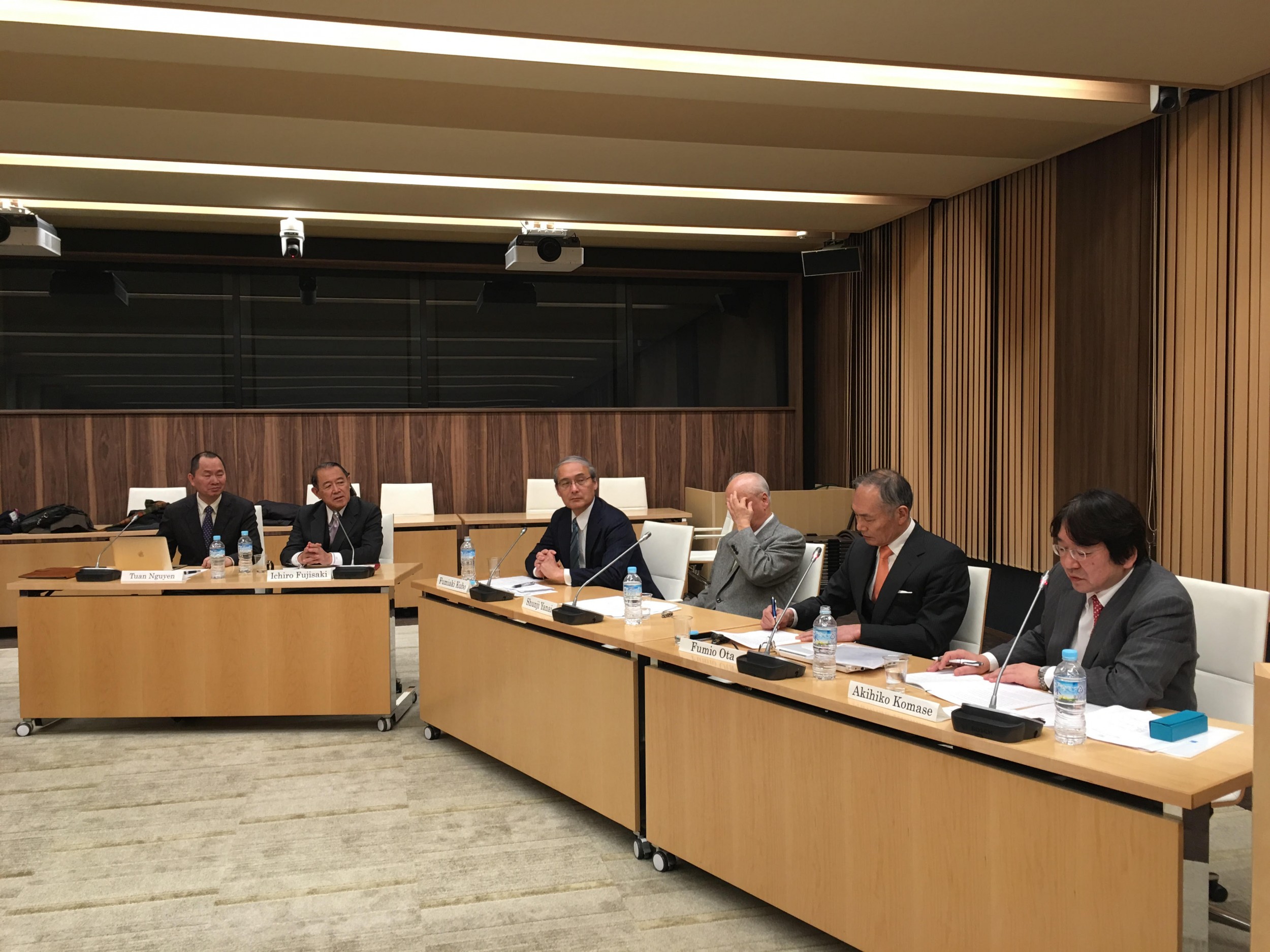
(April 11th, 2016) The Boston Global Forum (BGF) hosted a conference in Tokyo on March 28 as part of its BGF-G7 Summit Initiative. The Initiative, a collaboration with the Japanese government, has prepared policy prescriptions to be considered by national leaders at the summit, to be held in Japan on May 26-27.
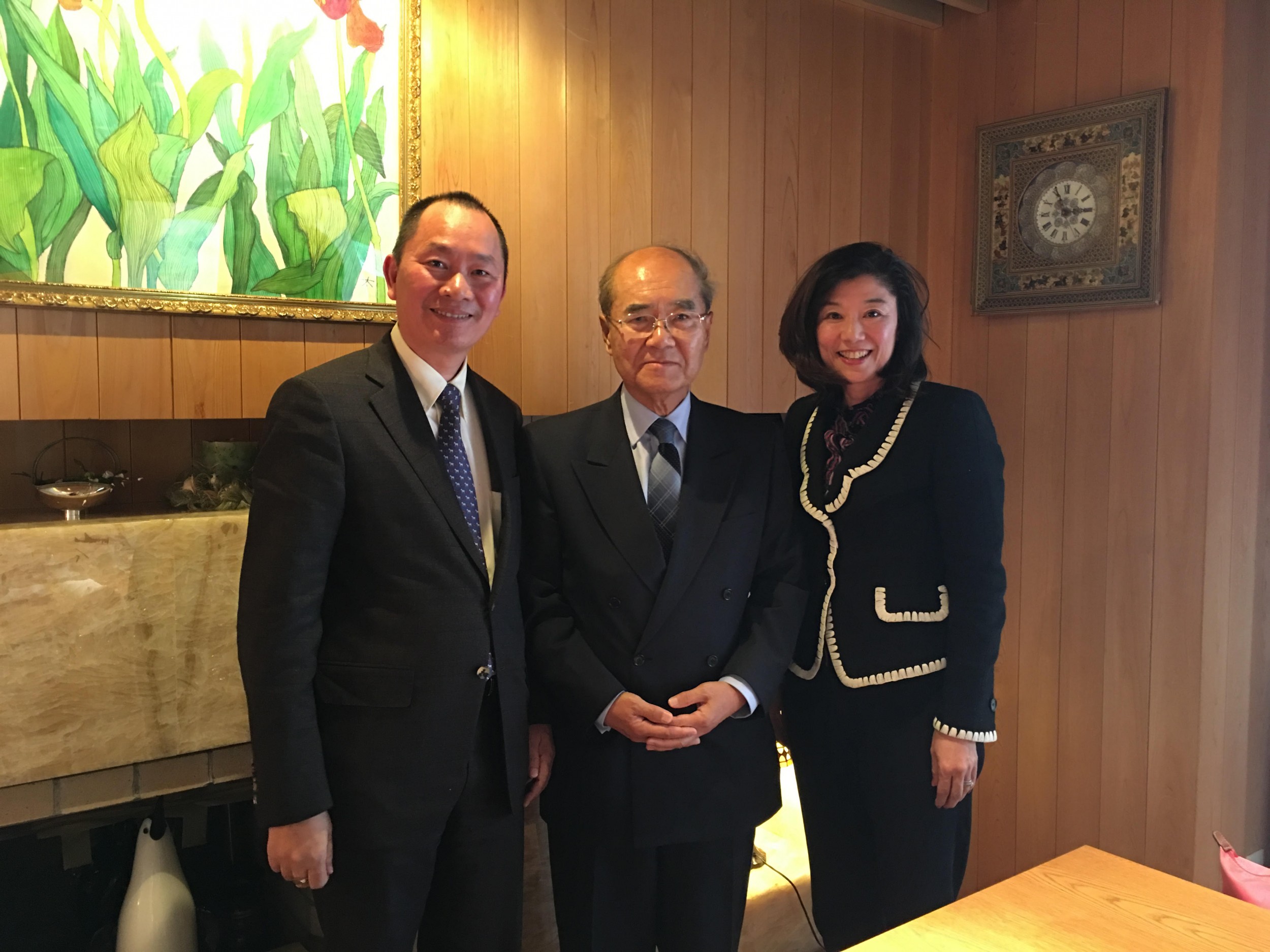
Nguyen Anh Tuan, CEO of the BGF, and Nobue Mita, the BGF’s Japan representative, welcomed a group of very high-level Japanese dignitaries/experts and described the missions of the Initiative. The leading mission is strengthening cybersecurity through establishing international norms of cyberbehavior – a challenge to which the BGF has drawn international experts to address. Other topics include reinforcing Japanese friendship with America and other G7 members and improving global citizenship education.
The BGF officials expressed the hope that the BGF-G7 Summit Initiative would lead to a long and fruitful relationship between the Boston Global Forum (and the academic community — especially Harvard, with which it is closely associated) and a wide range of leading G7 citizens.
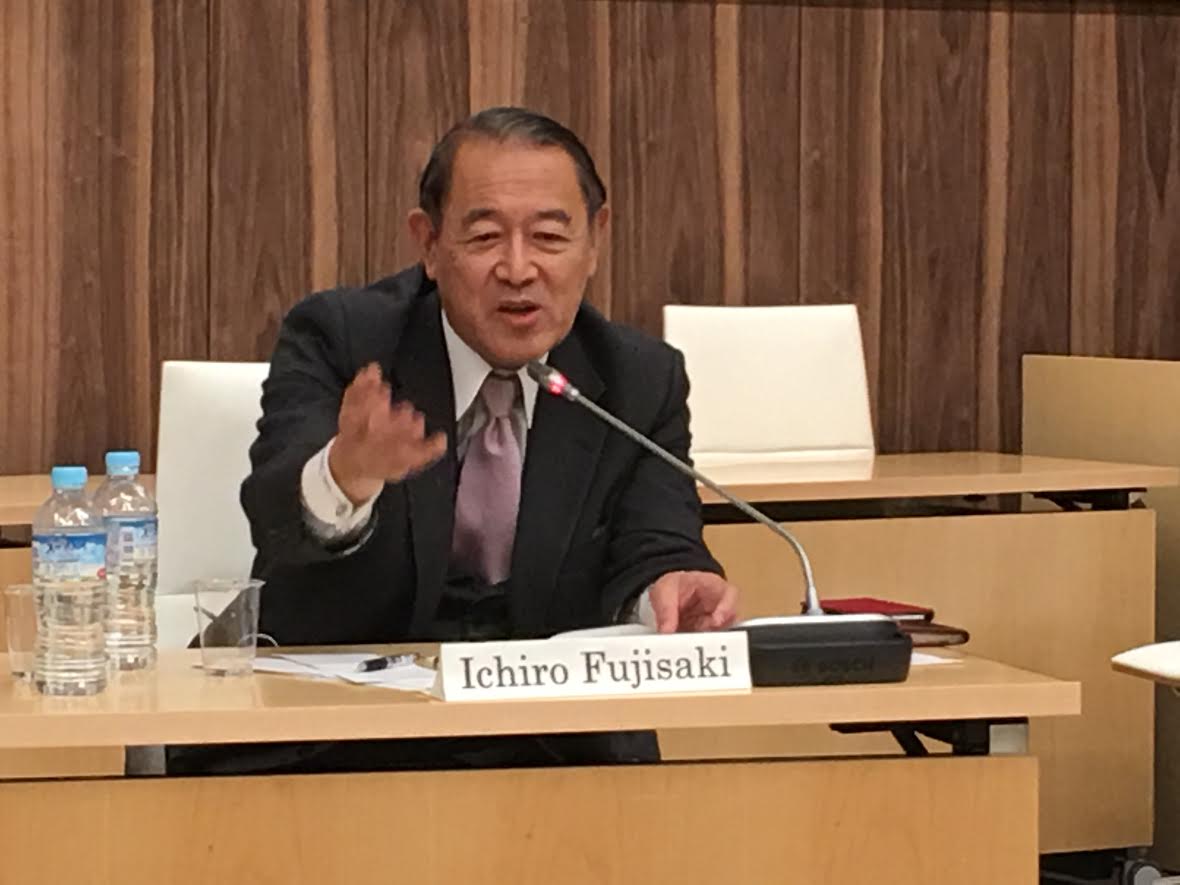
Most of the conference consisted of a wide-ranging discussion among the dignitaries/experts, moderated by a former Japanese Ambassador to the United States, the witty and charming Ichiro Fujisaki.
The panelists were, besides Ambassador Fujisaki:
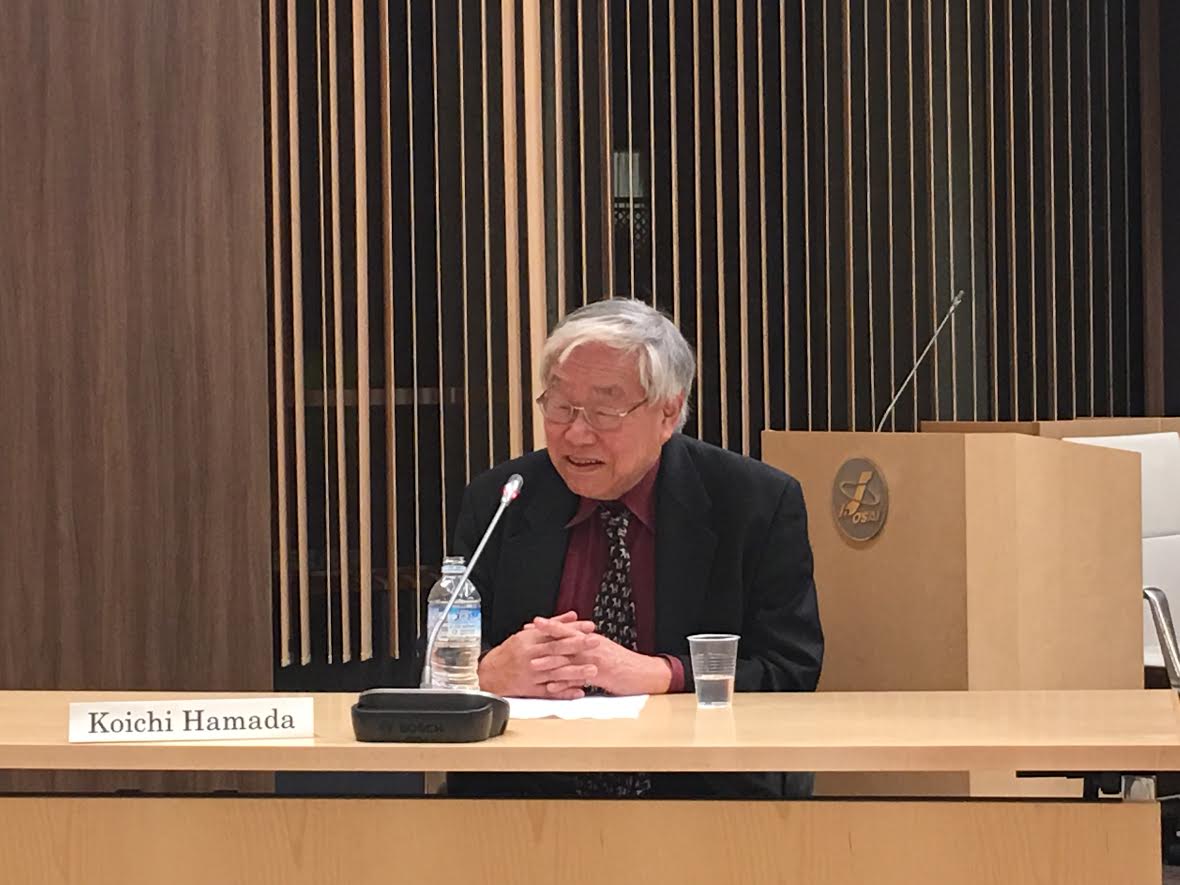
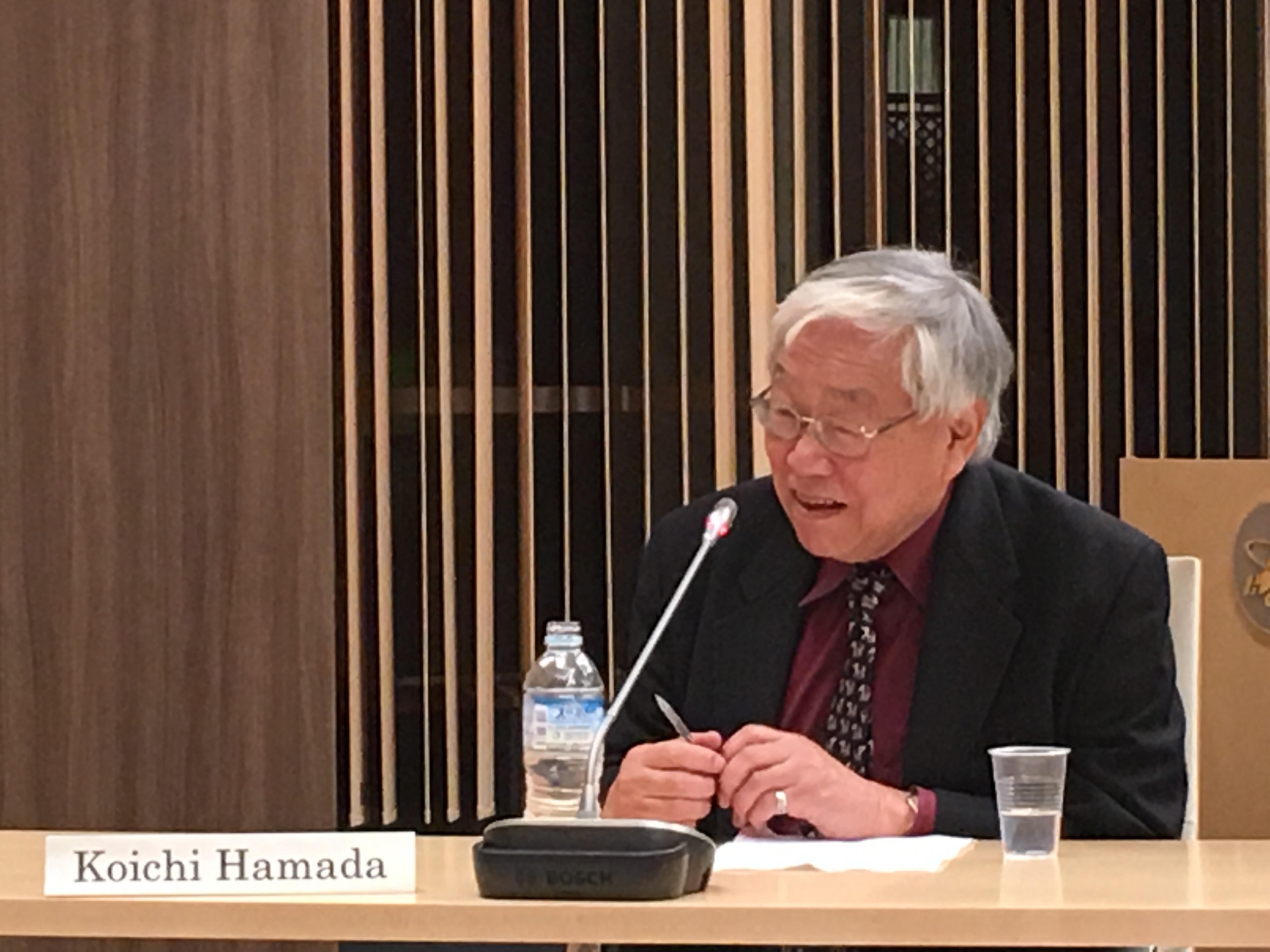
• Prof. Koichi Hamada, special adviser of Prime Minister Shinzo Abe and father of “Abenomics’’.
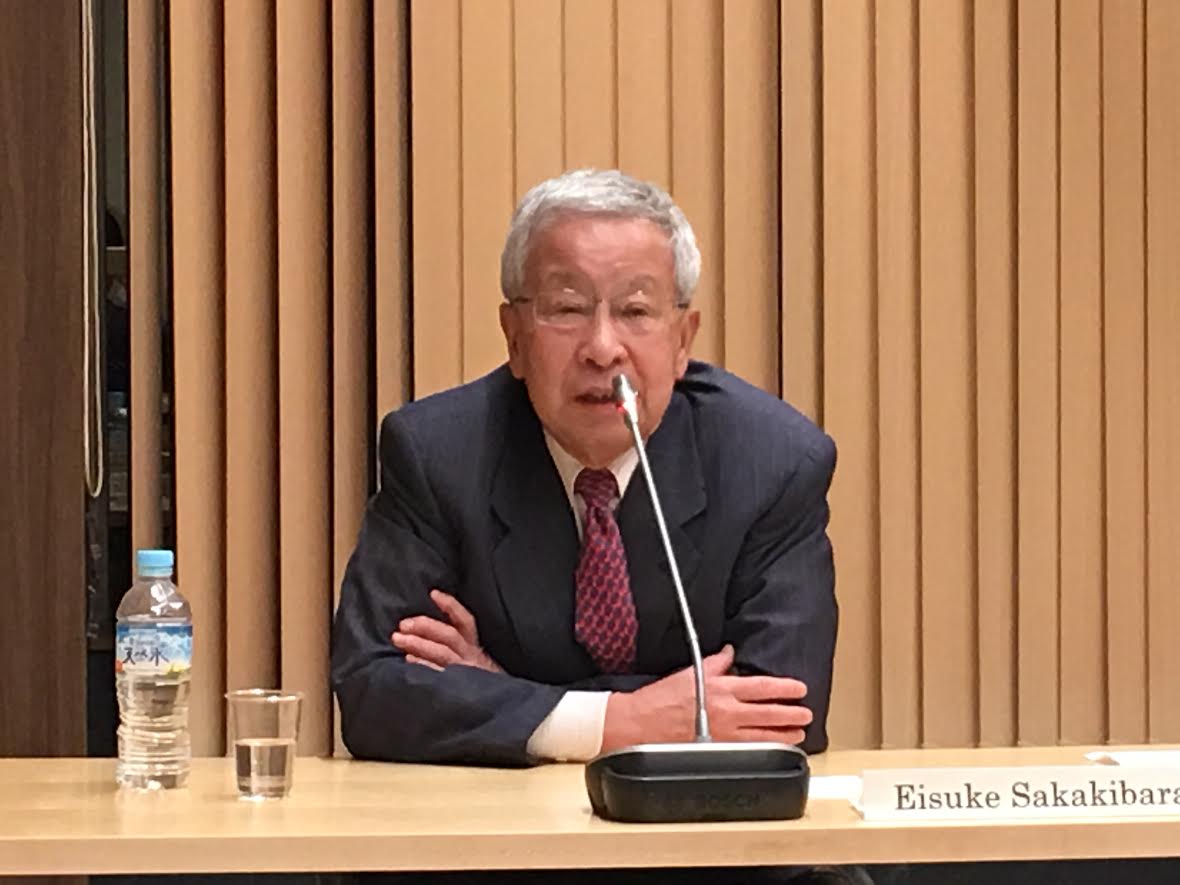
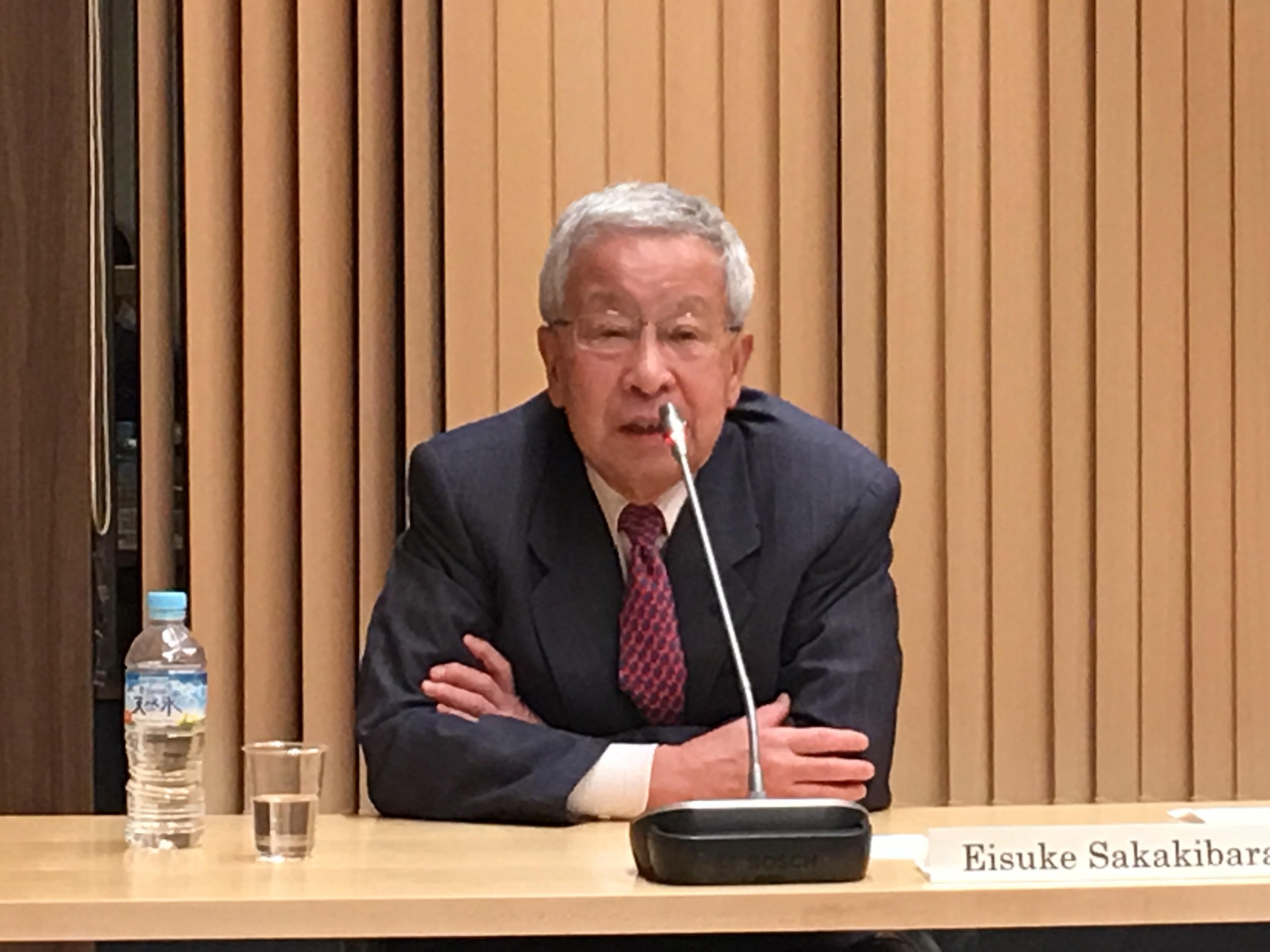
• Prof. Eisuke Sakakibara (whose nickname is “Mr. Yen’’).
• Prof. Fumiaki Kubo, of the University of Tokyo.
• Prof. Fumio Ota, of the Defense Academy of Japan.
• Ambassador Shunji Yanai.
The topics include the challenges posed to international security by Chinese military threats in the South China and East China Seas, North Korea’s nuclear saber-rattling and how to boost the collective security of Pacific and East Asian nations to deter them. The panelists enumerated some other topics that the G7 Summit leaders would take up — terrorism, refugees, the Mideast, cybersecurity, trade and the global economy among them.
Interestingly, the panelists spent a lot of time talking about the bad mood in American politics in general and Donald Trump in particular and what this election year might mean for American foreign policy. The panelists did not seemed pleased with the prospect of a President Trump.
The panel discussion ended with members answering questions from young Japanese experts.
(April 4th, 2016) The end of Apple’s fight over the FBI’s demand that the company give the agency access to what’s inside the iPhone of one of the San Bernardino terrorists may be just the start of a larger fight over data privacy as companies strengthen security and law-enforcement agencies keep fighting for access in criminal cases.
The end of Apple’s fight over the FBI’s demand that the company give the agency access to what’s inside the iPhone of one of the San Bernardino terrorists may be just the start of a larger fight over data privacy as companies strengthen security and law-enforcement agencies keep fighting for access in criminal cases. Meanwhile, the FBI, now that it has cracked the terrorist’s iPhone, is trying to find out if the same (mysterious to the rest of the world) methods will work on other kinds of iPhones.
(April 4th,2016) On March 28th, Nguyen Anh Tuan, The Boston Global Forum’s CEO and Editor-in-Chief, met with Japanese dignitaries at a conference in Tokyo that was part of the formal announcement in Japan of the BGF-G7 Summit Initiative, in which the BGF is making a group of recommendations for summit leaders to discuss, mostly focused on cybersecurity. The conference was organized and coordinated by Nobue Mita, The BGF Japan Representative.
Among the distinguished speakers were :
Prof. Koichi Hamada, a special adviser to Prime Minister Shinzo Abe and “The Father of Abenomics’’;
Prof. Eisuke Sakakibara, known as ‘Mr. Yen’ for the influence of his pronouncements on Japan’s currency, he is the former professor from Keio University, and now he is a professor from Aoyama University;
Ambassadors Ichiro Fujisaki and Shunji Yanai;
Prof. Fumiaki Kubo, A. Barton Hepburn Professor of American Government and History, Graduate Schools for Law and Politics, University of Tokyo;
Prof. Fumio Ota, Former Professor, Defense Academy of Japan (2005-2013);
Mr. Akihiko Komase, Asgent, Inc. Consulting Department manager and Security Center Fellow;
Former UNESCO Director General Yoichiro Matsuura and Inada Tomomi, a member of the Japanese House of Representatives (the lower house of parliament) and Chairwoman of the Policy Council of the ruling Liberal Democratic Party, also contributed valuable ideas at the meeting.
(April 4th, 2016) The Boston Global Forum has presented to planners of the G7 Summit, set for May 26-27 in Japan, its recommendations for improving cybersecurity and cybercitizenship. The proposals are part of the BGF-G7 Summit initiative.
The Boston Global Forum has presented to planners of the G7 Summit, set for May 26-27 in Japan, its recommendations for improving cybersecurity and cybercitizenship. The proposals are part of the BGF-G7 Summit initiative. The full package of proposals, the list of experts who produced the package and scholarly source material.
Here’s a summary of the key parts:
That the G7 nations encourage adoption of norms set forth by the G20, the United Nations’ Group of Government Experts (GGE) and The Boston Global Forum’s Ethics Code of Conduct for Cybersecurity (ECCC).
G7 nations should engage hardware and software vendors to develop cybernorms, following the six guidelines in the Microsoft report titled“International Cyber-Security Norms: Reducing Conflict in an Internet-Dependent World.”
The G7 nations should develop certain cyber risk-reduction measures.
The G7 nations should identify, publish and promote “best practices” in cybersecurity.
The G7 nations should support cybersecurity capacity-building in developing countries.
(April 4th, 2016) This may be a sign of a further tightening of relations between South Korea and Japan, perhaps accelerated by their common concerns about North Korean and Chinese aggressiveness, as well as by Japan’s desires to create an upbeat mood for the G7 Summit.
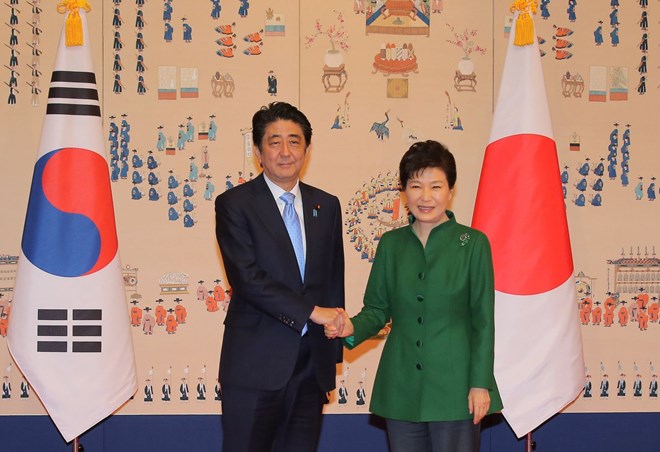
Prime Minister Shinzo Abe and South Korean President Park Geun-hye.
Japanese Prime Minister Shinzo Abe and South Korean President Park Geun-hye have met and reinforced an agreement to resolve the issue of reparations for the Korean comfort women forced to have sex with Japanese soldiers before and during World War II. During that time, all of Korea was occupied by Japan.
Mr. Abe will host the G7 Summit in Japan on May 26-27, for which the Boston Global Forum has been preparing proposals aimed at strengthening peace and security as part of its BGF-G7 Summit Initiative.
“While both nations have various domestic issues that must be dealt with, I want to display leadership in ensuring that the agreement is implemented properly,” Mr. Abe told Ms. Park, said Japanese officials.
Mr. Park, too, expressed her intention to fully carry out the pact.
Under the agreement, Japan will pay 1 billion yen ($8.9 million) to a fund to be established by Seoul to support the surviving former comfort women. South Korea, for its part, is expected to try to address Japanese government demands for the removal of a statue representing comfort women near the Japanese Embassy in Seoul.
Ms. Park also mentioned her conversations with Mr. Abe following recent North Korean nuclear tests and missile launches. She said those conversations laid the foundation for a new resolution approved by the U.N. Security Council that included tougher sanctions against Pyongyang.
(April 4th, 2016) The United Nations’ Global Citizenship Education program is a form of education of civic values in which the world is seen as global village where learning involves students’ active participation in projects that address global social, political, economic and environmental issues.
The United Nations’ Global Citizenship Education program is a form of education of civic values in which the world is seen as global village where learning involves students’ active participation in projects that address global social, political, economic and environmental issues.
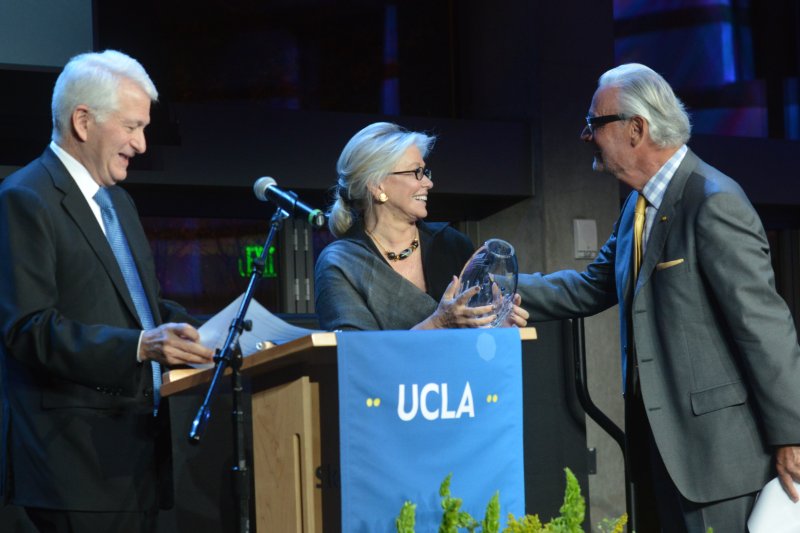
The Boston Global Forum has been heavily involved in promoting the concepts of global citizenship education, especially through the UNESCO-UCLA program in Global Learning and Global Citizenship Education at the University of California at Los Angeles. BGF member Carlos Alberto Torres is Distinguished Professor of Education and UNESCO Chair in Global Learning and Global Citizenship Education. Nguyen Anh Tuan, the BGF’s chief executive and editor-in-chief, is chairman of the International Advisory Committee of the UNESCO-UCLA Global Citizenship Education (GCE) program.
U.N. proposals for Global Citizenship Education can be summarized as aiming to:
Develop global consciousness through education.
Improve behaviors and lifestyles through outdoor project-based learning.
Create a curriculum based on life skills, human rights, pluralism, social justice, democracy, ethics, sustainability, health, science, technology and environmentalism at the local, regional and global levels.
Nurture technical-rational students through community-based learning and by using the educational power of the wider culture through dialogue and action.
Emphasizethe importance of “psychosocial resources,’’ such as by using modern technological tools interactively and empathetically, both between heterogeneous groups and within groups.
(April 4th, 2016) The United States has told China it will not recognize an exclusion zone in the South China Sea and would view such a move as “destabilizing,” U.S. Deputy Secretary of Defense Robert Work said.
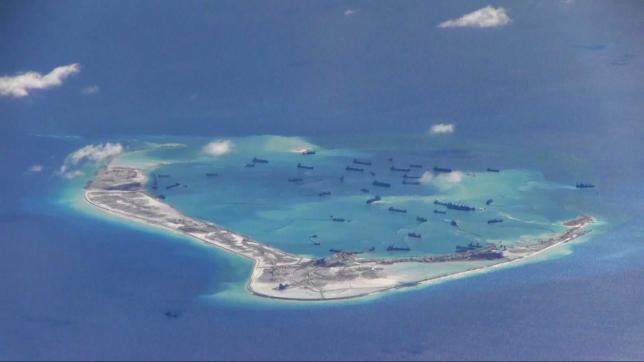
Chinese dredging vessels are purportedly seen in the waters around Mischief Reef in the disputed Spratly Islands in the South China Sea this still image from video taken by a P-8A Poseidon surveillance aircraft May 21, 2015. REUTERS/U.S. Navy/Handout via Reuters
In what might be a sign of a tougher stance, at least rhetorically, against China’s military expansionism in the South China Sea, the U.S. has emphasized that it won’t recognize any exclusion zone declared by China around the islands and reefs that it has been seizing and building on in the sea, through which goes 30 percent of world merchandise trade.
U.S. officials worry that an international court ruling expected soon in a case brought by the Philippines against China over its South China Sea claims could prompt Beijing to declare an air-defense identification zone in the region, as it did in the East China Sea in 2013. The U.S. doesn’t recognize that zone.
America, Vietnam, the Philippines and Australia have been pushing back against China’s stepped-up efforts to become the dominant power in the South China Sea.