by BGF | Jul 16, 2018 | News
The two nations are in a technology race to create a supercomputer that could result in major advances in many fields.
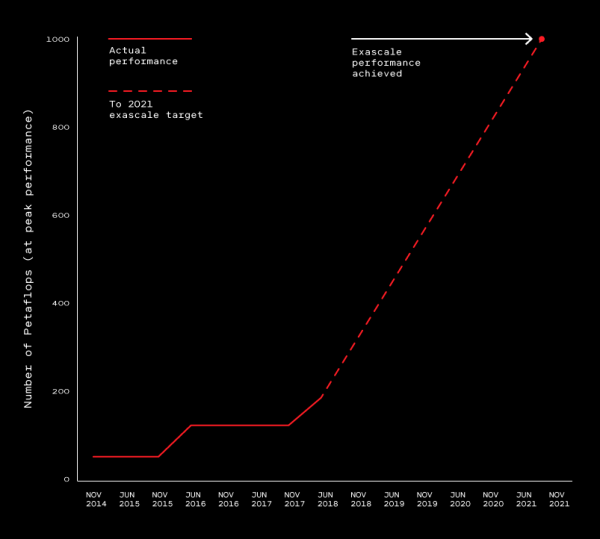
Reported by MIT Technology Review, last month, the US Department of Energy (DOE) unveiled the world’s fastest supercomputer called Summit. Thus, a new goal must be set.
The next goal is to create exascale computing-referring to computing systems capable of at least a billion calculations per second in the next few years. With such phenomenal power, it will facilitate industries and enable researchers in many field to expand remarkably. The competition for technological leadership between China and the US started.
China declared their plan to produce one exascale machine by the end of 2020, they have been working on three prototypes of this machine.
The DOE of the US made a proposal worth up to $1.8 billion for two exascale computers between 2021 and 2023.
Both China and America are using all their resource for exascale machines. China has teams working on some 15 application areas, while in the US, teams are working on 25, including applications in fields such as astrophysics and materials science.
Both countries are funding work on software, data processor, energy consumption, and chips for the machine. While there is plenty of national pride behind this competition, it should be kept in mind that, what matters is how it is used to solve the world’s problems. Technology should be developed with ethical standards. It is fortunate that in such a fast pace of development human kind is witnessing, there are institutions are working on moral issues of technology as well. For instance, BGF and MDI are currently developing the AIWS initiative- especially the AIWS 7-Layer Model to ensure the well-being of humans.
by BGF | Jul 16, 2018 | News
AI is offering huge opportunities to industries, it’s our choice to change or not.
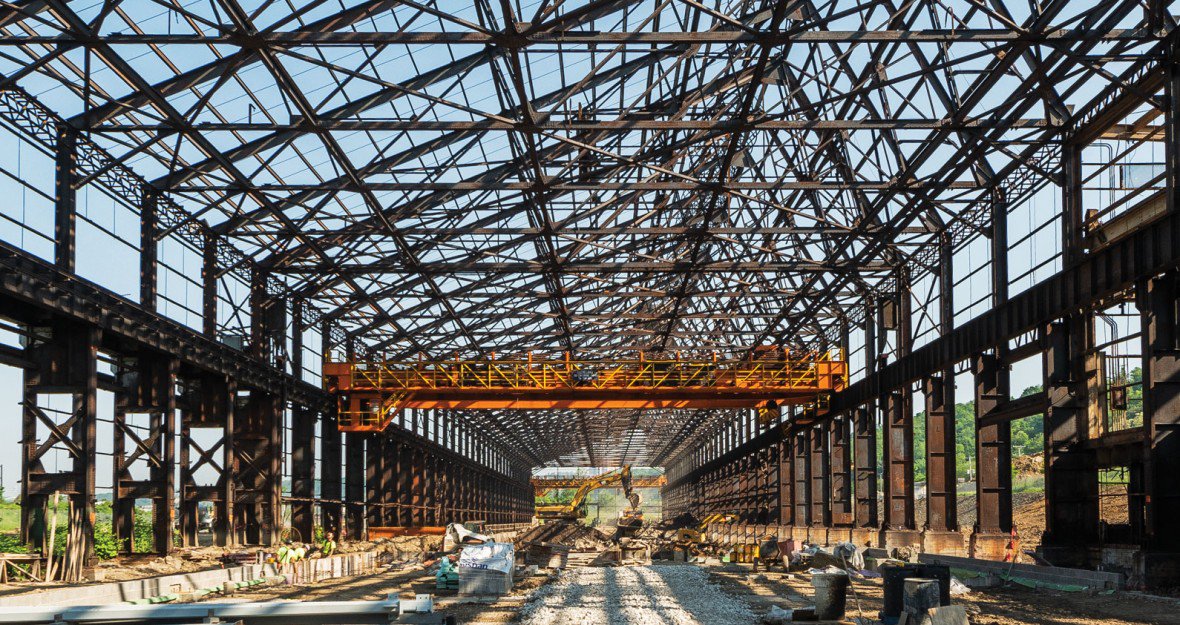
The rust belt in the US’s heartland- Pittsburgh is witnessing a huge transformation, Pittsburg was once a land of facilities of steel and coal, structures of coke, now they are a fading memory. The old steel site called Hazelwood Green has now become a test area for Uber’s self-driving cars; the former coke works – Mill 19 will be Advanced Robotic for Manufacturing Institute by the next spring. According to an article on MIT Technology Review, Pittsburgh is reinventing, using advances in automation, robots and artificial intelligence.
Billions of dollars from Silicon Valley have been invested in the city making it “a Robot belt”. In spite of all the changes, Pittsburgh’s economy is facing many problems. In the last decade, over 70,000 people from age 35-54 left the region. Automation and robots have certainly wiped out many jobs, it is calculated by Daron Acemoglu at MIT, for every robot, six jobs are lost, automation is changing work significantly although the exact number of a jobs lost will depend on the costs machines. Regarding new jobs, the number remains uncertain, the debate over the impact of automation is controversial but the location of jobs and kind of work people do are changing and causing difficulties to local populations and economies.
Turning to Pittsburgh’s case, the city is being transformed by new, young people working in AI and robotics, says Andrew Moore- dean of computer science at Carnegie Mellon University (CMU). In addition, Amazon is pledging 50,000 jobs and $5 billion in investment. If Amazon invests in Pittsburgh, it will be a solution for people’s jobs here.
The development of AI should be carried out slowly to ensure the world can catch up with the pace. It is essential to pay attention to ethical implications and keep the advance of AI under control. BGF and MDI are currently developing the AIWS 7-layer Model – an outstanding model for developers to follow to guarantee the future of AI.

by BGF | Jul 16, 2018 | News
German Chancellor visited China to strengthen international ties at the tech-hub in Shenzhen. She called for better data security in China.

According to Deutsche Welle’s article, in May, German Chancellor Angela Merkel had a two-day trip to China to improve ties with China and to seek greater market access for German businesses in China. At the end of her visit, she called for better data protection for German firms in Beijing in the upcoming time. She critically spoke of China’s security law, emphasizing its lack of protection, especially of intellectual property and human rights. The reason for this statement is one of the laws in China, taking effect since June 2017, requires firms to keep data on servers in China. This might pose a threat for German automakers during the data collecting progress for autonomous cars, as the data collected needs to be kept confidentially.
On December 12th, 2015, Chancellor Angela Merkel was honored as the World Leader for Peace, Security and Development by MDI with her contribution for the world’s peace and development.

by BGF | Jul 16, 2018 | News
A new initiative called “Education for Shared Societies” is being developed in the partnership of World Leadership Alliance – Club de Madrid (WLA- CdM) and the Varkey Foundation.
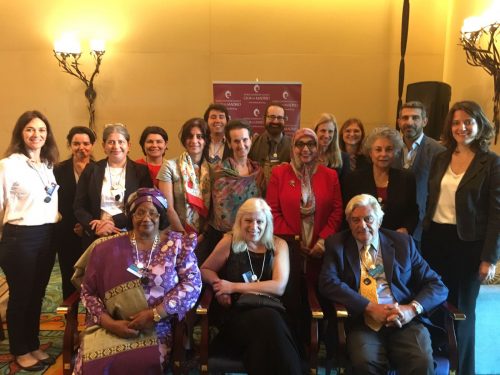
WLA-CdM, one of BGF and MDI’s closest partners in developing the AIWS 7-layer Model, partnered with the Varkey Foundation and kicked off “Education for Shared Societies” with the purpose to channel the collective knowledge of multiple fields to highlight the role of education in building peaceful communities from Shared Societies perspective. The expected outcome of the project is a strong Call to Action on Education for Shared Societies.
The kick-off of this initiative was held in Dubai on March 16th. The event was considered a brainstorming to identify stakeholders and participants, evaluating the possibilities to make contribution to transformative policies and practices with the presence of 30 representatives from governments, policy makers, educators, etc. who desire to present their opinion on how education can be better.

by BGF | Jul 8, 2018 | News
Stated in Senator Ed Markey’s article on The Boston Globe, the US is having a serious privacy issue due to many incidents involving consumer’s data being breached. The problem of cybersecurity in the US requires urgent action.

Just this year, there have been multiple invasions of privacy as smart phone apps become more popular, with notable incidents being two billion Facebook users having their information harvested, Delta Airline travelers’ credit cards breached, and 150 million under Armour’s MyFitnessPal having their data compromised. These breaches of personal information have clearly alarmed the nation, and American users are demanding an online bill of rights, which includes detailed descriptions of consumer data collection and usage by websites.
In the era of Big Data, the world must cope with challenges of information availability. It is necessary to have legislation that makes consent the law of the land; voluntary standards will not be enough, said Senator Markey.
In the search for the solution, Senator Edward J. Markey had a discussion with Governor Michael Dukakis, founder of MDI, on MDI’s AIWS Initiative and AIWS Ethics and Standards.