
by BGF | Jul 1, 2018 | News
The latest advance in artificial intelligence being combined with robots could take manufacturing and warehousing to a whole new level.

Reported by MIT Technology Review, Osaro – a San Francisco-based company – successfully created a robot arm with the ability to perform a kind of Sisyphean task. In particular, it hovers over a pile of chicken parts, retrieves a piece, swings around and gently places the chicken into a bento box along a conveyor belt The robot arm was created by a combination of older AI tools and more recent developments in machine learning, particularly as they apply to industrial robotics Including AI software in a physical body represents a revolution not just for robots but for AI too, “There is a huge amount of possibility for automating repetitive tasks,” said Willy Shih, trends in manufacturing student at Harvard Business School.
Yann LeCun, the head of Facebook’s AI research division until January, and now its chief AI scientist, wants AI to be able to reason, to see, and to hear. He believes this can be achieved by giving AI a physical presence so it can take advantage of its intelligence in interacting with the real world, just like human babies do.
As machines continue to develop human-like intelligence, there will be an increased need for ethical principles of the type advanced by MDI and its AIWS 7-Layer Model.
by BGF | Jul 1, 2018 | News
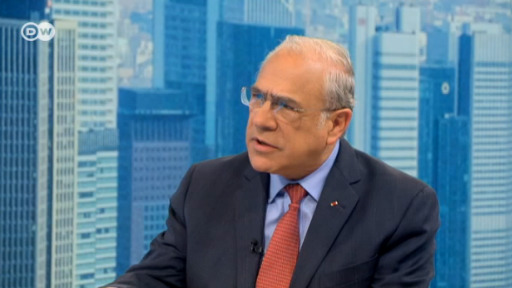
On June 12th, 2018, OECD Secretary-General Angel Gurria was invited to share his view on global trade by Deutsche Welle, a Germany’s international broadcaster.

Angel Gurria, the Secretary-General of OECD, was invited to share his point of view regarding factors that effect global growth. He stated that global trade is growing at the rate of 4-5%, which is higher than has been the case in many recent years—but that it could have been higher, around 7-8%. The reason for this is due to the tension the world is suffering from the global crisis leading to investors losing their confidence. He suggested unilateral solution for the global economy.
Angel Gurria was honored in April 2018 as the World Leader in AI World Society by BGF and MDI.

by BGF | Jul 1, 2018 | News
On March 15, 2018, Former President of Costa Rica, Laura Chinchilla, has been appointed to be new Vice President of the World Leadership Alliance – Club de Madrid (WLA-CdM).
The World Leadership Alliance–Club de Madrid, which is working closely with BGF and MDI in developing AIWS initiative and the AIWS 7-layer model, has recently welcomed the new Vice President Laura Chinchilla.

Laura Chinchilla is the first woman to become the President of Costa Rica. She’s dedicated to her work in WLA-CdM, especially for the Shared Societies Project where she co-led the Working Group on Sustainable Development. Her first activity with WLA-CdM was the Next Generation Democracy Regional Roundtable of the Americas, held in Bogota in 2015.
During her time as the Vice President of WLA-CdM, Laura Chinchilla will focus on certain areas of interest, such as protecting the environment, empowering women, and promoting social inclusion and democracy in Latin America.
by BGF | Jun 25, 2018 | AI-Government, AIWS and the Age of Global Enlightenment
Michael Dukakis, Nguyen Anh Tuan, Nazli Choucri, Thomas Patterson
Boston, June 25, 2018
***
Core Concepts for the design of AI-Government
The concept of AI-Government was developed at the Michael Dukakis Institute for Leadership and Innovation through the collaboration of Governor Michael Dukakis, Mr. Nguyen Anh Tuan, Professor Nazli Choucri, and Professor Thomas Patterson.
E-Government is the use of communication and information technology for improving the performance of public sector agencies. AI-Government transcends E-Government by applying AI to assist decision making for all critical public sector functions – notably provision of public services, performance of civic functions, and evaluation of public officials. At the core of AI-Government is the National Decision making and Data Center (NDMD). NDMD collects, stores, analyzes, and applies massive amounts of data relevant to the provision of public services and the evaluation of public programs and officials. It does not replace governance by humans or human decisional processes but guides and informs them, while providing an objective basis for service provision and evaluation.
AI supported public services span major critical functions to enable:
- AI for healthcare, social services
- AI for law, legal services
- AI for education
- AI for tourism
- AI for public transportation
- AI for labor
- AI for agriculture, fishing, and natural resource management
- AI for public finance
- AI for public housing
Structure of AI-Government:
- National Decision Making and Data Center (NDMD) lies at the core of AI-Government. It would link to all ministries, departments, and collects data from ministries, departments, provinces, provincial sub-units, cities, villages, schools, and other administrative units. NDMD would be located in the office of the President or Prime Minister
- NDMD would serve as the basis for automated public service functions. It would be a broad-based support system for public sector decision-making.
Tasks required to develop AI-Government:
- Build National Decision Making and Data Center (NDMD)
- Create regulations for automated public services
- Provide mechanisms to evaluate the performance of leaders or officials
- Facilitate feedback for civil society
- Set rules for decision making in all organs of government
- Set regulation to collect data from levels of governments, Party Office, National Assembly
- Establish a taskforce for implementation and evaluation
- Create methods to assist citizens through use of block chain ID for entities that would include corporations, institutions, social organizations.
Create automated public services assisted by AI, notably:
- Health care, public health, and social services
Build AI hospitals and other social services for remote, rural, and mountain area.
AI schools for remote, rural, and mountain areas.
Build AI law, legal services.
AI public transportation information, and support system.
AI public services for tourism.
AI labor, job guidance system.
- Agriculture, fishing, and natural resource management
AI agriculture, fishing, and natural resource guidance systems.
AI revenue collection and monitoring system.
AI public housing targeting, allocation, and monitoring system.
AI-Government is a component of the Artificial Intelligence World Society (AIWS) model developed by the Michael Dukakis Institute for Leadership and Innovation. The model has seven layers, two of which pertain to AI-Government.
***
Download The Concept of AI-Government

by BGF | Jun 25, 2018 | News
Recently, Governor Michael Dukakis, Director Nguyen Anh Tuan and Prof. Thomas Patterson discussed key parts of the AI Peace Treaty. They defined threats and challenges for AI peace, and discussed AI’s potential use as a weapon and the role of the UN, OECD countries, and top AI corporations in maintaining the AI peace.
The Michael Dukakis Institute’s missions are to provide an ethical framework for future generations of innovators, and to deploy initiatives to solve global issues involving Cybersecurity and Artificial Intelligence. With the work of Michael Dukakis – Governor of Masschusetts, Chairman of MDI, Nguyen Anh Tuan – Director of MDI and Professor Thomas Patterson – Bradlee Professor of Government & the Press at Harvard Kennedy School, key parts of the AI Peace Treaty are developing, including challenges for AI peace, AI weapons, the role of the UN, OECD countries and top AI corporations in maintaining the peace of Artificial Intelligence.

by BGF | Jun 25, 2018 | News
President Donald Trump directed the U.S Trade Representative to impose new tariffs on $200 billion in Chinese imports Monday while trying to save Chinese telecom ZTE.
ZTE is the fourth-largest vendor of mobile phones and electronic components for phones in the U.S. This company was caught conducting illegal sales to North Korea and Iran which violated a 2017 agreement. The Commerce Department at first imposed a seven-year ban in April on companies doing business with ZTE, until President Trump brokered a deal to lift the ban in exchange for a $1 billion fine and policies adjustments. The Senate supports the bill and requires that ZTE cooperate with U.S investigators before lifting the ban, as reported by Politico.
At the same time, Trump is pursuing additional tariffs on $200 billion of goods in retaliation for intellectual property theft.
The matters of cybersecurity and monitoring have become important issues since the Fourth Industrial Revolution began. It is a major challenge for people to monitor every action taken by companies all over the world. In this case, AI can be used for better monitoring enterprises to ensure a safer society. Hence, AI is expected to develop in order to do a better job preventing of intellectual breaches. MDI is currently developing an initiative called AIWS, which is aimed at keeping AI developing safely and pacifically.

by BGF | Jun 25, 2018 | News
Stated in MIT Technology Review, President Donald Trump’s slogan in his campaign “Make American great again” was favored by heavily industrialized counties. Embracing new technologies makes the economy healthy but creates an uncertain future for the labour.
According to a study by Brookings Institution, the Toledo metropolitan area is the most roboticized in U.S, with nine robots per 1000 workers. Within 5 years from 2010 to 2015, the number of Robots tripled to 2374. A March report estimated that, from 1967-2014, the state had lost 671,000 jobs to automation. A similar story has played out in many other regions. The issues caused by robots and other technologies are deeply affecting the society, and some argue that anxieties caused by automation helped elect Donald Trump.
How can we incorporate AI into our society so that it becomes a safer and even better place to live? An ethical framework and standards for AI are essential. The AIWS Initiative of MDI will support these frameworks and standards.
by BGF | Jun 25, 2018 | News
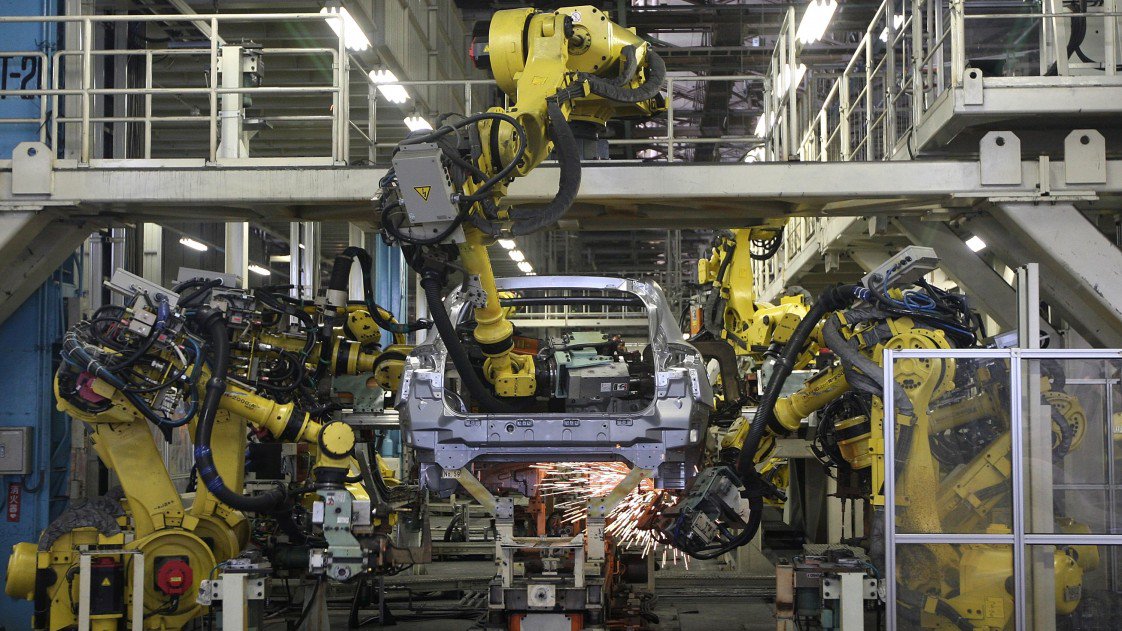
A report by International Federation of Robotics shows that over a third of industrial robots last year were installed by China. This nation is investing much more heavily in automation than the U.S. And while the U.S is assumed to be the leading country in AI industry, since most of the modern technologies originated from Silicon Valley, the same is not entirely true when it comes to robot manufacturing.
In 2017, 380,000 industrial bots were sold, a 29% increase in sales over the prior year. At the same time, China had an enormous increase by 58% in industrial robots (robotic systems used for manufacturing) and installed 138,000 bots. This number accounted for a third of the robots sold worldwide, and showed that China in particular and Asia in general are starting to create a foundation for robot metal —a branch of AI —at an extremely fast pace.
This development carries potential benefits and risks. Hence, it is essential to come up with ethical standards for this advancement. MDI is currently working on AIWS 7-Layer Model to ensure the future of AI is for the good of humans.

by BGF | Jun 25, 2018 | News
As North Korean leader Kim Jong Un began to normalize the relation with his neighbors, Japanese Prime Minister Shinzo Abe also wants to sit down with Kim Jong Un.
Earlier this month, the Prime Minister Shinzo Abe stated in a press conference with President Donald Trump in Washington, D.C. that he would like to meet with Leader Kim over the issue of abductees in North Korea, and would like to work on normalizing the relation between two nations. The Japanese Prime Minister, who was honored as the World Leader in Cybersecurity by MDI in 2015, asserts that this meeting needs to be held as Kim is also looking for financial aid down the road. “In its talks with Japan, North Korea expects economic gains by signaling that it is willing to discuss the abductees”, said Cheon Seong-Whun, a visiting research fellow at the Asan Institute for Policy Studies in Seoul.
