
by Editor | Jul 8, 2019 | News
Digging deeper, today’s artificial intelligence has three key ingredients: data, recipes and optimizations. The data is the foundation and the basis for learning. Just like we as humans learn from books, movies, teachers, etc. — all of which are sources of data — a computer needs data from which to learn in order to become intelligent. And with the proliferation of sensors —sensors attached to refrigerators, sensors attached to pipelines, sensors attached to production lines and even sensors attached to cows — there is more data than ever before. The volume and quality of data have a critical impact on the success of an artificial intelligence system.
The recipe of an AI system provides guidance on how the computer should discover patterns in data to produce outputs. The recipe helps the computer to create rules for classifications, segmentation and predictions based on the data it is learning from. According to AI Ethics report, AI technology also not only require a large of datasets and algorithms but also obtain a systematic approach to avoid bias and achieve core ethical value for relieving human well-being and happiness, as well as solving important issues, such as SDGs.

by Editor | Jul 8, 2019 | News
The World Economic Forum today announced its list of 56 companies selected as Technology Pioneers, and this year’s class demonstrates the growing embrace of artificial intelligence (AI) and machine learning across a broad range of sectors.
Of those selected, at least 20 companies say they are using AI or machine learning in some fashion to tackle challenges in fields such as advertising technology, smart cities, clean tech, supply chain, manufacturing, cybersecurity, autonomous vehicles, and drones.
As members of the Pioneers programs, startups are invited to participate in various WEF events that give them access to international policy makers and larger corporations that represent potential partners or investors. For many, it also represents an important validation of their product or services. AI and Machine Learning technology trend in WEF program is also aligned with Artificial Intelligence World Society (AIWS) for the purpose of promoting ethical norms and practices in the development of AI to serve and strengthen democracy, human rights, and the rule of law.
by Editor | Jul 21, 2019 | News
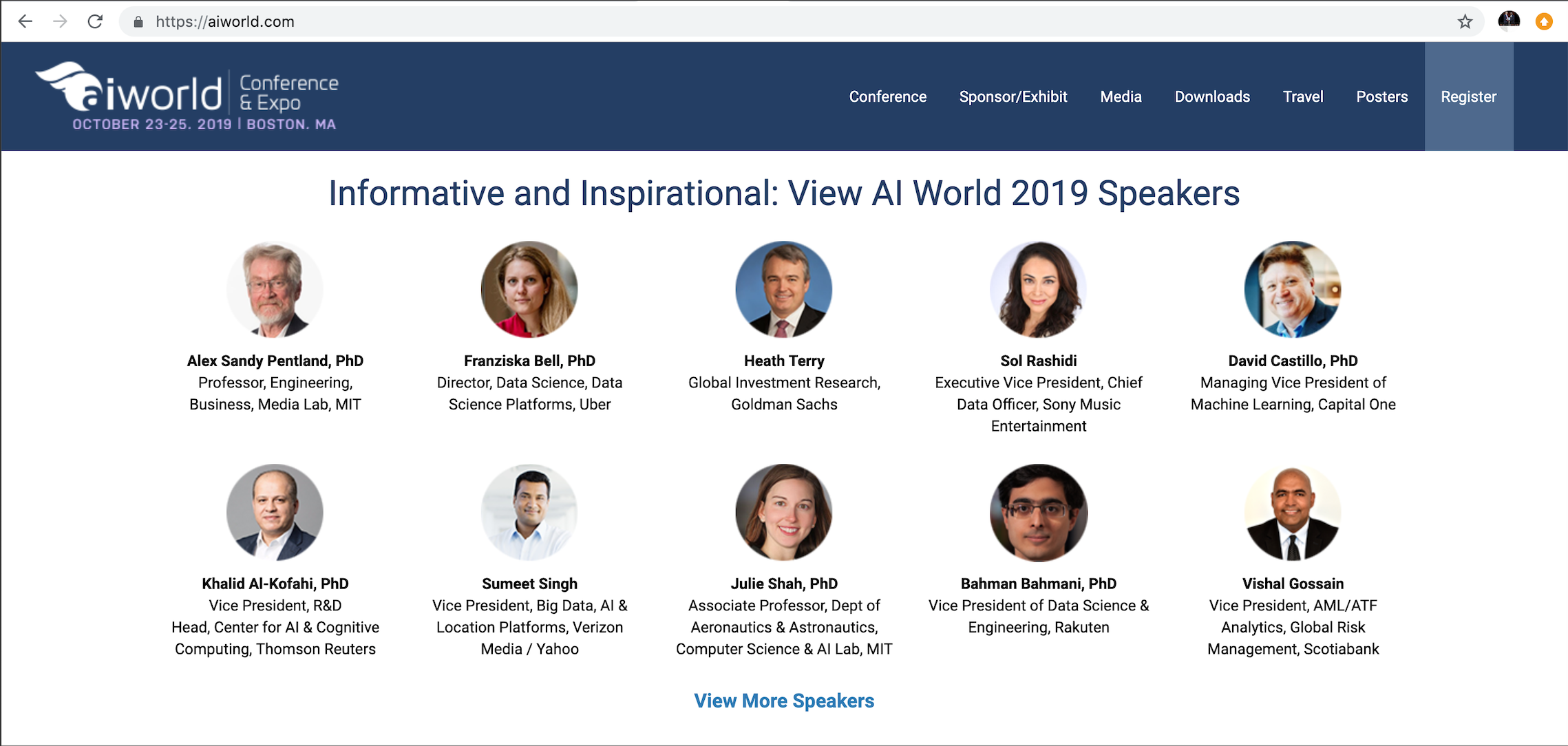
Professor Alex Sandy Pentland, co-founder of the Social Contract 2020, directs the MIT Connection Science and Human Dynamics labs and previously helped to create and direct the MIT Media Lab and the Media Lab Asia in India. He is one of the most-cited scientists in the world, and Forbes recently declared him to be one of the “7 most powerful data scientists in the world”, along with Google founders and the Chief Technical Officer of the United States. He co-led the World Economic Forum discussion in Davos that led to the EU privacy regulation GDPR, and was central in forging the transparency and accountability mechanisms in the UN’s Sustainable Development Goals. He has received numerous awards and prizes such as the McKinsey Award from Harvard Business Review, the 40th Anniversary of the Internet from DARPA, and the Brandeis Award for work in privacy.
Professor Alex Sandy Pentland will speak at AI World Conference and Expo on October 23, 2019 in Boston. The Boston Global Forum and Michael Dukakis Institute for Leadership and Innovation are Strategic Alliance Hosts of this event at AIWorld.com.
by Editor | Jun 21, 2024 | Board of Thinkers
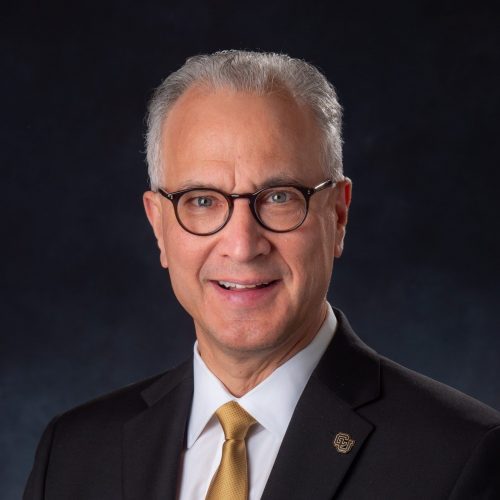
As Director of the Wilson Center’s Wahba Institute for Strategic Competition, Hon. Mark R. Kennedy (U.S. Congress 2001-07 MN) defines paths to strengthening America’s alliances, and the technology, trade, energy, infrastructure and industrial base foundations of its economic and global leadership.
As a Senior Fellow at CNA - Center for Naval Analyses and an appointed Civic Leader supporting the Secretary of the Air Force, Kennedy champions the grand strategy and military needed to deter aggression.
Mark applies experiences as a first-generation college graduate, President Emeritus of the University of Colorado, President of the University of North Dakota, presidentially appointed member of the Advisory Committee for Trade Policy and Negotiations, author of Shapeholders, Business Success in the Age of Activism (Columbia University Press), member of the Council on Foreign Relations, member of the Boston Global Forum’s Board of Thinkers, Chairman Emeritus of the Economic Club of Minnesota, corporate executive, University of Michigan MBA (with distinction) and St. John’s University (MN) graduate.
Kennedy has engaged wide cross-sections of society in over 45 countries, including refugee camps, war zones, 55+ military bases and three aircraft carriers at sea.
by Editor | Jun 12, 2024 | Board of Thinkers
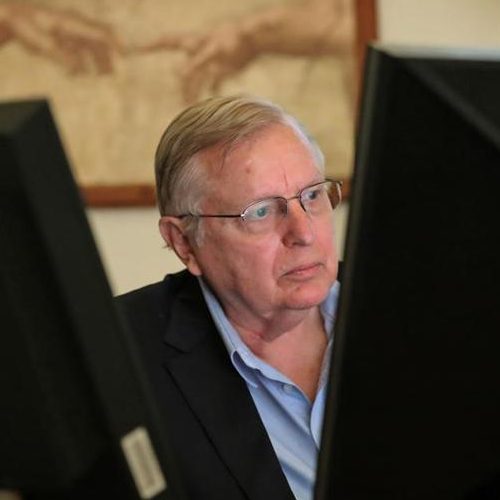
Patrick H. Winston was Ford Professor of Artificial Intelligence and Computer Science at the Massachusetts Institute of Technology. He has been with CSAIL and before that the MIT Artificial Intelligence Laboratory since 1967. He joined the faculty in 1970, and he was the Director of the Artificial Intelligence Laboratory from 1972 to 1997.
Professor Winston was particularly involved in the study of how vision, language, and motor faculties account for intelligence. He also works on applications of Artificial Intelligence that are enabled by learning, precedent-based reasoning, and common-sense problem solving.
Professor Winston was chairman and cofounder of Ascent Technology, Inc., a company that produces sophisticated scheduling, resource allocation, and schedule recovery applications, enabled by AI technology, and in use throughout the world in major airports and the Department of Defense.
Professor Winston was a member of the Naval Research Advisory Committee (NRAC) (1985-1990, 1994-2000) for which he served as Chair from 1997 to 2000. During his service on NRAC, he chaired several studies, including a study of how the Navy can best exploit the next generation of computer resources and a study of technology for reduced manning. Professor Winston is also a past president of the American Association for Artificial Intelligence.
Professor Winston was working on a major new research and educational effort, the Human Intelligence Enterprise, which will bring together and focus research from several fields, including Computer Science, Systems Neuroscience, Cognitive Science, and Linguistics.
Professor Patrick Winston passed away on July 19, 2019.