
by Editor | May 17, 2020 | News
The Artificial Intelligence (AI) application identifies anomalies in the lungs and assists in detection of COVID-19 pneumonia. It analyses the lung pathology on chest CT to aid in the assessment and comes with triage capability. With the sudden surge in admission of respiratory-related patients globally, triaging can help to reduce the increasing burden on the intensive care units (ICU) and address the shortage of medical resources.
Raymond Moh, CEO of BioMind, said: “We are proud to receive the Health Sciences Authority’s approval for our COVID-19 diagnostics support product. This was born out of the immense efforts and collaborations between clinicians, lung specialists and our engineers. In an unprecedented crisis like this, we hope to quickly scale our solution in Asia, Europe, Middle East and USA to equip physicians with smart tools to detect and manage COVID-19 pneumonia. Artificial intelligence will be their useful assistant daily in this long battle.”
Hanalytics, a medical AI company behind this solution, is also the brainchild of the BioMind application to assist diagnosis in neurological disorders including brain tumours and haemorrhagic stroke.
The company uses a deep learning approach and develops a predictive application that is trained on a large volume of CT scans which are clinically confirmed to have COVID-19 infections. This allows them to be used as an assistive tool to physicians to recognise diseases on medical scans, automate quantitative analysis and assist in report writing quickly.
The original article can be found here.
Regarding to AI impact for world society matter and global healthcare especially during COVID-19 pandemic, the Michael Dukakis Institute for Leadership and Innovation (MDI) established the Artificial Intelligence World Society Innovation Network (AIWS.net) for helping people achieve well-being and happiness, relieve them of resource constraints and arbitrary/inflexible rules and processes, and solve important issues, such as SDGs.
by Editor | May 17, 2020 | News
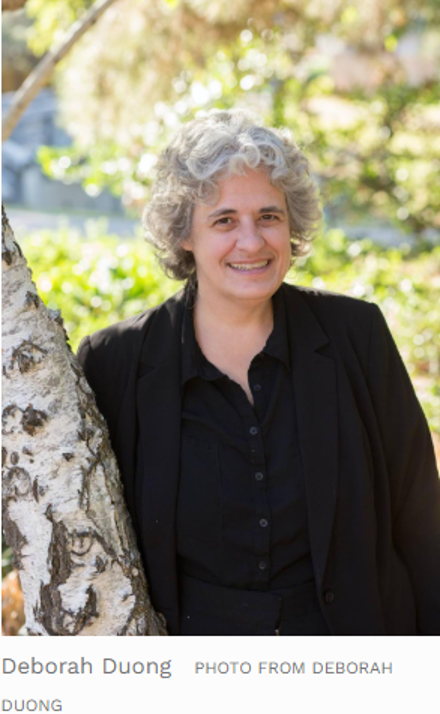
An Interview with Dr. Deborah Duong, Director for AI Development at Rejuve.
Dr. Duong says, “Healthcare workers and essential workers need to go to work during the Covid-19 pandemic. That puts them in danger even if they are wearing masks and gloves. They should be equipped with more information about their own health and the likelihood of infection in their places of work to make informed decisions. If they are empowered with a wearable that can alert them of the imminent infection of Covid-19 or if the probability of infection is extremely high, they can immediately decide to isolate themselves from their families, etc.”
Complex Adaptive Systems can potentially help us find a “Covid-19 data signature” from observations made from interaction data collected inside the population of people who are infected and who are not infected.
By discovering patterns using Artificial Intelligence and causal inference, conceptual groups can be identified and data can be analyzed in the context of what is happening within the society.
The media does a good job of scrutinizing AI systems for privacy, data ownership and security issues. It is possible to build a Complex Adaptive System that gives individuals their data ownership, preserves privacy and is secure. At the same time, through Artificial Intelligence with causal inference, a decision network can be created to inform policymakers. Much like the Markov Decision Process, data can be modeled in simulations. A percentage of the population can wear the wearables so that the least amount of data necessary for accurate decisioning can be collected and used for policy.
The original article can be found here.
It is useful to note that AI with causal inference has been developed by professor Judea Pearl, who is awarded Turing Award 2011, the most prestigious prize awarded to computer scientists by the Association for Computing Machinery. In 2020, Professor Pearl is also awarded as World Leader in AI World Society (AIWS.net) by Michael Dukakis Institute for Leadership and Innovation (MDI) and Boston Global Forum (BGF). At this moment, Professor Judea Pearl also contribute on Causal Inference for AI transparency, which is one of important AIWS.net topics on AI Ethics.
by Editor | May 10, 2020 | News
The Social Contract 2020 sets the foundation for a new historical chapter: the emergence of AI societies. Governor Michael Dukakis stressed the importance of studying history to prevent past mistakes from repeating in the present and the future. I value his insight and would like to add that looking back at history is a way to shape and invent the future. We should not content ourselves with merely predicting the future; with AI as our tools, we can strive to innovate and organize it.
With that idea in mind, AIWS.net shall announce today May 5, 2020, a new project—The History of AI—as a companion to the Social Contract 2020. While many individuals and organizations study the history of AI already, AIWS will study the field from a different angle and with a different approach. Our approach will be cross-sectional with the following structure:
- Ideology, motivating ideas, methodology, model, and solutions in AI.
- AI inventions in science and technology
- AI applications in politics, government, economics, and society
The project aims to identify historical events, figures, and accomplishments, as well as lessons, documents, evidence, witness, and anecdotes, with the aim to study AI to shape the future of AI. The History of AI project will accompany the Social Contract. An AI Chronicle e-book version is available on AIWS’s website. There will also be AIWS House in Boston and on university campuses around the world.
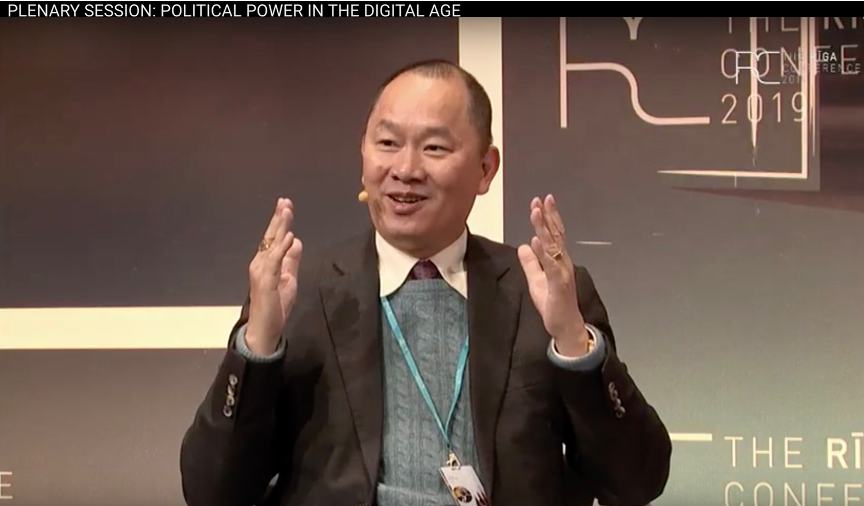
The History of AI Board include Governor Michael Dukakis, Professor Judea Pearl (UCLA), Professor Alex Pentland (MIT), Nguyen Anh Tuan (Michael Dukakis Institute), Professor Nazli Choucri (MIT), Professor Thomas Patterson (Harvard University), Professor David Silbersweig (Harvard University), and Historian Chien Minh Le (President of Dalat University). The AI History Board will assess and identify historical events, figures, and achievements to feature in the AI.
Chronicle e-book, which will be updated monthly and reviewed annually. Our approach will be open-ended: based on our findings, we will develop research on the above criteria, and we invite individuals and organizations to contribute to the project by gathering documents, stories and participating in analysis.
The History of AI belongs to all citizens, and anyone who contributes their mind and efforts can shape it.
Together, we shall envision the Social Contract 2020, put it into practice, and invent the History of AI.
The original post can be found here.

by Editor | May 10, 2020 | Event Updates, News
On May 5, the Boston Global Forum and Michael Dukakis Institute announced the Framework for the Social Contract 2020, a new Social Contract in the Age of Artificial Intelligence.
Artificial intelligence, biometric data and the use of digital technologies are proving to be allies in curbing the spread of COVID-19. Some countries have effectively deployed contact tracing apps in the mitigation of infection rates.
However, the deployment of these technologies does not come without challenges to our democracies. How can we guarantee a responsible collection of our data and a transparent usage of algorithms? Will we have to choose between health and privacy? Can we have both?
Club de Madrid and partner Boston Global Forum are jointly organising this online policy discussion to exchange views and actionable ideas for a democratic governance of emerging technologies, artificial intelligence, focusing on their impact on the right to privacy. With an eye set to transatlantic relations, the session brings together tech and policy experts with Members of Club de Madrid –democratic former Heads of State and Government– to discuss a social contract essential to a democratic governance of technology, before technology governs us.
Club de Madrid Members:
Danilo Türk, President of Club de Madrid and President of Slovenia (2007-2012).
Esko Aho, Member of Club de Madrid and Prime Minister of Finland (1991-1995).
Facilitator:
David Silbersweig, Chairman, Department of Psychiatry and Co-Director for Institute for the Neurosciences, Brigham and Women’s Hospital.
Experts:
Nazli Choucri, Professor of Political Science at the Massachusetts Institute of Technology.
Alex Pentland, Director of MIT Connection Science and Human Dynamics labs.
Thomas Patterson, Harvard, Bradlee Professor of Government & the Press.
Time: 9:00 am EST, May 12, 2020
The AIWS Roundtable will be streamed live on the website of the Club de Madrid.
This event is sponsored by Mr. Nguyen Van Tuong, Founder and Chairman of Tram Huong Khanh Hoa.
by Editor | May 10, 2020 | News
AIWS Summit 2020 started on April 28, 2020 with talk of Speaker of the Swedish Parliament Andreas Norlén. There are many feedbacks from talk of Dr. Norlén.
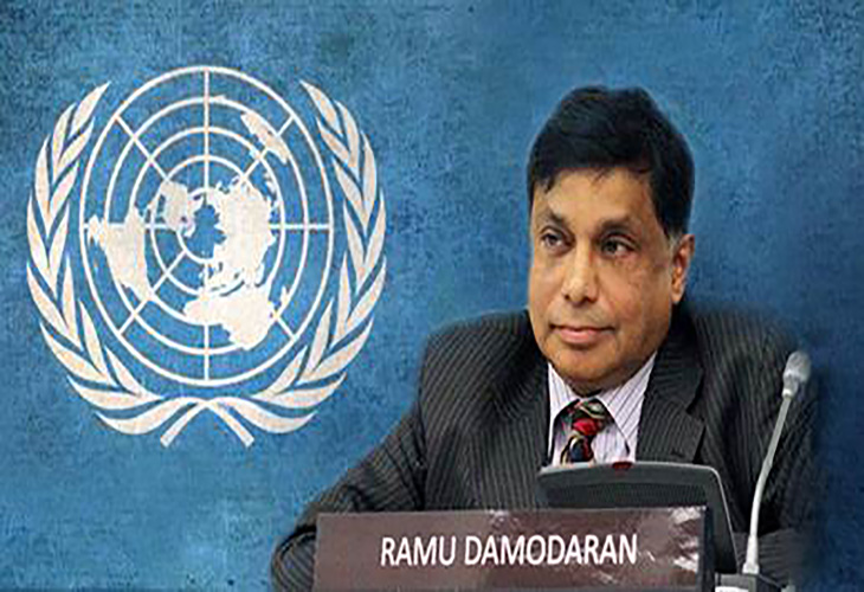
Continue with Speaker Norlén, on may 8, the Chief of the United Nations Academic Impact Ramu Damodaran talk on AIWS Summit 2020.
On May 12, 2020, AIWS Roundtable that co-organized by Club de Madrid and Boston Global Forum,, as a part of AIWS Summit 2020.
Ramu Damodaran is the chief of the United Nations Academic Impact, an initiative he was responsible for designing ten years ago and which now has more than 1300 member institutions. He also oversees the civil society and advocacy outreach in the United Nations Department of Global Communications, as well as the Dag Hammarskjold Library, the UN Chronicle journal and the Yearbook of the United Nations. He is the secretary of the United Nations General Assembly’s Committee on Information. In his more than 25 years at the United Nations he has held a number of positions, including in the Executive Office of the Secretary-General.
Originally a member of the Indian Foreign Service, he has held a number of governmental positions including that of executive assistant to the Prime Minister of India.
by Editor | May 10, 2020 | News
The early and accurate diagnosis of neurodegenerative diseases such as Alzheimer’s is critical to providing quality care to afflicted individuals. Yet, with one of the largest populations of individuals aging into the high-risk years for Alzheimer’s, improved diagnostic tools are imperative. In recent years, scientists and clinicians have focused their attention toward machine-learning artificial intelligence (AI) tools to help them diagnose Alzheimer’s risk and onset. Now, a team of investigators at Boston University School of Medicine (BUSM) may have developed just such an algorithm.
“Alzheimer’s disease is the primary cause of dementia worldwide, with an increasing morbidity burden that may outstrip diagnosis and management capacity as the population ages,” the authors of the newly published research wrote. “Current methods integrate patient history, neuropsychological testing and MRI to identify likely cases, yet effective practices remain variably applied and lacking in sensitivity and specificity.”
The BUSM researchers developed a computer algorithm based on AI that can accurately predict the risk for and diagnose Alzheimer’s disease using a combination of brain MRI, testing to measure cognitive impairment, along with data on age and gender. Findings from the new study were published recently in Brain through an article titled, “Development and validation of an interpretable deep learning framework for Alzheimer’s disease classification.”
The AI strategy, based on a deep learning algorithm, is a type of machine learning framework. Machine learning is an AI application that enables a computer to learn from data and improve from experience. Alzheimer’s disease is the primary cause of dementia worldwide. One in 10 people age 65 and older has Alzheimer’s dementia. It is the sixth-leading cause of death in the United States.
Regarding to AI impact for society and healthcare, the Michael Dukakis Institute for Leadership and Innovation (MDI) established the Artificial Intelligence World Society Innovation Network (AIWS.net) for helping people achieve well-being and happiness, relieve them of resource constraints and arbitrary/inflexible rules and processes, and solve important issues, such as SDGs.
by Editor | May 10, 2020 | News
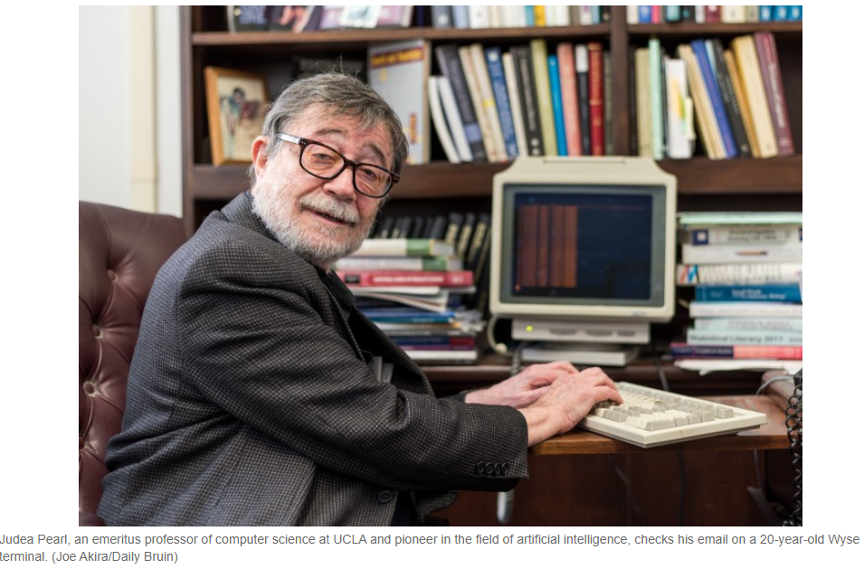
Pearl, an emeritus professor of computer science at UCLA, built his career by challenging generally accepted conventions in the field of artificial intelligence (AI).
When people upgraded to newer computers, Pearl continued to use his 20-year-old Wyse terminal.
“I always have my internet when everyone else is complaining about it,” he said while typing code onto the green and black screen to load his email.
When computer scientists said computers could only understand true or false, Pearl found a way to make them understand uncertainty.
When computer scientists said machines should be answering the question, “What?” Pearl said they should be answering the question, “Why?”
“He understands people aren’t necessarily going to agree with him, but when (Pearl) explains his logic, it all just seems so obvious,” said Kaoru Mulvihill, Pearl’s office assistant.
Mulvihill puttered around Pearl’s office, dusting first edition Francis Bacon books and the leather chair in the corner that Pearl sleeps in to maintain his strict nighttime working hours.
The walls are decorated with honorary degrees from universities that he can’t keep track of. Yellowed pages of scientific manuscripts are neatly slotted in bins around his desk, and trophies cover any flat surface that isn’t occupied by a stack of books.
The A.M. Turing Award, the most prestigious prize awarded to computer scientists by the Association for Computing Machinery, secures its spot in the center of Pearl’s bookcase. Pearl won the Turing award in 2011 for his probabilistic model of artificial intelligence.
The original article can be found here.
In 2020, Professor Pearl is also awarded as World Leader in AI World Society by Michael Dukakis Institute for Leadership and Innovation (MDI) and Boston Global Forum (BGF). At this moment, Professor Judea Pearl is an AI pioneer to contribute on Causal Inference for AI transparency, which is one of important AIWS.net topics on AI Ethics.

by Editor | May 4, 2020 | News

Professor Thomas Patterson, co-founder of Boston Global Forum and AIWS.net, will speak about his new book “Is the Republican Party Destroying Itself?” at 10:00 am (EST), May 5, 2020 at AIWS.net. The moderator is Mr. Barry Nolan, member of the Boston Global Forum Executive Board.
Is the Republican Party Destroying Itself? explores five traps that the Republican Party has set for itself and endanger its future. The traps vary in lethality but, together, they could cripple the party for a generation or more. One trap is its steady movement to the right, which has distanced the party from the moderate voters who hold the balance of power in a two-party system. A second trap is demographic change. Younger adults and minorities vote heavily Democratic, and their numbers increase with each passing election. The older white voters that are the GOP’s base of support are shrinking in number. Within two decades, based on demographic change alone, the GOP faces the prospect of being a second-rate party. Right-wing media are the Republicans’ third trap. A powerful force within the party, they have tied the GOP to policy positions and versions of reality that are blunting its ability to govern and impeding its efforts to attract new sources of support. A fourth trap is the large tax cuts that the GOP has three times handed to the wealthy. The rich have reaped a windfall but at a high cost to the GOP. It has soiled its image as the party of the middle class and created a split between its working-class supporters and its marketplace conservatives. The fifth trap is the GOP’s disregard for democratic norms and institutions, including its effort through voter ID laws to suppress the vote of minorities and lower-income Americans. In the process, it has made lasting enemies and created instruments of power that can be used against it. That Donald Trump won the 2016 presidential election says more about the Republican Party than it does about Trump. In the whole of American history, there is only one major party – today’s GOP – that would have nominated a Trump-like candidate for president. And he has deepened each of the Republican Party’s traps. If the GOP were to become a second-rate party, Trump will have accelerated its downfall rather than being the cause of it. Before he came on the scene, the GOP was already a conservative party in name only. It had become a reactionary party out of step with what America is becoming. Republicans have traded the party’s future for yesterday’s America.The GOP needs to restore its conservative heritage if it is to remain a competitive party. Our democracy requires a healthy and competitive two-party system and would not benefit from a greatly diminished Republican Party, nor can it flourish from the reactionary course that the GOP has been pursuing.

Thomas E. Patterson is Bradlee Professor of Government and the Press, Harvard Kennedy School. He is author of the book Informing the News: The Need for Knowledge-Based Journalism, published in October 2013. His earlier book, The Vanishing Voter, looks at the causes and consequences of electoral participation, and his book on the media’s political role, Out of Order, received the American Political Science Association’s Graber Award as the best book of the decade in political communication. His first book, The Unseeing Eye, was named by the American Association for Public Opinion Research as one of the 50 most influential books on public opinion in the past half century. He is also the author of Mass Media Election: How Americans Choose Their President (1980), and two general American government texts: The American Democracy and We the People. His articles have appeared in Political Communication, Journal of Communication, and other academic journals, as well as in the popular press. His research has been funded by the Ford, Markle, Smith-Richardson, Pew, Knight, Carnegie, and National Science foundations. Patterson received his PhD from the University of Minnesota in 1971.

Barry Nolan currently serves as Senior Advisor to Congressional Representative Carolyn B. Maloney in her DC office. He is Member of the Boston Global Forum’s Executive Board.
Prior to his current post, he served as the Senior Advisor to the Democratic Staff of the Joint Economic Committee from 2015 to 2017, as Senior advisor on the congressional staff of US Representative Carolyn Maloney (NY-12) from 2012-2014. From 2009 to 2011 he served as Communications Director for the JEC.
Before he began his career in public service he spent three decades as a multi-Emmy Award winning television journalist, producer and commentator traveling the world to cover an enormous range of stories. He has hosted national programs on ABC, Fox, and in syndication.
He has also been an Adjunct Professor in the Journalism Department at Boston University and was a regular contributor to Boston Magazine.
For 22 years, he has been a panelist on Says You, a weekly NPR radio show described by Time magazine as a “party for smarties,” and is blissfully married to BU professor Garland Waller.
by Editor | May 4, 2020 | Event Updates
The Boston Global Forum and World Leadership Alliance-Club de Madrid (WLA-CdM) will co-organize the Online AIWS Roundtable with the attendence of President of WLA-CdM, and Former President of Slovenia Danilo Türk, Former Prime Minister of Canada Kim Campbell, and Former Prime Minister of Netherlands Jan Peter Balkenende, Speaker of the Swedish Parliament Andreas Norlén , and leaders of AI World Society Innovation Network (AIWS.net) Professors Thomas Patterson (Harvard), Nazli Choucri (MIT), Alex Pentland (MIT), and David Silbersweig (Harvard).
Participants will discuss the Social Contract 2020, focus on the protection of privacy rights in times of the COVID-19 pandemic.
Time: 9:00 am (EST), May 12, 2020.
World Leadership Alliance-Club de Madrid (WLA-CdM) is the largest worldwide assembly of political leaders working to strengthen democratic values, good governance and the well-being of citizens across the globe. As a non-profit, non-partisan, international organisation, its network is composed of more than 100 democratic former Presidents and Prime Ministers from over 70 countries, together with a global body of advisors and expert practitioners, who offer their voices and agency on a pro bono basis, to today’s political, civil society leaders and policymakers. WLA-CdM responds to a growing demand for trusted advice in addressing the challenges involved in achieving democracy that delivers, building bridges, bringing down silos and promoting dialogue for the design of better policies for all. This alliance, providing the experience, access and convening power of its Members, represents an independent effort towards sustainable development, inclusion, and peace, not bound by the interest or pressures of institutions and governments.
This event is a part of the Policy Dialog 2020: Transatlantic Approaches on Digital Governance: A New Social Contract in Artificial Intelligence Age, sponsored by Mr. Nguyen Van Tuong, co-founder and Executive Chairman of ATC Tram Huong Khanh Hoa.