by Admin | Apr 22, 2015 | Event Updates
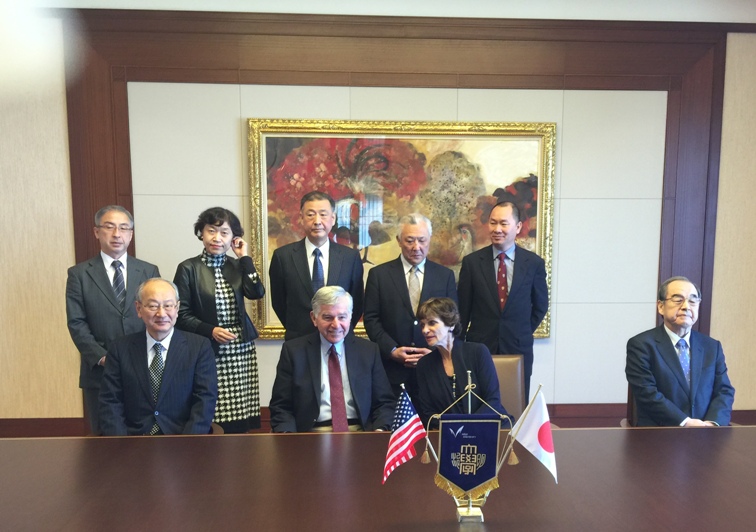
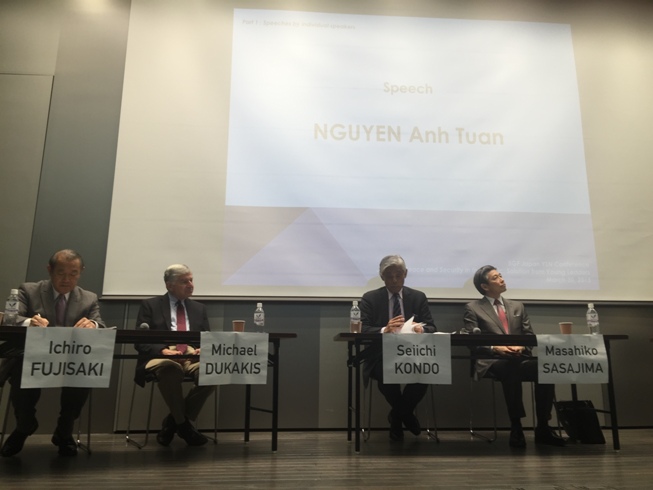
(March 31,2015) – During the trip to Tokyo to organize the Boston Global Forum’s first conference about its Young Leaders Network, Governor Michael Dukakis, Co-founder and Chairman of the Boston Global Forum made a speech at Meiji University about Creating a Framework for Peace and Security in the Pacific.
Read his full speech here.
CREATING A FRAMEWORK FOR PEACE AND SECURITY IN THE PACIFIC
Meiji University, Tokyo- March 30, 2015
It is a real pleasure for Kitty and me to join you in this historic city for a conference that is dealing with one of the great challenges we face as we seek to create what the first President Bush called “ a new world order.”
When he and Mikhail Gorbachev agreed to end the Cold War, many of us looked forward to an era which would be radically different from what we had experienced during the decades following World War II. We believed that it was possible to develop new institutions and rules of conduct that would not only reject war as an acceptable solution to the world’s problems but would make it possible for us to take the billions we were pouring into weapons of wars and use them to make this world a much better place.
Our thanks to Meiji University for inviting Kitty and me and making it possible for all of us to stop, take stock, and ask ourselves how well we are achieving the goals that Presidents Bush and Gorbachev set for us and for the world some twenty-five years ago.
I say this as somebody for whom Japan is not a new place. I served in the U.S. Army in Munsan, Korea from 1955 to 1957 about seven miles from the demilitarized zone. Fortunately for me, an uneasy truce was in effect, and those of us who were serving in Korea could take a week of leave in Japan every four months during our sixteen month tour of duty. That meant that I had three weeks in addition to whatever leave time I chose to take to spend in Japan, and, believe me, I made full use of it. I covered the country; explored its cities and its countryside; tried the best I could to study its history and its efforts to rebuild after World War II both physically and politically; and was impressed with the fact that Japan for the most part had accepted the Allies’ insistence that it forego rearmament and do in the Pacific what we hoped Germany would do in Europe— play the role of peacemaker in their respective regions.
At the same time an emerging Communist China had defeated the Nationalists and was advocating a tough and belligerent approach to foreign affairs allied with what we then called the Soviet Union. The Cold War that emerged engulfed everyone everywhere. The U.S. and the Soviet Union began to intervene in virtually every part of the globe. That included Vietnam—and another war which took thousands of American and hundreds of thousands of Vietnamese lives before it ended in defeat for the U.S.
By contrast, Japan’s recovery was remarkable. It began building an impressive, modern economy; found itself competing effectively with the U.S. and other advanced industrialized nations, In fact, many of you will remember that my friend, Ezra Vogel, wrote a popular book called “ Japan as Number One” that stirred up a lot of interest in the U.S. and around the globe. I always thought that the fact that Japan did not have to devote billions for its defense was one of the reasons it was able to develop its peacetime economy so effectively; give us remarkable technological advances like high speed rail; and establish itself as a serious international player in the world economy.
My own view of the subject of this conference has been influenced by two things: a strongly internationalist view of the world and the lessons one learns from a long and active life of public service over many decades.
I just celebrated my eighty-first birthday this past November. Kitty and I were children during World War II and remember it well. Almost within months after it ended, the Cold War began and engulfed us all for nearly fifty years. So most of our adult lives until the Cold War ended were defined by the struggle between the U.S. and the Soviet Union; communism and capitalism; east and west.
Fortunately, all of that is—or should be—behind us. India and China are emerging as growing economic players in a new world economic order. Japan, while it has had its economic struggles lately, continues to be an important force in Asia and the world.
I say “ should be” because there are increasingly troubling signs that some elements of the international community are beginning to accept the inevitability of a new Cold War in which Asia and the Pacific will be one of its battlegrounds. Clearly, in a world of imperfect human beings, there will be pressures and conflicts. That is why we have the United Nations and the various regional organizations under it that seek to create a framework for peace and security within their regions and try to resolve their differences peacefully and constructively.
In the Western Hemisphere, for example, we now have the Organization of American States that has done much to end the constant conflict that plagued the region for centuries and the military dictatorships that ruled much of it. In fact, when I was a student at the University of San Marcos in Lima, Peru in 1954, there were no more than three genuinely democratic governments in all of Latin America.
These days virtually all of Latin America is governed by democratic governments, and those that aren’t are under strong regional pressure to move in that direction. That includes Cuba which at long last will finally be able to function without the crushing effect of a U.S. imposed and enforced embargo and will have at long last the opportunity to evolve into a healthy and genuine democracy.
I cite the OAS as one example of the regional institutions under the aegis of the United Nations which can serve as models- however imperfectly- for the kind of permanent Asian regional organization that in my judgment is absolutely essential if we are going to achieve the goals that are reflected in this conference. Moreover, the OAS has not limited itself simply to reducing and eliminating conflict. When I spent that summer in Peru in 1954, one out of every two Peruvian babies never lived to see its first birthday. Today, infant mortality in Peru is about where it is in the rest of advanced industrialized world—a victory for the kind of international public health effort under the UN that most recently ended the Ebola epidemic remarkably quickly and effectively.
But I find the current situation in Asia and the Pacific particularly troubling. After decades of turmoil and conflict, the region has now achieved a remarkable level of growth and confidence and relative peace.
The China of Mao has now become a very different and, I would argue, better place. It has essentially adopted a market economy, and while it has not embraced democracy, I believe that will be inevitable over time as it grows in economic strength and influence and reaches out, as it is now doing, to nations all over the world. Welcoming and not rejecting China into the family of nations will encourage that development, which is why the U.S. effort to stymie China’s proposed international development bank and keep its key allies from joining it seems so short sighted.
The developing world, and particularly Asia, need the trillions in foreign exchange that China can help to pour into the new bank. For the life of me, I can’t understand why the U.S. or others would object to it. In fact, by participating in it and encouraging others to do so, we can ensure that it meets high standards of fiscal and banking responsibility and include China and others even more fully in an increasingly collaborative world that shares its resources.
South Korea is a marvel. The country I left as a young GI in 1957 with a per capita annual income of $50 is now a remarkable example of economic and political transformation. The dictatorship of Sygman Rhee is a distant memory as are the military dictatorships that followed it. Genuinely democratic institutions exist and thrive. Only the continued instability that North Korea creates casts a shadow over a prosperous and successful Korean future—an important priority for the kind of regional organization that I think is essential to the region’s future.
There are, as all of you here know, other critical issues that cry out for regional collaboration and resolution.
1. Political developments in Thailand are troubling and must be resolved if the Thais are going to get back on course with the peaceful and successful evolution of their democracy. Military dictatorships, as we all know, get into trouble sooner or later. A genuine effort to return Thailand on the road to democracy is essential– the sooner, the better.
2. You are now trying to deal with a series of disputes over islands, many of which are relatively worthless but seem to carry with them historic significance for certain countries and some of which do include resources that could be helpful to region as a whole. China has been particularly aggressive in establishing its presence and pursuing its claims, but Japan, South Korea, the Philippines, Indonesia, Vietnam and others have not been shrinking violets on the subject. These claims will never be resolved unless they are taken to an international dispute resolution tribunal like the World Court or the Law of the Sea tribunals or, conceivably, new machinery covering the region itself to be created by the proposed regional organization. China seems to prefer bilateral negotiations on the island questions, but there are too many countries and too many interests to be resolved bilaterally in most of these cases. A regional organization that either creates its own approach to resolving these issues or uses existing international machinery is the only way they can be resolved peacefully and effectively, and it is important that all of the nations involved, including China, recognize this.
3. The remilitarization of Japan is a particularly troubling issue. Frankly, I don’t see how the renunciation of the post-World War II Japanese constitution contributes to the creation of a framework for peace and security in the Pacific. In fact, I believe that Japan should play a unique role in the region as a peacemaker
4. The way Germany has conducted itself and continues to conduct itself since World War II is a good model to follow. It has certainly played a very constructive role in post-World War II Europe. It has been particularly important in attempting to deal with the current problems in Eastern Europe. Japan has exactly that same opportunity in the Pacific, and I believe it should use it; save itself a lot of money that it can use far more constructively for other priorities both at home and throughout the region; and continue to rely on the U.S. guarantee of its security which nobody I know in the U.S. questions.
5. Terrorism is the one issue on which virtually all established governments agree, and those that don’t are or will be quickly isolated. We all feel terrible about the victims of ISIS or the Taliban or other terrorist attacks and the various armed assaults that are taking place frequently throughout the world and take human lives. I don’t for a minute, however, believe that they are an existential threat to world order or democracy and freedom. They will be crushed quite simply because established governments won’t tolerate them. If one of those established governments in the Middle East happens to be Iran, so be it.
6. The U.S. may have its issues with China and Russia, but the active participation of both of them and the progress made so far in the ongoing negotiations with Iran over its nuclear energy policy would have been impossible without them. If the dispute with Iran is resolved, that would be a good starting point for similar negotiations with North Korea. Progress begets progress in this world. This might well be one good example of it.
7. Climate change is, however, an existential threat that must be taken seriously. While a majority of the members of the U.S. Congress apparently don’t share that view and the new Senate majority leader is actively trying to mobilize some of the states in the U.S. in opposition to what he calls President Obama’s “War on Coal,” anybody with half a brain who looks at the evidence has to conclude that human activity is creating a very serious long term threat to the viability of the planet. In this respect the recently concluded agreement between the U.S. and China is good news indeed. Let’s see if we can build on that. Let’s see if we can persuade the new Indian prime minister that mining and burning all the coal in India is not the way to go. China should play a major role in that effort.
8. It’s time for an international conference on cyber warfare. China and the U.S. in particular have been engaging in a cyber cold war that certainly isn’t contributing to peace and security in the region or, for that matter, the world, and I am sure we are not alone. Why isn’t the international community doing something about it? Why aren’t we trying to create the cyber warfare equivalent of the International Atomic Energy Commission? Why aren’t we pushing hard for international standards and enforcement machinery that can stop this madness before it spirals out of control? The head the U.S. National Security Agency recently argued that the U.S. had to begin spending billions more on offensive cyber weapons at a time when my country needs those billions to invest in its own public infrastructure
9. Finally, and most troubling, is the past and current situation with North Korea. Clearly, it is a dangerously isolated country. Its people are starving while it spends millions on nuclear weapons development. Several months ago, the Chinese president visited South Korea, and his visit immediately produced comments in the west that the visit was designed to drive a wedge between South Korea and the U.S. Rather than an effort to damage U.S. ties with South Korea, his visit seemed to me to be a strong message from him to North Korea that China was getting fed up with the North and looked forward to a constructive relationship with the South. Isn’t that a good thing?
Clearly, there are powerful forces in the region and the world, including the UN Security Council, that are committed to stopping nuclear proliferation and prepared to work together to do so. We don’t know at this point if the negotiations with Iran are going to be successful, although certainly much progress has been made.
In the meantime, why not begin to work on a similar process that focuses on North Korea? Why not seriously explore the same kind of serious, science based effort that has for the most part characterized the Iranian negotiations despite the active opposition of right wing Iranian, Israeli and U.S. political forces?
What better time to launch this effort, especially if it comes on the heels of a successful conclusion to the negotiations with Iran? The Iran model doesn’t have to be followed to the letter. Other nations in the region like Japan and South Korea should be involved as Germany has been in the Iranian negotiations, but having the permanent members of the Security Council driving the process has been critically important in the case of Iran and will be equally important if we are to bring the North Koreans to the table and make them a part of the solution and not the problem.
Here I think the Secretary-General of the UN can and should play a major role. He carries with him the prestige of the office. He is Korean with long experience in international affairs. He is a patient and skilled negotiator. He will have the broad support of the international community. He should be a key participant in this effort.
That’s a heady agenda for those who believe, as I do, that creating the kind of framework that we will be discussing at this conference is not only important but eminently doable. Does it require a high degree of optimism? Of course it does, but my experience teaches me that pessimists don’t succeed in public life. If you don’t believe that good people, working together, can make a difference in this world, then you should try something else.
Fortunately, there are a lot of optimists in this world. Many of them, I hope, are here with us at this conference, and I am looking forward to our discussion and to what I hope will be concrete proposals for change and institution building that can set the stage for real progress..
What kind of regional organization would make sense? Can it build on existing ones or should it be created as a new entity? What kind of a charter should it have? What rules of conduct for its members should it seek to enforce? What will be its relationship to the UN itself? Should it have new dispute resolution authority? And what role, if any, should the United States play in it?
Of course, we want a Pacific and an Asia that is open to all countries and all kinds of economic and maritime activity. We want a Pacific and an Asia which are forces for peace and progress—peace and progress that are broadly shared and help to build the kind of world we want for our children and grandchildren. But that vision must be primarily the product of regional leadership and regional cooperation.
In doing so, it would be wise to heed the words of another son of Massachusetts who was born just minutes from where Kitty and I have lived and raised a family in our native town of Brookline.
“What kind of peace do we seek, “John Kennedy asked. “ Not a PAX Americana enforced on the world by American weapons of war. Not the peace of the grave or the security of the slave, but a genuine peace, the kind of peace that makes life worth living. Not merely peace in our time but peace in all time.
“The pursuit of peace,” he said, “is not as dramatic as the pursuit of war. But we have no more urgent task. Too many of us think it is impossible. Too many think it is unreal. But that is a dangerous, defeatist belief…No problem of human destiny is beyond human beings.
“History teaches us,” he said, “that enmities between nations, as between individuals, do not last forever. The tide of time and events will often bring surprising changes in the relations between nations. {We should not} see conflict as inevitable, accommodation as impossible, and communication as nothing more than an exchange of threats.”
“For in the final analysis, our most basic common link is that we all inhabit this small planet. We all breathe the same air. We all cherish our children’s future. And we are all mortal.”
Governor Michael Dukakis
by Admin | Apr 6, 2015 | Event Updates
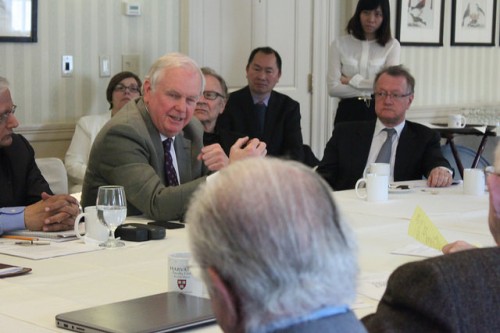
Boston Global Forum (BGF) is pleased to host a conference focused on practical solutions for maintaining security in the South China Sea. The Pacific region has not been free of conflicts and the past few year have witnessed provocations in the South and East China Sea, in particular the escalating tensions between China, the Philippines, Vietnam and Japan over their water claims.
The Framework for peace and security in the Pacific was released in February this year after a year-long international online conferences with policy practitioners, scholars, analysts from several countries as efforts of Boston Global Forum in easing the tensions among Asian countries over disputed territories.
This conference will provide the updated development in the South China Sea, and further discuss the practical resolutions for the conflicts, which will be implemented by the young global leaders.
Time: 9:00 AM – 11:00 AM (Eastern Time), Monday, April 20, 2015
Venue: Room 2, Harvard Faculty Club, 20 Quincy St. Cambridge, MA 02138
To be live-streamed at www.bostonglobalforum.org
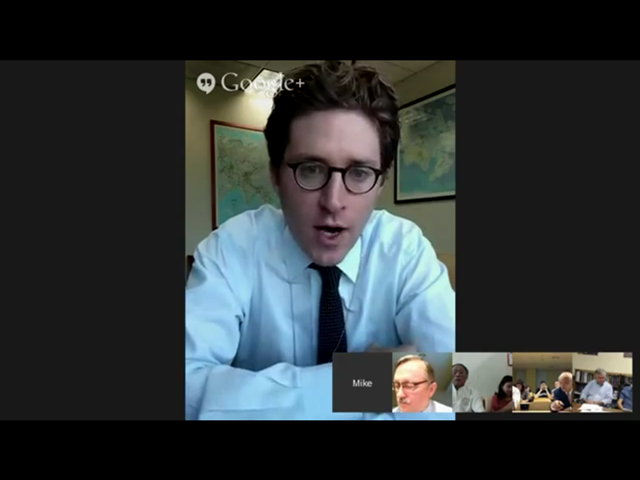
In connection vía Video Conference with Washington DC, New Jersey, Tokyo, Manila and Ho Chi Minh City
Topic Focus:
- Report on recent development in the South China Sea
- Solutions to maintain the security in the South China Sea
- Young Leaders Network for Peace and Security (YLNP) discussion on maintenance of security in the South China Sea
Moderated by
- Governor Michael Dukakis, Co-Founder, Chairman, Boston Global Forum
- Professor Joseph Nye, Member of BGF Board of Thinkers, University Distinguished Service Professor, Harvard Kennedy School.
Delegates and Speakers:
- Kitty Dukakis, Former First Lady of Massachusetts
- Nguyen Anh Tuan, Co-Founder, Editor-in-Chief, Boston Global Forum
- Professor Thomas E. Patterson, Co-Founder, Member of Board of Directors, Member of Editorial Board, Boston Global Forum; Bradlee Professor of Government and the Press, Harvard Kennedy School.
- Professor John Quelch, Co-Founder, Member of Board of Directors, Boston Global Forum; Charles Edward Wilson Professor of Business Administration, Harvard Business School
- Professor Ezra Vogel, Member of Board of Thinkers, Boston Global Forum; Henry Ford II Professor of the Social Sciences Emeritus, Harvard University
- Professor Suzanne P. Ogden, Member of Editorial Board, Boston Global Forum, Professor of Northeastern University’s Department of Political Science
- Professor Richard Cooper, Maurits C. Boas Professor of International Economics, Harvard University
- Professor Richard Rosecrance, Adjunct Professor, Harvard Kennedy School; Research Professor of Political Science, University of California, Los Angeles
- Tsutomu Himeno, Consul General of Japan in Boston
- Michael H. Fuchs, Deputy Assistant Secretary for Strategy and Multilateral Affairs, Bureau of East Asian and Pacific Affairs, U.S. Department of State
- Thomas J. Vallely, Member of Board of Thinkers, Boston Global Forum; Senior advisor, Mainland Southeast Asia; Ash Center for Democratic Governance and Innovation, Harvard Kennedy School
- Professor Fumio Ota, Former Professor, Defense Academy of Japan (2005 – 2013)
- Ambassador Ichiro Fujisaki, President of the America-Japan Society, Inc.; Professor of Sophia University and Keio University; Ambassador of Japan to the United States of America (2008-2012).
- Ambassador Shunji Yanai, Judge and Former President, The International Tribunal for the Law of the Sea (ITLOS); Ambassador Japan to the United States of America (1999–2001)
- Professor Zheng Wang, Director and Associate Professor, Center for Peace and Conflict Studies, School of Diplomacy and International Relations, Seton Hall University
- Lei Guo, Assistant Professor, Division of Emerging Media Studies, Boston University College of Communication
- Truong Minh Vu, Member, Young Leaders Network for Peace and Security; Director of Center for International Studies, University of Social Sciences and Humanities, Ho Chi Minh City (SCIS)
- Maximilian Mayer, Member, Young Leaders Network for Peace and Security; Researcher, Center for Global Studies, Institute for Political Science and Sociology, Bonn University
- Iryna Vushko, Member, Young Leaders Network for Peace and Security; Assistant Professor of History, Hunter College, City University of New York
- Richard Javad Heydarian, Assistant Professor in Political Science, De La Salle University, Manila.
- Trang Pham, Nippon Fellow (2014-2015 ), International Tribunal for the Law of the Sea (ITLOS)
- Roland Schatz, CEO, Media Tenor
- Admiral Nirmal Verma, U.S. Chief of Naval Operations Distinguished International Fellow, U.S. Naval War College – Newport RI; India’s High Commissioner to Canada (2012-2014); Former Chief of Naval Staff of Indian Navy
- Grant F Rhode, PhD, Research Associate, Center for the Study of Asia, Boston University; Research Associate, Fairbank Center for Chinese Studies, Harvard University
- Nobue Mita, Representative, Boston Global Forum Japan
- Dr. Elliot Salloway, Chief Operation Officer, Boston Global Forum
- Richard Pirozollo, Member, Boston Global Forum Editorial Board; Founder and Managing Director, Pirozzolo Company Public Relations
- Llewellyn King, Member, Boston Global Forum Editorial Board; Co-Host, Executive Producer of “White House Chronicle”, PBS
- Linda Gasparello, Co-Host, General Manager of “White House Chronicle”, PBS
————————————-
GOVERNOR MICHAEL DUKAKIS

Co-Founder; Chairman of The Board of Directors and Board of Thinkers, The Boston Global Forum. Democratic Party Nominee for President of the United States, 1988. Distinguished Professor J.D., Harvard University
Michael Stanley Dukakis was born in Brookline, Massachusetts to Greek immigrant parents. He attended Swarthmore College and Harvard Law School and served in the United States Army from 1955-1957, sixteen months of which was with the support group to the U.S. delegation to the Military Armistice Commission in Korea.
He served eight years as a member of the Massachusetts legislature and was elected governor of Massachusetts three times. He was the Democratic nominee for the presidency in 1988. Since 1991 he has been a distinguished professor of political science at Northeastern University in Boston, and since 1996 visiting professor of public policy during the winter quarter at UCLA in Los Angeles. He is chairman of Boston Global Forum. He is married to the former Kitty Dickson. They have three children—John, Andrea and Kara—and eight grandchildren.
PROFESSOR JOSEPH NYE

Member of Board of Thinkers , Boston Global Forum; University Distinguished Service Professor, Harvard University; Former Dean, Harvard Kennedy School
Joseph S. Nye, Jr. is University Distinguished Service Professor and former Dean of Harvard’s Kennedy School of Government and a member of the Boston Global Forum’s Board of Thinkers. He received his bachelor’s degree summa cum laude from Princeton University, did postgraduate work at Oxford University on a Rhodes Scholarship, and earned a Ph.D. in political science from Harvard. He has served as Assistant Secretary of Defense for International Security Affairs, Chair of the National Intelligence Council, and a Deputy Under Secretary of State. His most recent books include Soft Power, The Power Game: A Washington Novel, The Powers to Lead and Presidential Leadership and the Creation of the American Era. He is a fellow of the American Academy of Arts and Sciences, the British Academy, and the American Academy of Diplomacy. In a recent survey of international relations scholars, he was ranked as the most influential scholar on American foreign policy.
NGUYEN ANH TUAN

Co-Founder, Chief Executive Officer and Editor-in-Chief of The Boston Global Forum.
Nguyen Anh Tuan was the Founder and Chairman of the VietNamNet Media Group and the Founder and Editor-in-Chief of VietNamNet Online Newspaper. Tuan was also the Founder and CEO of the VASC Software and Media Company and VietNet, the first Internet service provider in Vietnam. In 1996, Tuan was named as one of the Top Ten Outstanding Young Talents of Vietnam by the Prime Minister. Under Tuan’s leadership, VietNamNet raised significant political topics for reform in Vietnam. He pioneered an interactive live format called the “VietNamNet Online Roundtable” that enabled readers to participate in interviews of leading political, social and cultural figures. In 2009, Tuan conceived a global initiative called the “World Compassion and Reconciliation Day” on September 9th of each year. In 2007, as the Shorenstein Center’s Fellow, Tuan researched key trends in the development of electronic media in Vietnam. In 2011, Tuan was a part of the Pacific Leadership Fellows Program at the School of International Relations and Pacific Studies at the University of California in San Diego. That year, he was also a speaker at the prestigious annual Club de Madrid Conference on the subject of Democracy and Digital Technology. Since February 2011, Tuan has been an Associate of the Shorenstein Center on the Press, Politics and Public Policy, John F. Kennedy School of Government, Harvard University. In April 2012, he founded the Tran Nhan Tong Academy . In December 2012, Tuan co-founded the Boston Global Forum with the Honorable Michael Dukakis who was Massachusetts Governor and U.S. Presidential Nominee, and currently serving as the Boston Global Forum’s Chief Executive Board and Editor-in-Chief . Also in 2012, together with Ambassador Swanee Hunt, Tuan established the Charles Ansbacher Music Club to bring classical music to people who live in remote and distant locations. Tuan has been a member of Harvard Business School Global Advisory Board since 2008. He also serves on the Board of Trustees of the Free for All Concert Fund in Boston.
PROFESSOR THOMAS E. PATTERSON

Co-Founder, Member of Board of Directors, Boston Global Forum; Mentor, Young Leaders Network for Peace and Security; Bradlee Professor of Government and the Press, Harvard Kennedy School
Thomas E. Patterson is Bradlee Professor of Government and the Press of Harvard Kennedy School and a co-founding member of BGF’s Board of Directors. His book, The Vanishing Voter, looks at the causes and consequences of electoral participation. His earlier book on the media’s political role, Out of Order, received the American Political Science Association’s Graber Award as the best book of the decade in political communication. His first book, The Unseeing Eye, was named by the American Association for Public Opinion Research as one of the 50 most influential books on public opinion in the past half century. He also is author of Mass Media Election and two general American government texts: The American Democracy and We the People. His articles have appeared in Political Communication, Journal of Communication, and other academic journals, as well as in the popular press. His research has been funded by the Ford, Markle, Smith-Richardson, Pew, Knight, Carnegie, and National Science foundation. Patterson received his PhD from the University of Minnesota in 1971.
PROFESSOR JOHN A. QUELCH

Co-Founder, Member of Board of Directors, Boston Global Forum; Charles Edward Wilson Professor of Business Administration, Harvard Business School
John A. Quelch is the Charles Edward Wilson Professor of Business Administration at Harvard Business School. He holds a joint appointment at Harvard School of Public Health as Professor in Health Policy and Management. He is also a fellow of the Harvard China Fund, a Member of the Harvard China Advisory Board and Associate in Research at the Fairbank Center for Chinese Studies.
Between 2011 and 2013, Professor Quelch was Dean, Vice President and Distinguished Professor of International Management at CEIBS, China’s leading business school. Between 2001 and 2011, he was the Lincoln Filene Professor of Business Administration and Senior Associate Dean at Harvard Business School. He served as Dean of London Business School from 1998 to 2001. Prior to 1998, he was the Sebastian S. Kresge Professor of Marketing and Co-Chair of the Marketing Unit at Harvard Business School.
Professor Quelch is known for his teaching materials and innovations in pedagogy. Over the past twenty-five years, his case studies have sold over 4 million copies, third highest in HBS history. In 1995, he developed the first HBS interactive CD-ROM exercise (on Intel’s advertising budgeting process). In 1999, he developed and presented a series of twelve one hour programs on Marketing Management for the Public Broadcasting System.
Professor Quelch’s research focus is on global marketing and branding in emerging as well as developed markets. His current research projects address (a) understanding the contributions of marketing to the functioning of democracies and (b) formalizing appropriate marketing and customer metrics for periodic review by boards of directors.
Professor Quelch is the author, co-author or editor of twenty-five books, including All Business Is Local (2011), Greater Good: How Good Marketing Makes for Better Democracy (2008), Business Solutions for the Global Poor: Creating Social and Economic Value (2007), The New Global Brands (2006), Global Marketing Management (5th edition, 2006), The Global Market (2005), Cases in Advertising and Promotion Management (4th Edition, 1996) and The Marketing Challenge of Europe 1992 (2nd edition, 1991). He has published eighteen articles on marketing strategy issues in the Harvard Business Review, most recently “How To Market In A Downturn” (April 2009), and many more in other leading management journals such as McKinsey Quarterly and Sloan Management Review.
Professor Quelch has served as an independent director of twelve publicly listed companies in the USA and UK. He is currently a non-executive director of WPP and Alere. He served pro bono for eight years as Chairman of the Port Authority of Massachusetts. He is the Honorary Consul General of Morocco in New England and served previously as Chairman of the British-American Business Council of New England. Professor Quelch has been a consultant, seminar leader and speaker for firms, industry associations and government agencies in more than fifty countries. He is a member of the Trilateral Commission and the Council On Foreign Relations. He received the CBE for services to British business in 2011 and holds an honorary doctorate from Vietnam National University.
PROFESSOR EZRA VOGEL

Member of Board of Thinkers, Boston Global Forum; Henry Ford II Professor of the Social Sciences Emeritus, Harvard University
Ezra F. Vogel is the Henry Ford II Professor of the Social Sciences Emeritus at Harvard. After graduating from Ohio Wesleyan in 1950 and serving two years in the U.S. Army, he studied sociology in the Department of Social Relations at Harvard, receiving his Ph.D. in 1958. He then went to Japan for two years to study the Japanese language and conduct research interviews with middle-class families. In 1960-1961 he was assistant professor at Yale University and from 1961-1964 a post-doctoral fellow at Harvard, studying Chinese language and history. He remained at Harvard, becoming lecturer in 1964 and, in 1967, professor. He retired from teaching on June 30, 2000.
Vogel succeeded John Fairbank to become the second Director (1972-1977) of Harvard’s East Asian Research Center and Chairman of the Council for East Asian Studies (1977-1980). He was Director of the Program on U.S.-Japan Relations at the Center for International Affairs (1980-1987) and, since 1987, Honorary Director. He was Chairman of the undergraduate concentration in East Asian Studies from its inception in 1972 until 1991. He was Director of the Fairbank Center (1995-1999) and the first Director of the Asia Center (1997-1999). Vogel was Chairman of the Harvard Committee to Welcome President Jiang Zemin (1998). He has also served as Co-director of the Asia Foundation Task Force on East Asian Policy Recommendations for the New Administration (2001).
Drawing on his original field work in Japan, he wrote Japan’s New Middle Class (1963). A book based on several years of interviewing and reading materials from China, Canton Under Communism (1969), won the Harvard University Press faculty book of the year award. The Japanese edition of his book Japan as Number One: Lessons for America (1979) is the all-time best-seller in Japan of non-fiction by a Western author. In Comeback (1988), he suggested things America might do to respond to the Japanese challenge. He spent eight months in 1987, at the invitation of the Guangdong Provincial Government, studying the economic and social progress of the province since it took the lead in pioneering economic reform in 1978. The results are reported in One Step Ahead in China: Guangdong Under Reform (1989). His Reischauer Lectures were published in The Four Little Dragons: The Spread of Industrialization in East Asia (1991). His most recent publication is Is Japan Still Number One? (2000).He has visited East Asia every summer since 1958 and has spent a total of over six years in Asia.
Vogel has received honorary degrees from Kwansei Gakuin (Japan), the Monterrey Institute, the Universities of Maryland, Massachusetts (Lowell), Wittenberg, Bowling Green, Albion, Ohio Wesleyan, Chinese University (Hong Kong) and Yamaguchi University (Japan). He received The Japan Foundation Prize in 1996 and the Japan Society Prize in 1998. He has lectured frequently in Asia, in both Chinese and Japanese. From fall 1993 to fall 1995, Vogel took a two-year leave of absence from Harvard to serve as the National Intelligence Officer for East Asia at the National Intelligence Council in Washington. He directed the American Assembly on China in November 1996 and the Joint Chinese-American Assembly between China and the United States in 1998.
THOMAS VALLELY
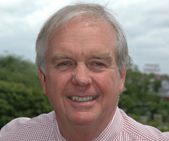
Member of Board of Thinkers, Boston Global Forum; Senior advisor, Mainland Southeast Asia; Ash Center for Democratic Governance and Innovation, Harvard Kennedy School
Thomas J. Vallely is the senior advisor for Mainland Southeast Asia and the former director of the Vietnam Program, a position he held since its inception in 1989.
Vallely has used the Vietnam Program’s research to engage in a candid and constructively critical dialogue with the Vietnamese government about the strategic challenges confronting the country. Under Vallely’s leadership the Fulbright School has emerged as a center of excellence in public policy research and teaching and a pioneer in the development of new modes of institutional governance in Vietnam.
A primary focus of Vallely’s past work is institutional innovation in Vietnamese higher education and science. He draws on the Program’s experience designing and developing innovative educational initiatives in Vietnam to pursue a dialogue about higher education reform with Vietnamese and international stakeholders. Vallely highlights the central importance of governance to achieving better outcomes in higher education and believes that international universities must revise current paradigms of academic exchange in order to effectively support institutional innovation in Vietnam.
Vallely has also worked in Cambodia, Myanmar/Burma, Mongolia, and the Ukraine. In these countries he has focused on the political economy of reform. Prior to becoming director of the Vietnam Program, Vallely was a senior research fellow at Harvard Kennedy School, where he worked on strategic and military issues in East and Southeast Asia. He has worked as a political consultant and was elected to the Massachusetts House of Representatives in 1980, serving until 1987. Vallely received a B.S. from the University of Massachusetts/Boston and an M.P.A. from the Kennedy School. Vallely served with the United States Marine Corps in Vietnam.
PROFESSOR RICHARD COOPER
Richard N. Cooper is Maurits C. Boas Professor of International Economics at Harvard University. He is a member of the Trilateral Commission, the Council on Foreign Relations, the Executive Panel of the US Chief of Naval Operations, and the Brookings Panel on Economic Activity. He has served on several occasions in the US Government, as chairman of the National Intelligence Council (1995-97), Under-Secretary of State for Economic Affairs (1977-81), Deputy Assistant Secretary of State for International Monetary Affairs (1965-66), and senior staff economist at the Council of Economic Advisers (1961-63). He was also chairman of the Federal Reserve Bank of Boston (1990-92), and Vice-Chairman of the Global Development Network (2001-2007). As a Marshall Scholar, he studied at the London School of Economics, and earned his Ph.D. at Harvard University. His most recent books include Boom, Crisis, and Adjustment (with others), Macroeconomic Management in Korea, 1970-1990 (with others), Environment and Resource Policies for the World Economy, and What the Future Holds (with others).
PROFESSOR RICHARD N. ROSECRANCE
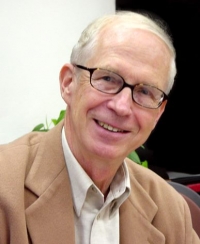
Adjunct Professor, Harvard Kennedy School; Research Professor of Political Science, University of California, Los Angeles
Richard Rosecrance is an Adjunct Professor at Harvard’s John F. Kennedy School of Government, a Research Professor of Political Science at the University of California, Los Angeles. He was formerly a Professor at the University of California, Berkeley, and the Walter S. Carpenter, Jr., Professor of International and Comparative Politics at Cornell University. He served in the Policy Planning Council of the Department of State. He has written or edited more than a dozen books and many scholarly articles. The singly authored works include Action and Reaction in World Politics (1963); Defense of the Realm: British Strategy in the Nuclear Epoch (1968); International Relations: Peace or War? (1973); The Rise of the Trading State: Commerce and Conquest in the Modern World (1986); America’s Economic Resurgence (1990); and The Rise of the Virtual State: Wealth and Power in the Coming Center (1999). The edited volumes include The Dispersion of Nuclear Weapons: Strategy and Politics (1964); The Future of the International Strategic System (1972);America as an Ordinary Country (1976); The Domestic Bases of Grand Strategy(1993); The Costs of Conflict (1999); and The New Coalition of Great Powers(2001). He is the principal investigator of UCLA’s Carnegie Project on “Globalization and Self Determination”. He has received Guggenheim, Rockefeller, Ford, Fulbright, NATO, and many other fellowships. He was President of the International Studies Association and served as Director of UCLA’s Center for International Relations from 1992 to 2000. He has held research and teaching appointments in Florence (the European University Institute); Paris (the Institut de Sciences Politiques), London (Kings College London, the London School of Economics, and the International Institute for Strategic Studies), and Canberra (The Australian National University). He has lectured widely in East Asia and Europe. His recent book on the “virtual state” has been translated into Japanese, Chinese (Taiwan), German and will shortly appear in Ar “Débat sur L’État Virtuel“. Professor Rosecrance is now at work on a book on international mergers which compares U.S. with European political and economic strategies.
AMBASSADOR ICHIRO FUJISAKI

President of the America-Japan Society, Inc.; Professor of Sophia University and Keio University; Ambassador of Japan to the United States of America (2008-2012).
Ichiro Fujisaki is currently President of America-Japan Society in Japan. He is also a distinguished professor of Sophia University and Keio University, both in Tokyo. Additionally, he is advisor to the metropolitan city of Tokyo.
Fujisaki served as the Ambassador of Japan to the United States 2008 through October 2012.
During this period, there were frequent changes in Japanese leadership, but he stayed on as a point person between Japan and the United States. Fujisaki was instrumental in bridging Japan and the US following the devastating earthquake and tsunami that occurred in March 2011. He frequently appeared on all forms of media, including national TV news shows. He was engaged in all of Japan’s negotiations with the US on security and trade issues, including Trans Pacific Partnership (TPP) consultations. Fujisaki has visited nearly all the fifty states, has met with local leaders, and has appeared on local media outlets.
Fujisaki is well connected to Japan’s political, bureaucratic, and business circles, having served more than 40 years in the Japanese government. As the Deputy Foreign Minister, he served as Prime Minister Koizumi’s personal representative to the G8 Summit as Sherpa. He was Japan’s chief trade negotiator and headed the teams for Free Trade Area agreement negotiations with the Republic of Korea, Malaysia, the Philippines, and Thailand. He has initiated and headed Deputy Ministerial dialogue with China. He also frequently traveled to India to lay the groundwork for large scale infrastructure projects which are currently underway. Fujisaki joined the Foreign Ministry of Japan in 1969 after passing the High Level Diplomatic Examination. He has served 20 years abroad and 23 years in Tokyo during his career.
Fujisaki is married to Yoriko Kashiwagi, daughter of Kazuko and the late Yusuke Kashiwagi, who was the CEO of The Bank of Tokyo. They have two daughters, Mari and Emi.
PROFESSOR SUZANNE P.OGDEN

Member of Editorial Board, Boston Global Forum, Professor of Northeastern University’s Department of Political Science
Suzanne Ogden is a Professor in the Department of Political Science, and a Faculty Associate in the Center for Emerging Markets, Northeastern University. She is also a Research Associate in Harvard’s Fairbank Center for Chinese Studies. As a China specialist, she has focused primarily on the interplay of culture, development, and politics.
Prof. Ogden is best known for her books Inklings of Democracy in China; China’s Unresolved Issues; 11 editions of Global Studies: China; and China’s Search for Democracy: The Student and Mass Movement of 1989 (the last co-authored with Kate Hartford, Lawrence Sullivan and David Zweig). In recent years, she has shifted her research focus to research on China’s role in the Mekong River Basin and the Greater Mekong Subregion.
MICHAEL H. FUCHS

Deputy Assistant Secretary for Strategy and Multilateral Affairs, Bureau of East Asian and Pacific Affairs, U.S. Department of State
Mike Fuchs is Deputy Assistant Secretary of State for Strategy and Multilateral Affairs in the Bureau of East Asian and Pacific Affairs. From 2009-2013, he served as Special Advisor to the Secretary of State for Strategic Dialogues, Special Assistant to the Secretary of State, and Member of the Secretary’s Policy Planning Staff.
Previously, Mike has held positions as Associate Managing Director for Energy and Environmental Policy at the Center for American Progress, Deputy National Security Director for Hillary Clinton’s 2008 Presidential campaign, Co-Director of the Democracy and U.S. Foreign Policy Project at The Century Foundation, and as a foreign policy research associate at the Center for American Progress. He is co-author, with Morton H. Halperin, of The Survival and the Success of Liberty: A Democracy Agenda for U.S. Foreign Policy. Mike is a graduate of Columbia University.
PROFESSOR FUMIO OTA

Former Professor, Defense Academy of Japan (2005-2013)
Born in 1942. Mr. After graduating the Defense Academy of Japan, Ota joined the Japan Maritime Self-Defense Force in 1970. In 1988, Ota served as the captain of the vessel Yamagumo-class antisubmarine destroyer. Ota also worked as a researcher at Stanford University and National War College in the U.S. and the Japanese embassy to the U.S. during the 90s. After returning to Japan, Ota was assigned as the dean of Joint Staff College and as the head of Defense Intelligence Headquarters.
In 2003, Ota obtained the PhD of international relations at Paul H. Nitze School of Advanced International Studies, Johns Hopkins University. After retiring the Maritime Self-Defense Force in 2005, Ota was assigned as a professor at the Defense Academy of Japan. He is now a member of the board of planning committee for Japan Institute for National Fundamentals.
Ota has published various books and papers regarding the relationship between national strategies and the notion of intelligence.
AMBASSADOR SHUNJI YANAI

Judge and former President, The International Tribunal for the Law of the Sea (ITLOS) (2011-2014); Ambassador of Japan to the United States of America (1999–2001)
Shunji Yanai of Japan served as the President of the International Tribunal for the Law of the Sea (ITLOS) in Hamburg, Germany. Judge Yanai has been a member of ITLOS since 2005 and was elected President in October 2011 to serve a three-year renewable term.
Prior to becoming a member of ITLOS, Judge Yanai had a long and distinguished career as a Japanese diplomat. Judge Yanai joined the Japanese foreign ministry in 1961 after receiving his LL.B. from the University of Tokyo. He spent the next four decades rising to a number of important diplomatic positions, such as serving as the Director of the International Conventions Division, Director of the Legal Affairs Division, Director of the Treaties Division and Director-General of the Foreign Policy Bureau. Judge Yanai rose to the level of Deputy Minister for Foreign Affairs and served in that position from 1997 to 1999, when he was appointed Ambassador to the United States in 1999.
In 2002 following his retirement from the Japanese Foreign Ministry, Judge Yanai entered academe and became a professor of international law at Chuo University in Tokyo from 2002 to 2007. Judge Yanai also served as a visiting professor of international law at Waseda University in Tokyo. Judge Yanai is also a prolific author, drawing on his vast experience in diplomacy and international and maritime law.
Beyond his role as President of ITLOS, Judge Yanai currently serves as President of the Japan Branch of the International Law Association. Among his other past organizational appointments, Judge Yanai has served as a member of the Vienna Conference on the Law of Treaties from 1968 to 1969, the UN Outer Space Committee and Legal Sub-committee Sessions from 1973 to 1974, the Third UN Conference on the Law of the Sea from 1973 to 1978, and the Drafting Committee of the Law of the Territorial Sea in 1977. As a diplomat, he was also involved in fisheries negotiations with Indonesia, the Soviet Union and the Republic of Korea.
Judge Yanai was born in Tokyo, Japan on January 15, 1937.
DR. ZHENG WANG

Associate Professor; Director, Center for Peace and Conflict Studies (CPCS), School of Diplomacy and International Relations, Seton Hall University
Dr. Zheng Wang joined the School of Diplomacy and International Relations in the fall of 2004. He is the Director of the Center for Peace and Conflict Studies (CPCS) and an Associate Professor. He also directs the School’s graduate specialization in Global Negotiation and Conflict Management.
Dr. Wang is also a Global Fellow at the Kissinger Institute on China and the United States of the Woodrow Wilson International Center for Scholars. He has been a Jennings Randolph Senior Fellow at the United States Institute of Peace (USIP), a Visiting Scholar at Saltzman Institute of War & Peace Studies of Columbia University, a Senior Visiting Research Fellow at the National University of Singapore, and a Dr. Seaker Chan Endowed Visiting Professor at the School of International Relations and Public Affairs (SIRPA) of Fudan University in Shanghai, China.
Dr. Wang’s research interests lie in three closely connected areas: (1) peace and conflict studies, with special focus on identity-based conflicts, nationalism, and the politics of historical memory; (2) peace and conflict management in East Asia, with special focus on China’s rise and its impact on regional peace and security; (3) foreign-domestic linkage in Chinese politics and foreign relations. His recent projects investigate China’s disputes with its neighbors, such as the dispute with Japan and the South China Sea disputes.
Dr. Wang is the author of the Columbia University Press book Never Forget National Humiliation: Historic Memory in Chinese Politics and Foreign Relations. This book received International Studies Association’s The Yale H. Ferguson Award which “recognizes the book that most advances the vibrancy of international studies as a pluralist discipline.” The Japanese version of the book was published in Japan in May 2014. He is also the co-editor of a new book, Clash of National Identities: China, Japan and the East China Sea Territorial Dispute (The Wilson Center, 2013).
Dr. Wang has published journal articles and book chapters in various peer-reviewed publications, including: International Studies Quarterly, International Negotiation, Asian Survey, Asia Policy, History and Memory, Journal of Contemporary China and Wilson Quarterly. He is regular contributor of op-ed articles in national and international media, such as The New York Times, TIME, The National Interest and Lianhe Zaobao(Singapore). He writes a bi-weekly foreign policy op-ed column in The Diplomat.
As a researcher and a practitioner, Dr. Wang regularly conducts conflict resolution trainings and acts as a facilitator in several interactive conflict resolution dialogue programs between participants of China-Japan, China-Taiwan, and U.S.-China in recent years.
LEI GUO

Assistant Professor, Division of Emerging Media Studies
Dr. Lei Guo earned her Ph.D. from the University of Texas at Austin in 2014. Her research focuses on the development of media effects theories, emerging media technologies and democracy, and international communication. She and Dr. Maxwell McCombs proposed the third level of agenda-setting theory—the Network Agenda-Setting Model, and tested the model in various settings using computer-assisted text analysis methods such as semantic network analysis, sentiment analysis, and data visualization.
Her studies, both quantitative and qualitative, have been published in a number of leading peer-reviewed journals such as Journal of Communication, Journalism Studies, Journal of Broadcasting & Electronic Media, Critical Studies in Media Communication, Journal of Computer-Mediated Communication, and International Communication Gazette. Dr. Guo has also been invited to write book chapters about journalism and communication in the United States and China. Her recent work includes co-editing a book The Power of Information Networks: New Directions for Agenda Setting published by Routledge.
IRYNA VUSHKO
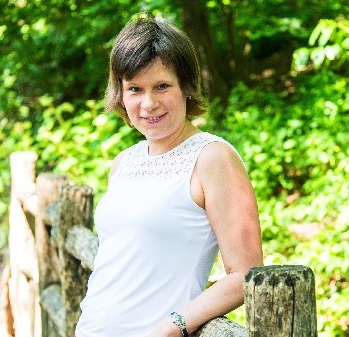
Assistant Professor of History at Hunter College, City University of New York
Iryna Vushko is an Assistant Professor of History at Hunter College, City University of New York. A native of Ukraine, she received a Ph.D. in history from Yale University and held fellowships in Italy, Austria, Poland, Germany, and Harvard. Her first monograph “The Politics of Cultural Retreat: Imperial Bureaucracy in Austrian Galicia, 1772-1867” is forthcoming with Yale University Press in early 2015.
ROLAND SCHATZ

Founder and CEO, Media Tenor International
Roland Schatz is the founder and CEO of Media Tenor International. He is a leading scholar in the field of media impact research, as well as German-American relations.
His interests include media monitoring, organizational development, cultural management, and new methods in education.
In his role as the CEO of Media Tenor, the Research Institute of InnoVatio Verlags AG, Mr. Schatz has an important role in the global media. With over 180 employees and offices worldwide in Berlin, London, New York, Ostrava, Pretoria, St. Petersburg, Windhoek, and Zürich, Media Tenor is the world’s leading provider of ongoing international media content analysis, including in-depth analysis of new and traditional global media content.
In 2007, Mr. Schatz had the honor of opening the first Arab Media Institute at Emory University. He has also held teaching positions since 1990 by teaching strategic communication management at universities in Augsburg, Atlanta, Berlin, Bonn, Lugano, and Prague.
Aside from his background in teaching, Mr. Schatz has served as Secretary of the International Media Monitor Association based in Washington, D.C. He is also a trustee for the Education Africa Foundation in Johannesburg, the Innovation Institute in Pretoria, and the Board of E-Standards in New York.
Mr. Schatz has a master’s degree in philosophy, economics, history, and political science from the University of Fribourg and Bonn.
GRANT F. RHODE, PHD

Research Associate, Center for the Study of Asia , Boston University; Research Associate, Fairbank Center for Chinese Studies, Harvard University
Grant F. Rhode is currently John A. van Beuren Visiting Professor of Asian Affairs at the U.S. Naval War College in Newport, RI, where he teaches Asian Maritime History and Current Disputes, and is also Research Associate at the Boston University Center for the Study of Asia and at the Fairbank Center for Chinese Studies at Harvard University. Dr. Rhode holds a masters degree from the University of Oxford in the Social Anthropology of China, and a doctorate from Tufts University Fletcher School of Law and Diplomacy in Asian Diplomatic History and Foreign Policies.
ADMIRAL NIRMAL VERMA

U.S. Chief of Naval Operations Distinguished International Fellow, U.S. Naval War College – Newport RI; India’s High Commissioner to Canada (2012-2014); Former Chief of Naval Staff of Indian Navy
Admiral (Retd) Nirmal Verma is currently the US Chief of Naval Operations Distinguished International Fellow at the US Naval War College in Newport RI. Admiral Verma retired as the Chief of Naval Staff, Indian Navy, and Chairman of the Chiefs of Staff Committee after a career spanning over forty-two years. He subsequently served as India’s High Commissioner to Canada from 2012-2014.
RICHARD PIROZZOLO

Member, Boston Global Forum Editorial Board; Founder and Managing Director, Pirozzolo Company Public Relations
Dick Pirozzolo is the founder and managing director of Boston-based Pirozzolo Company Public Relations, whose clients have included the governments of Vietnam, Japan and Canada and corporations in Indonesia, Israel, the United Kingdom, Germany and China.
During the mid-1990’s, Dick figured prominently in fostering reconciliation and trade with Vietnam, building US public support for accepting Vietnam as a Most Favored Nation trading partner and launching trade initiatives in Hanoi and Ho Chi Minh City, including the watershed VietnAmerica Expo – Hanoi’s official welcoming of US business. Additionally, he promoted successful trade initiatives with Vietnam on behalf of The State of Hawaii, Smith & Wesson, Syratech, the USA’s largest housewares company, and J/Brice Design International, Inc. the Boston and Dammam, KSA-based hospitality design and development firm.
In addition to establishing profitable relationships with Vietnam business and government entities, Dick arranged for positive media coverage of Vietnam by the world and US press – from Agence France Press and NHK to NBC Nightly News and Time Magazine. Additionally, his bylined articles, photos and op-ed pieces on Vietnam public policy and trade have appeared in the Washington Times, Insight, Transpacific, The Advertiser, Beverage World, Vietnam Business Journal, Destination Vietnam, The Boston Sunday Herald, Trade Show Week and PR News.
Dick brings high-level public relations, issues management and relationship-building skills to every client engagement. His recent work includes fostering carbon-offset trading on behalf of Trayport (GFIG/NYSE) and Foreign Exchange trading in Asia for FCM360, Inc. His earlier work includes public relations management positions with Boston University, where he was on assignment with the US Federal Court-Appointed Experts during Boston’s court-ordered and controversial school desegregation. Dick was a daily newspaper reporter with the Worcester Telegram & Gazette and a freelance writer for national magazines. He is author of four successful nonfiction books on homebuilding and design and of For All the Years, a history of television in New England.
While working as a public relations consultant to WBZ-TV, Dick helped create and fund a million-dollar endowment for the performing arts in Massachusetts. He is a graduate of the University of Connecticut and was awarded the Bronze Star for service as a US Air Force captain in Vietnam where he served as a information (media relations) officer for the 7th Air Force in Saigon (Ho Chi Minh City).
Dick is on the Advisory Board of the Association of Southeast Asia CEOs (SEACEO), serves on the Public Relations Committee of the New England Canada Business Council and has been an accredited member of the Public Relations Society of America (PRSA) since 1978. He is also a member of the Society of Professional Journalists (formerly Sigma Delta Chi honorary society), The Foreign Press Association of New York and The New York Deadline Club.
DR. ELLIOT SALLOWAY

Chief Operation Officer, Boston Global Forum
Dr. Elliot Salloway trained in Periodontology at Tufts, B.U and University of Pennsylvania graduate medical and dental schools. His residency was at Beth Israel Hospital and University Hospital Boston. He served as a captain in the US Air Force during the Cuba crisis and then became the first periodontist to practice in the City of Worcester where he still sees patients after 50 years. He was a member of the faculty of Harvard graduate dental school for over 35 years (where the “E.W.Salloway Teaching and Research Fund “was established by his patients and friends). He has served on several arts boards including Boston Ballet friends, Public Action for the Arts, Photo Resource Center and the Massachusetts Repertory Company which was the first equity repertory company in Boston 1977-78. Mass Rep brought talent such as Helen Hayes, Julie Harris, Rex Harrison, Sylvia Sidney, Brian Bedford, Ben Gazzara, Eva Marie Saint and Harry Chapin to the Boston theater district. Dr.Salloway is also a member of several professional and arts organizations including Indochina Arts Partnership, Rakushokai(Tokyo),International Association of Dental Research, American Academy of dental research and American Academy of Periodontology. He has lectured worldwide in his profession and for five years at the Miami Historical Museum on his photographs of the changing Miami River. He is prolific photographer and painter who has shown in galleries in Boston ,Miami ,Berlin ,Krefeld Germany and Hanoi. He is the Co-founder of Project Exodus which calls on children and teenagers to make art which addresses the question “is genocide and crimes against humanity preventable”? Project Exodus is now active in Boston with a show in mid February 2014 at Leslie college with the organization Violence Transformed.
NOBUE MITA

Boston Global Forum Representative in Japan
Ms. Nobue Mita is a graduate of the Department of French Literature at Rikkyo University. She worked at Fujitsu Limited, Mitsubishi Corporation as an event producer for a prominent shef.
Ms. Mita is the founder of the Rakushokai – a monthly study group for business executive with special prominent lecturer, held for eight years since September of 2006.
In 2011, Ms. Mita organized a charity concert for the Great East Japan Earthquake with a former Japanese ambassador to the United States.
In 2012, Ms. Mita organized a Christmas charity bazaar for the Great East Japan Earthquake at the Tokyo American Club.
Ms. Mita has been the representative of the Boston Global Forum JAPAN since March 2013.
LLEWELLYN KING
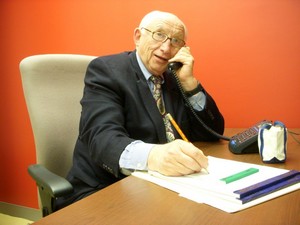
Member, Boston Global Forum Editorial Board; Co-Host and Executive Producer of “White House Chronicle” — a weekly news and public affairs program airing on PBS
Llewellyn King is the creator, executive producer and host of “White House Chronicle,” a weekly news and public affairs program,now in its 17th year on PBS. The program also airs on public, educational and government cable access television stations, and on Voice of America Television. Episodes can be viewed on the program’s Web site,whchronicle.com. An audio version of “White House Chronicle” airs weekends on SiriusXM Satellite Radio’s P.O.T.U.S. (Politics of the United States) Channel 124. King is also a regular commentator on P.O.T.U.S.
In addition to broadcasting, King writes a weekly column for the Hearst-New York Times Syndicate and The Huffington Post. In 2006, University Press of America published a collection of his columns,“Washington and The World 2001-2005.” The columns mainly appeared in Knight-Ridder newspapersincluding The Miami Herald, The Sacramento Bee, The St. Paul Pioneer Press, The Kansas City Star, The Charlotte Observer and The Columbus Dispatch. King was the founding editor-in-chief and publisher of The Energy Daily. The energy industry newsletter, created before the energy crisis broke out in 1973, was the flagship of his award-winning King Publishing Group, which he sold in 2006. The group’s other titles included Defense Week, New Technology Week, Navy News & Undersea Technology and White House Weekly. Over the years, King’s insightful reporting and analysis of energy has led to frequent guest spots on TV news shows, including NBC’s “Meet the Press” and PBS’s “The NewsHour with Jim Lehrer” and CNN. King’s remarkable career in journalism began in Southern Rhodesia, now Zimbabwe, where he was hired,at age 16, as a foreign correspondent for Time magazine. He also reported from Africa for London’s Daily Express and News Chronicle and United Press.
Moving to London in 1959, King worked as an executive for The Daily Mirror Group, a reporter for Associated Newspapers, and a news writer for BBC and ITN.Then moving to the United States in the 1960s, King worked as an editor and reporter for The New York Herald Tribune, The Baltimore News-American, The Washington Daily News and The Washington Post. A stint at McGraw-Hill’s Nucleonics Week led to his founding The Energy Daily. But it wasn’t King’s first trailblazing publication; his first was Women Now, a monthly magazine targeted to emerging professional women in the 1960s. “It didn’t liberate any women, but it liberated all my money,” King quips. Before creating “White House Chronicle,” King and his wife, Linda Gasparello, co-hosted “The Bull and The Bear,” a daily stock market program that aired on the GoodLife and Jones cable television networks in the mid-1990s.
King has given more than 2,000 speeches; he is an erudite commentator on energy, foreign affairs, Congress and the White House, small business, science, technology and journalism. He has organized more than 1,000 conferences on issues ranging from nuclear energy to land mine removal, Social Security and campaign finance. For his longtime contribution to the understanding of science and technology, King received an honorary doctorate in engineering from The Stevens Institute of Technology. He has received hundreds of energy industry awards, and most recently the United States Energy Association’s 2014 Award.
LINDA GASPARELLO

Co-Host and General Manager of “White House Chronicle” — a weekly news and public affairs program airing on PBS
Linda Gasparello began her career in journalism as a reporter for Forbesin New York, and associate editor of Forbes in Arabic, the business magazine’s annual Arabic language edition.
After joining King Publishing Group, Gasparello edited a number of industry newsletters and White House Weekly.
For five years, she and Llewellyn King co-anchored “The Bull &The Bear,” a stock market program that aired on the Jones and GoodLife cable television networks. She has been a commentator for the BBC Radio, RTE, Polish TV and Voice of America.
Gasparello received her bachelor’s degree in Arabic from Georgetown University. She was awarded a graduate fellowship to study Arabic at the American University in Cairo.