by Editor | Jul 22, 2022 | Shinzo Abe Initiative for Peace and Security, News
Roger B. Porter
The stunning, senseless death of former Japanese Prime Minister Shinzo Abe by an assassins’ bullet in Nara illuminates the vulnerability of political leaders. Abe’s legacy reminds us of the powerful influence of quiet diplomacy and of how one might think usefully about political leadership.
Quiet Diplomacy
Part of the measure of any administration’s success in foreign policy rests on the personal relationships established by leaders. Ronald Reagan and Margaret Thatcher, Bill Clinton and Tony Blair, George H.W. Bush and Brian Mulroney are examples of the benefits that flow when leaders establish trust and admiration. Shinzo Abe, during his tenure as the longest serving Japanese Prime Minister in the last three quarters of a century, was as skilled as any foreign leader in establishing such relationships with George W. Bush, Barack Obama and Donald Trump.
A major figure in Japan’s Liberal Democratic Party, Abe’s non-judgmental personality and cheerful disposition was key to his success. He was the first foreign leader to contact Donald Trump following his 2016 election, a courtesy that helped begin their relationship on a positive footing.
Matt Pottinger, the deputy national security adviser, confirms that Trump had more interactions with Abe than with any other foreign leader. They genuinely seemed to enjoy one another including their shared love of golf. Their lengthy discussions ranged from coordinating the response to North Korea’s nuclear and missile tests to fashioning a bilateral U.S.-Japan trade agreement. Concluded two and a half years ago, 90 percent of U.S. food and agricultural products imported into Japan are now duty free or receive preferential tariff access.
The Trump and Biden administrations have embraced Abe’s idea of a “free and open Indo-Pacific” and of a relationship of the Quad countries – the United States, Japan, India and Australia – designed to strengthen the rule of law and mutual security arrangements among other objectives. Much of Abe’s impetus for the Quad was his concern over the threat of a more aggressive and authoritarian regime in China which referred to the Quad as the Asian NATO.
Following the 2016 election, when the U.S. determined not to submit the recently negotiated Trans Pacific Partnership (TPP) for congressional approval, Abe led the effort to conclude an agreement among the remaining eleven TPP countries winning support for a Comprehensive and Progressive Agreement for Trans-Pacific Partnership (CPTPP) that largely maintained the TPP agreement and left the door open should the U.S. choose to join.
Ideas matter
In 2015 Abe came to Harvard as part of a U.S. visit that included the first time a Japanese Prime Minister had addressed a joint session of Congress. His remarks were not merely perfunctory but included a sense of how he viewed the rising generation and especially the role that women could and should play in its leadership. He came across as an idealist without illusions answering questions forthrightly and with respect for those who asked them.
He included facts and statistics that demonstrated he understood the intricacies of a challenge and the range of viable options. At the same time, he neither denied nor dismissed those who advanced challenging questions. Not least, he punctuated his answers with a touch of humor noting in response to a question about the role woman can play that if Lehman Brothers had been Lehman Brothers and Sisters they might still be in business.
For political leaders, ideas can matter in two important senses. First, they provide a framework and vision of what is important and of goals that are worth pursuing. The status quo is buttressed with a good deal of inertia. Societies benefit from having a measure of stability. Such stability enables individuals and organizations to plan with confidence and can contribute to establishing trust and confidence in institutions and societies.
At the same time, great individuals, organizations and societies embrace a measure of dynamism. They do not settle into a comfortable complacency. They are willing to make changes that inevitably involve some risk. Finding an appropriate balance between stability and change is one of the most important tasks of leaders.
Shinzo Abe had a fresh vision for Japan and its place in the world. He recognized the challenge presented by the current leadership in China. He saw the value of a coordinated response by nations that found authoritarianism counterproductive and that embraced individual liberty, free market economic arrangements, and that guaranteed the rule of law.
Political leadership also involves sustained follow through to move the public, the permanent government bureaucracy and other officials at home and abroad. This often takes many years. Abe’s idea of a Quad involving Japan, the United States, India, and Australia as a bulwark in support of democracy, took more than a decade to take root and to be embraced by its members and acknowledged by China and others. His patience never failed.
Shinzo Abe was skilled in putting together alliances that respected distinctive national interests and yet could find much in the way of common ground. His success went well beyond his charm and charisma. It rested on determination, resilience, and pleasant persistence.
Roger B. Porter, IBM Professor of Business and Government at Harvard University, served as the assistant to the president for economic and domestic policy from 1989-93.
This essay was published in the Deseret News on July 14, 2022.

by Editor | Jul 18, 2022 | Papers & Reports, Shinzo Abe Initiative for Peace and Security, AIWS City
The Shinzo Abe Digital Memorial Hall on AIWS City introduces select quotes from world leaders:
German Chancellor Olaf Scholz said he was “stunned and deeply saddened” by news that former Japanese Prime Minister Shinzo Abe died on Friday hours after he was shot while campaigning for a parliamentary election.
“We stand closely by Japan’s side even in these difficult hours,” Scholz tweeted, expressing his deepest sympathy to Abe’s family.
Australian Prime Minister Anthony Albanese has paid tribute to Shinzo Abe as a “true leader and true friend” of Australia, while warning such attacks on politicians could occur again.
Mr. Albanese said he changed the way Japan interacts with the world, and that impact will be felt for years ahead.
“Mr. Abe’s life was one of consequence,” he said.
“He made a difference, he changed things for the better not just in Japan, but in our region in particular and around the world.
“And that is, by any measure, a life truly well lived.”
Prime Minister Boris Johnson: said on Friday that Britain stood with Japan at this dark time following the “incredibly sad news” about the death of former premier Shinzo Abe in a shooting.
“Incredibly sad news about Shinzo Abe,” he said on Twitter. “His global leadership through unchartered times will be remembered by many. My thoughts are with his family, friends and the Japanese people.”
“The UK stands with you at this dark and sad time.”
Prime Minister Narendra Modi, India: “I am shocked and saddened beyond words at the tragic demise of one of my dearest friends, Shinzo Abe. He was a towering global statesman, an outstanding leader, and a remarkable administrator. He dedicated his life to make Japan and the world a better place,” PM Modi tweeted.
“My association with Mr. Abe goes back many years. I had got to know him during my tenure as Gujarat CM and our friendship continued after I became PM. His sharp insights on economy and global affairs always made a deep impression on me,” he added.
Ursula von der Leyen – President of the European Commission:
A wonderful person, great democrat and champion of the multilateral world order has passed away. I mourn with his family, his friends and all the people of Japan.
French President Macron:
“Japan has lost a great prime minister, who dedicated his life to his country and worked to ensure order in the world,” Macron said on Twitter.
President Joe Biden said he was “stunned, outraged and deeply saddened by the news that my friend Abe Shinzo.
“Above all, [Abe] cared deeply about the Japanese people and dedicated his life to their service. Even at the moment he was attacked, he was engaged in the work of democracy,” Biden said in a statement released by the White House. “While there are many details that we do not yet know, we know that violent attacks are never acceptable and that gun violence always leaves a deep scar on the communities that are affected by it. The United States stands with Japan in this moment of grief. I send my deepest condolences to his family.”
In recognition of Abe’s death, Biden has ordered that the American flag at the White House and on other federal grounds be flown at half-staff until July 10.

by Editor | Jul 17, 2022 | News, Practices in Cybersecurity
“The era of the global internet is over,” writes the Council for Foreign Relations in its latest Independent Task Force report. “The vision of an open, reliable, and secure global network has not been achieved and is unlikely to be realized. As a result, the internet is less free, more fragmented, and less secure than ever before.”
Confronting Reality in Cyberspace: Foreign Policy for a Fragmented Internet, proposes “a new strategy for today’s more complex, variegated, and dangerous cyber realm.”
AIWS.net includes news reports, analysis and reflections by distinguished thinkers and innovators supporting innovations and solutions for “Remaking the World – Toward an Age of Global Enlightenment” and the United Nations Centennial initiative, looking at how the world might be in 2045 when the global organization completes a hundred years.
by Editor | Jul 17, 2022 | News, Practices in Cybersecurity
The Cyber Project of the Belfer Center for Science and International Affairs at Harvard Kennedy School launched the report “The Geopolitics of Digital Standards,” by Sophie Faaborg-Andersen and Lindsay Temes. The Global Alliance for Digital Governance supports its ideas:
The United States should reverse its current hands-off approach to digital standards development and focus on what specific standards-setting activities are likely to impact U.S. strategic interests in the immediate, medium, and long term.
Toward the goal of developing a technically informed strategy for digital standards, policymakers must:
- Increase technical literacy within the policymaking community to distinguish and prioritize standards across infrastructure, protocol, and application layers of the internet.
- Facilitate greater public and private sector participation in multi-stakeholder standards bodies through federally funded training and stipends.
- Develop a clear picture of which digital standards that oppose U.S. strategic interests and values are being adopted by global markets by filling existing data gaps regarding digital standards implementation across technology sectors and geographies.
https://www.belfercenter.org/publication/geopolitics-digital-standards

by Editor | Jul 10, 2022 | Shinzo Abe Initiative for Peace and Security, Event Updates, Initiative, AIWS and the Age of Global Enlightenment
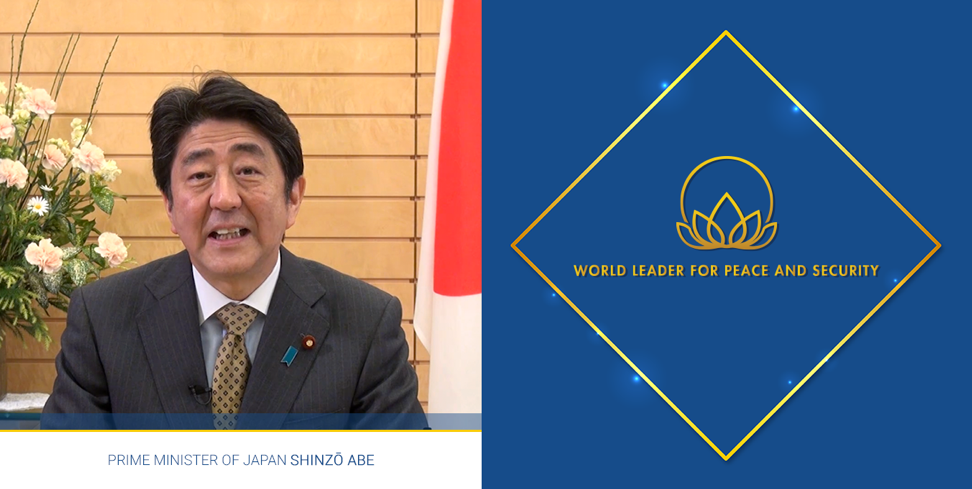
Prime Minister Shinzo Abe, the first leader who received the World Leaders Award for Peace and Security honored by the Boston Global Forum (BGF) on 12/12/2015, has dedicated to Japan and to world’s peace and security. Prime Minister Abe was senselessly assassinated on July 8, 2022. To honor his legacy and to continue his work the BGF is establishing the Shinzo Abe Initiative for Peace and Security in order to:
- Connect world leaders (leaders of government, parliament, businesses), scholars, thinkers, creators to accompany, dedicate, continue to fight, build a world of peace, security and prosperity.
- Continue the implementation of the fundamental ideas in the book “Remaking the World – Toward an Age of Global Enlightenment”, which Prime Minister Abe is a Distinguished Contributor.
- Recruit organizations and individuals to join this initiative.
The Shinzo Abe Initiative for Peace and Security supports efforts move humanity Toward an Age of Global Enlightenment, including:
- Security in cybersecurity, AI and digital governance, along with the Global Alliance for Digital Governance.
- Peace and Security concerning disputes over national sovereignty and territorial integrity
- Peace and Security for citizens
Furthermore, the Initiative includes
- Building of the Prime Minister Shinzo Abe Digital Memorial Hall on AIWS City (House of Honor Section), to showcase Abe’s dedication and to commemorate Shinzo Abe with actions and initiatives to build peace and security for mankind.
- Offering daily Tram Huong in memory of Abe by actions or postings of wishes, aspirations, stories, ideas for peace and security submitted by anyone and everyone submit articles in their native language.
Toward these ends, the Global Enlightenment Community accompanies Shinzo Abe Initiative in the struggle for Peace and Security.