
by Editor BGF | May 18, 2025 | News, Shaping Futures
This new device uses light to perform the key operations of a deep neural network on a chip, opening the door to high-speed processors that can learn in real-time.
The deep neural network models that power today’s most demanding machine-learning applications have grown so large and complex that they are pushing the limits of traditional electronic computing hardware.
Photonic hardware, which can perform machine-learning computations with light, offers a faster and more energy-efficient alternative. However, there are some types of neural network computations that a photonic device can’t perform, requiring the use of off-chip electronics or other techniques that hamper speed and efficiency.
Building on a decade of research, scientists from MIT and elsewhere have developed a new photonic chip that overcomes these roadblocks. They demonstrated a fully integrated photonic processor that can perform all the key computations of a deep neural network optically on the chip.
The optical device was able to complete the key computations for a machine-learning classification task in less than half a nanosecond while achieving more than 92 percent accuracy — performance that is on par with traditional hardware.
The chip, composed of interconnected modules that form an optical neural network, is fabricated using commercial foundry processes, which could enable the scaling of the technology and its integration into electronics.
Please see full here: https://news.mit.edu/2024/photonic-processor-could-enable-ultrafast-ai-computations-1202
by Editor BGF | May 18, 2025 | Shinzo Abe Initiative for Peace and Security, News
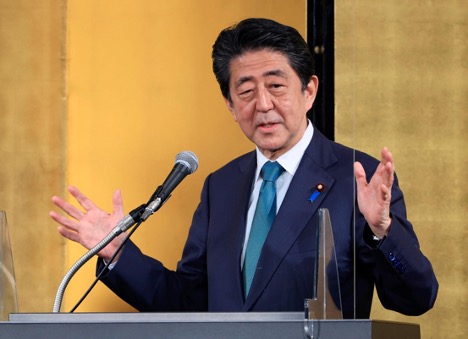
The trial of a man accused of assassinating former Prime Minister Shinzo Abe in 2022 is expected to begin on Oct 28, sources at the Nara District Court said on Thursday.
Tetsuya Yamagami, 44, is accused of fatally shooting Abe with a homemade gun while he gave a speech at an election campaign rally in front of Kintetsu Yamato-Saidaiji Station in Nara City on July 8, 2022.
The trial is expected to be heard by lay judges, NHK reported. So far, six “pretrial arrangement procedures” have been conducted since October 2023, in which the court, prosecutors and defense team narrowed down the evidence and issues to be raised. A seventh procedure is scheduled to take place on May 27.
Yamagami has told police that he shot Abe out of a growing resentment toward the World Peace Unification Family (formerly the Unification Church), to which his mother had made large donations 20 years earlier. He said he targeted Abe because of his perceived links to the church.
Yamagami has also been indicted on charges of violating the Weapons Manufacturing Act, the Explosives Control Act, as well as the Swords and Firearms Control Act for manufacturing multiple guns and gunpowder without a license.
A psychiatric evaluation of Yamagami concluded last June that he was mentally fit to be held criminally responsible for his actions. The defense did not contest the results of the evaluation.
The trial is expected to last about three months with a verdict likely in January 2026.
https://japantoday.com/category/crime/trial-of-former-pm-abe%E2%80%99s-accused-killer-expected-to-begin-on-oct-28

by Editor BGF | May 18, 2025 | World Leader for Peace and Security, News, World Leaders in AIWS Award Updates
Audrey Tang, 2025 World Leader in AIWS Award Recipient, coauthored an essay highlighting the need for AI tools that support meaningful civic discourse in the face of rampant polarization and mistrust.
The essay is part of a series published by McGill’s Centre for Media, Technology, and Democracy, Mila, and the Canadian Institute for Advanced Research. The full series is accessible here.
Democracy has undergone profound changes over the past decade, shaped by rapid technological, social, and political transformations. Across the globe, citizens are demanding more meaningful and sustained engagement in governance—especially around emerging technologies like artificial intelligence (AI), which increasingly shape the contours of public life.
From world-leading experts in deliberative democracy, civic technology, and AI governance we introduce a seven-part essay series exploring how deliberative democratic processes like citizen’s assemblies and civic tech can strengthen AI governance. The essays follow from a workshop on “Democratic Legitimacy for AI: Deliberative Approaches to Inclusive Governance” held in Vancouver in March 2025, in partnership with Simon Fraser University’s Morris J. Wosk Centre for Dialogue.
https://www.mediatechdemocracy.com/deliberative-approaches-to-inclusive-governance


by Editor BGF | May 18, 2025 | News
1966: ELIZA, the first chatbot, is created by Joseph Weizenbaum at MIT. ELIZA simulates a Rogerian psychotherapist and demonstrates the potential of simple natural language processing techniques.
ELIZA, an early natural language processing program, was designed to simulate a conversation with a human, and it became famous for its “DOCTOR” script, which mimicked a non-directive psychotherapist. The program used pattern matching and substitution rules to generate responses, rather than genuine understanding of the conversation.
ELIZA’s impact was significant because it demonstrated the potential of AI to engage in human-like conversation, and it sparked discussions about the ethical implications of AI. Weizenbaum’s work with ELIZA also led to the “ELIZA effect,” where users tend to attribute human qualities like intelligence and empathy to programs that are able to simulate conversation.

by Editor BGF | May 18, 2025 | Global Alliance for Digital Governance
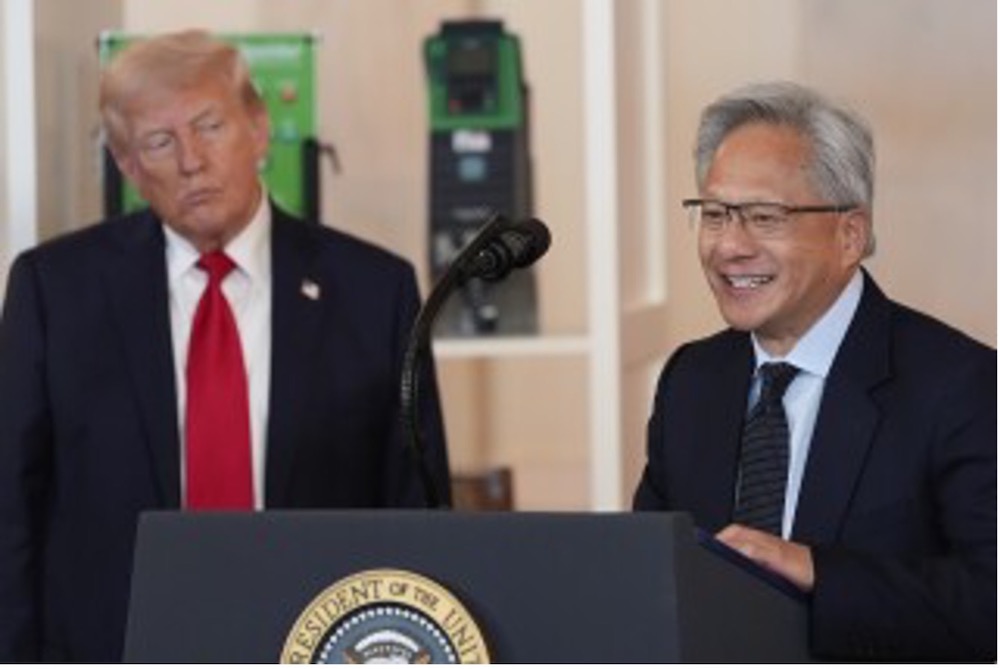
Responding to complaints from the tech industry and other countries, the U.S. Department of Commerce has rescinded a Biden-era rule due to take effect Thursday that placed limits on the number of artificial intelligence chips that could be exported to certain international markets without federal approval.
“These new requirements would have stifled American innovation and saddled companies with burdensome new regulatory requirements,” the Commerce Department stated in its guidance.
President Joe Biden established the export framework shortly before he left office in an attempt to balance national security concerns about the technology with the economic interests of producers and other countries. While the United States had already restricted exports to adversaries such as China and Russia, some of those controls had loopholes and the rule would have set limits on a much broader group of countries, including Middle Eastern countries that President Donald Trump visited last week.
The Biden rule’s sorting more than 100 countries into different tiers of export restrictions drew strong opposition from those countries, as well as U.S. chipmakers like Nvidia and Advanced Micro Devices. They argued the restrictions could actually push some countries to turn to China instead of the U.S. for their AI technology.
What Biden’s rule did “was send a message to 120 nations that they couldn’t necessarily count on us to provide the AI they want and need,” said Brad Smith, Microsoft’s president, at a U.S. Senate hearing last week.
Commerce Undersecretary Jeffery Kessler said Tuesday that President Donald Trump’s administration will work to replace the now-rescinded rule to pursue AI with “trusted foreign countries around the world, while keeping the technology out of the hands of our adversaries.” The administration said a replacement rule is coming in the future but hasn’t said what the new rule will say.
The European Commission welcomed the change, said spokesperson Thomas Regnier, arguing that the Biden rule, if it took effect, would “undermine U.S. diplomatic relations with dozens of countries by downgrading them to second-tier status.”
European Union countries should be able to buy advanced AI chips from the U.S. without limitations, Regnier said.
“We cooperate closely, in particular in the field of security, and represent an economic opportunity for the U.S., not a security risk,” he said in a statement.
https://www.cbs42.com/news/politics/ap-politics/ap-trump-administration-rescinds-curbs-on-ai-chip-exports-to-foreign-markets/
https://apnews.com/article/trump-biden-ai-chip-export-curbs-rescinded-bb05a9760abb8a320a447f58599e2ab6
https://time.com/7285232/trump-ai-middle-east-chip-export/
https://www.nytimes.com/2025/05/15/business/economy/trump-chips-ai-uae.html